

REVIEWED
Gaggia Classic Pro
$450-$550
Adjustable OPV that can be set to 9 bars, commercial-style 58mm group head, user-serviceable. Pulls consistent ristrettos with a good grinder.
Espresso Guides
Ristretto explained: same dose, about half the water. Why it tastes sweeter, how to pull one, the grind adjustment that matters, and caffeine.
A ristretto (Italian for “restricted”) is a short espresso shot: the same coffee dose as a double but roughly half the water yield. The result is sweeter, syrupier and less bitter, and it has slightly less caffeine, not more.
To pull one at home you need steady 9-bar pressure. Our pick: Gaggia Classic Pro ($450-$550), a commercial-style 9-bar machine that is easy to dial in for consistent shots.
Same dose, roughly half the water, so a different cup.
| Ristretto | Standard double | |
|---|---|---|
| Dose | 18g | 18g |
| Yield | 18–22g | 34–40g |
| Ratio | 1:1 to 1:1.2 | 1:2 |
| Time | 14–20 sec | 25–32 sec |
| Taste | Sweet, thick, little bitterness | Balanced, slight bitter finish |
Dose
Yield
Ratio
Time
Taste
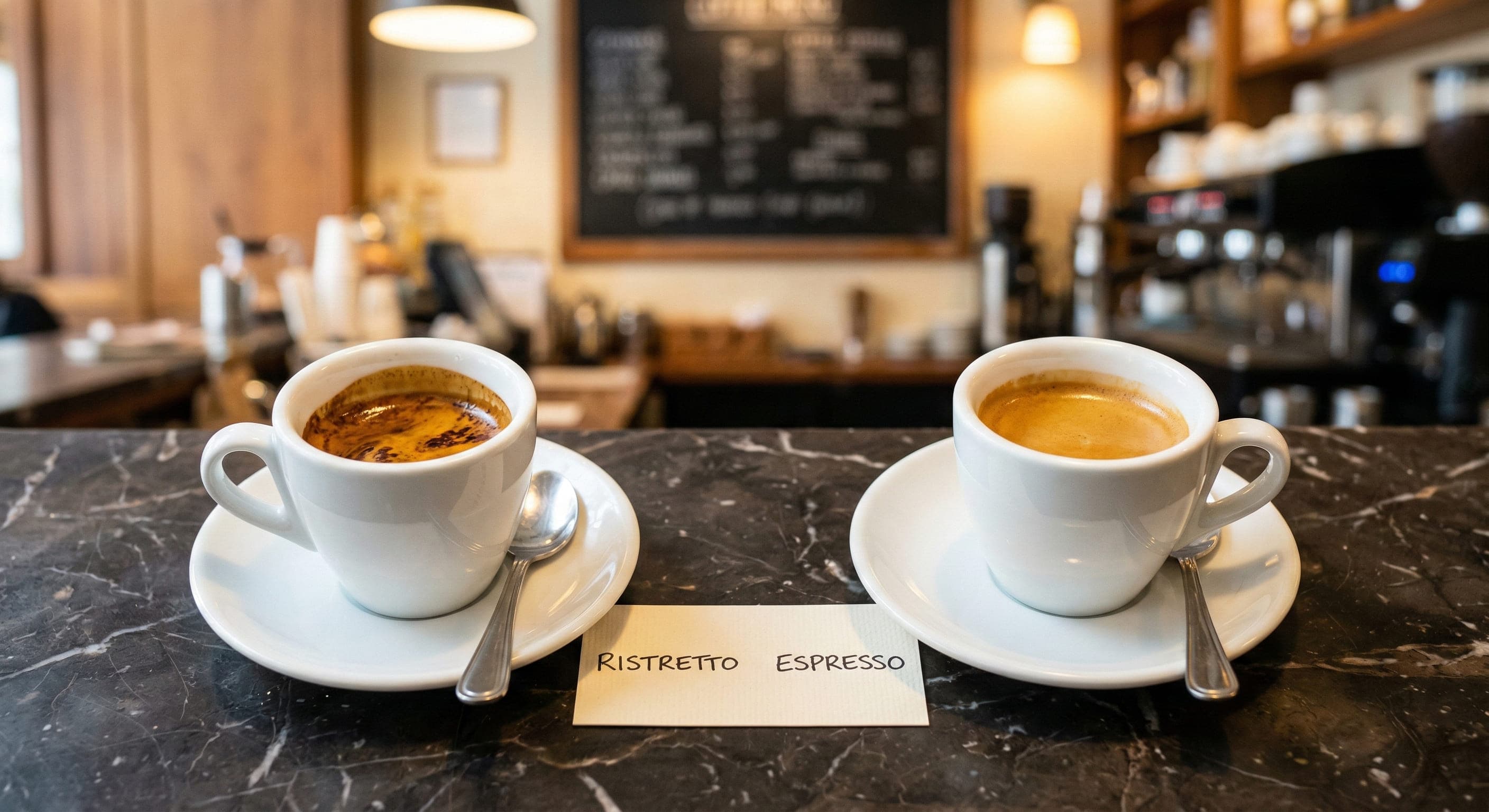
Sugars and fruity acids extract first; bitter compounds come last.
A ristretto stops before the bitter, drying compounds arrive. Neither style is better; it is a taste choice. If your regular shots taste bitter, read what is espresso extraction.
Extraction order explains the sweetness, the body and the lower bitterness.
Coffee does not dissolve all at once. Fruit acids and some sugars leave the grounds first, then caramelised sugars and body, and the harsh, drying compounds last. A ristretto cuts the shot during the middle phase, so the cup is concentrated and syrupy but misses most of the late bitterness.
Less water also means a higher concentration. Many baristas describe the ratio as roughly 1:1 to 1:1.5 (dose to liquid), against 1:2 for a standard shot. Because the shot is short, any flaw in the puck shows up as sourness or a sharp, thin taste.
That is also why a ristretto is a recipe, not a different bean or a special machine. It is the same espresso extraction, just stopped earlier.
Same 18g dose, a finer grind, and an earlier stop.
Dose 18g. At your usual espresso grind, or one step finer.
Brew at 9 bar and 93–95°C. (200–203°F).
Stop at 18–22g. In the cup, about 14–20 seconds.14–20 seconds
Thin or sour?. Go one step finer, then raise temperature toward 95°C.
Fresh beans matter more here because a short shot magnifies flaws. See how to pick espresso beans.
Where the short shot shines and where to skip it.
Quick decision guide
You make flat whites or milk drinks
Use a ristretto base for a sweeter, more caramelized drink. See what is a flat white.
You drink light-roast single origins
Pull a ristretto, since over-extracted light roasts turn sharp and sour.
You want a long, large drink
Skip it. Try a lungo or an americano instead.
No, slightly less, even though it tastes stronger.
Most caffeine extracts early, so a ristretto captures most of it, but stopping sooner leaves a little behind. Flavor concentration and caffeine are different things.
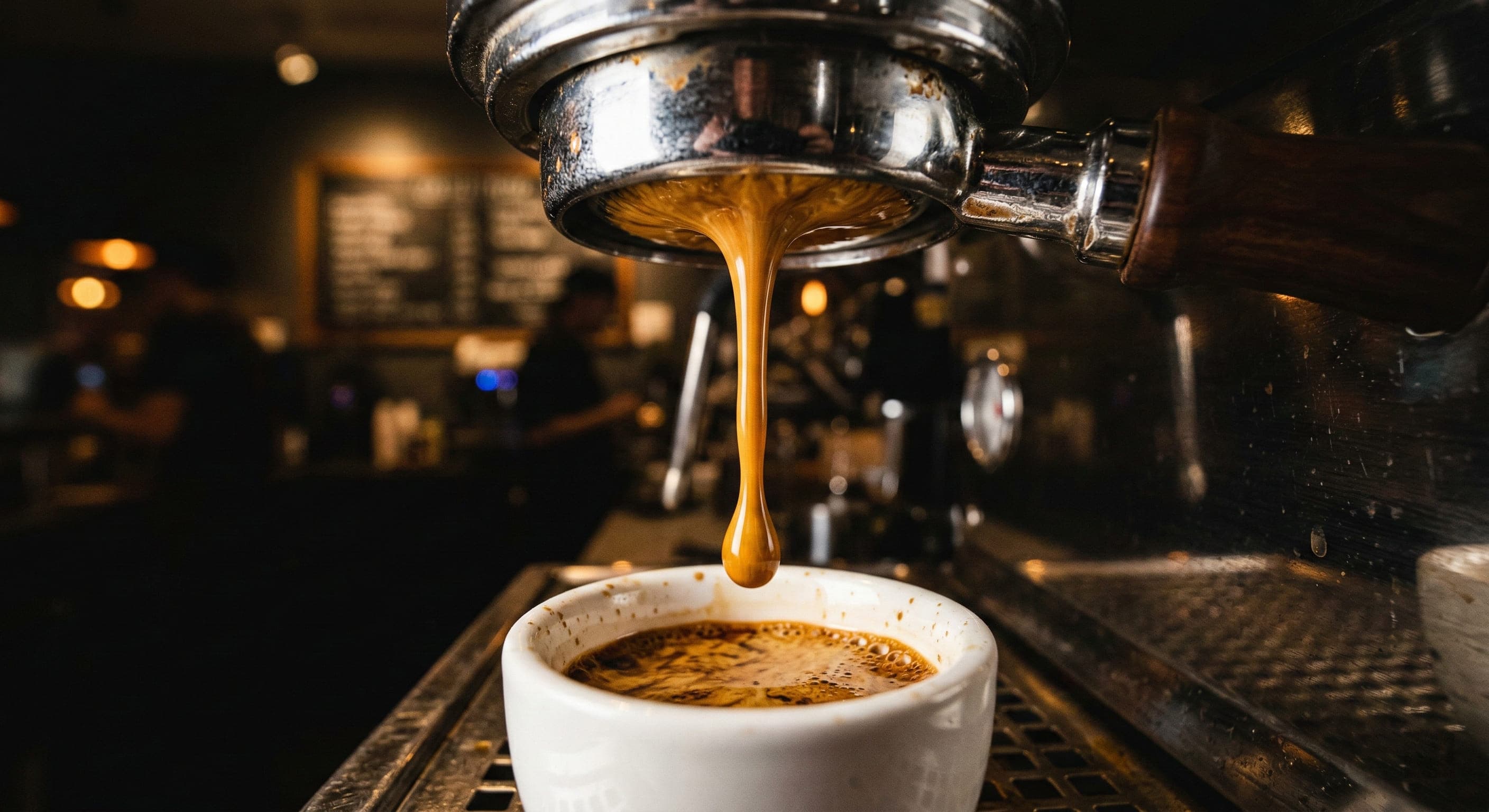
Current gear and technique that make short shots repeatable.
A pressure-profiling or flow-control machine lets you shorten the shot while keeping the early flow gentle, but it is not needed. A fixed 9-bar machine with a precise grinder gets you most of the way. Use the espresso dial-in calculator to set your starting numbers.
Steady 9-bar pressure and a consistent grinder.
A short shot exposes uneven pressure, temperature or particle size. Pair a stable machine with a good grinder; see the best coffee grinders.
REVIEWED
Adjustable OPV that can be set to 9 bars, commercial-style 58mm group head, user-serviceable. Pulls consistent ristrettos with a good grinder.
REVIEWED
ThermoJet heat-up, pre-infusion, auto-steam wand. Reliable ristretto extraction for home use.
REVIEWED
Entry-level espresso grinder with consistent particle size. A good starting point for home ristretto tuning.
Affiliate links: we may earn a commission at no extra cost to you.
You want control and a machine you can service
The Gaggia Classic Pro, paired with a good grinder.
You mostly make milk drinks and want simplicity
The Breville Bambino Plus, with more shot-to-shot variance.
Quick answers before you buy.
Stronger in flavor and sweetness, but not in caffeine.
Roughly “rih-STRET-oh”, with the stress on the middle syllable.
It is Italian for “restricted”, which describes the limited water.
They sit at opposite ends: a ristretto stops early for a sweet, syrupy shot, while a lungo runs long for a larger, more bitter one.
A standard espresso sits in between.
Only if you can stop the shot yourself or program the volume.
Machines that run a fixed-volume shot make it hard; compare options in the best espresso machines.
The grind is probably too coarse or the shot ran too fast, so it under-extracted.
Grind finer and keep the yield short; why is my espresso sour covers the fix.
Roughly the same weight as the dose, up to about 1.2 times it, so an 18g dose gives about 18–22g in the cup.
Weigh the shot rather than judging by eye.
Keep reading: more guides on the same topic.
What is a lungo? Same dose, more water: brew ratio, taste, caffeine, lungo vs americano vs ristretto, and when the long shot makes sense.
Read the guideHow espresso extraction works and how to fix sour or bitter shots.
Read the guideWhat is a flat white? A double espresso with silky microfoam. Learn how it differs from a latte, plus how to make one at home.
Read the guideHow to pick espresso beans that suit your taste and brewing style
Read the guideHow espresso is made, what crema means and what gear you need.
Read the guide


