

Our pick
Breville Barista Express BES870XL
Skip if: you want to upgrade the grinder later.
Espresso Guides
Last updated
What is a doppio? The standard double espresso: how it differs from a single shot, its caffeine, the drinks it makes and how to pull one.
Affiliate disclosure: this page contains Amazon affiliate links. We may earn a commission if you buy through them, at no extra cost to you, and it never affects our rankings. Read our full affiliate disclosure
A doppio is a double espresso shot (16–20g dose, typically 18g, with a 34–40g yield), and it is what nearly every café serves by default when you order "an espresso."
One pull through a double basket, not two singles.
| Doppio | Single | |
|---|---|---|
| Dose | 16–20g (typically 18g) | 7–9g |
| Yield | 34–40g | 15–20g |
| Time | 25–32 sec | 20–28 sec |
| Caffeine | About 120–140mg | About 60–70mg |
Dose
Yield
Time
Caffeine
A deeper puck extracts more evenly.
A bigger basket changes dose, bed depth and extraction, not only volume.
A doppio uses a double basket with roughly twice the grounds, so the puck is deeper and denser. Water has more coffee to pass through and flow is more evenly spread, which usually makes shots more repeatable than a single basket.
This is why most cafes pull doubles as standard. Single baskets are shallow and unforgiving, so small errors in dose or tamp have a larger effect. The doppio is the practical baseline recipe for dialling in, with other drinks built from it.
The numbers are a starting point rather than a rule. Basket size, roast and grinder all move the ideal dose and yield, which is why scales and timing matter. The espresso ratio calculator turns your dose into a target shot weight.
Starting defaults, then adjust by taste.
For how these interact, see what is espresso extraction.
Nearly all of them; only the milk changes.
| Drink | What goes with the doppio |
|---|---|
| Americano | Hot water |
| Cappuccino | Equal steamed milk and foam |
| Flat white | Microfoam, often ristretto-style |
| Latte | Lots of steamed milk, thin foam |
| Cortado | Equal steamed milk, no foam |
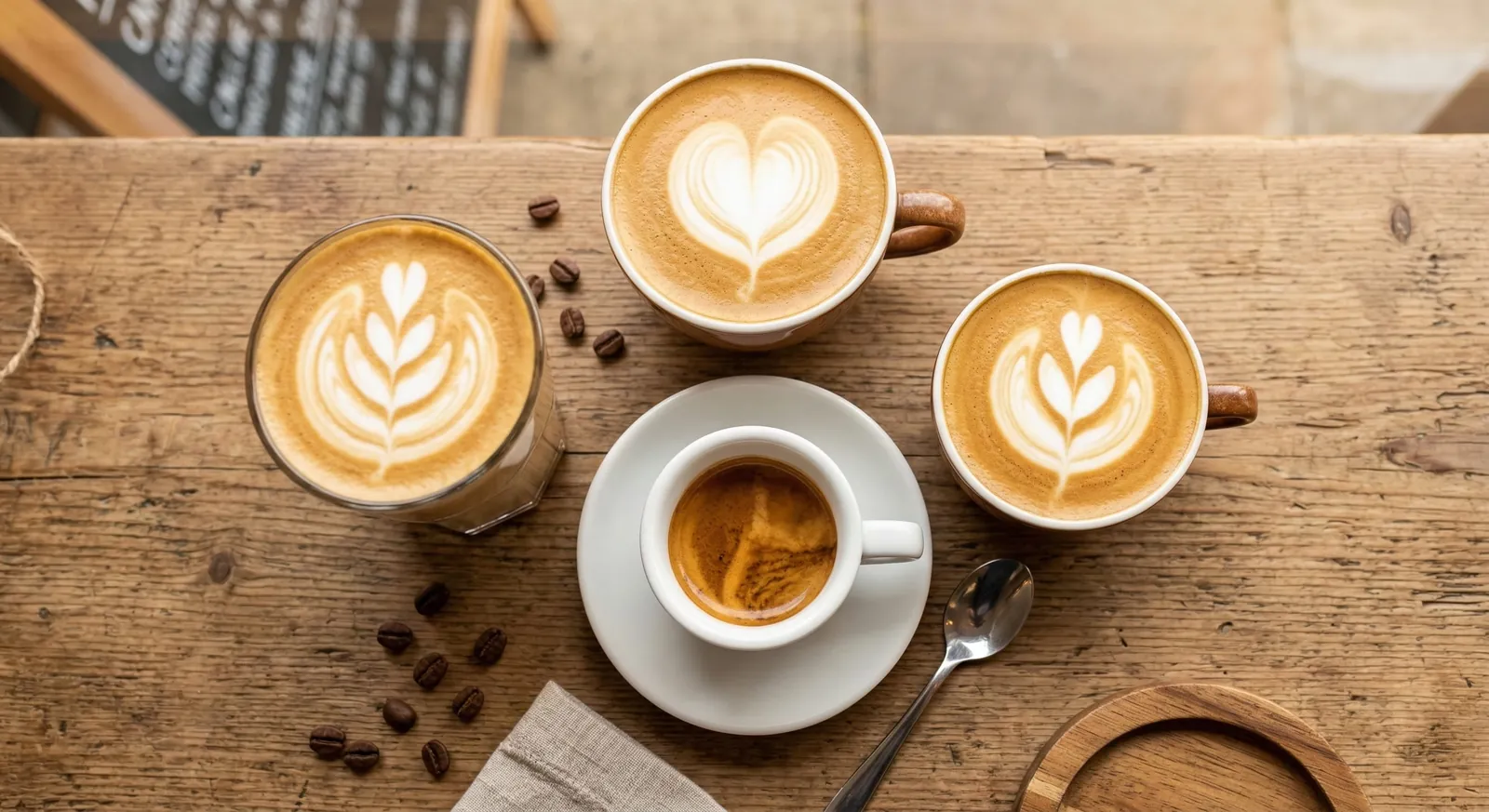
Full breakdown in coffee drink differences.
Most café milk drinks, from cortados to large lattes, use a doppio as their base.
Most of the drinks in our guide to alternative espresso drinks start from a doppio, and so does a properly made americano.
Say "espresso" in most cafés.
Weigh, distribute, tamp level, and aim for 36g in 25–32 seconds.
Weigh 18g. Of freshly ground coffee, fine like table salt.
Level the grounds. So water finds no easy channel.
Tamp straight down. For an even puck; force matters less than level.
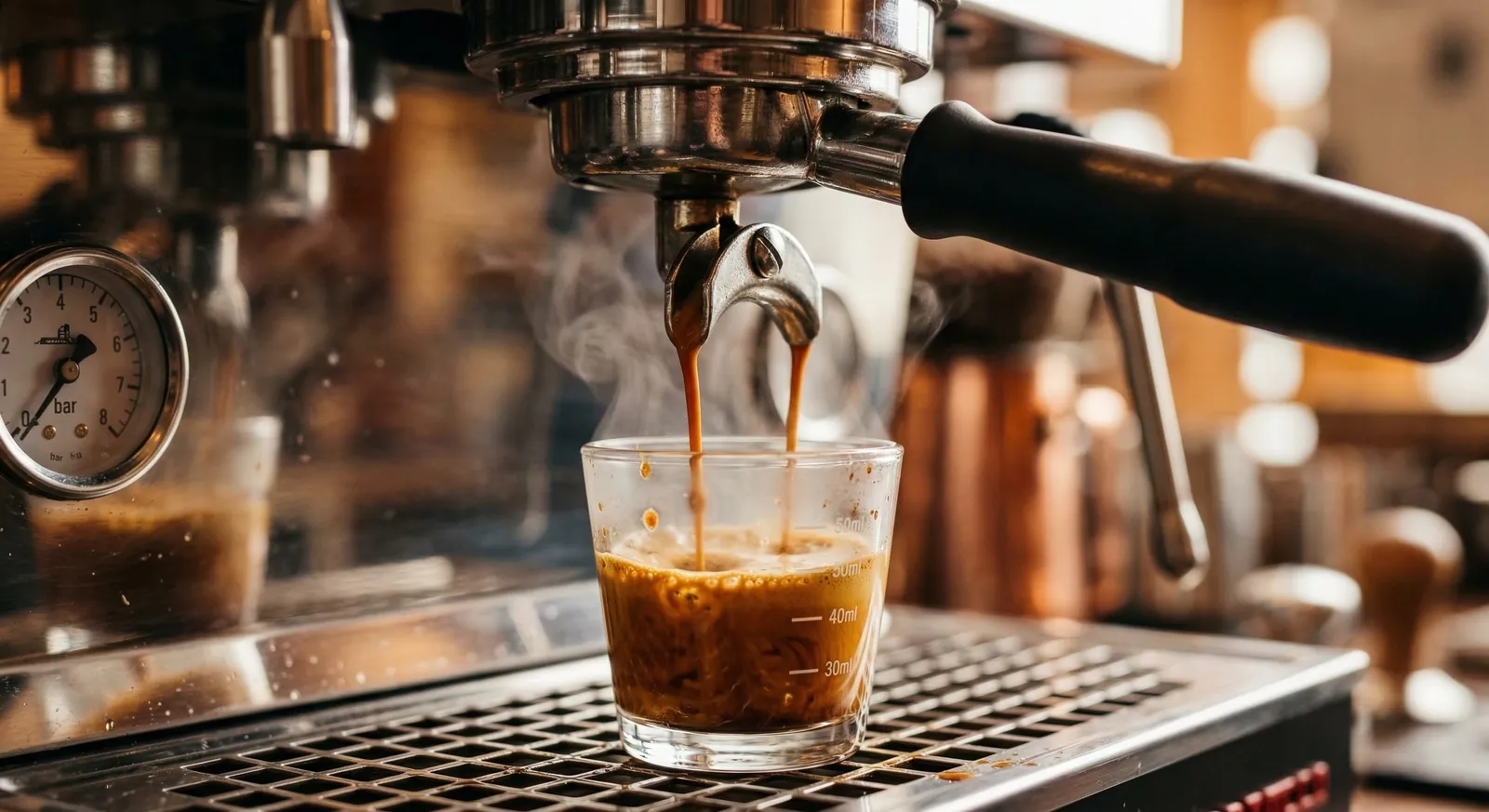
Pull to 36g. In 25–32 seconds on a scale.25–32 seconds
Adjust. Sour or thin, grind finer; bitter or dry, grind coarser.
| Problem | Fix |
|---|---|
| Runs too fast | Grind finer, then raise dose in 0.5g steps |
| Runs too slow | Grind coarser, then check distribution |
| Thin or no crema | Use beans roasted within about 3 weeks; grind slightly finer |
Deeper tuning is in how to dial in espresso. A blade grinder will hold back any machine. The espresso dial-in calculator tells you what to change after each shot.
A serviceable machine and a burr grinder.
Quick decision guide
You want a manual, serviceable machine to learn on
The Gaggia Classic Pro rewards a good grinder.
You are still choosing equipment
Compare top-rated espresso machines and best coffee grinders.
Scales, basket choice, puck prep and water for consistent doubles.
Filtered water with moderate mineral content protects the machine and improves taste. If you are unsure where to start, the dial-in guide walks through each variable.
Small changes in beans, dose and grind show up quickly in a double shot.
A doppio uses twice the coffee of a single, so any drift in your routine is easier to taste. Most day-to-day changes trace back to a few causes.
If shots swing between sour and bitter, follow our dial-in method and change one variable at a time.
Doubles are easier to make well and suit modern drinks.
Double baskets are more forgiving than single baskets. Their shape allows an even bed of coffee, so doubles are easier to dial in and more consistent from shot to shot. Single baskets are narrower and tapered, which makes them prone to channeling. Most modern drinks, especially milk drinks, are also built around a double shot so the coffee flavour carries through the milk.
If you want a smaller amount of coffee, many cafés will split a double into two cups rather than pull a true single. At home, you can do the same with a split-spout portafilter, which gives you two singles from one double basket. That is often easier than learning to dial in a single basket.
Ordering a doppio in Italy is less common than elsewhere; Italian bars usually serve single shots by default, and you ask for "un doppio" if you want a double. In most other countries, "espresso" on a café menu already means a double shot. If you want a single, ask specifically, and check the cup size to see what you are getting.
Roughly double a single shot, though it varies widely.
A double espresso usually contains somewhere around 100–150 mg of caffeine, but the real figure depends on the beans, the dose and the extraction. Robusta-heavy blends contain much more caffeine than 100% arabica, and a larger dose naturally contains more. Roast level makes less difference than many people think.
For comparison, a typical mug of drip coffee often contains a similar or larger amount of caffeine in total, even though each sip tastes less intense. If you are watching caffeine, track the number of shots across the day rather than the size of each drink. Our caffeine calculator estimates caffeine for common drinks.
If you are sensitive to caffeine, a single shot or a decaf espresso still gives you the ritual and flavour.
A built-in grinder keeps the setup simple.
Our pick
Skip if: you want to upgrade the grinder later.
Affiliate links: we may earn a commission at no extra cost to you.
Quick answers before you buy.
Not exactly.
A doppio is one pull through a double basket; "two shots" can also mean two singles.
Volume and caffeine are equivalent.
Roughly 120–140mg depending on bean, roast and freshness, compared with about 60–70mg for a single.
A 12 oz filter coffee has 140–200mg, spread over a larger volume.
At most cafés a regular espresso is already a doppio, so there is no difference.
Against a true single, a doppio has about twice the coffee and caffeine, but the taste concentration is similar.
Yes.
A doppio needs a double basket sized for roughly 18g of coffee.
Dosing a double amount into a single basket overfills it and usually causes uneven extraction.
A doppio is the undiluted double shot; an americano is that same shot topped with hot water.
See americano vs espresso for how the taste and strength compare.
Not a true one.
A moka pot brews strong coffee at far lower pressure and makes no real crema, so it is closer to an americano-style drink.
See what is a moka pot.
Keep reading: more guides on the same topic.
 Explained
Espresso7 min read
What is a ristretto? A short 1:1 to 1:1.2 espresso that tastes sweeter. See how to pull one, the grind change, and caffeine.
 Compare
Coffee Education6 min read
Macchiato vs latte: compare size, espresso strength and calories, then pick what to order or make at home.
 Explained
Espresso6 min read
What is a lungo? A long espresso shot at 1:3 to 1:4: taste, caffeine, lungo vs americano, and which roasts suit it.
 Explained
Coffee Education6 min read
What is a macchiato? Espresso macchiato vs latte macchiato: size, taste, how each is made, and which one to order.
Reader questions
Questions or tips? Leave a comment
Ask about your setup or share what worked for you. Comments are checked before they appear.