

REVIEWED
Breville Bambino Plus
$399–$449
Auto steam wand textures small milk volumes to microfoam reliably.
Coffee Education
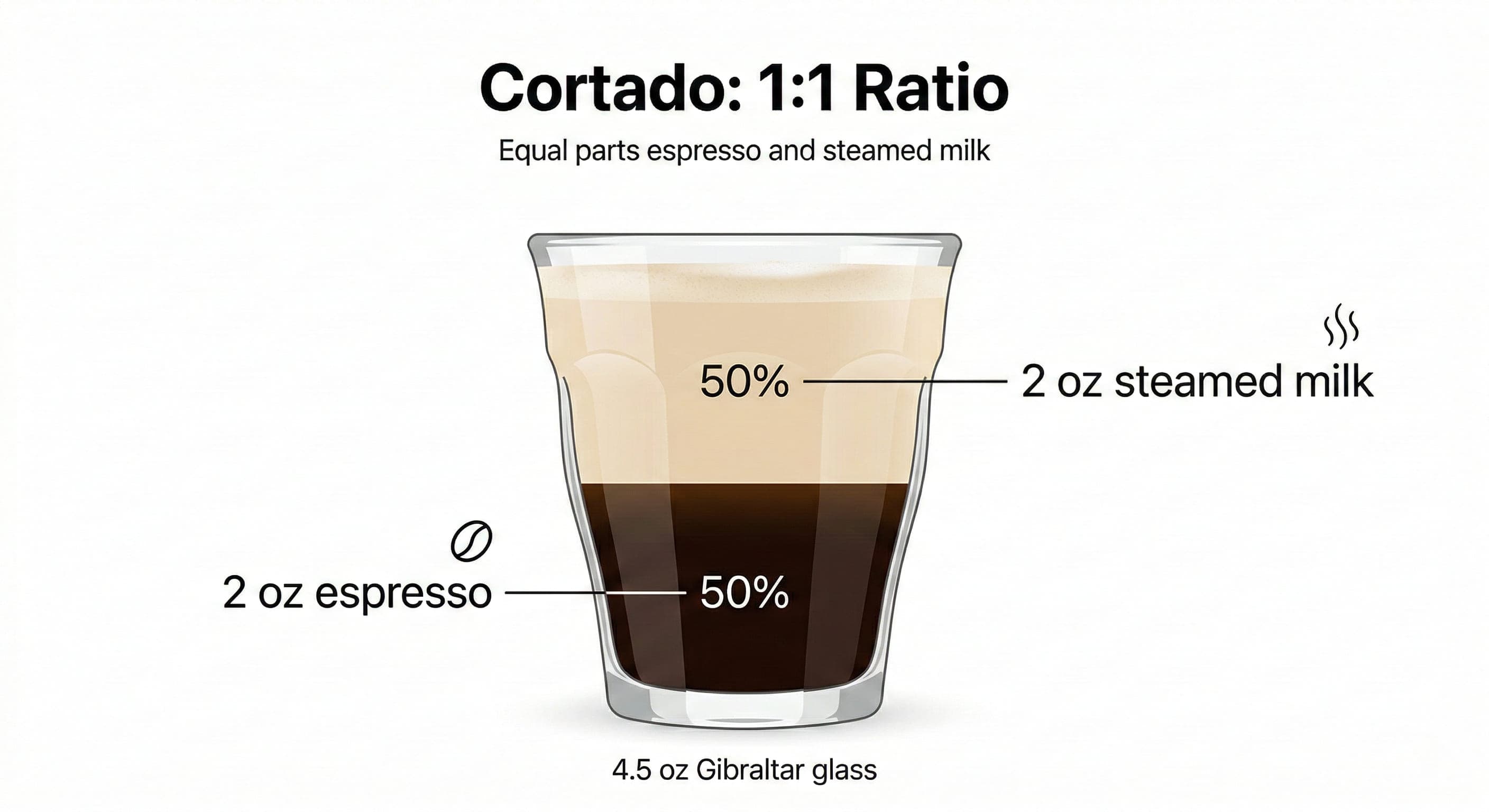
What is a cortado? A 1:1 mix of 2 oz espresso and 2 oz steamed milk. See its taste, how to make one and how it differs from a latte.
A cortado is a 4 oz drink of equal parts espresso and lightly steamed milk (1:1), served in a small glass. It is more espresso-forward than a flat white or latte, so order it if you want to taste the coffee.
Size, ratio and glass at a glance.
| Detail | Cortado |
|---|---|
| Total size | 4 oz (120 ml) |
| Espresso | 2 oz (a double shot) |
| Milk | 2 oz steamed, minimal foam |
| Glass | Small, traditionally a Gibraltar |
| Origin | Spain, probably Basque Country or Madrid |
Total size
Espresso
Milk
Glass
Origin
More milk moves a cortado toward a flat white, then a latte.
| Drink | Total size | Milk |
|---|---|---|
| Macchiato (traditional) | 1–2 oz | Dash of foam |
| Cortado | 4 oz | 2 oz |
| Cappuccino | 6 oz | 2 oz + 2 oz foam |
| Flat white | 6–7 oz | 4–5 oz |
| Latte | 8–12 oz | 6–10 oz |
Macchiato (traditional)
Cortado
Cappuccino
Flat white
Latte
Some cafés serve a 5 oz version with a slightly longer shot and 2.5 oz of milk, which keeps the ratio. A 6 oz drink with 4 oz of milk is a flat white, whatever the menu calls it.
Espresso-forward, with the sharp edges rounded off.
The milk softens acidity and adds sweetness, but the coffee stays audible. A well-made shot finishes short and clean, with no bitterness.
The same coffee as a latte tastes creamy and mild, with origin notes barely perceptible. That difference is the cortado's whole argument.
Four steps with an espresso machine, a small glass and whole milk.
Warm. A 4–4.5 oz glass with hot water, then pull a double shot (about 18g in, 36g out, 26–30 seconds) into it.26–30 seconds
Steam. 60 ml (2 oz) of cold whole milk to 58–62°C (136–144°F) with fine microfoam and under 0.5 cm of foam.
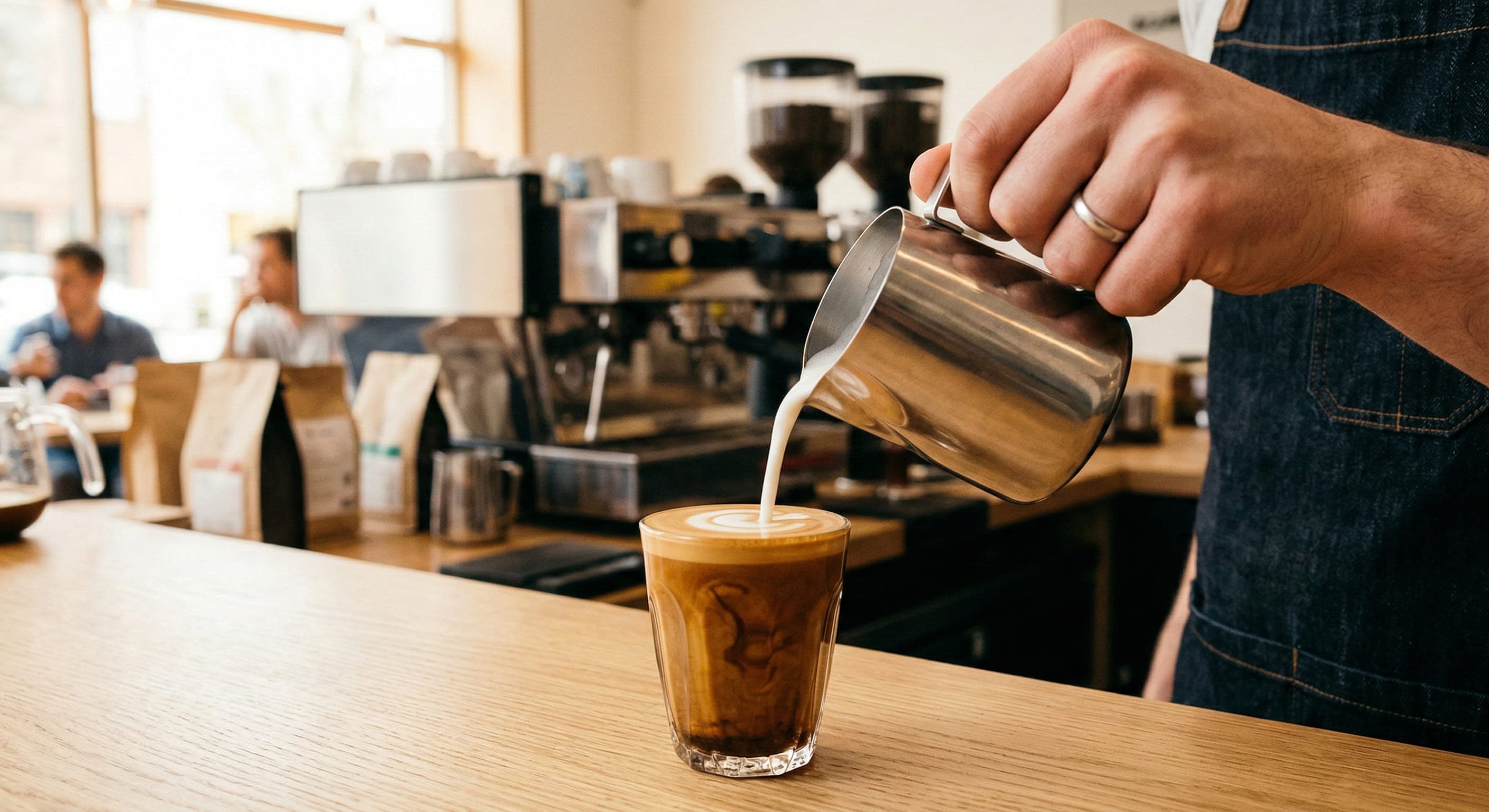
Pour. At a controlled angle so the milk blends into the espresso rather than sitting on top.
Check. For a small, unified drink with a thin layer of crema.
Cortado for the espresso, flat white for something smoother and larger.
| Feature | Cortado | Flat white |
|---|---|---|
| Texture | Light microfoam | Velvety microfoam throughout |
| Foam depth | Minimal | Very thin (about 2–3 mm) |
| Flavor | More espresso-forward | Slightly more milk-forward |
| Origin | Spain | Australia/New Zealand |
Texture
Foam depth
Flavor
Origin
For technique, see what is a flat white. For all three drinks side by side, see flat white vs cappuccino vs cortado.
No: a latte leads with milk, a cortado with espresso.
A cortado shows the espresso in its most transparent form while removing its harshest edges. Built on the same double shot, both have the same caffeine (roughly 120–150mg); the cortado only tastes stronger because the flavor is more concentrated.
Full breakdown: latte vs cortado.
A small clear glass, so you can see the espresso and milk blend.
Traditionally the 4.5 oz Gibraltar; a 4 oz ceramic demitasse also works. Be wary of an 8 oz cup, which usually means extra milk and a diluted drink.
Milk cuts acidity and bitterness without hiding the coffee.
Cortado comes from the Spanish verb cortar, to cut. The warm milk cuts the espresso's acidity and bitterness, but because the ratio is roughly 1:1 the coffee flavour stays clear. It is typically made with a double ristretto or a regular double shot in a small glass.
Milk is steamed with minimal foam, so the texture is silky rather than airy. Because the drink is small, a thin shot still shows through, which is why technique matters.
How to make a better cortado at home.
You need a steam wand that can texture a small amount of milk.
Quick decision guide
You want small milk drinks and have (or are buying) a machine with a steam wand
The Breville Bambino Plus textures small milk volumes reliably; see more in best espresso machines under $500.
You want a long, milky drink rather than a strong one
Skip the cortado and start with a latte or flat white.
REVIEWED
Auto steam wand textures small milk volumes to microfoam reliably.
Affiliate links: we may earn a commission at no extra cost to you.
Quick answers before you buy.
You need some way to warm and texture a small amount of milk.
Milk frothed another way is usually coarser than the fine microfoam this drink is built on.
Largely, yes.
Gibraltar is the name some US cafés use for a cortado-style drink served in a Gibraltar glass.
Ratios can vary slightly by café.
In Spain the milk is often just warmed or lightly foamed, while specialty cafés elsewhere typically use fine microfoam.
Both are espresso softened with a similar amount of milk.
Yes.
Barista-style oat milk textures well on a steam wand, though it can taste sweeter than dairy.
If your wand struggles with small volumes, see steam wand troubleshooting.
A traditional macchiato is espresso marked with a dash of foam, while a cortado is about half milk.
The cortado is milder; the macchiato is closer to straight espresso.
You can approximate one with strong moka pot coffee and warmed milk, but it will not match a true espresso shot.
Keep reading: more guides on the same topic.
Flat white vs cappuccino vs cortado: milk ratio, foam, size and taste compared, plus which to order or make at home.
Read the guideSame caffeine, very different strength: how milk ratio changes the drink.
Read the guideWhat is a flat white? A double espresso with silky microfoam. Learn how it differs from a latte, plus how to make one at home.
Read the guideLooking for a latte alternative? Compare 7 espresso drinks, from cortado to con panna, by milk, strength, sweetness and calories.
Read the guideCoffee drinks explained: how lattes, cappuccinos, flat whites and cortados differ by milk, strength and caffeine, and how to order one.
Read the guide


