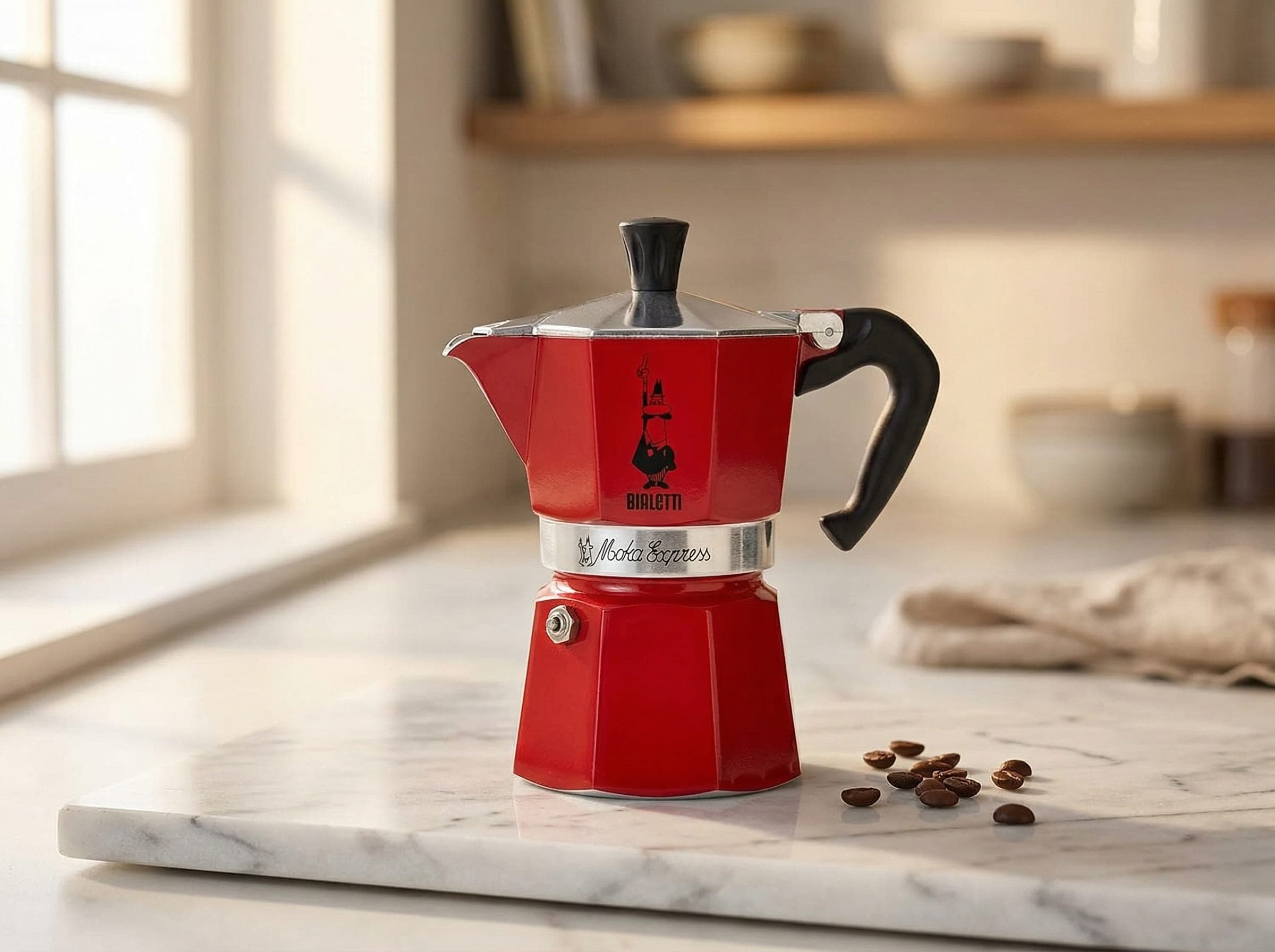
The stovetop route
Bialetti Moka Express
A stovetop moka pot for straight shots. Cheap, durable, no electronics.
Brewing Guides
Last updated
Moka pot vs espresso machine: compare pressure, taste, milk drinks and cost to choose the right brewer for black coffee or lattes.
Affiliate disclosure: this page contains Amazon affiliate links. We may earn a commission if you buy through them, at no extra cost to you, and it never affects our rankings. Learn more
Pick a moka pot for straight, strong coffee on a low budget. Pick an espresso machine for milk drinks or repeatable, syrupy shots with crema.
The differences that affect taste, cost and daily use.
| Moka pot | Espresso machine | |
|---|---|---|
| Pressure | About 1-2 bar of steam | About 9 bar from a pump |
| Crema | None | Visible, thick |
| Taste | Lighter, clean, strong concentrate | Thick, syrupy, sweeter |
| Milk drinks | Poor: thin body | Excellent |
| Cost | $20-$99 | $150-$2,000+ |
| Upkeep | Rinse and replace the gasket | Regular cleaning and descaling |
Pressure
Crema
Taste
Milk drinks
Cost
Upkeep
A moka pot (what a moka pot is) is closer to hot percolation than true extraction under pressure, so it makes strong coffee, not espresso.
Match the brewer to the drinks you actually make.
Quick decision guide
You drink shots straight, travel, or want a durable low-cost brewer
Moka pot. Learn the method in how to use a moka pot.
You drink lattes or cappuccinos, or want repeatable shots
Espresso machine. Start with espresso machines under $500.
Not sure which style of machine? See espresso machine types.
Consistency, speed and beans.
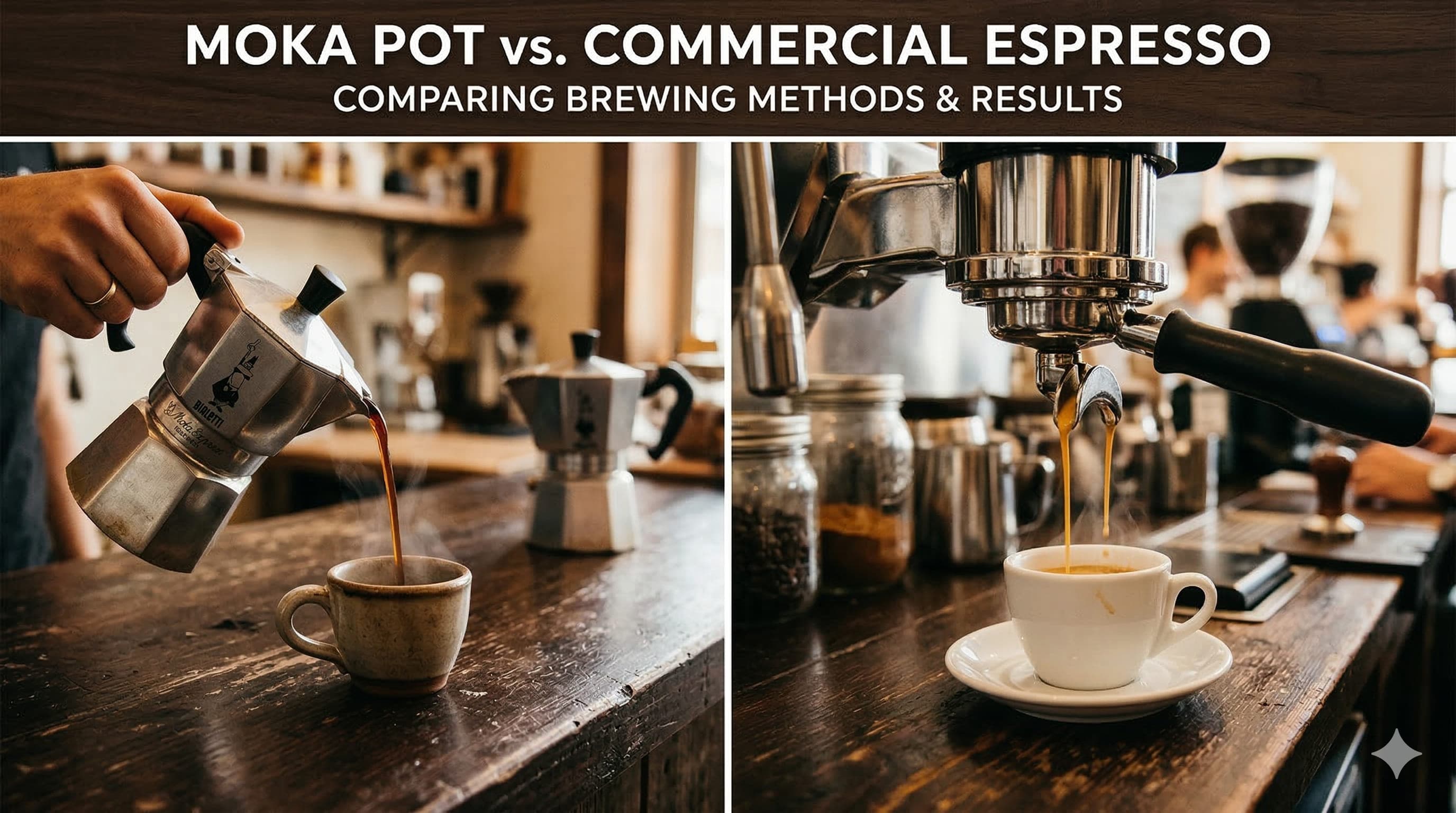
Pressure, temperature and extraction time set the gap.
An espresso machine forces near-boiling water through a compacted puck at about 9 bar in 25-30 seconds, producing a concentrated shot with crema. A moka pot uses steam pressure of roughly 1-2 bar and takes a few minutes. The result is strong and rich, but with less body and no true crema.
Grind size follows the method: fine, even grounds for espresso, and a medium-fine grind for moka. An espresso machine also offers repeatable temperature control and steam for milk drinks; a moka pot does not.
Getting more from either, and when to upgrade.
One pick for each route.
The stovetop route
A stovetop moka pot for straight shots. Cheap, durable, no electronics.
The espresso machine route
A compact espresso machine for milk drinks, if you already own a grinder.
Affiliate links: we may earn a commission at no extra cost to you.
Prices change, so check the current listing.
Quick answers before you buy.
Yes.
"Espresso roast" describes a roast profile, not a bean type.
Grind them medium-fine rather than espresso-fine.
Yes, it is more concentrated than drip but less than true espresso.
A quality pot such as the Bialetti Moka Express can last decades with rinsing and an occasional gasket swap, often outlasting an entry-level machine.
You can make a latte-style drink by adding steamed or frothed milk to moka coffee, but the body is thinner than a machine shot.
For café-style milk drinks, an espresso machine is the better fit.
Only if the pot has an induction-compatible base.
Most traditional aluminium pots do not work on induction, while stainless steel models are usually made for it.
Check the pot's description before buying.
A grinder helps with both, because pre-ground coffee goes stale fast.
Moka pots forgive a basic burr grinder; espresso machines need one that grinds fine and evenly.
See the best coffee grinders.
Keep reading: more guides on the same topic.
 How to
Brewing4 min read
How to use a moka pot for smooth stovetop coffee: medium-fine grind, pre-boiled water, medium-low heat, plus fixes for bitter cups.
 Explained
Coffee Education3 min read
What is a moka pot? How this stovetop coffee maker works, how it differs from espresso, what it tastes like and who should buy one.
 Compare
Coffee Education4 min read
Espresso vs coffee: how strength, caffeine, taste and brewing differ, and which suits your routine, budget and beans.
 Compare
Buying6 min read
Types of espresso machines compared: manual, semi-automatic, super-automatic and pod, by skill level, price and milk drinks.
