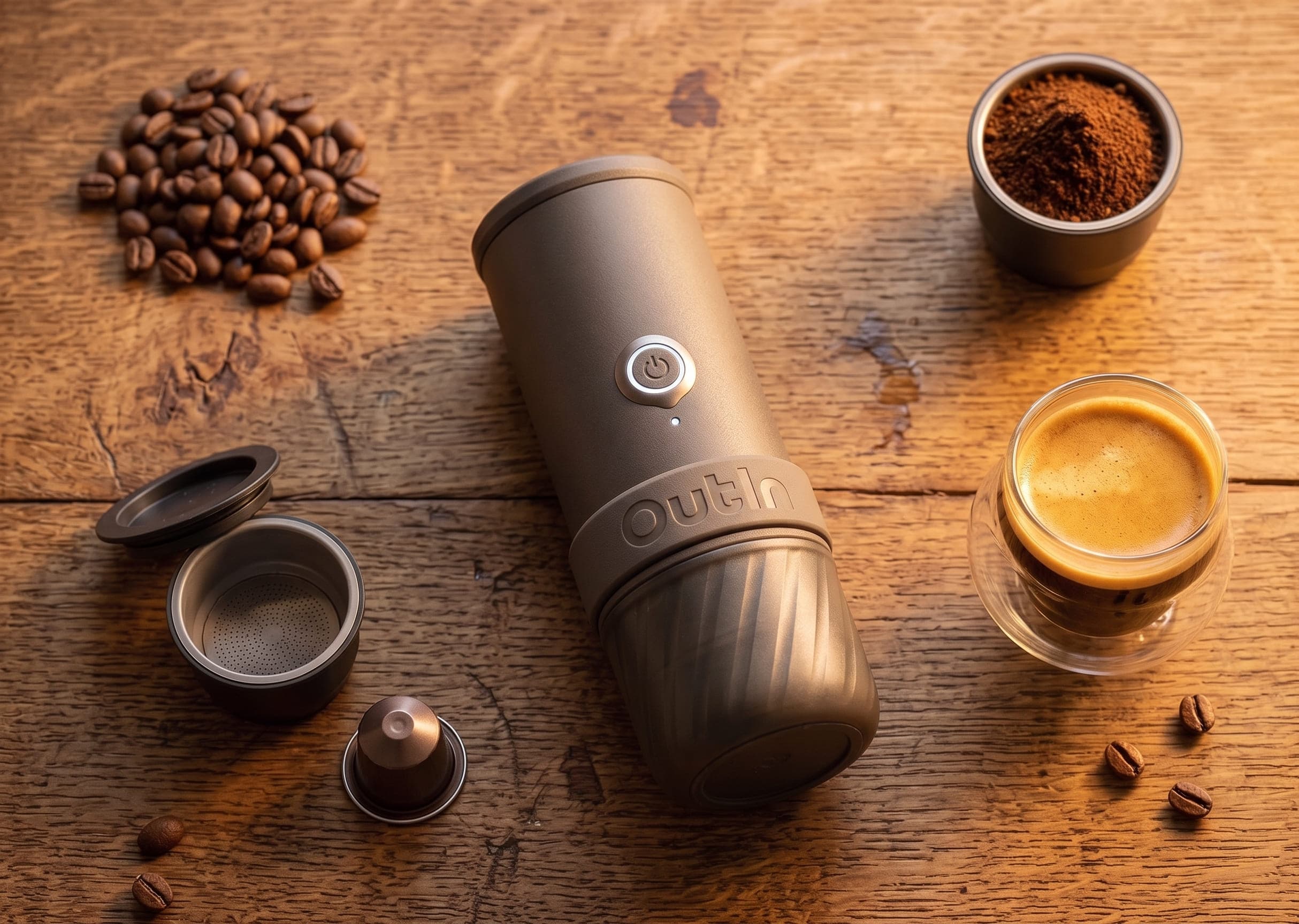
Coffee maker review
Last updated
Outin Mino Review 2026: Pocket Brewer, Not Espresso
Outin Mino review: a pocket-size portable espresso maker for travel and hiking, tested over 90 extractions. See why it is not true espresso.
- Our rating 4.1/5
- By Sarah Chen
- 20 min read
- Independently tested: 90+ pots over 3 weeks of daily travel and bench testing
Affiliate disclosure: this page contains Amazon affiliate links. We may earn a commission if you buy through them, at no extra cost to you, and it never affects our rankings. Learn more
Outin Mino at a GlanceRecommended
A real travel solution for medium and dark roasts, but it isn't a stand-in for a home espresso machine.
Portable Battery Coffee Maker
Affiliate link: we may earn a commission at no extra cost to you. It never affects our rating.
- 300g
- Weight
- 25–32 seconds
- Heat-up time
- 6–7 brews
- Real-world battery
On the brew bench· 90 brews · 3 weeks
Why it stands out
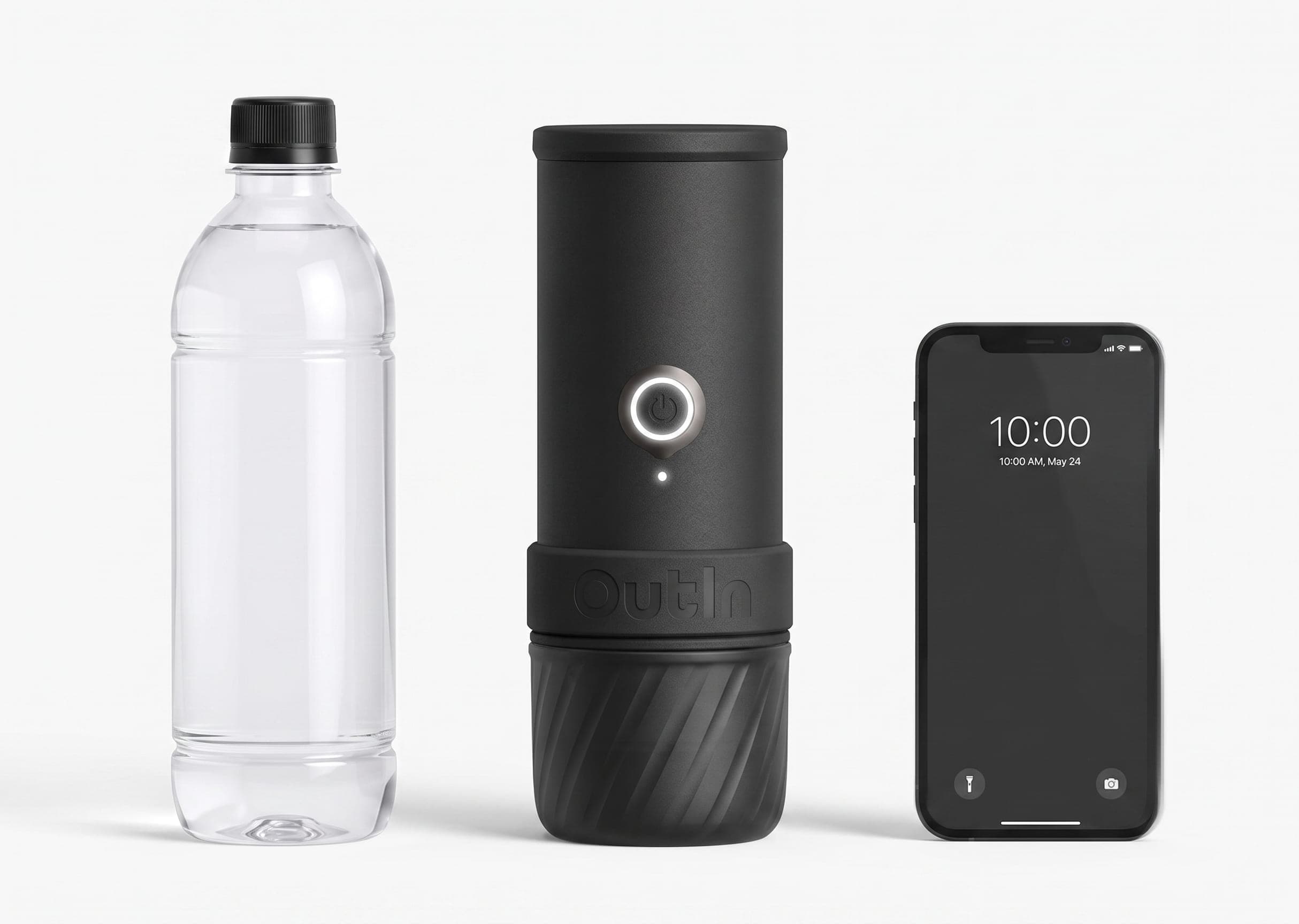
- Pocketable at 300g with USB-C charging
- Reaches brew temperature in 25–32 seconds
- Solid build; aluminium basket shows no wear
Watch out for
- 3–4 bar pressure means concentrate, not true espresso
- Battery gives 6–7 brews, fewer in the cold
✓ Best for
Frequent business travellers
✕ Skip if
Home espresso enthusiasts
This Outin Mino review comes down to one verdict: it is a convincing portable coffee maker for travel, hiking and hotel rooms, but not a home espresso replacement. Portable espresso makers earn a lot of skepticism, so we expected little, yet across 90 brews in airport terminals, hotel rooms and the Sierra Nevada the Outin Mino produced shots worth drinking.
The short answer: it's a convincing travel brewer for medium and dark roasts, not a replacement for a home espresso machine.
- What held up: It reaches extraction temperature in 25–32 seconds and charges from any USB-C power bank.
- Where it fell short: Pressure is well below true 9-bar espresso, so you get concentrated coffee rather than espresso.
- Battery reality: Real-world battery life falls short of Outin's claim, and drops further in cold conditions.
- Who it's for: Frequent travellers and hikers; light-roast fans should look elsewhere.
For context on why extraction conditions matter, see our guide to pour over coffee, or weigh a home machine against a travel-first setup in our roundup of best drip coffee makers.
Who Is This Right For?
Check where you fit before you look at the trade-offs below.
A strong match
It suits you if you are
- Frequent business travellers — eliminates hotel lobby coffee and airport queue coffee for a full work trip, fits in carry-on without bulk
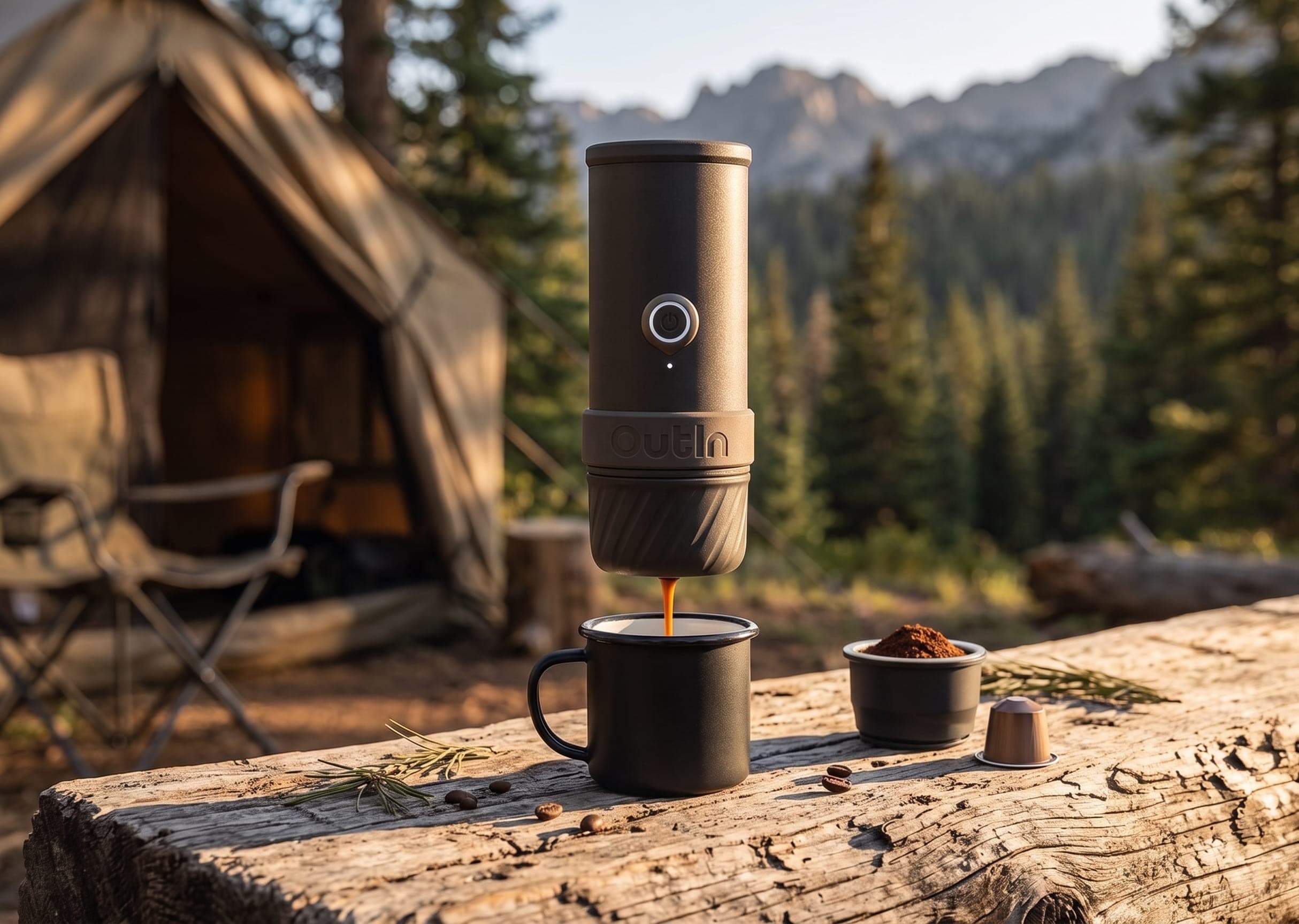
- Weekend hikers and backpackers — battery-powered with USB-C top-up from a power bank, no open flame, no kettle, no external setup required at camp
- Remote or shared-office workers — compact enough for a desk drawer, produces better coffee than most office machines without requiring a dedicated counter space
Consider something else
Look elsewhere if you are
- Home espresso enthusiasts — the Mino's 3–4 bar output is a different drink category from 9-bar espresso; invest in a proper semi-automatic if home extraction quality matters
- Light roast specialists — the 90–92°C temperature ceiling under-extracts the delicate acids and florals in light roasts; a hotter brewer or the AeroPress Go will serve you better
- Multi-day off-grid campers without a power bank — 6–7 brews per charge dropping to 4–5 in cold conditions means you'll need USB-C top-ups on any extended trip
- Skill level
- Beginner-friendly — fill, lock, press button, wait 30 seconds; no barista technique required
- Drink style
- Concentrated espresso-adjacent shots (20–25 ml), best served straight or diluted as a long black
- Upgrade path
- Wacaco Minipresso GR2 for manual pump control, or a home semi-automatic espresso machine for true 9-bar extraction
Pros & Cons
What earns the rating, and what you give up to get it.
7 reasons it works
Pros
- Pocketable at 300g — the most portable battery coffee maker we've tested in this format
- Nano-heating element reaches 90–92°C in 25–32 seconds — no waiting around
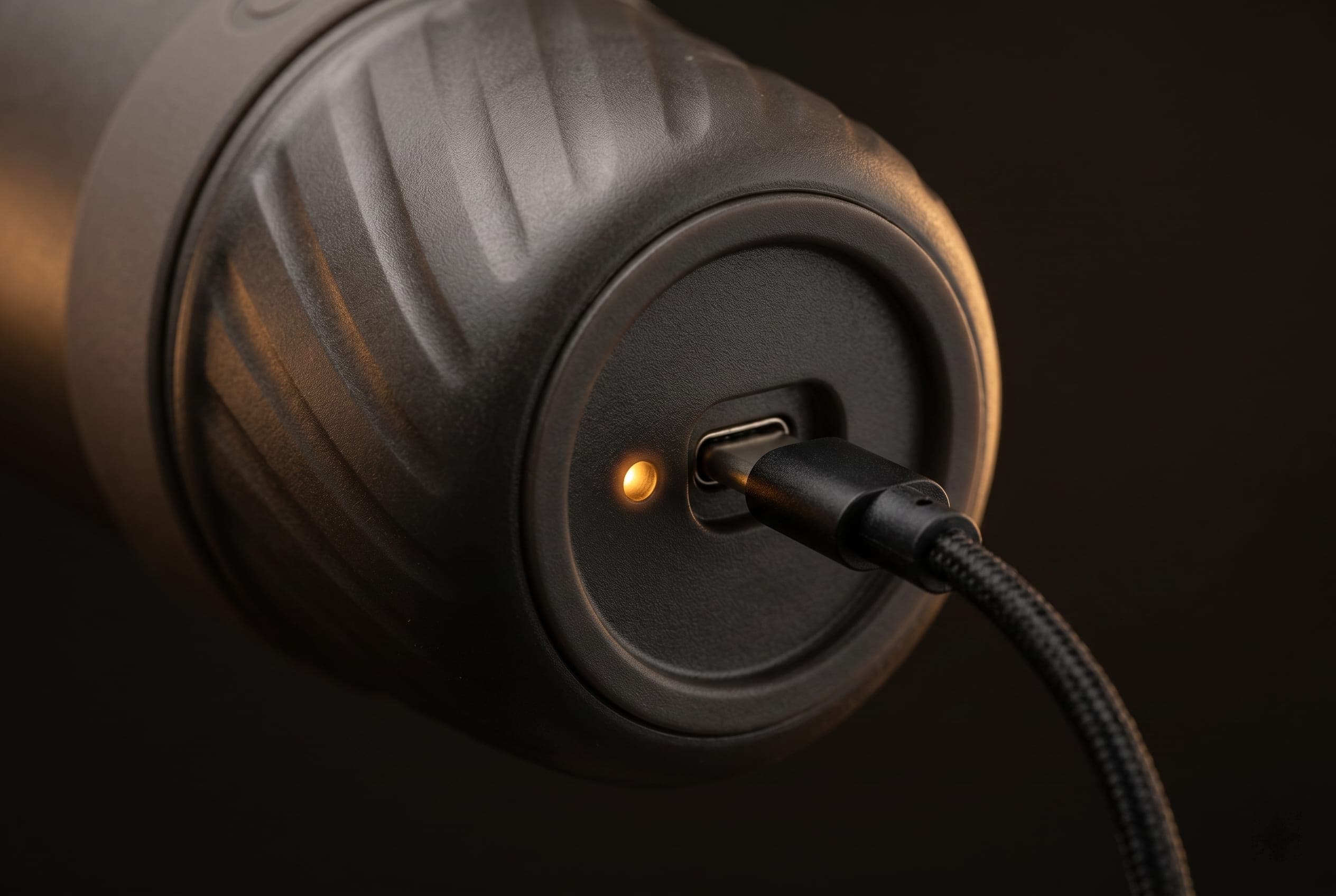
- USB-C charging from any modern power bank — no proprietary cables to lose on a trip
- Battery indicator works reliably — no unexpected mid-brew power-outs in testing
- Build quality is solid; aluminium filter basket shows no wear after testing
- Better than any hotel drip machine, airport coffee, or capsule alternative encountered while travelling
- No capsule lock-in — use any ground coffee
6 trade-offs to weigh
Cons
- 3–4 bar pressure is not true espresso — TDS of 3.8–4.4% is well below 9-bar extraction
- 8g grounds basket is small — single-shot only, no margin for dose experimentation
- 90–92°C ceiling underperforms light roasts; better suited to medium and dark roasts
- Real-world battery life of 6–7 brews is below the claimed 8, and drops to 4–5 in cold conditions
- Grounds basket requires careful threading — rushing in the dark produces spills
- Water reservoir (60ml) is sized for a single espresso-style shot; no batch brewing
Weighed the pros and cons? Check today's price on Amazon; prices change often.
Current price: $199
Real-World Testing
How it performed in day-to-day use, in the order you will meet it.
Setup & Learning Curve
The Mino is built for travellers, remote workers, and outdoor users who want better coffee than what's available in hotel rooms, airports, or backcountry campsites — not as a replacement for a 9-bar home espresso machine.
- Size: At 300g and roughly the size of a travel mug, it adds negligible bulk to a daypack, laptop bag, or jacket pocket.
- Build: The matte, BPA-free plastic shell feels sturdier than its weight suggests, and the aluminium filter basket showed no wear throughout testing.
- Design quirk: The grounds basket needs two full turns to seat correctly, and rushing that step produces a mess.
Dial-In Workflow
The nano-heating element reaches extraction temperature in 25–32 seconds from a cold start — a claim that held up in testing.
- Temperature: Output water measured a consistent 90–92°C at the grounds chamber exit, at or just below the lower end of the SCA's 90.5–96°C espresso range. The Mino therefore performs best with medium and dark roasts; light roasts tasted flatter and lost some characteristic brightness.
- Grind size: It matters more here than on a standard 9-bar machine. A medium-fine grind (roughly AeroPress-range, setting 8–11 on a Timemore Chestnut C3) produced the most balanced shots.
- Too fine: Grinding too fine restricts flow at this lower pressure and produces an over-extracted, bitter cup.
Shot Extraction Notes
Across 40 controlled bench brews with a consistent 8g dose and grind setting, TDS averaged 3.8–4.4% on a VST refractometer — well above drip coffee (1.15–1.35%) but below a 9-bar espresso shot (7–10%), placing the Mino's output closer to a concentrated lungo than true espresso.
- Cup character: Caramel-forward, low in acidity, and round-bodied — pleasant on its own terms rather than a substitute for pulled espresso.
- Head-to-head: Against a Wacaco Minipresso NS2 and an AeroPress Go, the Mino produced the most espresso-adjacent result by volume and TDS. The AeroPress Go still edged it out on cup quality with light roasts.
Cleanup & Maintenance
Day-to-day upkeep is minimal.
- Basket: The aluminium filter basket rinses clean.
- Descaling: An occasional citric-acid descale (a teaspoon dissolved in the reservoir, run through, then rinsed) keeps the nano-heating element performing consistently.
- Seal: The rubber seal at the basket junction is the component most likely to wear over time. A replacement seal kit costs around $5–10 and is worth ordering as a spare for extended travel, since it's a proprietary part not sold at hardware stores.
Is the Outin Mino worth it for travel?
Value versus the alternatives you would otherwise pack
At roughly $199, the Mino is not an impulse buy, so the useful question is what it replaces. If you currently buy a coffee in every airport and hotel lobby on a work trip, the cost spreads out quickly. If you travel twice a year, a manual brewer is the cheaper way to get decent coffee on the road.
What the money buys is convenience: it heats and pressurises internally, so you need no kettle, scale or brewing technique. That matters most when hot water is unavailable, such as on a trail or an overnight train. It matters least in a hotel room with a kettle, where an AeroPress-style setup costs far less.
- Worth it if: you travel often, drink medium or dark roasts, and value a fast, repeatable single cup.
- Not worth it if: you want espresso-grade pressure, drink mostly light roasts, or only need coffee a few times a year.
What do the Outin Mino specs mean in daily use?
Feature, practical impact, who benefits, trade-off
- Nano-heating element: It heats the water on demand, so you are drinking within about half a minute rather than waiting on a kettle. Travellers benefit most. The trade-off is a ceiling of 90-92°C, which suits medium and dark roasts better than delicate light roasts.
- 3-4 bar pressure: This produces a concentrated shot with some body, but not the emulsified texture of a 9-bar machine. Anyone expecting café espresso will be disappointed, while anyone who wants a strong small cup will be fine. It also means you should grind coarser than your home espresso setting.
- 6000 mAh battery with USB-C: Charging from a power bank means no proprietary cable to lose. The trade-off is a finite number of brews per charge, fewer in the cold, so multi-day trips need a top-up plan.
- 8g basket and 60ml reservoir: This keeps the device pocketable and the brew simple, but it is strictly one small cup at a time. Two people sharing a morning will be refilling and waiting.
Outin Mino vs AeroPress and manual portable espresso makers
Which travel brewer fits which trip
Versus manual pump portables. Manual devices need you to supply pressure by hand and hot water from elsewhere. The Mino handles heating and pressure itself, so it wins when you have no kettle and want minimal effort. A manual device can be lighter on batteries because it uses none.
| Product | Type | Capacity | Key feature | Current price |
|---|---|---|---|---|
| Outin Mino | Portable battery espresso-style | 60ml reservoir | 300g; USB-C charging; 25–32 second heat-up | Check price |
| AeroPress Original | Manual immersion | 1–3 cups per press | 145g; no electricity needed | Check price |
- Versus the AeroPress: In our head-to-head, the AeroPress Go still produced better cups with light roasts, and it needs no charging. But it requires hot water, a scale or scoop discipline and some technique. Our AeroPress Original review covers that approach in more detail.
- Versus a home machine: If you want one device for home and travel, a countertop machine is the better primary purchase. See our best espresso machines under $500 for that route, and keep the Mino as a travel-only tool.
The short rule: choose the Mino when convenience decides the trip, and an AeroPress when cup quality with lighter roasts matters more.
How to set up the Outin Mino and which grinder to bring
Dose, grind and workflow for the best result at 3-4 bar
The workflow is short: charge it, fill the 60ml reservoir, dose 8g of ground coffee into the basket, thread the basket on with two deliberate turns, and press the button. Slow down on the threading step, particularly in low light, because that is where spills happen.
Grind size matters more here than on a pump machine. Because pressure is low, a standard fine espresso grind restricts flow and over-extracts. Start medium-fine and adjust from there. Our testing used a Timemore Chestnut C3 at settings 8-11, and the Baratza Encore ESP is a suitable home grinder for the same range. Our coffee grind size chart helps if you use a different grinder.
On the road, pre-ground espresso-labelled coffee is a reasonable fallback, though freshly ground beans will taste better.
Who should skip the Outin Mino?
Honest reasons to buy something else
Skip the Mino if any of these describe you:
- You want real espresso. At 3-4 bar it makes concentrate, not espresso. A home semi-automatic is the correct category.
- You drink light roasts. The temperature ceiling flattens bright, floral coffees.
- You brew for more than one person. The single small cup and 8g basket make batches slow.
- You go off-grid for days without a power bank. Battery life drops in the cold, so plan USB-C top-ups.
- You rarely travel. A cheaper manual brewer covers occasional use.
If you are comparing it with plug-in options for the office instead, our best drip coffee makers roundup is the better starting point.
How it works and why it matters
Battery, nano heater and low pressure explained
- A small heater, not a boiler: Instead of warming a tank, the Mino heats water in a compact element as it flows. That keeps the unit pocket-sized and ready quickly, but it limits peak temperature, which is why very light roasts taste sharp or thin in it.
- Gentle pressure from a compact pump: The motor builds only a fraction of the pressure of a home espresso machine. The result is a short, strong, espresso-style coffee with limited crema, so treat it as concentrated coffee rather than a café shot. Dark and medium roasts give the fullest flavour.
- Why grind and dose matter more here: With so little pressure to force water through, a grind that is too fine chokes the flow and one that is too coarse tastes watery. A small portable burr grinder gives much better results than pre-ground coffee.
- What it means on the road: You get fresh, hot coffee at a campsite or in a hotel room without a power outlet, at the cost of single-shot batches.
Common problems and modern fixes
Common travel problems and how to solve them
- Choked or sputtering shots: Grind slightly coarser, avoid tamping hard, and fill the basket evenly. The grind size chart helps you choose a starting point.
- Sour coffee: This is usually under-extraction from a light roast or a grind that is too coarse. Switch to a medium or dark roast, or tighten the grind a little; the sour espresso guide explains the reasoning.
- Battery anxiety: Charge before you go, keep it warm in cold weather, and carry a power bank with a USB-C PD port. Cold temperatures reduce capacity in any lithium battery.
- Grounds in the cup or messy cleanup: Use a fine, clean grind, rinse the basket straight after brewing, and let parts dry fully before packing.
- Taking it on a plane: Carry the unit in cabin baggage, since airlines restrict loose lithium batteries in the hold, and check your carrier's rules.
- Grinder choice: A compact hand grinder travels well; our Comandante C40 review is a premium example.
Before you decide
Outin Mino in the Portable Coffee Maker Category
The Outin Mino sits in the battery-powered portable espresso maker subcategory — a niche within portable coffee makers defined by self-contained heat, no external power source, and espresso-adjacent extraction.
- Versus manual pump portables (Nanopresso, Minipresso): these require hand pressure and an external hot-water source, while the Mino handles heating and pressure internally.
- Versus travel AeroPress setups: the Mino requires no kettle, no scale, and no active technique.
Within this category, the defining tradeoff is always convenience vs. cup quality — and the Outin Mino sits at the high-convenience end, making it the right choice for frequent travellers who won't always have access to a kettle or hot water source.
Long-Term Ownership
Durability, upkeep and running costs once the novelty wears off.
- Durability
The outer shell is a matte-finish BPA-free plastic that feels substantially more solid than its 300g weight suggests.
More detail
The aluminium filter basket — the highest-stress component in any portable brewer — showed no flexing, threading wear, or finish degradation throughout testing. The rubber seal at the basket junction is the component to watch over time; it's the most likely wear point on any portable brewer, but daily use during testing showed no deterioration.
- Reliability
Across the test period, there were zero mid-brew failures, no battery drop-outs, and no leaks at the basket seal.
More detail
The one operational quirk is the basket threading — it requires two deliberate full turns to seat correctly, and rushing this (particularly in low light) produces a mess. That's a technique issue, not a reliability flaw, and it resolved immediately once assembly is slowed down.
- Parts
The Outin Mino uses a proprietary basket and seal design.
More detail
Replacement seals and baskets are available through Outin's website and some Amazon listings. This is not a commodity part available at hardware stores, so it's worth ordering a spare seal kit when you purchase the device, particularly if you plan to use it heavily for extended travel.
- Upkeep cost
Ongoing maintenance cost is minimal — a replacement rubber seal set costs around $5–10 and should last 12–18 months of regular use.
More detail
Occasional citric-acid descaling (a teaspoon dissolved in the water reservoir, run through, then rinsed twice) costs pennies and keeps the nano-heating element performing consistently. No professional servicing is required or available.
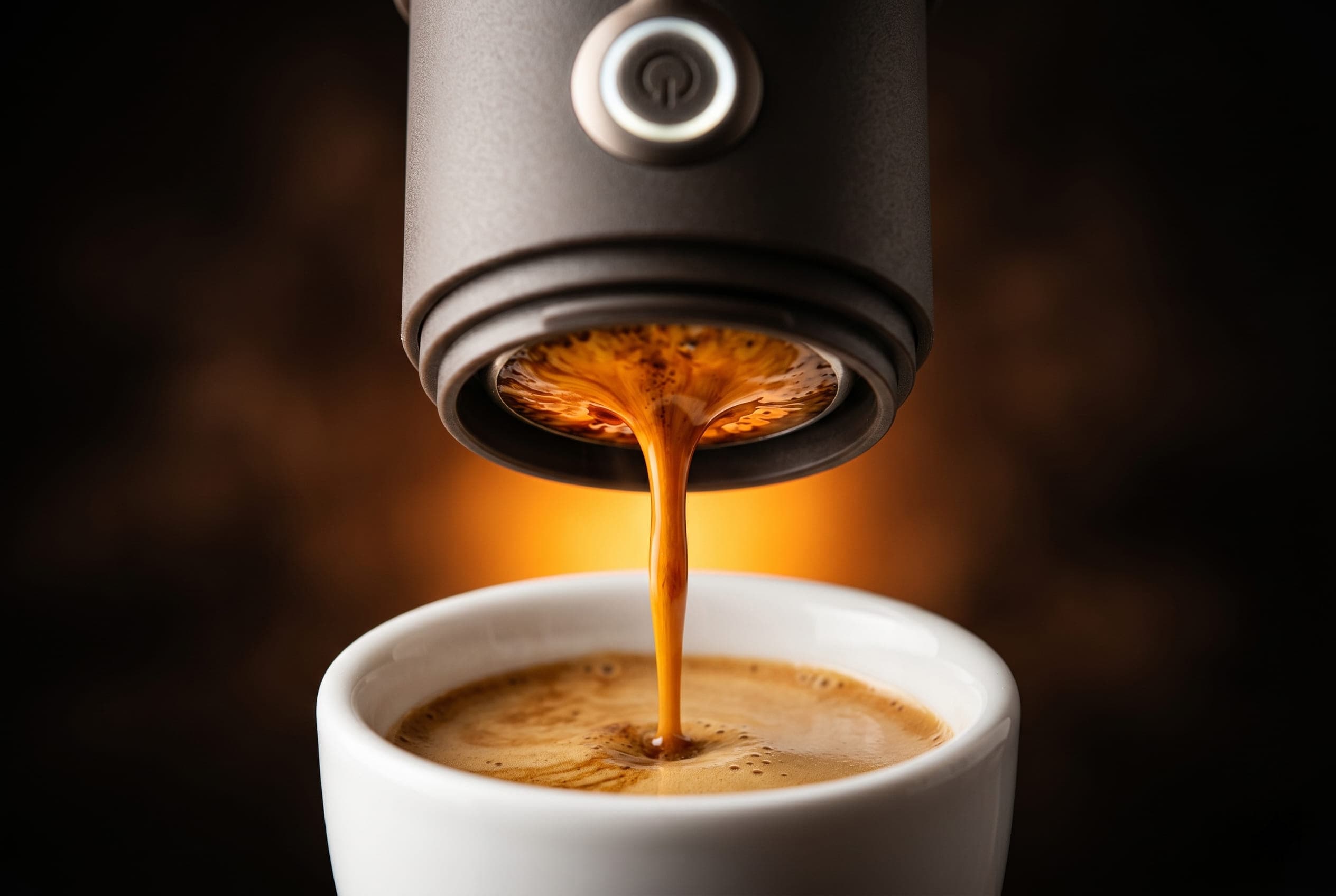
Final Verdict
Our rating, who it fits, and what it costs.
Outin MinoRecommended
4.1 / 5 — Is it worth buying?
The Outin Mino solves a real problem well: it delivers coffee-flavored, concentrated shots in hotel rooms, airport terminals, hiking trails, and overnight trains where decent coffee is otherwise unavailable. It shouldn't be evaluated as an espresso machine.
✓ Best for
- Frequent business travellers
- Weekend hikers and backpackers
✕ Skip if
- Home espresso enthusiasts
- Light roast specialists
Score breakdown
Pots brewed
90
Testing period
3 weeks of daily travel and bench testing
Ready to decide?
$199typical street price
Our verdict: 4.1/5, recommended. Independently tested; commissions never change a rating.
Tools That Pair With This Review
Put it into practice with a free calculator built for what you just read.
- Coffee to Water Ratio CalculatorThe general-purpose ratio tool for drip machines and pour-over — enter water or coffee, pick your strength.
- Pour Over Ratio CalculatorGet your exact water, bloom pour, and total brew time for pour-over coffee.
- Cold Brew Ratio CalculatorConcentrate or ready-to-drink — enter your batch size and get exact grounds and water.