
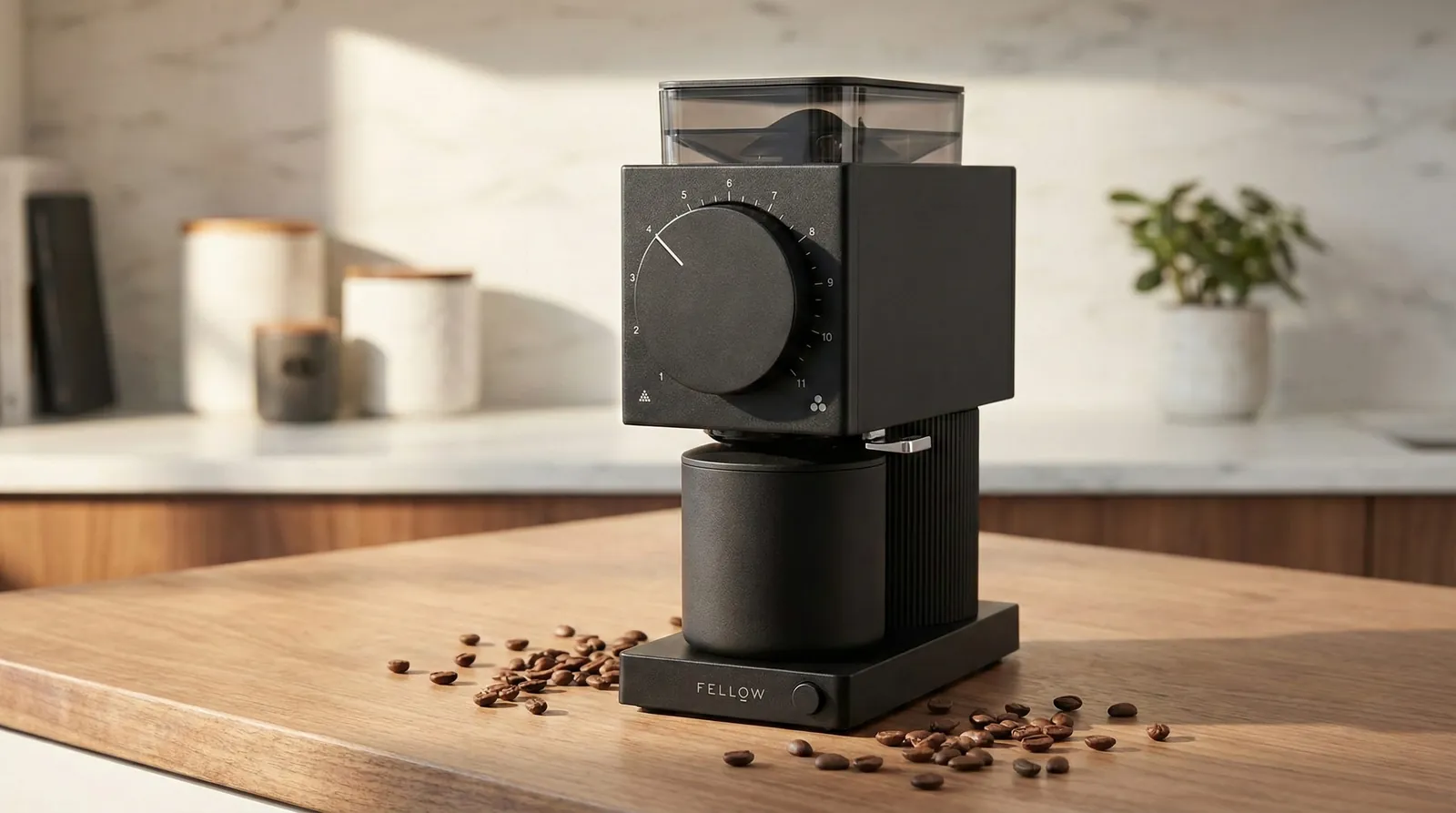
Fellow
Fellow Ode Gen 2 Review
A single-dose grinder built specifically for pour-over and filter coffee enthusiasts — not intended for espresso.
Updated
Get your moka pot ratio right: pick your pot size, from 1 to 12-cup, to get how much coffee and water to use, filled correctly every time.
Fill grounds level with the basket rim. Do not tamp a moka pot basket like an espresso puck.
Water (to below the valve)
6-cup300ml
Grounds, level
30g
Water in oz
10.1oz
Grounds to water by weight
Stovetop flow
Fill + level
no tamp
Medium-low heat
lid open
Off the burner
when it sputters
Next: Stop at the pot size that matches how much you drink: a part-filled basket brews unevenly.
Moka pot sizing isn't a ratio calculation the way drip or pour-over is — each pot size has a fixed basket volume, so the calculator maps your chosen "cup" size directly to that pot's known water fill (to just below the pressure valve) and a level, un-tamped grounds fill for the basket.
Because the basket volume is fixed, you can't meaningfully change the ratio the way you can with a pour-over — the water-to-coffee relationship is set by the pot's own geometry, which is why the calculator asks only for pot size, not a strength preference.
Every fixed figure the maths uses, so you can check the result against your own gear.
Moka pot brewing is sensitive to grind consistency — uneven particles cause uneven extraction. These burr grinders handle the fine-medium range well.
Fellow
A single-dose grinder built specifically for pour-over and filter coffee enthusiasts — not intended for espresso.
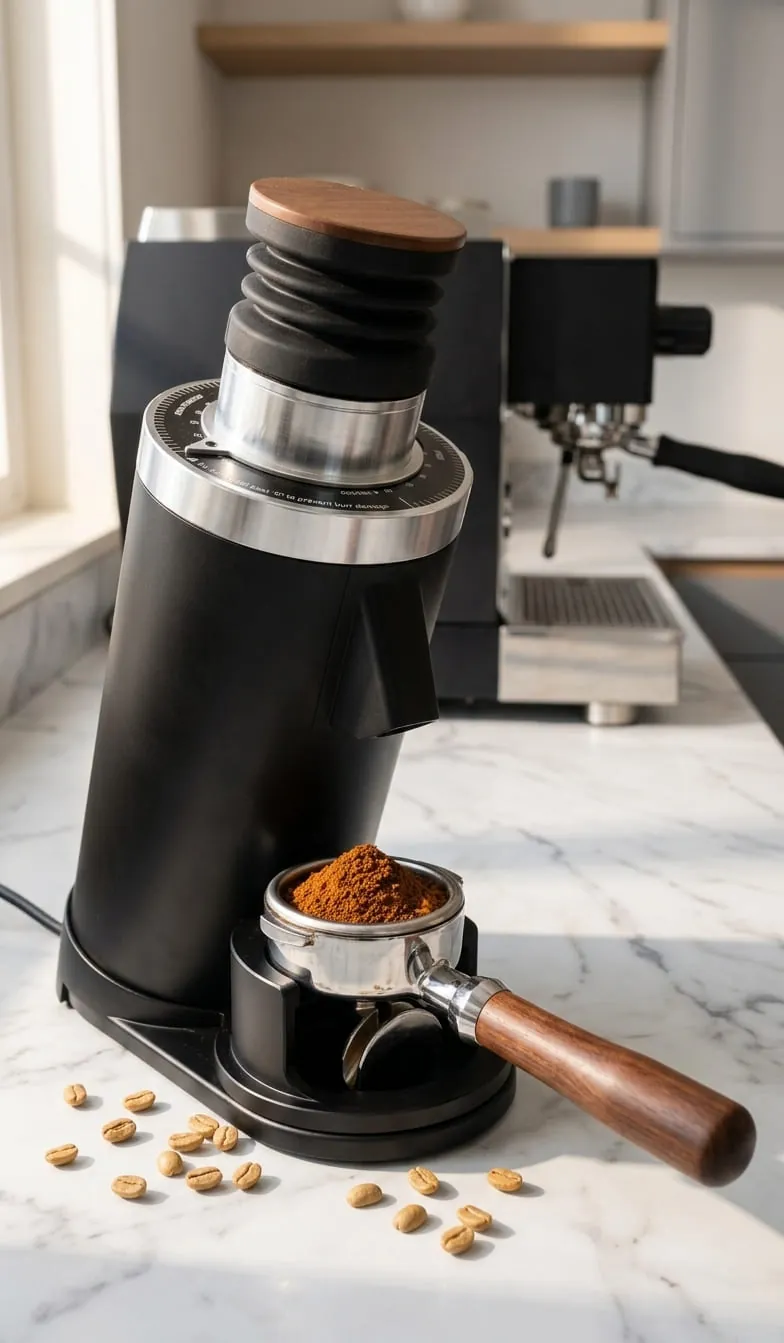
Turin
An electric grinder with factory-aligned 64mm flat burrs and very low retention, built for single-dose espresso workflows.
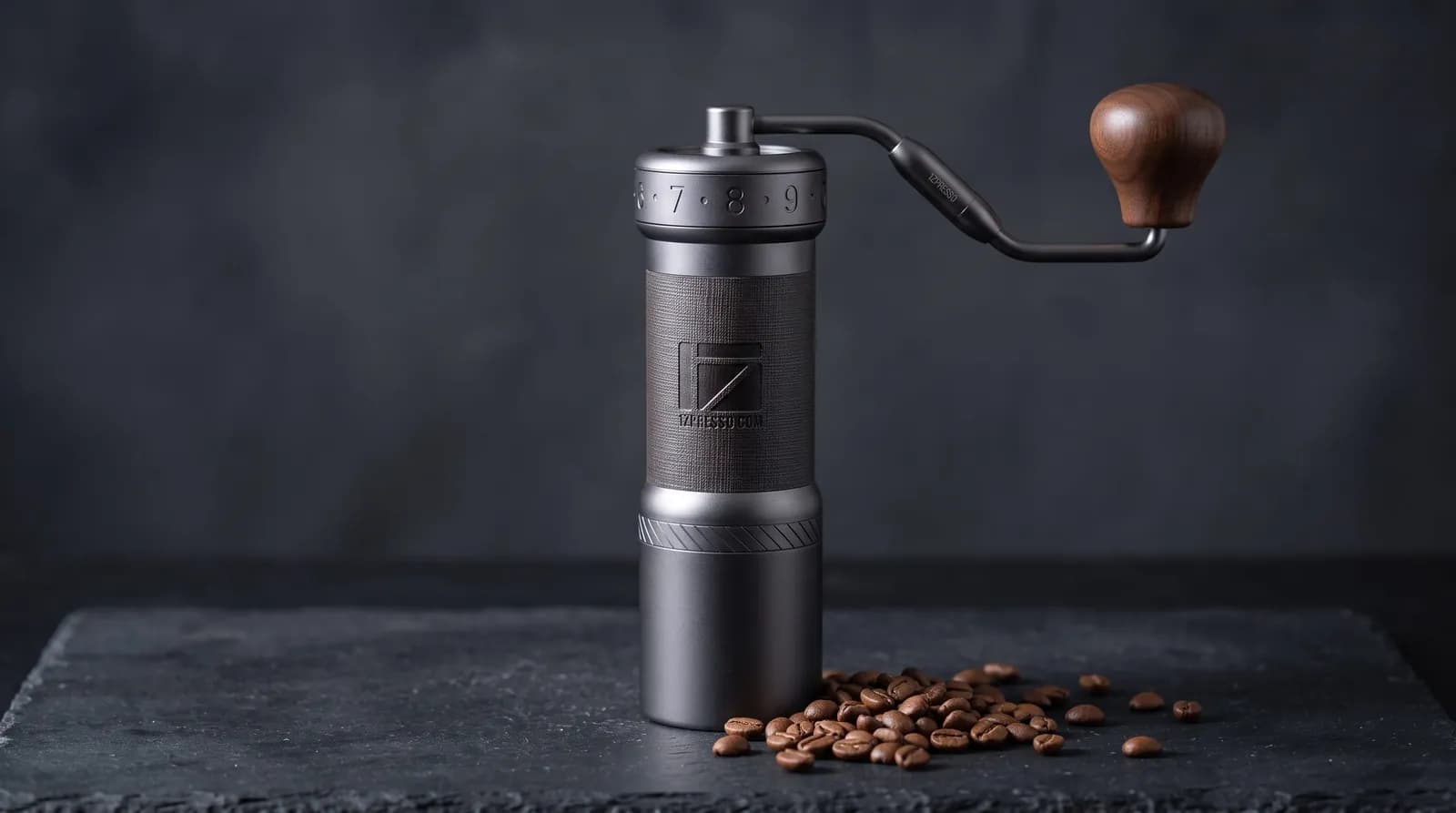
1Zpresso
A manual grinder with fine adjustment precision that handles both espresso dialing and filter coffee equally well.
Our Bialetti Moka Express review covers sizing, heat control and the common mistakes that make moka coffee bitter.
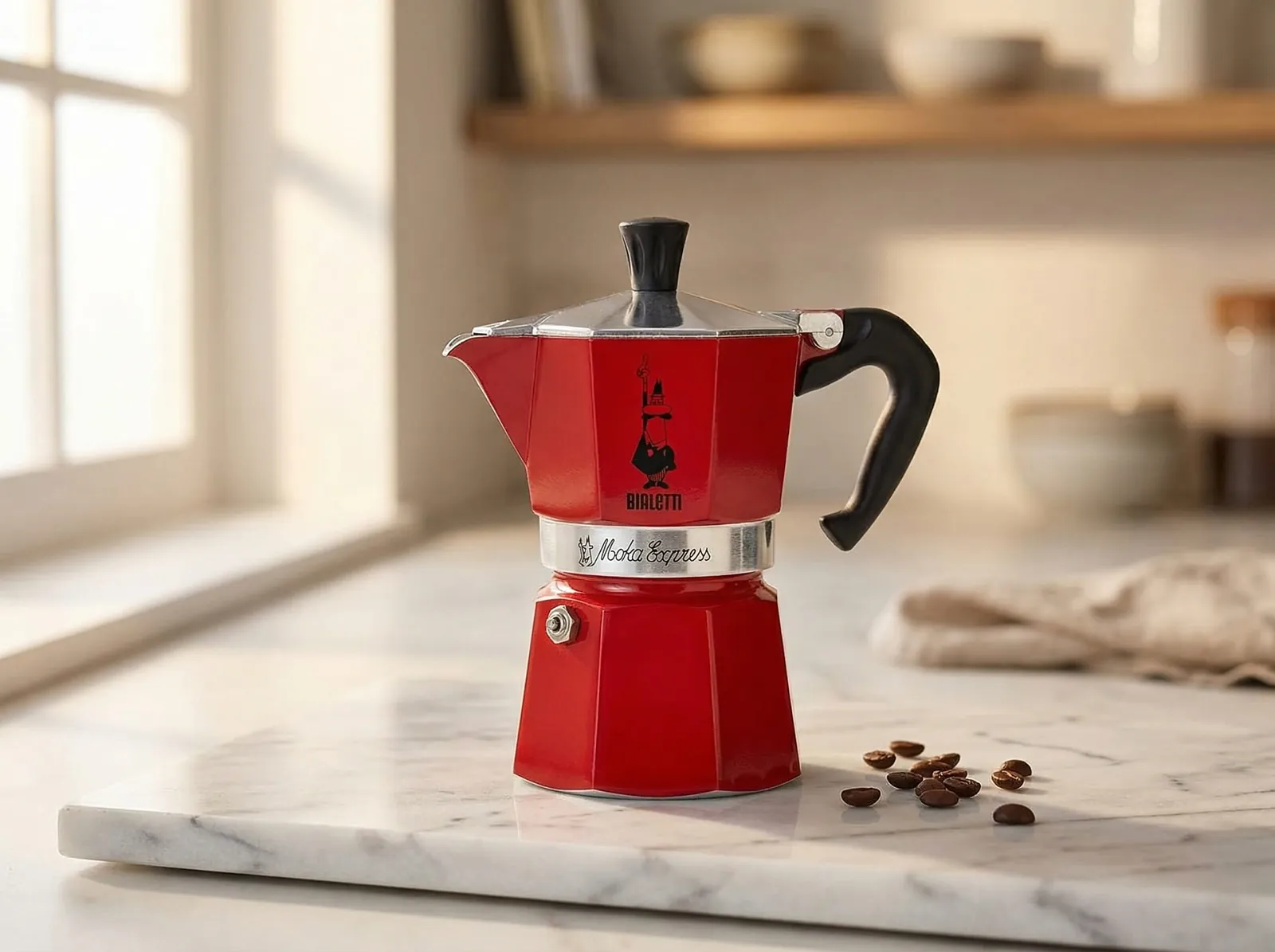
Bialetti
A classic aluminium stovetop brewer that delivers rich, espresso-strength coffee once you get the technique down.
Quick answers before you buy.
Fill the basket level with grounds up to the rim, without tamping — a 6-cup moka pot typically takes about 30g.
Tamping a moka pot basket like an espresso puck can restrict flow too much and stall the brew.
Fill to just below the pressure release valve on the bottom chamber, never above it.
Filling higher doesn't make the coffee stronger — it just risks the valve venting steam and water during brewing.
A fine-medium grind, slightly coarser than espresso and finer than drip — think slightly coarser than table salt.
Too fine and the pot can stall or the coffee turns bitter; too coarse and the coffee comes out weak and watery.
Usually the heat is too high.
Brew on medium-low heat and remove the pot from the burner as soon as the flow turns light and sputters — leaving it on the heat after that scorches the last of the coffee coming through.
It is a small serving of roughly espresso size, not a standard 8 oz cup.
Sizes vary by brand, so use the cup number printed on your pot and the basket and fill line as the guide.
No. A moka pot brews with steam pressure that is well below an espresso machine's, so it makes a strong, concentrated coffee without crema in the espresso sense.
It works well for milk drinks and strong black coffee.
Many people start with hot water in the base to shorten the time the grounds sit on a hot pot, which can reduce bitterness.
Handle the hot base with a cloth.
Both methods work.
It is not recommended.
Fill the basket and base for the pot's design.
Underfilling the basket can brew unevenly, so buy the size you actually brew most often.
Keep reading: more guides on the same topic.
 How to
Brewing6 min read
How to use a moka pot for smooth stovetop coffee: medium-fine grind, pre-boiled water, medium-low heat, plus fixes for bitter cups.
 Compare
Brewing7 min read
Moka pot vs espresso machine: compare pressure, taste, milk drinks and cost to choose the right brewer for black coffee or lattes.
 Explained
Grinder6 min read
Coffee grind size chart with micron ranges for espresso, moka pot, AeroPress, pour over, French press and cold brew, plus how to adjust.