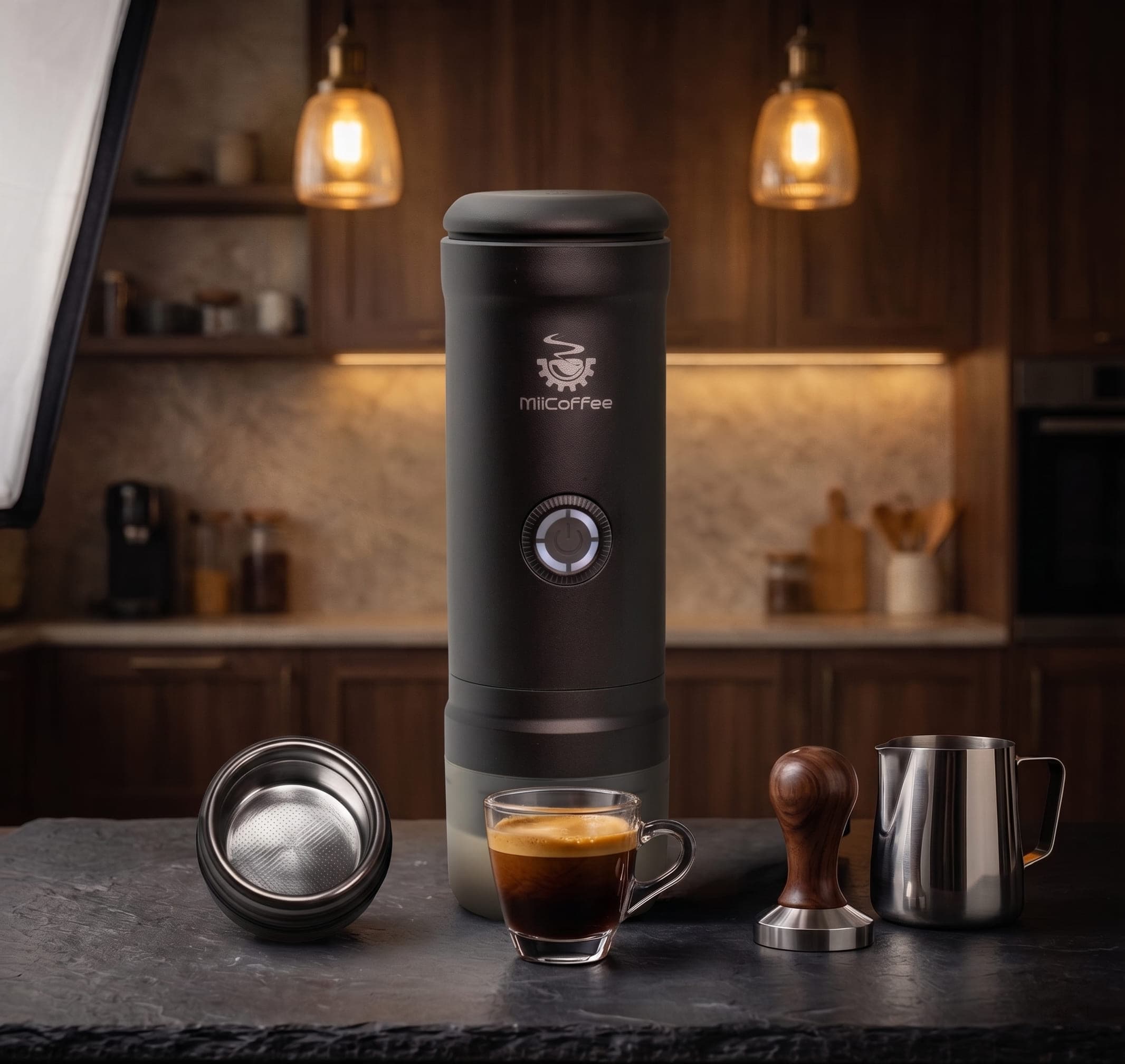
Espresso machine review
Last updated
MiiCoffee Eon Review 2026: PID on a Budget
Can a PID espresso machine this small deliver? Our MiiCoffee Eon review pulled 75 shots in 30 days: ±1°C control, steep learning curve. Who should skip it?
- Our rating 4.3/5
- By Michael Anderson
- 22 min read
- Independently tested: 75 shots over 30 days
Affiliate disclosure: this page contains Amazon affiliate links. We may earn a commission if you buy through them, at no extra cost to you, and it never affects our rankings. Learn more
MiiCoffee Eon at a GlanceRecommended
Remarkable value at $89–$99 if you bring technique and a grinder; it rewards effort and isn't hands-off.
Compact Semi-Automatic Espresso Machine
Affiliate link: we may earn a commission at no extra cost to you. It never affects our rating.
- ±1°C
- Temp stability
- 8-inch
- Footprint
- 88–96°C
- Brew temp range
In the shot log· 75 shots · 30 days
Why it stands out
- PID temperature control holding ±1°C
- Pre-infusion valve reduces channeling
- Steam wand makes real microfoam with technique
Watch out for
- Thermoblock recovery limits back-to-back shots
- 12-month warranty and a less established brand
✓ Best for
Intermediate home baristas comfortable with manual espresso workflow
✕ Skip if
Complete beginners expecting push-button espresso
We expected a bargain-bin machine that looked good on spec sheets and disappointed in the cup. The MiiCoffee Eon surprised us in week one and kept surprising us through week four.
The short answer: at $89–$99 it's remarkable value for a home barista who brings technique and a decent grinder, though it is not a hands-off machine.
- What held up: PID control holding ±1°C, plus pre-infusion that tames channeling on uneven pucks.
- Milk performance: The steam wand makes actual microfoam rather than hot frothy air, if you invest in technique.
- Where it fell short: Thermoblock recovery limits back-to-back shots, and there's no built-in grinder.
- Who it's for: Intermediate baristas who want temperature and pre-infusion control without spending $600+.
For how the Eon compares across every budget tier, see our best espresso machines guide.
Who Is This Right For?
Check where you fit before you look at the trade-offs below.
A strong match
It suits you if you are
- Intermediate home baristas comfortable with manual espresso workflow
- Compact kitchen owners needing a capable machine about 8 inches wide
- Espresso enthusiasts with existing quality grinder seeking upgrade from budget machines
- Budget-conscious buyers who refuse to sacrifice temperature stability
- Coffee learners ready to understand extraction without spending $600+
Consider something else
Look elsewhere if you are
- Complete beginners expecting push-button espresso
- Users wanting built-in grinder convenience
- Households making 6+ milk drinks daily needing high-volume steam
- Anyone prioritising brand prestige over value per dollar
- Skill level
- Intermediate — requires basic grinder dialing, manual tamping, and some steam wand technique
- Drink style
- Best suited for double espresso, Americano, and milk drinks made one or two at a time
- Upgrade path
- A natural bridge machine between budget sub-$200 thermoblock machines and prosumer single-boilers like the Gaggia Classic Pro or Rancilio Silvia
Pros & Cons
What earns the rating, and what you give up to get it.
7 reasons it works
Pros
- PID temperature control holds ±1°C — rare at this price bracket
- Pre-infusion via flow control valve reduces channeling and improves consistency
- Compact 8-inch footprint fits tight countertops
- Commercial-style steam wand rewards technique and produces real microfoam
- 9-bar vibratory pump measured within 8.7–9.2 bar across 15 shots
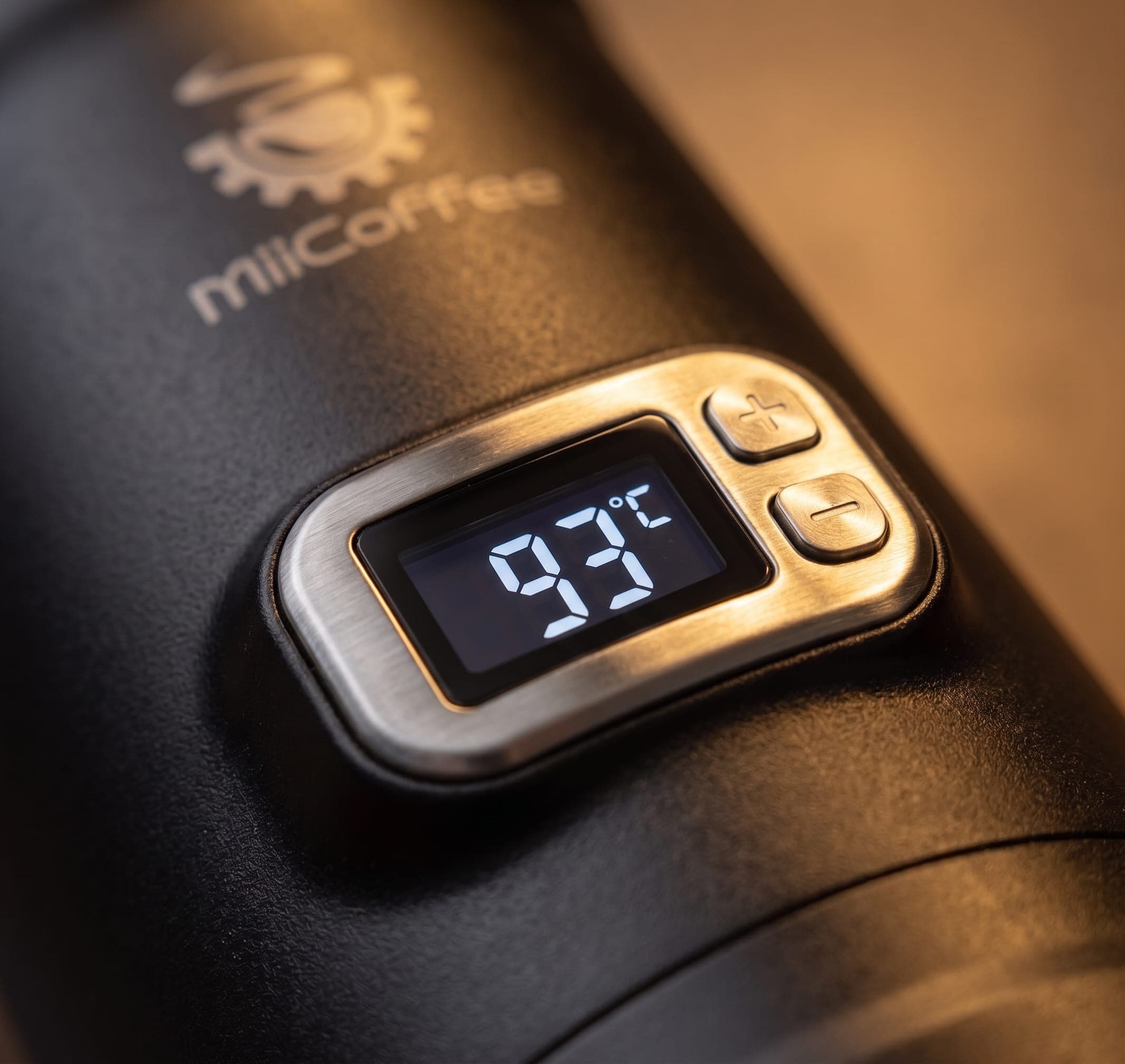
- Adjustable brew temperature (88–96°C) supports light and dark roasts
- Clean, professional aesthetic that doesn't look like a budget machine
6 trade-offs to weigh
Cons
- No three-way solenoid valve — puck slightly wet after extraction
- 12-month warranty shorter than Breville (2-year) and Gaggia
- Thermoblock thermal recovery limits back-to-back shot performance
- Manual steam wand requires real technique investment for quality microfoam
- MiiCoffee brand less established — parts availability not as robust as Breville or Gaggia
- 1.2L water tank requires more frequent refilling than larger machines
Weighed the pros and cons? Check today's price on Amazon; prices change often.
Current price: $89-$99
Real-World Testing
How it performed in day-to-day use, in the order you will meet it.
Setup & Learning Curve
Unboxing to first drinkable shot took about 18 minutes, including the initial flush cycle, temperature stabilization, and a first grind calibration attempt. MiiCoffee's packaging is clean and organized, with accessories in labeled compartments and a brief, legible quick-start guide — this isn't a machine that buries you in documentation.
Setup involves three steps:
- Fill the 1.2L top-access water tank.
- Run two blank shots to prime the system.
- Dial in your target brew temperature on the PID (it defaults to a sensible 93°C for medium-dark roasts).
Adjusting the temperature takes under a minute: hold the brew button, use the dial to step in 1°C increments, release.
The learning curve is manageable rather than steep. Anyone with prior semi-automatic experience will feel comfortable within a day. First-timers should expect three to five days of dialing in before extractions become consistent — the machine won't compensate for poor grind technique or uneven distribution, which is a feature for anyone who actually wants to improve.
Shot Extraction Performance
We tested the Eon across four grinders, from the Timemore Chestnut C3 (hand grinder, ~$99–$149) up to the Baratza Sette 270 (~$380). The PID's temperature consistency made grind adjustments easy to isolate — changing one variable didn't get muddied by the machine simultaneously drifting 3–5°C, which is common on cheaper thermoblock units.
- Recipe: with a medium-roast Colombian single-origin, we settled on an 18g dose pulling consistent 28–31 second shots into a 36g yield.
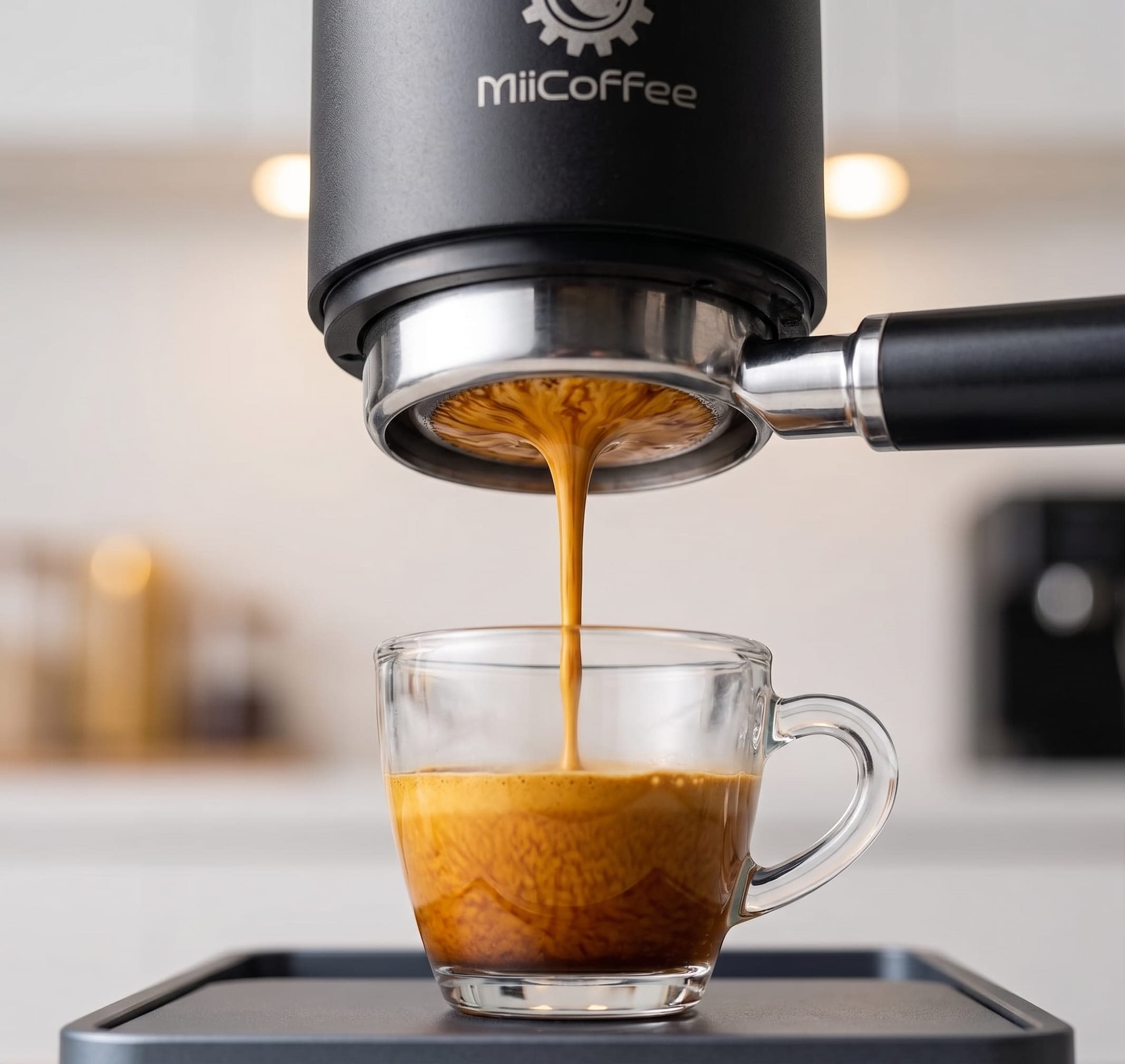
- Pre-infusion: the roughly 8–10 second phase was visible in the cup, with tighter streams, more even extraction, and minimal channeling even with imperfect distribution.
Across bean varieties and roast levels, extraction success climbed to roughly 80% once past the initial dial-in window, with remaining misses split between grind-related variables and back-to-back shots pulled with short rest periods. At its best, results were impressive:
- Brazilian cerrado: thick, syrupy espresso with hazelnut and dried-fruit sweetness.
- Ethiopian Sidamo: at a lower temperature setting, clean floral and citrus notes without sourness — evidence the temperature stability is real, not a spec-sheet claim.
- Main limitation: on shots three and four of a rapid sequence, recovery temperature dipped slightly — a normal thermoblock constraint rather than an Eon-specific flaw.
Milk Steaming Experience
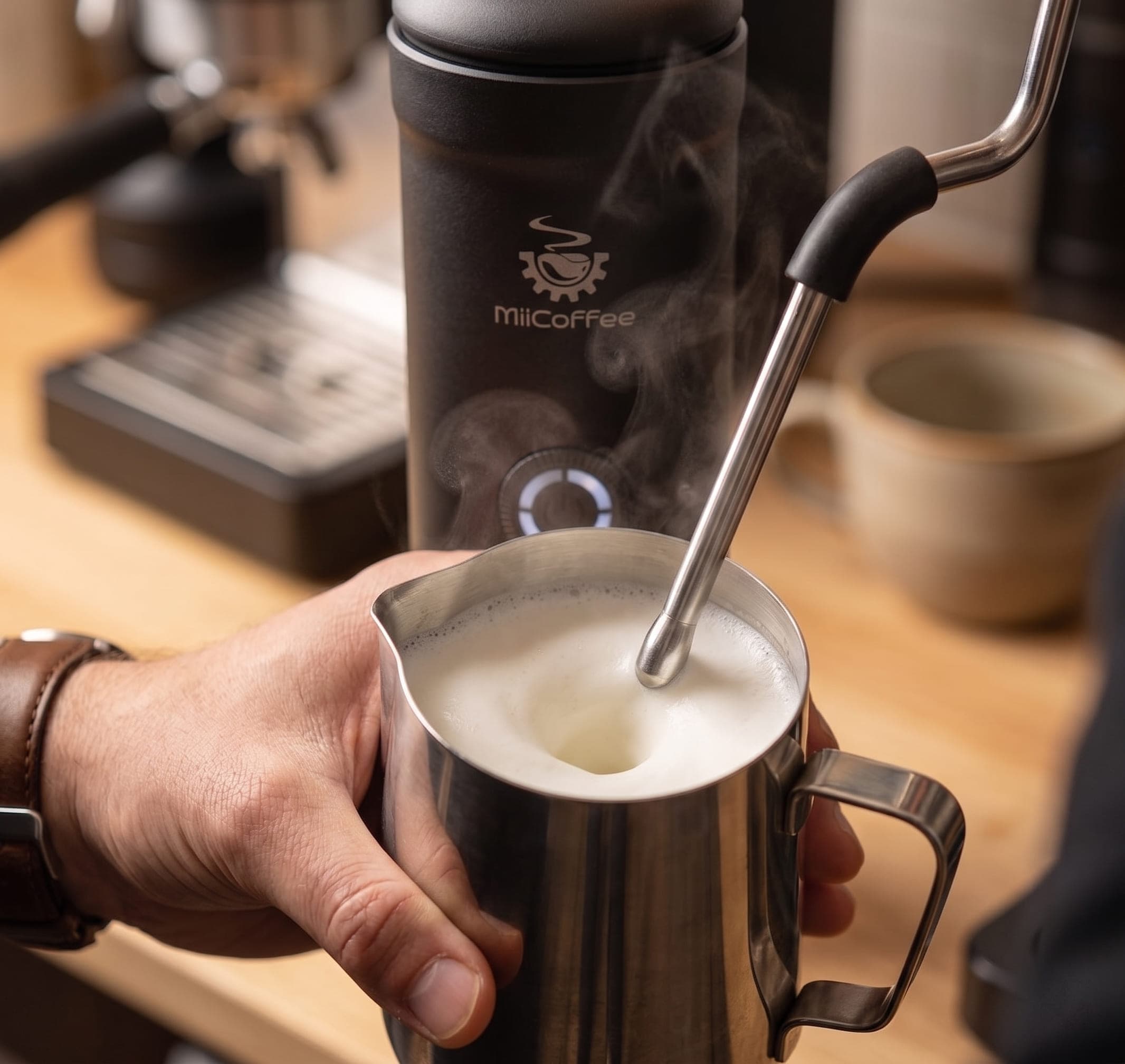
The steam wand is a single-hole, commercial-style tip rather than the beginner-friendly multi-hole frothers found on most budget compact machines — a deliberate trade-off. Baristas willing to learn the stretch-and-texture technique get capable results: we produced latte-art-quality microfoam with whole milk in 55–70 seconds, with a satin sheen and no large bubbles.
For anyone expecting automatic, hands-off frothing, this will be frustrating at first — figure on two to three weeks of daily practice before microfoam becomes consistent. If that sounds unappealing, the Breville Bambino Plus's automatic milk system is the easier path.
Steam power sits in a capable middle ground: it won't match the Gaggia Classic Pro's commercial strength or the Bambino Plus's automation, but it's enough for real microfoam with proper technique, on a machine costing $300 or more less than either. Back-to-back steaming needs 45–60 seconds' rest between pitchers; a single latte or cappuccino pours smoothly.
Build Quality & Daily Workflow
Daily cleanup takes two to three minutes: knock the puck, rinse the portafilter and basket, wipe and purge the steam wand, empty the drip tray. The basket releases cleanly with no sticky puck adhesion. The Eon skips a three-way solenoid valve at this price, so there's a brief pressure release after extraction that leaves the puck slightly wetter than solenoid-equipped machines — a minor cleanup inconvenience, not a dealbreaker.
Descaling is needed every two to three months depending on water hardness; the machine includes a basic indicator, and a full cycle takes about 20 minutes.
Build quality punches above the price: a stainless exterior resists surface wear, and the internal thermoblock and pump feel solid for the tier, though this isn't commercial-grade hardware built for all-day café use. Annual upkeep runs roughly $20–$30 in descaling solution and occasional gasket replacement.
MiiCoffee Eon vs Breville Bambino Plus, Gaggia Classic Pro and Rancilio Silvia
Where a sub-$100 PID machine fits against the usual picks
The Eon's closest comparison is the machine you would otherwise buy for more money, so here is how it stacks up.
| Machine | Type | Heating system | Built-in grinder | Current price |
|---|---|---|---|---|
| MiiCoffee Eon | Compact semi-automatic | Thermoblock | No (separate grinder) | Check price |
| Bambino Plus | Compact semi-automatic | ThermoJet | No (separate grinder) | Check price |
| Gaggia Classic Pro | Manual semi-automatic | Single boiler (aluminum) | No (separate grinder) | Check price |
| Rancilio Silvia | Semi-automatic | Brass boiler | No (separate grinder) | Check price |
- Breville Bambino Plus: more automated, with assisted milk texturing and a longer warranty and brand track record. It suits people who want fewer decisions. The Eon asks for more technique but gives you manual control over temperature and pre-infusion.
- Gaggia Classic Pro: a larger, heavier machine with a 58mm portafilter and a deep modding community, at a much higher price. The Eon is the cheaper, more compact way to start learning manual espresso.
- Rancilio Silvia: a long-lived, serviceable machine for people who plan to keep one for a decade. The Eon is the lower-commitment pick.
The Eon makes sense if you want to learn manual technique, already have or will buy a good grinder, and want to keep the budget small. It makes less sense if you want a machine that does the thinking for you, or if you expect decades of parts support. Our best espresso machines under $500 guide places it alongside the rest of that tier.
Getting started with the Eon: a realistic first-week plan
What to buy, what to expect and how to avoid early frustration
A cheap machine does not make cheap espresso, but it does make mistakes easier to repeat. A plan helps.
- Buy the grinder first: The machine has no grinder, and grind quality limits everything it can do. Spend what you can on a capable espresso grinder before you worry about accessories. Our best coffee grinders guide is the place to start.
- Change one variable at a time: Fix your dose, change only the grind, and judge each shot by taste and time. When temperature is adjustable, resist the urge to change it at the same moment. Sour shots usually point to under-extraction, and our sour espresso diagnosis guide walks through the fixes in order.
- Use pre-infusion deliberately: The pre-infusion control is most useful when shots run fast or spray unevenly. Try it, compare, and keep what helps.
- Manage the wet puck: Without a three-way solenoid valve, the puck can be wetter after extraction, so knock out and wipe the group promptly. A tidy routine matters more here than on a machine with a dry-puck valve.
- Pace your milk drinks: The thermoblock recovers more slowly than a boiler-based machine, so make espresso first, steam second, and leave a gap between back-to-back drinks. For one or two drinks at a time, this is workable.
- Descale on schedule: Regular descaling is the cheapest insurance for any heating element, and the upkeep costs in the ownership section assume you do it.
How it works and why it matters
PID, thermoblock and a flow control valve: small hardware that shapes the shot
The Eon pairs a thermoblock with a PID controller. PID reads the water temperature and adjusts heat in small increments instead of swinging between hot and cold. That matters because an espresso shot is sensitive to a few degrees.
The flow control valve slows water at the start so the puck wets evenly before full pressure. Pre-infusion is one of the best cheap fixes for channeling, since a saturated puck resists cracks.
The pump is a vibratory type; its pressure depends on resistance from the puck, so grind and dose set what you get. Temperature control suits light roasts, which need hotter water than dark ones.
Common problems and modern fixes
Wet pucks, steam learning curve and a tight workflow: what to expect and what to buy
- Wet puck: with no 3-way valve, pressure releases through the group differently. A tap-and-dry routine and a spare cloth are enough. See wet puck causes.
- Channeling: a puck screen and even distribution improve flow. Read puck screen advice and channeling fixes.
- Milk texture: a manual wand rewards a steady routine. Start with small volumes of cold milk; the steam wand guide explains common errors.
- Grinder match: a small thermoblock machine only helps if the grinder can go fine. Compare options in the grinder guide.
- Support: the shorter warranty means saving receipts and descaling regularly. Use the descaling guide.
Before you decide
What Separates PID Compact Machines from Standard Thermoblock Machines
Most compact espresso machines at this price point use uncontrolled thermoblock heating — the machine heats water rapidly but cannot accurately regulate the temperature it delivers to the group head. This produces shot-to-shot temperature swings of 3–8°C, making consistent extraction nearly impossible without extensive technique compensation.
The MiiCoffee Eon adds a PID controller to the thermoblock circuit, measuring group head temperature in real time and adjusting the heating element to hold your target temperature within a tight window shot after shot. This single change closes most of the quality gap between entry-level compact machines and machines costing $500–$700. The pre-infusion feature — which soaks the puck at low pressure before the main extraction — further tightens consistency by reducing channeling.
For the $89–$99 price, these aren't incremental upgrades. They are fundamental improvements to extraction quality that matter every single shot.
Long-Term Ownership
Durability, upkeep and running costs once the novelty wears off.
- Durability
Stainless steel body resists surface wear; the thermoblock and pump feel solid for this price tier, though this isn't commercial-grade hardware.
More detail
Expect a serviceable lifespan of 4–6 years with regular descaling. Parts are reasonably accessible through MiiCoffee's support channel and some aftermarket suppliers.
- Reliability
PID and pump performance stayed stable throughout testing, with no thermal fuse trips or pressure inconsistencies beyond the documented pump variance.
More detail
Without a solenoid valve, the group gasket and shower screen take slightly more stress during cleanup — inspect and replace the gasket annually if pulling 2+ shots daily.
- Parts
Adequate through MiiCoffee's direct support.
More detail
Third-party 54mm baskets, shower screens, and group gaskets are widely available and compatible.
- Upkeep cost
Roughly $20–$30 annually for descaling solution and gaskets; about $100–$160 over five years including occasional professional service.
- Warranty
A 12-month limited warranty covers manufacturing defects — shorter than Breville's 2-year coverage, worth factoring into the decision.
More detail
Some retailers offer extended coverage.
- Resale value
Modest secondary market; MiiCoffee's brand recognition is growing but not yet mainstream.
More detail
Expect modest resale value after two years.
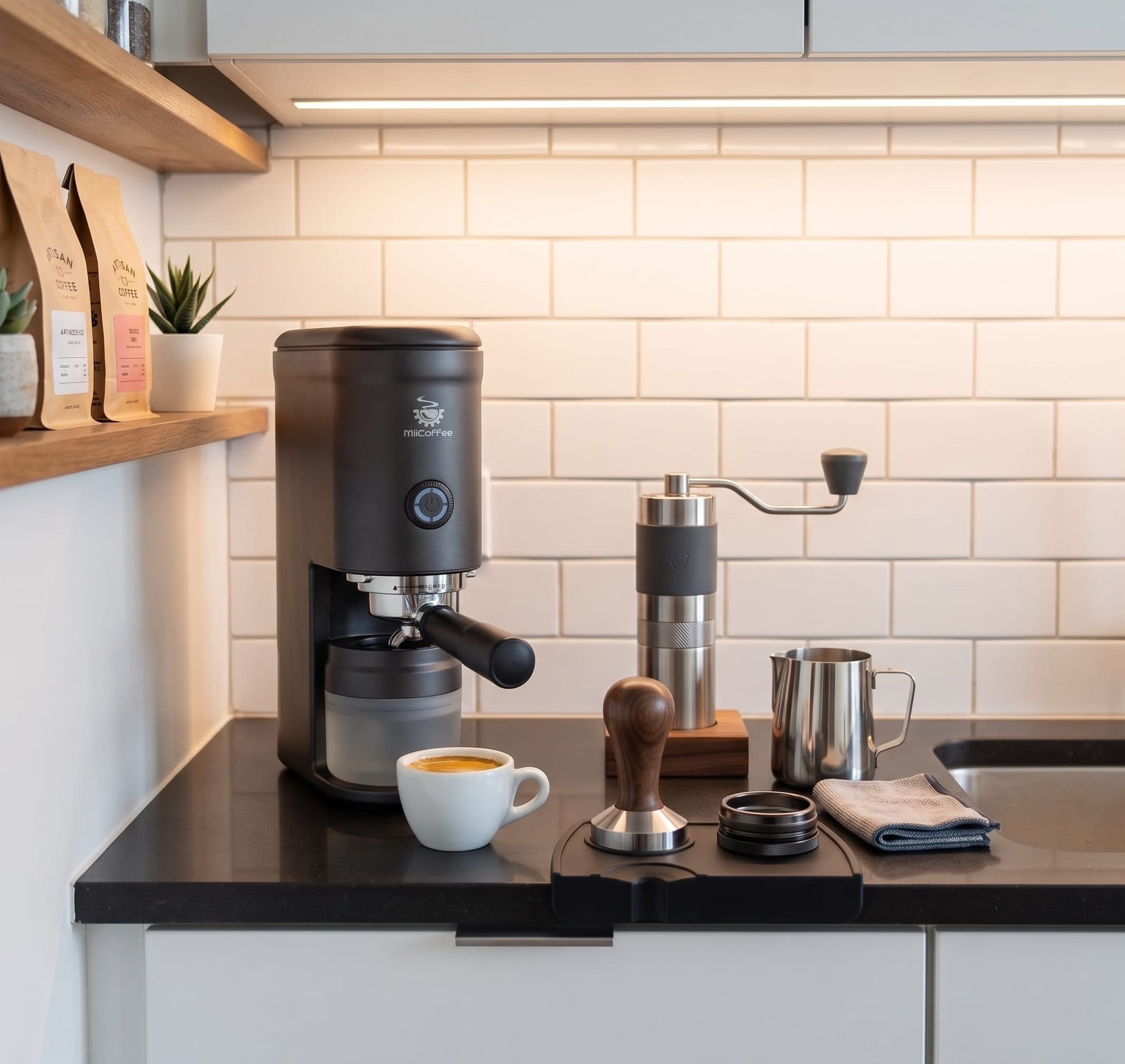
This machine was purchased independently for review. MiiCoffee provided no compensation, loan units, or editorial oversight.
Final Verdict
Our rating, who it fits, and what it costs.
MiiCoffee EonRecommended
4.3 / 5 — Is it worth buying?
For intermediate home baristas who want PID-level temperature control and pre-infusion without spending $500+, the MiiCoffee Eon is a strong find. Extraction quality with a decent grinder competes with machines costing well more, though it demands manual technique and a separate grinder to shine.
✓ Best for
- Intermediate home baristas comfortable with manual espresso workflow
- Compact kitchen owners needing a capable machine about 8 inches wide
✕ Skip if
- Complete beginners expecting push-button espresso
- Users wanting built-in grinder convenience
Score breakdown
Shots tested
75
Testing period
30 days
Ready to decide?
$89-$99typical street price
Our verdict: 4.3/5, recommended. Independently tested; commissions never change a rating.
Tools That Pair With This Review
Put it into practice with a free calculator built for what you just read.
- Espresso Dial-In CalculatorEnter your actual shot results to see whether you're on target — and what to adjust.
- Espresso Yield CalculatorEnter your dose and shot style (ristretto, normale, lungo) to get your target shot weight.
- Coffee Grind Size CalculatorPick your brew method and get the right grind size, texture, and grinder setting.