Coffee Education

Macchiato vs Latte: What’s the Real Difference?

Expert breakdown of these two Italian espresso classics—from ratios to technique to taste

Last Updated: September 22, 2026
14 min read

The difference between macchiato and latte comes down to one variable: milk ratio. Is a macchiato stronger than a latte? Yes — dramatically, in flavor. Caffeine is a different story: nearly identical between the two when both use the same number of shots. Calories are where they really split — 15–20 for a macchiato versus 180–220 for a latte. This guide breaks down every difference so you can order with confidence and make both drinks well at home.

Quick Answer

A macchiato is a 2–3 oz espresso shot with a dollop of foam; a latte is an 8–12 oz milk-forward drink. Same espresso base, very different milk ratio and intensity.

Our pick for this: Breville Bambino Plus (~$300–$350) — an auto steam wand that textures milk to microfoam reliably, ideal for these milk-based drinks

Overview

Macchiato vs Latte: Quick Comparison

  • Stronger flavor: Macchiato
  • More milk: Latte
  • Higher calories: Latte
  • Faster to drink: Macchiato
  • Better for beginners: Latte
Feature Macchiato Latte
Size 2-3 oz 8-12 oz
Espresso:Milk Ratio 80-90% espresso 15-20% espresso
Flavor Intensity 9/10 — Very strong 4–5/10 — Balanced
Caffeine (Double) 128-150mg 128-150mg
Calories (Whole Milk) 15-20 cal 180-220 cal
Consumption Time 2-3 minutes 10-15 minutes
Serving Cup Demitasse (small) Ceramic cup/mug

Why It Matters

Why Understanding Macchiato vs Latte Actually Matters

This isn’t coffee snobbery — the distinction affects your actual experience at the counter: your budget, your caffeine intake, and whether you get the drink you were actually craving.

Mix these two up and you’ll know it immediately. Order expecting a bold, concentrated macchiato and get a milky latte instead, and it’s a genuinely different drink — not a smaller or bigger version of the same thing. These aren’t interchangeable milk-based coffee drinks, and treating them that way is the fastest way to end up disappointed in your cup.

The espresso-to-milk ratio difference is dramatic: macchiatos are 80-90% espresso with just a “mark” of milk foam, while lattes flip that to 15-20% espresso drowning in steamed milk. Order the wrong one and you’re getting a completely different coffee beverage — different flavor intensity, different caffeine perception, different everything.

Ordering Tip at Coffee Shops

At specialty cafés serving traditional Italian espresso, simply order ‘macchiato’ for the authentic drink. At chain coffee shops like Starbucks, specify ‘espresso macchiato’ to distinguish it from their caramel macchiato — which is actually a vanilla latte with caramel drizzle, not a true macchiato at all.

What Is a Caffè Macchiato?

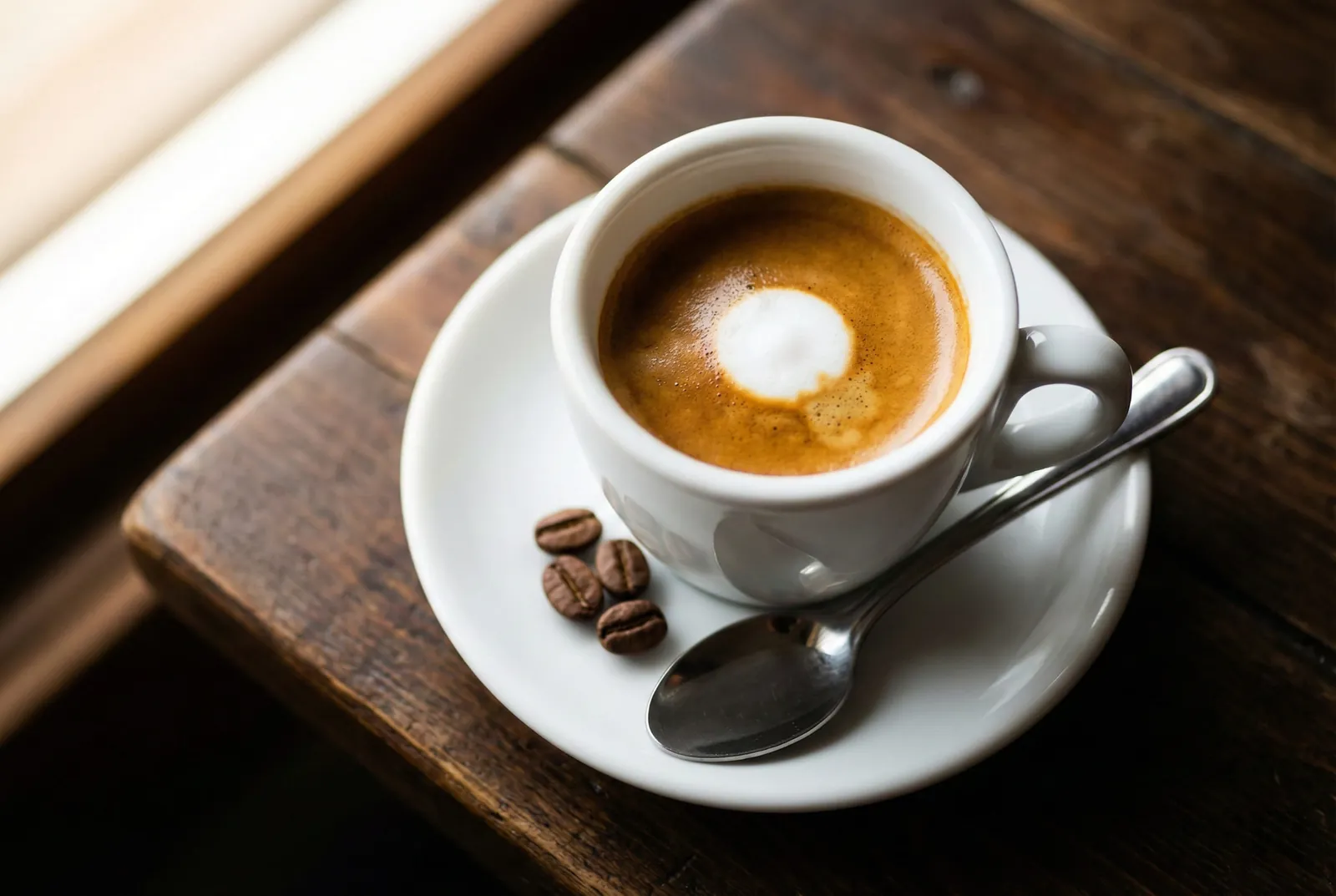
The traditional caffè macchiato is the purest expression of espresso, barely softened by milk. The Italian word “macchiato” means “stained” or “marked” — this drink is literally espresso “stained” with a small dollop of milk foam or steamed milk.

Picture it: you pull a perfect double espresso shot, watch that tiger-striped crema form, catch the aroma rising off it — and then someone adds just a tiny spoonful of velvety microfoam on top. That’s it. That’s a macchiato. The milk doesn’t dilute or mask the espresso; it barely touches it.

Traditional Italian technique is unforgiving on this point: add more than a teaspoon of foam and it stops being a macchiato. The precision is the whole drink — this is an Italian espresso drink where technique is everything, and the margin for error is genuinely tiny.

Traditional Italian macchiato closeup showing espresso-based drink with small dollop of white microfoam milk steaming on rich espresso crema in specialty coffee demitasse cup

Traditional Macchiato Composition

Here’s what goes into an authentic macchiato at any decent specialty coffee shop:

  • 1-2 shots espresso (1-2 ounces) — pulled at 9 bars pressure, 25-30 seconds extraction time using 14-18g of freshly ground coffee
  • 1-2 teaspoons steamed milk/microfoam (approximately 0.5 ounces) — steamed to 140-150°F with silky texture
  • Total volume: 2-3 ounces in a demitasse cup (those tiny ceramic cups Italians use)
  • Ratio: Approximately 80-90% espresso, 10-20% milk — this is a coffee beverage dominated by espresso

Precision is what separates a good macchiato from a great one: even half an ounce too much milk changes the drink entirely. It should taste like espresso first, with milk as a subtle modifier — not a mask.

What Is a Caffè Latte?

The latte sits at the opposite end of the espresso-milk spectrum: a harmonious marriage where steamed milk provides the canvas and espresso adds color and depth. “Latte” is shortened from “caffè latte,” Italian for “milk coffee.” And there’s a lot of milk.

Where the macchiato is all about the espresso, the latte is about balance: 6-8 ounces of perfectly steamed milk mixed with 1-2 shots of espresso. The milk doesn’t just touch the espresso — it embraces it, surrounds it, creates a creamy, smooth coffee beverage that coffee shops worldwide have turned into an art form.

Getting microfoam texture right — silky, glossy, barely a visible bubble — is where the real skill lives. It takes consistent practice to hit that texture reliably, and it’s the single biggest thing separating a decent home latte from a café-quality one.

Classic latte at specialty coffee shop in white ceramic cup showing barista-crafted rosetta latte art pattern with silky microfoam milk on espresso-based drink

Traditional Latte Composition

Here’s the breakdown for an authentic latte (not those 20-ounce milk bombs at chain coffee shops):

  • 1-2 shots espresso (1-2 ounces) — same foundation as the macchiato, but gets lost in all that milk
  • 6-8 ounces steamed milk — heated to 150-155°F for optimal sweetness and texture
  • ~0.25-0.5 inch microfoam layer on top — this is what you draw latte art in
  • Total volume: 8-10 ounces in a ceramic cup (standard cappuccino-sized cup at specialty cafés)
  • Ratio: Approximately 15-20% espresso, 80-85% milk — a milk-based coffee drink through and through

The single biggest mistake home baristas make, even at some “specialty” cafés: overheating the milk. Above 160°F, proteins denature, sweetness disappears, and you get that burnt-milk taste. The sweet spot is 150-155°F. Your taste buds will thank you.

Comparison

Macchiato vs Latte: Side-by-Side Comparison

Put these two espresso-based drinks head-to-head and here’s what actually matters:

Size comparison of espresso-based drinks at coffee shop showing small traditional macchiato in demitasse cup next to larger latte in ceramic mug demonstrating milk-to-espresso ratio differences
Infographic chart comparing macchiato versus latte flavor profiles showing espresso intensity, milk-based coffee characteristics, and espresso-to-milk ratios for both specialty coffee drinks

A lot of customers who order a macchiato at a chain coffee shop, expecting a big, sweet drink, are genuinely surprised when they get the real thing — a couple of ounces of pure, unmasked espresso. But that intensity, that pure espresso character, is the entire point. Different tools for different jobs.

One thing that surprises most people: both a macchiato and a latte typically use 1–2 espresso shots, delivering nearly identical caffeine — roughly 64–75mg per shot, or 128–150mg for a double. The perceived strength difference is entirely about dilution. The macchiato’s minimal milk lets you experience the espresso’s full intensity unmasked; the latte’s generous steamed milk mellows and stretches that same caffeine hit into a longer, smoother experience. If caffeine is your goal, either drink delivers the same amount. If flavor intensity is your goal, macchiato wins decisively.

How to Make Each Drink Perfectly (Barista Preparation Methods)

Every step here matters — skip one and you'll taste it immediately.

Three-step barista preparation sequence showing traditional macchiato creation with espresso extraction, milk steaming microfoam, and final espresso-based drink assembly at coffee shop

Perfect Macchiato Preparation (The Italian Way)

Double shot espresso extraction flowing into small demitasse cup showing rich golden crema formation for traditional Italian macchiato at specialty coffee shop with professional espresso machine
  1. Preheat demitasse cup - Run hot water through, let sit 30 seconds. A cold cup kills espresso temperature instantly.
  2. Pull espresso - 14-18g coffee, 25-30 second extraction, 1-2oz yield. Watch for tiger striping in the crema — a quality indicator.
  3. Steam minimal milk - Just 2-3oz to 140-150°F, silky microfoam rather than thick, cappuccino-style foam.
  4. Add milk dollop - Spoon 1-2 teaspoons of foam onto the espresso's center — the "mark" should sit on top like a little cloud.
  5. Serve immediately - Consume within 2-3 minutes; espresso fades fast.

Common mistakes: too much milk (then it's a cortado), overheated milk (above 160°F tastes burnt), stirring the drink (defeats the visual contrast), and using old, stale espresso beans. Fresh coffee roasted within 2-4 weeks is non-negotiable.

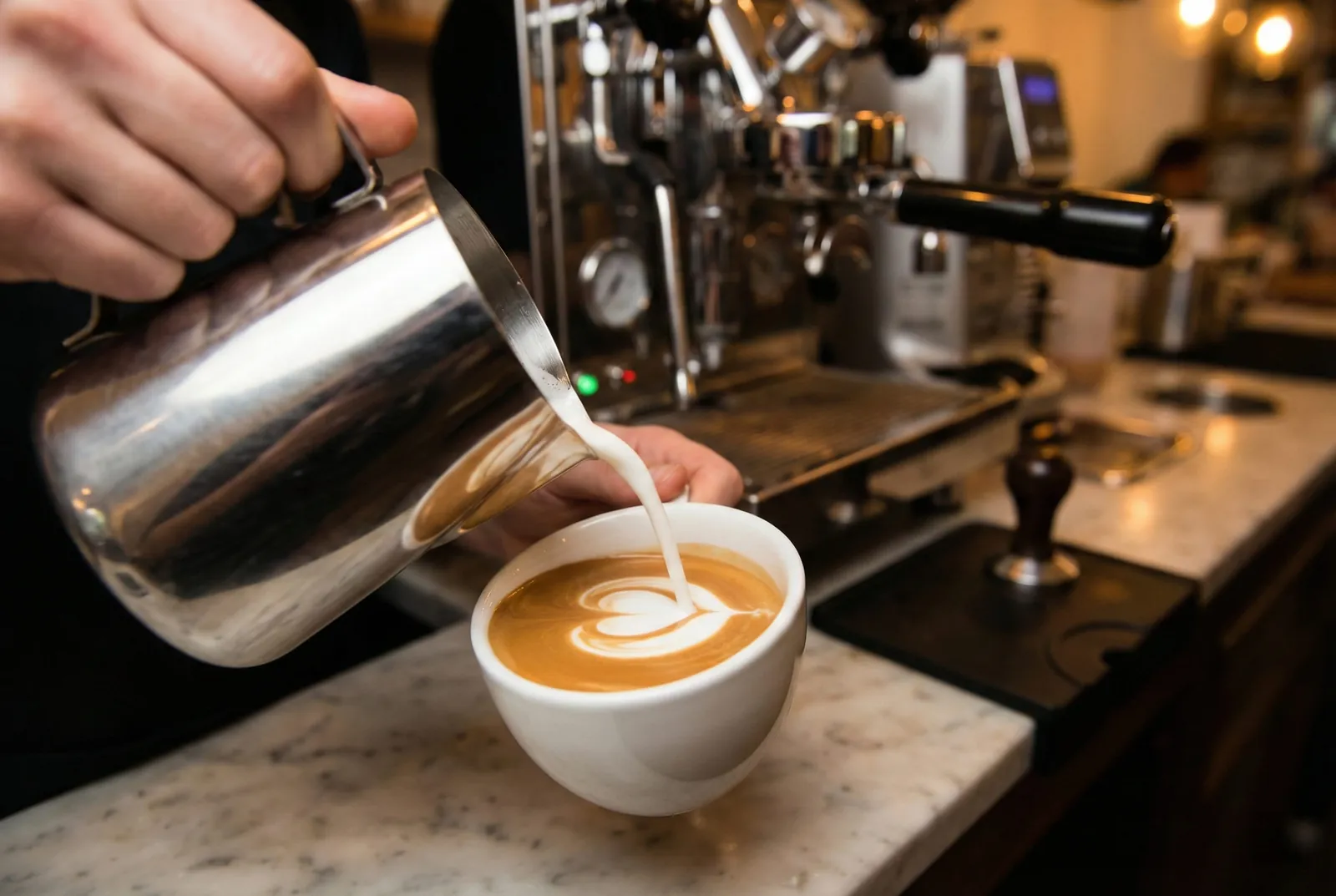
Professional barista pouring steamed milk into espresso creating latte art pattern demonstrating proper milk-based coffee technique for specialty coffee shop drinks

Perfect Latte Preparation (The American Specialty Coffee Shop Way)

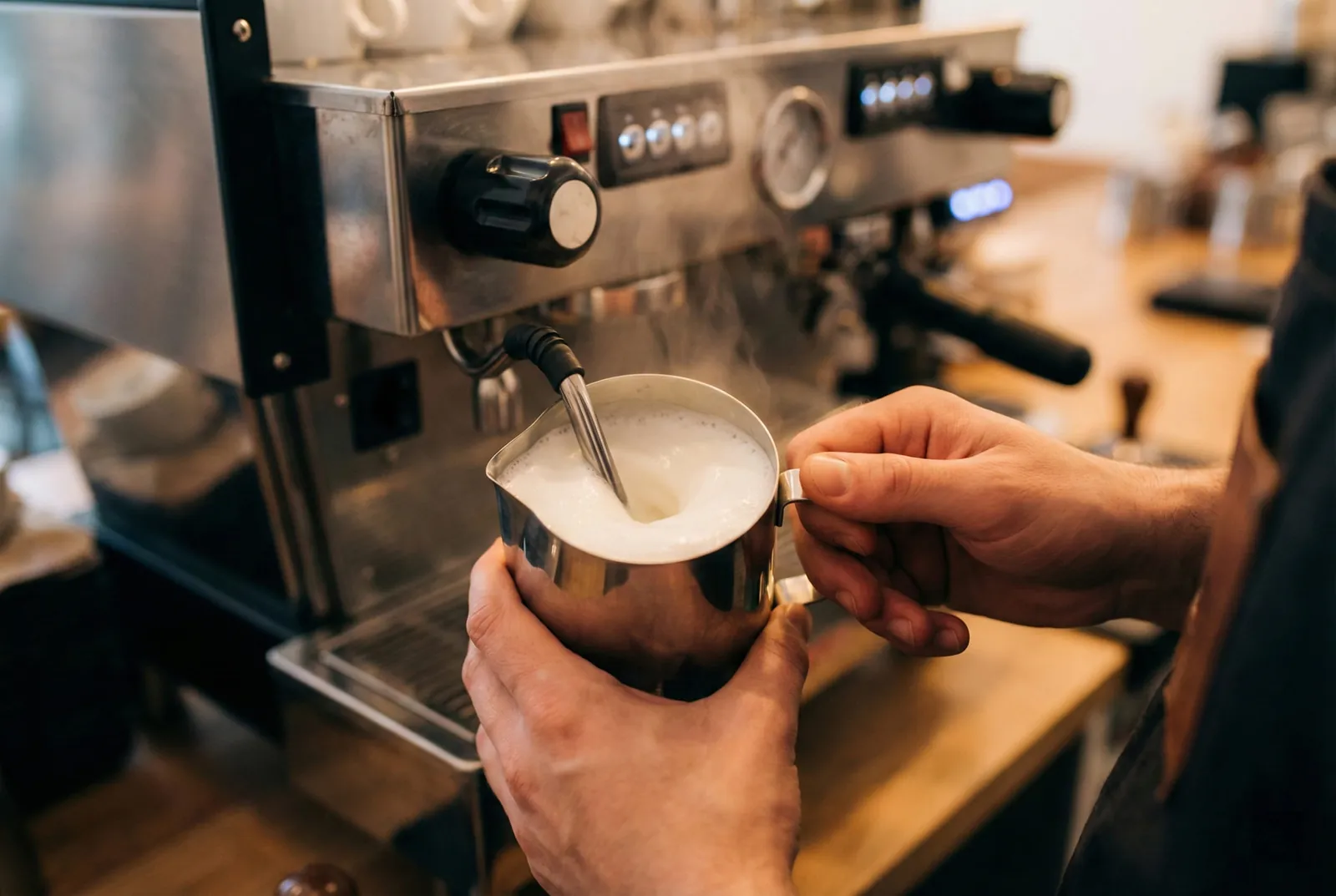
Barista steaming milk in stainless steel pitcher creating silky microfoam for latte preparation showing proper milk texturing technique for espresso-based drinks at specialty coffee shop

Lattes are more forgiving than macchiatos, but milk technique separates amateurs from pros:

  1. Preheat latte cup - Fill with hot water while preparing espresso. An 8-10oz ceramic cup is traditional size.
  2. Pull espresso shots - Same specs: 14-18g, 25-30 seconds, 2oz yield for a double.
  3. Steam milk to 150-155°F - Create silky microfoam, not thick foam. Listen for the "chirping" sound as you introduce air in the first 3-5 seconds, then submerge the tip to create the vortex. Total steam time: 15-20 seconds.
  4. Pour milk in circular motion - Start high (2-3 inches above cup), pour steadily to integrate espresso and milk. Drop close to the surface for latte art.
  5. Finish with microfoam layer - That thin, velvety layer on top is your canvas for latte art, or just enjoy the creamy texture.
Temperature Matters More Than You Think

Milk steamed above 160°F tastes scalded and destroys delicate flavors — proteins denature and sweetness disappears. This holds across whole, 2%, and alternative milks. The sweet spot is 150-155°F for dairy, 145-150°F for most oat/soy alternatives. Use a thermometer until muscle memory kicks in.

Choosing Between Macchiato and Latte: Which Drink Is Right for You?

The choice between macchiato and latte isn’t about which drink is “better” — both are excellent when properly prepared. Your pick should come down to your mood, your caffeine needs, your taste preferences, and the specific coffee experience you’re after in that moment.

Think of it by occasion: a professional morning meeting where you’re sipping slowly calls for a latte. A quick afternoon energy boost calls for a macchiato, no question. After dinner at an Italian restaurant, a macchiato is the only right answer — anything else feels out of place. Different espresso-based drinks for different moments in your day.

Choose Macchiato When:

  • ✓ You want an intense, bold espresso experience
  • ✓ You’re ordering after a meal (Italian tradition)
  • ✓ You need a quick caffeine boost without the milk
  • ✓ You’re watching calories (15-20 cal vs 180-220)
  • ✓ You appreciate the pure coffee flavor profile

Choose Latte When:

  • ✓ You prefer smooth, creamy coffee drinks
  • ✓ You’re drinking in the morning (breakfast companion)
  • ✓ You want something to sip over 15-20 minutes
  • ✓ You’re new to espresso drinks and building palate
  • ✓ You appreciate latte art and visual presentation

Match the Drink to the Moment

Many coffee enthusiasts enjoy both drinks for different occasions. A macchiato works perfectly for an afternoon pick-me-up or post-dinner digestif, while a latte excels as a leisurely morning beverage or companion to breakfast pastries. The key is understanding what each drink offers and choosing accordingly.

Palates tend to shift over time toward less dilution — many experienced coffee drinkers gradually migrate from lattes toward macchiatos as they get more particular about tasting the espresso itself, rather than having it softened by milk. Your own preference might follow that path, or you might always love that creamy latte texture. Both are equally valid in specialty coffee culture.

Italian Coffee Culture & Traditions (The Real Deal)

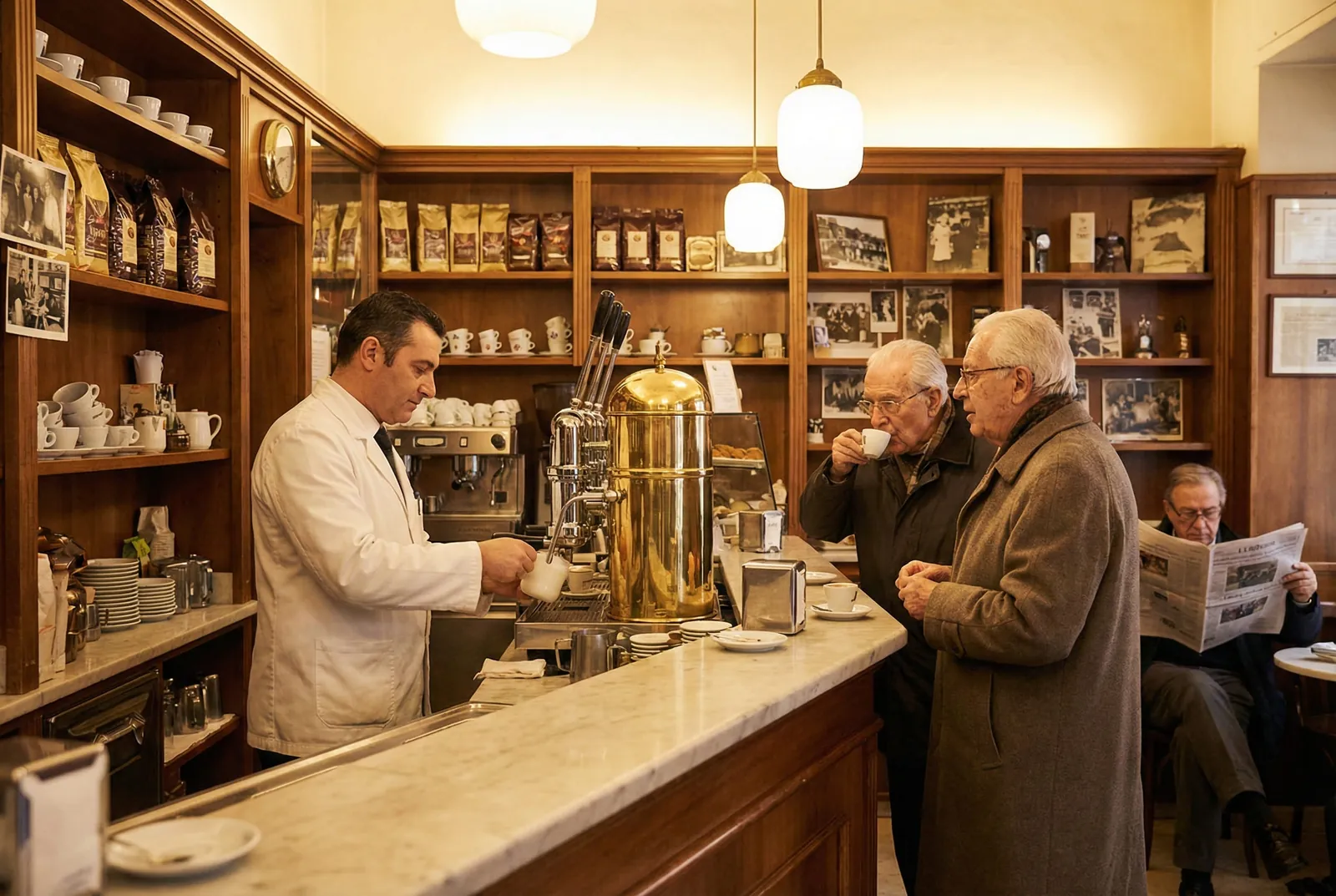
Traditional Italian coffee bar interior showing espresso machine and barista preparation area at authentic caffè serving specialty coffee drinks including macchiato and other espresso-based beverages

In Italy, macchiatos are consumed standing at the café bar — sitting costs extra — often after meals as a digestivo. They’re drunk quickly, in two or three sips, and rarely ordered after 11 AM in traditional cafés. Order a cappuccino after lunch in Rome and expect a raised eyebrow, if not an outright comment.

Lattes (called “caffè latte” when Italians order them at all) are primarily breakfast drinks, usually made at home rather than ordered at a café, and often paired with a cornetto. Walk into a traditional Italian coffee bar at 3 PM and order a latte, and the barista will probably make it — but you won’t be mistaken for a local.

The specialty coffee movement has reinterpreted both drinks globally, with lattes becoming all-day beverages and macchiatos showcasing single-origin espressos at third-wave coffee shops. Understanding the traditional context deepens your appreciation for how these drinks are prepared and consumed, even if you’re adapting them to your own routine.

Fun cultural note: a busy Italian coffee bar during morning rush can turn out a macchiato in well under a minute — order to delivery. Speed, precision, consistency: that’s Italian espresso culture. No 10-minute latte art sessions, no fussing. Just excellent espresso-based drinks, served fast.

Alternative Milk Options for Espresso-Based Drinks

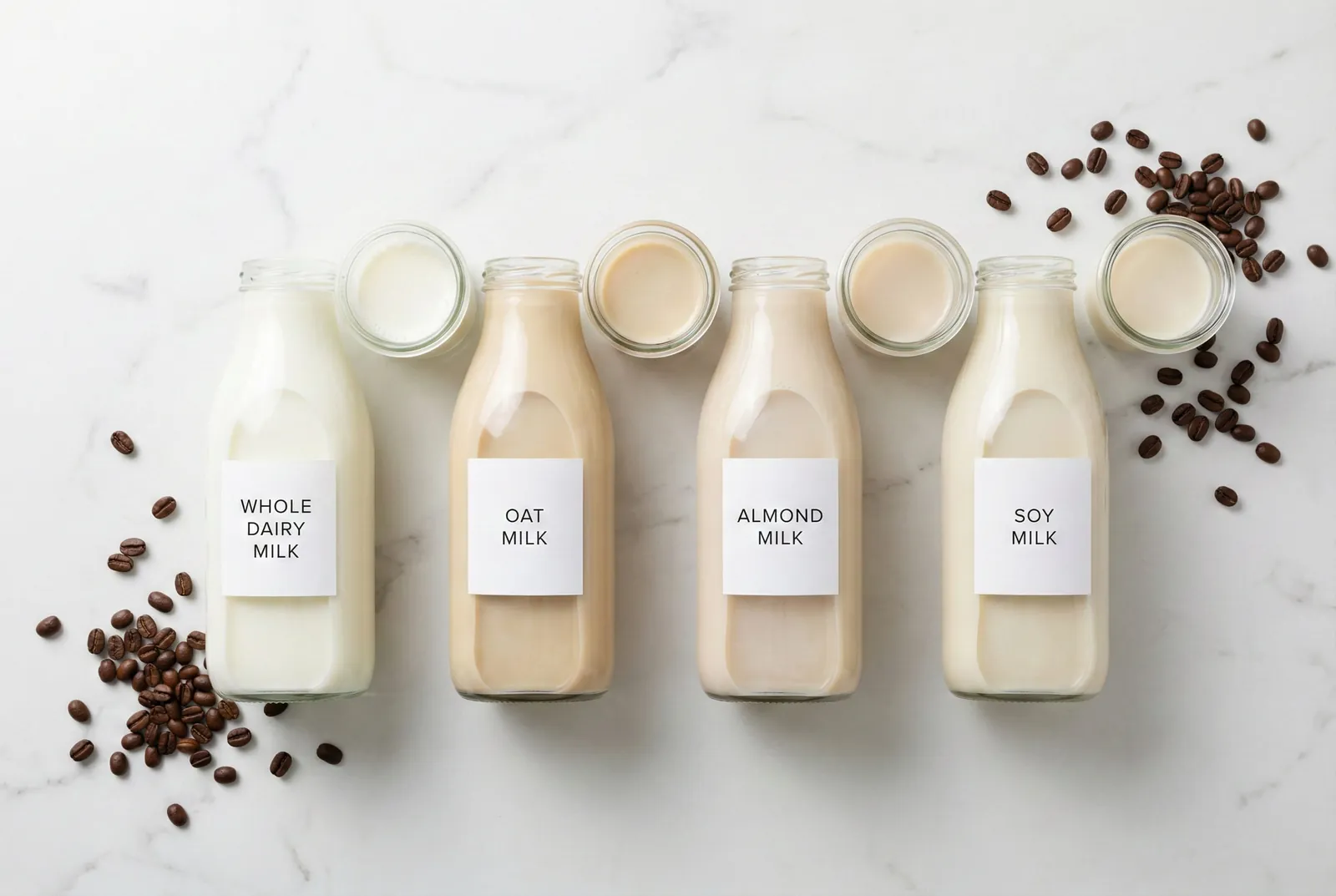
Display of different milk alternatives for coffee shop use including oat milk, almond milk, soy milk, and dairy milk options for specialty espresso-based drinks and milk-based coffee beverages

Best Alternatives for These Drinks

Not every alternative milk behaves the same way under steam. Here’s what actually works for macchiatos and lattes:

  • Oat Milk (Top Choice): Steams excellently — especially barista-formulated versions like Oatly Barista Edition and Chobani Extra Creamy. Natural sweetness complements espresso beautifully, at 180-220 cal per latte. Works for both drinks, though the slight grain flavor is more noticeable in macchiatos. The best all-around alternative for specialty coffee drinks, and it steams to microfoam almost as well as whole dairy.
  • Almond Milk: Thinner, more watery texture, with a nutty flavor that can compete with espresso notes. Around 80-100 cal. Works better in macchiatos, where minimal milk impact is the goal — it’s a poor choice for latte art, since the foam doesn’t hold pattern for long. Barista-blend versions perform noticeably better than standard almond milk but still lag dairy on foam stability.
  • Soy Milk: Good foam potential and a creamy mouthfeel, at 130-160 cal. It can curdle when paired with more acidic espresso, so darker roasts or lower-acidity beans are the safer match. It’s also temperature-sensitive — push past 155°F and it curdles fast.
  • Coconut Milk: A strong coconut flavor that tends to overpower espresso character, with a thin texture, at 100-120 cal. Worth using only if someone specifically requests it or loves coconut — it’s not the pick if showcasing the espresso is the goal.

The honest take: whole dairy milk still produces the best texture and sweetness for both drinks. Oat milk is the closest alternative, especially with a barista-specific formulation — close enough that most people drinking a well-made oat milk latte won’t miss dairy at all.

Equipment Recommendations for Making These Drinks at Home

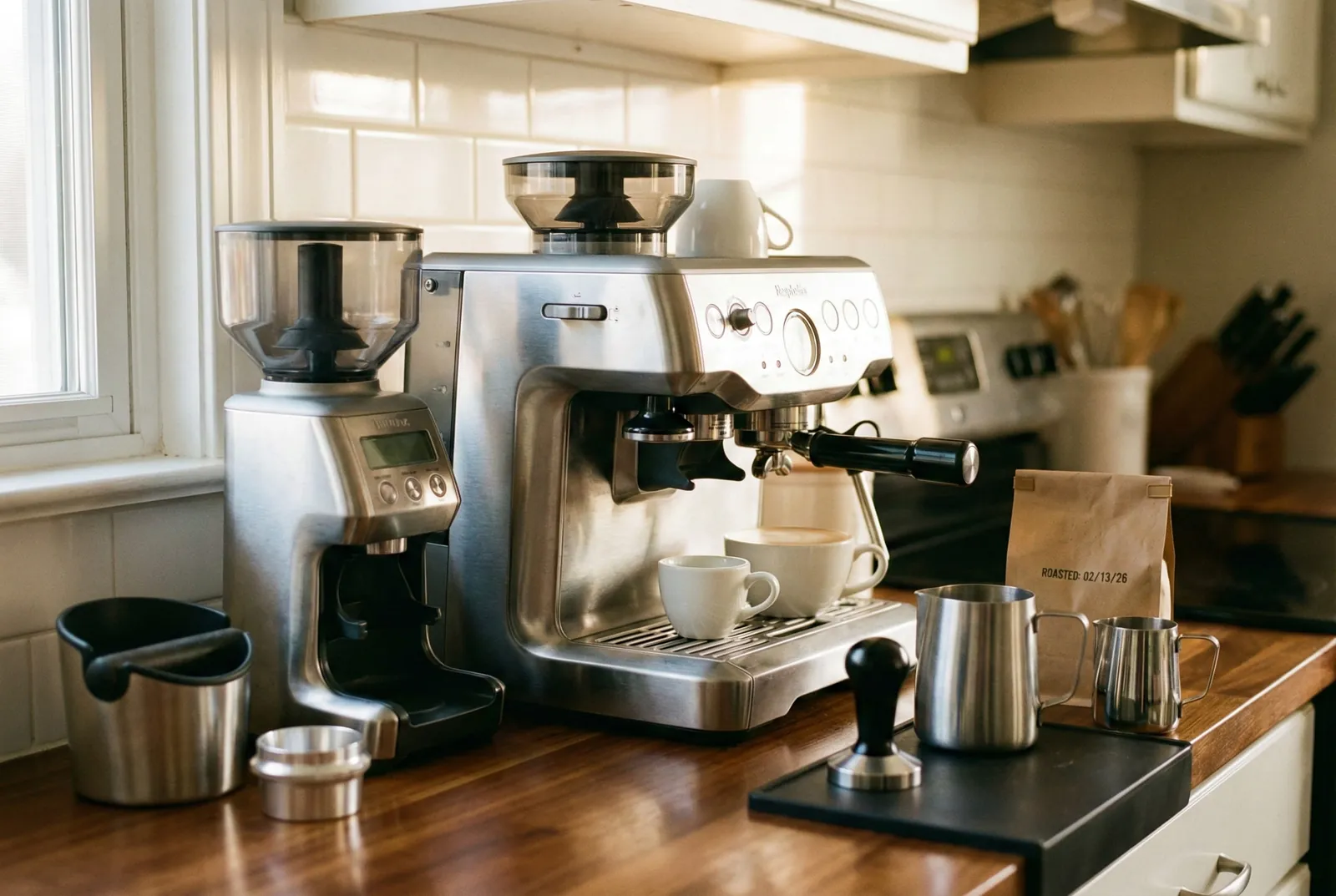
Modern home espresso station setup with espresso machine, coffee grinder, and barista accessories for preparing specialty coffee drinks including macchiato and latte at home

Here's what we recommend for making these espresso-based drinks at home.

Essential Equipment for Espresso-Based Drinks

Espresso Machines for Home Use

  • Budget ($400-600): Gaggia Classic Pro — a solid workhorse with decent temperature stability once you learn the cooling flush technique. Steam power is adequate for 6-8oz milk portions.
  • Mid-Range ($600-1000): Breville Bambino Plus — fast heat-up, automatic milk texturing that works well for beginners, and a compact footprint.
  • Premium ($1000-1500): Rancilio Silvia — temperature-stable, commercial-grade portafilter, built to last for years with proper maintenance.

Reality check: You can make excellent espresso-based drinks on all three machines — the difference is consistency, ease of use, and how much technique you need to compensate for equipment limitations.

Not sure which type of machine suits your workflow? Our espresso machine types guide covers every category, and our best espresso machines page shows top-tested picks at every budget.

Coffee Grinders (More Important Than the Machine!)

Your grinder matters more than your espresso machine for drink quality — a $400 machine with a $600 grinder beats a $2000 machine with a $100 grinder every time.

  • Manual ($80-200): 1Zpresso JX-Pro — hand grinding is a workout, but grind quality rivals $400 electric grinders. Totally viable for 2-4 drinks per day.
  • Electric Entry ($300-400): Baratza Sette 270 — purpose-built for espresso with excellent grind consistency. Parts are user-replaceable, which matters for longevity.
  • Electric Premium ($700-900): Eureka Mignon Specialita — whisper-quiet, minimal retention, precise stepless adjustment. Worth the investment if you make 3+ drinks per day.

Non-negotiable rule: Your grinder must have fine, repeatable adjustments for espresso. Blade grinders or cheap burr grinders won't cut it — the grind consistency isn't there.

Read our detailed grinder buying guide with real testing data →

Milk Pitchers & Accessories

  • For Macchiatos: 6-12oz pitcher (12oz max) — you barely need milk, so a small pitcher gives better control.
  • For Lattes: 12-20oz pitcher (16oz is the sweet spot for a single latte). A Fellow Eddy-style pour spout design helps for latte art if you care about that.
  • Recommended Brands: Fellow Eddy (premium, $35-45), Rattleware ($20-30, excellent value), or Espro Toroid (good for beginners learning to create the vortex).

Why pitcher size matters: Too-large pitchers make it impossible to properly texture small milk quantities. For macchiatos especially, you need a small pitcher to create microfoam from just 2-3oz of milk.

Final Thoughts on Macchiato vs Latte

Final Thoughts on Macchiato vs Latte

Neither drink is superior — both are excellent espresso-based drinks when prepared correctly. Macchiato delivers intense espresso character with minimal milk dilution (80–90% espresso, just a “mark” of foam); latte provides a smooth, creamy canvas where espresso swims in microfoam-topped milk (15–20% espresso). Which you choose depends on your mood, caffeine needs, and time available — many coffee drinkers enjoy both for different occasions.

If you want the middle ground between the two, our What Is a Flat White guide covers the drink that sits exactly there. For a dedicated breakdown of espresso macchiato vs latte macchiato, with ratios and technique, see our What Is a Macchiato guide. For the shorter, more concentrated ristretto shot many cafés use for flat whites, see our What Is a Ristretto guide, and for the longer, gentler pull, our What Is a Lungo guide covers how it compares to an americano.

Frequently Asked Questions

Macchiato is significantly stronger in coffee flavor. Both contain the same espresso (and identical caffeine), but macchiato's minimal milk lets you taste the espresso's full intensity.

On a strength scale of 1–10, macchiato rates 9/10 for flavor; latte rates 4–5/10. Milk dilution determines perceived strength, not caffeine content.