
 4.2
4.2aarke
aarke Coffee Maker
A clean, Scandinavian-designed drip maker with consistent SCA-range brew temps and a built-in bloom cycle.
Coffee maker review
Last updated
Tired of grinding and brewing separately? Our Breville Grind Control review of this grind-and-brew coffee maker covers 50+ brews, the loud grinder and bloom.
Affiliate disclosure: this page contains Amazon affiliate links. We may earn a commission if you buy through them, at no extra cost to you, and it never affects our rankings. Read our full affiliate disclosure
Breville Grind Control Coffee Maker at a GlanceHighly recommended
A confident recommendation for daily fresh-ground drinkers; just plan around the loud grinder.
Premium Grind & Brew Coffee Maker
Affiliate link: we may earn a commission at no extra cost to you. It never affects our rating.
On the brew bench· 50+ brews · 30 days
Why it stands out
Watch out for
✓ Best for
Want freshly ground coffee without separate grinder complexity
✕ Skip if
Want a budget option under $200
This Breville Grind Control review finds it brews bean-to-cup coffee that rivals a carefully dialed manual pour-over, and the adjustable bloom turned out to be its most underrated feature.
The short answer: a confident recommendation for daily drinkers who can taste fresh-ground versus pre-ground, as long as they can plan around the noise; skip it on a tight budget or for single cups.
It pays off most with fresh coffee beans.
Check where you fit before you look at the trade-offs below.
A strong match
Consider something else
What earns the rating, and what you give up to get it.
8 reasons it works
8 trade-offs to weigh
How it performed in day-to-day use, in the order you will meet it.
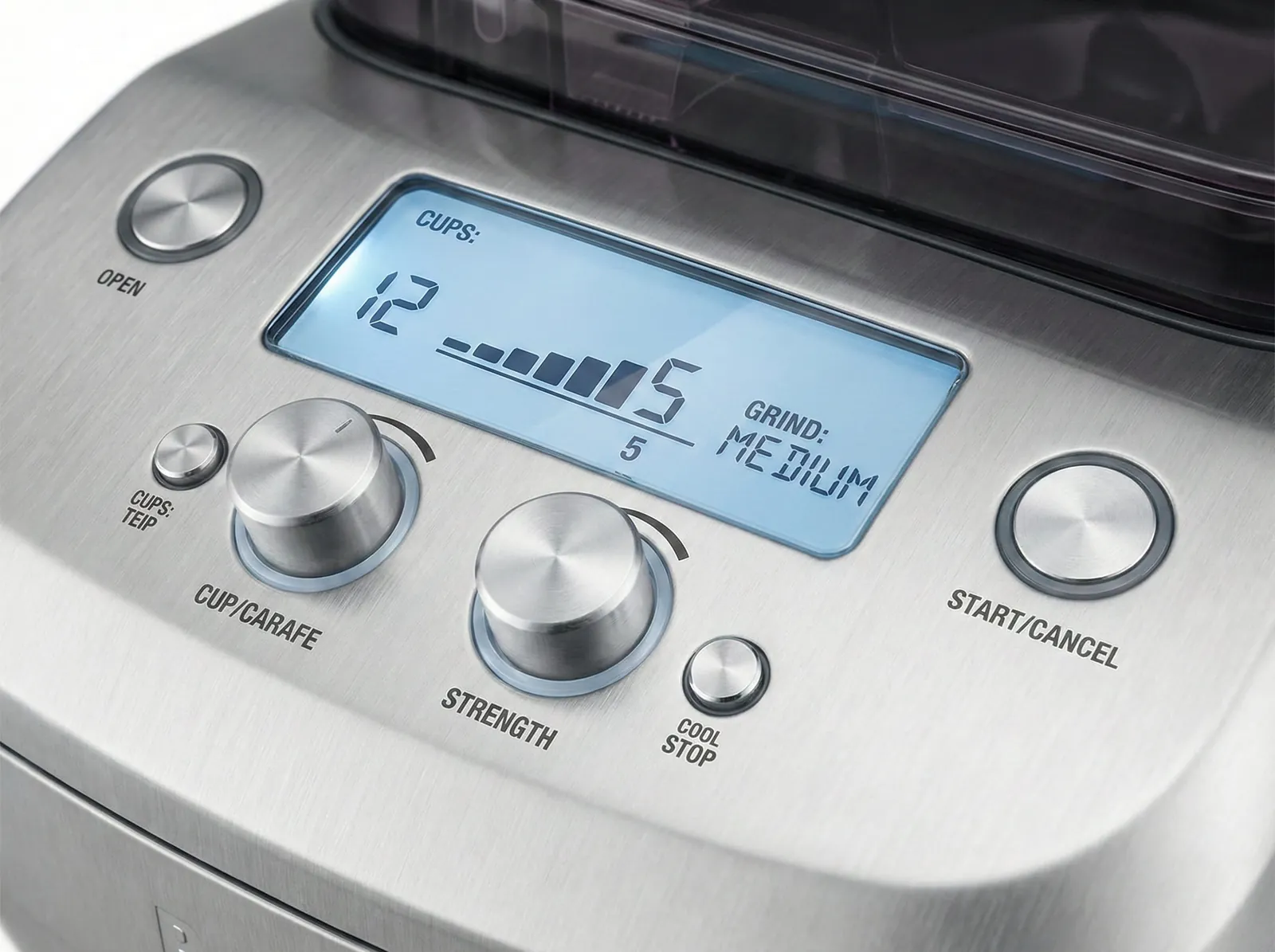
From unboxing to first drinkable brew took about 15 minutes. The LCD interface is intuitive after a short adjustment period: the water tank slides in from the rear, the bean hopper fills from the top with a sealed lid, and the flat-bottom filter basket swings out for easy access.
The first brew with factory defaults produced good coffee immediately. By day two, testing had settled on a preferred strength (setting 6 for medium roast beans) and grind size (setting 3, medium), and the learning curve is minimal — most users will nail their ideal bean-to-cup brew within 3-5 attempts.
The daily routine across the test period:
Total hands-on time is under two minutes. The machine grinds for 20-30 seconds, blooms for the selected duration, then brews for 8-12 minutes, and the automation is reliable once dialed in.
TDS testing at the medium-strong to maximum strength settings (5-8) with freshly ground beans from multiple roasters showed 1.35-1.65% TDS — slightly stronger than the SCA Golden Cup range (1.15-1.35% for filter coffee), reflecting a bolder default profile.
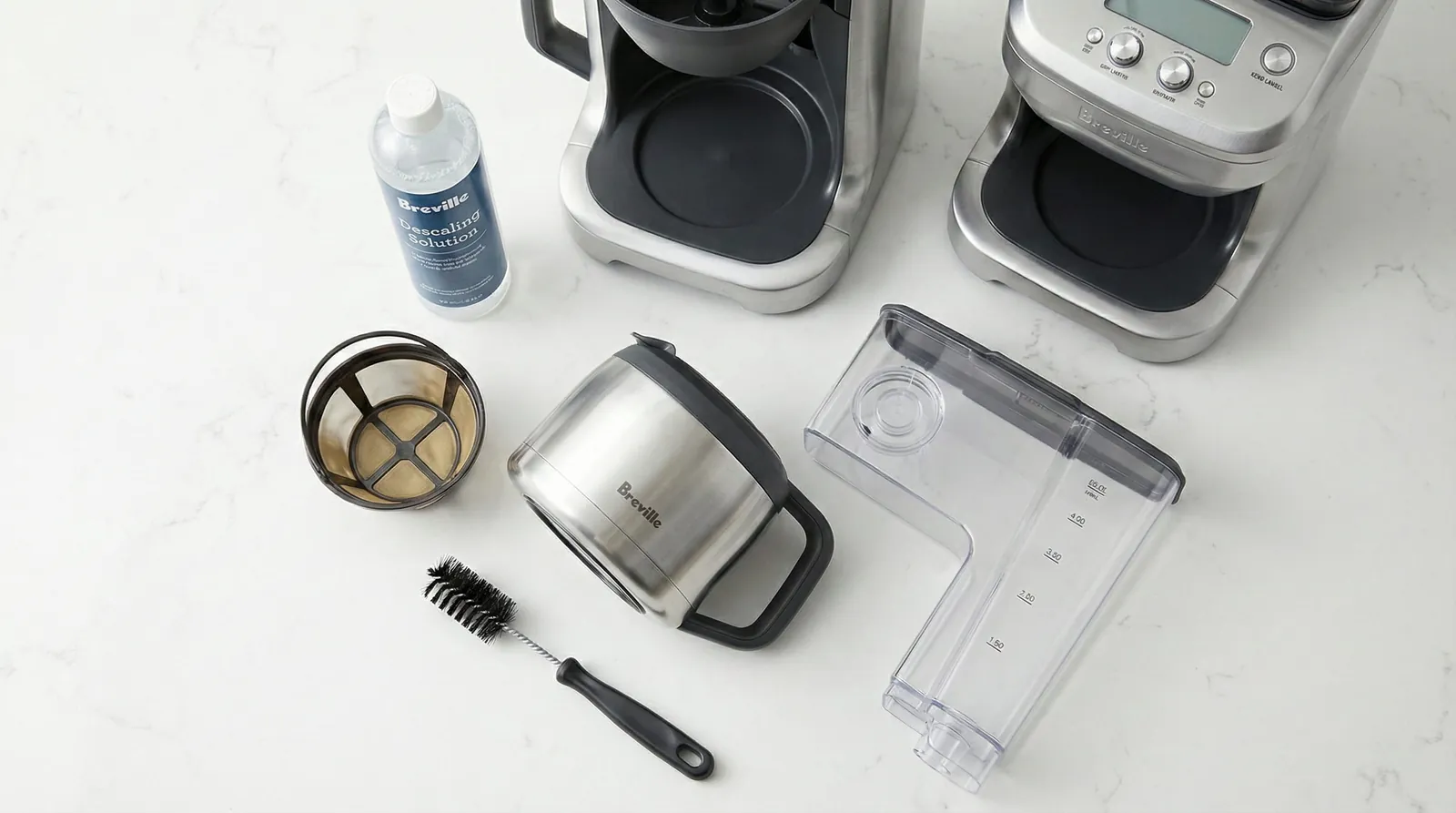
Daily cleanup takes about 2 minutes: empty the filter basket, rinse the thermal carafe, and wipe the LCD and exterior. The rest is periodic:
Compared to running a separate grinder and brewer, the consolidated cleanup is more convenient despite the added grinder maintenance, and the thermal carafe stays notably cleaner than glass carafes on a warming plate.
Value depends on how many cups you brew and how much you care about freshness
The honest answer is that it depends on your daily volume. At $399-$449 the machine costs several times what a basic drip maker does, so the premium only pays back if you actually taste and value the difference between freshly ground and pre-ground coffee. If you drink two or more cups a day and already buy whole beans, you are paying for convenience: grinding, blooming and brewing happen in one sequence, with no separate grinder to buy, store or clean.
The comparison that matters is not against a $50 drip machine. It is against a separate burr grinder plus a temperature-certified brewer. Once you price that pair, the all-in-one stops looking expensive, although you give up the ability to upgrade the grinder and brewer independently. If one half fails or disappoints, you replace the whole machine rather than one component.
If you mostly brew one mug at a time, or you are happy with pre-ground coffee, the premium is hard to justify. The single-serve mode works, but it is a convenience feature rather than the reason to buy.
What you gain and what you give up by buying one machine
An all-in-one machine wins on workflow. You fill the hopper, choose a strength, and walk away. A separate grinder and brewer wins on flexibility, because you can adjust grind more finely, move the grinder to espresso later, and replace parts individually.
| Product | Type | Capacity | Key feature | Current price |
|---|---|---|---|---|
| Breville Grind Control | Automatic grind and brew | 70 oz tank (about one 12-cup carafe) | Built-in conical burr grinder, adjustable bloom | Check current price |
| OXO Brew 9-Cup | Drip coffee maker | 9 cups | SCA-certified 197–204°F with 45-second bloom | Check current price |
| Technivorm Moccamaster KBGV Select | SCA-certified drip coffee maker | 40 oz | SCA Gold Cup temperatures, 5-year warranty | Check current price |
| Cuisinart Grind & Brew | Automatic grind and brew | 2–4 cups | Built-in blade grinder, 24-hour timer | Check current price |
| Fellow Aiden | App-controlled precision drip coffee maker | 40 oz (8-cup) | App-programmable bloom and 10–20 mL/s flow rate | Check current price |
If you want the brewer without the grinder, the OXO Brew 9-Cup is the closest comparison in this file, since it holds a similar brew temperature range but leaves grinding to you. The Technivorm Moccamaster is the long-lived, hand-built alternative with no grinder at all. For a cheaper bean-to-cup route, see the Cuisinart Grind & Brew, and for app-driven recipe control look at the Fellow Aiden.
When you are comparing, ask three questions. Do you want one appliance or two? Is a loud grinder acceptable at your usual brewing hour? Would you rather spend on convenience now or keep upgrade options open later? Your answers usually settle the decision faster than any spec sheet. Our drip coffee maker picks roundup lays out the wider field.
Honest reasons to buy something else
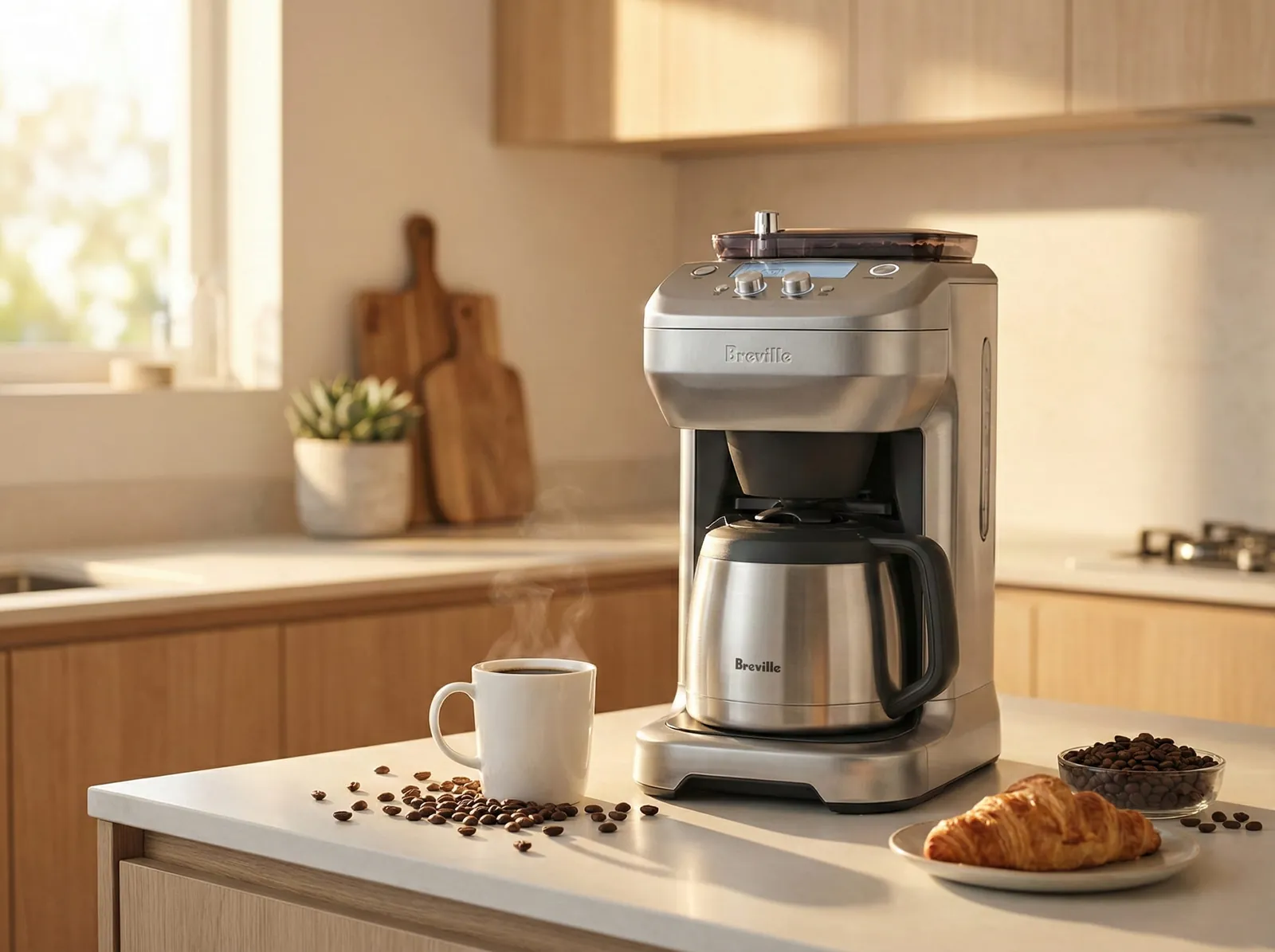
Skip it if your kitchen has limited counter or cabinet clearance. The machine is substantial and tall, so check the space under your cabinets before ordering.
Skip it if you brew early while others sleep. The grinder is the loudest part of the cycle, and a programmable timer that fires the grinder at dawn will be heard through the house.
Skip it if routine cleaning feels like a chore. The grinder needs regular attention so oils do not turn rancid, and descaling matters for brewing accuracy. A machine you neglect will taste worse than a simpler one you maintain.
Skip it if you keep coffee for long periods. With no hot plate, the thermal carafe is designed to hold heat, but coffee is best finished within a few hours. Our brew yield calculator accounts for the water the grounds keep.
Finally, skip it if budget is the main constraint. A good burr grinder paired with an inexpensive brewer costs less up front and still beats pre-ground coffee in a basic machine.
How a built-in burr grinder changes freshness and where the trade-offs sit
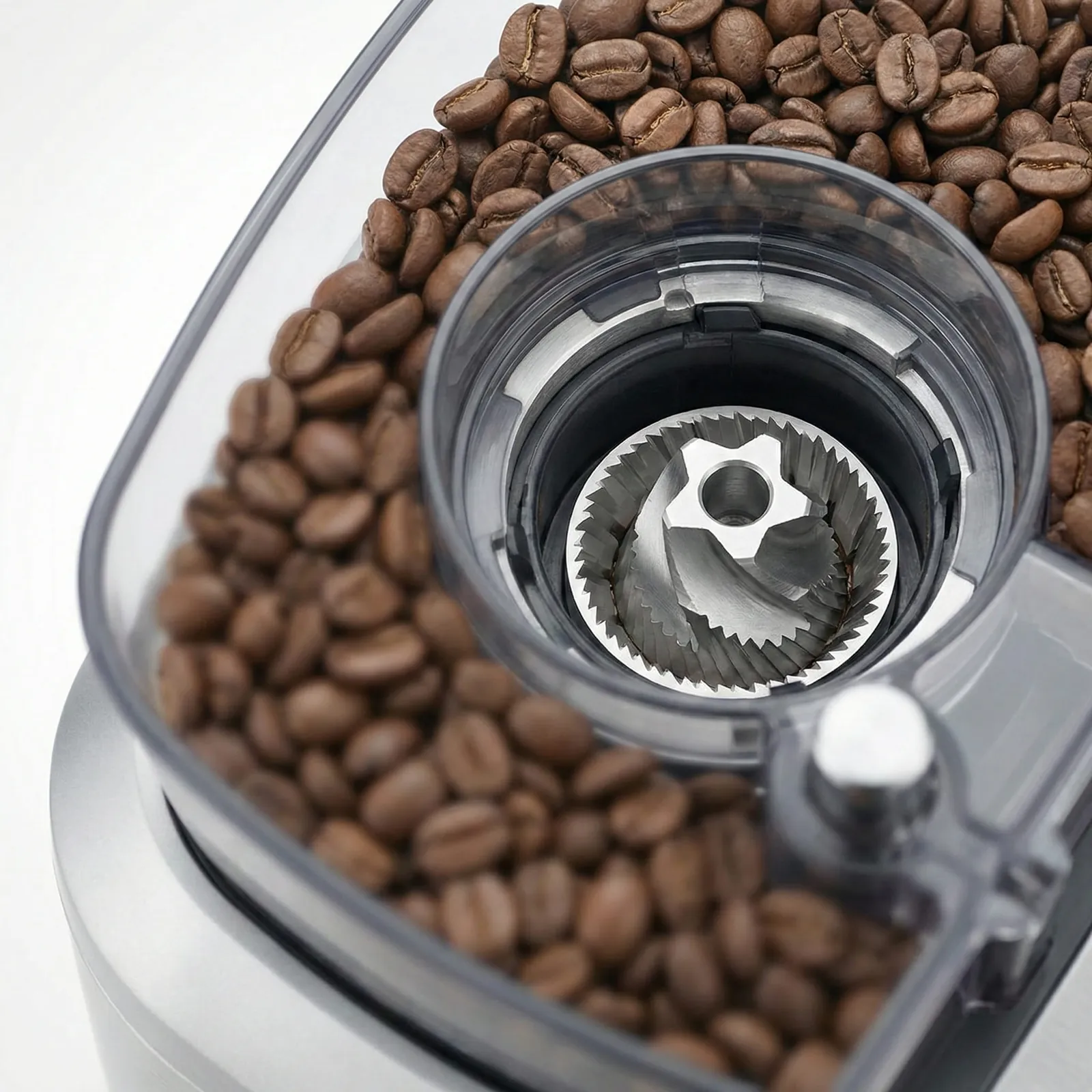
Coffee loses aroma within minutes of grinding because the surface area is exposed to air. The Grind Control grinds immediately before it brews, so the volatile compounds that make fresh coffee smell and taste vivid are still there.
It uses a burr grinder, which crushes beans between two surfaces for uniform particles. A blade chops them unevenly, giving fines that over-extract and boulders that under-extract. Learn the difference in the burr versus blade guide.
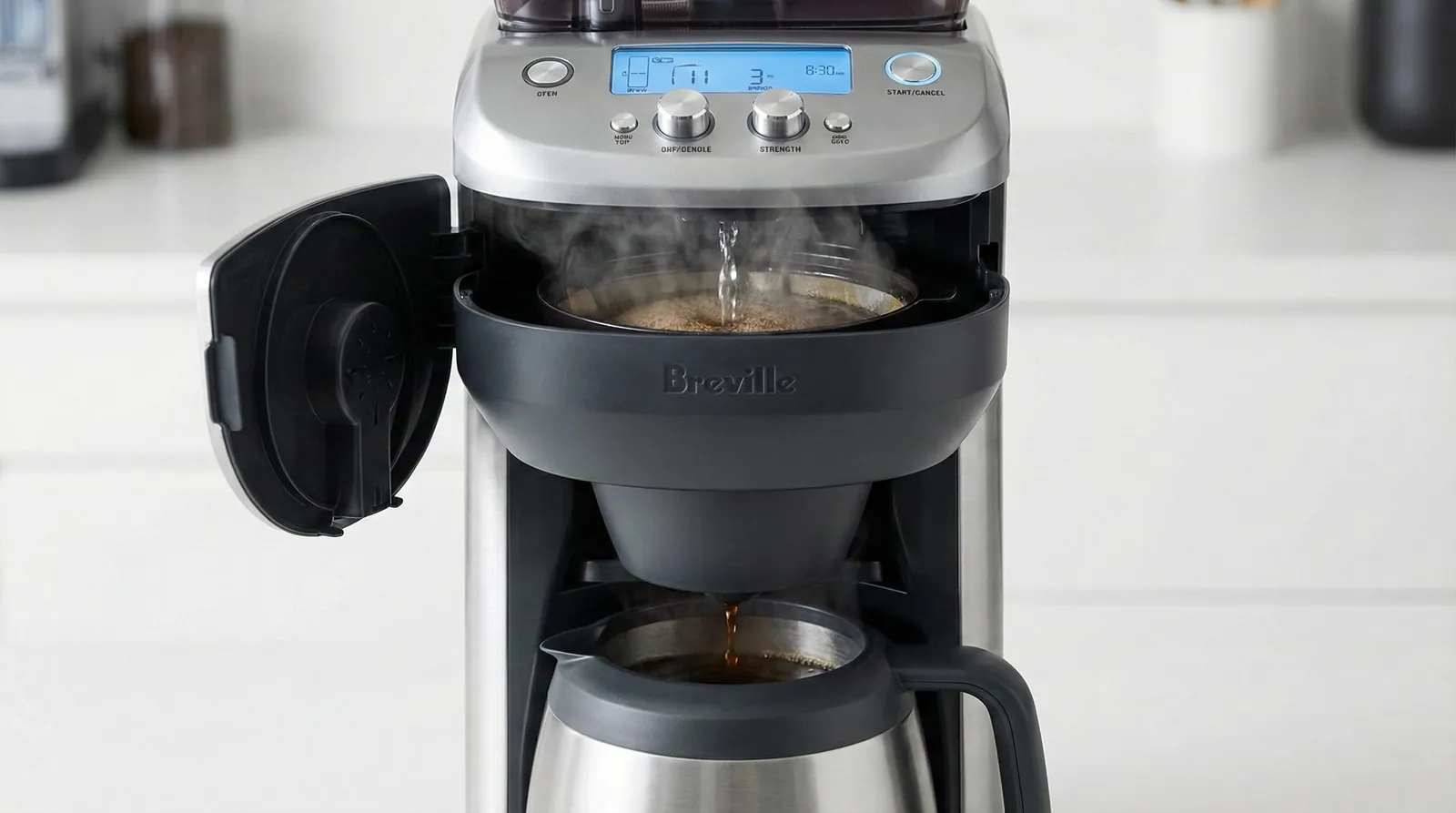
The brew phase adds a bloom and adjustable strength by changing how much coffee is ground per carafe. The bloom lets gas escape from fresh grounds before the main brew starts. The step-by-step brew timer tells you when to pour and how much.
What it means for you: convenience and freshness at the cost of flexibility. You cannot upgrade the grinder separately, and it cannot be quiet. If you want that option, see how to choose a burr grinder.
The ownership problems with grind-and-brew machines and the modern fixes
Alternatively, pairing a separate grinder with a good brewer gives easier upgrades, covered in our programmable maker roundup.
Before you decide
Most grind-and-brew machines compromise on either grind quality or precision brewing temperature, usually both.
The Breville Grind Control addresses both issues: its conical burr grinder maintains roughly ±15% particle size consistency versus ±50% for blade grinders, and brew temperature consistently hits 197-204°F across every tested cycle. The adjustable bloom time (0-45 seconds) adds a level of precision brewing control normally only available with manual pour-over.
The trade-offs:
For daily coffee drinkers who can taste the difference between fresh-ground and pre-ground beans, these trade-offs deliver measurable quality improvements — higher TDS extraction and better flavor clarity — at a level of consistency that rivals separate $300–$400 coffee grinder plus SCA-certified brewer combinations. Browse the full coffee maker reviews to see how it stacks up against alternatives.
Durability, upkeep and running costs once the novelty wears off.
Stainless steel body with brushed fingerprint-resistant finish.
Conical burr grinder designed for 500-800 brew cycles before replacement needed. Thermal carafe double-wall vacuum insulation maintains integrity for years. Expected lifespan 5-7 years with regular maintenance, 2-3 years with neglect (scale buildup, grinder wear).
The brew basket is solid construction with no reported failure issues.
Most common wear item: burr grinder (500-800 cycles = 1.5-2 years daily use). Water tank seal may develop minor leaks after 12-18 months of heavy use (user-replaceable seal). Brew basket swing mechanism can loosen with heavy use but remains functional. LCD display and electronics generally reliable with minimal reported failures.
Breville maintains parts availability for 7+ years post-manufacture.
Common replacement parts: burrs ($40-60), water tank seal ($8-12), brew basket ($15-20), bean hopper lid ($10-15). Parts ship within 2-4 business days from Breville direct. Third-party aftermarket parts available for common components. Service manuals available online for DIY repairs.
Annual costs: $25-35 (descaling solution $15, grinder cleaning tablets $10, water filters $10).
Burr replacement every 1.5-2 years: $40-60. 5-year total ownership cost: $205-295 in maintenance vs $200-400 for super-automatic espresso machines. Comparable to Technivorm Moccamaster ($150-200 over 5 years) but with added grinder maintenance.
2-year limited warranty covers manufacturing defects and component failures.
Excludes normal wear items (burrs, seals, filters). Requires proof of purchase and registration. Claims process: Contact Breville customer service, troubleshoot over phone, receive prepaid shipping label for repairs if needed. Extended 3-year warranty available for $60-100 at purchase. Customer service response generally within 24-48 hours.
Strong secondary market demand for premium grind-and-brew machines.
Resells for 60-75% of original price after 1 year ($240-335 on a $399-$449 purchase). 45-60% after 2 years ($180-270). 35-45% after 3 years ($140-200). Well-maintained units with original packaging command higher prices. Burr grinder machines hold value better than blade grinder alternatives.
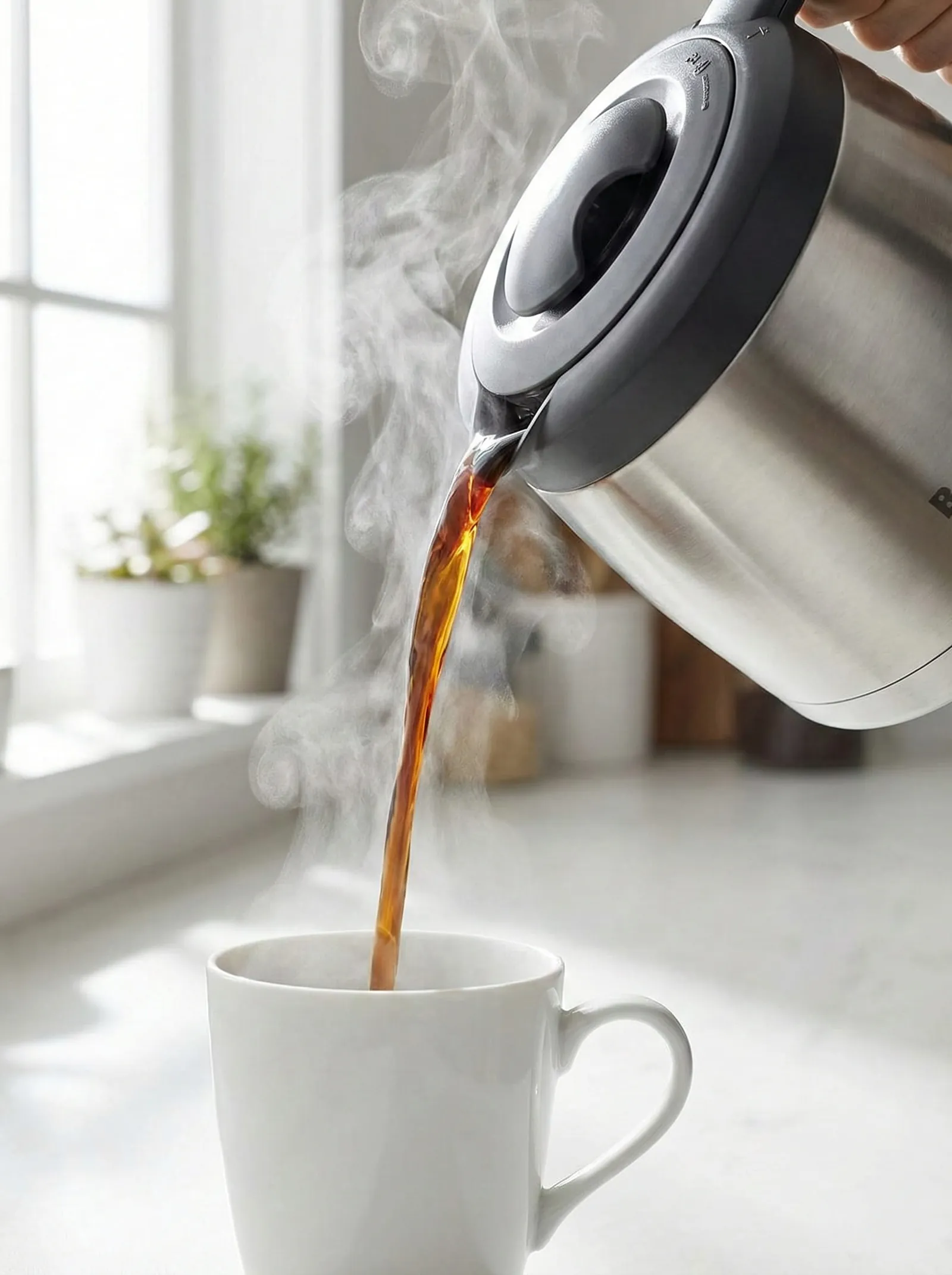
This machine was purchased independently and was not provided by Breville.
Our rating, who it fits, and what it costs.
Breville Grind Control Coffee MakerHighly recommended
4.5 / 5 — Is it worth buying?
Across the full test period — from inexpensive supermarket beans to specialty single-origin coffee — the Breville Grind Control bridges the gap between convenience and quality: proper brew temperature, adjustable bloom, and a real burr grinder rather than marketing fluff.
✓ Best for
✕ Skip if
Score breakdown
Brews tested
50+
Testing period
30 days
Ready to decide?
Our verdict: 4.5/5, highly recommended. Independently tested; commissions never change a rating.
See how the Breville Grind Control Coffee Maker compares with the other picks in each tested roundup.
Closest alternatives in price and purpose, each tested the same way.
4.2aarke
A clean, Scandinavian-designed drip maker with consistent SCA-range brew temps and a built-in bloom cycle.
 4.3
4.3Fellow
A precision brewer with app-controlled bloom, flow, and temperature per recipe — for enthusiasts who rotate coffees.
 4.7
4.7Technivorm
A hand-built Dutch drip maker with SCA-certified temps and a reputation for lasting a decade or more.
 4.3
4.3Chemex
An automated take on the Chemex ritual, keeping the same clean, bright cup character but without the standing-over-a-kettle routine.
Put it into practice with a free calculator built for what you just read.
Quick answers before you buy.
Yes.
The Grind Control has a 'pre-ground' setting that bypasses the grinder entirely — add ground coffee directly to the filter basket, select 'pre-ground' on the LCD, and brew as normal.
That said, buyers paying $399–$449 for a built-in grinder they won't use should consider the OXO Brew 9-Cup ($200-$250) or Technivorm Moccamaster ($349-$369) instead — excellent brewers without the grinder premium.
Light roasts (bright, fruity, acidic) generally need grind setting 2-3 (medium-fine to medium), since they're denser and extract more slowly. Medium roasts do well at setting 3 (medium).
Dark roasts (more porous, extracting faster) tend to work best at setting 3-4 (medium to medium-coarse). General rule: if coffee tastes bitter or harsh, grind coarser; if it's weak, sour, or watery, grind finer.
Starting at setting 3 for new beans and adjusting from there works reliably across most origins.
Yes — the grinder runs at a vacuum-cleaner-level 75-80 dB for 20-30 seconds per brew, loud enough to wake sleeping household members if run early. Workarounds: use pre-ground coffee mode (which bypasses the grinder entirely and runs silently), grind beans the night before and use pre-ground mode in the morning, or accept the noise as a trade-off.
There's no such thing as a silent burr grinder — precision grinding requires powerful motors, and powerful motors make noise. If noise is a dealbreaker for the household, this isn't the right machine.
In every measured performance metric, yes, and not particularly close. The Cuisinart uses a blade grinder that produces inconsistent particle sizes; the Breville uses a conical burr grinder with roughly 40% fewer fines. The Cuisinart brews at 185–195°F, under the SCA-recommended range; the Breville consistently hits 197–204°F.
The Cuisinart has no bloom function; the Breville offers adjustable bloom up to 45 seconds. The trade-off is price: $149–$199 vs $399–$449. On a strict budget, the Cuisinart makes acceptable coffee, but for anyone who can taste the difference between properly extracted fresh-ground coffee and a mediocre cup, the Breville is worth the extra money.
Read the full Cuisinart Grind & Brew review for the detailed head-to-head.
Depends on priorities. A dedicated coffee grinder at $100–150 paired with an SCA-certified drip maker like the OXO Brew 9-Cup ($200–250) gives roughly equivalent or slightly better coffee quality for $300–400 total, plus more flexibility if one component fails.
The Breville Grind Control's advantage is convenience — one machine, one footprint, one workflow — with tight integration between grinder and brewer. Limited counter space or a preference for a simpler morning routine favors the Breville; wanting maximum grind quality without minding two machines gives the separate setup a slight edge.
Plan on 500-800 brew cycles, which is roughly 1.5-2 years of daily brewing.
Replacement burrs cost about $40-60, and wear items like burrs are excluded from the 2-year limited warranty.
Weekly grinder cleaning keeps oils from building up and turning rancid.
The recurring issues are noise (75-80 dB while grinding), a large footprint (16 inches tall), and upkeep: weekly grinder cleaning and monthly descaling.
Long term, the water tank seal may develop minor leaks after 12-18 months of heavy use; it is user-replaceable for about $8-12.
If you already own a grinder, the OXO Brew 9-Cup ($200-$250) or the Technivorm Moccamaster ($349-$369) are strong brewers without the grinder premium.
On a tighter budget, the Cuisinart Grind & Brew is cheaper but uses a blade grinder.
A middle option with a burr grinder built in is the De'Longhi TrueBrew ($299), though it takes a glass carafe only.
Reader questions
Questions or tips? Leave a comment
Ask about your setup or share what worked for you. Comments are checked before they appear.