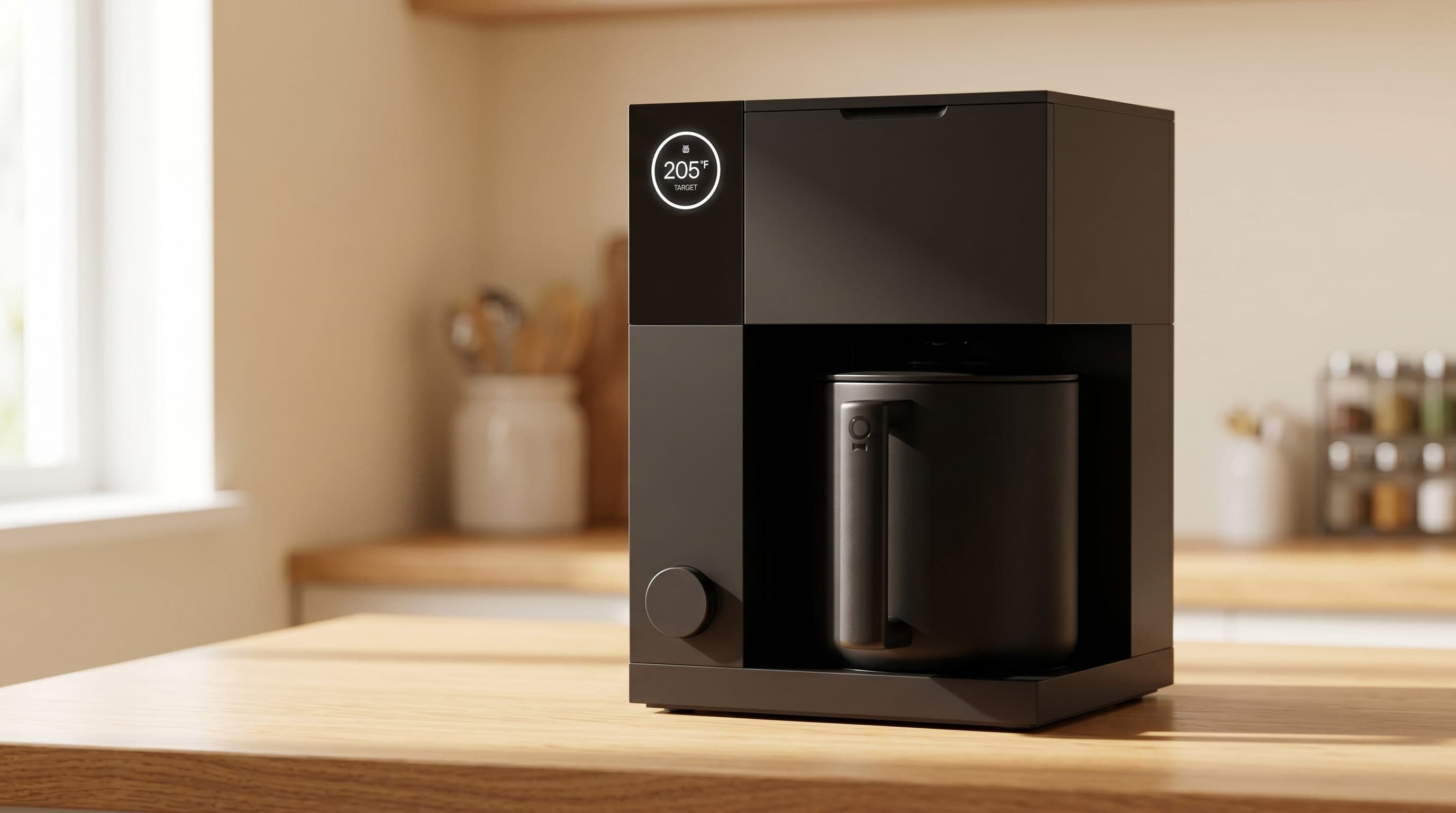
Coffee maker review
Last updated
Fellow Aiden Review 2026: Precision Needs the App
Can a drip machine match hand-brewed V60? Our Fellow Aiden review tested PID heat, variable flow and bloom in 70+ brews. See who should buy it.
- Our rating 4.3/5
- By Sarah Chen
- 26 min read
- Independently tested: 70+ shots over 6 weeks
Affiliate disclosure: this page contains Amazon affiliate links. We may earn a commission if you buy through them, at no extra cost to you, and it never affects our rankings. Learn more
Fellow Aiden at a GlanceRecommended
A strong choice if you'll use the app's per-recipe controls; not the simplest, most durable or best-value drip machine.
App-Controlled Precision Drip Coffee Maker
Affiliate link: we may earn a commission at no extra cost to you. It never affects our rating.
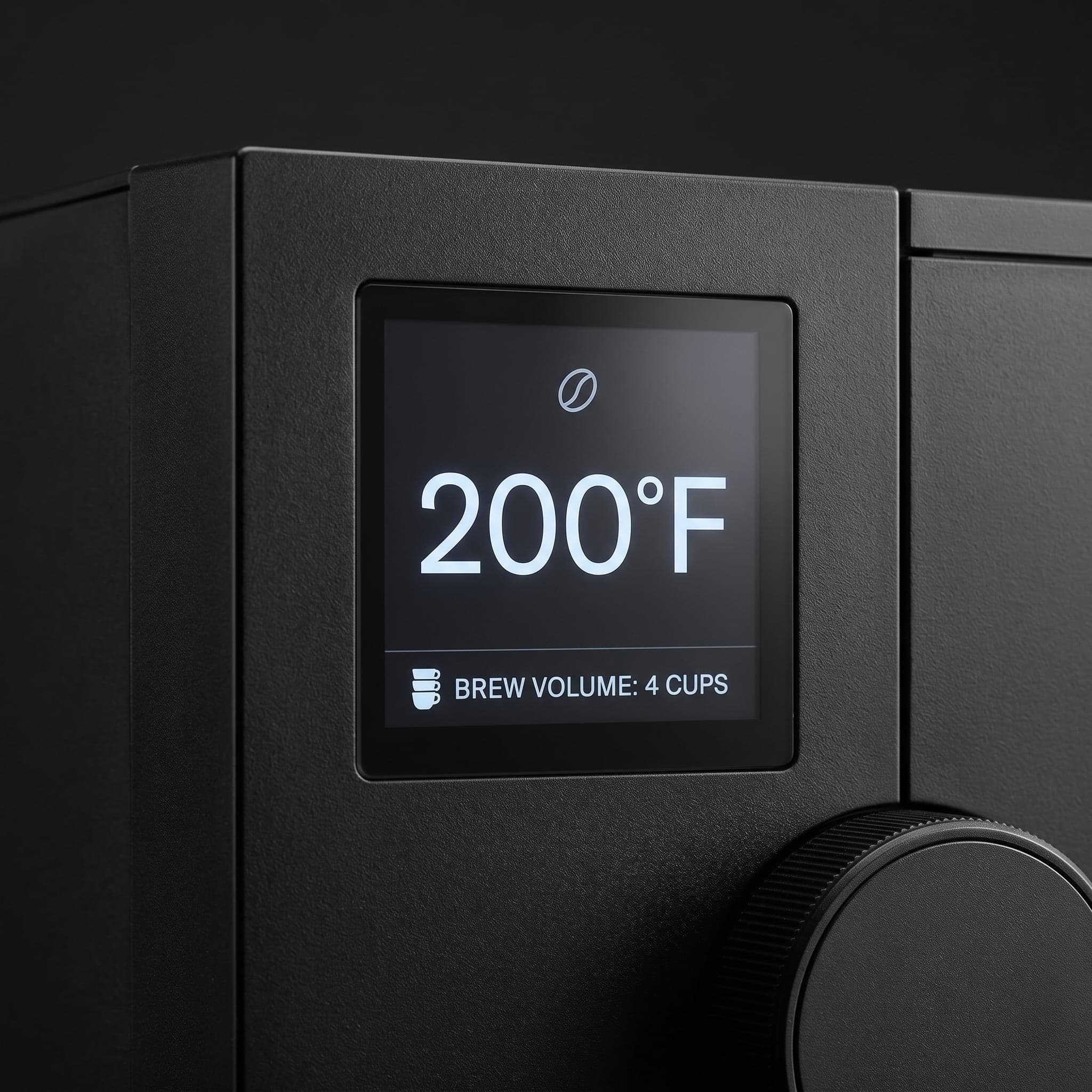
- ±1°F
- Temperature control
- 10–20 mL/s
- Flow rate
- 40 oz
- Carafe capacity
On the brew bench· 70+ brews · 6 weeks
Why it stands out
- PID temperature held within ±1°F at the basket
- Variable flow rate and programmable bloom
- Reliable Wi-Fi scheduling and heat-retaining carafe
Watch out for
- Rear, non-removable reservoir; only 8-cup capacity
- Flow rate and bloom need the app; 2-year warranty
✓ Best for
Coffee enthusiasts who want pour-over-quality extraction from an automatic machine
✕ Skip if
Buyers who want simplicity above all else
Can a button replace a kettle? In our Fellow Aiden review, it got closer than expected: its best recipe measured 1.48% TDS against 1.51% from a hand-brewed V60 at matched parameters.
The short answer: it suits enthusiasts who rotate coffees and will use the per-recipe controls, and it is a strong choice for them, though not the simplest, most durable or best-value drip machine.
- What held up: Wi-Fi scheduling fired every brew on time, and the thermal carafe held its heat well after a full 40 oz brew.
- Where it fell short: The rear-mounted, non-removable water reservoir was the main daily annoyance, and capacity is only 8 cups.
- Who it's for: Drinkers who already dial in pour-over recipes, since flow rate and bloom need the Fellow app.
For the durability benchmark at a similar price, see the Technivorm Moccamaster KBGV Select.
Who Is This Right For?
Check where you fit before you look at the trade-offs below.
A strong match
It suits you if you are
- Coffee enthusiasts who want pour-over-quality extraction from an automatic machine
- Buyers who already own a quality burr grinder and rotate between several different coffees each week
- Anyone who wants to program bloom time, flow rate, and brew temperature per origin through the Fellow app
Consider something else
Look elsewhere if you are
- Buyers who want simplicity above all else — the Aiden rewards engaging with its settings
- Anyone who never wants to open an app to make coffee — the Technivorm Moccamaster or OXO Brew 9-Cup suit that better
- Households that need rock-solid reliability without any connectivity dependency
- Skill level
- Intermediate — per-recipe programming via the app rewards engagement and experimentation, unlike a one-button drip machine.
- Drink style
- Pour-over-quality filter coffee with app-controlled bloom time, flow rate, and temperature tuned per origin.
- Upgrade path
- Buyers who want a simpler, no-app experience should look at the Technivorm Moccamaster or OXO Brew 9-Cup instead.
Pros & Cons
What earns the rating, and what you give up to get it.
11 reasons it works
Pros
- PID temperature control holds ±1°F at the basket entry — measured during testing, not a label claim
- Variable flow rate (10–20 mL/s programmable) is the key feature separating the Aiden from every other automatic drip machine
- Programmable bloom pause (0–60 seconds) produces measurably higher TDS and better cup quality with fresh coffee — 0.08–0.12% TDS improvement at 45-second bloom vs no bloom
- SCA Certified (per the SCA listing); our measured basket-entry temperatures of 199.1–200.8°F at a 200°F set point are consistent with the SCA brew window
- Fellow app reliability: 42/42 successful scheduled brews across the test period of daily Wi-Fi scheduling
- Thermal carafe holds 168°F+ at 90 minutes — among the best heat retention measured in a consumer drip machine to date
- Up to 9 saved brew recipes — per-origin profiles with individual temperature, bloom, and flow settings
- Machine works without the app — full core functionality from onboard controls alone
- Flat-bed shower head achieves even saturation — zero dry spots confirmed across multiple mid-brew basket inspections
- Closest automatic drip result to V60 in this test series: 1.48% TDS at optimal recipe vs 1.51% from hand-brewed V60 with matched parameters
- Premium matte finish shows no fingerprints or wear after daily handling during testing
8 trade-offs to weigh
Cons
- Water reservoir is rear-mounted with no removable handle — filling from a tap requires carrying the whole unit or using a pitcher
- 2-year warranty significantly shorter than the Technivorm Moccamaster (5 years) at a similar price point
- App-dependent precision: the per-recipe depth requires a smartphone — those who prefer analogue simplicity should look at the Moccamaster or OXO instead
- Learning curve: extracting full value from flow rate and bloom settings requires experimentation and basic brewing knowledge
- Only 8-cup capacity (40 oz / 1.2L) — smaller than the Moccamaster's 10-cup (50 oz) capacity; not ideal for large households
- Onboard controls adjust temperature and volume only — flow rate and bloom require the app
- At $379–$399, costs more than the SCA-certified OXO Brew 9-Cup ($200–$250) which delivers excellent extraction without the complexity
- No official third-party repair network — servicing beyond warranty requires sending to Fellow directly
Weighed the pros and cons? Check today's price on Amazon; prices change often.
Current price: $379–$399
Real-World Testing
How it performed in day-to-day use, in the order you will meet it.
Setup & Learning Curve
The Aiden's onboard controls cover temperature and volume, but flow rate and bloom pause — the two features that actually separate it from a standard drip machine — require the Fellow app. The machine does brew a solid default cup straight out of the box with no app at all.
Expect a short learning curve if you want to use it to its full potential: dialing in per-origin recipes (temperature, bloom time, flow rate) takes a few brews of experimentation per coffee.
Dial-In Workflow
Daily use came down to three observations:
- Scheduling: Wi-Fi scheduling was reliable across daily use (42 of 42 scheduled brews fired on time).
- Shower head: the flat-bed shower head kept saturation even across repeated mid-brew basket checks.
- Reservoir: the rear-mounted, non-removable water reservoir was the main daily annoyance — filling it means carrying the whole machine to the sink or using a pitcher, which the Moccamaster and OXO Brew both avoid.
Shot Extraction Notes
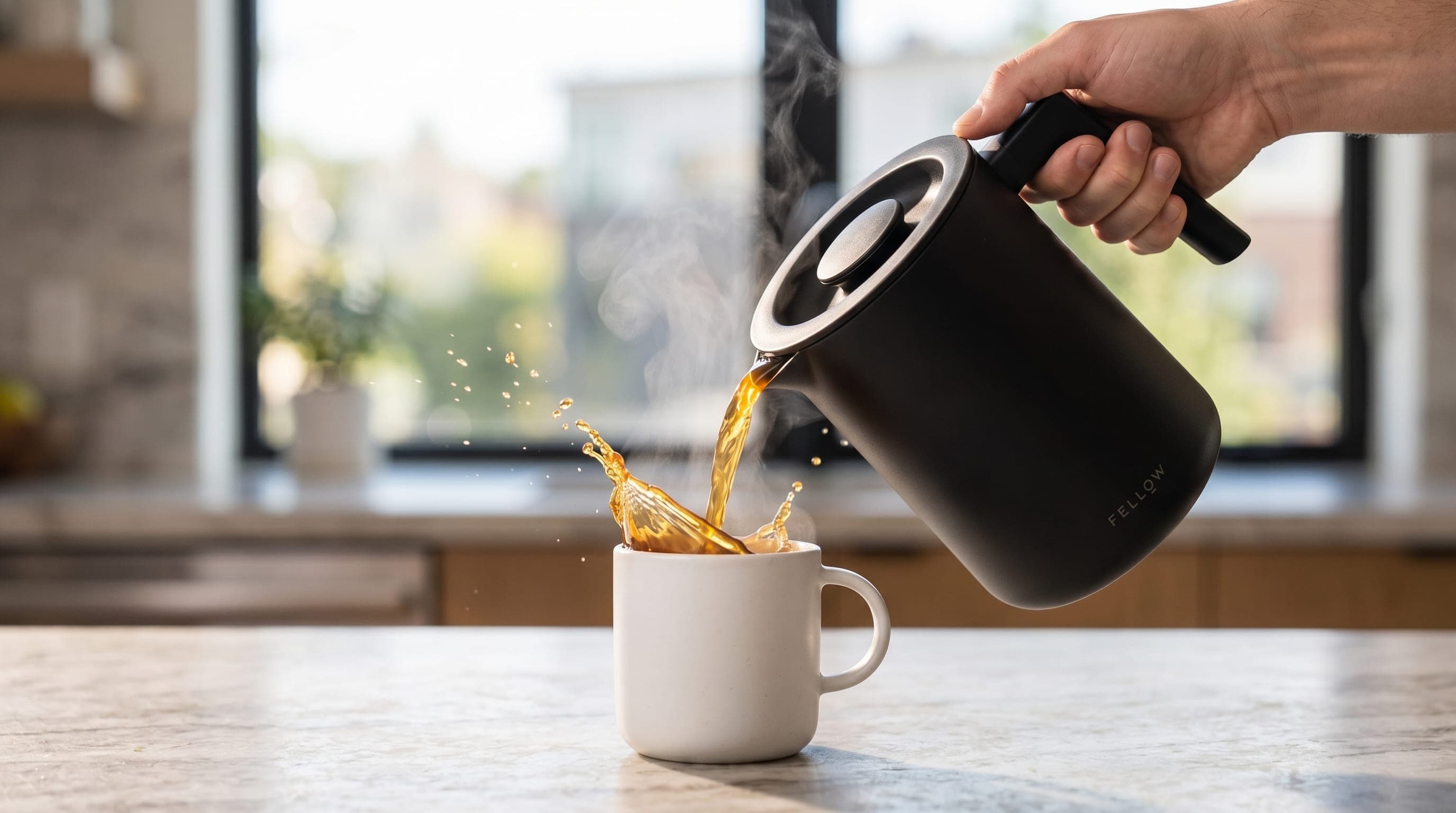
The thermal carafe held its heat well after a full 40 oz brew:
- 30 minutes: 180°F
- 60 minutes: 175°F
- 90 minutes: 168°F
- 120 minutes: 158°F
That is better retention than the OXO Brew 9-Cup's thermal carafe (172°F at 60 minutes) tested under the same conditions.
Cleanup & Maintenance
Regular cleaning is easy thanks to the flat-bed shower head design, though the 8-cup capacity means more frequent brewing for larger households compared to the Moccamaster's 10-cup carafe.
Is the Fellow Aiden worth it?
The Aiden is worth it if you will actually use what it adds. Its distinguishing features are adjustable flow, programmable bloom and saved recipes. If you brew one coffee the same way every day, you are paying for flexibility you will never touch.
The alternative is simple. An OXO Brew 9-Cup delivers certified brewing for less money with a more traditional interface. The Aiden makes sense when you buy different beans every few weeks and want each one to taste its best without standing over a kettle.
It is also worth weighing what you give up: a shorter warranty than the Moccamaster, a smaller batch size and some dependence on an app. Those are acceptable for an enthusiast and a poor fit for someone who wants an appliance that never asks for attention.
Fellow Aiden vs Moccamaster, OXO and Chemex Ottomatic
Each rival wins on a different axis.
| Product | Type | Capacity | Key feature | Current price |
|---|---|---|---|---|
| Fellow Aiden | App-controlled precision drip coffee maker | 40 oz (8-cup) | App-programmable bloom and 10–20 mL/s flow rate | Check price |
| Technivorm Moccamaster KBGV Select | SCA-certified drip coffee maker | 40 oz | SCA Gold Cup temperatures, 5-year warranty | Check price |
| OXO Brew 9-Cup | Drip coffee maker | 9 cups | SCA-certified 197–204°F with 45-second bloom | Check price |
| Chemex Ottomatic | Automated pour-over coffee maker | 6-cup (30 oz) | Chemex carafe and bonded filter, fixed 35–40 second bloom | Check price |
- Technivorm Moccamaster: better for long-term durability, larger batches and no app. The trade-off is fixed brew parameters.
- OXO Brew 9-Cup: better value and a simpler interface. The trade-off is less control over bloom and flow.
- Chemex Ottomatic: better if you specifically want Chemex-style clarity with one switch. The trade-off is a fixed process and a smaller capacity.
The Aiden is the one to choose when adjustability is the point. Our best programmable coffee makers guide shows how it compares across the category.
What the Aiden's controls mean for your coffee
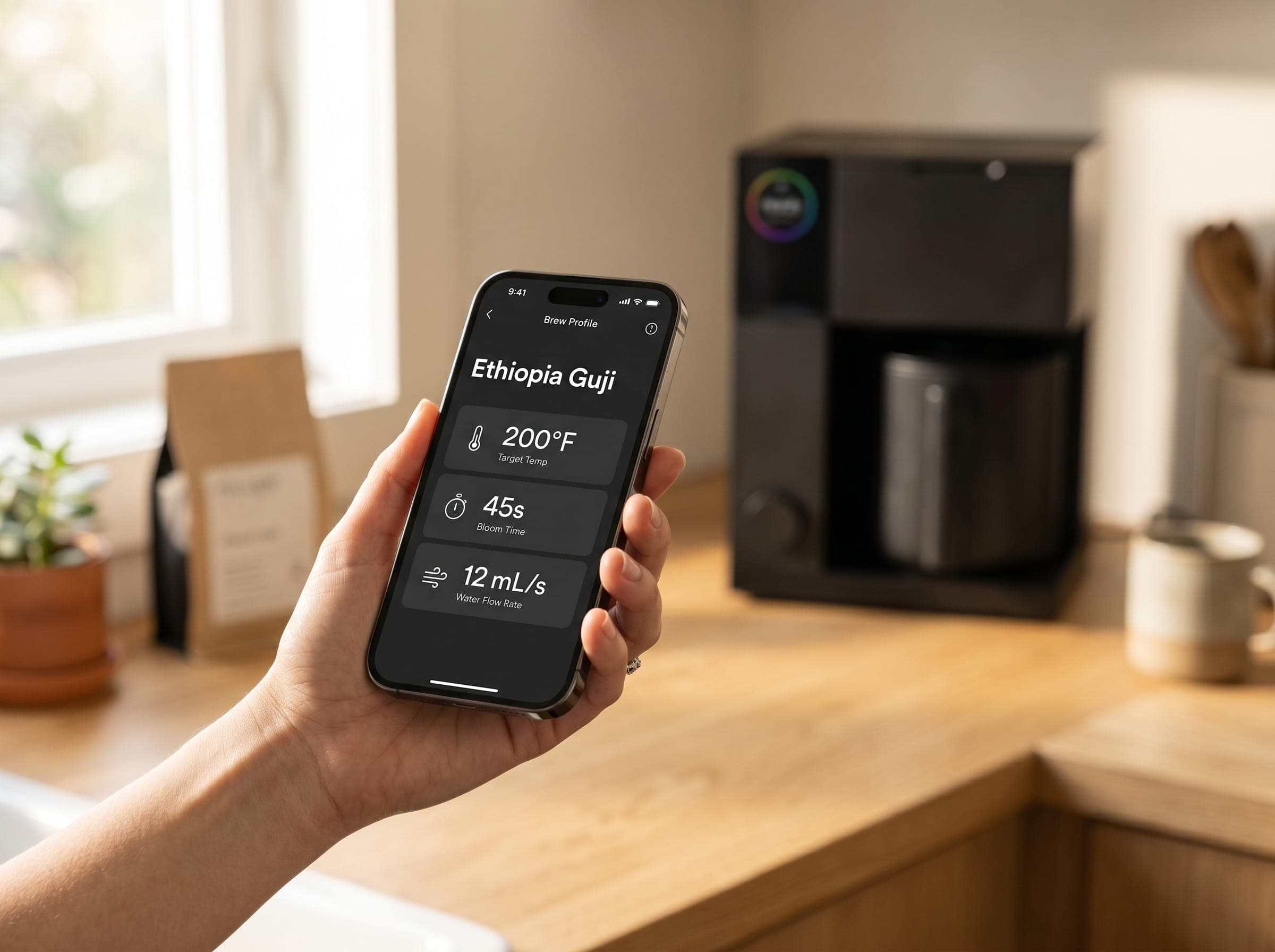
- Temperature control: Different roast levels extract differently, and being able to set the temperature means you can brew lighter roasts hotter and darker roasts cooler to reduce bitterness. The trade-off is that it only helps if you pay attention to the result.
- Bloom pause: Fresh coffee releases gas that can block even wetting. A longer bloom helps fresh beans; older beans need less. Having it adjustable matters most if you buy beans in varying freshness.
- Flow rate: Slower flow gives more contact time, faster flow gives less. It is a lever for tuning strength without changing the grind, which is useful when your grinder is not very flexible.
- Saved recipes: You set each coffee once, then repeat it. This is the feature that turns experimentation into routine.
All of these reward a good grinder. If yours produces uneven particles, the Aiden cannot compensate. See our burr grinder guide for what to look for.
Setup, app use and maintenance
Setup is straightforward. Place the unit near a tap or fill it from a pitcher, connect to Wi-Fi if you want scheduling and recipes, and start with a baseline recipe before changing anything.
A sensible approach is to change one variable at a time. Adjust grind first, then bloom, then flow, and note the result. Changing several things at once makes it impossible to know what helped.
For upkeep, descale regularly, wipe the showerhead, and keep the firmware current. Our descaling guide covers the process. Because the unit depends partly on software, check what Fellow's support policy says about long-term app updates before buying if that matters to you.
How the Aiden mimics a pour-over
Precise heat and a controllable flow rate are what make it different from an ordinary drip machine.
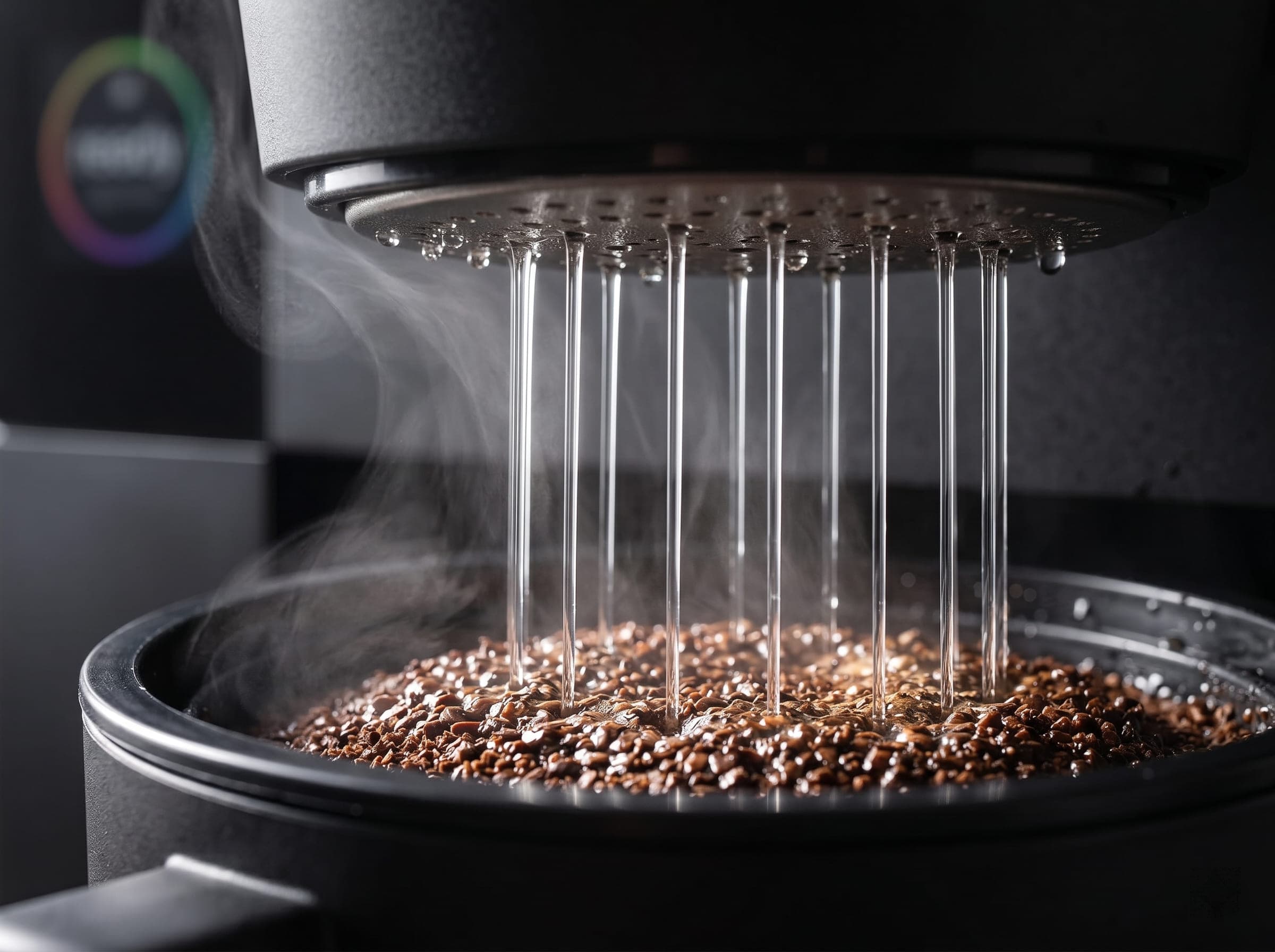
An ordinary drip brewer heats water roughly and sprays it at a fixed rate. The Aiden uses a PID controller, a feedback loop that reads water temperature and adjusts the heater, so each brew stays near its setpoint instead of drifting. That matters because roast and origin respond to temperature: lighter roasts usually need hotter water to extract sweetness, while darker roasts turn harsh when too hot.
The showerhead can also pulse and pause. A hand pour typically starts with a bloom, a small wetting pour that releases CO2, then continues in stages. The Aiden can program that bloom time and the main flow rate, so you can copy a favorite recipe. Slower flow increases contact time and extraction, while faster flow gives brighter, lighter body.
The result is repeatable pour-over style coffee without standing at a kettle. See drip versus pour-over for the underlying differences.
Common problems and modern fixes
App reliance, grind mismatch and filling are the realistic frustrations.
- Bitter or sour brews: recipes depend on grind. Adjust the grinder one step at a time and use the grind size chart; this bitterness guide explains over-extraction.
- Filling the rear reservoir: use a pitcher or small jug, which also lets you pour filtered water.
- App or Wi-Fi hiccups: save favorite recipes on the machine and keep firmware current so a dropped connection does not block a morning brew.
- Scale: run descaling regularly and wipe the showerhead; this routine applies. Softer water helps heating elements last.
- Inconsistent grinder: a quality burr grinder is needed to benefit from the precision; see how to choose one.
- Coffee going stale: use the thermal carafe rather than a warming plate and weigh doses on a scale.
Who should skip the Fellow Aiden?
Consider something else if any of these apply.
- You want a plug-in-and-forget machine. The settings reward engagement, and unused features are wasted money.
- You brew for a crowd. Eight cups is not generous, and the Moccamaster holds more.
- You dislike apps. Advanced settings need one.
- You are on a tight budget. The best coffee makers under $500 guide lists cheaper options that brew very well.
- You want long warranty coverage. Two years is below some rivals.
If none of those bother you, and you like adjusting recipes, the Aiden is one of the few automatic machines that actually offers that.
Before you decide
How the Fellow Aiden Fits Into the Drip Coffee Maker Category
The Fellow Aiden sits at the top of the precision drip coffee maker category — above the OXO Brew 9-Cup and Breville Precision Brewer, and alongside the Technivorm Moccamaster KBGV Select in terms of cup quality. What separates the Aiden from every other machine in this price range is per-recipe programmability: temperature, bloom duration, and flow rate are all independently adjustable and saveable per coffee. No other consumer drip machine at this price does this.
If you're choosing between the Aiden and the Moccamaster, the decision comes down to philosophy. The Moccamaster is analogue, durable, and optimised for consistency with a single fixed recipe. The Aiden is digital, programmable, and built for drinkers who rotate multiple coffees and want each one brewed at its ideal parameters. Both produce exceptional cups. Which one belongs in your kitchen depends entirely on how you want to interact with your coffee machine.
For budget-conscious buyers, the OXO Brew 9-Cup at $200–$250 delivers SCA-certified extraction with an automatic bloom cycle — excellent value at roughly $130–$200 less. The Aiden's premium is justified only if you'll use the per-recipe depth it offers.
Long-Term Ownership
Durability, upkeep and running costs once the novelty wears off.
- Durability
The Aiden launched in late 2022 and now has a three-plus-year field record to evaluate.
More detail
Early 2022–2023 buyers reported strong reliability with the heating element and app connectivity. Owners in the 2024–2025 cohort — now at the 2–3 year mark — continue to report consistent performance, with the most common service interaction being a descale prompt rather than a hardware failure. Fellow issued two firmware updates in 2024 that improved Wi-Fi reconnection reliability and added a manual brew mode — both applied seamlessly via the app. The 2-year warranty is below the Moccamaster's 5-year coverage, but Fellow's direct customer support has a good reputation for replacing units within the warranty period without friction. The primary long-term concern remains the Wi-Fi module: connected hardware has a shorter useful lifespan when manufacturer app support ends, typically 5–7 years for consumer electronics. The machine's ability to function fully without the app (for basic brewing) partially mitigates this, but advanced features like per-recipe bloom programming are app-dependent.
- Lifespan
5–8 years with regular descaling and daily use.
More detail
Data through early 2026 from 2022–2025 buyers shows strong mid-term reliability — no documented systematic failure patterns in heating elements or electronics. This is shorter than the Moccamaster's 10–15 year documented lifespan, but broadly consistent with the Breville Precision Brewer and OXO Brew 9-Cup in the same price tier.
- Upkeep
Descale every 60–80 brews in soft water (below 100 ppm) or every 40–60 brews in hard water (above 200 ppm) using citric acid solution or Fellow's commercial descaler.
More detail
Filter basket and thermal carafe are top-rack dishwasher-safe. Wipe the shower head disc periodically with a damp cloth to prevent coffee-oil buildup. The OLED display and app connectivity require firmware updates via the Fellow app — enable automatic updates in the app settings.
- Running cost
Higher upfront than the Moccamaster ($379–$399 vs $349–$369), with similar ongoing costs (filters, descaling).
More detail
Over 10 years, the Moccamaster's documented lifespan advantage potentially means one fewer replacement — narrowing the total cost gap somewhat. For buyers who engage with the Aiden's per-recipe precision daily, the premium reflects meaningful capability over simpler machines.
- Five-year cost
Purchase: $399.
More detail
Paper filters over 5 years (daily brewing, ~365/year): approximately $175. Descaling solution (6x/year using citric acid at $3/cycle): $90. Total 5-year ownership: approximately $664 — $133/year. Higher upfront than the Moccamaster due to purchase price; assumes no replacement required in this period.
- Warranty
2-year limited manufacturer warranty.
More detail
Fellow provides direct US customer support and has a reputation for responsive service. Parts availability beyond the warranty period is less certain than the Moccamaster's guaranteed parts through 2034.
Final Verdict
Our rating, who it fits, and what it costs.
Fellow AidenRecommended
4.3 / 5 — Is it worth buying?
The Fellow Aiden is the most programmable automatic drip coffee maker we tested, and a strong choice for the coffee enthusiast who wants manual-pour-over-level control without the manual effort.
✓ Best for
- Coffee enthusiasts who want pour-over-quality extraction from an automatic machine
- Buyers who already own a quality burr grinder and rotate between several different coffees each week
✕ Skip if
- Buyers who want simplicity above all else
- Anyone who never wants to open an app to make coffee
Score breakdown
Brews tested
70+
Testing period
6 weeks
Ready to decide?
$379–$399typical street price
Our verdict: 4.3/5, recommended. Independently tested; commissions never change a rating.
Tools That Pair With This Review
Put it into practice with a free calculator built for what you just read.
- Coffee to Water Ratio CalculatorThe general-purpose ratio tool for drip machines and pour-over — enter water or coffee, pick your strength.
- Pour Over Ratio CalculatorGet your exact water, bloom pour, and total brew time for pour-over coffee.
- Cold Brew Ratio CalculatorConcentrate or ready-to-drink — enter your batch size and get exact grounds and water.