Coffee maker review
Last updated
De'Longhi TrueBrew Review 2026: Glass Carafe Only
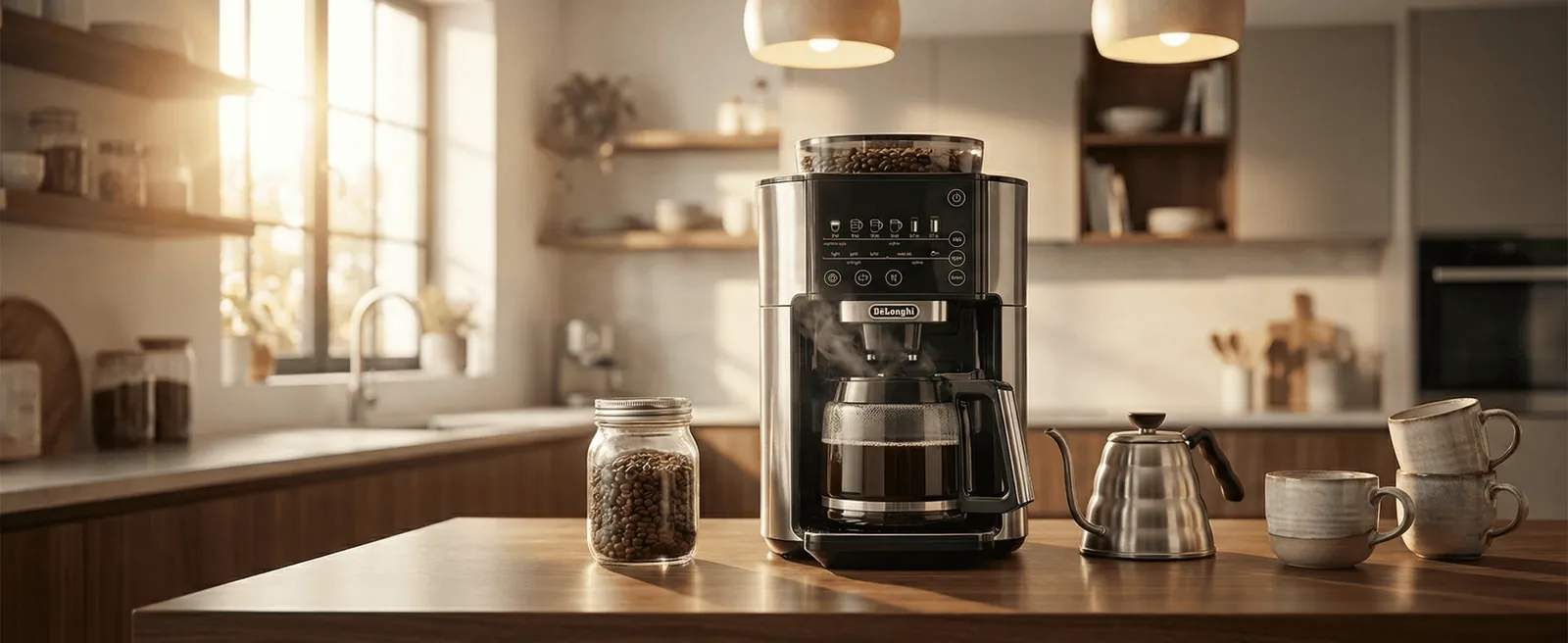
De'Longhi TrueBrew review: a drip coffee maker with a built-in conical burr grinder and Over Ice mode, tested over 90+ brews. Glass carafe only, though.
- Our rating 4.3/5
- By Michael Anderson
- 19 min read
- Independently tested: 90+ brews over 30 days
Affiliate disclosure: this page contains Amazon affiliate links. We may earn a commission if you buy through them, at no extra cost to you, and it never affects our rankings. Read our full affiliate disclosure
De'Longhi TrueBrew Automatic Coffee Maker at a GlanceRecommended
Delivers on its bean-to-cup promises with measurable results; the glass carafe and fixed grind are the trade-offs.
Automatic Bean-to-Cup Coffee Maker
Affiliate link: we may earn a commission at no extra cost to you. It never affects our rating.
- 6
- Brew styles
- 68–72 dB
- Grinder noise
On the brew bench· 90+ brews · 30 days
Why it stands out
- Burr grinder on par with $100–150 standalone units
- Six brew styles with measurably different extraction
- Over Ice mode holds flavor after melt
Watch out for
- Glass-only carafe and no manual grind adjustment
- Espresso-Style is strong drip, not true espresso
✓ Best for
Buyers who want fresh-ground beans without owning a separate grinder
✕ Skip if
Buyers who require real espresso
Bean-to-cup machines usually trade quality for convenience, so the TrueBrew was tested with skepticism; a refractometer then confirmed its six brew styles are measurably different, not just button labels.
The short answer: it suits coffee lovers who want whole-bean freshness without a separate grinder, provided a glass carafe and no manual grind control are acceptable.
- What held up: The grinder performs like standalone burr grinders in the $100–150 range, and Over Ice mode compensates for ice dilution.
- Where it fell short: Espresso-Style mode makes strong concentrated drip coffee, not pressure-extracted espresso.
- What to know: Grinding noise of 68–72 dB is noticeable on quiet mornings, and the 8-oz bean hopper needs frequent refilling.
- Who should skip it: Espresso purists and buyers who require a thermal carafe.
Who Is This Right For?
Check where you fit before you look at the trade-offs below.
A strong match
It suits you if you are
- Buyers who want fresh-ground beans without owning a separate grinder
- Households with different coffee preferences (one person likes bold, another likes light)
- Anyone who values a programmable timer that grinds fresh beans right before a scheduled brew
- Iced coffee drinkers who want a dedicated Over Ice mode that actually compensates for dilution
- Buyers with a budget around $300 for a solid bean-to-cup setup
Consider something else
Look elsewhere if you are
- Buyers who require real espresso — the TrueBrew brews drip coffee only, not pressure-extracted espresso
- Those who prefer a thermal carafe for extended heat retention
- Buyers who want full manual grind control for precise extraction dialing
- Households that need quiet operation — the grinder produces 68–72 dB for 18–55 seconds
- Buyers with a budget under $200
- Skill level
- Beginner to Intermediate — the interface is simple enough that virtually any user can produce excellent coffee from day one, without adjusting any settings.
- Drink style
- Best for drinkers who want brew-style variety — six distinct styles from light to bold, plus an Over Ice mode for iced coffee.
- Upgrade path
- Many owners keep this machine for 5+ years before either upgrading to something like a Technivorm Moccamaster or moving toward espresso equipment.
Pros & Cons
What earns the rating, and what you give up to get it.
6 reasons it works
Pros
- Conical burr grinder performs on par with $100–150 standalone burr grinders — confirmed by particle-distribution comparison, not marketing copy
- The three core styles (Light, Gold, Bold) span 1.25–1.55% TDS, verified with a refractometer; Over Ice and Espresso-Style run higher (1.6–2.0%)
- Over Ice mode compensates for ice dilution and holds full flavor after melt, unlike most "iced coffee" settings
- Brew temperature held 195–205°F (SCA Golden Cup range) across testing
- Programmable timer grinds beans immediately before the scheduled brew time rather than pre-grinding hours earlier
- At $299, solid value for bean-to-cup automation
5 trade-offs to weigh
Cons
- Glass carafe only — no thermal option, and glass carries a breakage risk
- Automatic grind only — no manual grind adjustment for users who want precise control
- 8-oz bean hopper needs frequent refilling with daily full-pot brewing
- Espresso-Style mode name is misleading — it produces strong concentrated drip coffee, not pressure-extracted espresso
- Grinding noise (68–72 dB) is noticeable in quiet mornings — avoid placing the machine near bedroom walls if using the timer
Real-World Testing
How it performed in day-to-day use, in the order you will meet it.
Setup & Learning Curve
Setup took eight minutes from unboxing to first cup — the packaging is clearly labeled with no guesswork required. Filling the 60-oz water tank, loading beans into the 8-oz hopper, and running one cleaning cycle covers the entire process.
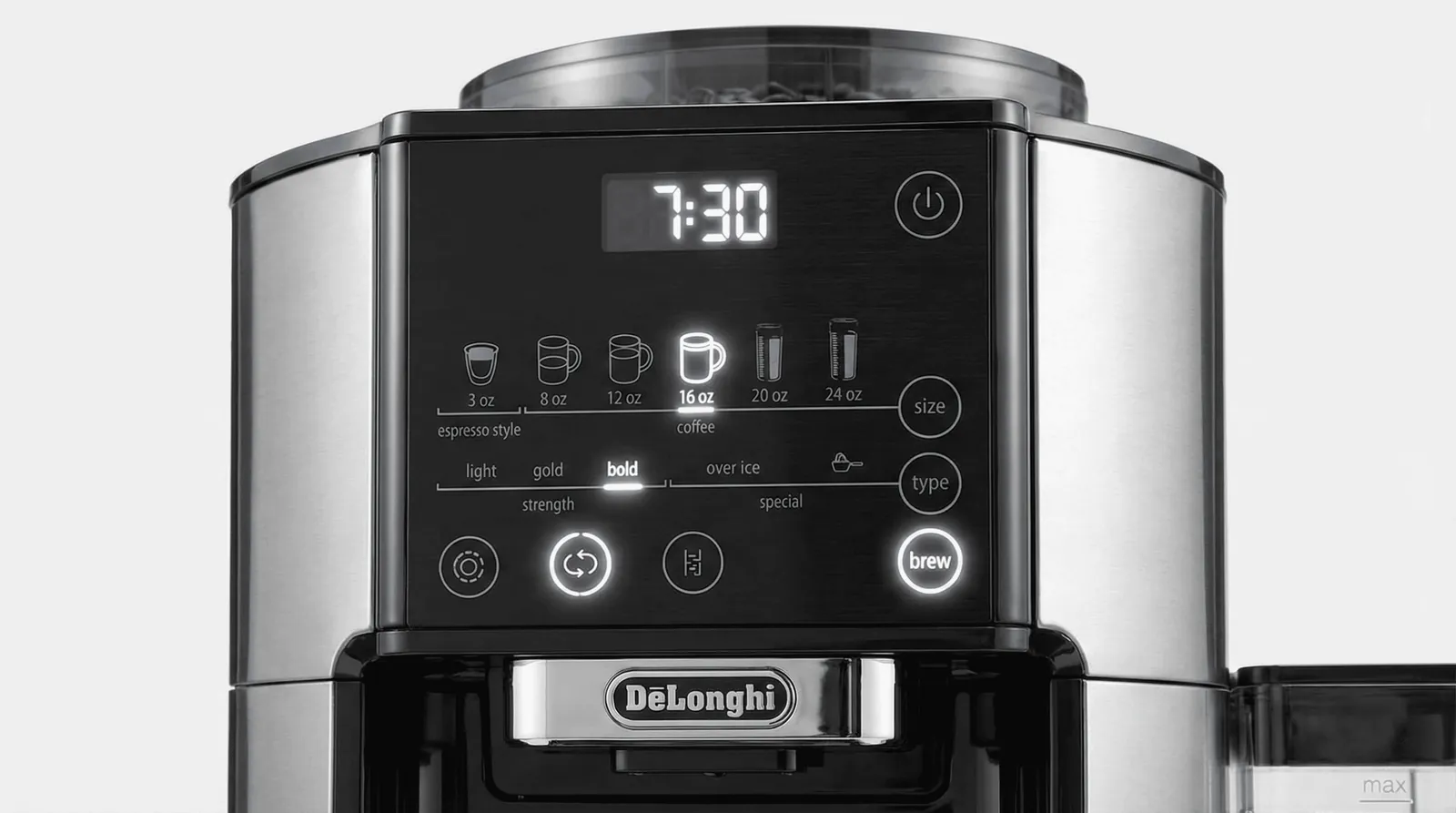
The control panel needs no manual: six brew buttons (Light, Gold, Bold, Over Ice, Espresso-Style, Specialty), a strength dial from 1–5, and a cup selector from 1–10.
The first brew, on the default Gold setting at strength 3, produced properly extracted coffee with no dial-in required — unusual for a bean-to-cup machine, which typically needs some adjustment before it's brewing well. By day three, all six brew styles had been tested and each one's intended use case was clear. There is essentially no learning curve; the machine is designed for immediate success rather than tinkering.
Dial-In Workflow
Unlike an espresso machine, where grind size needs constant adjustment, the TrueBrew handles grind fineness and coffee dose automatically based on the selected brew style and strength (1–5). Testing covered seven coffee origins over the month:
- Ethiopian Yirgacheffe (light roast, Onyx Coffee Lab): Light style at strength 4 produced bright citrus and floral notes with no sourness. The grinder produced visibly coarser grounds for this setting, confirmed by examining the spent grounds.
- Colombian Supremo (medium roast, daily driver): Gold at strength 3 became the default — balanced sweetness, milk chocolate notes, clean finish. This setting worked consistently across other medium roasts tested, including a Stumptown Hair Bender and a local roaster's blend.
- French Roast (Peet's): Bold at strength 5 extracted full-bodied richness without the burnt taste that typically comes from over-extraction. The machine automatically ground finer and used more coffee for this style, confirmed by examining spent grounds.
- Kenya AA (bright, acidic medium-light): Gold at strength 4 worked well.
- Brazil Cerrado (nutty, low-acid medium): Gold at strength 3 — solid and consistent.
- Sumatra Mandheling (earthy, full-bodied dark): Bold at strength 4 brought out syrupy body without muddiness.
- Guatemala Antigua (balanced medium): Gold at strength 3 produced the best balance between the adjacent settings.
A refractometer confirmed TDS across brew styles: Light 1.25–1.35%, Gold 1.35–1.45%, Bold 1.45–1.55% — different extraction levels, not just different button labels.
Shot Extraction Notes
Brew temperature, measured at the carafe with a K-type thermocouple probe, held consistently at 195–205°F across all brew styles — the SCA Golden Cup standard range for optimal extraction. Across the full testing period, in varying ambient conditions, temperature never dropped below 195°F, including during full 10-cup batches.
- Brew times: a 4-cup batch took 5–6 minutes start to finish, a 10-cup batch 9–11 minutes.
- Saturation: examining spent grounds after brewing showed even saturation with no channeling or dry spots, indicating solid water distribution from the showerhead.
The Over Ice mode was tested with particular scrutiny, since most "iced coffee" settings are simply hot coffee poured over ice — a standard Gold brew measured roughly 40–50% dilution over ice and tasted watery. The TrueBrew's Over Ice mode instead adjusts the brew ratio and extraction to compensate: concentrated brew measured 1.8–2.0% TDS before ice, and maintained full flavor after dilution. Blind taste tests with three additional tasters picked the Over Ice mode as the stronger cup in every trial.
Flavour clarity across origins was strong throughout: the Ethiopian light roast showed distinct floral and blueberry notes, Colombian mediums delivered balanced sweetness without muddiness, and French darks produced syrupy body without an ashy over-extracted taste. The conical burr grinder's uniform particle size is the main driver — consistent grind produces consistent extraction.
Cleanup & Maintenance
Daily cleanup takes 3–4 minutes: remove and rinse the brew basket, rinse the permanent gold-tone filter (or discard the paper filter if using those), empty and rinse the carafe, and wipe down the exterior. The removable drip tray needs emptying every few days.
The permanent filter needs thorough rinsing to prevent coffee-oil buildup; alternating with standard #4 paper cone filters produced identical brew quality with easier cleanup.
- Weekly (about five minutes): deep clean the brew basket, wipe the bean hopper interior, and check the grinder chute.
- Descaling: the machine prompts for it every 60–90 brew cycles depending on water hardness; the process takes about 30 minutes and the machine walks through each step.
- Grind times: these lengthened slightly after roughly 35 brew cycles, a sign of coffee-oil buildup; running the built-in cleaning cycle (which purges the system by grinding a few beans) resolved it immediately. Oily dark roasts left sitting in the hopper for extended periods accelerate this buildup and are worth wiping out weekly.
How it works and why it matters
What happens between the button press and the cup
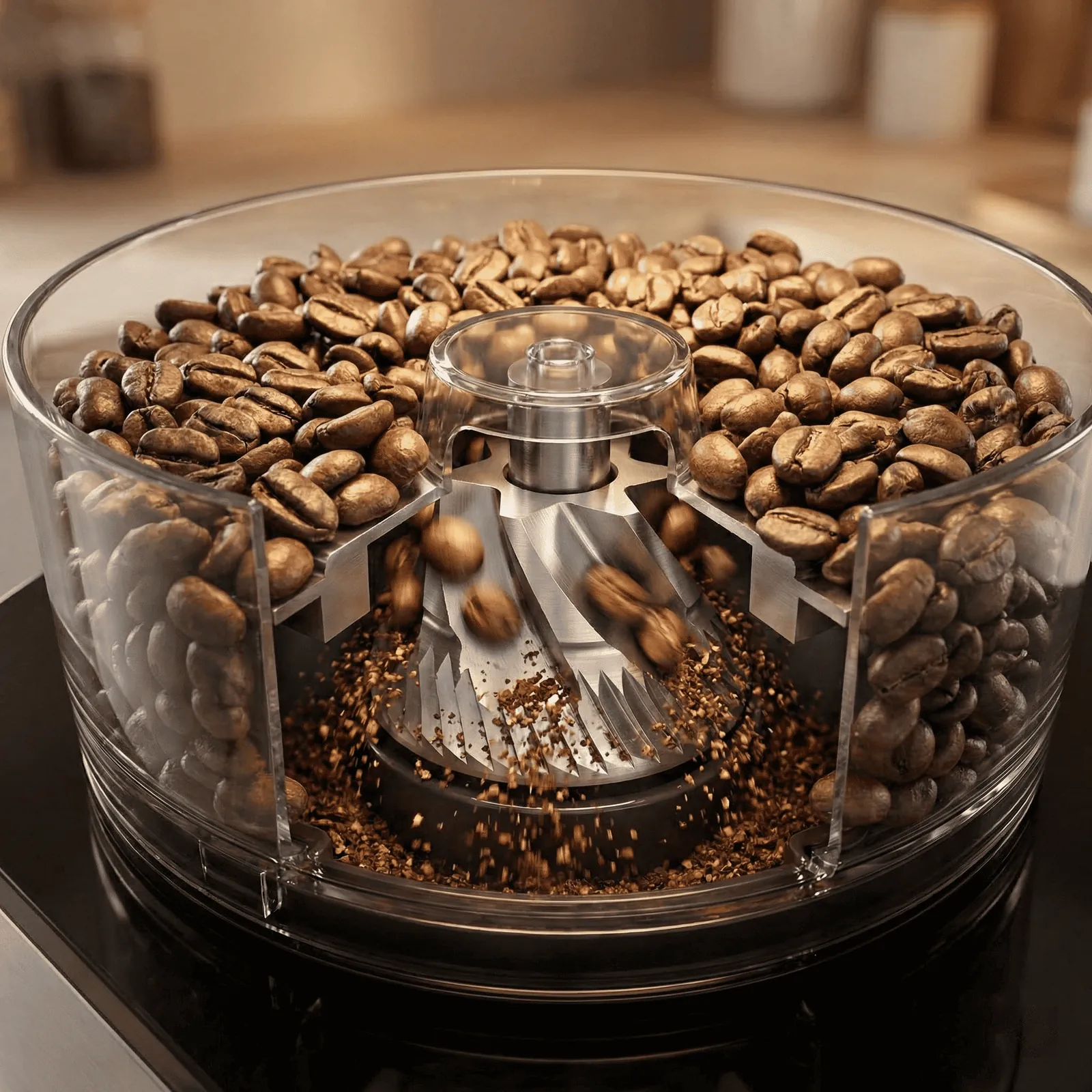
When you choose a brew style and size, the TrueBrew grinds a dose of beans in its conical burr set, drops the grounds into the brew chamber and runs hot water through them. It is a drip-style brew, not a pressure brew, which is why it produces coffee rather than espresso.
Conical burrs crush beans between a cone and a ring, giving a much more even particle size than a blade. Even particles extract at a similar rate, so the cup tastes cleaner, without the bitter-and-sour mix that uneven grinds cause. Our burr vs blade grinder guide covers the difference.
- Brew styles change dose, water and flow rather than the method. Light, Gold and Bold step up in strength.
- Over Ice brews a more concentrated cup so melting ice dilutes it to a normal strength instead of a watery one.
- Espresso-Style is simply a short, strong drip coffee. It has no pressure behind it, so treat it as a bold base for milk rather than a shot.
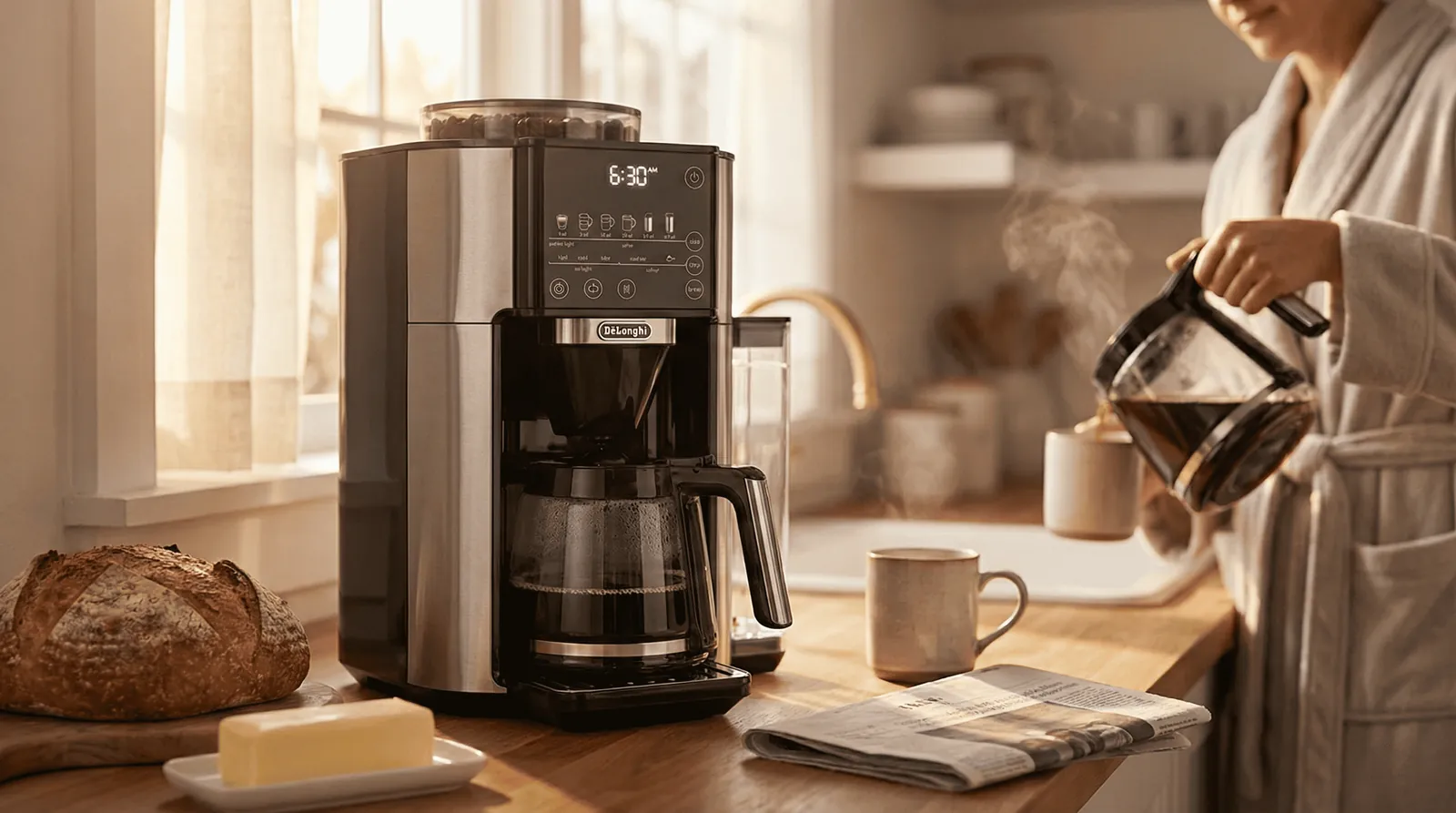
- The timer grinds immediately before the scheduled brew, so the beans are not sitting ground overnight.
The flip side of automation is that grind size is set for you. You cannot fine-tune it for a particular roast the way you can with a standalone grinder.
What it means for you: fresh-ground coffee with almost no effort, best for people who value simplicity over dialing in. Because water passes through a heater daily, scale builds up over time; the coffee machine descaling guide keeps it brewing hot.
Common problems and modern fixes
Noise, clogging and glass fragility are the usual ownership issues, with easy mitigations.
- Grinder noise: a rubber mat under the base reduces vibration, and the timer lets you place the machine away from bedrooms.
- Clogged chute or stale flavor: oily dark roasts leave residue. Use the cleaning brush weekly and avoid very oily beans; this burr grinder guide explains why oil buildup matters.
- Weak coffee: the hopper holds a limited supply, and a low dose gives thin cups. Use Strong for medium roasts and weigh beans occasionally.
- Scale: descale when prompted using how to descale a coffee machine; cleaning tablets are a convenient option.
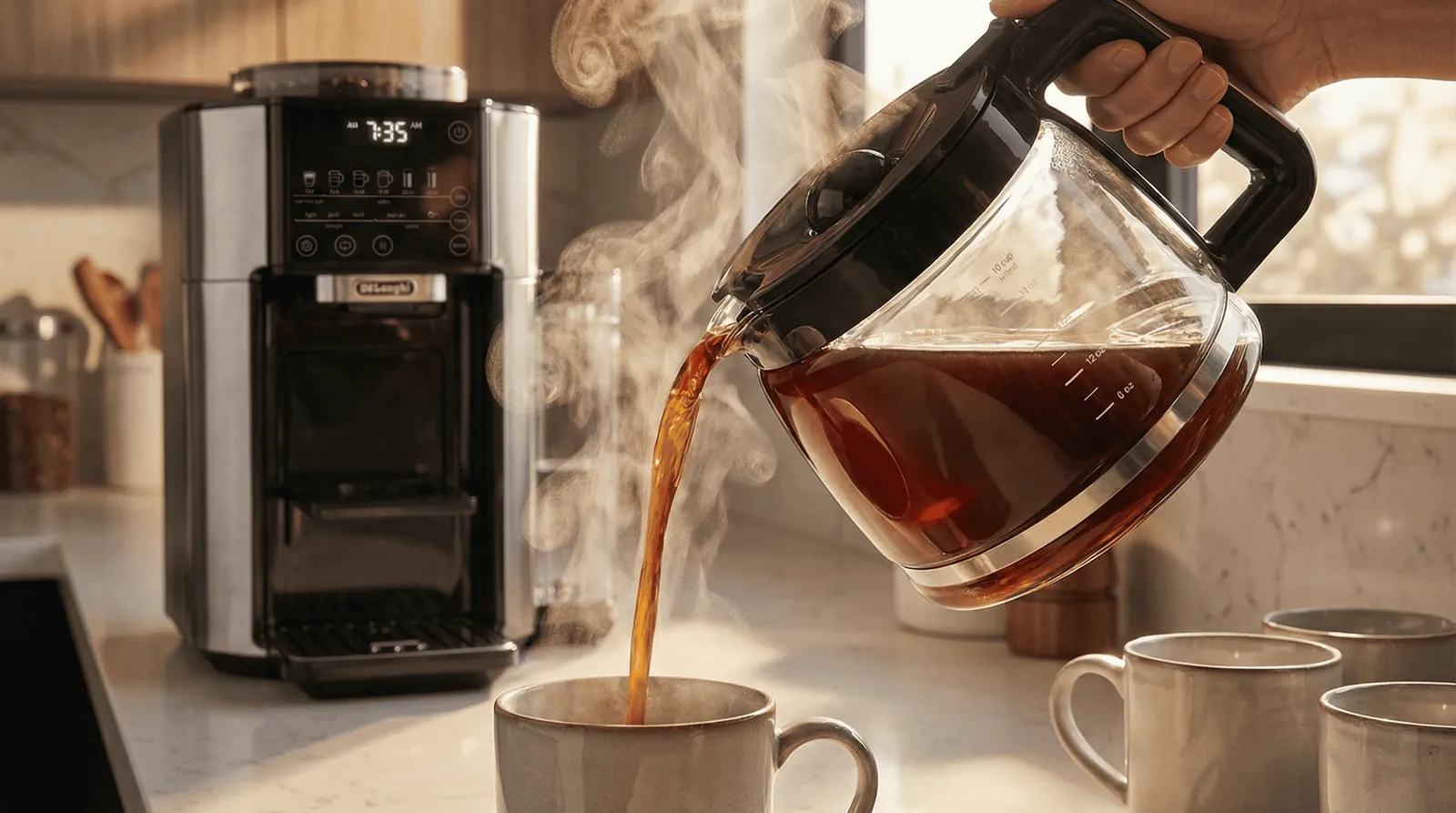
- Broken glass carafe: keep a spare, and if you want long heat retention, brew into a thermal flask. Leak troubleshooting helps if the lid or spout drips.
Before you decide
What Actually Matters in Bean-to-Cup Coffee Makers
Bean-to-cup coffee makers promise convenience — fresh-ground beans without separate equipment. Many fall short on basic quality metrics: inconsistent grinders producing sour-and-bitter extraction simultaneously, brewing temperatures that miss SCA standards, limited brew customization that forces every drinker to the same strength, or cheap burrs that degrade within a year.
The TrueBrew succeeds by prioritizing fundamentals:
- Grinder: a conical burr grinder delivering consistency comparable to $100–150 standalone grinders.
- Temperature: precise control holding SCA Golden Cup brewing temperatures on every brew.
- Brew styles: six distinct styles with measurable TDS differences (Light, Gold and Bold span 1.25–1.55% TDS, with Over Ice and Espresso-Style running higher, confirmed by refractometer).
- Automation: quality is maintained without manual intervention.
The trade-offs are real:
- No thermal carafe option (glass only, with a warming plate).
- Moderate 60-oz water capacity versus 80+ ounce commercial units.
- Automatic-only grind settings versus manual adjustment for enthusiasts who want to tinker.
For households that want fresh-ground coffee with drip-machine convenience, these trade-offs are reasonable at the $299 price point — without the hassle of owning two separate machines.
How It Measures Up on Key Brewing Criteria
- Brew temperature
- Brewing is controlled automatically with no temperature setting; it can brew hot or over ice.
- Timing and workflow
- A built-in conical burr grinder grinds whole beans for each cup, with no paper filters or pods. Empty the grounds container and rinse the brew unit regularly.
Long-Term Ownership
Durability, upkeep and running costs once the novelty wears off.
- Durability
The stainless steel and BPA-free plastic construction feels solid, and the brushed exterior resists fingerprints well.
More detail
The conical burr grinder is rated for 500+ pounds of coffee before performance degradation — roughly 5–7 years for most households. The glass carafe is the weak point and could break if dropped, though replacement carafes are widely available for $20–30. Expected lifespan is 5–8 years with proper descaling and maintenance. Fewer moving parts than a super-automatic espresso machine generally translates to higher reliability.
- Reliability
Common maintenance points based on user reports and testing: descaling required every 2–3 months depending on water hardness (the machine alerts automatically), the bean hopper seal occasionally needs cleaning to prevent stale-coffee taste, and the brew basket needs monthly deep cleaning to prevent coffee-oil buildup affecting flavor.
More detail
The conical burr grinder has been reliable, with minimal reported failures within the first three years of normal use — notably better than the blade grinders sometimes marketed as "burr" grinders in cheaper machines.
- Parts
De'Longhi maintains parts inventory for 5+ years after production ends.
More detail
Glass carafes, water reservoirs, brew baskets, bean hoppers, and burr grinders are available through De'Longhi directly and major retailers. Standard drip coffee maker parts like carafes also have universal aftermarket availability. Replacement parts typically ship within 3–7 business days domestically.
- Upkeep cost
Annual cost runs roughly $20–$30 for descaling solution, cleaning tablets, and occasional brew-basket replacement.
More detail
Five-year total is roughly $100–$175 including periodic deep-cleaning supplies and potential carafe replacement. This is significantly lower than super-automatic espresso machines ($200–$400 annual maintenance) or separate grinder-plus-brewer setups requiring dual maintenance schedules.
- Warranty
A 1-year limited warranty covers manufacturing defects, electrical components, heating elements, and the grinder motor.
More detail
It excludes normal wear items — carafe, seals, filters, burrs. Extended warranties are available through retailers for an additional $40–$60 for 3-year coverage. De'Longhi customer service response has been moderately responsive, with average repair turnaround around 10–14 days with customer-paid shipping.
- Resale value
Moderate secondary-market demand: well-maintained units resell for about 45–60% of original price after 2 years and 30–40% after 4 years, based on completed marketplace listings.
More detail
Expect roughly $140–$180 resale value after 2 years and $90–$120 after 4 years — higher initial depreciation than premium espresso machines, but better retention than basic drip makers.
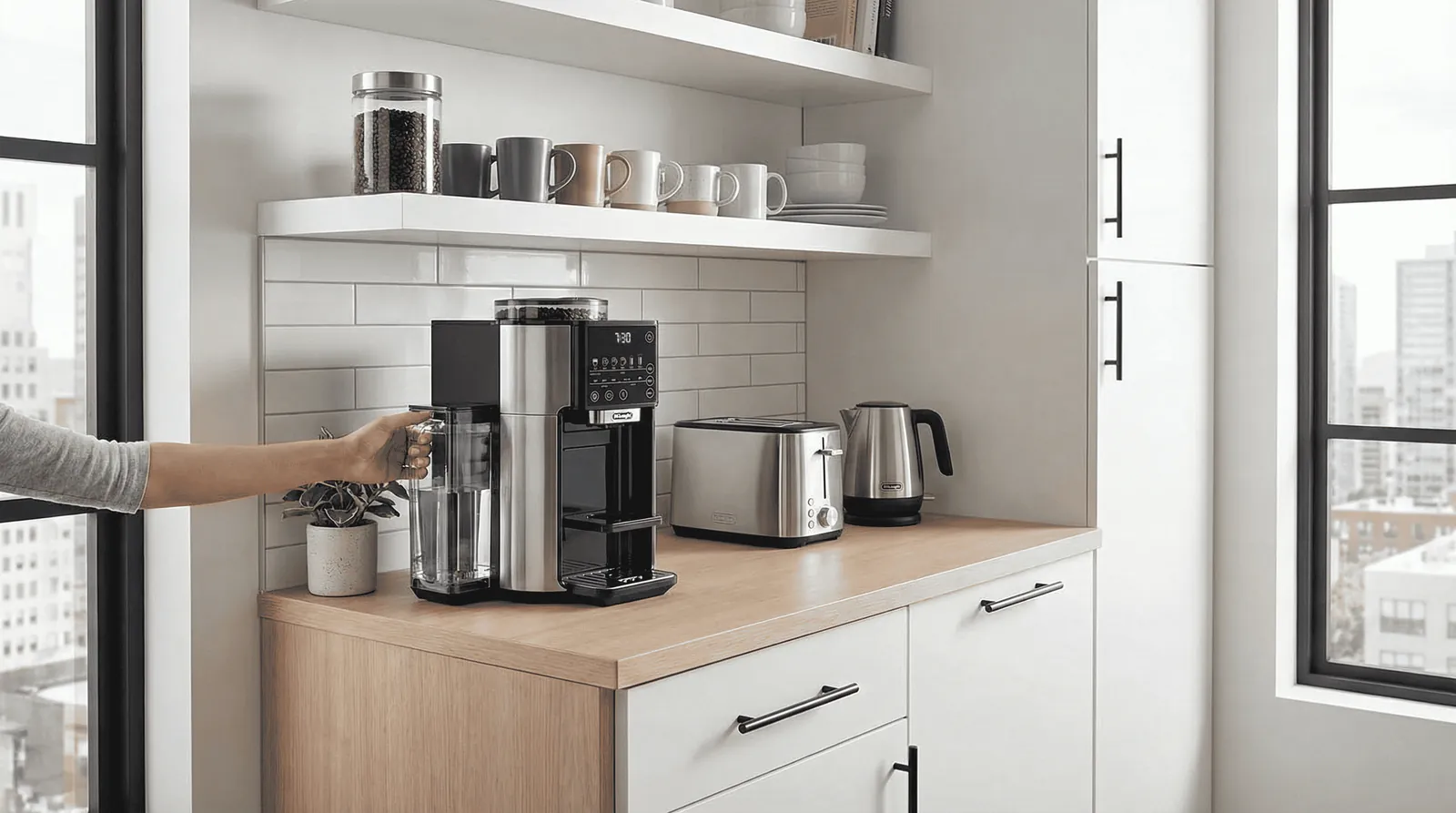
This machine was purchased independently and was not provided by De'Longhi.
Final Verdict
Our rating, who it fits, and what it costs.
De'Longhi TrueBrew Automatic Coffee MakerRecommended
4.3 / 5 — Is it worth buying?
After daily use, the TrueBrew delivers on its bean-to-cup promises. The conical burr grinder performs at $100–150 standalone grinder level.
✓ Best for
- Buyers who want fresh-ground beans without owning a separate grinder
- Households with different coffee preferences (one person likes bold, another likes light)
✕ Skip if
- Buyers who require real espresso
- Those who prefer a thermal carafe for extended heat retention
Score breakdown
Brews tested
90+
Testing period
30 days
Ready to decide?
Our verdict: 4.3/5, recommended. Independently tested; commissions never change a rating.
Where It Ranks in Our Buying Guides
See how the De'Longhi TrueBrew Automatic Coffee Maker compares with the other picks in each tested roundup.
Tools That Pair With This Review
Put it into practice with a free calculator built for what you just read.
- Coffee to Water Ratio CalculatorThe general-purpose ratio tool for drip machines and pour-over — enter water or coffee, pick your strength.
- Brew Yield CalculatorGrounds keep water: work out what to pour to end up with the amount of coffee you want.
- Pour Over Ratio CalculatorGet your exact water, bloom pour, and total brew time for pour-over coffee.
Reader questions
Questions or tips? Leave a comment
Ask about your setup or share what worked for you. Comments are checked before they appear.