
Ninja
Ninja Specialty Coffee Maker
An all-in-one drip maker that also makes lattes, cappuccinos, and iced coffee — versatile, though not true 9-bar espresso.
Coffee maker review
Last updated
Pods, single cups of grounds or a 12-cup pot from one machine, with a cooler-than-ideal cup.
Affiliate disclosure: this page contains Amazon affiliate links. We may earn a commission if you buy through them, at no extra cost to you, and it never affects our rankings. Read our full affiliate disclosure
Hamilton Beach FlexBrew Trio Coffee Maker (49902) at a GlanceWorth considering
A flexible 3-way brewer for mixed households; cup temperature and counter space are the trade-offs.
3-Way Brewer (pod, single cup of grounds and 12-cup carafe)
Why it stands out
Watch out for
✓ Best for
Households that mix pod drinkers with people who want a full pot
✕ Skip if
Anyone who ranks cup temperature and flavor first, since a Consumer Reports test found it fell short of 195°F
Affiliate link: we may earn a commission at no extra cost to you. It never affects our rating.
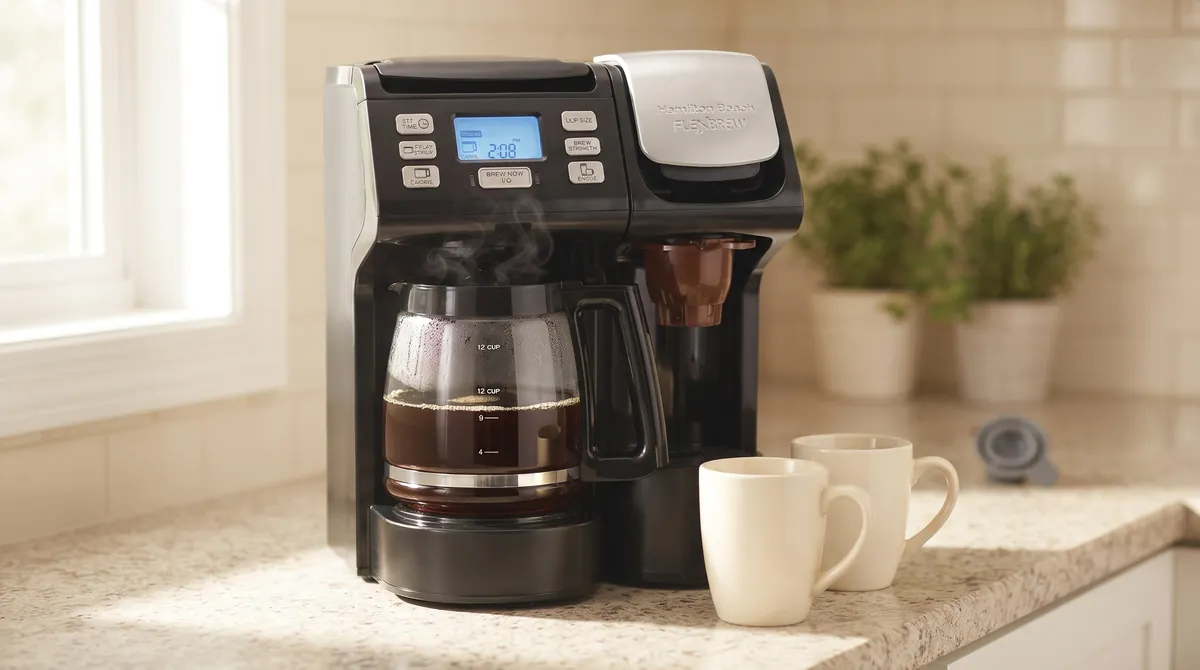
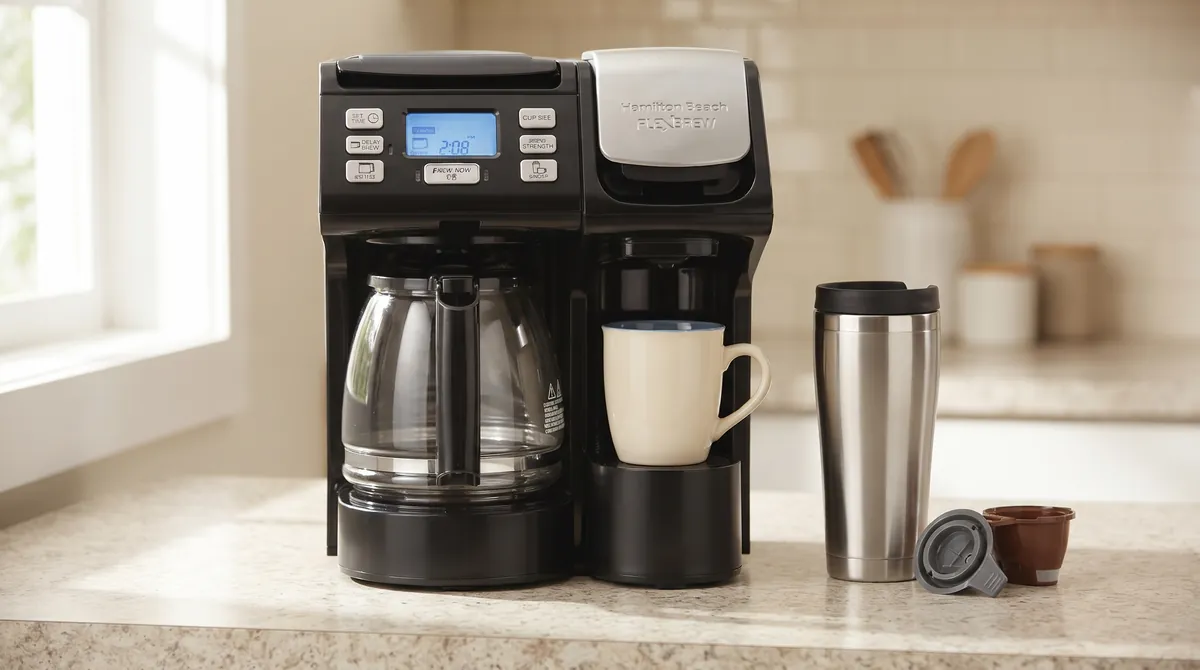
The Hamilton Beach FlexBrew Trio (model 49902) brews three ways from one machine: a K-Cup style pod in about 90 seconds, a single cup of ground coffee from a reusable basket, or up to 12 cups of ground coffee into a glass carafe. It adds a programmable timer, a regular or bold strength selector and a 56 oz reservoir that listings say covers seven single servings.
The short answer: it is the most flexible machine on this page and a reasonable buy for a mixed household, with the usual compromise on cup temperature. Consumer Reports found the machine fell short of the recommended 195°F, and its single-serve results were weak on first-cup speed and cup-to-cup temperature. Individual reviewers describe the coffee as good, especially on the bold setting. Choose it for flexibility, and expect a good-enough cup rather than a great one.
Check where you fit before you look at the trade-offs below.
A strong match
Consider something else
What earns the rating, and what you give up to get it.
6 reasons it works
6 trade-offs to weigh
Yes for flexibility; no if the hottest, best-tasting cup is the goal
It is worth it if you live with people who want different things: one wants a fast pod, another wants a pot, and you want to use ground coffee sometimes. A single machine covers all three and costs about as much as a mid-range Keurig. Listings put it at roughly $120 to $140, and Consumer Reports listed it from about $122; check the current price.
It is not worth it if brew temperature and flavor are your priorities. Consumer Reports noted the machine fell short of the 195°F guideline, and its single-serve scores for first-cup speed and temperature consistency were weak. If you want better coffee, the best drip coffee makers brew hotter, and for pods the Keurig K-Elite has strong brew and iced mode.
Pod, single cup of grounds, or a full pot
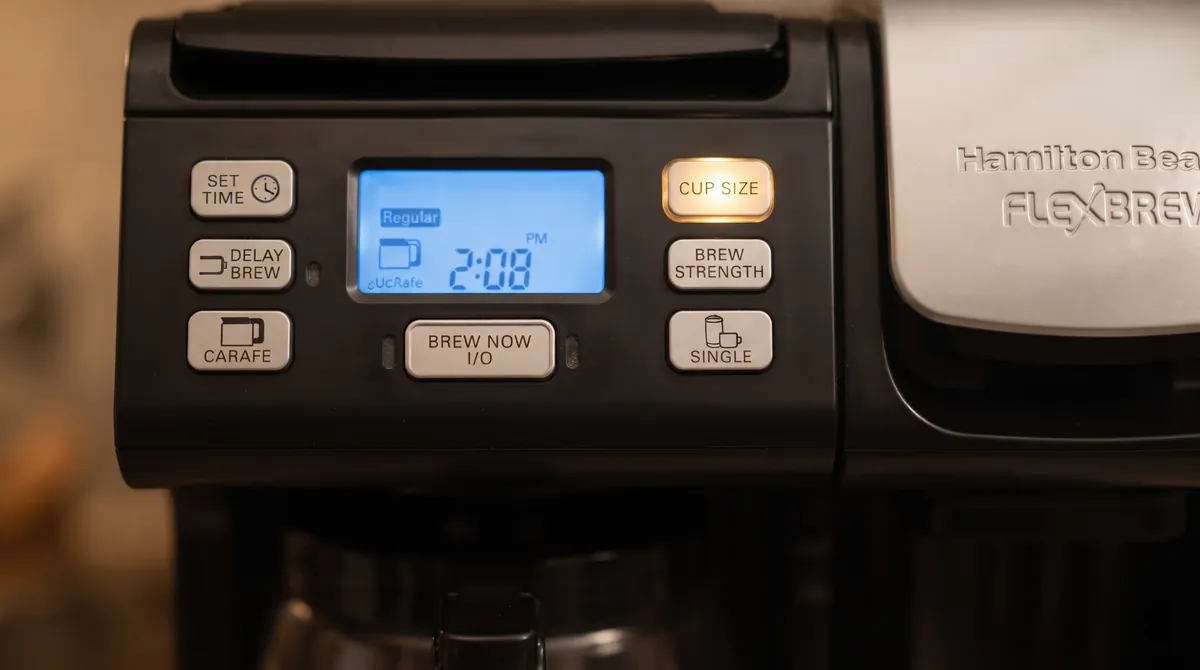
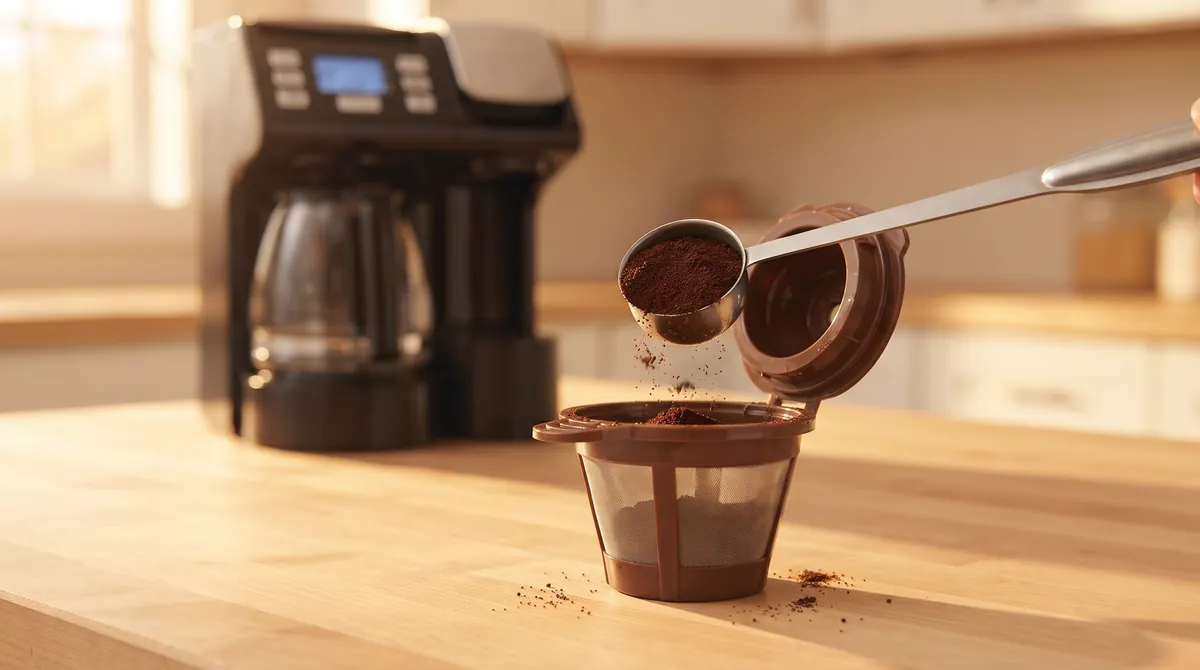
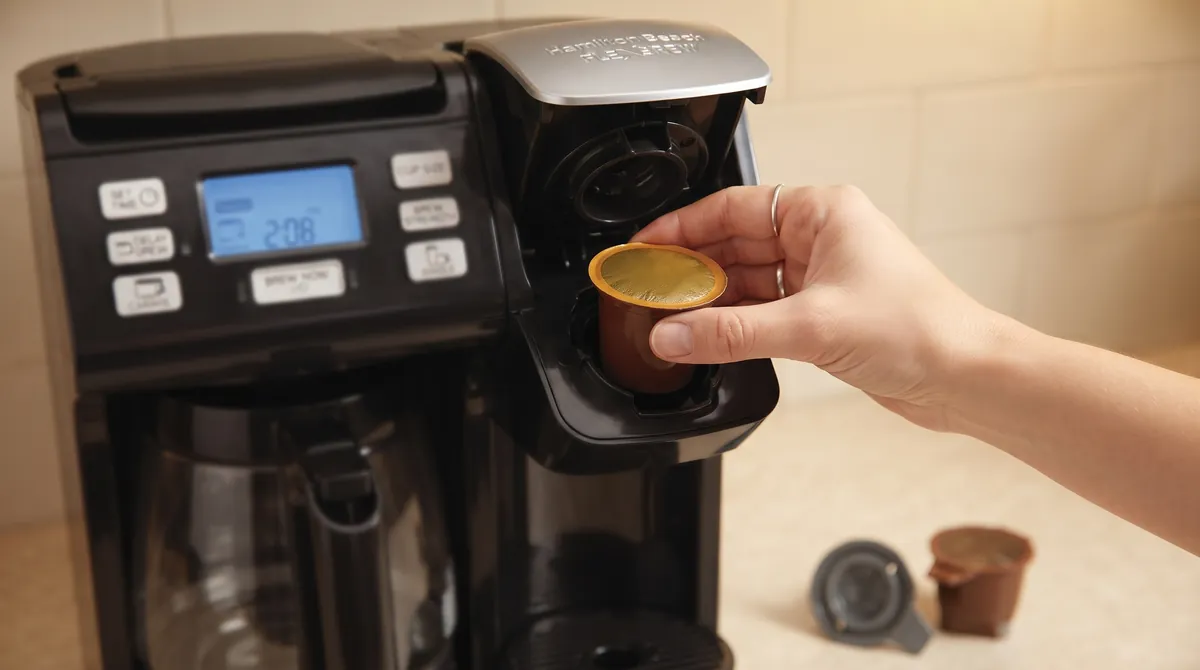
Pod mode takes K-Cup style pods and brews 6, 8 or 10 oz in about 90 seconds. Single cup of grounds uses a reusable basket, so you can put in your own ground coffee and brew 6, 8, 10, 12 or 14 oz, which is cheaper per cup than pods and gives you control over the coffee. Carafe mode brews up to 12 cups of ground coffee into a glass carafe through a paper filter.
A Select-a-Brew button chooses regular or bold strength, an Auto Pause and Pour lets you take the carafe off mid-brew, and the machine shuts off two hours after brewing. A height-adjustable cup rest handles short cups, though Consumer Reports lists a maximum mug height of 8 inches, and one hands-on reviewer found travel mugs fit poorly. That is slightly more room than the Keurig K-Express, which fits mugs up to 7.2 inches with the drip tray removed.
Variants and conflicting listings
The Trio comes in more than one version. The 49902 listings describe a 12-cup glass carafe and a 56 oz removable reservoir, a 49920 version uses a thermal carafe, and the 49902C listing at one retailer gives different dimensions again. Consumer Reports describes its 49902 as having no removable reservoir, which conflicts with the 56 oz removable reservoir in the retail listings.
Because of these differences, confirm the model suffix and the carafe type on the listing you buy from. Dimensions also vary by source, from about 14 by 13 by 12 inches (Consumer Reports) to about 13.75 by 12.9 by 15.6 inches (a retail spec table). Verify current specifications before relying on any single number, including the ones here.
Good-enough pods and pots, but cooler than the target
Brew temperature is the main limit. Consumer Reports found the machine fell short of the recommended 195°F held for five or six minutes, and listed an average coffee temperature of 175°F. For single-serve brews it rated first-cup and repeat-cup speed as weak and cup-to-cup temperature consistency as weak, while size consistency was strong, meaning each cup received the same volume.
Hands-on reviewers are kinder on flavor. One reviewer who used it for about a month found the bold setting added richness without bitterness and called the coffee good overall, though that review gives no temperature measurements. Both views can be true: a cooler brew still makes drinkable coffee, especially with medium and dark roasts, but it will not bring out the sweetness and aroma of a light roast.
Pod coffee from any machine is limited by contact time, so expect the pod cup to match other pod machines rather than the carafe. The grounds modes give you the most room to improve the result with fresh, medium-ground beans. See the best single-serve coffee makers for how pods compare across machines.
Brew temperature, speed, capacity and fit
Check the current listing for your exact model.
Reservoir, timer, size and the carafe
Several parts to rinse; descale on schedule
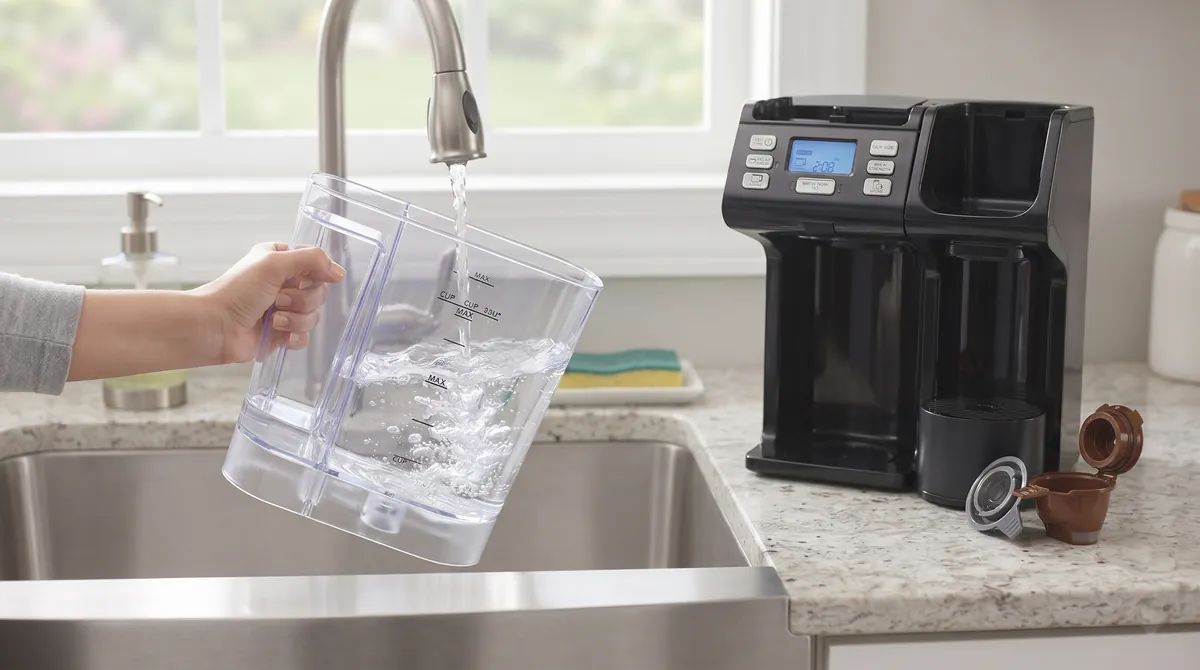
There are more parts to clean than on a pure pod machine: the carafe, the paper-filter basket, the reusable single-serve basket, the pod holder and the cup rest. Rinse them after use and wash the removable parts regularly. Scale lowers brew temperature, and this machine already runs cool, so descale on schedule with a solution made for coffee machines. Our descaling guide has the steps, and the cleaning tablets comparison covers easier options.
Ground coffee mode is the cheap way to use it
In pod mode you pay per pod, which in the reviews on this site ran from about $0.25 to $1.20 for Keurig pods. In grounds mode you pay only for beans and paper filters, so using the reusable basket for most cups lowers running cost. Use our coffee ratio calculator for the right amount per cup, and pair the machine with a burr grinder if you can: fresh medium-ground coffee is the biggest upgrade this machine can get.
Where the Trio makes the most sense
The sensible way to own this machine is to treat pod mode as the convenience button and grounds mode as the everyday option. Pods are quick and consistent in size, which Consumer Reports rated strongly, but they cost more per cup and come pre-ground, so freshness depends on the brand and the box. The reusable basket costs almost nothing per cup, lets you pick your own beans and lets you set strength by dose. A household that uses pods only on rushed mornings and the basket or carafe the rest of the time will spend far less than one that runs pods all day.
The carafe is the right choice when more than two people want coffee. Brewing a pod at a time for a table of guests is slow and expensive, and a 12-cup pot of freshly ground coffee is both cheaper and, with the bold setting, reportedly richer. Grind to a medium setting, use about one level tablespoon per cup as a starting point and adjust to taste. The grind size chart shows what medium looks like.
Bigger than a pod machine, smaller than two machines
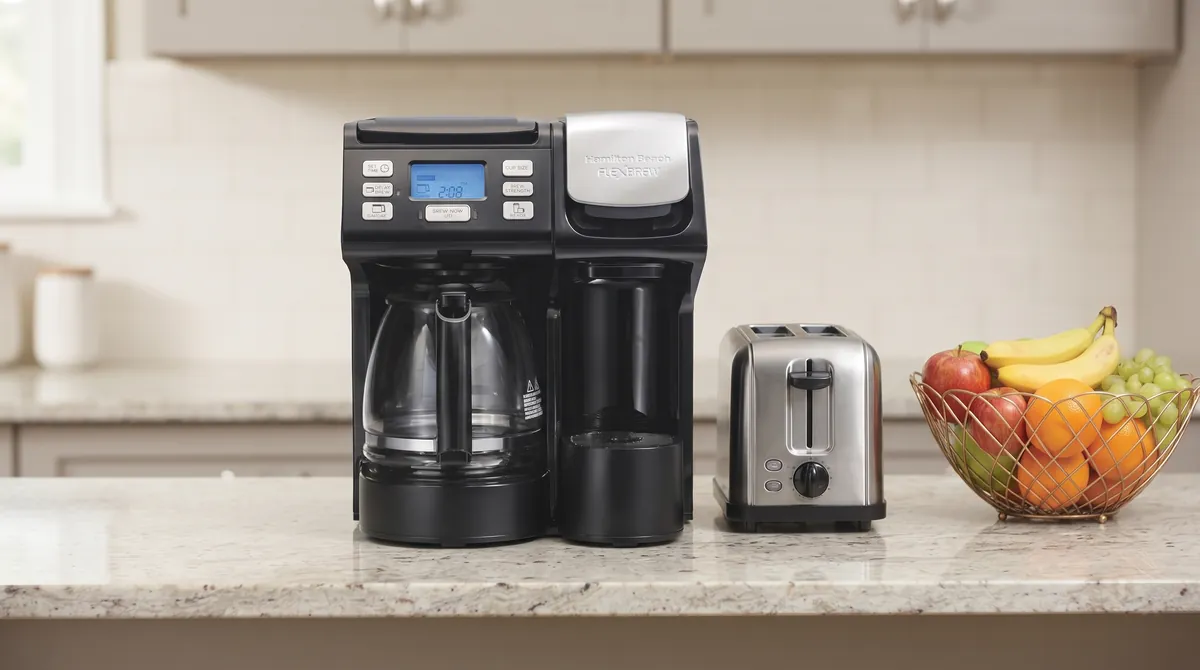
The Trio is one of the larger machines in the single-serve category. At roughly 14 by 13 by 12 inches or more, it takes the counter space of a drip maker, which is its biggest practical drawback in a small kitchen. The trade-off is that it replaces two appliances, so the net footprint can still be smaller than owning a drip maker and a Keurig side by side.
Daily use is simple. Fill the 56 oz reservoir every few days, choose pod or basket, press the size and strength buttons and wait. Consumer Reports found the carafe fairly easy to use, and the two-hour shut-off means it will not stay hot all day. The part to plan for is cleaning, because three brew paths mean a pod holder, a reusable basket, a paper-filter basket and a carafe to rinse.
Pick by what you drink most
If you only want pods, the Keurig K-Elite is stronger on cup quality and features. For a pot with better temperature, the Cuisinart 14-Cup and the OXO Brew 9-Cup brew hotter. The cheaper Hamilton Beach FlexBrew 2-Way is a two-mode sibling, with pod compatibility that depends on the model. For a ranked list, see our best single-serve coffee makers.
A clear split
Buy it if your household mixes pod and pot drinkers, if you want a timer and a K-Cup option in one machine, or if you like switching to your own ground coffee. Skip it if cup temperature and flavor come first, if counter space is tight, or if you drink mostly from tall travel mugs.
Before you decide
A 3-way brewer saves counter space and money against owning a drip maker and a pod machine, but you give up cup temperature and a compact footprint. If you mainly want a full pot, start with our best drip coffee makers. If you mainly want one cup at a time, see the best single-serve coffee makers.
Durability, upkeep and running costs once the novelty wears off.
A light plastic body with a glass carafe, so the carafe is the part most likely to break in a busy kitchen.
Three brew paths mean more moving parts than a drip-only maker, and the pod holder and basket get the most handling. Treat it as a mid-price appliance and plan on a few years of regular use, not a decade.
The pod-puncture needle and the single-cup water path are the parts to watch, since they clog with grounds and scale first.
The listing and the long run of reviews do not show a pattern of early failures, but the machine is new enough that long-term reliability is unproven.
Replacement glass carafes, reusable baskets and pod holders are the parts most owners end up needing.
Check that any replacement is listed for your exact model suffix before you order.
Descaling and cleaning products are the only recurring upkeep cost, and a descale every two to three months keeps the pod path clear.
Pods are the real running cost; brewing your own grounds in the basket is the cheaper way to use it.
A retail listing shows a 1-year limited warranty.
Confirm the terms for your model and retailer, and keep the receipt, since limescale damage is typically not covered.
Expect low resale value.
Mid-price coffee makers sell for a fraction of the purchase price after a year or two, and the glass carafe makes shipping a used one awkward.
Quick specs
Affiliate link: we may earn a commission at no extra cost to you. It never affects our rating.
Our rating, who it fits, and what it costs.
Hamilton Beach FlexBrew Trio Coffee Maker (49902)Worth considering
3.7 / 5 — Is it worth buying?
The FlexBrew Trio does what it promises: pods, single cups of grounds and a 12-cup pot from one machine, with a timer and a large reservoir. Measured brew temperature, weak single-serve consistency and a big footprint hold it back.
✓ Best for
✕ Skip if
Ready to decide?
Our verdict: 3.7/5, worth considering. Independently tested; commissions never change a rating.
See how the Hamilton Beach FlexBrew Trio Coffee Maker (49902) compares with the other picks in each tested roundup.
Closest alternatives in price and purpose, each tested the same way.
Ninja
An all-in-one drip maker that also makes lattes, cappuccinos, and iced coffee — versatile, though not true 9-bar espresso.
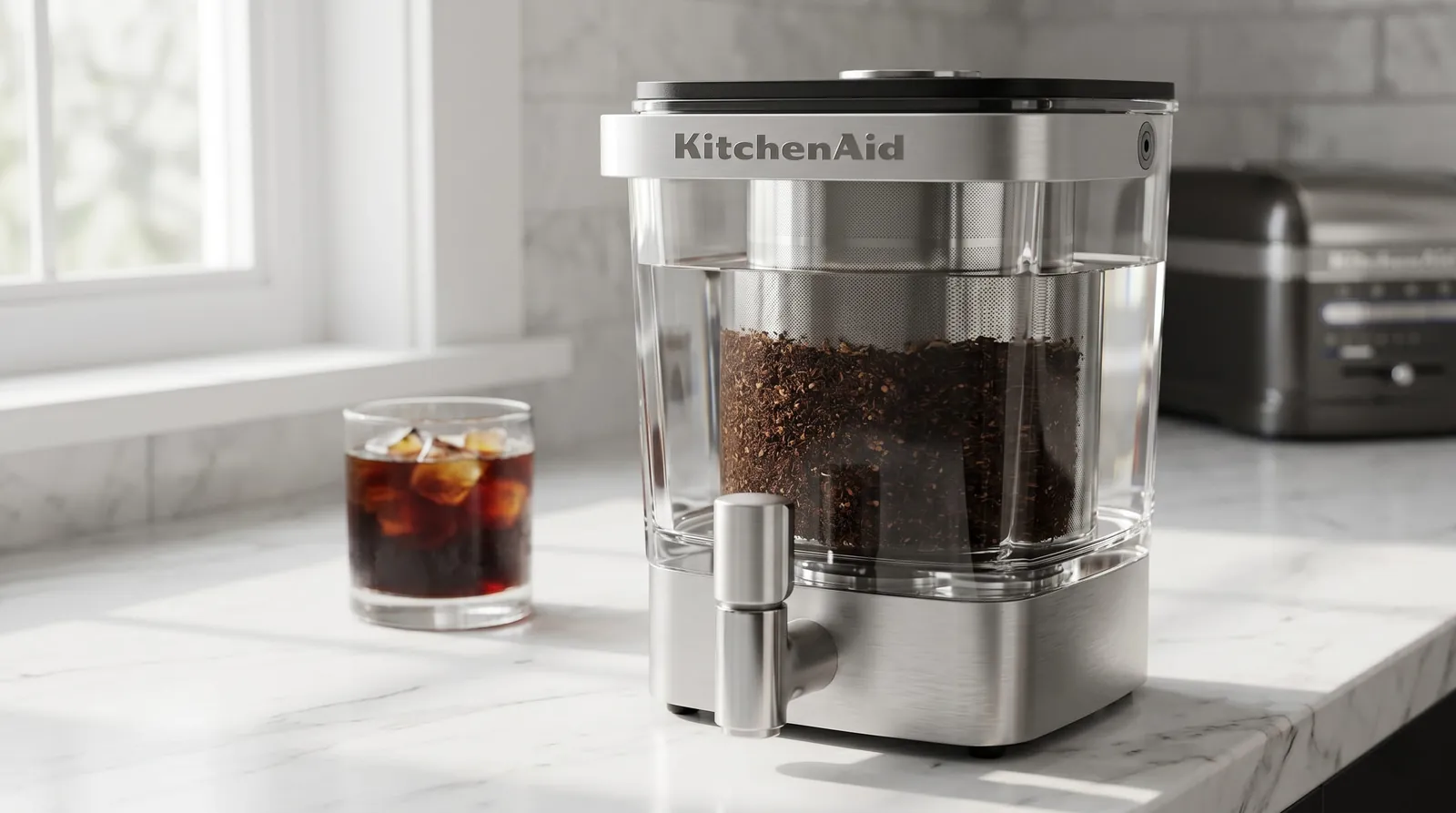
KitchenAid
A glass cold brew carafe that looks as good on the counter as it performs in the fridge, favoring odor-neutral flavor purity over budget.
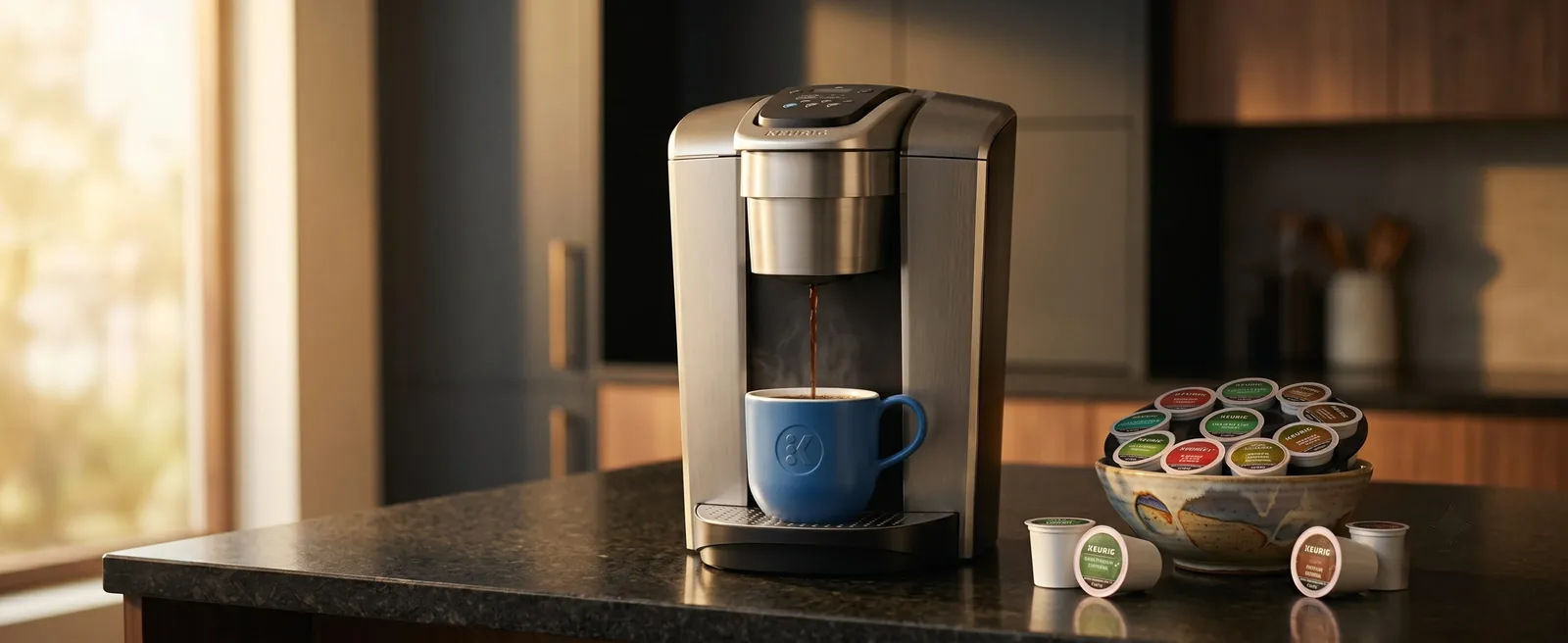
Keurig
A capable single-serve pod machine with five brew sizes and a dedicated iced-coffee mode, though pod extraction has limits.
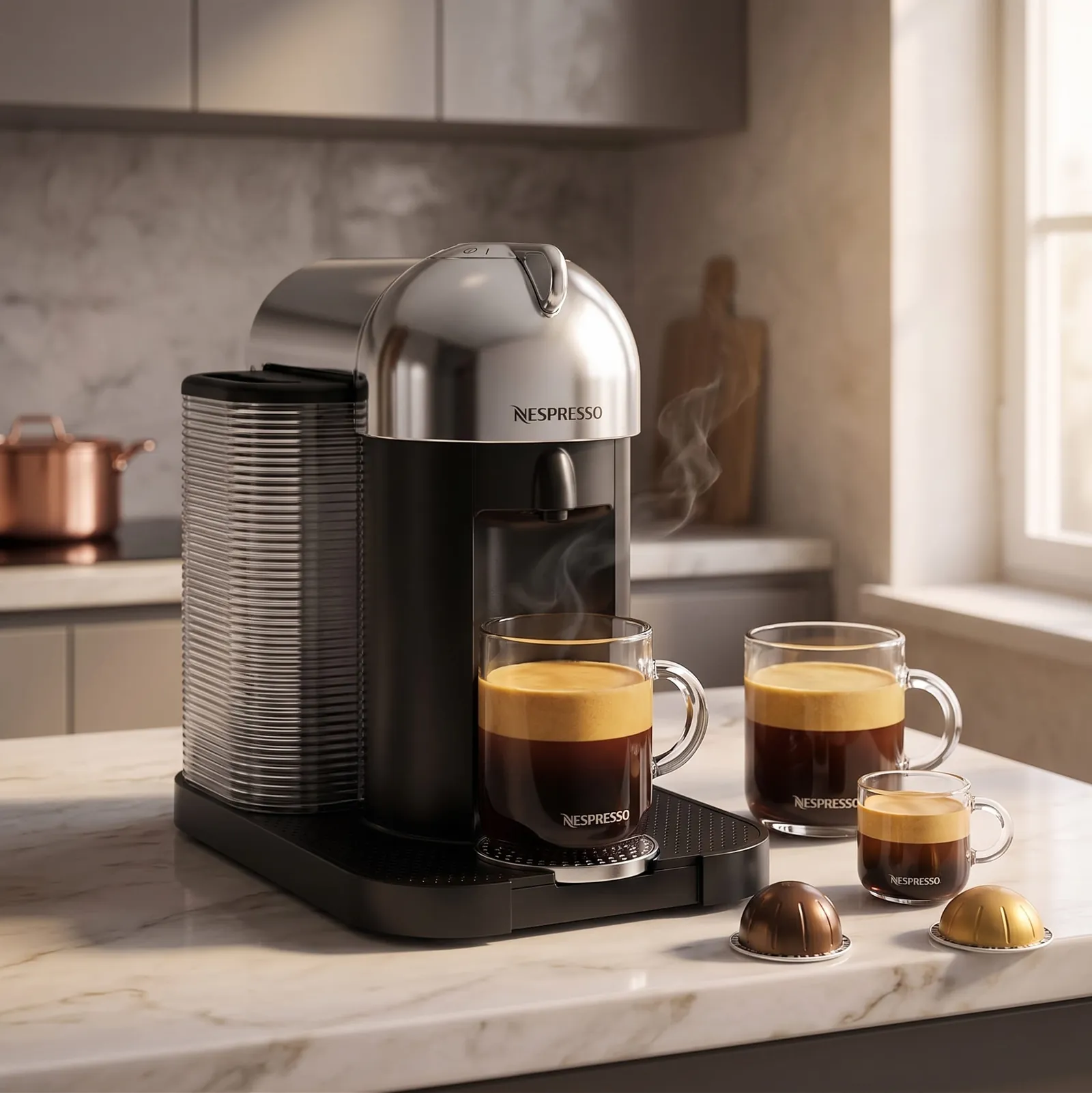
Nespresso
The entry point into Nespresso's Vertuo lineup — one-button, capsule-recognizing convenience with real crema and zero learning curve.
Put it into practice with a free calculator built for what you just read.
Quick answers before you buy.
Yes.
The 49902 listings say it works with K-Cup style pods, alongside ground coffee in a reusable basket and a 12-cup carafe mode.
Confirm the exact model, since other FlexBrew models differ on pod support.
About 90 seconds per cup in pod mode, according to the listing.
Consumer Reports rated first-cup and repeat-cup speed as weak in its single-serve tests, so expect it to be slower than a dedicated Keurig.
Consumer Reports found it fell short of the recommended 195°F held for five or six minutes and listed an average coffee temperature near 175°F.
That is cooler than the 195–205°F range associated with the best extraction.
Yes.
The reusable single-serve basket brews 6, 8, 10, 12 or 14 oz of ground coffee, and the carafe side makes up to 12 cups.
Use a medium grind and fresh beans for the best result.
Consumer Reports lists a maximum mug height of 8 inches, and one reviewer found travel mugs fit poorly.
Measure your mug before you buy.
The listings describe Easy-Touch programming for a wake-up brew, but one hands-on review is inconsistent about scheduling.
Confirm the timer on your model and test it when it arrives.
The standard 49902 uses a 12-cup glass carafe, while the 49920 version has a thermal carafe.
Glass on a hot plate can scorch coffee left for a long time, so pour what you will drink.
For pods, the Keurig K-Elite offers strong brew and iced mode.
For a full pot, a Cuisinart 14-Cup brews hotter.
See the roundup for ranked pod machines.
Reader questions
Questions or tips? Leave a comment
Ask about your setup or share what worked for you. Comments are checked before they appear.