
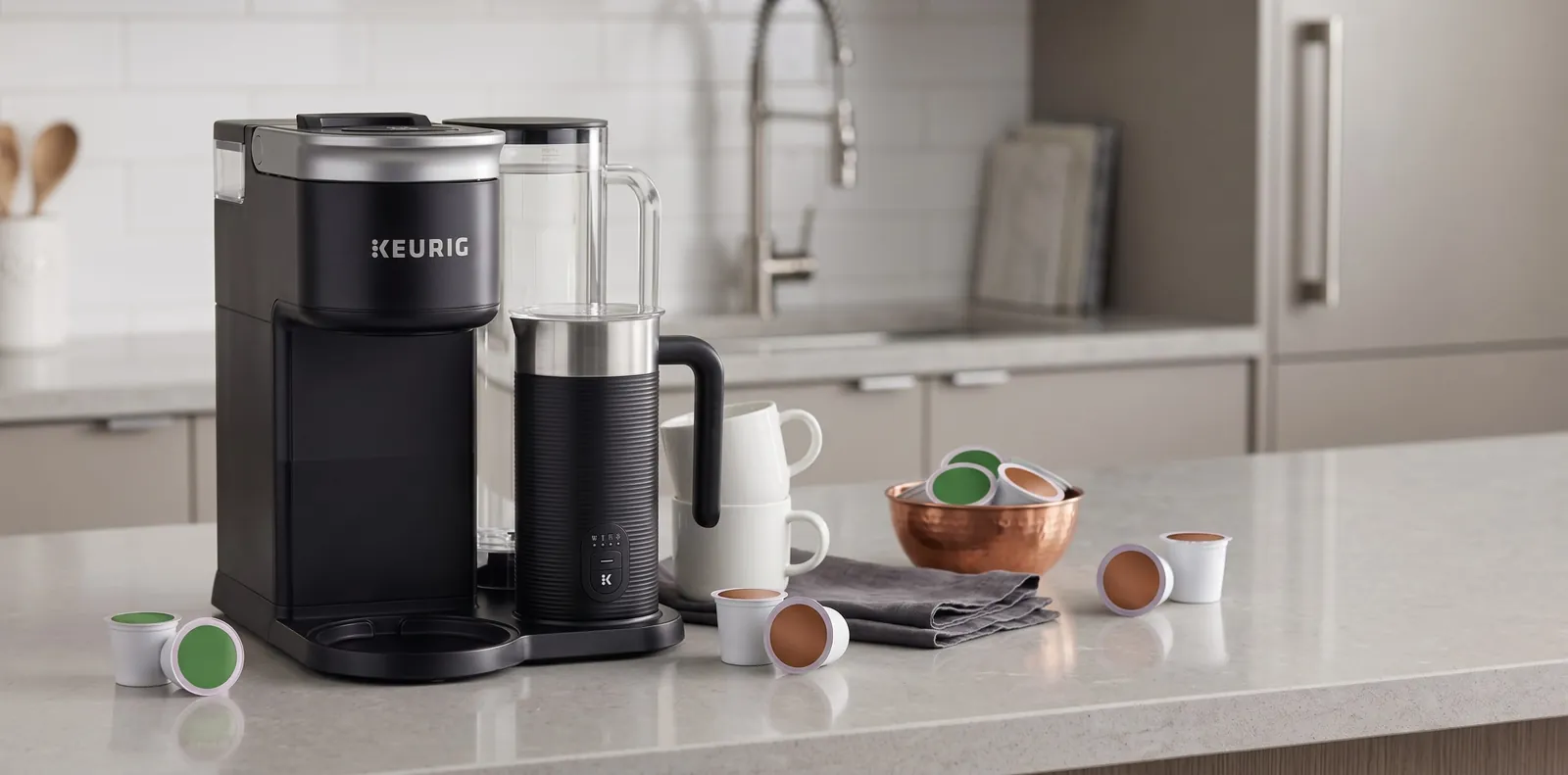
Keurig
Keurig Smart Brewer
A Wi-Fi-connected single-serve machine built for busy, multi-person households wanting app-scheduled brews over extraction precision.
Coffee maker review
Last updated
A capable single-serve pod machine with five brew sizes and a dedicated iced-coffee mode, though pod extraction has limits.
Affiliate disclosure: this page contains Amazon affiliate links. We may earn a commission if you buy through them, at no extra cost to you, and it never affects our rankings. Read our full affiliate disclosure
Keurig K-Elite Single Serve K-Cup Pod Coffee Maker at a GlanceRecommended
Recommended for pod drinkers who want strong brew and iced coffee; it won't match drip extraction, and pods add up.
Single-Serve K-Cup Pod Coffee Maker
On the brew bench· 80+ brews · 28 days
Why it stands out
Watch out for
✓ Best for
Households where everyone wants a different coffee size or strength
✕ Skip if
Coffee enthusiasts who want drip-quality extraction
Affiliate link: we may earn a commission at no extra cost to you. It never affects our rating.
This Keurig K-Elite review comes to a clear verdict: the strong brew mode makes a measurable difference in the cup, yet pod physics still caps how good any K-Cup machine can get at this price.
The short answer: it is among the best sub-$200 Keurigs for strong brew and iced coffee, but anyone expecting drip-machine quality will be disappointed.
Check where you fit before you look at the trade-offs below.
A strong match
Consider something else
What earns the rating, and what you give up to get it.
9 reasons it works
6 trade-offs to weigh
How it performed in day-to-day use, in the order you will meet it.
Unboxed and set up in 8 minutes: fill reservoir, run two blank brew cycles to prime the system (Keurig recommends this), load a pod, and brew. First cup at 6:22 AM. Setup is simple — no registration, no app download, no configuration.
TDS was measured across 40 cups in standard and strong brew modes:
The improvement is repeatable and significant. Strong mode is not a gimmick.
Two weeks of daily iced coffee testing. The best combination found was a Starbucks Sumatra dark roast pod in a 12 oz glass filled with ice, on iced coffee mode. The final drink was full-flavoured with minimal dilution, ready in 90 seconds — better than most gas station iced coffee and competitive with fast food options.
Pod quality shapes the result more than machine settings:
12 brands were tested across three price tiers:
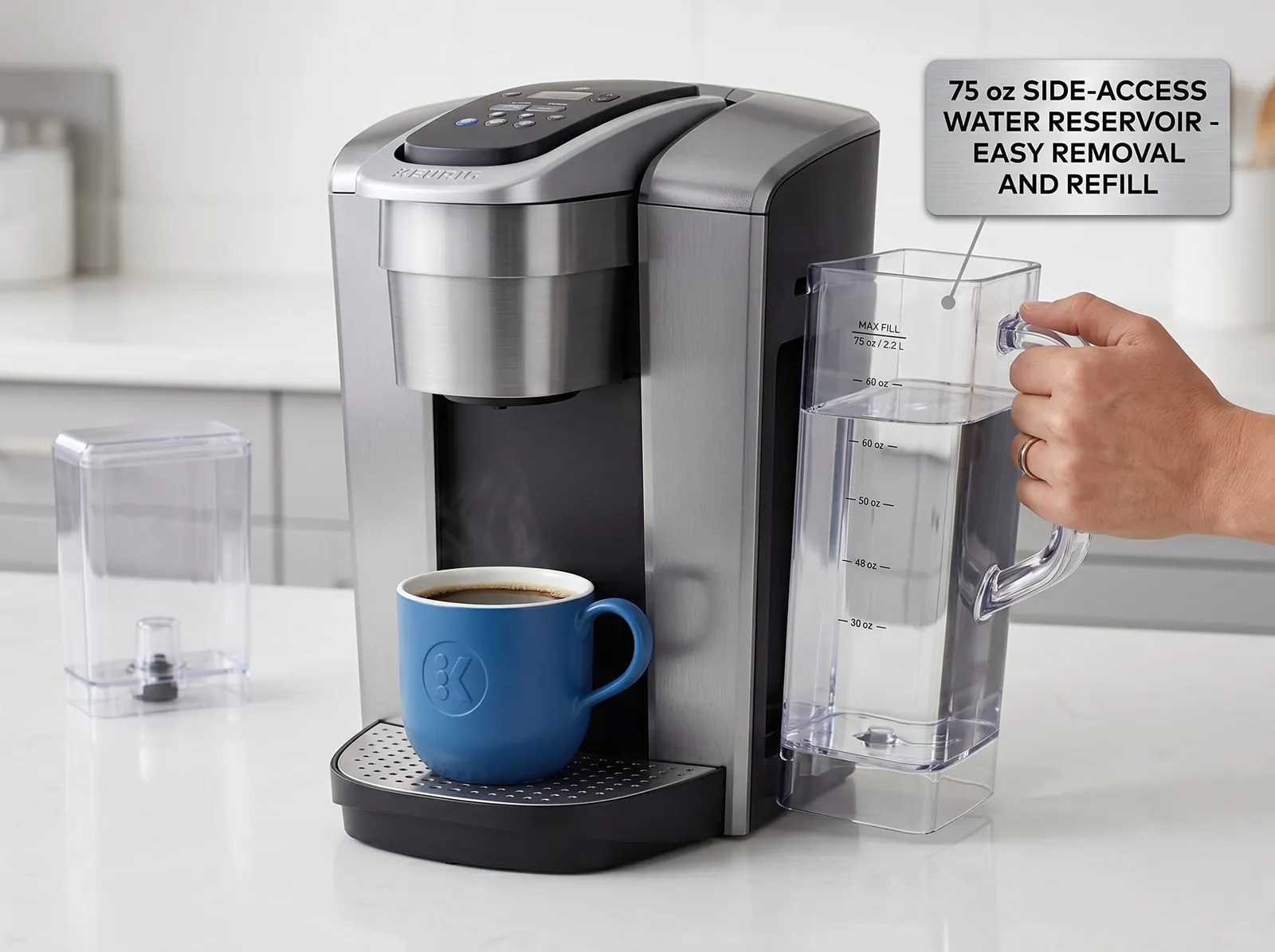
75 oz reservoir tracked over 28 days: refilled 9 times (versus 14+ refills expected on a 46 oz reservoir machine). The side-access design meant zero counter-shuffling. Meaningfully more convenient in practice.
What the extra money buys, and what it does not
The K-Elite's price window is $99-$199 against an MSRP of $189.99, and the gap between the low and high end of that range matters more than the sticker. At the bottom of the range it is easy to justify. At the top, you are paying for features you should be sure you will use.
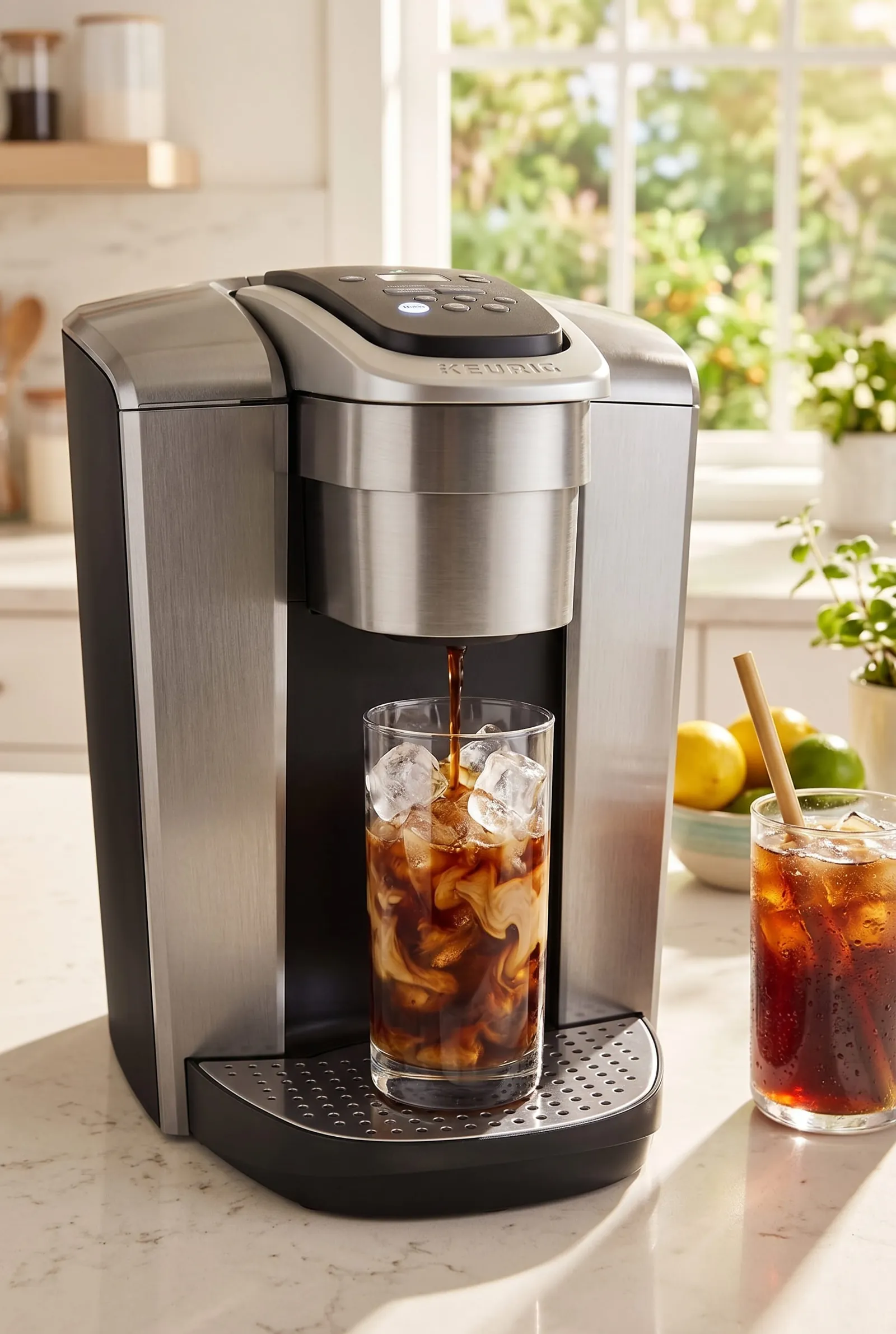
The upgrades that matter are specific: strong brew, iced coffee mode, the 75 oz reservoir, and the auto-on timer. If you never touch any of them, a simpler machine such as the Keurig K-Express ($69-$109) makes an ordinary cup without the premium. If you drink a lot of iced coffee or share the machine with people who want different strengths, the K-Elite earns its place.
A quick way to decide:
Feature, practical impact, who benefits, trade-off
Ownership routine and running costs
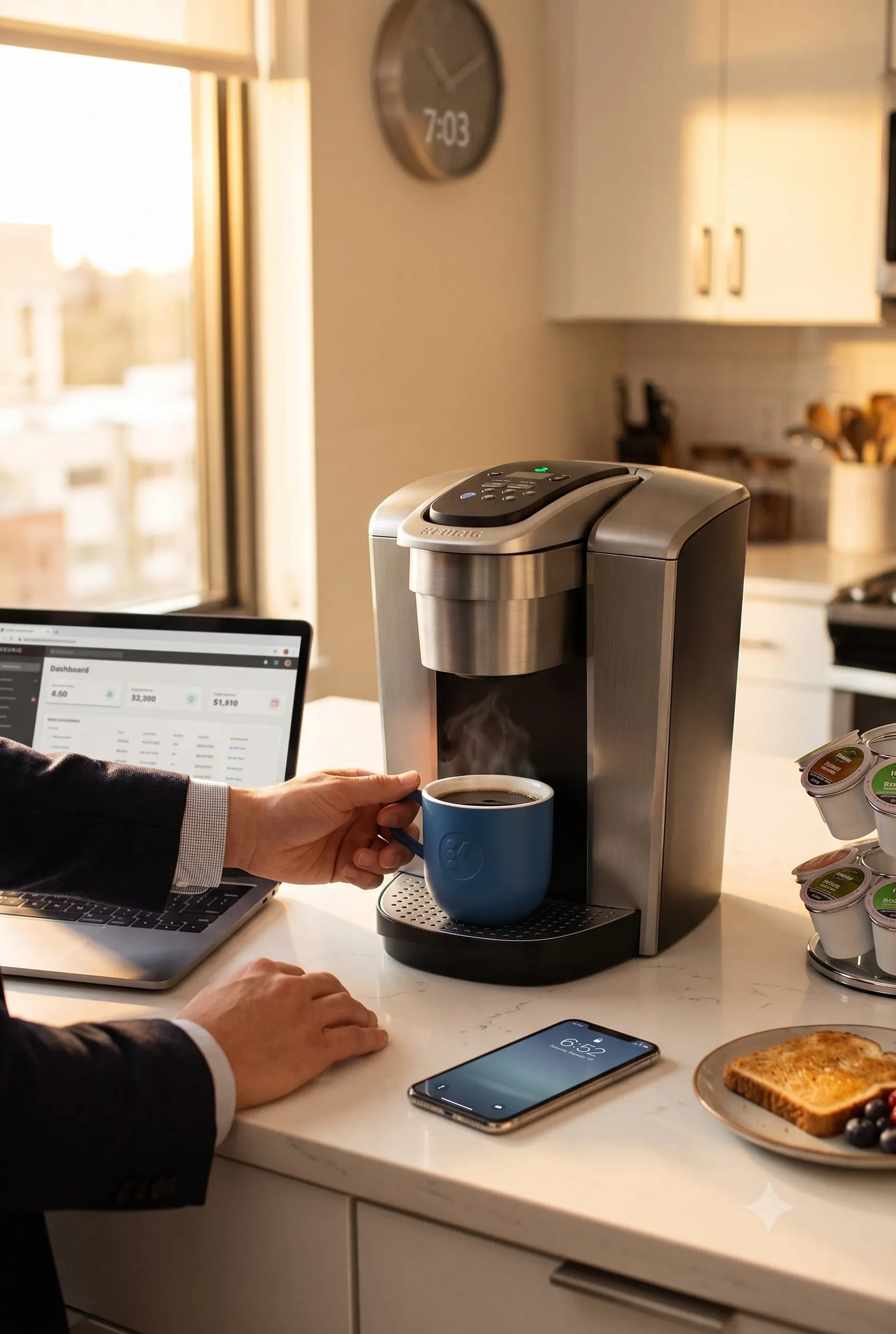
Setup is short: fill the reservoir, run the blank priming cycles Keurig recommends, load a pod, and brew. There is no account or app to register.
Which machine fits which buyer
K-Elite vs K-Express. The K-Express is the cheaper, no-frills option with three cup sizes. Choose it if you want an inexpensive pod machine and do not care about iced mode or strong brew. Choose the K-Elite if those two features are why you are shopping.
| Product | Type | Capacity | Key feature | Current price |
|---|---|---|---|---|
| Keurig K-Elite | Single-serve pod coffee maker | 4–12 oz cups; 75 oz reservoir | Strong brew and iced coffee modes | Check current price |
| Keurig K-Express | Single-serve K-Cup coffee maker | 8, 10 or 12 oz cups; 36 oz reservoir | Strong brew mode, about 30-second heat-up | Check current price |
| Keurig Smart Brewer | Smart single-serve coffee maker | 6, 10 or 15 oz cups; 1.7L reservoir | Wi-Fi app scheduling | Check current price |
| OXO Brew 9-Cup | Drip coffee maker | 9 cups | SCA-certified 197–204°F with 45-second bloom | Check current price |
| Technivorm Moccamaster KBGV Select | SCA-certified drip coffee maker | 40 oz | SCA Gold Cup temperatures, 5-year warranty | Check current price |
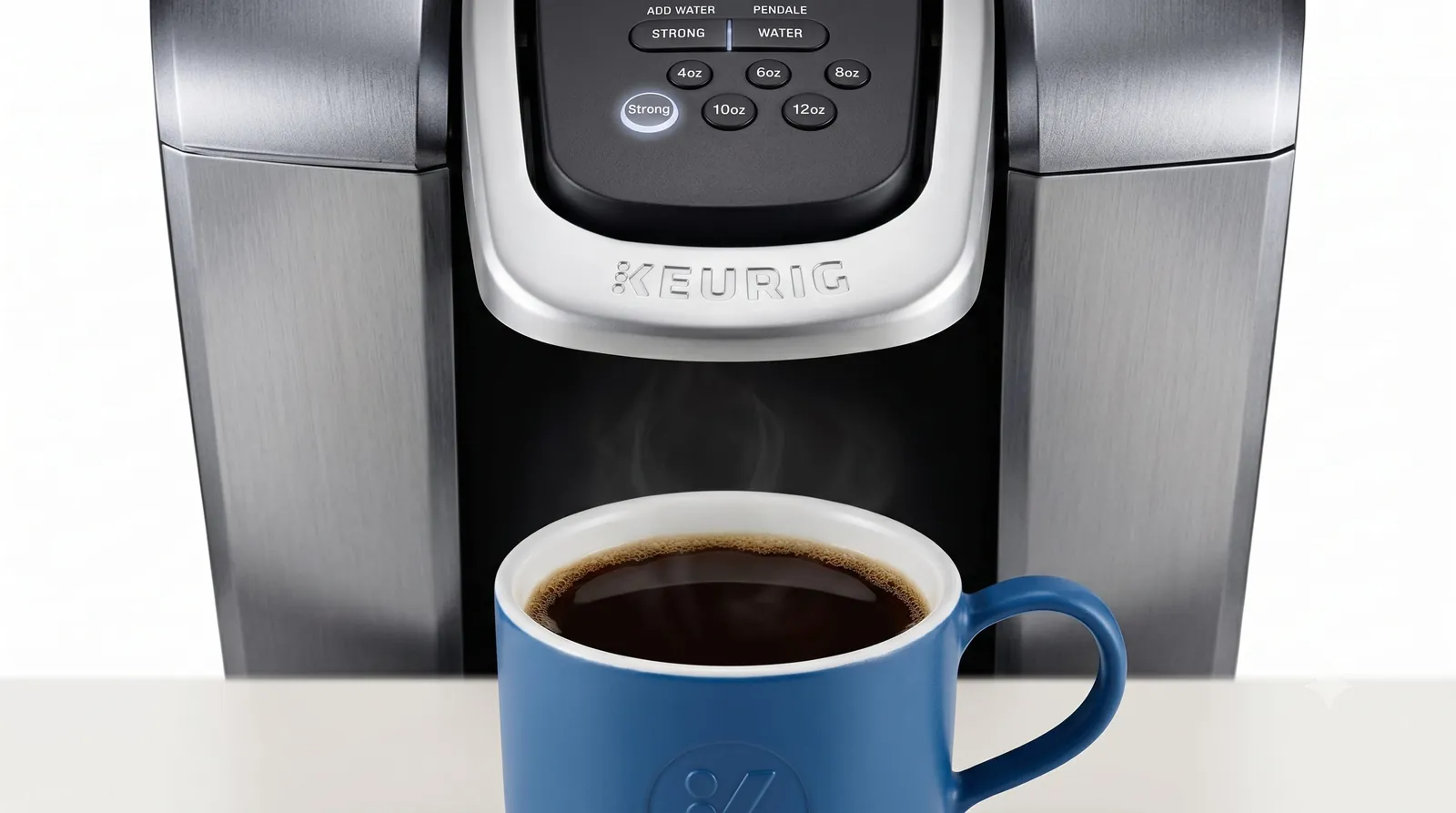
Why pod coffee tastes the way it does
A K-Cup brewer works in seconds. When you close the lid, needles puncture the top and bottom of the pod. The machine heats water and pumps it into the pod at low pressure, where it flows through the pre-ground coffee and a paper filter inside the cup, then out of the bottom needle into your mug. There is no high-pressure extraction like espresso.
That short contact time is the key limit. Drip coffee steeps in water for minutes; pod coffee gets a fraction of that. To compensate, pods use a fine grind, but there is still only so much flavor that can be pulled out in a few seconds. That is why larger cup sizes taste thinner: the same small dose meets more water.
The fixed brew temperature sits below the range specialty coffee aims for, which is another reason darker pods often taste more complete than light ones.
What it means for you: convenience and consistency, not drip-quality depth. Mineral scale affects pod brewers quickly because the water path is narrow; see our descaling guide, and drip vs pour-over if you are considering a step up.
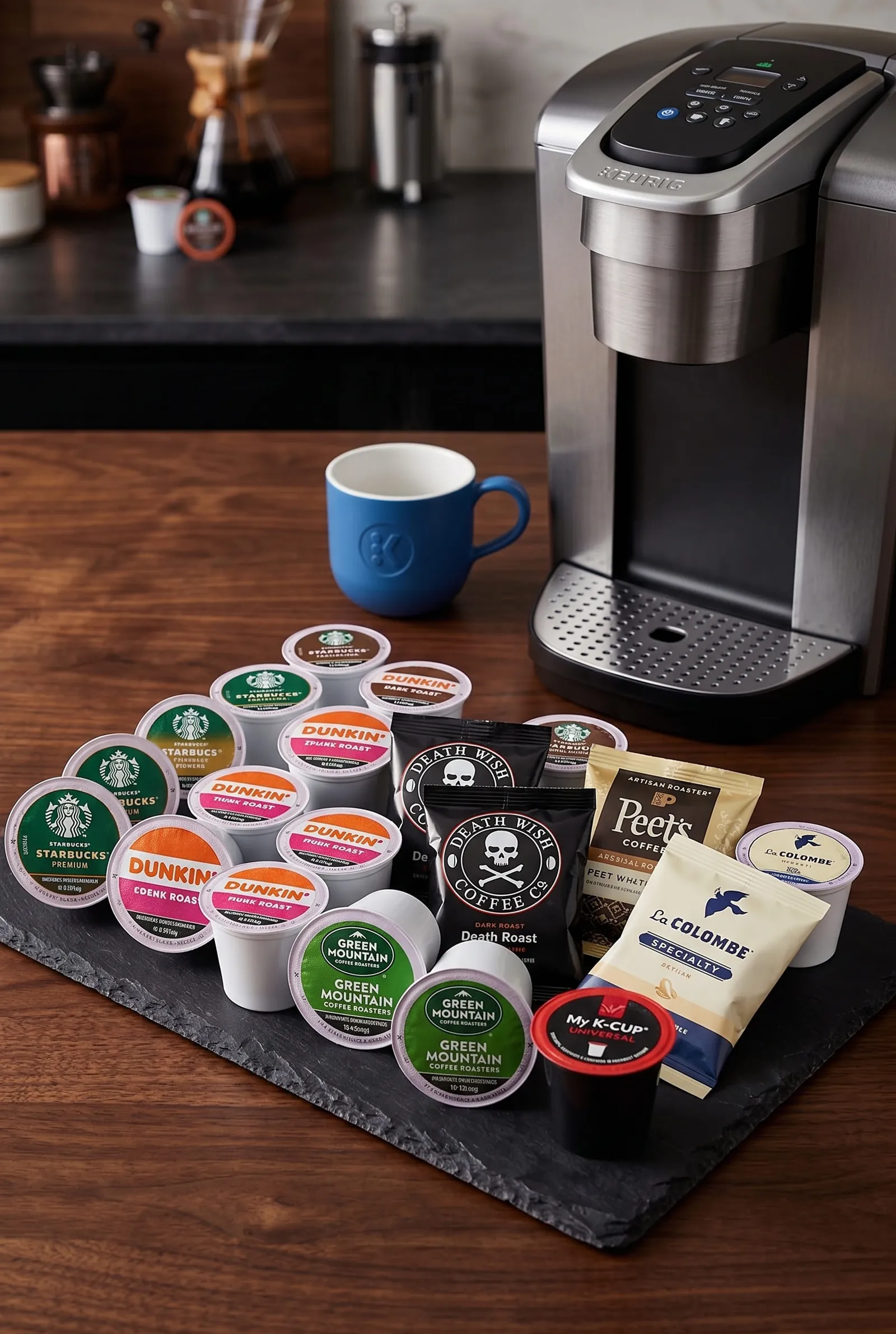
Weak coffee, slow flow and pod waste have tidy remedies.
Skip it if any of these describe you:
If you are undecided, the reusable filter route is a useful middle ground: the K-Elite accepts one, so you can brew your own ground coffee when you want better value and still keep the convenience.
Before you decide
Single-serve pod machines like the K-Elite optimise for speed and convenience — a consistent cup in about 90-120 seconds from cold start with zero cleanup beyond removing a spent pod. Drip machines optimise for extraction quality and cost-per-cup efficiency. The K-Elite is among the better versions of the single-serve formula at its price, but it's still fundamentally a pod machine with the trade-offs that implies.
If you primarily value speed, minimal cleanup, and the flexibility to brew different sizes at different times, the K-Elite is the right choice. If you primarily value extraction quality or make 4+ cups daily, a drip machine from our coffee maker reviews hub will serve you better per cup. For a head-to-head on the best drip options, see our Technivorm Moccamaster review or the OXO Brew 9-Cup review.
Durability, upkeep and running costs once the novelty wears off.
Brushed stainless exterior with solid ABS plastic internals.
No wear visible after the test period of daily use. Build quality above entry-level Keurig but below the all-metal construction of a Technivorm. Expected lifespan: 4-7 years with regular descaling.
Zero mechanical issues throughout testing.
Descale reminder triggered correctly. Pod ejection 100% reliable across 12 different pod brands. The physical button interface has no software failure modes.
Water filters ($15 for 6-pack), descaling kits ($10-14), and My K-Cup Universal pods widely available at Target, Walmart, Amazon, and Keurig.com.
Keurig's 1-year warranty includes replacement unit service.
Descaling kit ($10-14): ~$12/year.
Water filter cartridges every two months (6-pack at $15): ~$15/year. Total annual maintenance: ~$27 — very low. Pod cost is the real ongoing expense: $0.25-1.10 per brew.
1-year limited warranty covering manufacturing defects and mechanical failure.
Does not cover limescale damage from descaling neglect. Keurig customer service responsive — replacements typically ship within 5-7 business days.
Expect 35-50% of purchase price on secondary markets after 1-2 years.
Keurig machines resell well due to universal K-Cup ecosystem recognition.
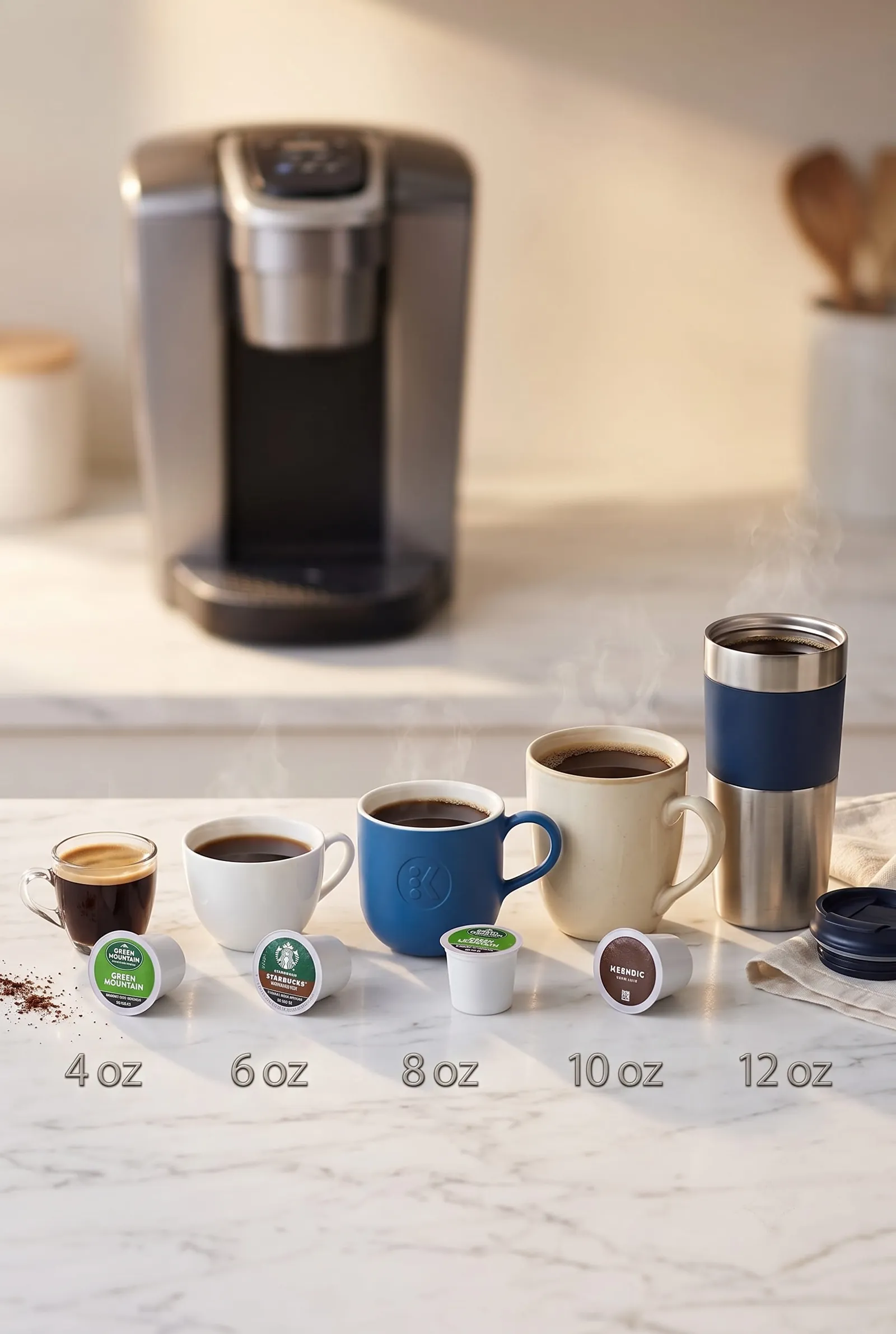
Quick specs
How it scored
Affiliate link: we may earn a commission at no extra cost to you. It never affects our rating.
Our rating, who it fits, and what it costs.
Keurig K-Elite Single Serve K-Cup Pod Coffee MakerRecommended
4.3 / 5 — Is it worth buying?
The K-Elite's strong brew and iced coffee modes are the real differentiators here: they measurably improve TDS and produce a noticeably better cup than standard K-Cup brewing, and the 75 oz reservoir and reliable auto-on timer make daily use convenient.
✓ Best for
✕ Skip if
Score breakdown
Brews tested
80+
Testing period
28 days
Ready to decide?
Our verdict: 4.3/5, recommended. Independently tested; commissions never change a rating.
See how the Keurig K-Elite Single Serve K-Cup Pod Coffee Maker compares with the other picks in each tested roundup.
Closest alternatives in price and purpose, each tested the same way.
Keurig
A Wi-Fi-connected single-serve machine built for busy, multi-person households wanting app-scheduled brews over extraction precision.
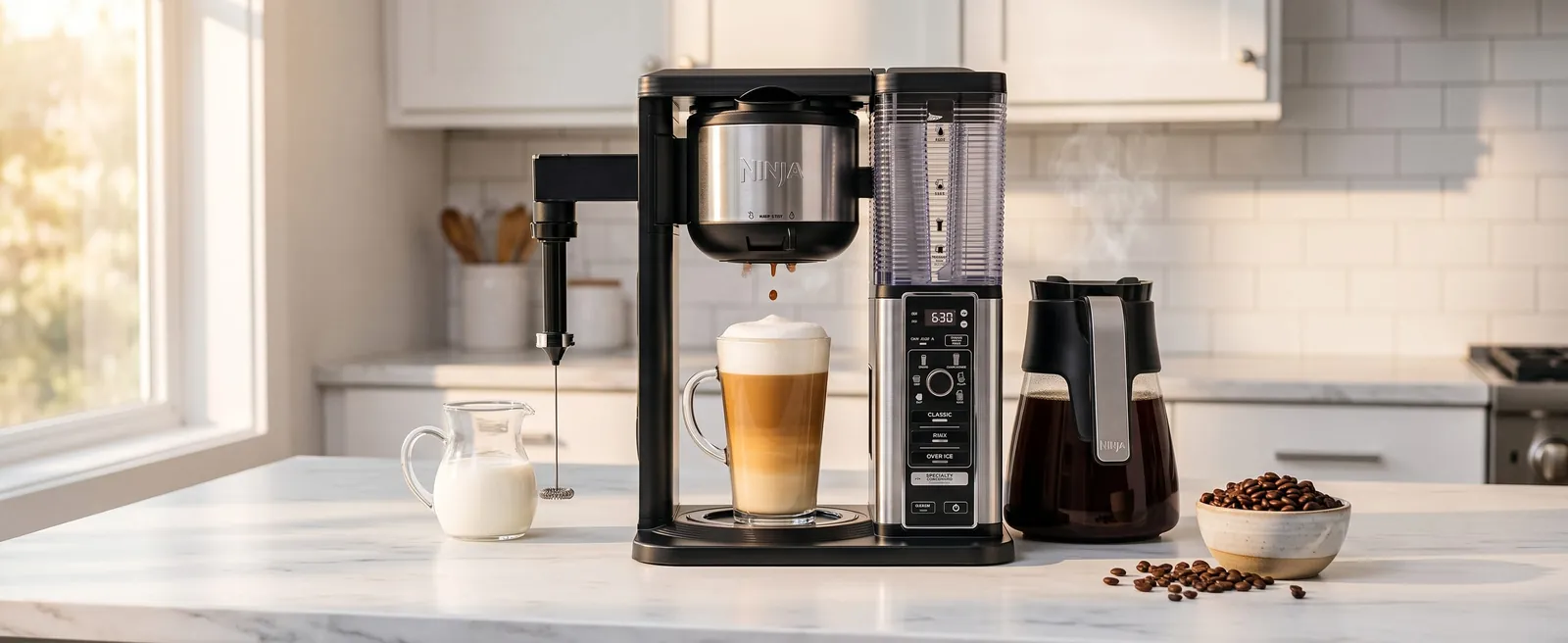
Ninja
An all-in-one drip maker that also makes lattes, cappuccinos, and iced coffee — versatile, though not true 9-bar espresso.
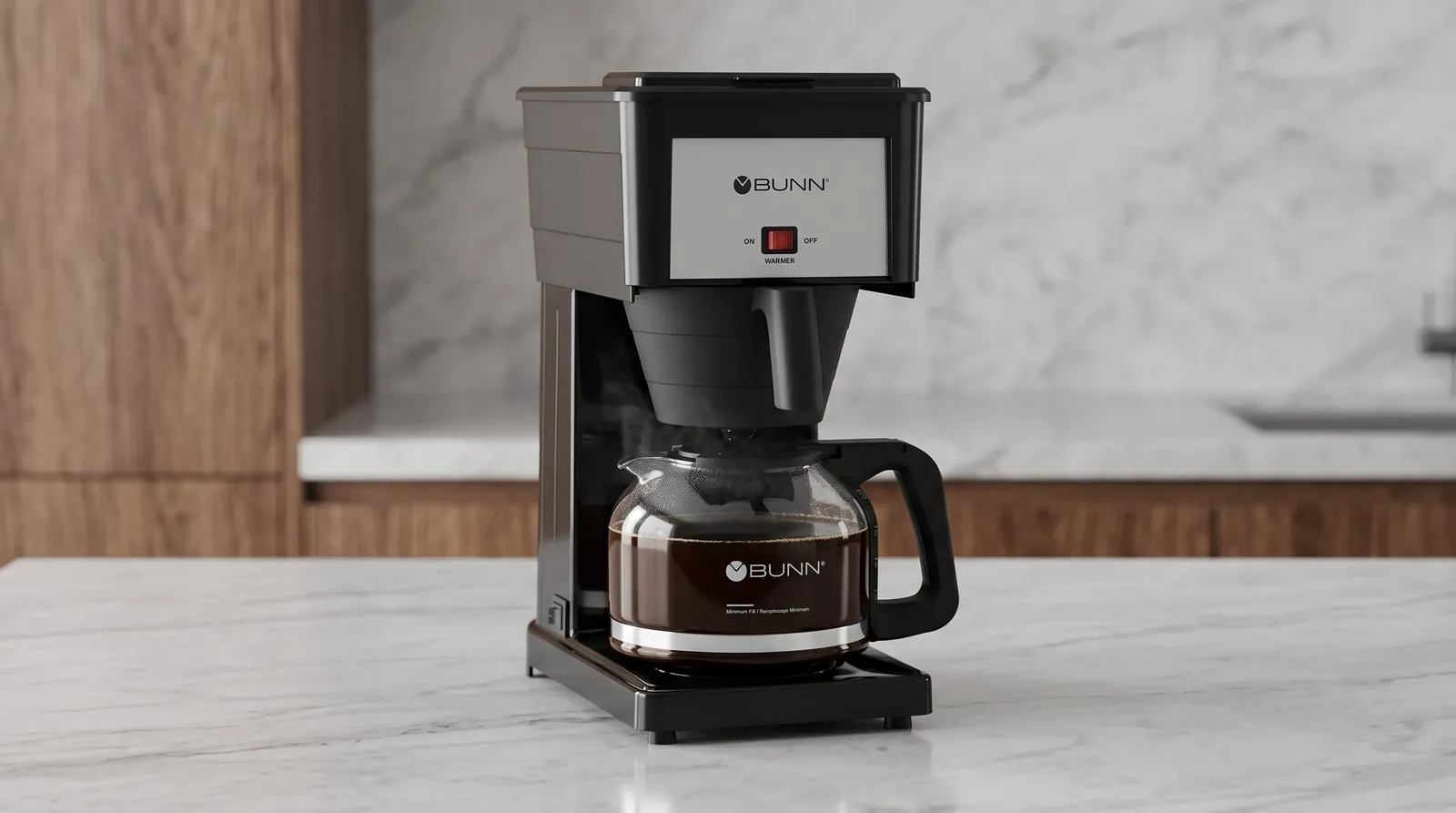
BUNN
A high-volume programmable brewer with a thermal carafe, built for households brewing 10+ cups a day rather than solo drinkers.
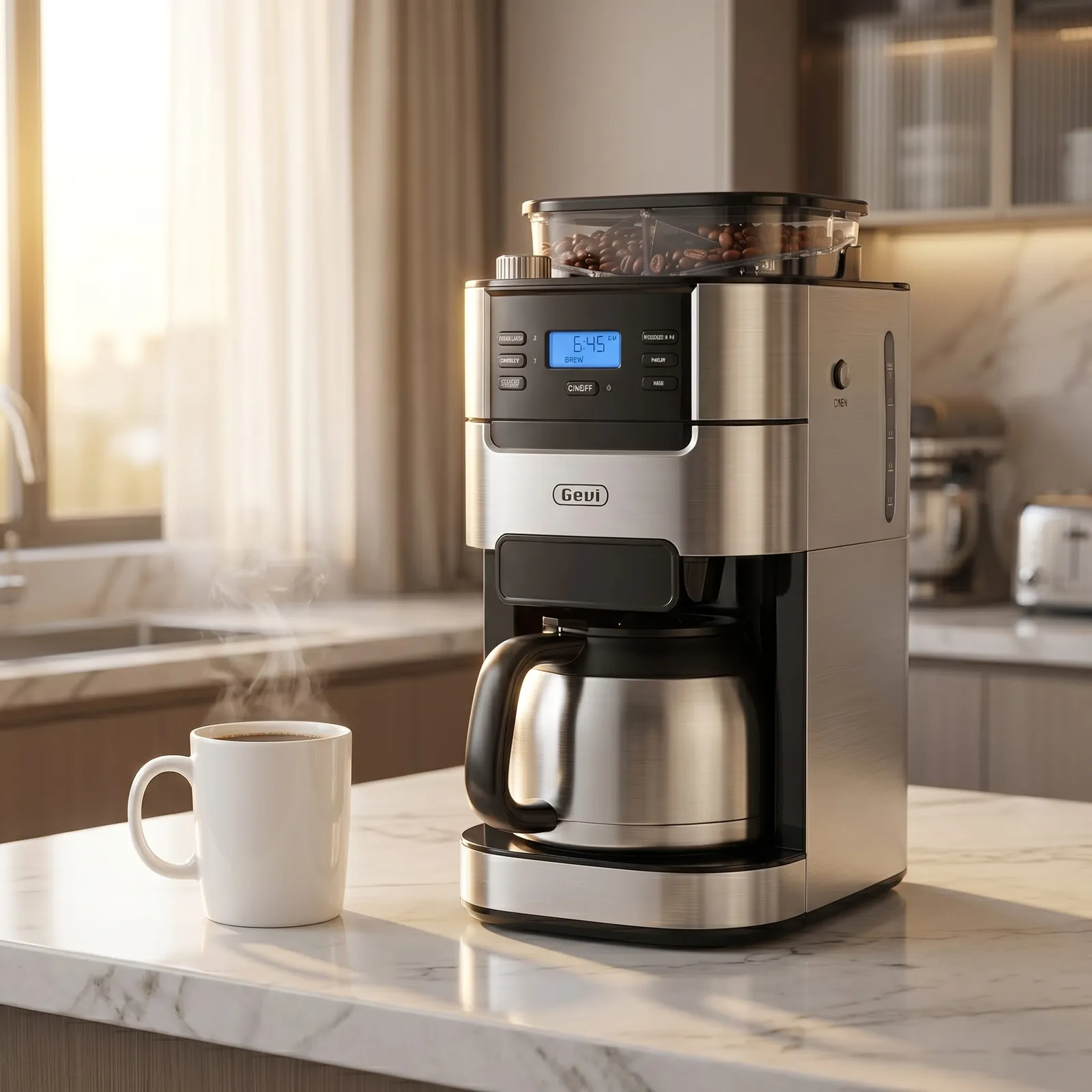
Gevi
An SCA-range drip maker with real automation at a budget price — brew-only, with no built-in grinder.
Put it into practice with a free calculator built for what you just read.
Quick answers before you buy.
Yes — for the right buyer. The K-Elite is among the best sub-$200 Keurigs for strong brew and iced coffee, with strong brew mode that measurably improves cup quality, a dedicated iced coffee mode, and five brew sizes covering every household need.
At $99-$199, it's worth the step up from cheaper Keurig models if you use the strong brew and iced features regularly. If you only make standard cups, the K-Classic at $99-119 brews identically for everyday use.
The K-Supreme and K-Supreme Plus add MultiStream Technology (five water nozzles vs the K-Elite's single nozzle) which Keurig claims improves extraction across the pod. In our testing, the K-Supreme Plus produces slightly more consistent TDS readings, but the K-Elite's strong brew mode gets close to the same output.
The K-Elite also has the larger 75 oz reservoir vs 66 oz on the K-Supreme. The K-Supreme Plus adds app connectivity; the K-Elite does not.
At similar prices, the K-Supreme Plus wins on extraction; the K-Elite wins on reservoir size and simplicity.
Yes — and it does it properly. The iced coffee mode brews a concentrated volume over ice rather than pouring a full-size hot brew that then dilutes.
In our testing, the iced mode produced final TDS of 1.19% vs 0.94% when pouring a standard brew over the same amount of ice. That's a measurable, taste-detectable difference.
Use a dark or medium-dark roast pod and fill your glass with ice before pressing brew.
Press the strong brew button once (it illuminates) before pressing your chosen brew size. The machine will slow its water flow through the pod, extending contact time and increasing extraction.
In our testing, strong mode boosted TDS from 1.18-1.35% (standard) to 1.38-1.52% — a measurable improvement in strength and body. We recommend strong mode for 10 oz and 12 oz brews where dilution is most noticeable, and for dark roast pods where intensity is the point.
Yes.
It is compatible with reusable filters, so you can brew your own ground coffee instead of buying pods.
That lowers the per-cup cost and reduces pod waste, though you give up some of the convenience of a sealed pod.
Descale when the machine's reminder appears, and more often in hard-water areas.
Skipping it risks limescale damage that the 1-year warranty does not cover.
Follow our descaling guide for the general method.
It is better if you want strong brew, iced coffee mode, more brew sizes and a larger tank. If you only want a basic hot cup, the K-Express costs less and brews a standard cup in a similar way.
For iced and specialty drinks without pods, the Ninja Specialty Coffee Maker is another option. If app scheduling is on your list, the Keurig Smart Brewer ($159–$199) adds Wi-Fi scheduling and a touchscreen.
Yes, for a small office. Simple physical controls mean anyone can operate it, the 75 oz tank cuts down on refills, and it accepts universal K-Cup pods.
For a large team, a batch drip machine is more practical. For one person's desk, the Keurig K-Mini Mate Plus ($98–$118) takes a fraction of the counter space.
Reader questions
Questions or tips? Leave a comment
Ask about your setup or share what worked for you. Comments are checked before they appear.