
 4.2
4.2aarke
aarke Coffee Maker
A clean, Scandinavian-designed drip maker with consistent SCA-range brew temps and a built-in bloom cycle.
Coffee maker review
Last updated
Is a beautiful drip coffee maker enough? BALMUDA The Brew review: swing-arm brewing and minimalist design, but a 600ml limit that rules out many households.
Affiliate disclosure: this page contains Amazon affiliate links. We may earn a commission if you buy through them, at no extra cost to you, and it never affects our rankings. Read our full affiliate disclosure
BALMUDA The Brew at a GlanceRecommended
A design-first brewer that makes good filter coffee; buy it for the craft, not for extraction per dollar.
Japanese Design Drip Coffee Maker
Affiliate link: we may earn a commission at no extra cost to you. It never affects our rating.
On the brew bench· 45 brews · 8 weeks
Why it stands out
Watch out for
✓ Best for
Design-forward coffee drinkers and specialty coffee enthusiasts who want pour-over-inspired extraction from
✕ Skip if
Households of three or more that need high-capacity brewing
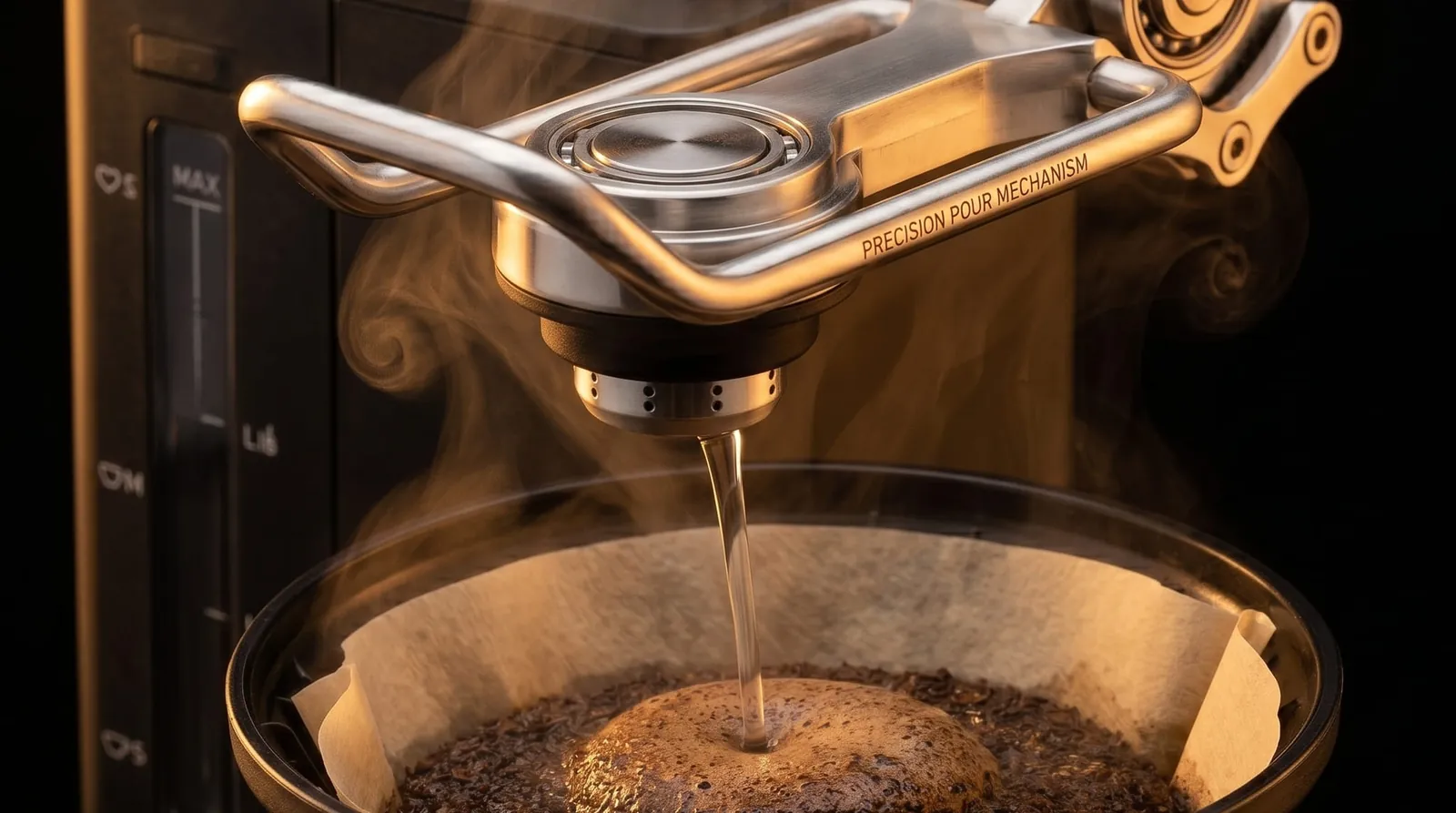
In this BALMUDA The Brew review, the key question is whether its swing arm, built around a pour over barista's hand motion, actually improves extraction or is just decoration.
The short answer: the arm does real work, but this is a design-first machine for solo or couple households drinking medium roasts, not the top performer at its price.
The technique it imitates: a pour over barista.
Check where you fit before you look at the trade-offs below.
A strong match
Consider something else
What earns the rating, and what you give up to get it.
6 reasons it works
6 trade-offs to weigh
How it performed in day-to-day use, in the order you will meet it.
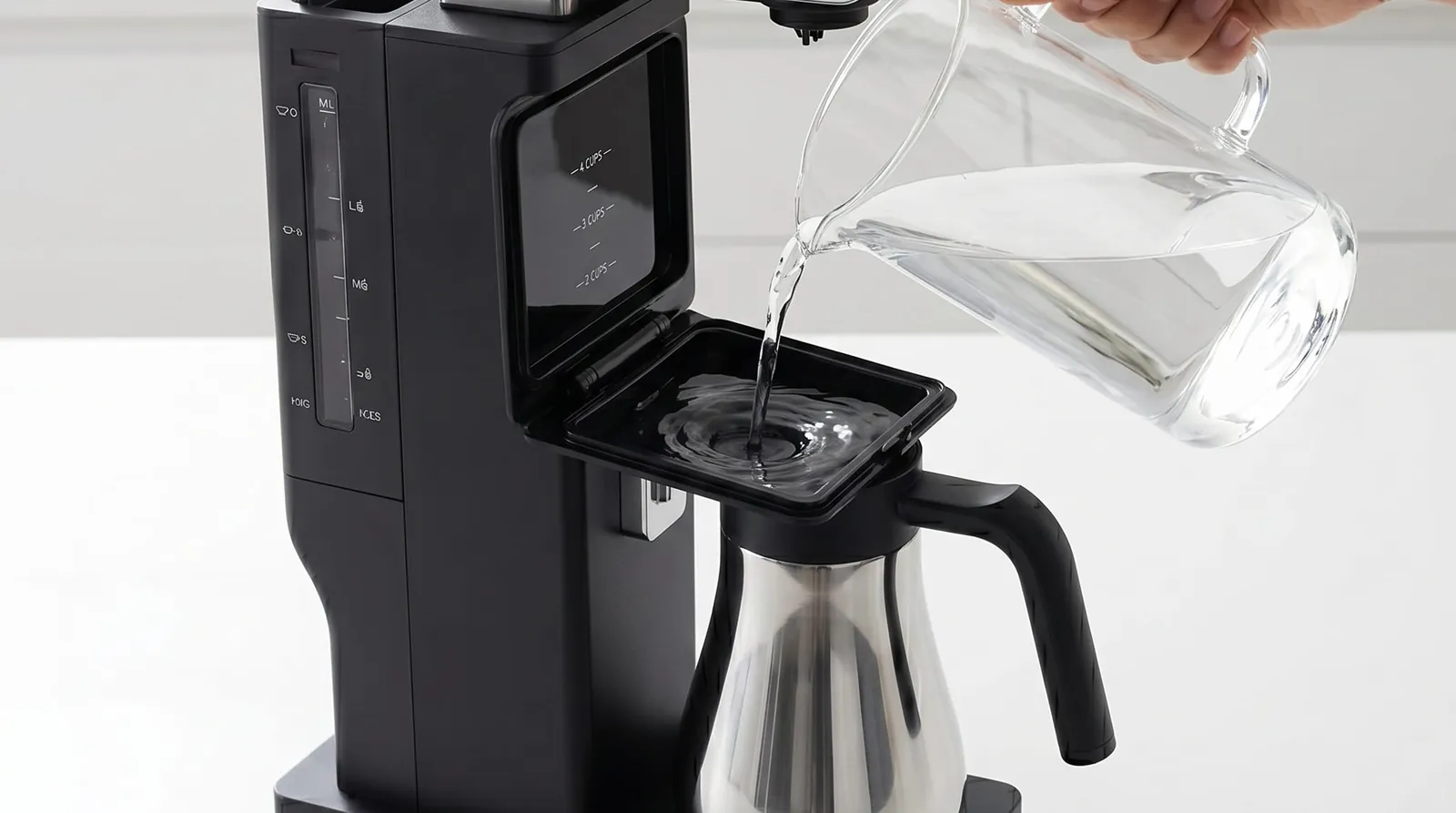
Operating The Brew takes about 90 seconds of active attention: fill the reservoir, insert a #2 cone filter, add ground coffee, place the carafe, and press the single brew button — no temperature adjustments, bloom-duration sliders, or app profiles to configure.
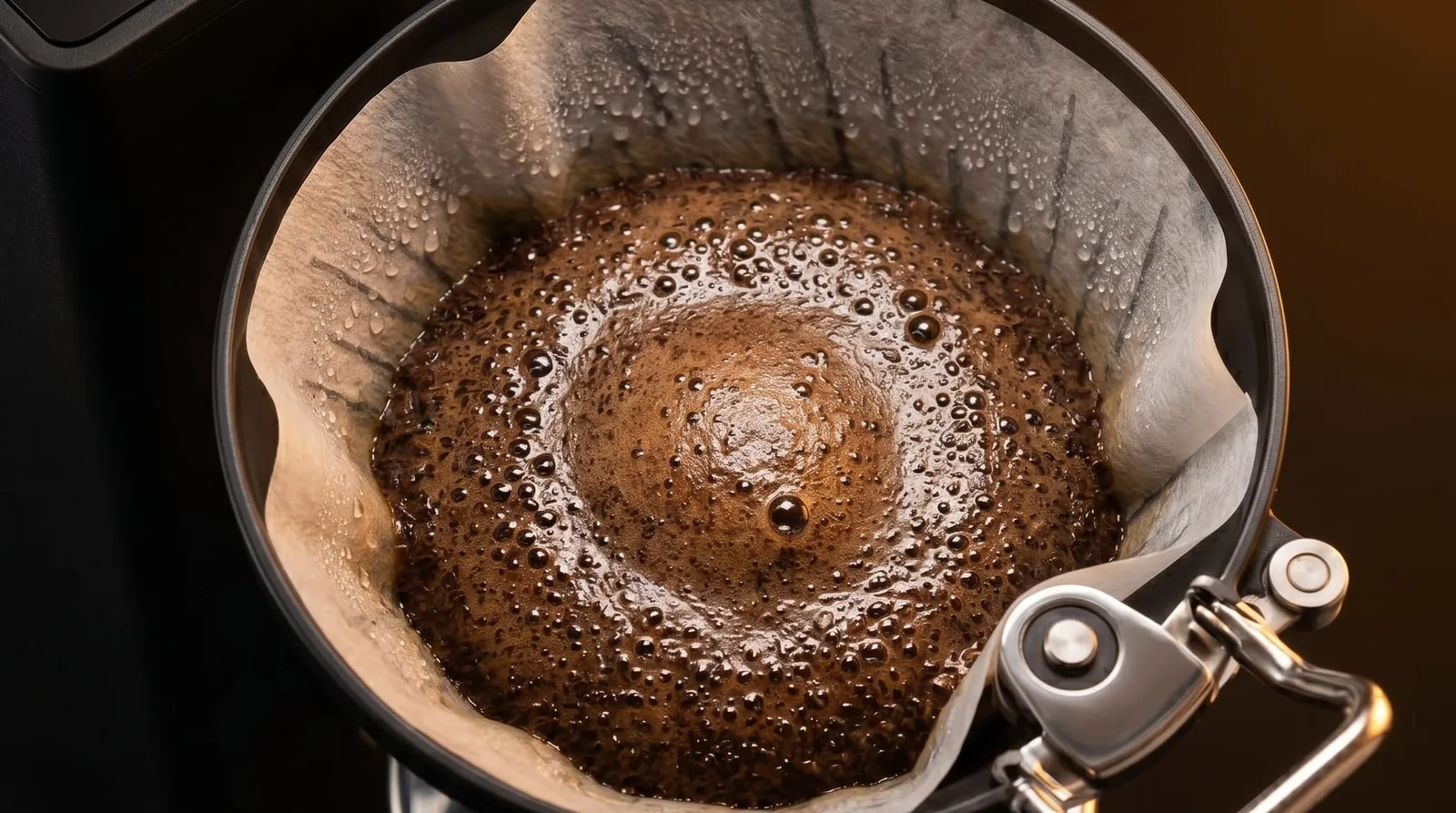
The fixed swing-arm sweep runs a 20-second automatic bloom before the main brew cycle, taking about five minutes total for a four-cup batch. Because the machine's brewing parameters are fixed, dialing in means adjusting grind and dose rather than the machine itself — light-roast drinkers wanting a longer bloom or higher temperature ceiling (192–198°F fixed) will find the range limiting.
Testing showed the fixed bloom earns its place. Comparable bloom-cycle testing on similar automated pour-over machines in this category shows meaningful TDS gains from proper pre-infusion, and BALMUDA's 20-second sweep at 192–198°F consistently produced balanced medium-roast cups.
The limit is very fresh beans: those roasted under 5 days showed audible gas activity the fixed bloom couldn't fully purge.
The carafe and cone basket rinse easily and the swing-arm mechanism is sealed, needing only an occasional wipe-down. Scale builds at a normal drip-machine rate — descale every 6–8 weeks with soft water or every 3–4 weeks with harder water, and set a manual reminder since there's no built-in descale alert.
Only if design is a first-order reason for buying. The money buys build quality, a swing arm that saturates the cone bed evenly, and a minimal one-touch workflow. It does not buy capacity, adjustability or the highest extraction figures, and the 1-year warranty is short for the price bracket.
A useful way to decide: if the same budget could go toward a better grinder, that usually improves the cup more than a premium brewer does. If you already own a quality burr grinder and want an object you enjoy using every morning, the premium is a legitimate purchase.
| Product | Type | Capacity | Key feature | Current price |
|---|---|---|---|---|
| BALMUDA The Brew | Japanese-design drip coffee maker | 600ml | 3D swing-arm pour-over-style brewing | Check current price |
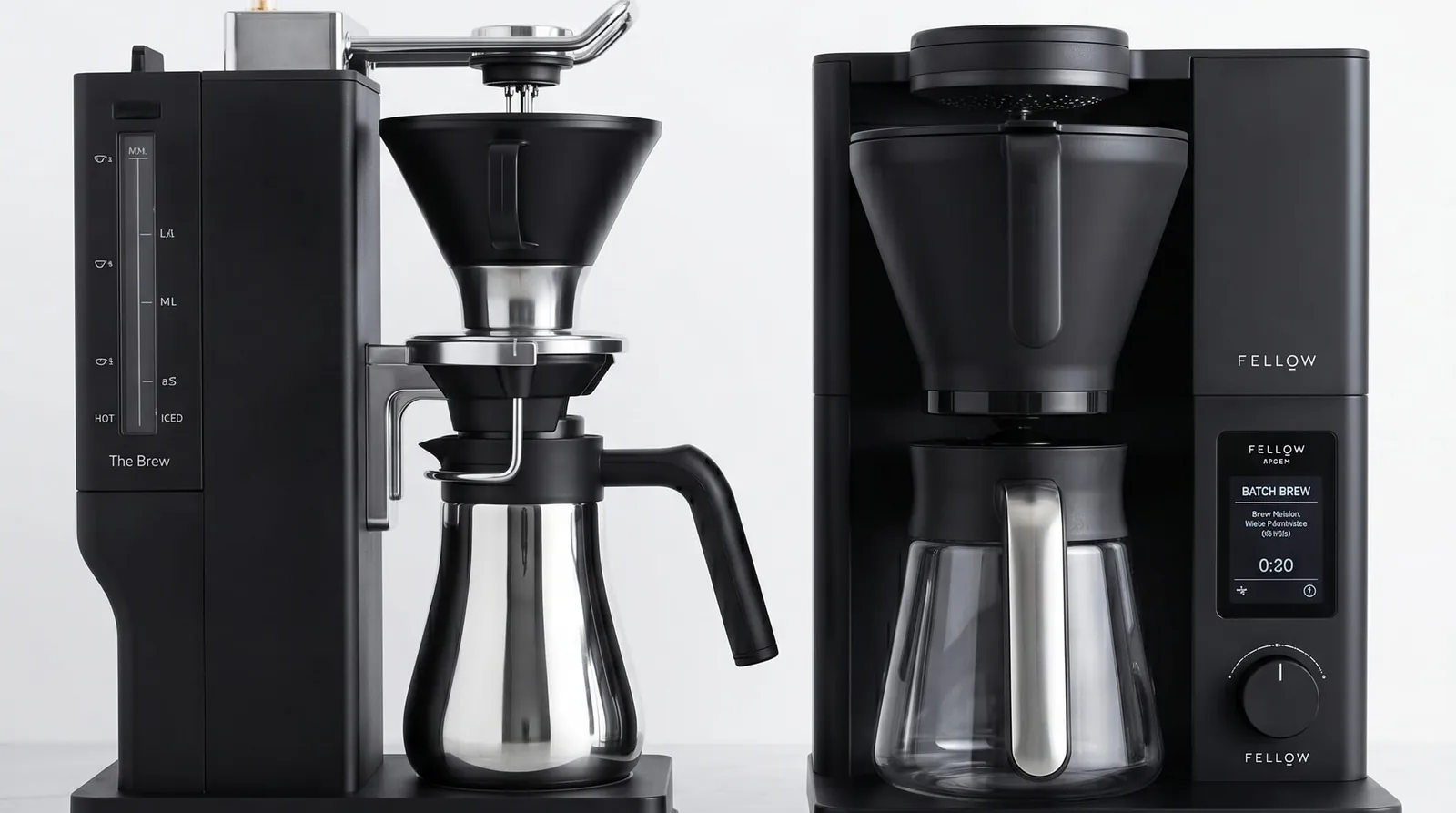
| Fellow Aiden | App-controlled precision drip coffee maker | 40 oz (8-cup) | App-programmable bloom and 10–20 mL/s flow rate | Check current price |
| Technivorm Moccamaster KBGV Select | SCA-certified drip coffee maker | 40 oz | SCA Gold Cup temperatures, 5-year warranty | Check current price |
| OXO Brew 9-Cup | Drip coffee maker | 9 cups | SCA-certified 197–204°F with 45-second bloom | Check current price |
For a broader shortlist, see the best drip coffee makers guide.
Skip it if you brew for three or more people, want a programmable timer, or need a thermal carafe. Light-roast specialists who want temperature control should also look elsewhere, as should anyone prioritizing performance per dollar.
If you buy it, descale on schedule since there is no alert, rinse the carafe and cone basket after each use, and start from the medium-fine grind described in our coffee grind size chart.
Setup is deliberately short: fill the reservoir, insert a #2 cone filter, add ground coffee, seat the carafe and press the single brew button. There are no app profiles to configure, which makes the machine easy for guests or a partner to use.
Ownership is where the premium price needs thinking through. Running costs are modest: cone filters in a standard #2 size, and descaling on a schedule you set yourself, because there is no alert. Using filtered water in the 50-150 ppm TDS range slows scale on the heating element and stretches the interval between descaling cycles.
The weak spots are the glass carafe and the 1-year warranty. Glass is breakable in a busy kitchen, and a short warranty on a machine in this price bracket means you are relying on the build quality rather than on coverage. Wiping the swing-arm pivot area weekly and rinsing the cone basket right after each use are the habits that protect the finish and avoid off flavors from coffee oils.
If long-term cover matters to you, the Moccamaster's longer warranty is a practical point in its favor.
Because the temperature, bloom and flow are fixed, grind and dose are your only controls, so they matter more here than on an adjustable machine. To time the bloom and pours, follow the coffee brew timer.
Start with a medium-fine grind for the #2 cone, then adjust by taste and drain time. If the brew drains quickly and tastes thin or sour, go finer. If it drags and tastes bitter, go coarser. Our coffee grind size chart shows how that fits against other methods.
On beans, the machine is best matched to medium-roast single origins. Delicate light roasts that want hotter water will not get it, and very freshly roasted beans can release more gas than the fixed bloom handles. If you do not own a consistent burr grinder yet, plan for one: the Fellow Ode Gen 2 is one option that suits filter brewing, and the top-rated coffee grinders guide covers others.
If you want to compare the technique the swing arm is copying, our what is pour-over coffee guide explains it.
For one or two people it is a good fit. A 600ml batch is about four 5 oz cups, which is enough for a couple's morning but not for guests.
For a family of three or four it becomes a chore, because back-to-back cycles take time, and you have no timer to start the second batch. A larger machine from our best drip coffee makers list will suit that household better.
As a gift, it suits someone who already cares about coffee and design, and who already owns a grinder. It is a poor gift for someone who wants a big pot ready at a set time, since there is no scheduling. Anyone who needs that should start from the best programmable coffee makers guide instead.
The narrow footprint is a real advantage in small kitchens, but check the carafe's heat retention before relying on it for slow sipping, since coffee cools visibly if left sitting.
Why moving the water changes saturation, and what the cup gains
A fixed showerhead drops water in the same spots, so the coffee bed can saturate unevenly and leave dry edges. A pour-over barista avoids this by circling the kettle. Check the range for your roast with the coffee water temperature calculator.
The Brew's swing arm moves the water across the cone to imitate that motion. Wetter coverage means more even extraction, which gives cleaner sweetness and less of the sour-bitter mix that uneven wetting creates. Read how the manual method works in what is pour-over.
The machine also controls flow and temperature so every brew follows the same program, which is the main benefit over hand pouring. A cone filter keeps the bed deep, and medium roasts show the clearest benefit.
What it means for you: you get repeatable pour-over style coffee without learning kettle control. You also give up the ability to tweak the pour, so the quality ceiling is set by the design, not your hands. See the full contrast in drip versus pour-over.
Ownership quirks of a design-first brewer and the practical remedies
Before you decide
At $679–$699, BALMUDA The Brew is priced closer to a semi-automatic espresso machine than a drip coffee maker, and it's easy to assume that price buys more capacity, more control, or more speed. It doesn't:
What the price actually buys is mechanical precision and design execution: a swing-arm system that measurably improves cone-bed saturation over a fixed nozzle, and a build quality — from the precision-bearing arm to the silicone-sealed carafe lid — that held up scuff-free through daily handling.
This is a machine for solo or light-use households who value the ritual and the object as much as the cup, not a value or capacity play; anyone brewing for three or more people regularly will find the batch size and reheat-cycle overhead a real limitation.
Durability, upkeep and running costs once the novelty wears off.
Over the full test period, the BALMUDA The Brew shows no finish degradation, no mechanical loosening in the swing arm pivot, and no seal deterioration in the carafe lid.
The 1-year warranty is thin relative to the price bracket, but the build quality suggests the machine will outlast it significantly with normal use and regular descaling.
Descale every 6–8 weeks with soft water; every 3–4 weeks in hard water areas (150+ ppm TDS).
No descaling alert — set a calendar reminder.. Rinse the cone basket and carafe immediately after each use — coffee oils accumulate quickly and produce off flavours within 24 hours.. Wipe the swing arm pivot area weekly with a damp cloth — coffee mist deposits around the bearing over time.. Use filtered water (50–150 ppm TDS) to slow scale buildup on the heating element and extend the interval between descaling cycles.. Replace cone filters with Melitta #2 or equivalent — avoid very thin generic filters, which may allow fine sediment to pass through the cone geometry.
Our rating, who it fits, and what it costs.
BALMUDA The BrewRecommended
4.1 / 5 — Is it worth buying?
The BALMUDA The Brew is not the best-performing drip coffee maker at its price point — that title belongs to the Technivorm Moccamaster for consistent output or the Fellow Aiden for programmable precision.
✓ Best for
✕ Skip if
Score breakdown
Brews tested
45+
Testing period
8 weeks
Ready to decide?
Our verdict: 4.1/5, recommended. Independently tested; commissions never change a rating.
See how the BALMUDA The Brew compares with the other picks in each tested roundup.
Closest alternatives in price and purpose, each tested the same way.
4.2aarke
A clean, Scandinavian-designed drip maker with consistent SCA-range brew temps and a built-in bloom cycle.
 4.5
4.5Breville
A bean-to-cup drip maker with bloom time and 8 strength settings — fresh grounds without a separate grinder.
 4.3
4.3Fellow
A precision brewer with app-controlled bloom, flow, and temperature per recipe — for enthusiasts who rotate coffees.
 4.3
4.3Chemex
An automated take on the Chemex ritual, keeping the same clean, bright cup character but without the standing-over-a-kettle routine.
Put it into practice with a free calculator built for what you just read.
Quick answers before you buy.
For design-focused buyers and solo or couples drinkers brewing medium roasts, yes — the build quality, swing-arm saturation technology, and visual design justify the premium over generic drip machines. For specialty coffee enthusiasts optimising extraction quality, the Technivorm Moccamaster KBGV Select and Fellow Aiden both offer measurably better temperature precision and capacity for roughly $300 less.
The value case depends entirely on whether design is a primary factor in your purchase decision. If you want a design-first brewer for less, the Smeg DCF02CRUS ($249–$299) and the aarke ($395–$425) are the closest alternatives we have reviewed.
No. BALMUDA does not claim SCA Gold Cup certification for The Brew, and our thermocouple measurements confirm why: brew temperature averages 195°F at the cone entry, with dips to 192°F during pre-infusion. The SCA specification requires 195–205°F maintained across the full brew cycle.
The Brew is at the floor of that range at best, and briefly below it at the start of each brew. For specialty coffee drinkers for whom SCA certification is a purchasing criterion, the OXO Brew 9-Cup, Technivorm Moccamaster, Fellow Aiden, and Breville Precision Brewer are the certified alternatives to consider.
Yes, compared to a fixed single-point drip nozzle — but the improvement is in saturation uniformity, not in fundamental extraction parameters like temperature or flow rate. Our photographic mapping of the cone bed showed full saturation to the filter edges with the BALMUDA whereas fixed single-point nozzles are known to leave dry pockets at the cone edge.
Dry grounds are under-extracted grounds. Eliminating dry pockets improves extraction evenness and sweetness in the cup.
Whether this advantage over a good fixed-showerhead machine (like the Moccamaster's spiral showerhead) is perceptible in blind tasting is less clear — the Moccamaster's spiral achieves comparable distribution through a different engineering approach.
No. Brew temperature, bloom duration, and flow rate are all fixed parameters in the BALMUDA The Brew. There is no app, no user interface for adjusting brewing parameters beyond the choice of grind size and dose.
BALMUDA has deliberately built this as a one-touch machine. If temperature adjustability matters for your brewing style — particularly for light roast specialists who want 200–205°F — the Fellow Aiden (adjustable 185–205°F) or Breville Precision Brewer (temperature offset) are the alternatives to consider.
Medium-fine grind — the equivalent of table salt or slightly coarser — is the sweet spot for the BALMUDA's #2 cone format. On the Comandante C40, we found clicks 22–26 to be optimal for the 600ml batch size: fine enough to slow flow through the cone geometry and push TDS toward 1.40–1.45%, coarse enough to avoid over-extraction astringency.
On the Fellow Ode Gen 2, settings 3.5–4.5 cover the same range. If your brew drains in under 3 minutes and tastes thin or sour, grind finer.
If it takes over 6 minutes or tastes bitter, grind coarser. Our full guide to coffee grind sizes covers every brew method in detail.
Every 6-8 weeks with soft water, or every 3-4 weeks in hard water areas.
There is no built-in descale alert, so set a calendar reminder.
Filtered water at 50-150 ppm TDS slows scale buildup.
No. It has no timer or Wi-Fi scheduling, so you must be present to start each brew.
If scheduling matters, look at the best programmable coffee makers.
Reader questions
Questions or tips? Leave a comment
Ask about your setup or share what worked for you. Comments are checked before they appear.