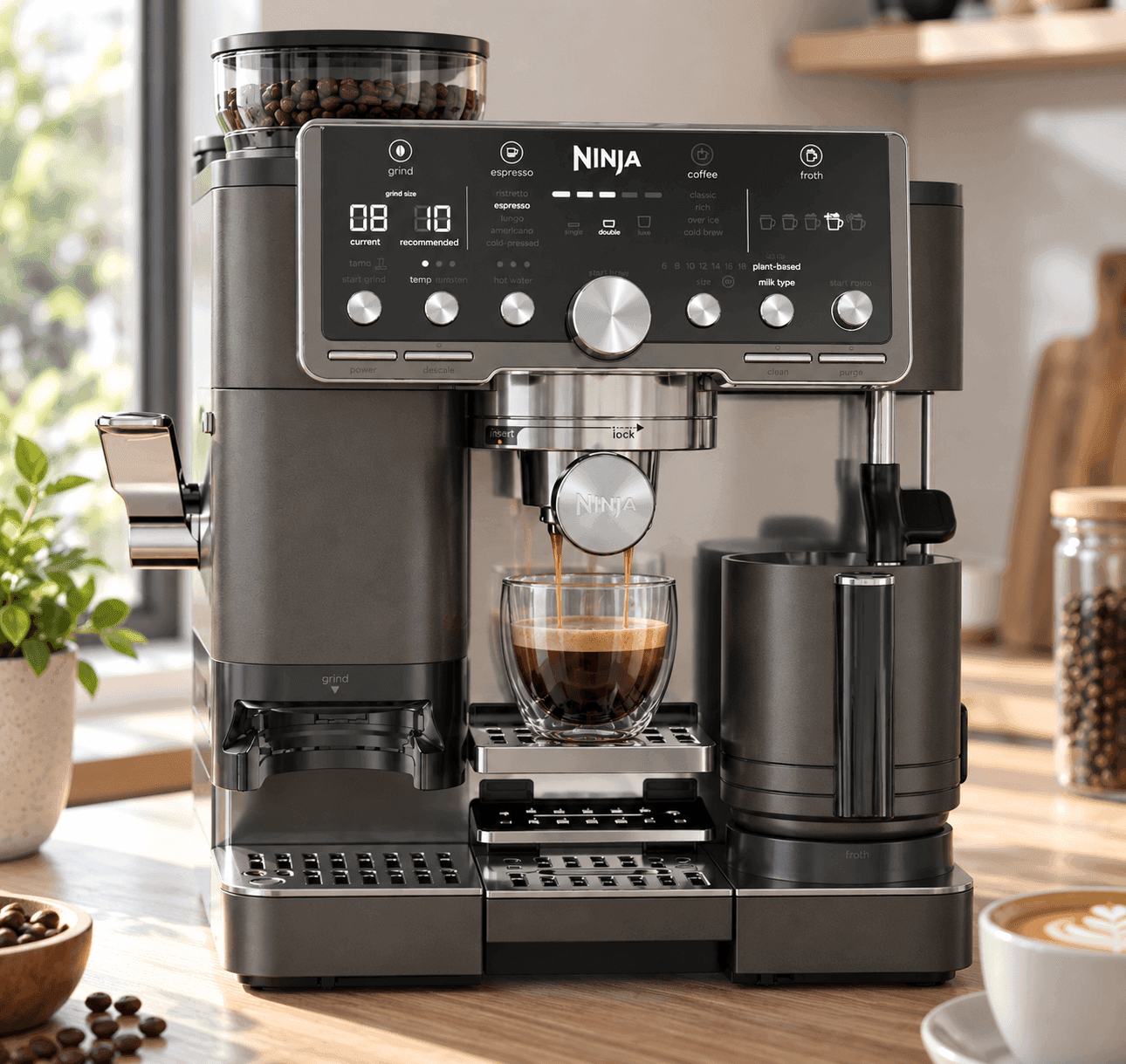
Espresso machine review
Last updated
Ninja Luxe Café Pro Review 2026: One Weak Spot
Ninja Luxe Café Pro review: espresso, drip, cold brew and hot water in one machine, but which mode falls short? 115+ shots over 27 days show who should buy.
- Our rating 4.2/5
- By Michael Anderson
- 22 min read
- Independently tested: 115+ shots over 27 days
Affiliate disclosure: this page contains Amazon affiliate links. We may earn a commission if you buy through them, at no extra cost to you, and it never affects our rankings. Learn more
Ninja Luxe Café Pro at a GlanceRecommended
A strong value for a four-in-one buyer who drinks medium-dark roast; light-roast fans should look elsewhere.
All-in-One Semi-Automatic Espresso Machine with Built-In Conical Burr Grinder, Drip Coffee, and Cold Brew
Affiliate link: we may earn a commission at no extra cost to you. It never affects our rating.
- Four
- Brewing modes
- 25-setting
- Grinder
- 1-year limited
- Warranty
In the shot log· 115+ shots · 27 days
Why it stands out
- Four brewing modes plus an integrated grinder
- Real espresso from non-pressurized baskets
- Automated frothing with latte-art-capable microfoam
Watch out for
- Light roast espresso is inconsistent
- Drip coffee is the weakest of the four modes
✓ Best for
Buyers upgrading from a pod or drip machine who want espresso, drip coffee, cold brew
✕ Skip if
Light roast and single-origin espresso drinkers
This Ninja Luxe Café Pro review covers a machine that tries to do espresso, drip coffee, cold brew and hot water in one appliance, and the espresso mode held up better than we expected.
The short answer: at $749.99 it's a strong value for someone replacing a pod or drip machine who mostly drinks medium-dark roast, and a weaker fit for light-roast or drip-first drinkers.
- What held up: Non-pressurized baskets make real espresso, and the automated frothing includes latte-art-capable microfoam.
- Where it fell short: Light roast espresso is inconsistent, and drip coffee is the weakest of the four modes.
- Everyday annoyances: The small drip tray needs emptying after about five drinks, and the warranty is only one year.
- Who it's for: Buyers who want guided dosing and tamping with four brewing formats and a grinder in one appliance.
Here's what stood out over 27 days and 115+ shots, organized the way you'd actually use the machine.
Who Is This Right For?
Check where you fit before you look at the trade-offs below.
A strong match
It suits you if you are
- Buyers upgrading from a pod or drip machine who want espresso, drip coffee, cold brew, and hot water from one appliance without assembling separate equipment
- Beginners who want guided dosing and tamping — the built-in scale and Barista Assist suggestions remove much of the early guesswork around grind and dose
- Medium-dark and dark roast drinkers who want consistent espresso without extensive manual dialling-in
- Households that make milk-based drinks regularly and want automated, preset-driven frothing rather than a fully manual wand
- Buyers prioritizing total value across multiple brew formats over best-in-class performance in any single one
Consider something else
Look elsewhere if you are
- Light roast and single-origin espresso drinkers — the grinder and extraction profile are inconsistent on lighter roasts
- Anyone whose primary daily drink is filter/drip coffee — that mode is the weakest of the four
- High-volume households who don't want to empty a small drip tray every few drinks
- Buyers who want a 2-year-plus warranty — Ninja's 1-year limited warranty is shorter than several competitors at this price
- Espresso enthusiasts who plan to eventually add pressure-profiling or manual pre-infusion control — this is a guided, semi-automatic machine, not a prosumer platform
- Skill level
- Beginner to intermediate — the weight-based dosing and guided tamping are built specifically to shorten the learning curve
- Drink style
- Espresso, ristretto, americano, lungo, drip coffee, cold brew, and milk-based drinks (cappuccino, latte, flat white)
- Upgrade path
- Buyers who outgrow the integrated grinder's ceiling on light roasts would need to replace the whole unit rather than swap components, since the grinder isn't separable from the machine — factor that into the long-term value calculation.
Pros & Cons
What earns the rating, and what you give up to get it.
6 reasons it works
Pros
- Four brewing modes (espresso, drip coffee, cold brew, hot water) from one $749.99 machine, with an integrated weight-based grinder included in that price
- Non-pressurized baskets produce real espresso rather than artificially crema'd shots — extraction on medium-dark and dark roasts held up well
- Weight-based dosing and lever-activated Barista Assist tamping meaningfully shorten the beginner learning curve
- Automated milk frothing with five presets, including latte-art-capable microfoam
- Cold brew mode is a real strength at this price point
- Automatic basket detection adjusts dose and grind suggestions without manual configuration
7 trade-offs to weigh
Cons
- Light roast and single-origin espresso is inconsistent — the grinder and extraction profile are clearly tuned toward medium-dark and dark roasts
- Drip coffee is the weakest of the four modes
- Small drip tray needs emptying after about five drinks due to the auto-flush cycle
- 1-year limited warranty is shorter than several competitors at this price tier
- Automatic grind recommendations aren't always accurate and sometimes need manual correction
- Build quality is solid rather than premium, with plastic components at several touch points and a boxy design
- No knock box or water filter included, despite the price point
Convinced by the pros? Check today's Amazon price — it regularly goes on sale.
Current price: $749.99
Real-World Testing
How it performed in day-to-day use, in the order you will meet it.
Setup & Learning Curve
Unboxing to first shot takes a little longer than a standalone espresso machine, because you're setting up a grinder and a four-mode brewing system at once:
- Fill the water reservoir and seat the XL milk jug.
- Load the hopper.
- Run a seasoning grind through with cheap beans to clear manufacturing dust before the good beans go in.
The box includes the portafilter, single, double, and Luxe (quad) baskets, a cleaning brush, cleaning disc, descaling powder, cleaning tablets, and a hard water testing kit — no knock box and no water filter, so budget for those separately if you want them.
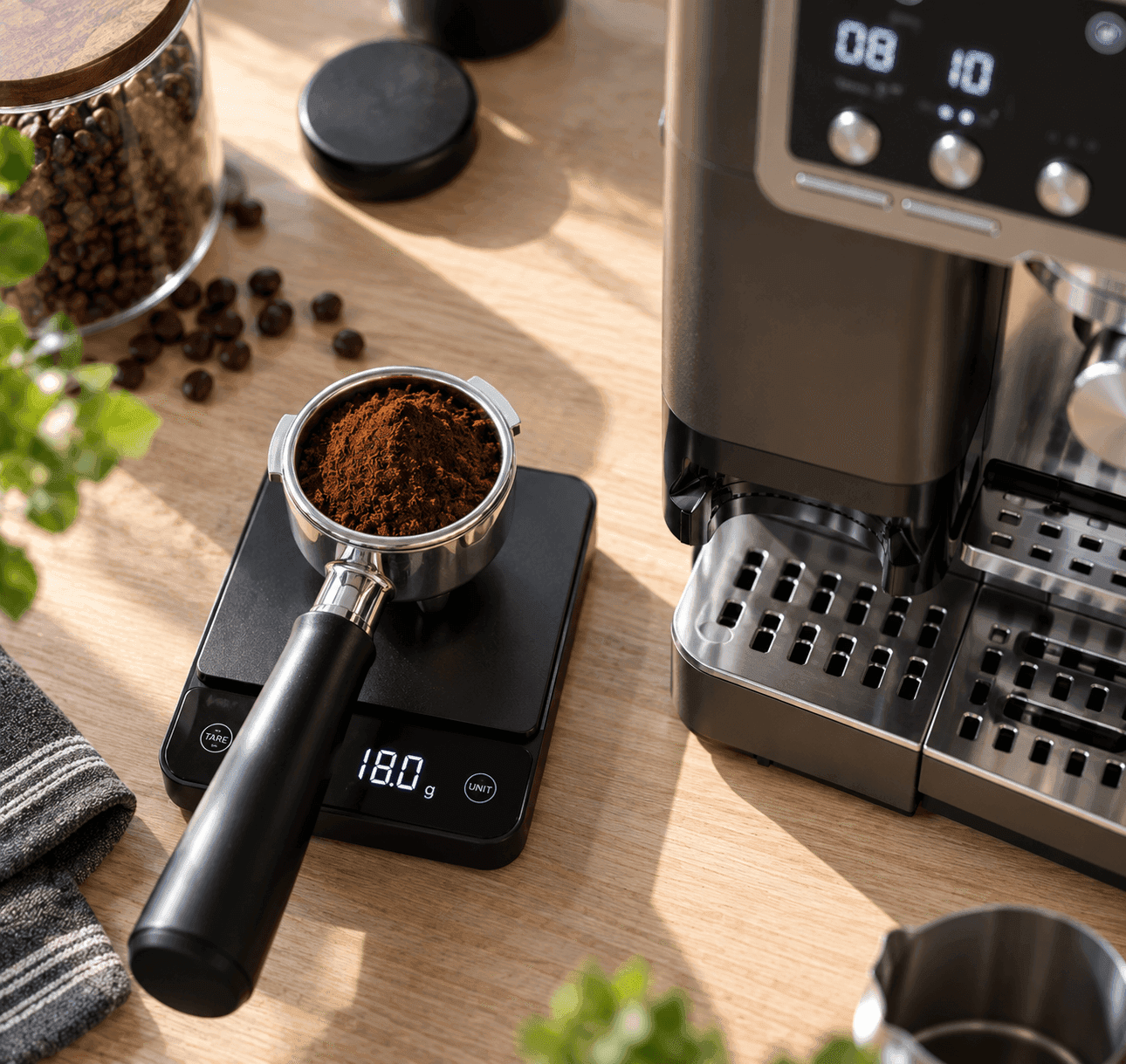
Barista Assist Technology is the first thing you notice in daily use: drop in a basket and the machine detects which one it is, weighs the dose on the built-in scale, and suggests a grind setting. That's a useful shortcut for a first-time espresso buyer, but it's a starting point rather than a finished answer — the suggested grind setting needed manual correction more than once to actually land a good shot, particularly outside the medium-dark and dark roast range the machine seems tuned for.
Dial-In Workflow
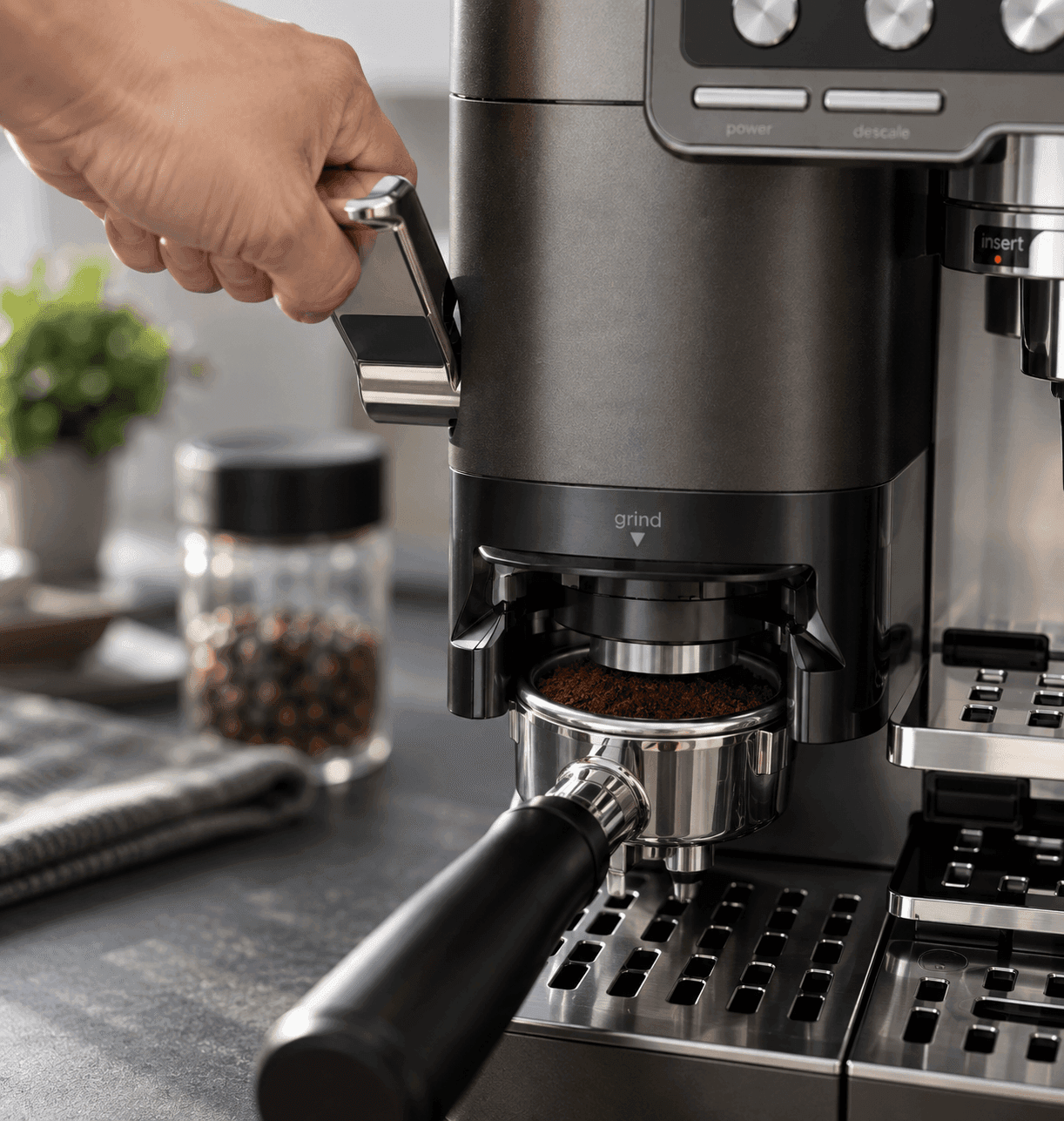
The lever-activated tamper is the other half of the Barista Assist system: once the scale confirms the dose is in range, pulling the lever presses the tamp to a consistent depth without you eyeballing pressure by hand. That consistency is the main thing beginners struggle with early on, and removing it from the equation shortens the learning curve.
The 25-setting conical burr grinder covers a wide range, but it's clearly calibrated with medium-dark and dark roasts in mind — Colombian and Brazilian medium-dark blends dialled in without much fuss, landing in a normal 25–33 second shot window on the double and Luxe baskets. Light roasts and washed single-origins needed more fiddling and never quite reached the clarity expected from a machine with a dedicated flat-burr grinder; if that's your primary use case, that ceiling is worth knowing about before you buy.
Shot Extraction Notes
Because the Luxe Café Pro uses non-pressurized baskets across the board — single, double, and the quad-shot Luxe basket — the shots it pulls are real espresso rather than the artificially crema'd output you get from machines that lean on pressurized baskets to fake good-looking shots regardless of grind quality. On a Brazilian medium-dark roast, a double pulled at 33 seconds after we nudged the grind coarser than the machine's initial suggestion came out with real body and persistent crema — the kind of result that's encouraging for a beginner-oriented machine at this price.
The selectable 4:1, 2.5:1, and 2:1 ratios cover ristretto through lungo without needing to manually override volume targets, which is a nice touch for anyone still learning what those ratios mean in practice. The weak point stayed consistent through testing: light roast espresso came out thin and underdeveloped even after adjusting grind and dose manually, pointing to a real limitation in the grinder and extraction profile rather than an isolated bad shot.
Milk Steaming Experience
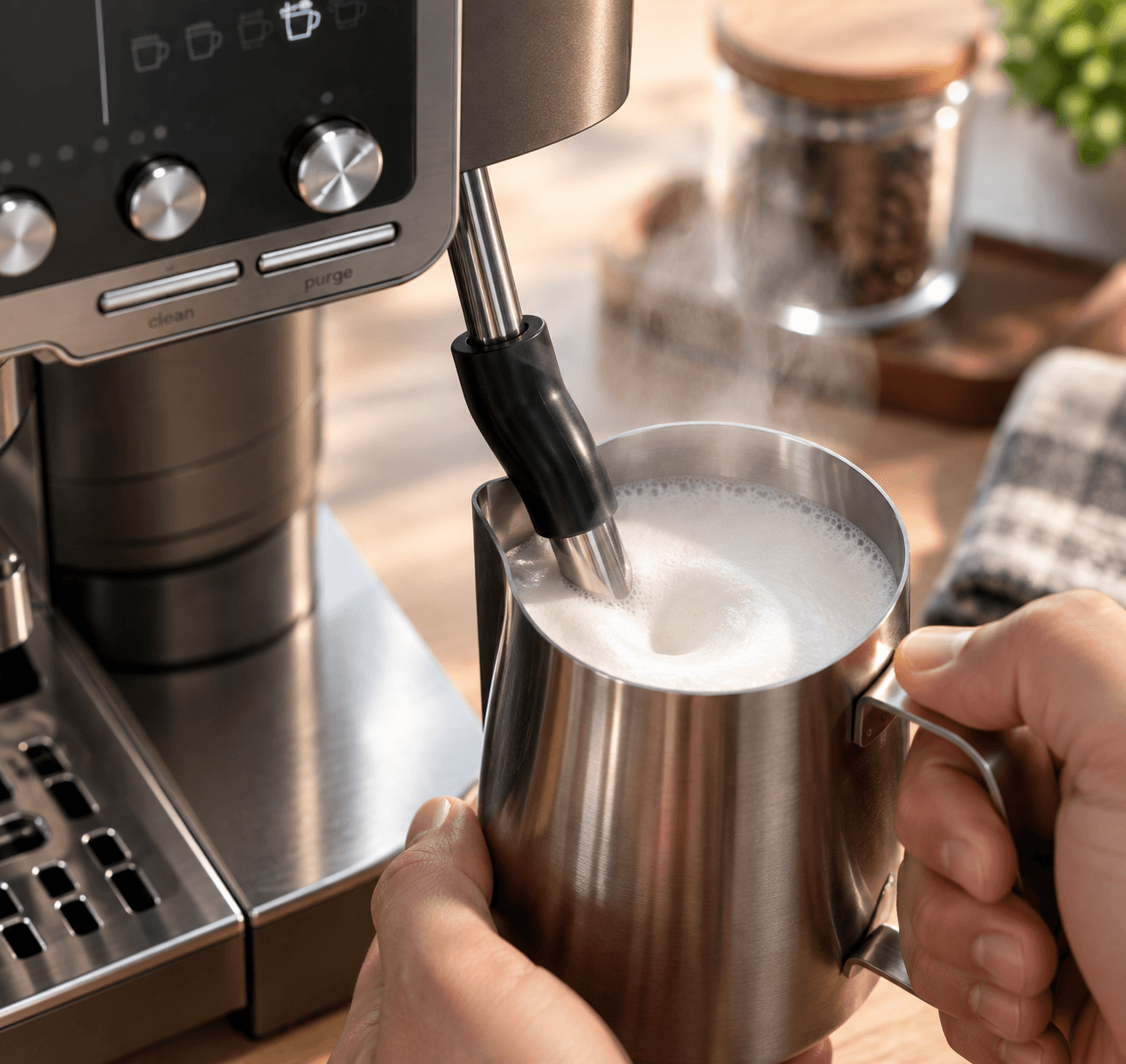
The Dual Froth System Pro's five presets — steamed milk, thin froth, thick froth, extra-thick froth, and cold foam — cover essentially everything you'd want for cappuccino, latte, or flat white without hand-holding the wand yourself. Whole milk in the included XL milk jug produced glossy, dry cappuccino foam and microfoam fine enough to actually pour latte art with, which is a strong result for an automated system.
The one inconsistency worth flagging: milk temperature wasn't fully repeatable session to session — noticeably warmer some mornings than others using the same preset and the same amount of milk. It never ruined a drink, but if you're chasing precise, repeatable steamed-milk temperature the way a manual wand and a thermometer allow, this system gets close without quite matching that level of control.
Drip Coffee and Cold Brew Modes
Cold brew was a standout — smooth, well-extracted, and one of the better cold brew results we've had from a machine that also does espresso. Drip coffee, on the other hand, was consistently the least impressive of the four modes: it makes a drinkable pot in sizes from 6 oz to 18 oz, but it's clearly not where Ninja focused its engineering effort. If drip coffee is your primary daily drink, don't buy this machine expecting it to compete with a dedicated drip coffee maker — buy it for the espresso, milk, and cold brew capability, and treat drip as a convenient extra.
Cleanup & Maintenance
Daily maintenance is simple: wipe the steam wand after each milk session (it's insulated and cool-touch, so there's no burn risk doing this immediately after use), and empty the drip tray — which needs it more often than is ideal. The machine's auto-flush cycle after each shot fills the tray faster than its size accounts for, and in normal daily use it needed emptying after roughly every five drinks. It's a minor daily annoyance rather than a functional problem, but it's the kind of thing you notice within the first week of ownership.
Build quality overall felt solid for the price rather than premium — stainless steel exterior, with plastic at several touch points (the hopper lid and some internal components) that doesn't quite match the exterior finish. The design leans boxy and utilitarian next to some of the more design-forward machines at this price, which is a fair trade if you're prioritizing the four-mode functionality over looks.
How it works and why it matters
Built-in grinder, weight-based dosing and assisted tamping in one machine
The Luxe Cafe Pro is a bean-to-cup semi-automatic. A conical burr grinder dispenses grounds into the portafilter, a scale measures dose by weight, and a lever tamp presses them. Weight-based dosing matters because grams, not time, set extraction.
The non-pressurized baskets mean grind size and dose decide pressure, as on a traditional espresso machine. That gives real crema and flavor, but also lets a bad grind show. Automatic basket detection suggests a grind setting to speed up dialing in.
Cold brew and drip modes use the same water path. They add flexibility but are not the main strength. The dial-in guide shows how to adjust.
Common problems and modern fixes
Grind drift, dose errors and cleaning: common ownership issues and practical fixes
- Sour or slow shots: the suggested grind is a start. Adjust one step at a time and change dose before chasing speed; see fast or slow shot fixes.
- Light roasts: they need finer grinds and more heat than the built-in grinder may reach. Medium roasts work best.
- Channeling: an even bed helps; read channeling fixes.
- Grinder buildup: oily beans leave residue in the grinder. Brush the chute regularly and use the cleaning guide.
- Scale: the machine prompts descaling. Use filtered water and follow the descaling guide.
Before you decide
All-in-One 4-in-1 Machines vs. Dedicated Single-Purpose Equipment
The Luxe Café Pro sits in a growing category of appliances trying to replace multiple single-purpose machines — an espresso maker, a drip coffee maker, a cold brew setup, and a hot water dispenser — with one unit. The trade-off is the same one seen in other all-in-one espresso machines: broader capability in exchange for a lower ceiling in any single mode compared to equipment built to do one thing.
At $749.99, the fairer comparison isn't just to other espresso machines with built-in grinders (like the Breville Barista Express, which focuses on espresso alone) — it's to the combined cost of an espresso machine, a drip coffee maker, and a cold brew setup bought separately, which typically runs higher and takes up considerably more counter space. For buyers who want all four brewing formats and are fine with drip coffee being the weakest link, that combined value is real. For buyers who only care about excellent espresso, or who already own a drip machine and cold brew setup they're happy with, a dedicated espresso machine with a better light-roast ceiling is worth the trade-off in flexibility. See our full espresso machine reviews for dedicated alternatives.
Long-Term Ownership
Durability, upkeep and running costs once the novelty wears off.
- Durability
The stainless steel exterior holds up well to daily kitchen use, though the hopper lid and several internal touch points are plastic — the usual trade-off at this price tier rather than a specific weak point unique to this machine.
More detail
The thermoblock heating system is a simpler, more repairable design than a full boiler, which generally trends toward lower long-term failure rates in home machines. Burr lifespan varies with usage and bean type; comparable conical burr grinders in this class are typically rated for roughly 100–200 pounds of coffee, which translates to roughly 4-6 years of daily two-shot use before burrs measurably dull.
- Reliability
This model is recent enough that multi-year owner-reported failure data doesn't exist yet, so treat any specific long-term reliability claim as unconfirmed until more owners have put a few years on the machine.
More detail
The most consistent complaint from early testing and reviews isn't a reliability issue at all — it's the small drip tray needing frequent emptying due to the auto-flush cycle. Worth watching over time: the lever-tamper mechanism and the auto-detection sensors are more moving parts than a simpler manual machine, and mechanisms like these are typically where all-in-one machines eventually develop issues first.
- Parts
SharkNinja sells directly and has an established consumer appliance parts and support channel in the US, which differs from a smaller or newer brand — but parts pricing and availability timelines vary by part and over time.
More detail
Check current parts support with SharkNinja's customer service before relying on any repair cost or timeline estimate.
- Upkeep cost
The box includes descaling powder, cleaning tablets, a cleaning brush and disc, and a hard water testing kit, which covers your first several months of maintenance at no extra cost.
More detail
Beyond that, expect a similar maintenance cadence to other home espresso machines with a boiler or thermoblock — descaling every 2-3 months with moderately hard water, using either Ninja's own solution or a citric-acid alternative. Ongoing annual cost varies with water hardness and usage; a reasonable estimate based on comparable machines is $25-40 a year in descaling and cleaning supplies.
- Warranty
1-year limited warranty — shorter than the 2-year coverage common on comparable integrated-grinder machines like the Breville Barista Express.
More detail
Confirm exactly what's covered (parts vs. labor, grinder vs. machine body) through Ninja's warranty documentation before you buy.
- Resale value
No meaningful resale market data exists yet for a model this recently launched.
More detail
All-in-one machines with a shorter warranty and a newer brand track record in espresso specifically (versus Ninja's longer track record in drip coffee and kitchen appliances) tend to hold value less predictably than established prosumer brands — so set expectations accordingly rather than counting on a specific resale value.
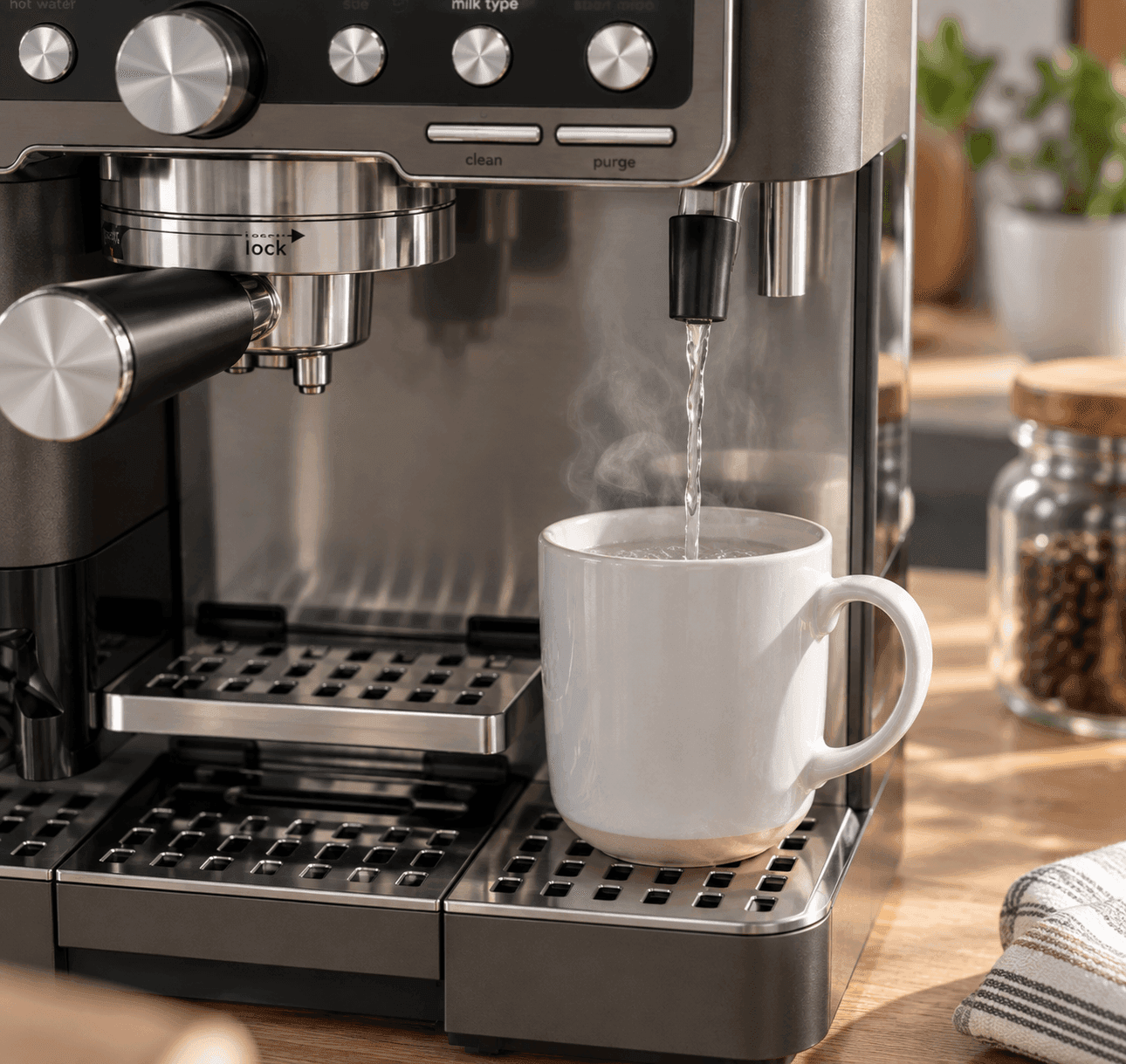
Final Verdict
Our rating, who it fits, and what it costs.
Ninja Luxe Café ProRecommended
4.2 / 5 — Is it worth buying?
The Ninja Luxe Café Pro is easiest to recommend to a specific buyer: someone replacing a pod machine or an aging drip maker who wants espresso, drip coffee, cold brew, and hot water covered by one $749.99 appliance, and who mostly drinks medium-dark or dark roast coffee.
✓ Best for
- Buyers who want espresso, drip coffee, cold brew
- Beginners who want guided dosing and tamping to shorten the early learning curve
✕ Skip if
- Light roast and single-origin espresso drinkers who need a grinder tuned for brighter
- Anyone whose primary daily drink is filter coffee
Score breakdown
Shots tested
115+
Testing period
27 days
Ready to decide?
$749.99typical street price
Our verdict: 4.2/5, recommended. Independently tested; commissions never change a rating.
Tools That Pair With This Review
Put it into practice with a free calculator built for what you just read.
- Espresso Dial-In CalculatorEnter your actual shot results to see whether you're on target — and what to adjust.
- Espresso Yield CalculatorEnter your dose and shot style (ristretto, normale, lungo) to get your target shot weight.
- Coffee Grind Size CalculatorPick your brew method and get the right grind size, texture, and grinder setting.