
 3.3
3.3Neretva
Neretva Espresso Machine
A sub-$120 starter machine for first-timers and renters wanting a pod-machine replacement without a big commitment.
Espresso machine review
Last updated
Cheap espresso machine, real trade-offs. Our De'Longhi Stilosa EC260 review pulled 67 shots and found ±8°F swings. See who should buy it over the Dedica.
Affiliate disclosure: this page contains Amazon affiliate links. We may earn a commission if you buy through them, at no extra cost to you, and it never affects our rankings. Read our full affiliate disclosure
DeLonghi Stilosa EC260 at a GlanceWorth considering
A fair, cheap way to find out if you like home espresso, as long as you accept its temperature swings.
Budget Entry-Level Semi-Automatic
Affiliate link: we may earn a commission at no extra cost to you. It never affects our rating.
In the shot log· 67 shots · 4 weeks
Why it stands out
Watch out for
✓ Best for
Absolute beginners exploring espresso without major financial risk
✕ Skip if
Daily espresso drinkers expecting café-quality consistency
Our DeLonghi Stilosa EC260 review verdict: a sensible first espresso machine for budget-capped beginners, and a poor choice for anyone who already knows they love espresso.
Our first few Stilosa shots were watery and barely had any crema, and that was on us as much as the machine: we expected a $500 experience from a $130 machine. Once we adjusted, it started producing proper espresso.
The short answer: it's a legitimate way for a budget-limited beginner to find out if they like espresso, and a poor fit for anyone who already knows they will.
Browse our espresso machine reviews hub for more options across every budget.
Check where you fit before you look at the trade-offs below.
A strong match
Consider something else
What earns the rating, and what you give up to get it.
7 reasons it works
7 trade-offs to weigh
How it performed in day-to-day use, in the order you will meet it.
A typical testing morning, from cold start to espresso in the cup, ran 6-7 minutes on average.
That is slower than the Bambino Plus (about 3 minutes) or Dual Boiler (about 4 minutes), but a reasonable trade for the money saved on a $130 machine.
The experience feels budget, and DeLonghi doesn't hide it. The pump rattles audibly when it kicks in, and you can hear the water working to push through the puck. None of that affects what ends up in the cup, but it's a different sensory experience than a heavier, quieter machine. The learning curve for basic espresso is minimal thanks to the pressurized basket forgiving technique mistakes; milk steaming is the part that actually takes practice.
To see where the Stilosa actually lands, we pulled the same recipe — same beans, same grind, 15g dose, 2oz target — back-to-back on three machines.
Our take: for a fraction of the Dual Boiler's price, the Stilosa got most of the way there on flavor — not all the way, but close enough to matter for a budget buyer.
Extraction data backed this up:
The manual steam wand is the biggest adjustment coming from automatic machines. Early on, texturing was rough — thin, bubbly foam with more air than body, taking well over two minutes to get anywhere close to right. Purging the wand first, positioning the tip just below the surface, and building a whirlpool made the biggest difference; the panarello attachment adds some forgiveness, but it's still hands-on control throughout.
With practice, steaming settled into a consistent 45-65 seconds for 8oz of whole milk — similar to the Bambino Plus's automatic wand (about 55–65 seconds), but with real skill development behind it rather than a machine doing the work for you. The ceiling here is real, though: don't expect dense, latte-art-ready microfoam. What you get is decent, usable foam for cappuccinos and lattes, and that's about it.
A beginner tester, a total espresso novice, was making passable cappuccinos on their own within two weeks — a fair test of how forgiving this learning curve actually is.
Construction is mostly molded plastic with a stainless-steel front panel — appropriate for the price, not premium. It doesn't feel as substantial as the Bambino Plus or Gaggia Classic Pro.
Daily operation is simple:
The three-button layout and clear indicator light make this one of the least intimidating semi-automatics to learn.
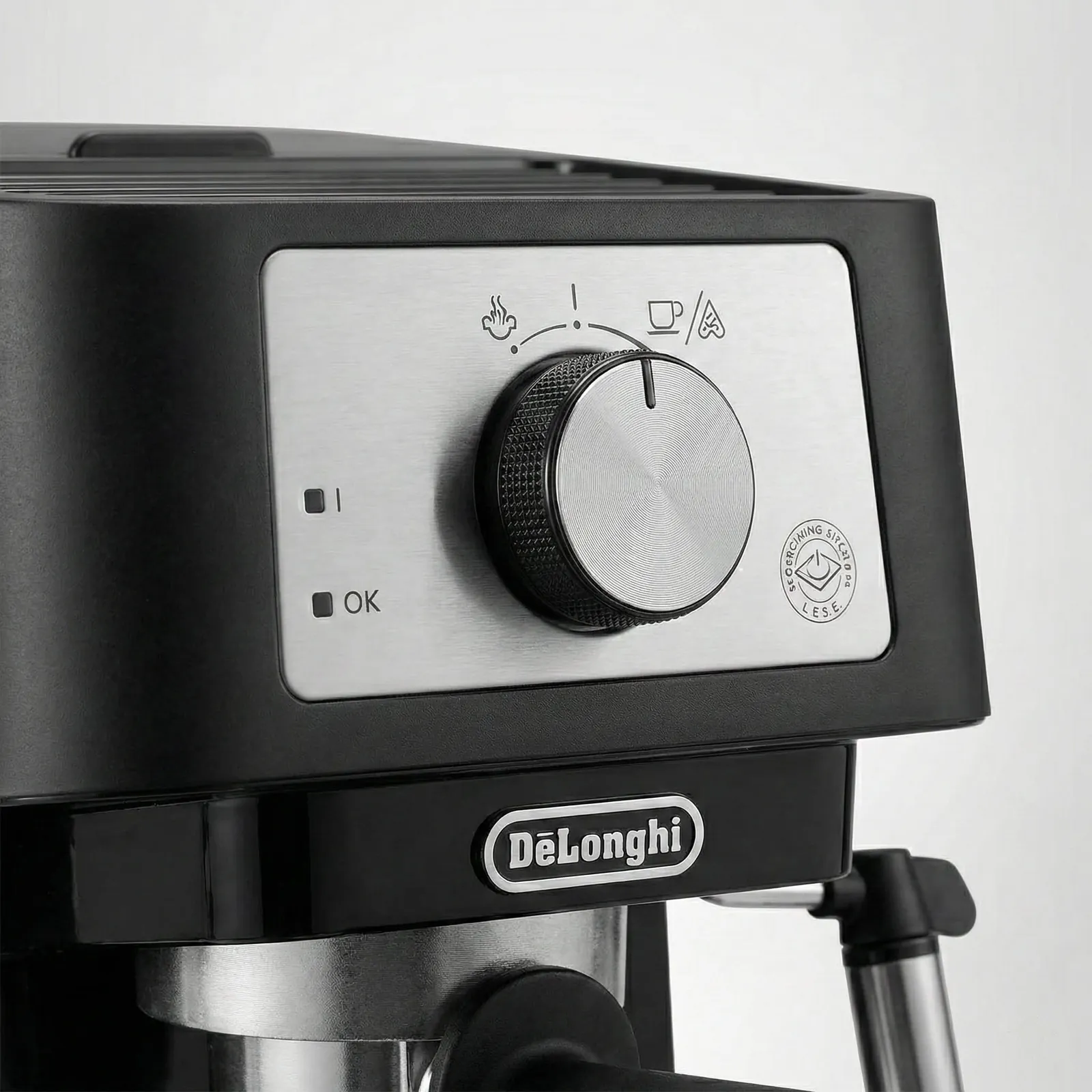
The Stilosa is a budget thermoblock machine with a manual steam wand. Here is how it shapes the cup.
A thermoblock is an aluminum block with a heating element and a thin water channel. Water is heated as it flows through instead of waiting in a boiler, which is why these machines are ready within a minute and stay small and cheap. The Stilosa's pump pushes that water through the coffee, and its manual wand steams milk by hand.
A pressurized basket adds a small restrictor at the exit, so pressure builds even when the grind is imperfect. That forgives uneven grounds and stale beans, but it also hides the feedback that teaches you to grind finer or coarser. For the cup, expect reliable crema and a rounder, less detailed shot than a standard basket gives.
Because the manual wand has no automatic air control, you learn the stretch-and-swirl technique that transfers to every future machine.
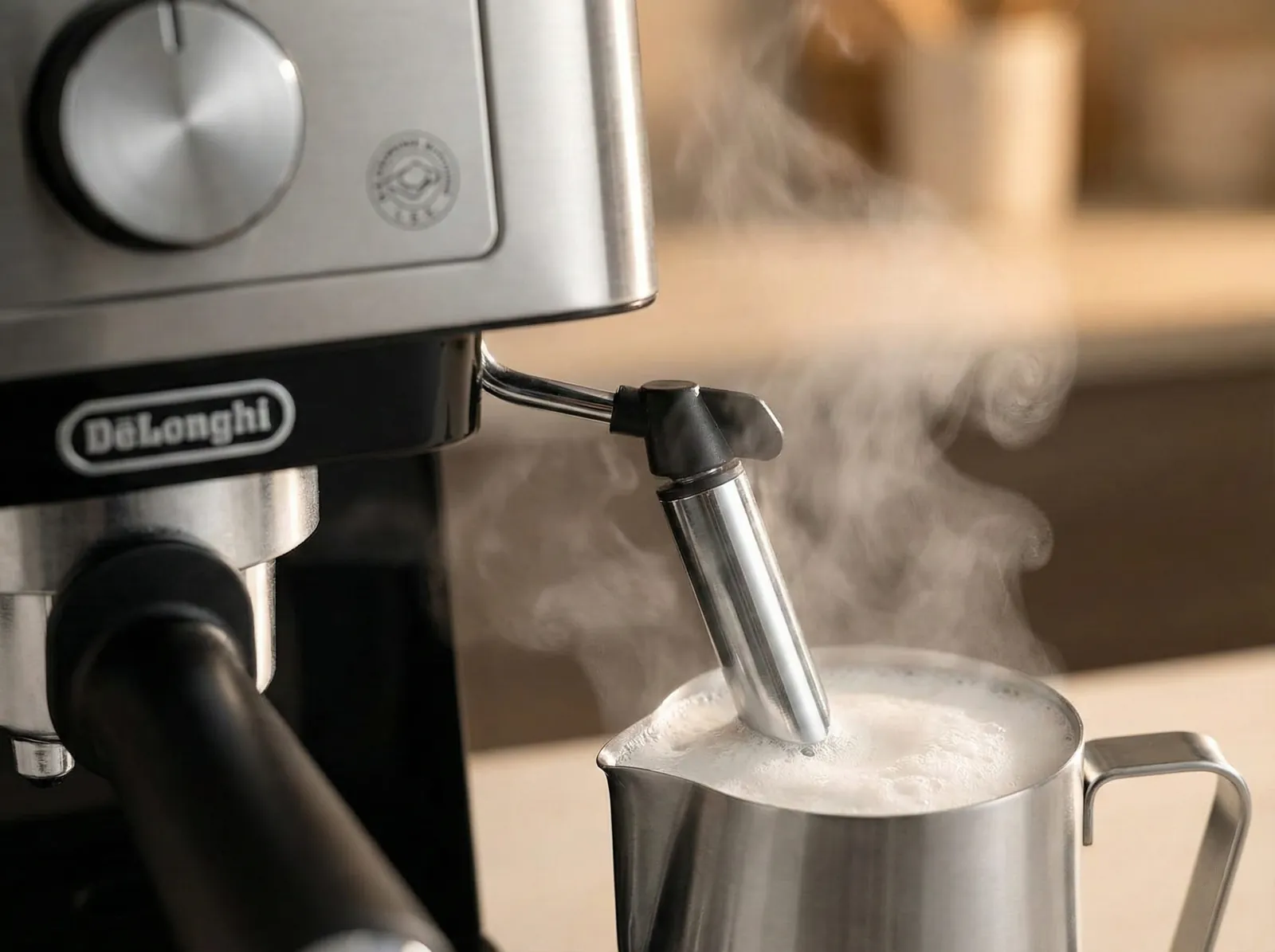
Budget thermoblock machines share a few common problems. These fixes are cheap.
Thermoblock machines drift in temperature, especially after steaming. Run a blank shot through the empty portafilter to warm the metal, and let the ready light settle before brewing. Cooler water is the usual cause of sour espresso; a hotter, rushed shot is where bitter espresso starts.
Scale is the other slow killer. Use filtered or softened water and follow the descaling guide on schedule, because mineral build-up narrows the block's channel and cuts flow. Rinse the portafilter and group screen after each session, as covered in cleaning an espresso machine.
Because temperature varies the most, brew a blank shot first and give the machine a minute after steaming. Pair it with a decent choosing a burr grinder and picking espresso beans, since stale or uneven grounds are the common cause of a shot that runs too fast or too slow. The espresso dial-in calculator tells you what to change after each shot.
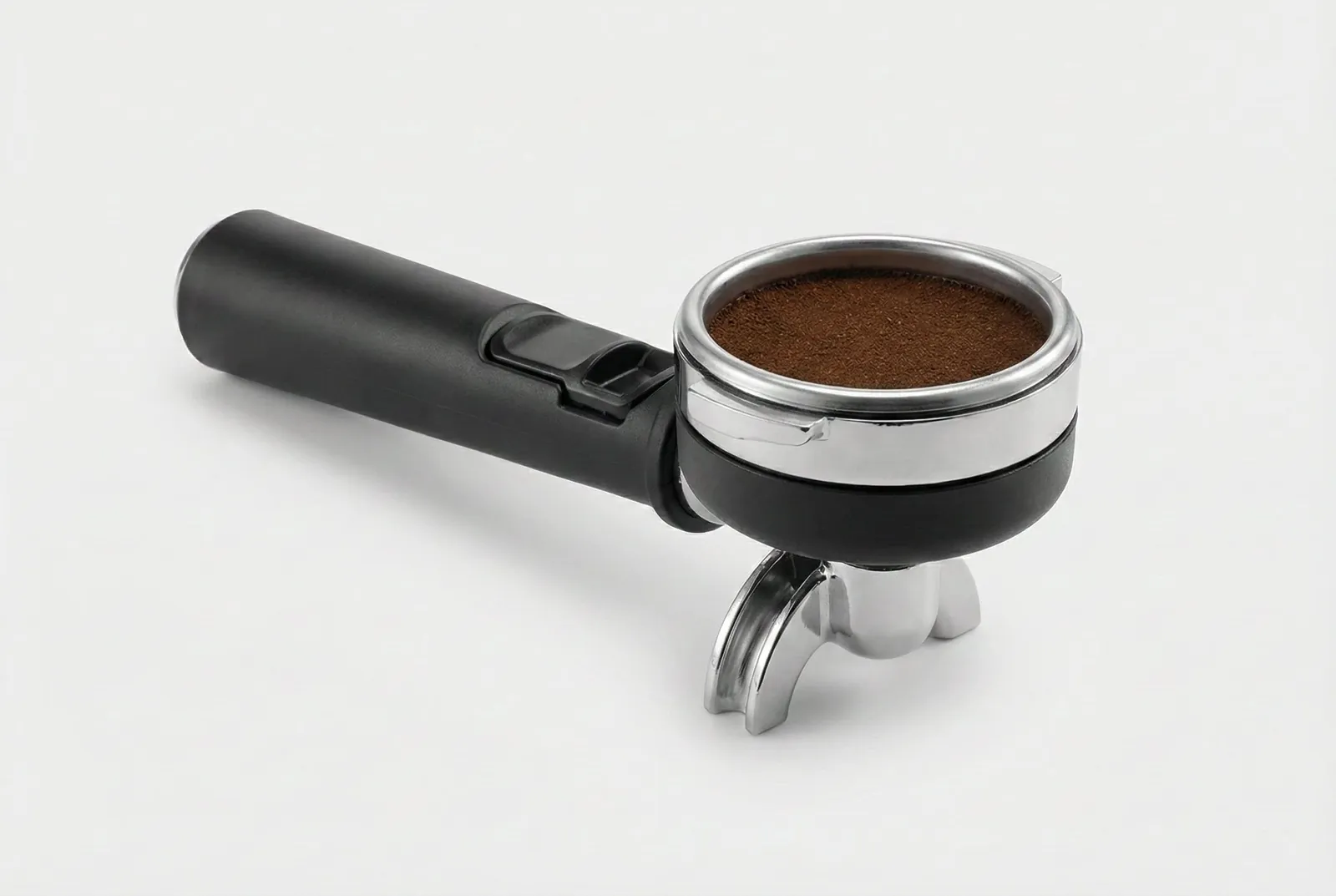
Before you decide
Budget espresso machines under $200 represent the entry point into home espresso, where every dollar matters. They compete on accessibility and basic functionality rather than precision or advanced features. The key trade-offs:
The Stilosa EC260 at $79-$149 sits in a competitive price bracket where machines like the DeLonghi Dedica ($200-250) offer better features, while the Neretva espresso machine goes cheaper still and the Mr. Coffee Café Barista adds an automatic frother. It prioritizes affordability and beginner accessibility (pressurized basket, simple controls) over performance consistency and long-term durability. Buyers should weigh whether the savings justify temperature fluctuations affecting shot quality, weak steam requiring patience, and an expected 1-2 year lifespan before wanting to upgrade.
For absolute beginners testing espresso interest on a strict budget, or occasional coffee drinkers (1-4 drinks weekly), these compromises may prove acceptable. However, at the $79-$149 price point, buyers who can save slightly more for machines like the Dedica EC685 ($200-250) or stretch to $400 for the Bambino Plus will get significantly better temperature stability and steam power, delivering superior long-term value and satisfaction.
For a broader view, our complete top-rated espresso machines guide covers top picks from budget to prosumer. If you’re budget-constrained, the best espresso machines under $500 list includes strong alternatives with better temperature stability. Our full espresso machine reviews hub has every machine we’ve put through real-world testing.
New to espresso and weighing the Stilosa against other first machines? Our best espresso machines for beginners guide compares it with six alternatives, and our basket guide explains why its pressurized basket is so forgiving.
For other machines at this price, see our best espresso machines under $200.
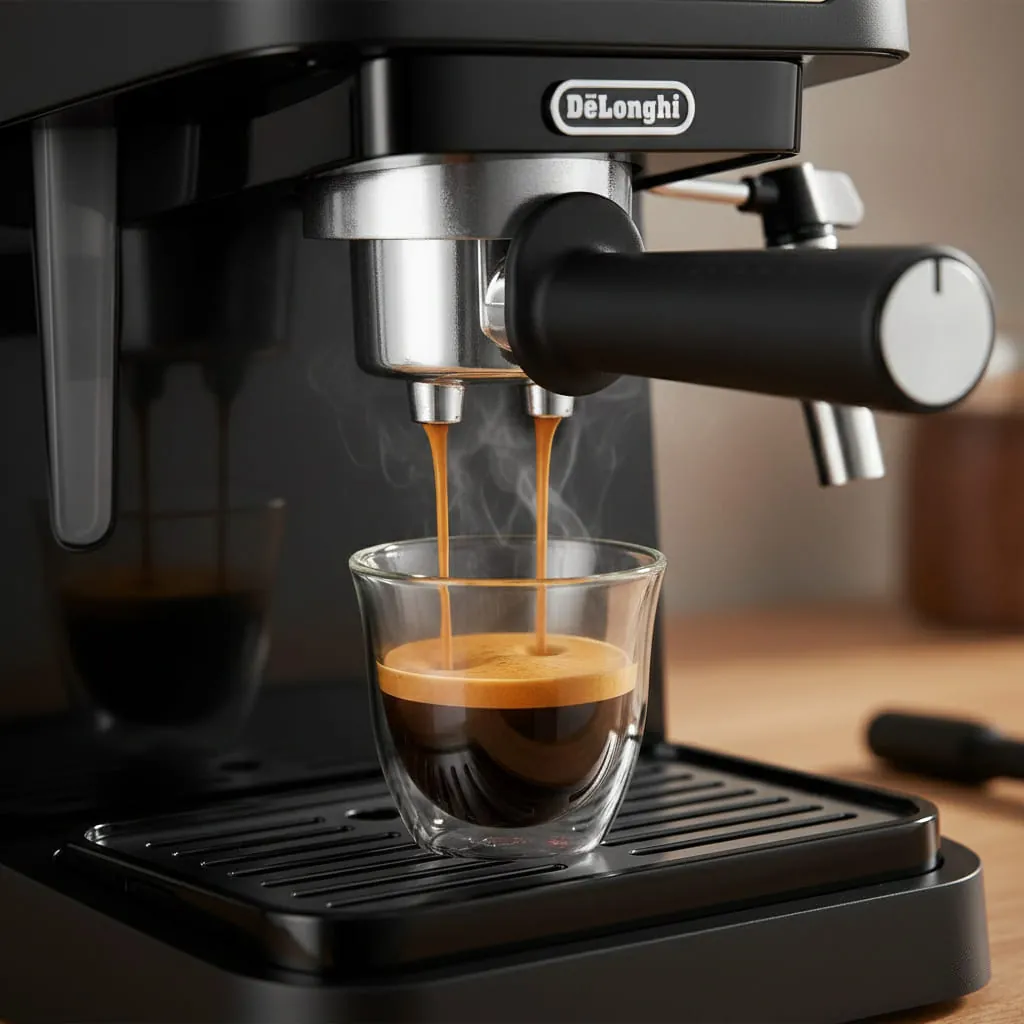
Durability, upkeep and running costs once the novelty wears off.
Plastic-heavy construction with a non-standard 51mm portafilter and a single Ulka vibration pump, built to hit a $79–$149 price point rather than for years of daily use.
As the verdict in this review frames it, the machine is best suited as a real test of whether home espresso is worth pursuing rather than as a long-term daily driver — expect roughly a 1–2 year realistic lifespan under regular use.
Temperature instability (±8°F measured during testing) was identified as the single biggest source of failed shots and doesn't improve with age; light roasts are the most consistent casualty.
The Ulka vibration pump and thermoblock are the parts most likely to show wear first, and the audible pump rattle noted in testing is a normal characteristic of this pump type rather than a sign of failure.
Basic and generally available: pressurized baskets and portafilter components are standard low-cost DeLonghi entry-level parts.
Because the 51mm portafilter is non-standard, aftermarket basket and accessory options are more limited than on 58mm machines, and an unpressurized basket option isn't included or widely available.
Very low.
No water filtration system to maintain, a simple removable 1L tank, and only basic descaling solution needed periodically — a handful of dollars per year in consumables at typical use levels.
1-year limited manufacturer warranty, standard for DeLonghi's budget entry-level lineup and shorter than the 2-year coverage on step-up machines like the La Specialista Prestigio.
Minimal.
At a $79–$149 street price, depreciation is steep and the resale market for sub-$150 espresso machines is thin; most buyers should treat the Stilosa as a low-cost trial of the espresso habit rather than something with meaningful resale value.
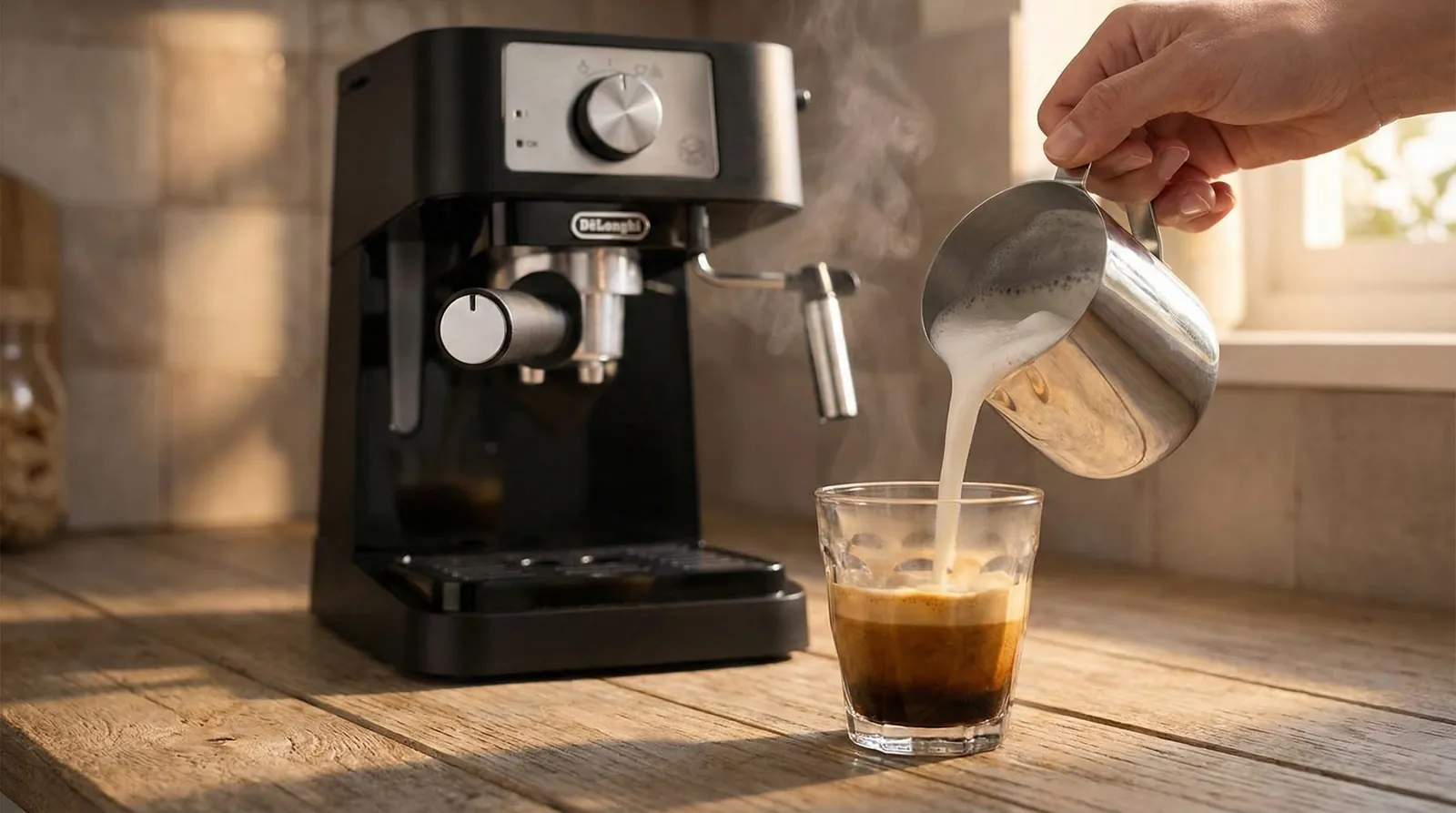
This machine was purchased independently and was not provided by DeLonghi.
Our rating, who it fits, and what it costs.
DeLonghi Stilosa EC260Worth considering
3.7 / 5 — Is it worth buying?
The Stilosa EC260 makes real, pump-driven espresso for less than almost any other semi-automatic on the market, and its pressurized basket makes that possible even for total beginners.
✓ Best for
✕ Skip if
Score breakdown
Shots tested
67
Testing period
4 weeks
Ready to decide?
Our verdict: 3.7/5, worth considering. Independently tested; commissions never change a rating.
See how the DeLonghi Stilosa EC260 compares with the other picks in each tested roundup.
Closest alternatives in price and purpose, each tested the same way.
3.3Neretva
A sub-$120 starter machine for first-timers and renters wanting a pod-machine replacement without a big commitment.
 4.0
4.0Capresso
A budget-friendly pump machine for pod-machine refugees getting their first taste of real espresso pressure.
 3.8
3.8Nespresso
The smallest Original-line Nespresso: two cup sizes, a 30-second heat-up and a small tank.
 3.8
3.8Mr. Coffee
A budget beginner machine under $200 for occasional drinkers who want one-button milk drink convenience.
Put it into practice with a free calculator built for what you just read.
Quick answers before you buy.
For absolute beginners on a tight budget, yes. Testing left us more impressed than expected.
At $79-$149, it's among the cheapest functional semi-automatics we've tested. But go in with realistic expectations: this isn't commercial-grade equipment.
Compared to $500+ machines, it'll disappoint you. Compared to instant coffee or a pod machine, it's a real upgrade — and a low-cost way to find out whether you actually care about espresso before spending real money.
Yes, thanks to the pressurized basket. We measured crema thickness at 3-5mm with fresh beans (under 14 days post-roast). However, it's artificial crema created by the pressurized basket, not natural crema from proper extraction.
Experienced coffee people will immediately recognize the difference (more uniform color, more stable, less complex texture). But for beginners it looks impressive and indicates your shot worked. With older beans (30+ days post-roast), crema was thinner (1-2mm) but still present.
Don't expect specialty coffee shop crema quality, but it's adequate for home use.
The ready indicator light comes on in about 45-60 seconds from cold start. However, for optimal temperature stability on the first shot, we recommend waiting 3-4 minutes after the light comes on.
Across timed sessions, the thermoblock stabilized around 3:45 total, ranging from 3:20 to 4:15 depending on room temperature. That's middle-of-the-pack for heat-up speed among budget and mid-range machines.
If you want faster, you'd need to leave it powered on constantly, which we don't recommend for safety and energy reasons.
Yes, but results are mediocre. We tested with pre-ground supermarket espresso, and the shots were drinkable—the pressurized basket helped compensate for inconsistent grind.
However, pre-ground coffee is rarely at the correct fineness for espresso (usually too coarse), so you'll get weak, under-extracted shots more often than not. If you're serious about espresso quality, invest $100-150 in a basic burr grinder like the Baratza Encore; blade grinders don't cut it, since they smash beans inconsistently.
If you're truly on a budget and want to experiment first, pre-ground will at least produce something resembling espresso.
Harder than an automatic wand, but teachable. Expect the first week to feel clumsy — thin, bubbly foam and short patience are normal.
By the second week, most people (including a total beginner we tested this with) can pull cappuccino-quality texture. The panarello attachment adds forgiveness versus a bare wand.
Budget 45-65 seconds per pitcher once you've got the technique down, versus roughly 20 seconds on an automatic wand like the Bambino Plus.
Minimum: a Baratza Encore ($140) or similar entry-level burr grinder. We tested with several grinders, from a basic hand mill to a $700 conical burr unit, and the Encore produced decent, consistent results appropriate for this machine's capabilities — the pricier grinder was noticeably better but overkill.
Do not use a blade grinder; particle size is too inconsistent and you'll get channeling and under-extraction constantly. Budget realistically: machine plus grinder plus basic accessories runs $300+ total for an acceptable home espresso setup.
The Dedica costs roughly $100-$120 more but offers a slimmer design (5.9" wide vs 7.5"), slightly better build quality, and more consistent temperature. The Stilosa has simpler controls and is more beginner-friendly. On basic espresso capability they're similar—both use thermoblocks, 15-bar pumps, 51mm portafilters, and pressurized baskets—but the Dedica offers noticeably better temperature stability and build.
If space is critical and you can stretch the budget, get the Dedica. If budget is the priority and you want dead-simple operation, get the Stilosa. The Dedica is the stronger machine if you can stretch the budget; the Stilosa wins on price and simplicity.
The Krups XP444C50 does essentially the same job (pressurized basket, panarello frother) for $250–$300, so it is hard to justify against either.
Buy the Stilosa if you own or plan to buy a grinder; buy the EC155 only if you want to brew ESE pods. The Stilosa usually costs less and has a manual steam wand, which gives you more control over milk than the EC155's panarello frother.
The EC155's one real advantage is its pod-compatible filter holder. If you can stretch the budget, the Breville Bambino Plus is the clearer step up, and the best espresso machines under $500 list covers more options.
Reader questions
Questions or tips? Leave a comment
Ask about your setup or share what worked for you. Comments are checked before they appear.