
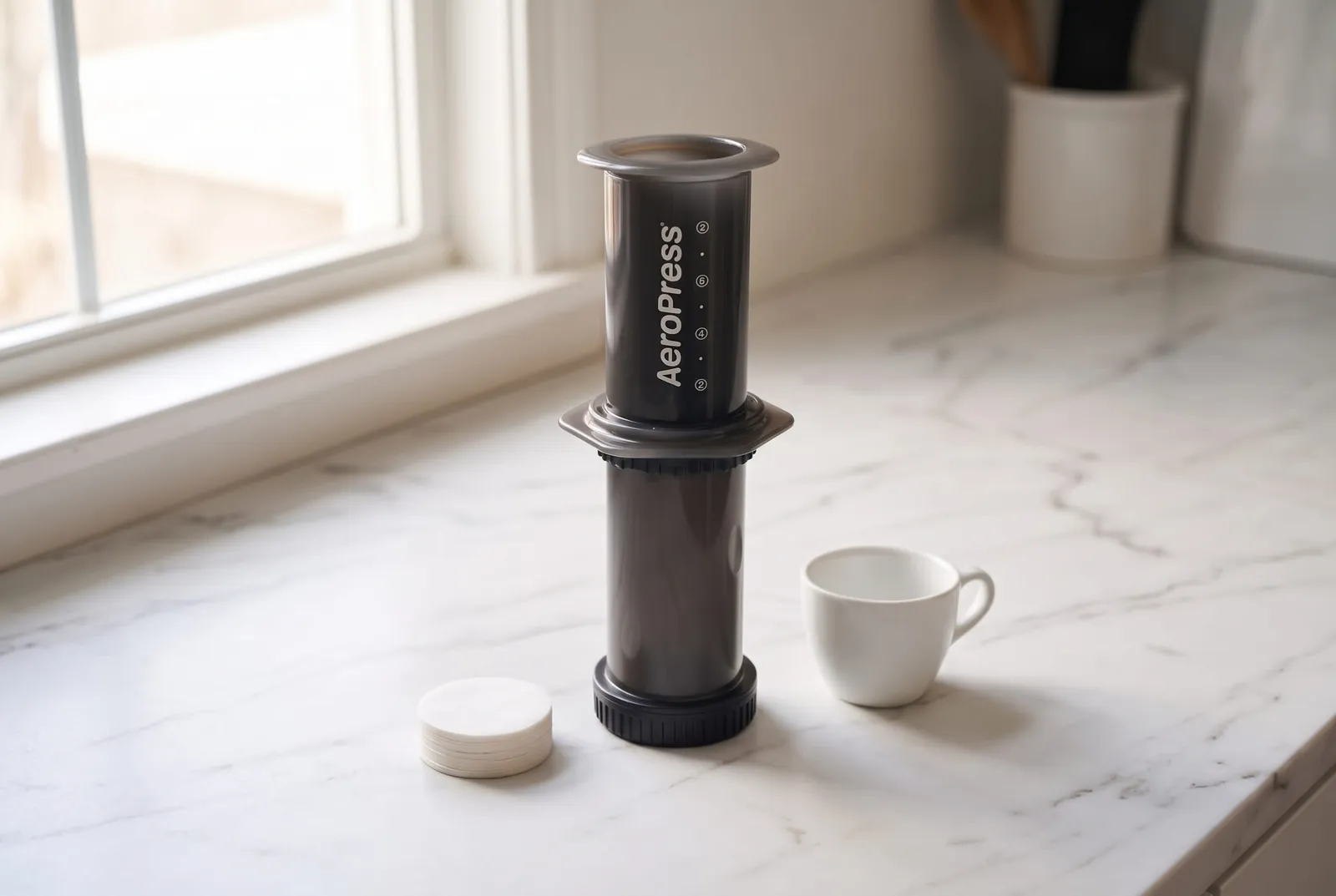
AeroPress
AeroPress Original Coffee Maker
A fast, forgiving manual brewer that produces smooth, low-acid coffee for one or two cups, with plenty of room to experiment with technique.
Coffee maker review
Last updated
A simple, budget-friendly cold brew pitcher for anyone who's found more complex immersion systems intimidating.
Affiliate disclosure: this page contains Amazon affiliate links. We may earn a commission if you buy through them, at no extra cost to you, and it never affects our rankings. Read our full affiliate disclosure
Takeya Tritan Cold Brew Coffee Maker at a GlanceRecommended
A reliable, low-fuss starter cold brew pitcher at a fair price, best suited to one or two people.
BPA-Free Cold Brew Pitcher
On the brew bench· 30+ brews · 6 weeks
Why it stands out
Watch out for
✓ Best for
Home brewers who want a reliable, low-fuss cold brew routine
✕ Skip if
Households of four or more that need larger batches
Affiliate link: we may earn a commission at no extra cost to you. It never affects our rating.
After 30+ batches alongside the OXO Good Grips and a classic Toddy, the plain Takeya kept outperforming its $22–$28 price.
The short answer: it's a strong-value, low-fuss starting point for most home cold brewers, though it won't match a paper-filtered Toddy's clarity or suit larger households.
Check where you fit before you look at the trade-offs below.
A strong match
Consider something else
What earns the rating, and what you give up to get it.
8 reasons it works
6 trade-offs to weigh
How it performed in day-to-day use, in the order you will meet it.
Setup is simple: grind, add water, seal, and refrigerate — no calibration required beyond selecting the right grind size. One early lesson: pressing down on the lid to speed up pouring at a medium-fine grind forced grounds through the filter. This is a steep-and-pour system, not a press, and treating it like one causes bleedthrough.
Testing covered three coffees (a medium-dark Guatemalan, an Ethiopian Yirgacheffe light roast, and Costco Kirkland Colombian), with grind sizes from extra-coarse down to medium-fine used to find the filter's limits, and blind comparisons run against the OXO Good Grips and a Toddy system.
The routine amounts to about 4 minutes of active time.
At a 1:7–1:8 ratio (65g coffee to 500ml water) and a 20-hour refrigerator steep, concentrate consistently measured 15–17% TDS across testing — squarely in the ideal range for 1:1 or 1:2 dilution.
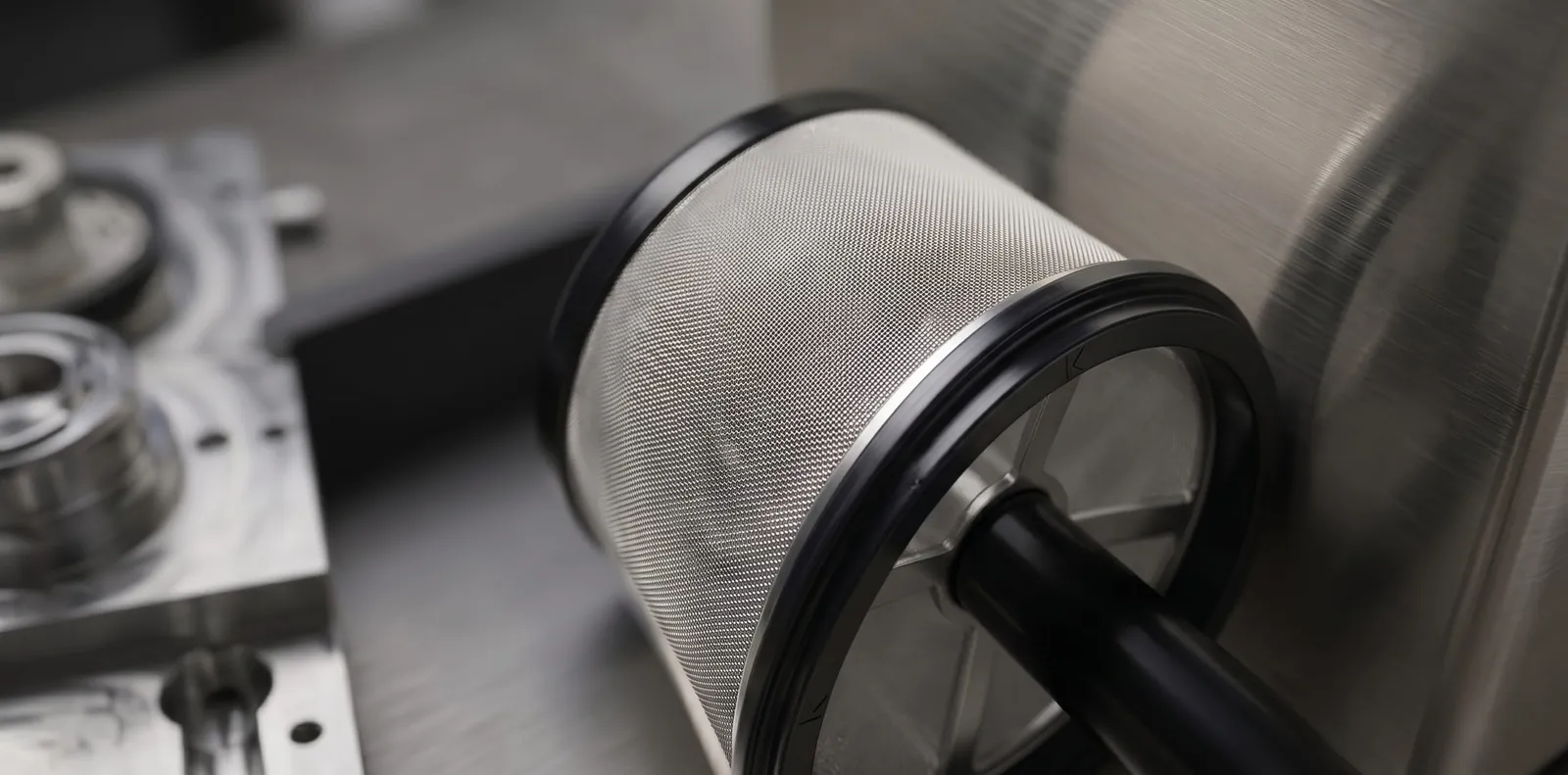
Cleanup takes about 90 seconds: the fine-mesh filter unscrews fully, the silicone gasket comes off the lid, and every component is dishwasher safe on the top rack. After repeated weekly dishwasher cycles, there was no odour retention, staining, or seal deterioration.
Sealed cold brew keeps well in the refrigerator for up to two weeks, with only a slight softening of brighter notes by the two-week mark and no off-flavours or spoilage.
For most beginners, yes. Cold brew does not need elaborate equipment; it needs a vessel, a filter and time. The Takeya covers all three at a low price, which makes it a sensible way to find out whether you actually like making cold brew at home before spending more. The cold brew ratio calculator sizes the coffee and water for any batch.
The main reason to look elsewhere is a specific preference: glass construction, paper-filter clarity or a larger batch. If none of those apply, the extra cost of fancier systems mostly buys features rather than better coffee.
The right alternative depends on what you want to change.
| Product | Type | Capacity | Key feature | Current price |
|---|---|---|---|---|
| Takeya Tritan Cold Brew | Cold brew pitcher | 1-quart | Fine-mesh filter; slim fridge-door fit | Check current price |
| OXO Cold Brew | Cold brew maker (tap release) | 32 oz | Rainmaker lid; tap-release drain | Check current price |
| KitchenAid Cold Brew | Cold brew pitcher (glass) | 38 oz | Borosilicate glass carafe | Check current price |
| VINCI Express Cold Brew | Electric rapid cold brew | 14 oz chamber | 5–7 minute brew; USB-C charging | Check current price |
The Takeya is the simple, inexpensive option. Pay more only when you need glass, speed or a different filter style. Our how to make cold brew guide explains the basics so you can judge which features matter.
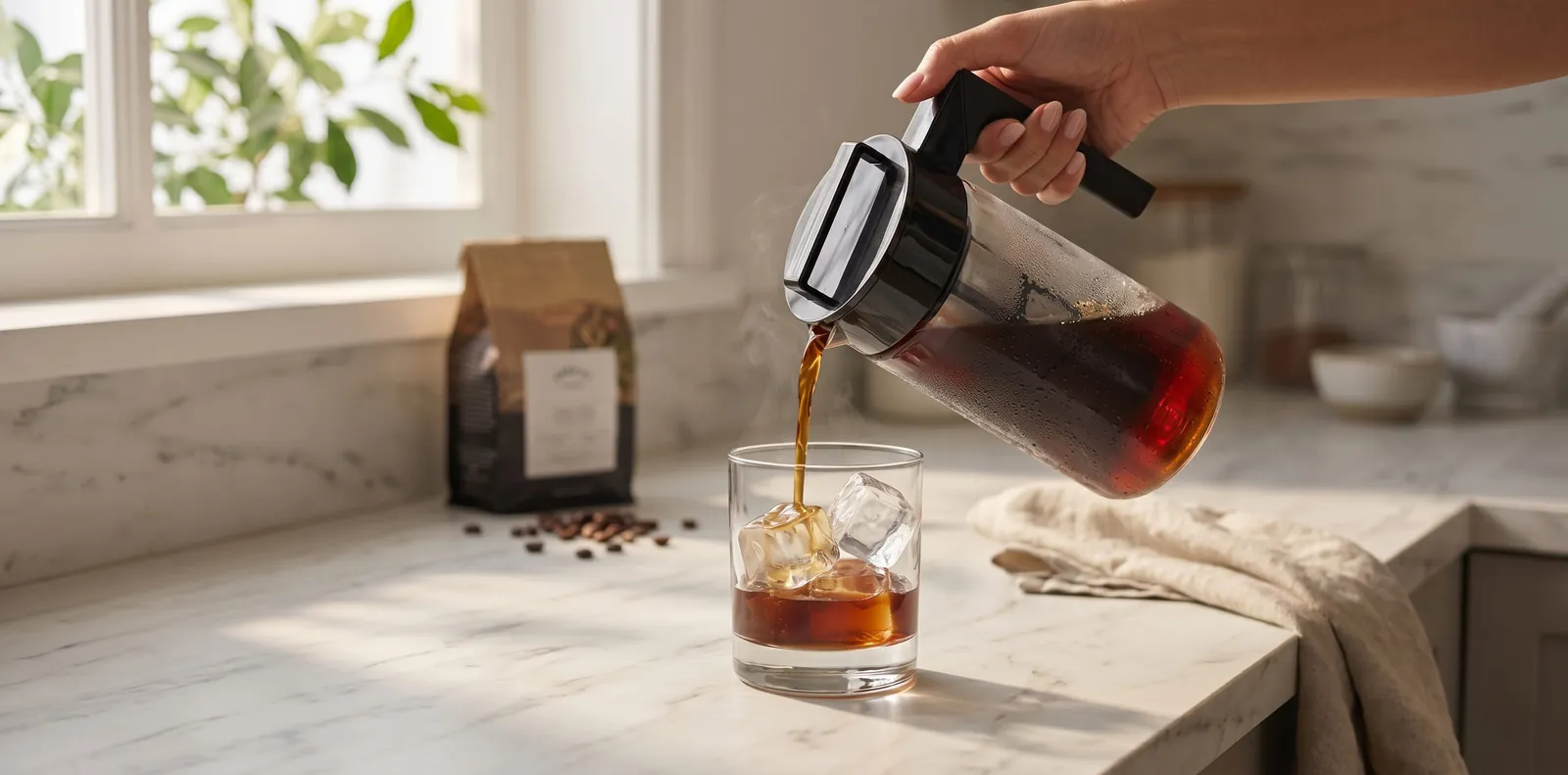
Most problems with a pitcher-style brewer come from technique rather than equipment.
These habits matter more than the pitcher, and they apply to any immersion brewer.
The Takeya is easy to clean, but a few habits protect it.
Tritan is a BPA-free plastic that resists staining and odors better than many alternatives, but it can still scratch. Avoid abrasive scrubbers and you will keep it clear and looking good.
Look elsewhere if you recognize yourself below.
For everyone else, it is an inexpensive and low-risk way to start. See our OXO cold brew review if you want to compare a second option.
How a mesh-filter pitcher extracts cold brew
Common cold-brew pitcher problems and fixes
Before you decide
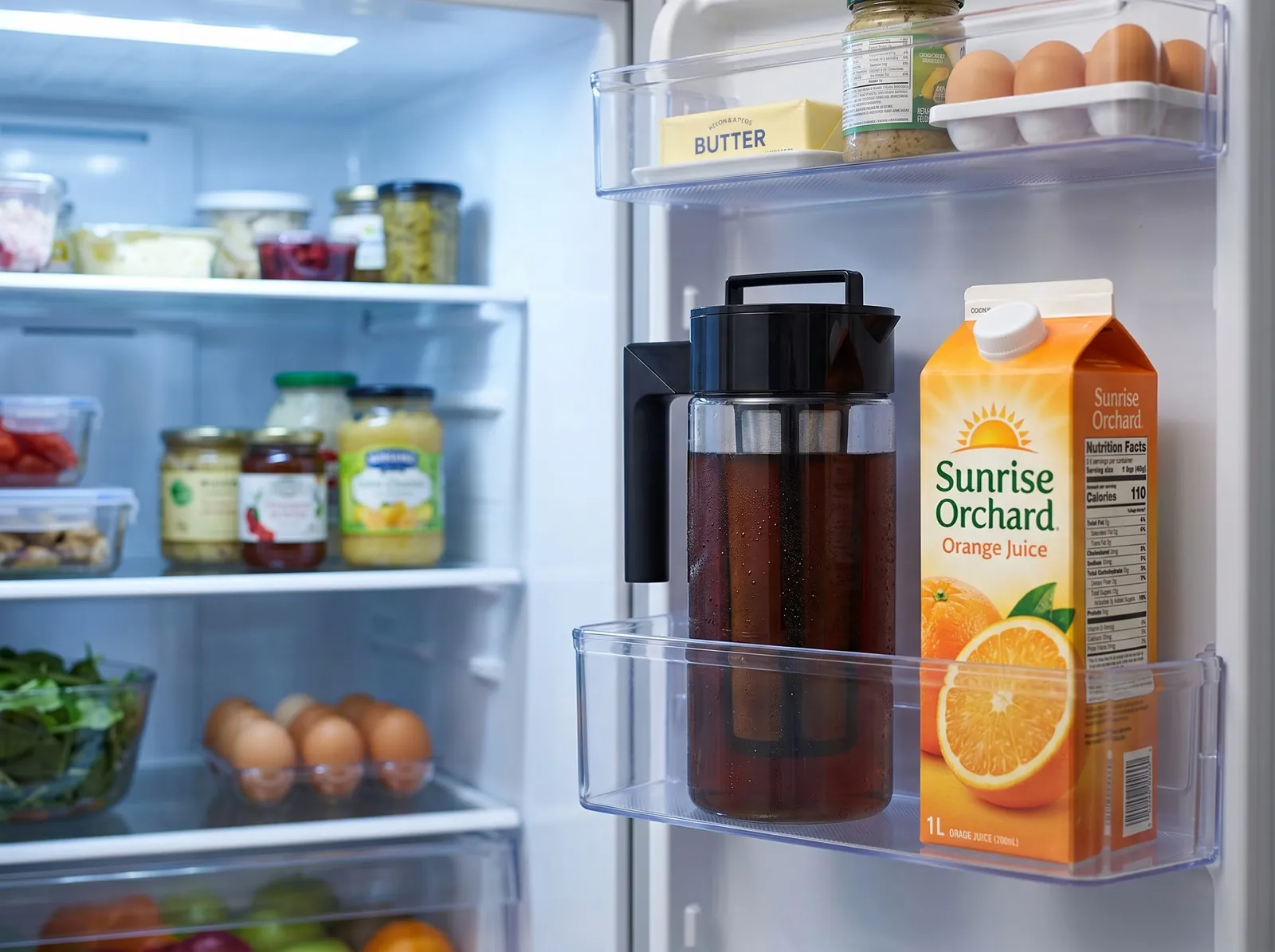
The Takeya Tritan sits at the value end of the cold brew pitcher category — competing against glass alternatives (KitchenAid, OXO) at a fraction of the price, and against rapid electric makers (VINCI Express) on the question of convenience versus cost.
Within passive immersion pitchers, Tritan plastic is the correct material choice for most buyers:
The KitchenAid review's blind cupping panel found near-identical cold brew between the two — the material premium of glass is real long-term, but the flavour difference is not detectable in a fresh batch. For the majority of home cold brewers, the Takeya is the rational first choice.
Durability, upkeep and running costs once the novelty wears off.
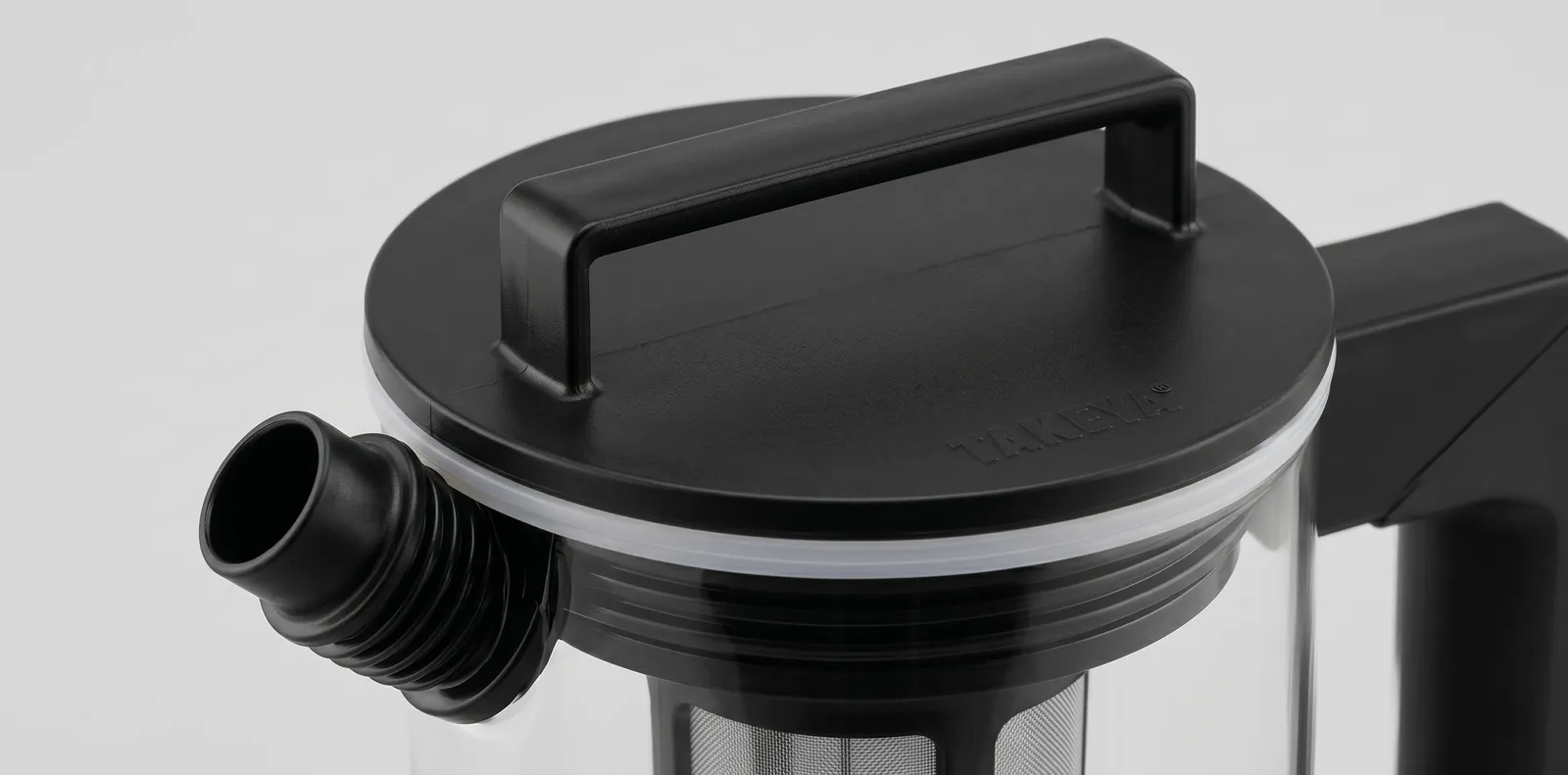
The Tritan plastic body showed no odour transfer or visible wear across weekly use and dishwasher cycles, and the leak-proof lid passed an inverted-over-the-sink test plus two drops onto tile.
The plastic lid hinge is the one component worth watching over years of repeated use, since it's the most mechanically stressed part.
The fine-mesh stainless filter consistently produced sediment-free cold brew at medium-coarse and coarser grinds across dozens of test batches, with the main caveat being medium-fine grinds, which risk sediment bleedthrough under pouring pressure.
As a simple, largely single-piece pitcher with a removable filter and lid, there are few parts to replace; Takeya sells the product in both 1-quart and 2-quart sizes, so a full replacement is inexpensive if any single component fails.
No ongoing consumable costs — the fine-mesh stainless filter is reusable and dishwasher safe, with no paper filters or replacement parts required for normal use.
No formal manufacturer warranty is listed for this product; as a low-cost pitcher-style brewer, this is typical for the category and consistent with its $22-$32 price point.
As an inexpensive cold brew pitcher, resale value is essentially nonexistent, but the low $22-$32 purchase price makes that largely irrelevant to the ownership calculation.
This pitcher was purchased independently and was not provided by Takeya.
Quick specs
How it scored
Affiliate link: we may earn a commission at no extra cost to you. It never affects our rating.
Our rating, who it fits, and what it costs.
Takeya Tritan Cold Brew Coffee MakerRecommended
4.4 / 5 — Is it worth buying?
After testing across three coffees and five grind sizes, the Takeya Tritan Cold Brew Maker earns its reputation as a strong-value entry point in the cold brew pitcher category.
✓ Best for
✕ Skip if
Score breakdown
Cold brew batches
30+
Testing period
6 weeks
Ready to decide?
Our verdict: 4.4/5, recommended. Independently tested; commissions never change a rating.
See how the Takeya Tritan Cold Brew Coffee Maker compares with the other picks in each tested roundup.
Closest alternatives in price and purpose, each tested the same way.
AeroPress
A fast, forgiving manual brewer that produces smooth, low-acid coffee for one or two cups, with plenty of room to experiment with technique.
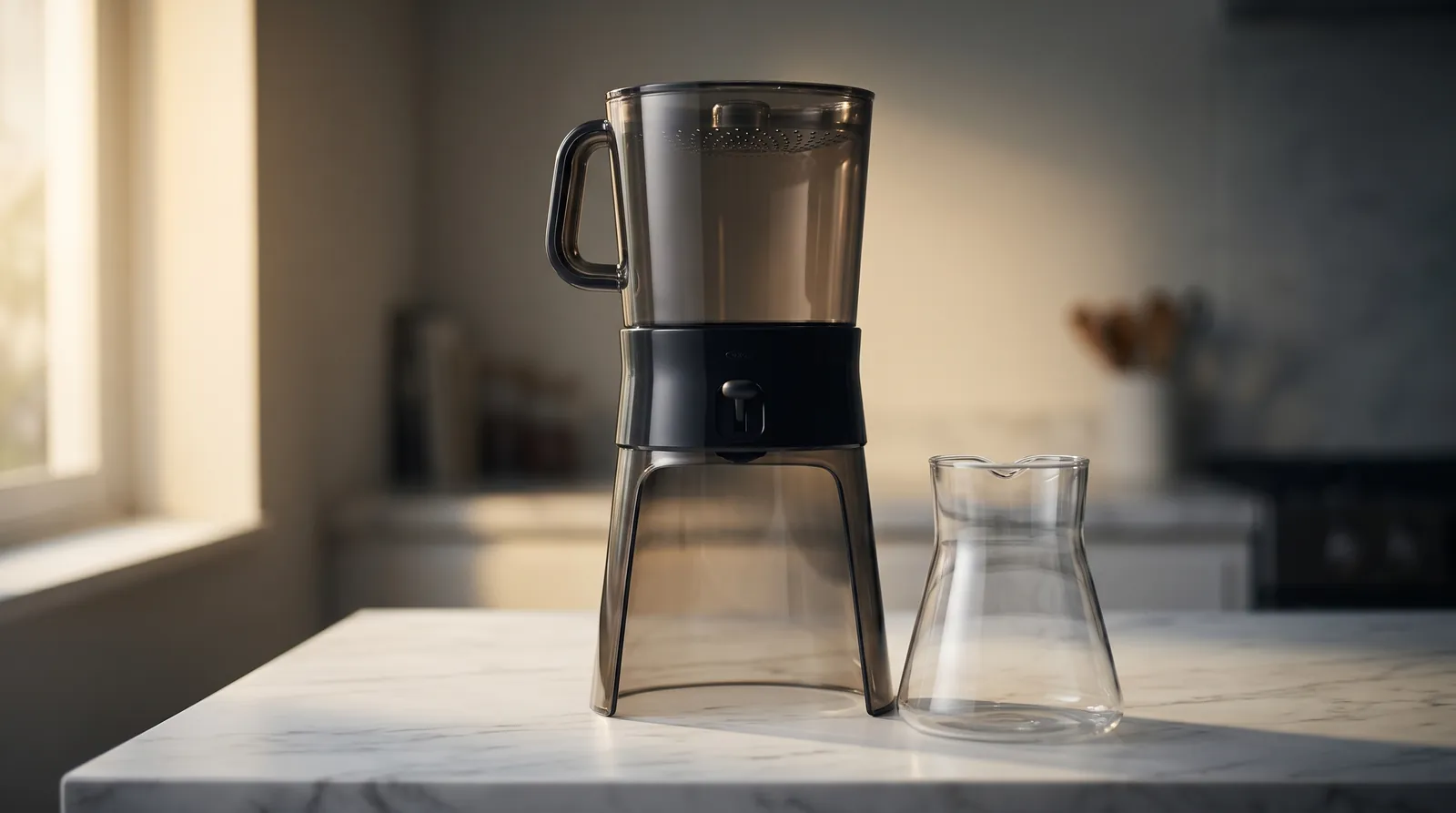
OXO
A tap-release cold brew system that delivers cleaner concentrate than a basic pitcher, without the mess of straining by hand.
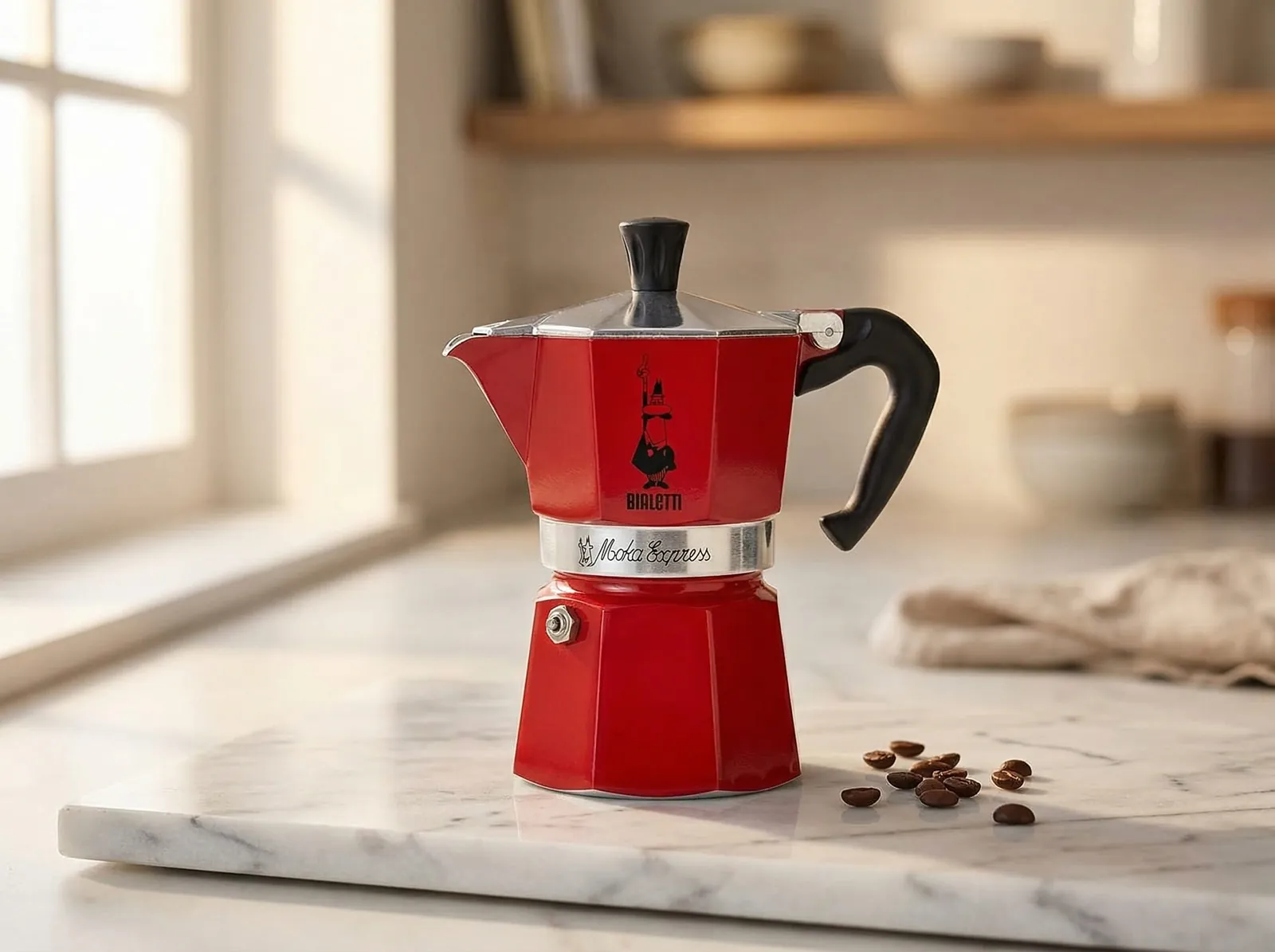
Bialetti
A classic aluminium stovetop brewer that delivers rich, espresso-strength coffee once you get the technique down.
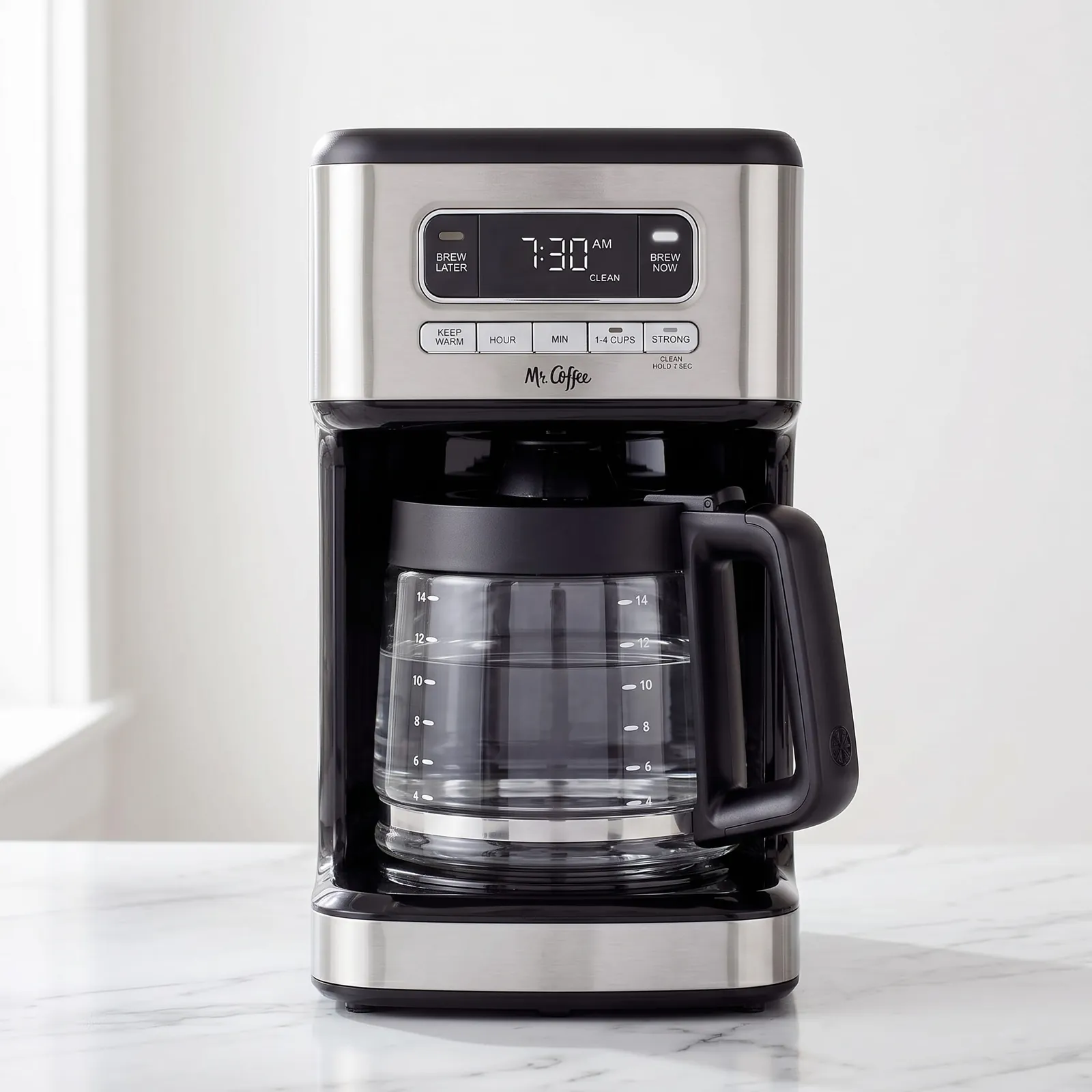
Mr. Coffee
An affordable, large-batch programmable drip maker built for fast wake-up brewing rather than precise extraction.
Put it into practice with a free calculator built for what you just read.
Quick answers before you buy.
Yes — for most home cold brewers. At $22–$28, the Takeya delivers Tritan BPA-free construction, a fine-mesh stainless filter that performs as advertised, and a leak-proof lid that holds up under an inverted-over-the-sink test.
Using medium-coarse grounds and a 20–24 hour refrigerator steep produces clean, smooth concentrate at 15–17% TDS. The main exception: if an existing cold brew system already works well, there's little reason to switch.
Medium-coarse — Baratza Encore setting 20 is the recommended default, with setting 22 (coarse) workable with a longer steep.
Testing across five grind sizes from medium-fine (setting
14) to extra-coarse (setting
25) found the filter handles medium (setting
17) reliably in most cases, but finer settings risk sediment bleedthrough, especially with natural-process light roasts or when pouring under pressure.
Medium-coarse at setting 20–22 produced clean, sediment-free results across every batch tested, including with a problematic Ethiopian natural that struggled at finer settings.
20–24 hours in the refrigerator is the sweet spot. At 16 hours, concentrate measures a thinner 12–13% TDS.
At 20–24 hours, TDS lands in the 15–17% range with good flavour balance. Past 36 hours, darker roasts start picking up woody, slightly harsh notes.
Light roasts benefit from an extra few hours (24–28 hours) since they extract more slowly. A room-temperature countertop steep of 2–4 hours also works, though the result is slightly less clean than a refrigerator steep.
Tritan is marketed as free of BPA and BPS, and it is widely used for food and beverage containers; check the manufacturer's current safety documentation if this is a deciding factor. Tritan is a copolyester plastic developed by Eastman Chemical specifically for food and beverage applications requiring odour and taste neutrality.
Unlike standard BPA-free plastics — which often just swap BPA for BPS, a similar bisphenol compound — Tritan uses a different polymer architecture that avoids bisphenol compounds altogether. In practical testing, the pitcher showed no plastic smell or flavour transfer after weekly use and dishwasher cycling.
Both perform well, but differently. The OXO Good Grips ($52-$62) uses a metal mesh basket in a glass carafe, offering slightly cleaner filtration and glass construction for anyone wary of plastic contact.
The Takeya ($22–$28) is Tritan plastic, performs comparably for filtration at appropriate grind sizes, and is lighter and more shatter-resistant. In blind taste tests, the coffee quality difference between the two was marginal.
The OXO makes sense if glass matters or slightly more reliable fine-grind filtration is a priority; the Takeya makes sense for price, shatter resistance, or tight refrigerator space, thanks to its slim door-shelf profile. If you do not want to wait for an overnight steep, the VINCI Express Cold Brew ($99) makes concentrate in minutes that landed within 2 cupping points of an 18-hour brew, at roughly three times the price of a basic pitcher.
The 1-quart pitcher yields roughly 500-600ml of concentrate.
Diluted 1:1 to 1:2, that works out to roughly 4-7 serving-strength 8 oz drinks, which suits one or two people.
Households that drink more should look at the 2-quart version.
The main ones are sediment at medium-fine grinds, small capacity markings that are hard to read in dim light, and a plastic lid hinge that is the part most likely to wear over years.
Skipping the initial stir can leave dry pockets in the grounds, and pressing on the lid while pouring can push grounds through the filter.
Pour gently with a medium-coarse grind and these are easy to avoid.
Unscrew the fine-mesh filter, take the silicone gasket off the lid, and put every part on the top rack of the dishwasher.
Cleanup takes about 90 seconds, and repeated weekly dishwasher cycles caused no odour retention, staining or seal deterioration in testing.
Reader questions
Questions or tips? Leave a comment
Ask about your setup or share what worked for you. Comments are checked before they appear.