
Lavazza
Lavazza Super Crema
A forgiving, classic Italian-style espresso blend that builds reliable crema and performs especially well in flat whites and cappuccinos.
Coffee beans review
Last updated
A fruit-forward, third-wave roast that shines in pour-over and rewards a dialed-in espresso setup — not a beginner-friendly dark roast.
Affiliate disclosure: this page contains Amazon affiliate links. We may earn a commission if you buy through them, at no extra cost to you, and it never affects our rankings. Read our full affiliate disclosure
Blue Bottle Coffee Three Africas at a GlanceRecommended
Exceptional filter coffee worth the premium, if you own a burr grinder and don't expect easy espresso.
Specialty Coffee · Three Africas (Light-Medium Roast)
Why it stands out
Watch out for
✓ Best for
Home baristas with a decent grinder who want to explore what third-wave specialty coffee actually tastes like
✕ Skip if
Beginners who need the maximum forgiveness margin of a dark Italian roast while learning to dial in
Affiliate link: we may earn a commission at no extra cost to you. It never affects our rating.
Our first bag of Three Africas in 2018 tasted nothing like the Lavazza and illy we'd been drinking: brighter, more pointed, almost uncomfortably vibrant. Five weeks of systematic testing showed that edge is exactly what you're paying for, and exactly what won't suit everyone.
The short answer: Three Africas is exceptional, but it serves a specific purpose: it's a filter-first coffee for people with a decent burr grinder, at a real premium.
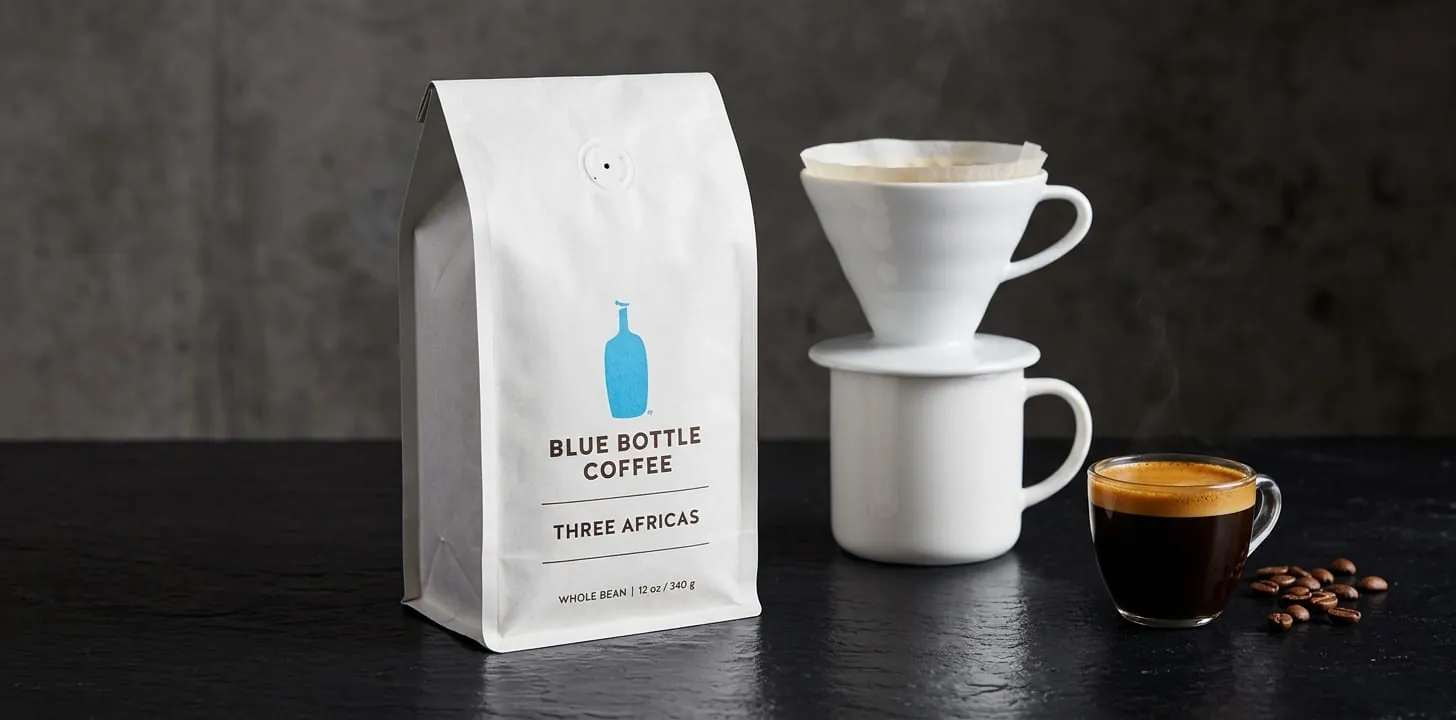
Check where you fit before you look at the trade-offs below.
A strong match
Consider something else
What earns the rating, and what you give up to get it.
4 reasons it works
4 trade-offs to weigh
How it performed in day-to-day use, in the order you will meet it.
Blue Bottle Coffee was founded in 2002 by James Freeman in Oakland, California — Freeman, a former freelance clarinet player, started roasting in a 186-square-foot Oakland warehouse after becoming frustrated with the staleness of commercial supermarket coffee. The company's defining philosophy, from its earliest days, was freshness: beans roasted to order and delivered or sold within a narrow window after roasting.
The name comes from a coffee house in Vienna that is credited as one of Europe's first — a deliberate nod to coffee history and to the idea that what was old and serious about coffee culture could be rescued and refined rather than replaced entirely.
Today Blue Bottle operates cafés across the US and Japan, with a roastery in Oakland handling production for both direct retail and their subscription delivery service. The subscription model has become central to their identity: beans shipped within days of roasting, eliminating the weeks-to-months of shelf-aging that undermines most supermarket and even specialty retail coffee. For an in-depth look at what separates specialty from commercial coffee, our guide to what is specialty coffee covers the grading standards and sourcing practices that define the category.
Blue Bottle's product lineup spans single-origin filter coffees, espresso blends, and seasonal limited offerings. Three Africas is one of their most consistently available and widely purchased blends — an East African filter blend that has defined Blue Bottle's flavour identity since the brand's early days.
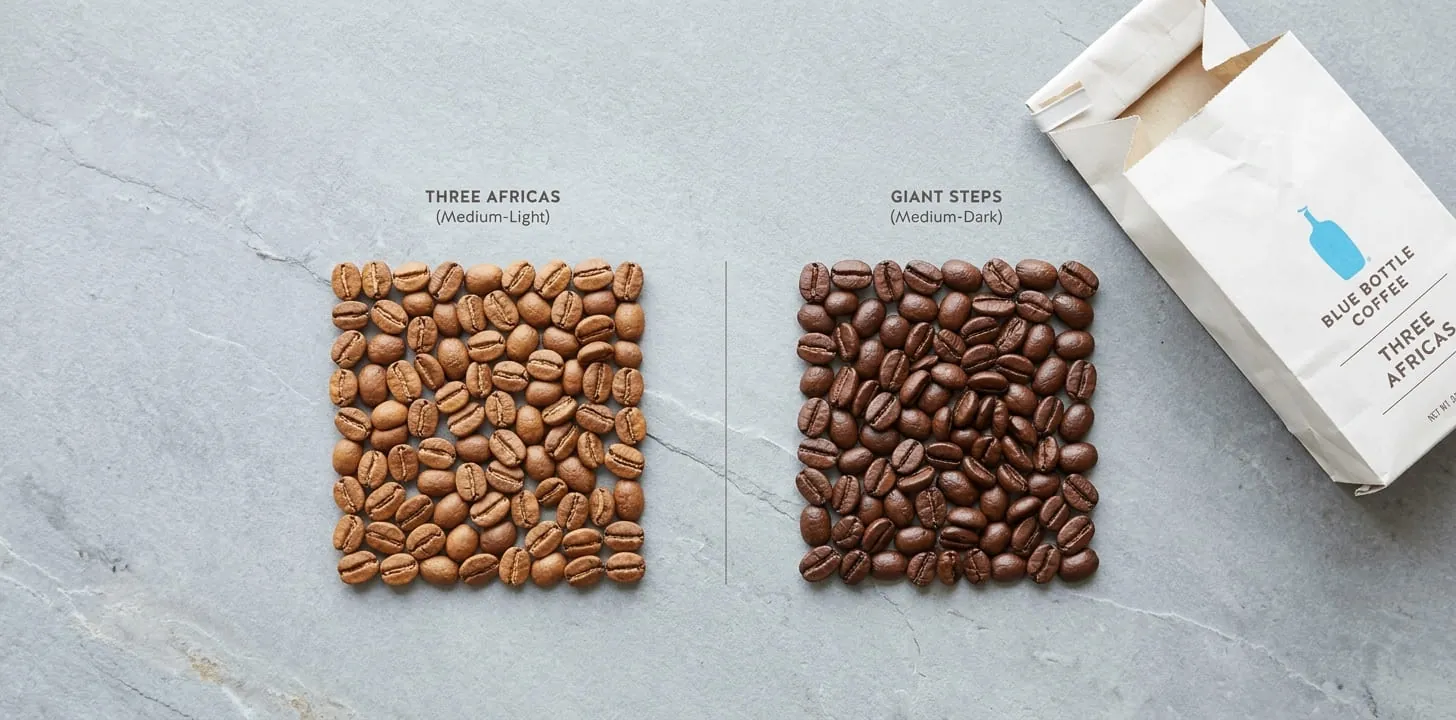
Three Africas — the blend this review focuses on — combines washed coffees from Ethiopia, Rwanda, and Burundi. Washed processing keeps the three origins' characters distinct rather than blended into a single fermented sweetness: floral Ethiopian notes, red-fruit Rwandan character, and clean Burundian citrus acidity all read individually in the cup.
Three Africas in a V60 at optimal parameters: the first sip at drinking temperature (around 65°C) delivers a clean, medium-bodied cup with a bright blackcurrant note up front that transitions to blood orange mid-palate. The jasmine floral note is most prominent as the cup drops to 55–60°C — it's a delicate, top-note brightness rather than a heavy perfume character. The finish is clean and citrus-toned with low residual bitterness and a wine-like acidity that lingers pleasantly. It's a distinctive cup — unlike any commercial Italian espresso blend and unlike most filter coffees you'll find outside of specialty roasters.
As espresso, Three Africas concentrates that brightness into something more intense: the blackcurrant note becomes almost jammy, the acidity is sharper and more present, and the floral component is pushed further back. It's a challenging cup for drinkers used to sweet, caramel-forward Italian espresso, but unmistakably interesting and complex for those who want to explore what East African specialty coffee can do under pressure.
In a Chemex at 1:15 ratio, the body increases slightly and the fruit notes become richer and more integrated — slightly less bright than a V60 but equally complex. For drinkers who find the V60 acidity slightly sharp, the Chemex's thicker filter produces a more rounded cup that's an excellent alternative starting point with Three Africas.
Three Africas is designed for filter brewing, but it can be pulled as espresso with careful technique, which is how to approach it if you want one bag for both methods.
Our baseline parameters for each method:
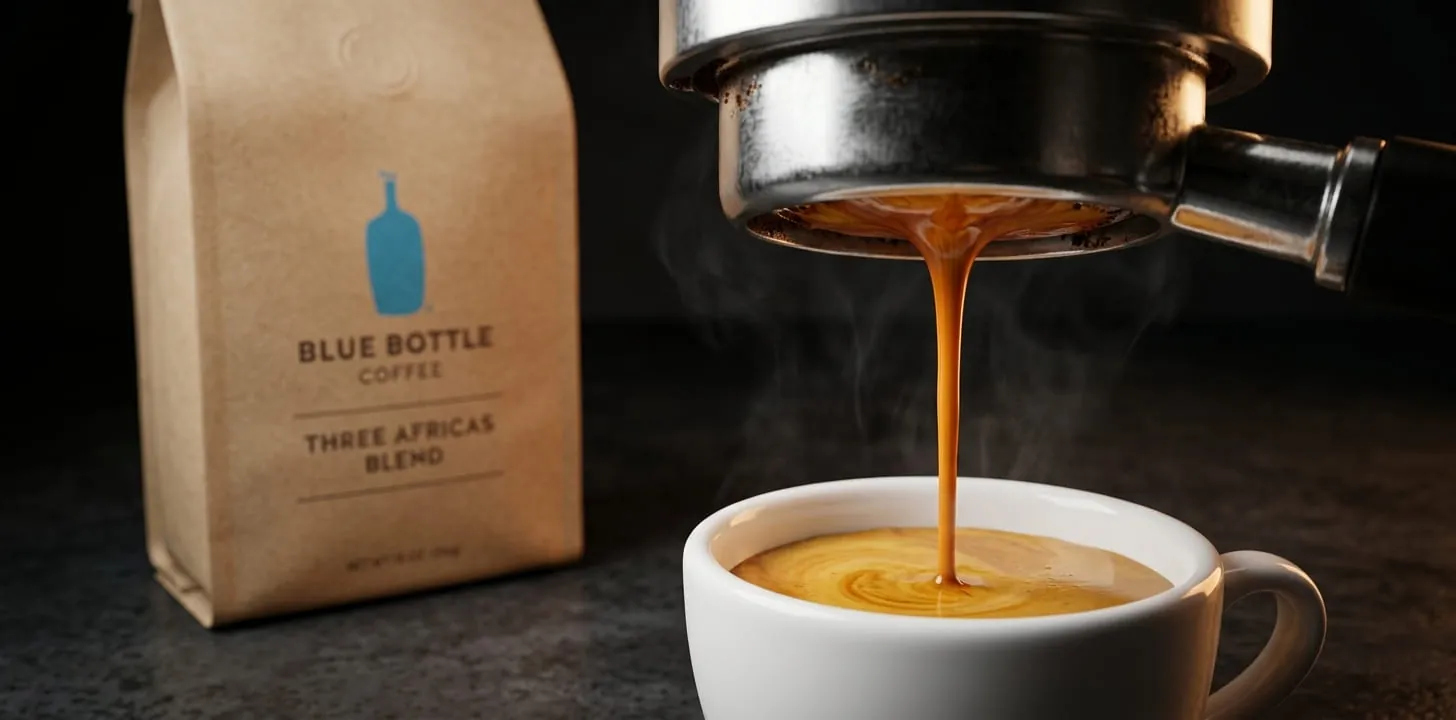
Three Africas as espresso at calibrated parameters produced a notably bright extraction. The stream was amber-tinted with golden clarity, visually lighter than a dark Italian blend, reflecting the lighter roast and 100% washed Arabica composition. Crema formed as a fine, golden layer, lighter in volume than Robusta-containing blends but clean and well-structured.
At the 1:2.2 ratio the shot profile was:
The brightness that makes Three Africas exceptional as filter coffee needs careful management in espresso. A slightly longer yield and attention to temperature help tame the acidity without losing the fruit character. In the V60 the extraction was more forgiving and immediately rewarding, with the same blackcurrant, blood orange and jasmine arc described above.
Three Africas in a flat white (18g in, 40g out, 140ml steamed whole milk at 60–65°C) gave a noticeably brighter, more acidic result than a typical espresso blend. It worked, but the fruity acidity competed with the milk rather than integrating with it the way a medium-roast espresso blend would. If milk-based drinks are your primary format, Three Africas as espresso is a challenging choice.
As straight espresso it is more interesting, since the floral component creates a cup unlike any commercial Italian blend. It's not a beginner espresso experience, but home baristas who've already mastered Italian commercial blends will find it rewarding and worth the extra technique.
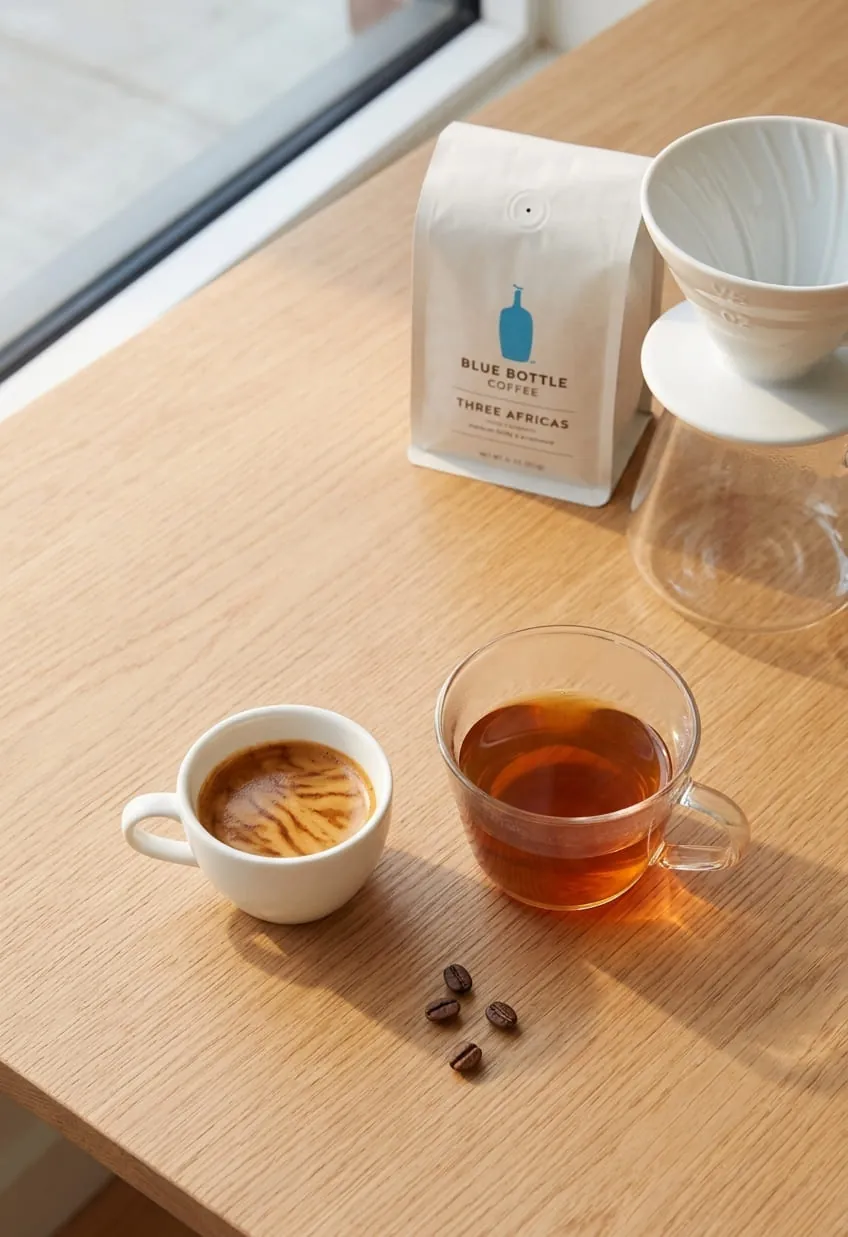
Why Three Africas tastes bright and tea-like, and what that asks of you
Three Africas is built from washed East African coffees. Washing strips the fruit from the seed before drying, which gives a clean, high-acidity cup with floral and citrus notes instead of the heavy sweetness of natural-process beans.
A lighter roast keeps those organic acids intact. Darker roasts caramelize and burn them off, trading brightness for bittersweet body. That is why this bag tastes like blackcurrant and blood orange rather than chocolate, and why it reads as sour when under-extracted.
Freshness works differently here too. Beans release CO2 for days after roasting, and that gas pushes water away from the grounds. Filter methods are happy a few days after the roast date, while espresso usually settles after about a week, which is why the delivery window matters.
What it means for you: a specialty coffee subscription rewards a burr grinder, a scale and filtered water. Without them you pay for acidity you cannot extract cleanly. With them, the same bag tastes sweeter, rounder and more consistent.
Most disappointing cups from light roasts trace back to four fixable habits
If dialing in still feels random, the dial-in guide gives a repeatable order of adjustments. To check a shot, enter it in our espresso dial-in calculator.
Before you decide
Three Africas is built as a filter-first coffee that can be pulled as espresso with more technique than a typical dark or medium roast requires. That is the trade-off for its bright, wine-like fruit character. At $30–$39 (or $26–$35 on subscription), it costs more per ounce than specialty alternatives such as Onyx and Intelligentsia, and above most commercial Italian blends.
If you primarily brew filter coffee and want distinctive East African character, it's a strong choice. If espresso is your main use case and you want a forgiving, bold cup, a darker or more espresso-calibrated blend will serve you better.
Want to understand what single-origin sourcing actually means before you decide? See our guide on what single-origin sourcing actually means. For a full breakdown of how roast level shapes flavor, see our coffee roast levels chart.
To see how Three Africas compares with the other beans we have pulled as espresso, read our best coffee beans for espresso roundup.
Durability, upkeep and running costs once the novelty wears off.
Blue Bottle's one-way valve resealable bags are functional and adequate for freshness, though not as impressive as illy's pressurised packet technology.
The resealable zip maintains adequate freshness for 2–3 weeks post-opening when beans are stored correctly — press out air, reseal firmly, store in a cool dark environment. For espresso use, beans are best consumed 5–14 days post-roast; for filter brewing, 3–14 days is the sweet spot. Blue Bottle's subscription delivery timing ensures you receive beans right at the beginning of that window.
Blue Bottle's roasting consistency across Three Africas is excellent — among the most consistent in the specialty subscription tier.
Seasonal blend adjustments are handled smoothly: the flavour identity of Three Africas remains recognisable even as the specific origin lots from Ethiopia, Rwanda, and Burundi change with the harvest cycle. Subscription delivery reliability is strong, with typical lead times of 3–7 days from roasting to delivery in the continental US.
Blue Bottle Coffee is available via their own website and subscription service, on Amazon (though freshness is less certain via Amazon than via direct subscription), and at select specialty retailers and Blue Bottle café locations.
The subscription channel is the most reliable for consistent freshness. Three Africas is a core SKU with year-round availability.
At $30–$39 per 12 oz bag (retail pricing; subscription brings it to roughly $26–$35), the cost per 18g double espresso from Three Africas is approximately $1.60–$2.07.
For a typical home barista pulling one or two double shots daily, one 12 oz (340g) bag yields roughly 19 double shots, so it lasts about 19 days at one shot daily (about 9–10 days at two). Annual cost at one double shot daily: approximately 19 bags × $34 average = $650/year. Compare to specialty café espresso at $3.50–$5.50 per double shot (about $1,280–$2,010 per year): home brewing with Blue Bottle saves roughly $620–$1,350 per year at the same consumption rate.
As a food product, no traditional warranty applies.
Blue Bottle has a strong quality guarantee via their subscription service: if beans arrive in poor condition or outside the expected flavour profile, their customer service team has a solid reputation for replacement or refund. Amazon's standard return policy covers defective or incorrectly described products for retail purchases.
Not applicable as a consumable product.
Blue Bottle's subscription model effectively provides a permanent discount for regular buyers. The flexibility to pause or cancel makes it practical for irregular usage patterns. For buyers who go through beans more quickly, the subscription economics improve significantly versus retail one-off purchases.
Quick specs
How it scored
Affiliate link: we may earn a commission at no extra cost to you. It never affects our rating.
Our rating, who it fits, and what it costs.
Blue Bottle Coffee Three AfricasRecommended
4.2 / 5 — Is it worth buying?
The testing confirmed what we already suspected: Blue Bottle Three Africas is the real thing at a premium price that's justified if you brew filter coffee regularly and care about what ends up in your cup.
✓ Best for
✕ Skip if
Score breakdown
Shots tested
90+
Testing period
5 weeks
Ready to decide?
Our verdict: 4.2/5, recommended. Independently tested; commissions never change a rating.
See how the Blue Bottle Coffee Three Africas compares with the other picks in each tested roundup.
Closest alternatives in price and purpose, each tested the same way.
Lavazza
A forgiving, classic Italian-style espresso blend that builds reliable crema and performs especially well in flat whites and cappuccinos.
illy
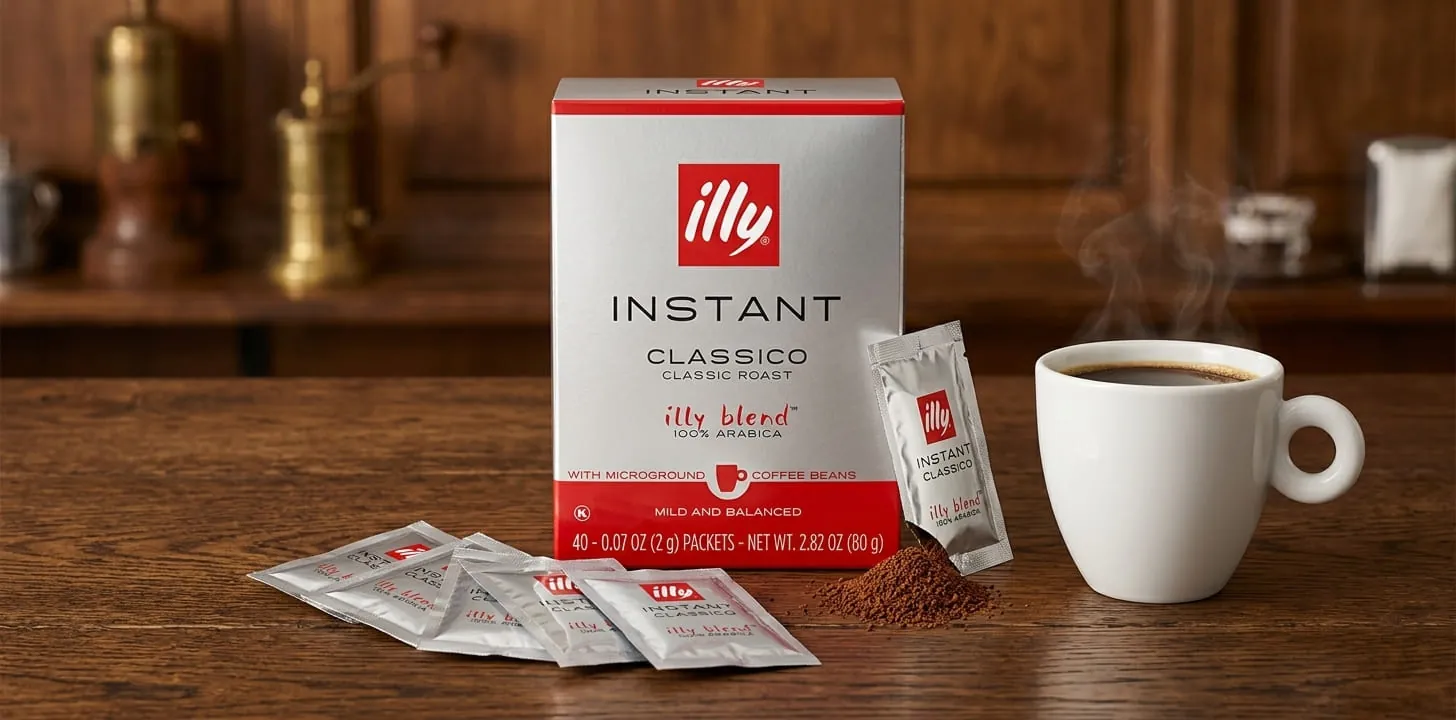
A smooth, balanced 100% Arabica blend with caramel and chocolate notes — best enjoyed as straight espresso rather than buried in milk.
Onyx Coffee Lab
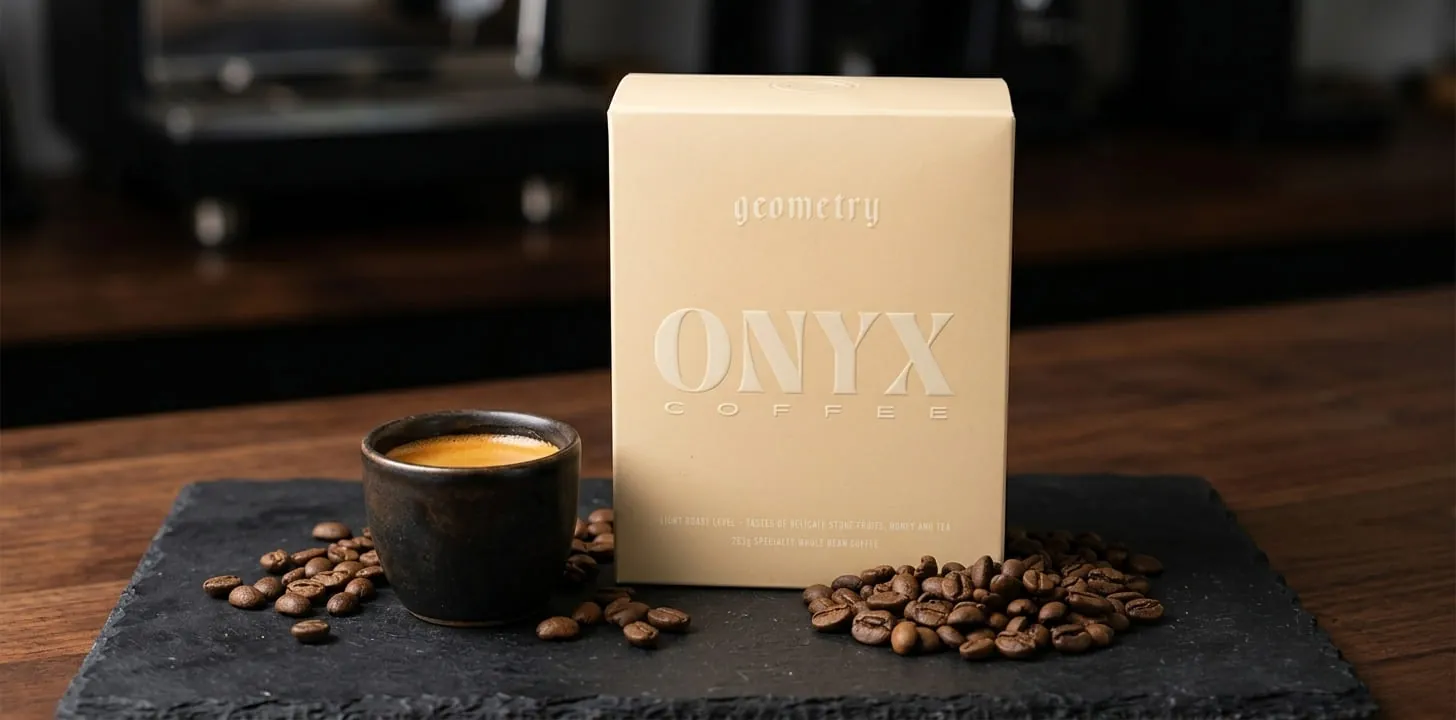
An award-winning medium-light blend with dark chocolate and dried stone fruit complexity — versatile across espresso and pour-over alike.
Stumptown Coffee Roasters
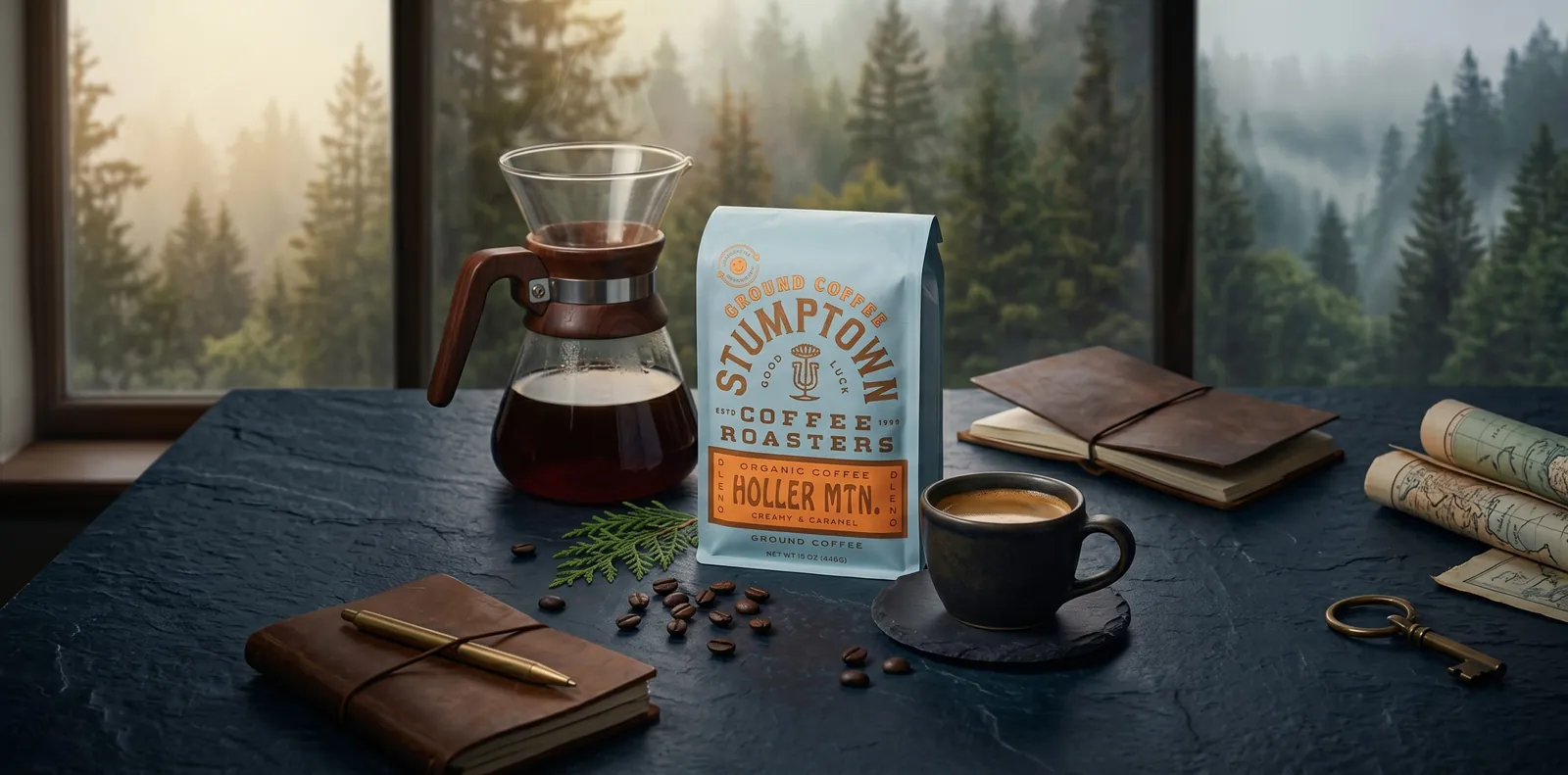
A Pacific Northwest-style dark roast with a bold, chocolatey body that holds up well across espresso, Americanos, and French press.
Quick answers before you buy.
Three Africas can be used as espresso and produces a bright, fruit-forward shot that rewards careful technique — but it is primarily designed for filter brewing. The natural acidity from the East African washed origins requires a slightly longer yield (1:2.2–1:2.3 ratio) and precise temperature control to produce a balanced result.
For drinkers expecting classic Italian espresso sweetness, Three Africas as espresso will taste noticeably different — brighter and more acidic. Home baristas who've already mastered commercial Italian blends and want to explore what East African specialty coffee tastes like under pressure will find it exciting.
Three Africas has a vibrant, bright flavour profile built around blackcurrant, blood orange, and jasmine — a clean, wine-like acidity with a floral top note that emerges as the cup cools. In filter brewing (V60, Chemex, AeroPress), the flavour range is wide and clearly expressed.
As espresso, the brightness intensifies into something sharper and more concentrated. If you're accustomed to caramel-forward Italian espresso, Three Africas as espresso will taste noticeably different — more fruit-forward and acidic, which is intentional and a hallmark of well-sourced East African coffee.
Subscription bags arrive 3–7 days after roasting, with the roast date stamped on the bag, so the beans land just as they enter the best window for espresso and filter brewing.
Three Africas is sold whole bean only in 12 oz bags, and subscription pricing is 10–15% lower than buying single bags.
Once opened, press the air out and reseal the one-way-valve bag after each use to hold that freshness.
Blue Bottle Coffee bags use a one-way valve with resealable zip — press out as much air as possible after each use and reseal firmly. Store in a cool, dark location away from heat and direct light; avoid the refrigerator (condensation affects beans) and don't freeze unless storing for more than three weeks.
For espresso use, beans are best between 5–14 days post-roast; for filter brewing, 3–14 days post-roast is the sweet spot. Blue Bottle's subscription service delivers beans typically 3–7 days post-roast, meaning you receive them right as they enter optimal condition.
You can, but with caveats. Three Africas in a super-automatic machine is generally not recommended — the lighter roast and higher density don't always register correctly in built-in grinders calibrated for medium-dark beans.
Super-automatic machines are calibrated for darker commercial blends and may not extract Three Africas at its full potential; expect a serviceable but simplified flavour profile compared to a dialled-in V60 or manual espresso extraction. For best results, Three Africas is best brewed on a manual pour over setup or a traditional espresso machine where you control grind, dose, and yield precisely.
Only if you already own a decent burr grinder.
The lighter roast is less forgiving than a dark Italian blend, so beginners can struggle to hit the flavour sweet spot while learning to dial in.
If you are still learning, a medium roast such as Intelligentsia Black Cat Classic gives you more margin for error.
Buy Three Africas if you mainly brew filter coffee and want blackcurrant, blood orange and jasmine clarity.
Choose Black Cat Classic if you pull espresso and milk drinks daily and want chocolate and dried cherry with a more forgiving dial-in.
Read the full Black Cat Classic review before deciding.
Yes. It is sold as whole bean only, and the clarity that justifies the price depends on an even grind.
A blade grinder will undermine the fruit and floral notes. See our top-rated coffee grinders for options.
Reader questions
Questions or tips? Leave a comment
Ask about your setup or share what worked for you. Comments are checked before they appear.