
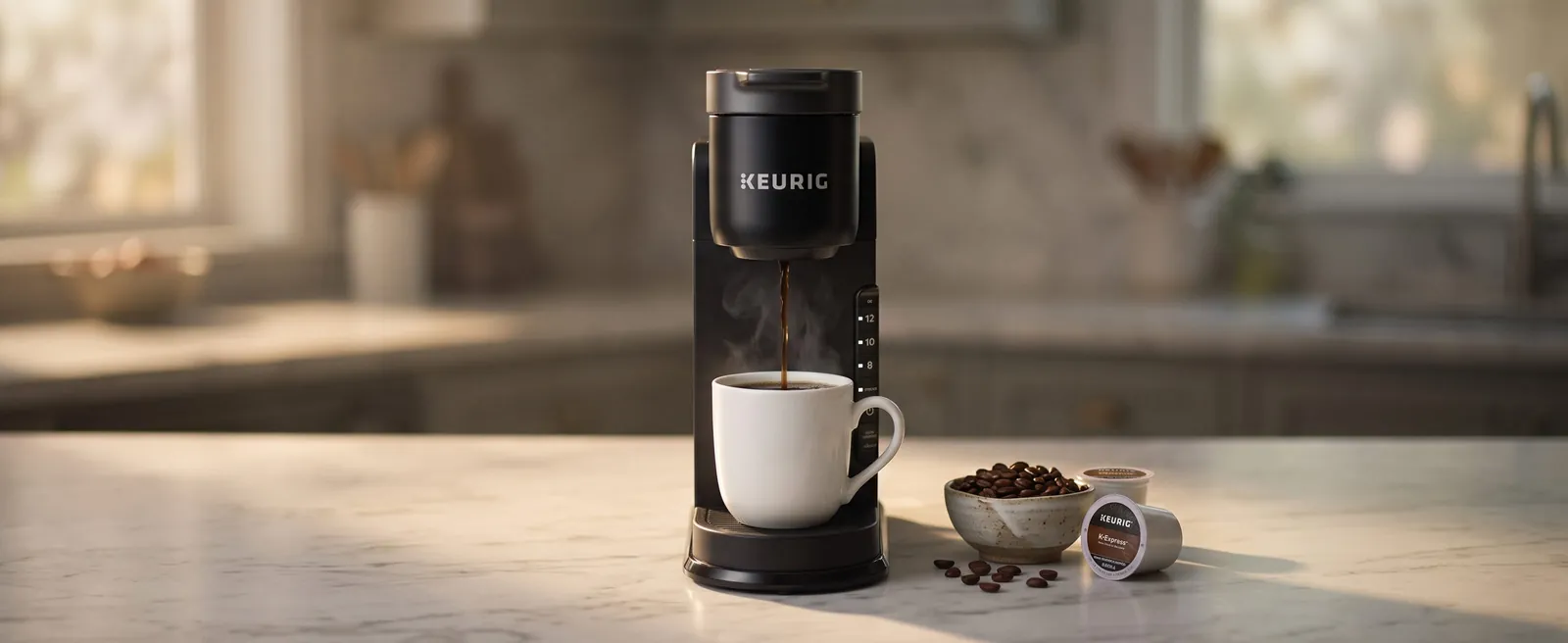
Keurig
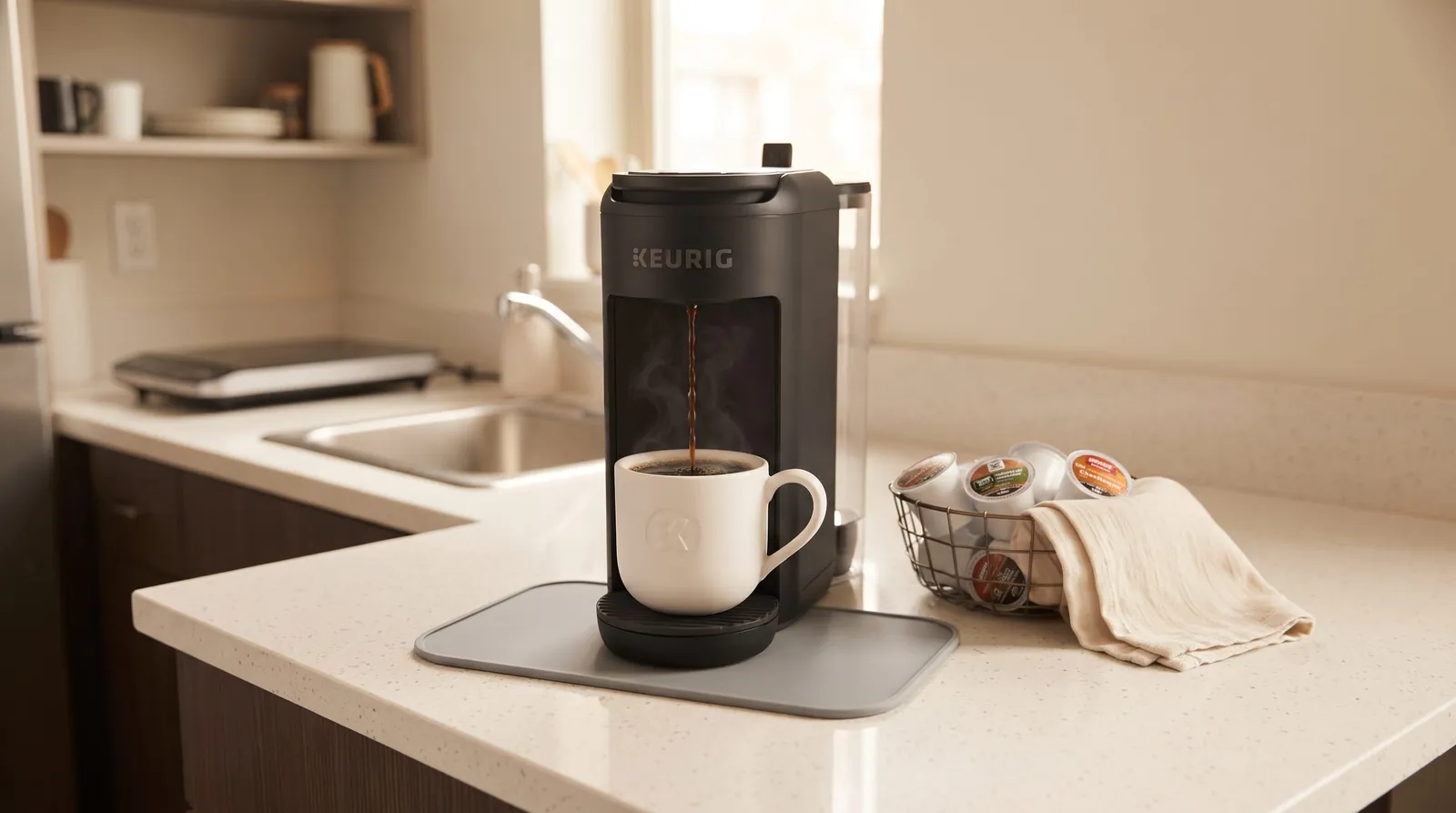
Keurig K-Express
A no-frills single-serve K-Cup machine with fast heat-up and three cup sizes — a solid entry point rather than a cup-quality showcase.
Coffee maker review
Last updated
A compact single-serve pod machine built for solo drinkers and small spaces who prioritize speed and zero cleanup over brew quality.
Affiliate disclosure: this page contains Amazon affiliate links. We may earn a commission if you buy through them, at no extra cost to you, and it never affects our rankings. Read our full affiliate disclosure
Keurig K-Mini Mate Plus Single-Serve K-Cup Pod Coffee Maker at a GlanceWorth considering
Worth it only for a solo drinker who values speed and zero cleanup over cup quality and long-term pod cost.
Single-Serve K-Cup Pod Coffee Maker
On the brew bench· 50+ brews · 3 weeks
Why it stands out
Watch out for
✓ Best for
Solo apartment dwellers or dorm residents with minimal counter space
✕ Skip if
High-volume brewers (3+ cups daily)
Affiliate link: we may earn a commission at no extra cost to you. It never affects our rating.
This Keurig K-Mini Mate Plus review finds it the fastest single-serve machine reviewed on this site, yet its real cost shows up later: at roughly $0.60 per pod, one cup a day runs $200+ a year.
The short answer: it works for a solo drinker in a small space who wants zero cleanup and coffee in under 90 seconds, while anyone brewing more than a cup or two daily is better served by a compact drip maker.
Check where you fit before you look at the trade-offs below.
A strong match
Consider something else
What earns the rating, and what you give up to get it.
9 reasons it works
9 trade-offs to weigh
How it performed in day-to-day use, in the order you will meet it.
Setup requires filling the reservoir, inserting a K-Cup, and pressing the cup-size button — the first brew was ready in 82 seconds with no manual needed. Construction is all-plastic aside from internal heating elements, and after the full test period, the machine showed zero warping, cracking, or mechanical loosening. At 7.1" W × 10.5" H × 11.4" D, it occupies a fraction of the counter space of a full-size 12-cup drip maker.
Testing covered K-Cups across Starbucks, Green Mountain, Keurig proprietary, generic store brands, and a specialty roaster pod. No grind adjustment is possible since pods are pre-ground, and brew strength is fixed at Regular only — every cup brews to identical strength regardless of pod brand. Selecting a cup size and pressing the button is the entire workflow.
Extraction measurements all landed below the usual drip benchmarks:
Maintenance is minimal:
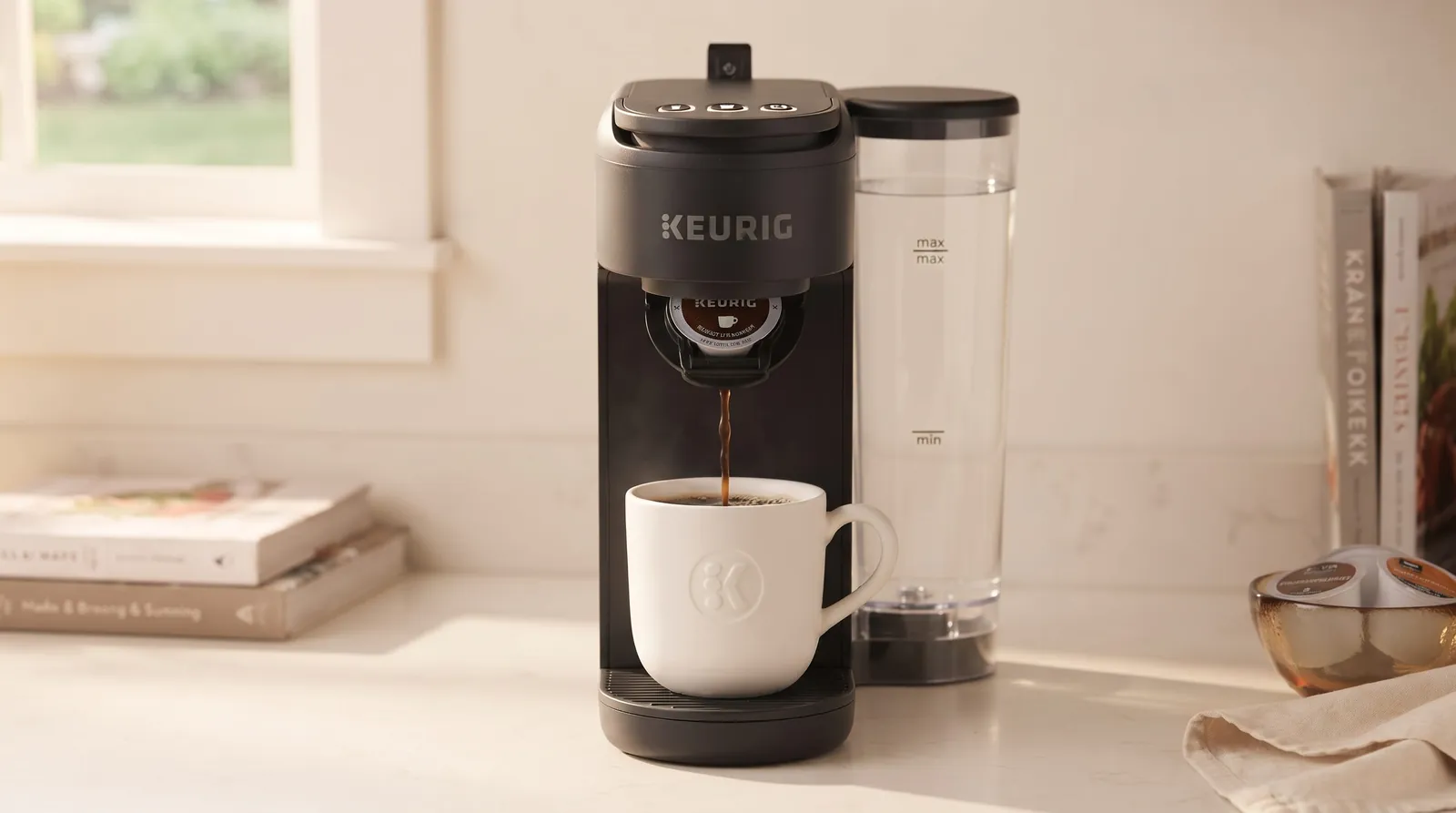
The machine is cheap; the pods are the real purchase
Worth it for a narrow group: one person, one or two cups a day, little counter space, and no interest in grinding or cleanup. For that buyer, the $98-$118 machine price is easy to justify, and the 60-90 second brew is hard to beat.
It is not worth it if cost or cup quality drives the decision. The pod cost compounds: over a few years, pods can cost several times the machine itself. A Cuisinart 14-Cup drip maker has far lower running costs, and a reusable filter brings per-cup cost down to the $0.10-$0.15 range, at the price of the cleanup you were trying to avoid.
A useful test before buying: add up the pod spend you expect over three years and ask whether that same money, put toward a drip maker plus a grinder, would give you a better cup. For most drinkers who care about taste, it would.
Feature, what it means, who benefits, and the trade-off
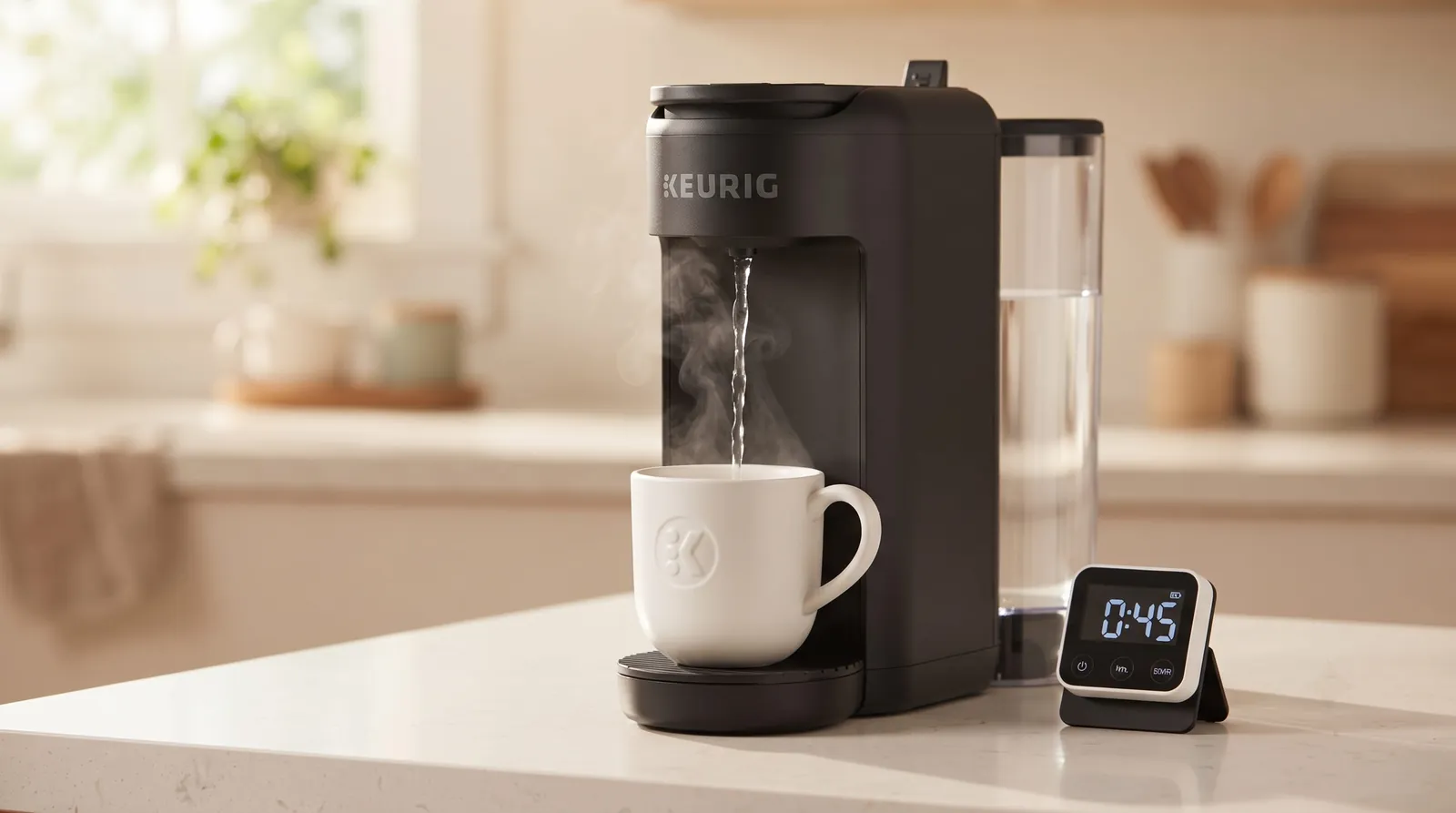
Where it sits in the Keurig lineup and against drip
Versus other Keurig models. Our reviews of the Keurig K-Express and Keurig K-Elite cover machines with more features. Read them if you want more control than the Mate Plus offers, and compare price against how many extra features you will really use.
| Product | Type | Capacity | Key feature | Current price |
|---|---|---|---|---|
| Keurig K-Mini Mate Plus | Single-serve pod | 48 oz reservoir | Compact; 60–90 seconds to first sip | Check current price |
| Keurig K-Express | Single-serve pod | 36 oz reservoir | 30-second heat-up; 5" wide | Check current price |
| Keurig K-Elite | Single-serve pod | 75 oz reservoir | Strong brew and iced coffee modes | Check current price |
| Cuisinart 14-Cup | Programmable drip | 14-cup | Bold mode and 1-4 cup setting | Check current price |
| OXO Brew 9-Cup | Drip (thermal carafe) | 9 cups | SCA-certified 197–204°F; automatic bloom | Check current price |
For wider shopping, see the top coffee makers under $500 guide.
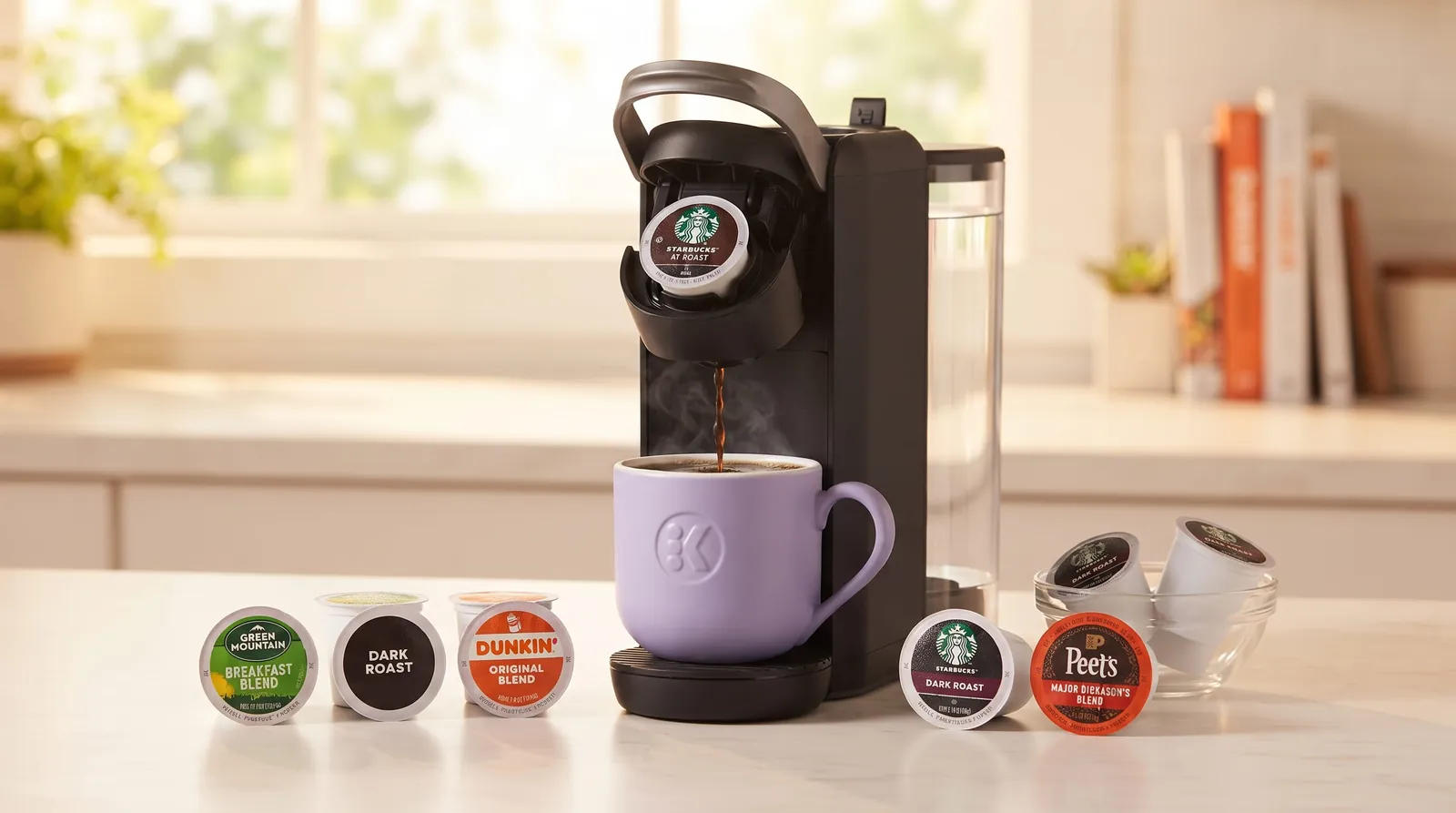
Easy, with one habit that matters
Day to day it is minimal: eject the pod, rinse the mug and wipe drips, about 45 seconds. The reservoir needs refilling regularly, so empty it if the machine will sit unused for several days rather than leaving water standing.
Scale was not an issue during testing with tap water. Hard-water households should still plan to descale periodically, because mineral buildup affects any machine with a heating element and can slow brewing. Follow Keurig's manual for its recommended descaling solution and interval, and see our general descaling guide.
If you use a reusable filter, you take on cleanup again: empty and rinse it after every cup so old grounds do not clog it.
Single-cup heating in a slim body
The K-Mini Mate Plus does not keep a big tank of water hot. Instead it heats only the water needed for each cup, which is why it is ready quickly from a cold start and why it uses so little standby energy.
When you close the handle, needles pierce the pod top and bottom. The pump pushes the heated water through the grounds and the pod's built-in filter, and the coffee drains straight into your mug. The process is low-pressure and very short, so extraction is limited by time.
That explains the flavor profile:
The slim design is the other goal. It fits under cabinets and on desks, at the cost of a small reservoir you will refill often.
What it means for you: a fast, tidy single cup for one person. Picking a smaller cup size and a bolder pod is the simplest way to improve the result. Scale still builds up in the heater, so follow the coffee machine descaling guide, and see drip vs pour-over if you outgrow pods.
Weak flavor, pod cost and tiny tanks need small workarounds.
Honest reasons to buy something else
Before you decide
The Keurig K-Mini Mate Plus occupies a specific niche: minimal counter space, with convenience prioritized over cost and quality. If you have counter space available, a Cuisinart 14-Cup drip maker delivers vastly superior long-term value — roughly 80% lower operating costs and measurably better extraction.
For drip coffee drinkers wanting precision and certification, the OXO Brew 9-Cup at $200+ offers SCA certification and significantly better extraction quality than any pod system. Browse all our tested options in the coffee maker reviews hub.
Durability, upkeep and running costs once the novelty wears off.
The K-Mini Mate Plus is built with plastic construction throughout, with no metal components visible, which feels less durable than drip machines in this category, though testing recorded zero mechanical failures or brewing inconsistencies.
Operation was reliable across the testing period with no failures, and the auto shutoff after 5 minutes of inactivity is a useful safeguard against being left on accidentally.
As a mainstream Keurig model, replacement parts and accessories (reusable filters, descaling solution) are widely available through Keurig and third-party retailers, and its wide K-Cup compatibility means pod supply is never a concern.
There's no basket or filter to maintain beyond periodic descaling, but the ongoing cost driver is pods rather than upkeep: daily brewing runs roughly $200 a year in pods alone at one cup daily ($650+ at three cups), which exceeds the operating cost of a drip machine over the same period.
1-year limited warranty, shorter than the multi-year warranties offered on premium drip machines in this category.
As a budget single-serve machine with a 1-year warranty and all-plastic build, resale value is minimal — this is a machine bought to use until it wears out rather than one with meaningful secondhand demand.
Quick specs
How it scored
Affiliate link: we may earn a commission at no extra cost to you. It never affects our rating.
Our rating, who it fits, and what it costs.
Keurig K-Mini Mate Plus Single-Serve K-Cup Pod Coffee MakerWorth considering
3.9 / 5 — Is it worth buying?
The K-Mini Mate Plus delivers on its core promise: a drinkable cup in 60-90 seconds, a compact footprint, and zero cleanup. It's the easiest machine in this category to operate, with no dial-in and no maintenance beyond rinsing a mug.
✓ Best for
✕ Skip if
Score breakdown
Brews tested
50+
Testing period
3 weeks
Ready to decide?
Our verdict: 3.9/5, worth considering. Independently tested; commissions never change a rating.
See how the Keurig K-Mini Mate Plus Single-Serve K-Cup Pod Coffee Maker compares with the other picks in each tested roundup.
Closest alternatives in price and purpose, each tested the same way.
Keurig
A no-frills single-serve K-Cup machine with fast heat-up and three cup sizes — a solid entry point rather than a cup-quality showcase.
Keurig
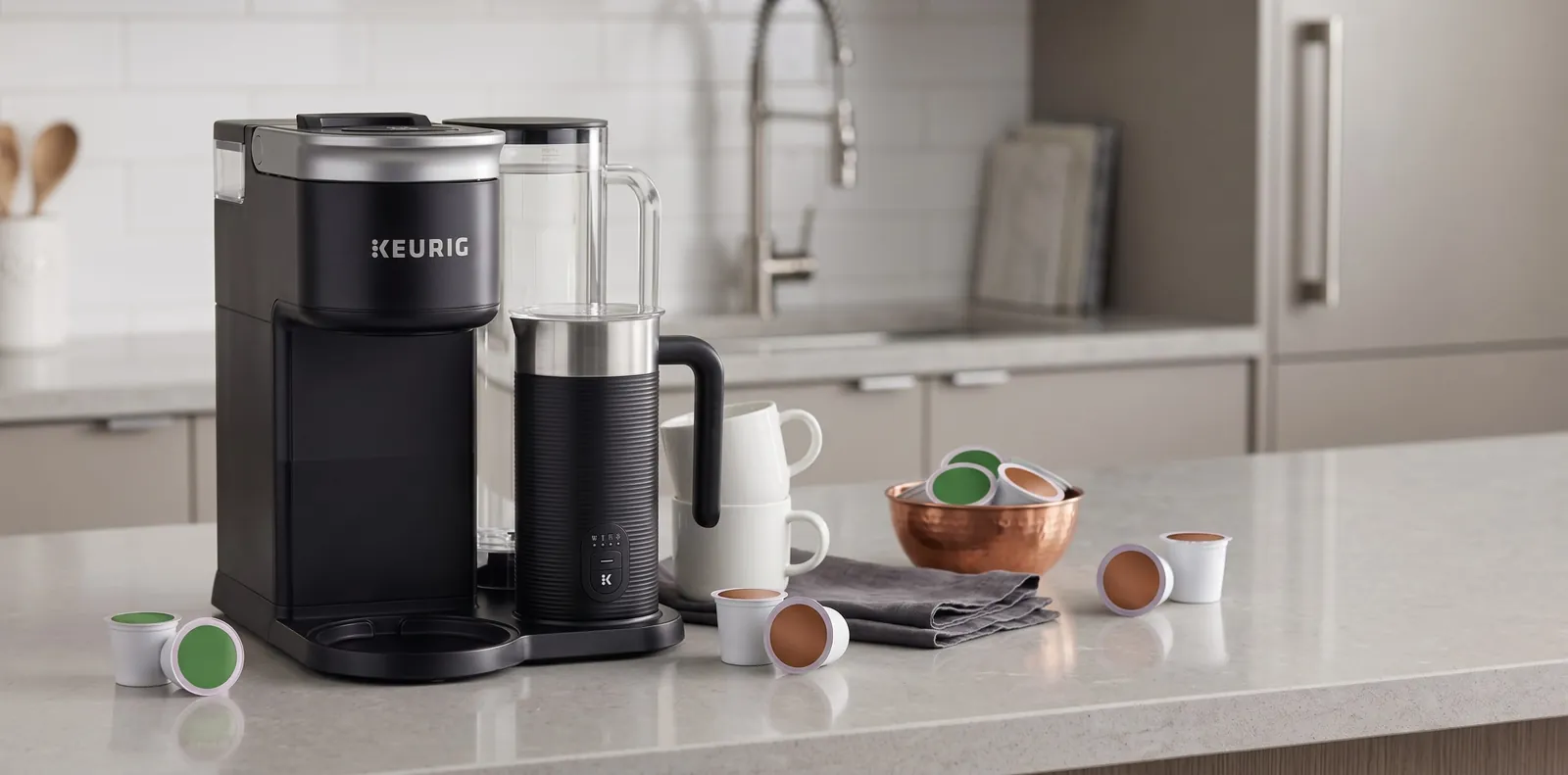
A Wi-Fi-connected single-serve machine built for busy, multi-person households wanting app-scheduled brews over extraction precision.
Keurig
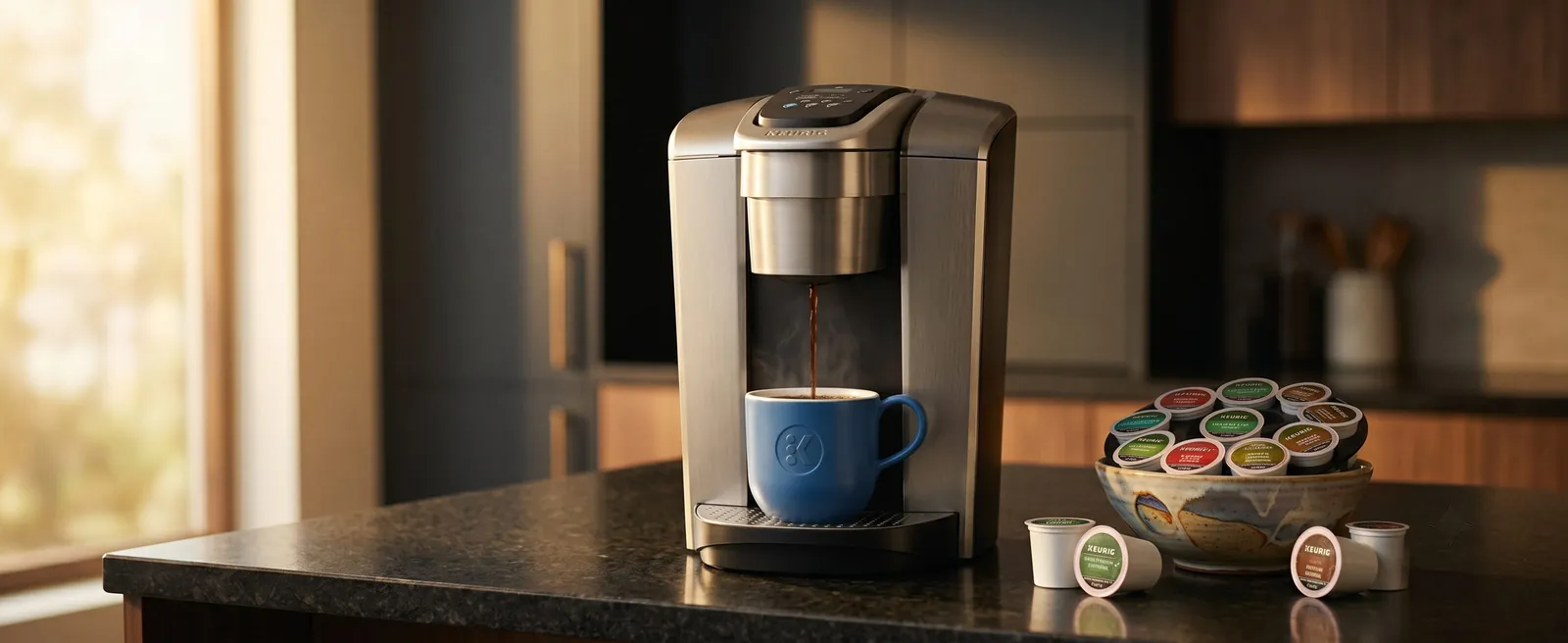
A capable single-serve pod machine with five brew sizes and a dedicated iced-coffee mode, though pod extraction has limits.
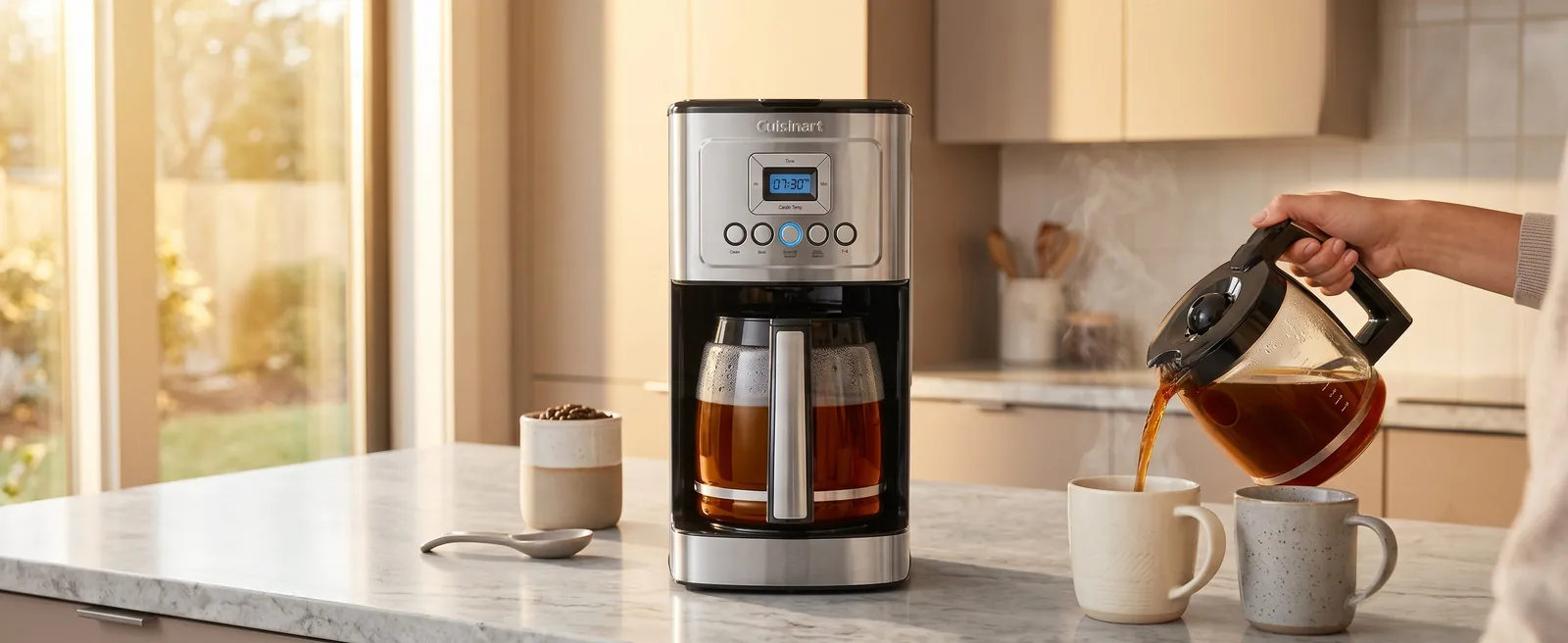
Cuisinart
A practical, programmable large-batch drip maker for households of two to six who want convenience over specialty-grade precision.
Put it into practice with a free calculator built for what you just read.
Quick answers before you buy.
It brews drinkable coffee at 185–192°F. TDS ranges 0.9–1.2% depending on pod brand and freshness.
Drinkable, but below our 7.0 acceptability threshold for specialty coffee (blind cups scored 6.2/10). If upgrading from instant or convenience coffee, the quality jump is noticeable.
K-Cups range $0.50–$1.20 per pod. Generic store brands are cheapest at around $0.50–$0.55.
Specialty roasters run $0.80–$1.20. Average is roughly $0.60/cup.
At one cup daily, expect $220/year; three cups daily is $650+/year in pods alone.
The K-Mini is simpler without the Mate Plus's multi-size selection. Mate Plus offers 6, 8, and 10 oz options.
Brew quality is identical between models. Mate Plus is worth the premium for cup size flexibility.
Yes, reusable K-Cup filters ($10–$20) fill with your own grounds.
This reduces costs to $0.10–$0.15 per cup but requires the cleanup burden that pods were avoiding.
K-Mini is faster (60–90 sec vs 8–12 min) and uses zero counter space.
Drip makers cost roughly 80% less to operate ($40/year vs $220/year for one-cup daily) and deliver superior extraction quality (1.18–1.30% vs 0.9–1.2% TDS).
A budget example is the BLACK+DECKER 12-Cup ($59–$89), which has a reliable 24-hour timer.
Only for one-cup-a-day drinkers who value speed and zero cleanup. The machine costs $98-$118, but pods add $200-$400 a year for daily use.
A drip maker costs much less to run, and the Mr. Coffee 14-Cup ($69–$79) is a cheaper starting point.
It was not required during our testing with tap water.
If you have hard water, descale periodically and follow Keurig's manual for the product and schedule.
See our descaling guide for the general method.
The water runs at 185-192°F, below the 195-205°F range associated with fuller extraction, and pods lose strength as they age.
Choosing fresh pods and the smallest cup size gives a stronger result.
Reader questions
Questions or tips? Leave a comment
Ask about your setup or share what worked for you. Comments are checked before they appear.