

A machine where pressure and the three-way valve come into play
Gaggia Classic Pro
The best value in manual espresso, if you're willing to learn Typical price: $450-$550
Espresso Guides
Last updated
Why is my espresso puck wet? Check dose, grind, shower screen, 3-way valve and gasket in order, with one-change-at-a-time fixes.
Affiliate disclosure: this page contains Amazon affiliate links. We may earn a commission if you buy through them, at no extra cost to you, and it never affects our rankings. Read our full affiliate disclosure
A wet or soupy espresso puck is most often caused by overdosing the basket, followed by a grind so fine it chokes the shot. Weigh your dose against the range stamped on the basket and cut it slightly before touching anything else. If the puck is still soupy, clean the shower screen, then check the 3-way valve.
Match what you see in the portafilter to the most likely cause.
| Symptom | Likely cause | Jump to |
|---|---|---|
| Domed puck stuck to the screen, grid imprint | Overdosed basket | Overdose |
| Shot crawled or stopped; top is saturated | Grind too fine | Grind |
| Soupy despite correct dose and grind | Dirty shower screen | Screen |
| Portafilter spurts or drips on release | Leaking 3-way valve | Valve |
| Wet only at the rim | Worn gasket or poor basket fit | Gasket |
Domed puck stuck to the screen, grid imprint
Shot crawled or stopped; top is saturated
Soupy despite correct dose and grind
Portafilter spurts or drips on release
Wet only at the rim
The most common cause: no room for the coffee to expand against the screen.
The puck is domed, sloppy, or stuck to the shower screen with a grid imprint.
A flat, damp puck that comes out in one piece with no screen imprint.
Water that cannot drain, or is pushed back, stays in the basket.
After a shot, pressure drops and the three-way valve vents leftover water. A dry, firm puck means water drained through the coffee. A wet puck means too much water was left behind or the coffee bed did not allow flow.
Common mechanisms are too much coffee for the basket (no headspace), a grind so fine the water cannot leave quickly, or a machine problem such as a blocked valve. Headspace is the gap between the coffee and the shower screen, and it gives the water room to spread.
A wet puck is not always a bad shot, but it often signals a setup that can be improved.
A choked bed keeps water on top of the puck after the shot stalls.
The shot crawls or drips, then stops, and the top of the puck stays saturated.
A steady flow and a puck that holds together. For timing targets, see shot too fast or too slow.
Blocked holes make water pool instead of spreading evenly.
Dose and grind are right, but the puck is still soupy or has uneven wet patches.
Water spreading evenly across the puck.
A sticking valve traps pressure so the puck cannot drain.
The puck is consistently soupy and the portafilter spurts or drips when you release it. Only machines with a 3-way valve are affected.
A short hiss at the end of the shot and a drier puck.
Water slips past the edge of the puck, leaving a wet rim.
The middle holds together but the edge is wet, or the gasket looks cracked or flattened.
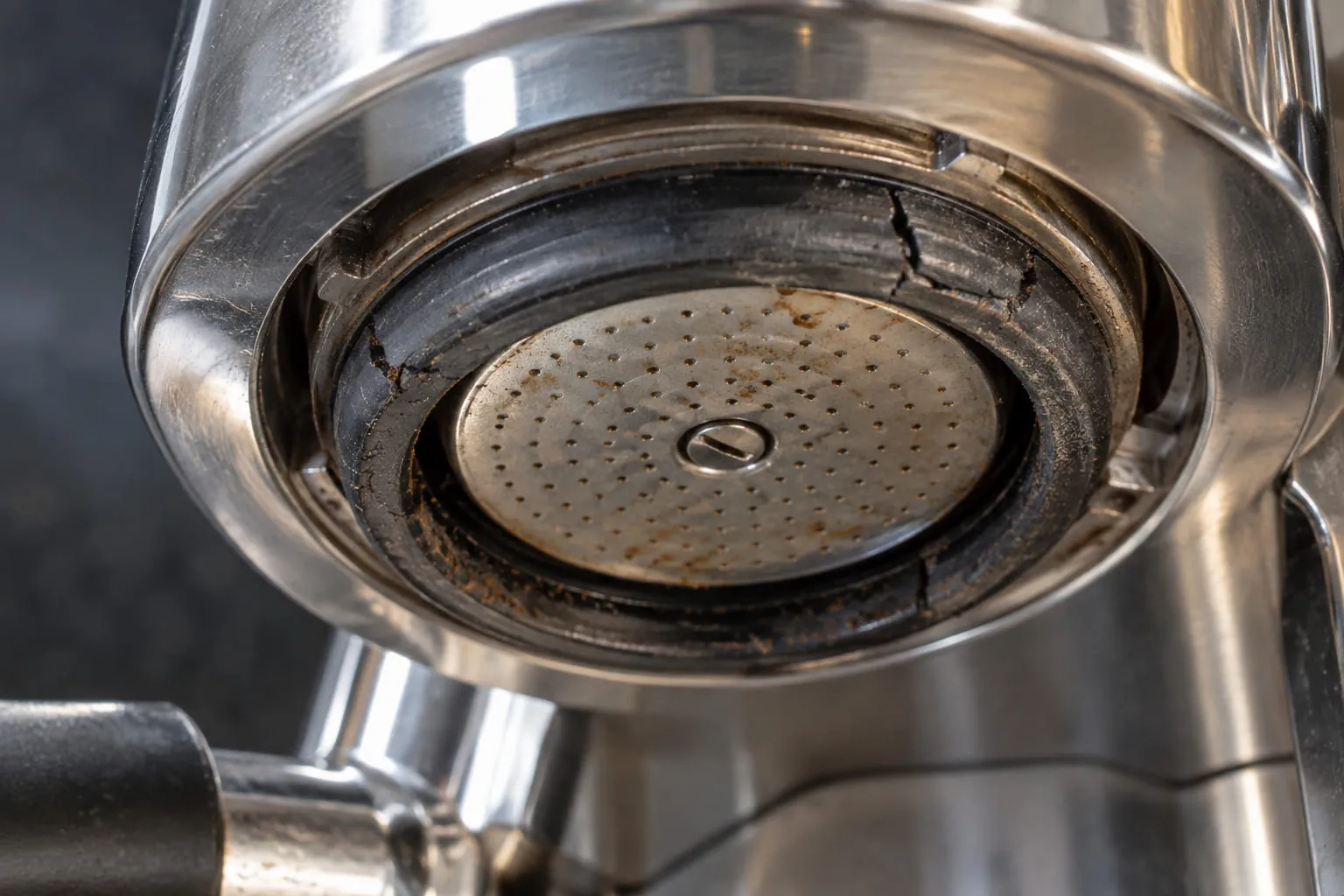
Edge bypass also causes uneven flow; see the channeling guide if the puck looks patchy.
Options to compare if an aging machine keeps causing trouble.
Check the current listing before you buy, since prices and availability change.
A machine where pressure and the three-way valve come into play
The best value in manual espresso, if you're willing to learn Typical price: $450-$550
An all-in-one machine to compare
Best All-in-One Espresso Machine Under $700 Typical price: $449-$699
Affiliate links: we may earn a commission at no extra cost to you.
Comparing more? See the best espresso machines, or the best coffee grinders if your grinder cannot hold a fine, consistent grind.
Dose, prep and maintenance habits that restore normal flow.
If you have changed the dose and cleaned the machine and the puck is still soupy, check the group gasket and the three-way solenoid.
Only if the shot tastes wrong; a damp puck on its own is often fine.
A wet puck looks alarming, but on its own it does not mean the espresso was bad. Machines without a three-way solenoid valve, which includes many entry-level and compact models, cannot release the pressure above the puck after the shot, so the water left in the headspace soaks back into the coffee. On those machines a damp or soupy puck is normal. What matters is the shot: if it tasted sweet and balanced, the puck is not a problem.
It is worth fixing when the wet puck comes with a sour or bitter shot, with water pooling on top of the puck in the basket, or with coffee sticking to the shower screen. In those cases, the headspace is usually too big because the dose is too low, or the grind is too coarse and the shot ran fast. Weighing your dose and staying within your basket's range fixes most of it; our baskets guide lists typical dose ranges, and espresso tamping pressure explains why harder tamping is not the answer.
A simple test tells you whether headspace is the issue. After tamping, lock the portafilter in, remove it again, and look at the top of the puck. A light imprint of the shower screen screw means the headspace is about right; no mark at all means there is a large gap, and a deep imprint means you have overdosed. Adjust the dose by half a gram at a time until you see a light mark.
Pick the next guide based on what the shot tastes and looks like.
Quick decision guide
The puck is wet and the shot tastes sour
Work through why espresso tastes sour.
The puck looks patchy or has holes
See the channeling guide and how to tamp.
The puck is fixed and you want to tune flavor
Follow how to dial in espresso.
Quick answers before you buy.
Not as a first fix.
A soupy puck usually means the bed already offers too much resistance, so tamping harder can make it worse.
Fix dose and grind first, then see espresso tamping pressure.
Not directly.
Stale beans affect flavor and crema, and hard water affects taste and scale buildup, not how wet the spent puck is.
Brief pre-infusion can also leave a puck evenly damp, which is normal.
A damp puck is normal; a puddle of water on top or a puck that slumps and sticks to the screen is not.
Some wetness after a stalled or very short shot is also common, so judge it alongside shot time and taste.
If flavor is good, a slightly wet puck is usually harmless and often comes from a full basket or a brief pre-infusion.
Trim the dose by half a gram if the screen imprint bothers you, then see how to dial in espresso.
Usually the basket is overdosed, so the coffee swells into the screen.
Reduce the dose slightly and check the shower screen is clean; if it still sticks, inspect the gasket and the portafilter fit.
It can.
Uneven, patchy wet spots or small holes in the puck point to channeling rather than a dose problem, so check distribution and tamp.
The channeling guide covers how to confirm it.
Keep reading: more guides on the same topic.
 Fix a problem
Espresso4 min read
Learn how to increase espresso crema: fix bean freshness, grind, dose, pressure and temperature in order of impact.
 Fix a problem
Espresso5 min read
Learn how to spot and fix espresso channeling: uneven flow, sour-and-bitter shots, a holey puck. Ordered fixes from distribution to grinder.
 Fix a problem
Espresso5 min read
Steam wand not frothing milk? Run the plain-water test, then fix clogs, technique, low heat, scale or worn seals in likelihood order.
 Fix a problem
Espresso4 min read
Espresso pulling too fast (under 20 sec) or too slow (past 40)? Fix shot time by checking grind, dose, tamp, bean age and machine in order.

Reader questions
Questions or tips? Leave a comment
Ask about your setup or share what worked for you. Comments are checked before they appear.