
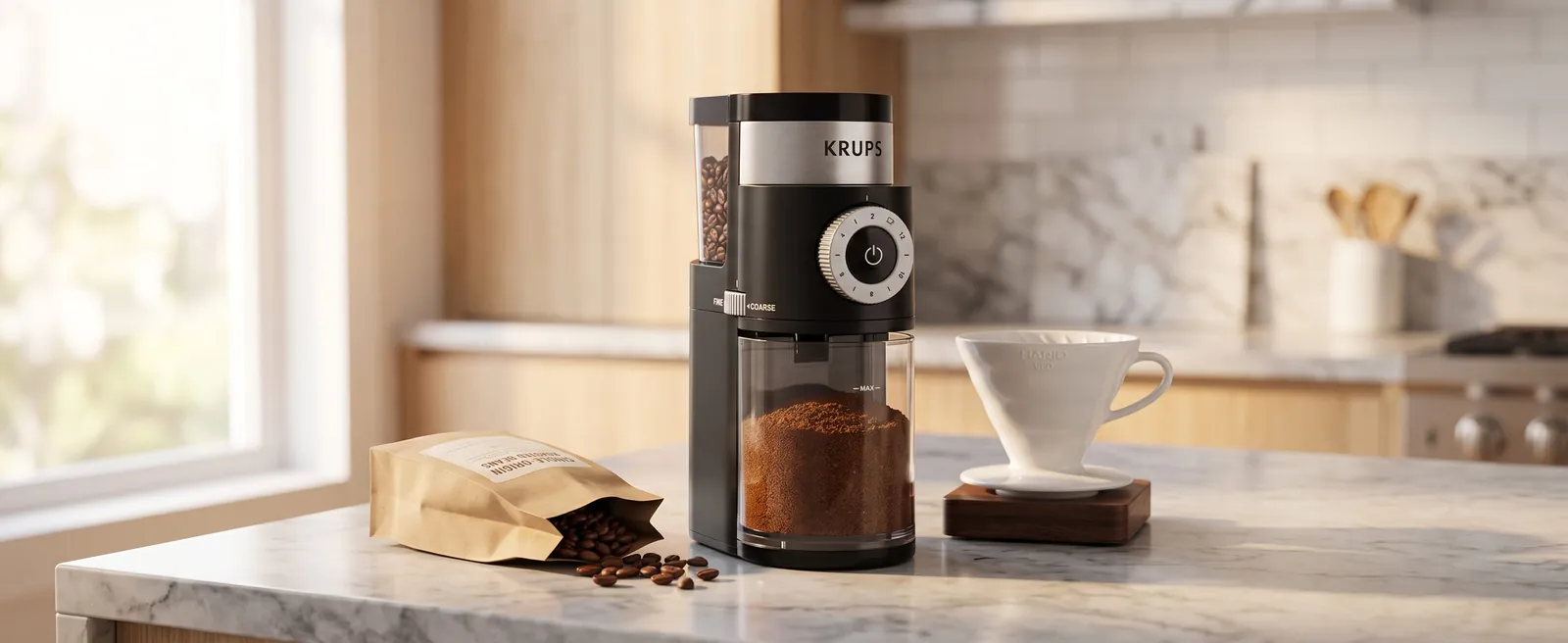
Krups
Krups Precision Burr Coffee Grinder
An entry-level conical burr grinder offering a real step up from blade grinding for drip, French press, or pour-over.
Coffee grinder review
Last updated
A basic, budget electric grinder for casual drip coffee drinkers wanting fresher grounds without much upfront cost.
Affiliate disclosure: this page contains Amazon affiliate links. We may earn a commission if you buy through them, at no extra cost to you, and it never affects our rankings. Read our full affiliate disclosure
Hamilton Beach Fresh Grind Electric Coffee Grinder at a GlanceWorth considering
Right only for casual drip drinkers on a tight budget; everyone else should spend more on a burr grinder.
Entry-Level Blade Grinder for Drip Coffee
On the grind bench· 85 grinds · 21 days
Why it stands out
Watch out for
✓ Best for
Casual drip coffee drinkers who want fresh-ground flavor for the first time
✕ Skip if
Pour-over and AeroPress brewers who need grind consistency
Affiliate link: we may earn a commission at no extra cost to you. It never affects our rating.
In this Hamilton Beach Fresh Grind review, what stood out most wasn't the grinding, which is uneven by design, but the removable stainless steel chamber that pours straight into a filter. After 85 grinding sessions, that workflow is what sets it apart from other blade grinders.
The short answer: it's the best blade grinder for one specific buyer, the casual drip drinker who wants fresher grounds without spending more or learning anything. For almost everyone else, it's the wrong choice.
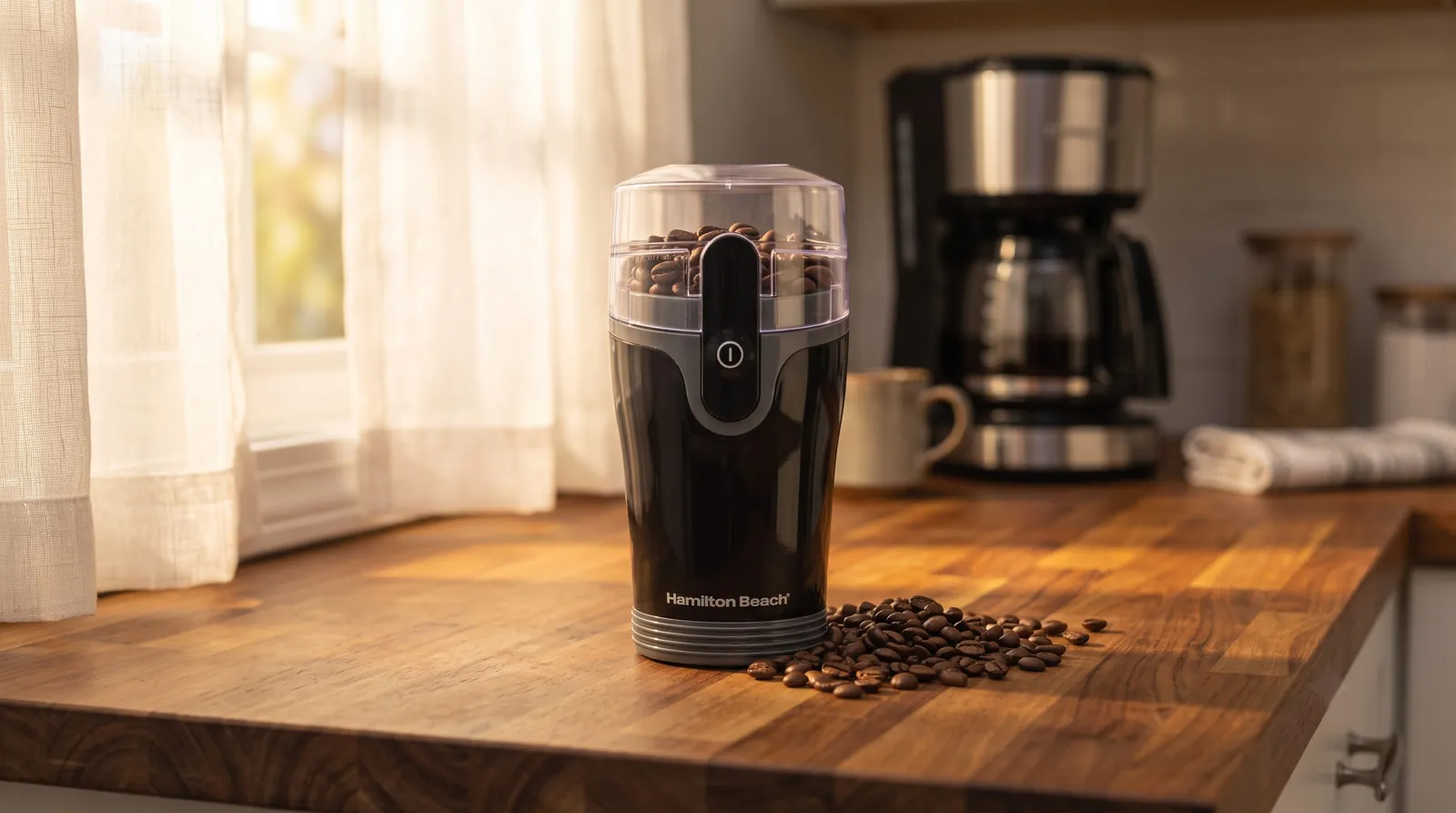
Check where you fit before you look at the trade-offs below.
A strong match
Consider something else
What earns the rating, and what you give up to get it.
7 reasons it works
7 trade-offs to weigh
How it performed in day-to-day use, in the order you will meet it.
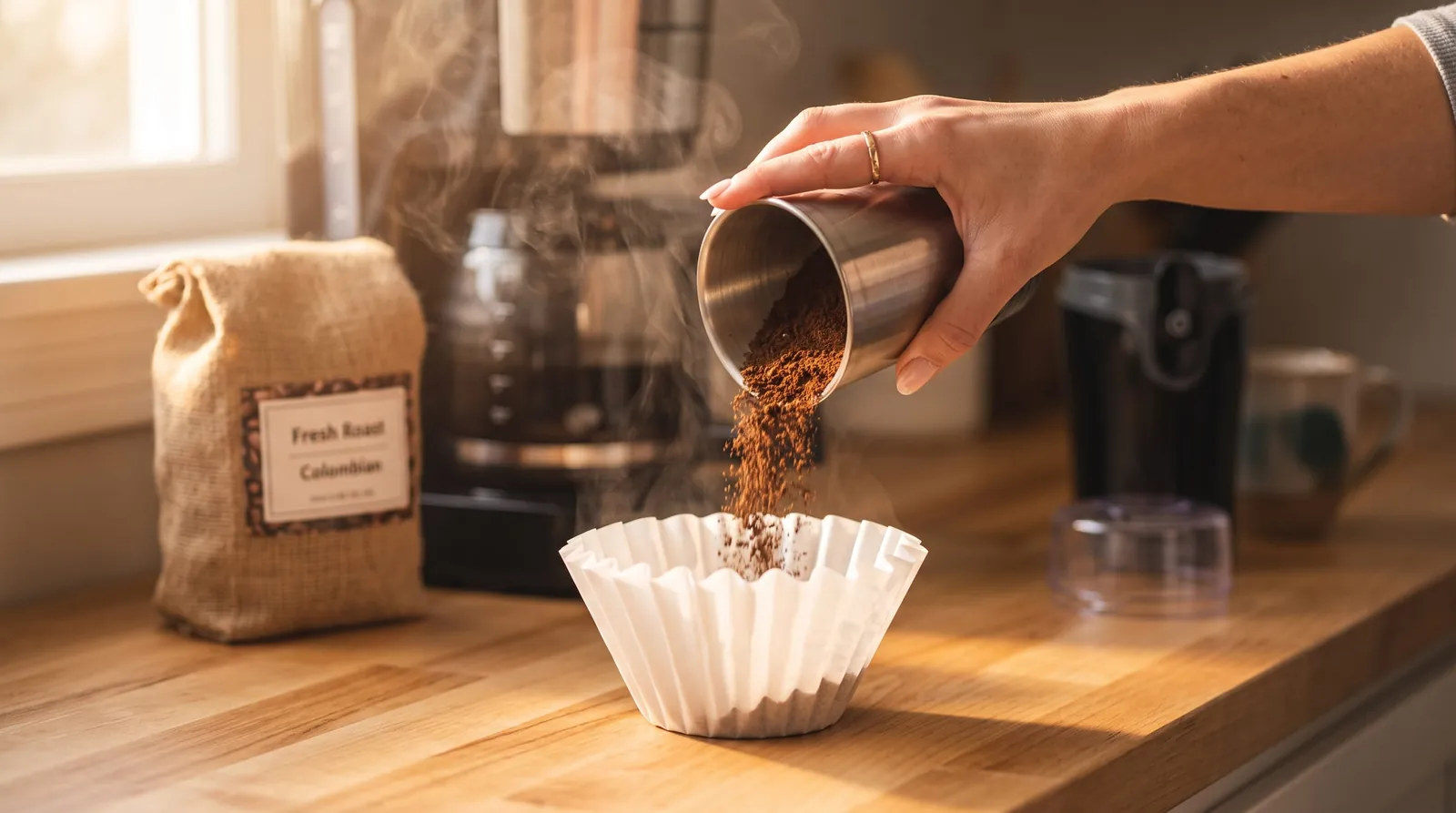
Out of the box to first grind takes under 2 minutes — load beans, replace the lid, press the button. Run one 10-second dry cycle with no beans first to clear factory residue. The only real technique to learn is pulse-and-shake — 2–3 second bursts with a shake between them to redistribute beans — which took about two sessions to internalize.
Because there are no grind settings, dialing in means learning timing: 6–8 seconds for a coarser drip grind, 8–10 for medium, 12–15 for finer. Past 15 seconds the grind turns to excess fine powder that clogs filters and over-extracts. Pulse-and-shake consistently beat continuous grinding for even distribution.
Drip coffee is the one brew method this handles well. French press is marginal, and pour-over is where blade grinding shows its limits.
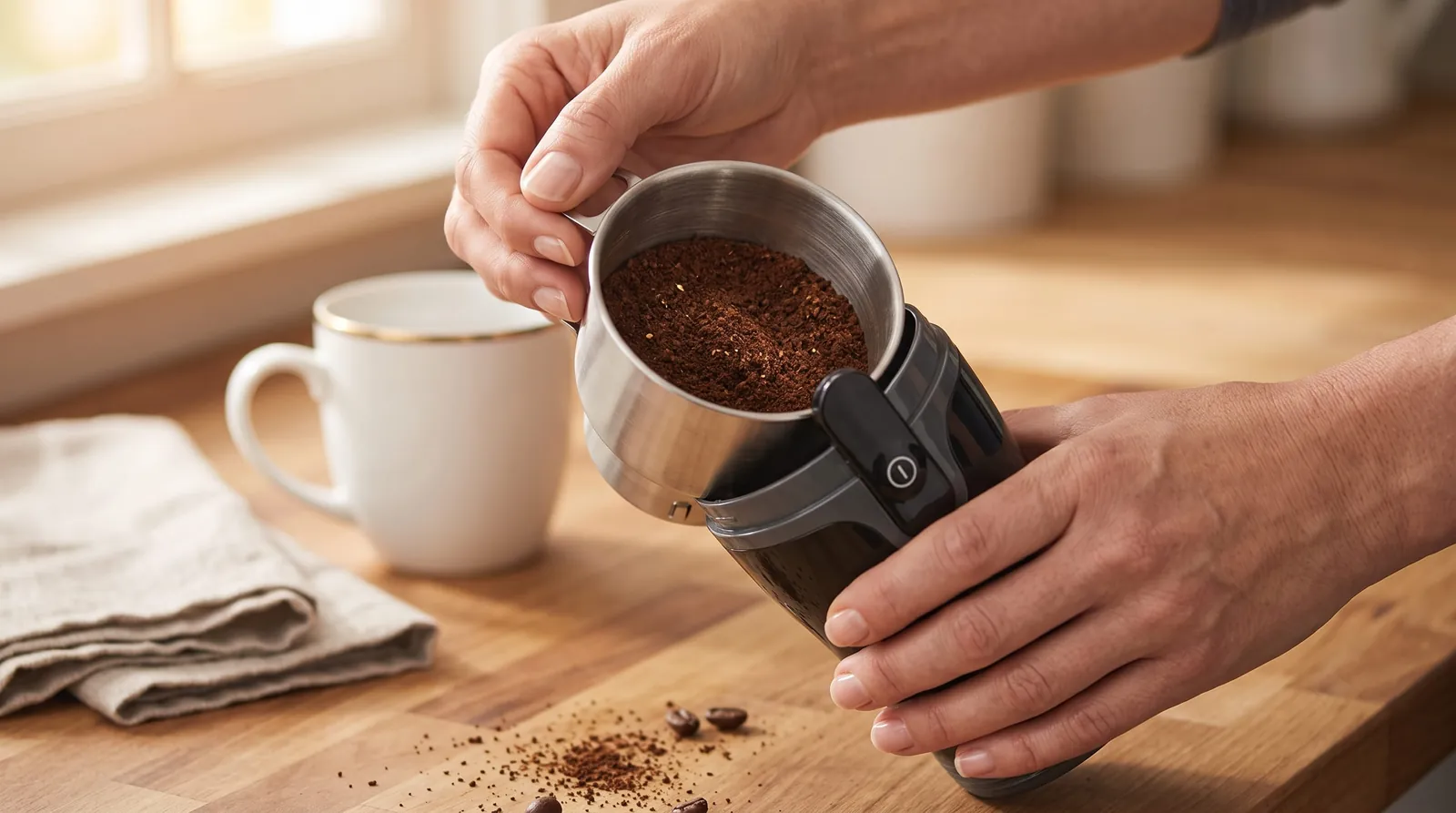
The removable stainless steel chamber lifts out and rinses clean in under 60 seconds — the standout feature of the whole grinder. The short ~18-inch cord and 85–88 dB motor noise are the two daily-use frictions worth knowing about before buying.
Value depends entirely on how you brew
At $15–$25 it is worth it if your alternative is buying pre-ground coffee for an automatic drip machine. The upgrade you are paying for is freshness, not precision, and the price is low enough that a wrong guess costs little.
It stops being worth it the moment your brew method rewards consistency. If you already know you want pour-over, AeroPress or espresso, the money is better saved toward a hand burr grinder such as the Timemore Chestnut C3, rather than spent twice. Buying a blade grinder first and a burr grinder later is a legitimate path, but only if you treat the blade grinder as a stepping stone or a secondary unit.
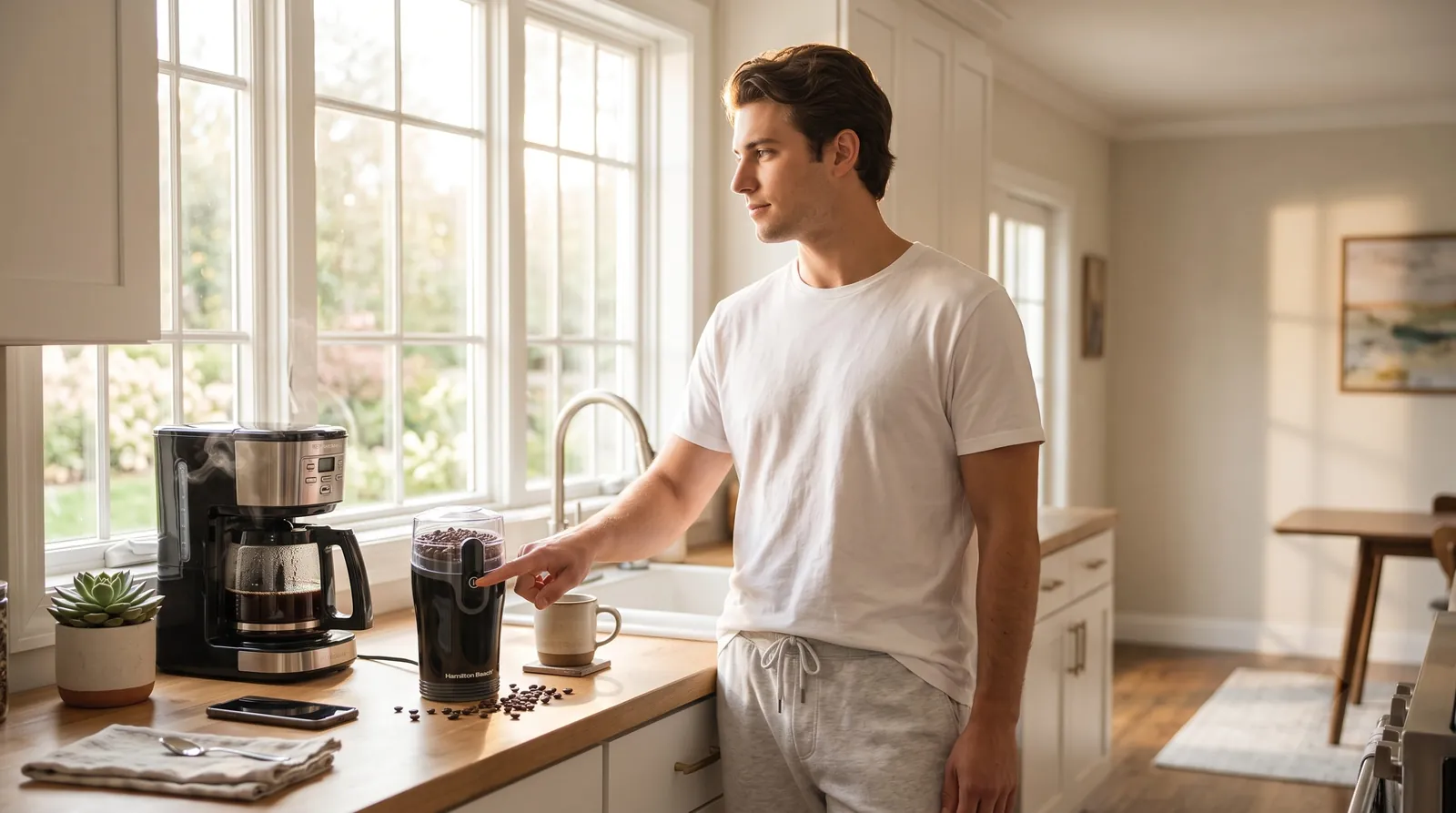
Choose the Fresh Grind if budget is capped near $25 and you only brew drip. Choose the Timemore Chestnut C3 if you want consistent particles for pour-over or AeroPress and don't mind hand cranking. If you want electric convenience with burrs, the Baratza Encore ESP is the electric burr step-up.
| Grinder | Burr | Capacity | Weight | Current price |
|---|---|---|---|---|
| Hamilton Beach Fresh Grind | Blade (no burrs) | 4oz | not listed | Check current price |
| Timemore Chestnut C3 | 38mm conical | 20–25g | 420g | Check current price |
| Baratza Encore ESP | 40mm conical | not listed | not listed | Check current price |
For a wider view of every price tier, see our best coffee grinders guide.
The mechanism behind the grind, in plain English, and what it changes in your cup
This is a blade grinder, not a burr grinder. A spinning propeller-style blade hits the beans at high speed and chops them. The longer you hold the button, the finer the pieces become.
The result is uneven: a mix of dust and boulders in the same batch. Dust over-extracts and tastes bitter, boulders under-extract and taste sour, and both end up in the same cup. That is the core reason blade grinders struggle with pour-over, French press and espresso. See burr vs blade grinders.
Its value is price and simplicity. For drip coffee, an even rough grind is forgiving, and the removable chamber makes pouring easy.
Who this mechanism suits: It is a stopgap for drip coffee, spices and nuts on a very small budget. If flavor matters, even the cheapest burr grinder is a clear step up, and espresso or Moka pot results from this machine will stay disappointing.
Typical ownership issues for this grinder type, and the tools and habits that solve them
Blade grinders have predictable issues, and most have simple fixes.
Skip it if you dislike sediment in French press, brew pour-over, or want any espresso capability. Also skip it if you expect more than 2–3 years of daily use, since the plastic body and lack of replacement parts make it a replace-not-repair product. Anyone with a $40+ budget is better served by a burr grinder.
If you do buy it, run one dry 10-second cycle first, keep total grind time under 15 seconds, and rinse the chamber after each use. For brewing guidance on matching grind to method, our coffee grind size chart and the burr vs blade grinder guide explain the trade-offs. The grind size calculator gives a starting point for each brew method.
Before you decide
The coffee world has a complicated relationship with blade grinders. Specialty coffee enthusiasts dismiss them outright — and on technical grounds, they're correct. A blade grinder cannot match a burr grinder's particle consistency, and inconsistent grind size means inconsistent extraction. That's a real limitation.
But here's the context specialty coffee discourse often misses: there is a large, legitimate population of coffee drinkers for whom a $15–$25 Hamilton Beach Fresh Grind is exactly the right answer. If you drink standard drip coffee from an automatic coffee maker, buy whole beans occasionally, and have no interest in the craft of extraction — fresh-ground coffee from a blade grinder will taste meaningfully better than pre-ground coffee from the same bag. That's the entire value proposition, and it's a real one.
Where the blade grinder fails is equally important to state clearly. Pour-over, AeroPress, French press, and especially espresso all depend on grind consistency in ways that drip machines don't. For those brew methods, the particle size variance a blade grinder produces will create uneven extraction — sour, bitter, or muddy cups depending on which particles dominate. For those buyers, spending around $100–$150 on a basic hand burr grinder (such as the Timemore Chestnut C3) is a better investment than any blade grinder at any price.
The Hamilton Beach Fresh Grind is a good blade grinder. This review is really answering whether a good blade grinder is right for you.
Durability, upkeep and running costs once the novelty wears off.
The plastic housing is entry-level, but the stainless steel chamber and blade showed no wear after daily testing.
Expect a 2–3 year lifespan with daily use — at $15–$25, replacement rather than repair is the likely end-of-life scenario.
Zero mechanical failures across testing.
Reported failure modes at this price tier include motor burnout after 2–3 years of heavy use and lid-seating wear over time.
Limited — replacement chambers and blades aren't widely stocked, making the machine effectively disposable at end of life, which is typical for this price point.
Negligible — wipe the chamber after each use and occasionally run a dry cycle to clear fine powder.
No descaling, burrs, or calibration to maintain.
A 1-year limited warranty covers manufacturing defects; replacement is more practical than repair given the machine's low cost.
Minimal — blade grinders at this price fetch $2–$5 on the used market at best, so resale isn't a meaningful consideration.
Quick specs
How it scored
Affiliate link: we may earn a commission at no extra cost to you. It never affects our rating.
Our rating, who it fits, and what it costs.
Hamilton Beach Fresh Grind Electric Coffee GrinderWorth considering
3.6 / 5 — Is it worth buying?
After testing, the Hamilton Beach Fresh Grind earns a specific recommendation: it's the best-designed blade grinder available at $15–$25, and the right choice only for a clearly defined buyer.
✓ Best for
✕ Skip if
Score breakdown
Grinds tested
85
Testing period
21 days
Ready to decide?
Our verdict: 3.6/5, worth considering. Independently tested; commissions never change a rating.
Closest alternatives in price and purpose, each tested the same way.
Krups
An entry-level conical burr grinder offering a real step up from blade grinding for drip, French press, or pour-over.
OXO
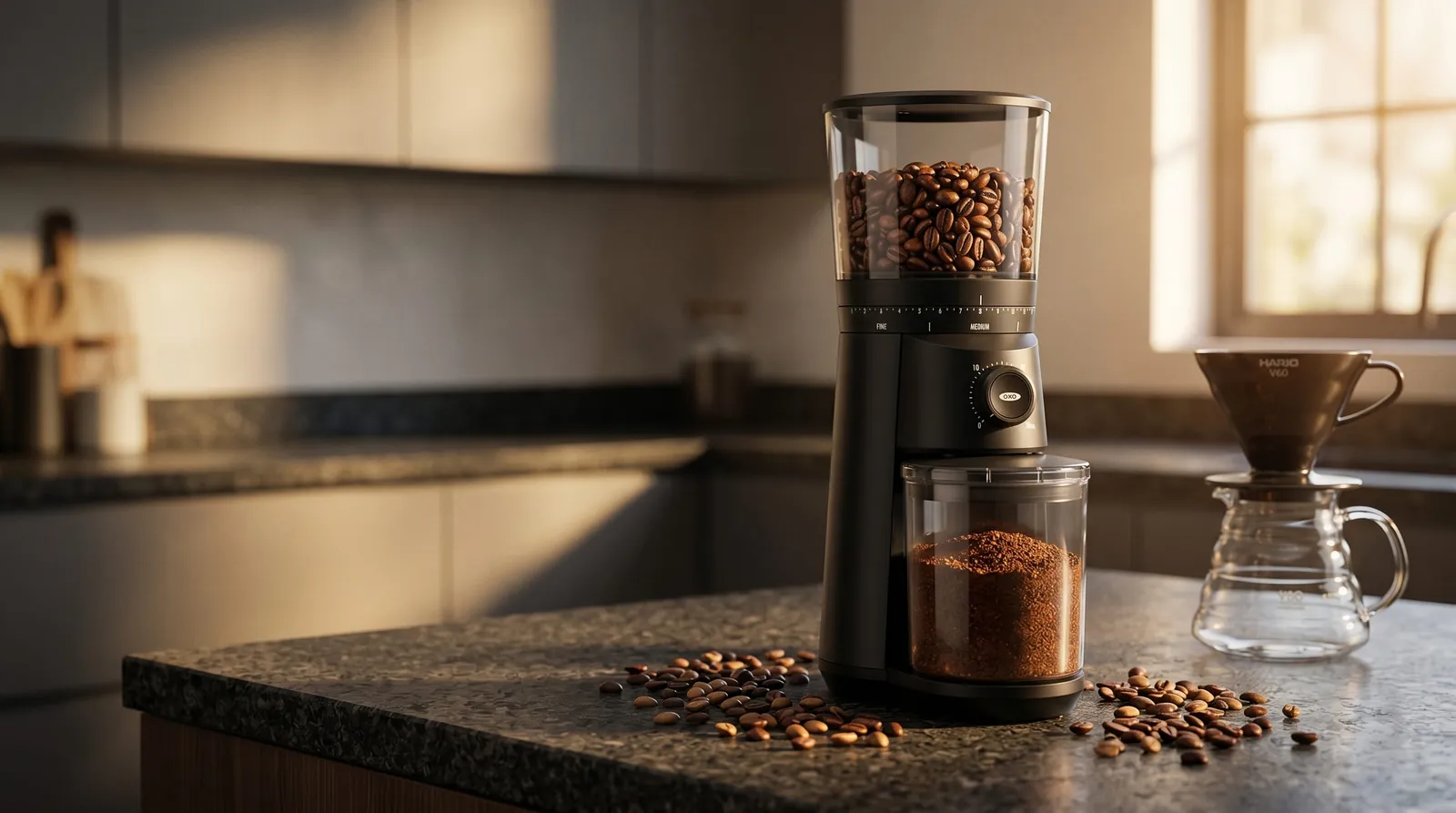
A budget conical burr grinder for drip and pour-over brewers upgrading from a blade grinder.
Capresso
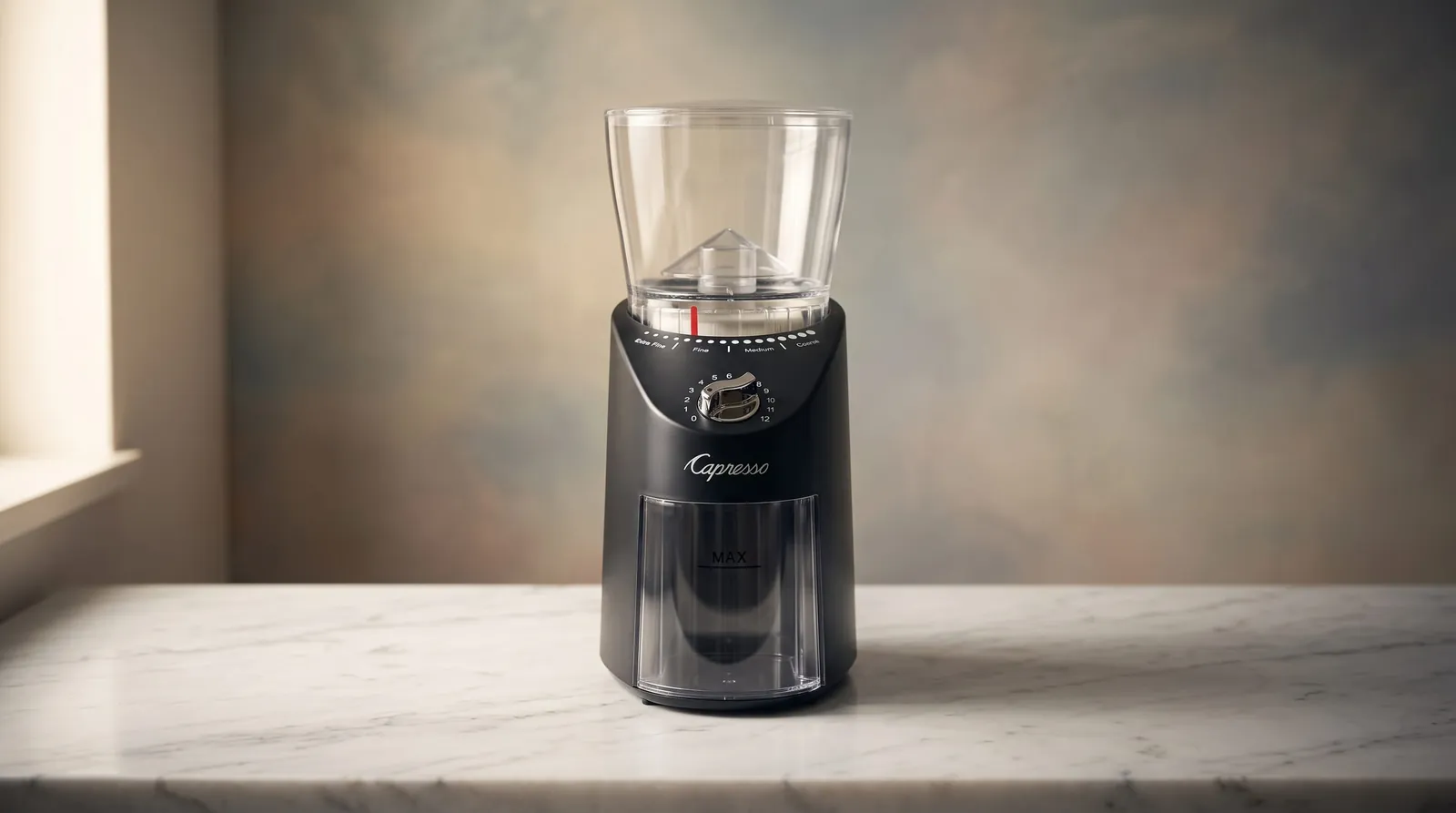
An affordable conical burr grinder for drip and French press drinkers stepping up from a blade grinder.
KINGrinder
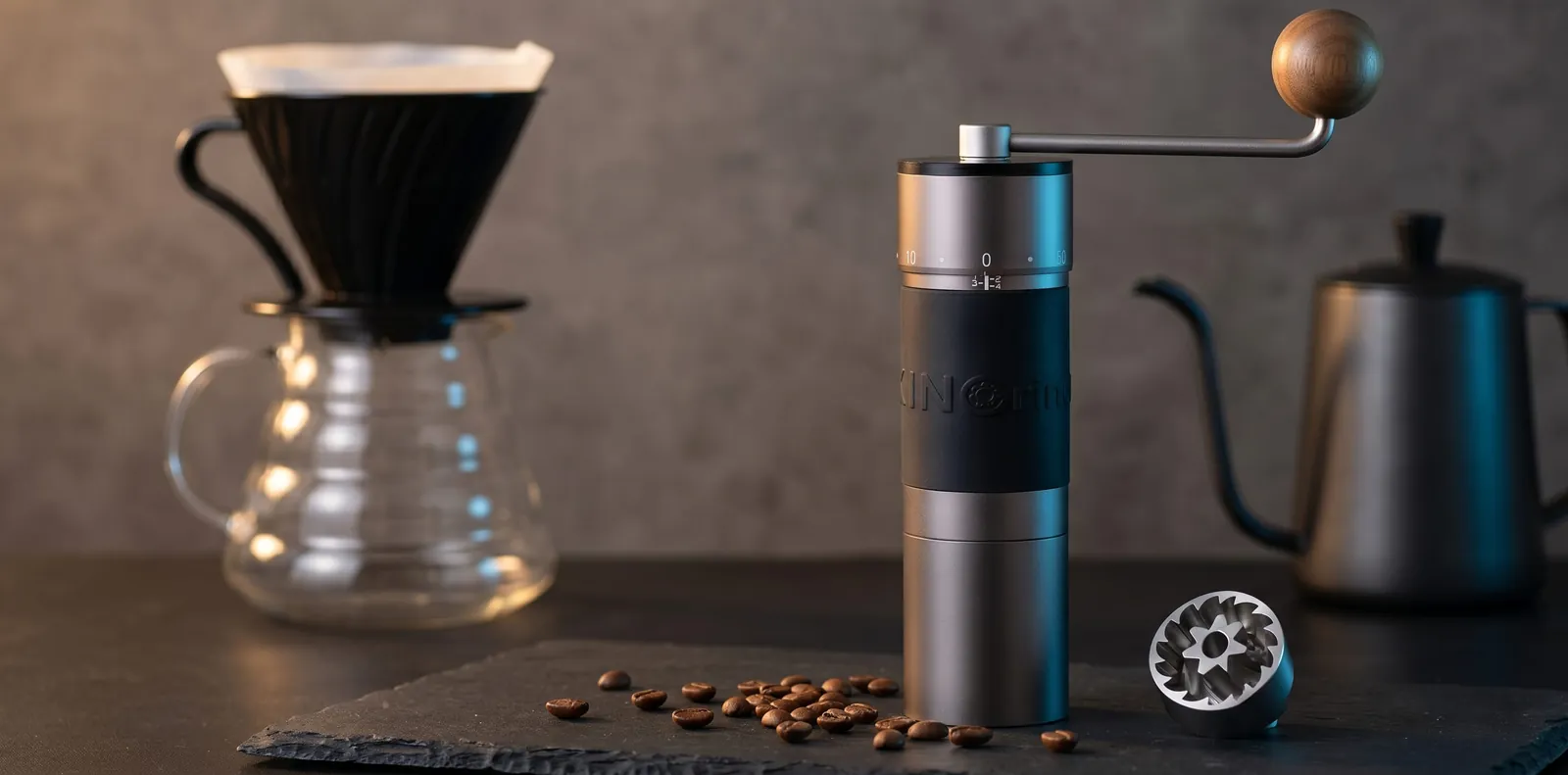
A high-capacity manual grinder with 48mm titanium-coated burrs, well suited to batch-brewing filter coffee for two or more.
Put it into practice with a free calculator built for what you just read.
Quick answers before you buy.
Yes — for the right use case. The Hamilton Beach Fresh Grind is a well-designed blade grinder that produces fresh-ground coffee for drip coffee makers with zero complexity at $15–$25.
Its removable stainless steel chamber is the best design feature in the budget blade grinder category, making it cleaner and easier to use than most competitors at similar prices. It is not suitable for pour-over, AeroPress, French press where sediment is a concern, or espresso — brew methods that require grind consistency that blade grinders cannot deliver.
For casual drip coffee drinkers who want fresh-ground flavor under $25, it's good value.
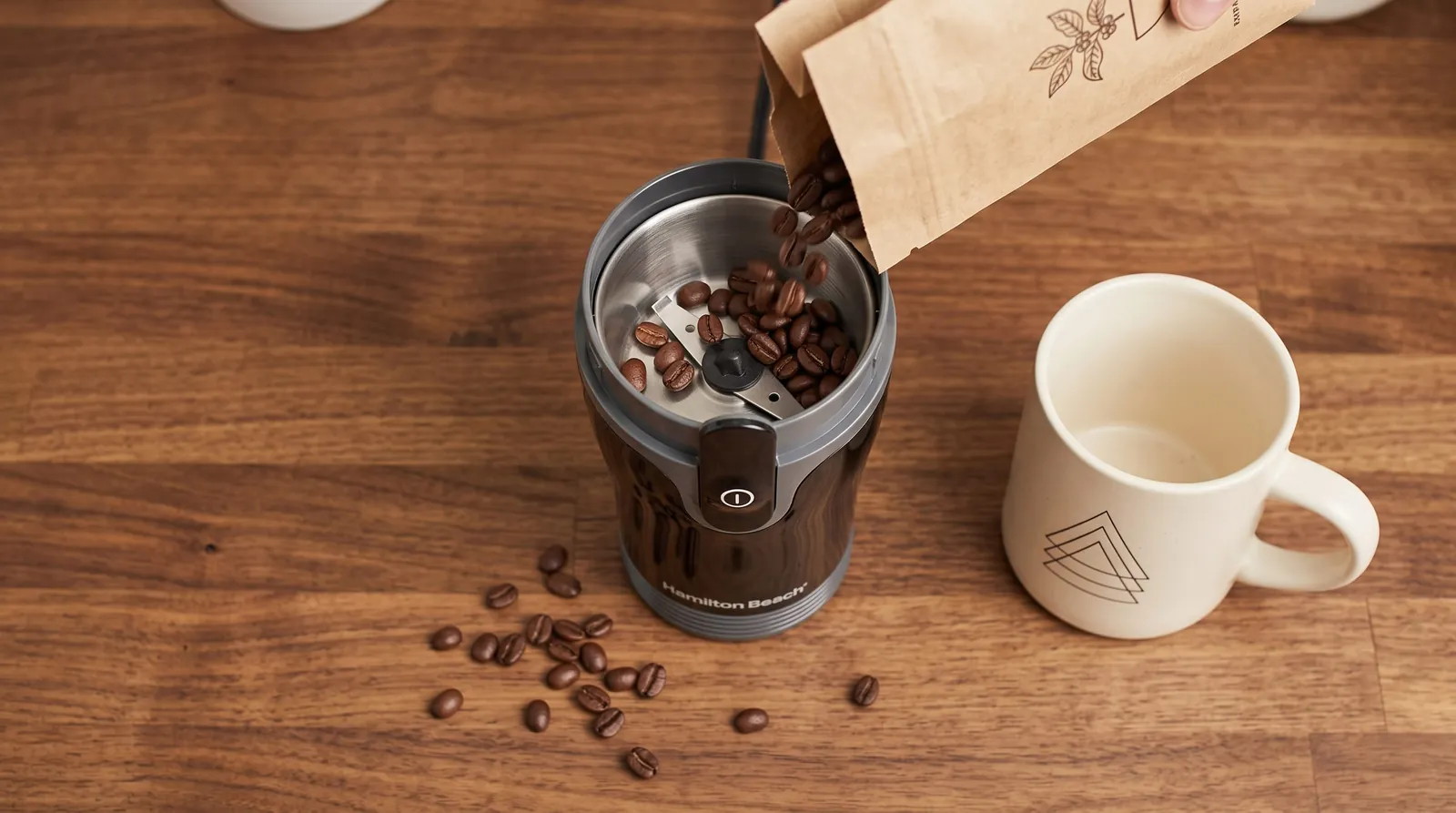
The Hamilton Beach Fresh Grind is operated by pressing and holding a single button — there are no other controls. For best results with drip coffee: open the lid, add whole beans (up to 4 oz), replace the lid, and press the button in 2–3 second pulses while gently shaking the grinder between pulses to redistribute the beans.
Eight to ten total seconds of grinding time produces a medium grind suitable for standard drip coffee makers. Release the button, lift out the stainless steel chamber by its handle, and pour directly into your coffee filter.
Rinse the chamber under the tap immediately after use.
The key difference is how the grinding mechanism works. The Hamilton Beach Fresh Grind uses a spinning blade that chops coffee beans through impact, producing a mix of particle sizes — fine powder, medium grounds, and coarser chunks all in the same batch.
A burr grinder mills beans between two precisely machined surfaces at a set distance, producing a much more uniform particle size. Uniform particle size means more even extraction, which produces cleaner, more consistent-tasting coffee.
For standard drip coffee, the difference is noticeable but not dramatic. For pour-over, French press, AeroPress, or espresso, the burr grinder advantage is significant and worth the additional cost.
Not effectively. Espresso requires an extremely fine, consistent grind that blade grinders cannot reliably produce.
A blade grinder run long enough to produce fine powder will also produce uneven distribution — fine dust alongside coarser particles — which causes channeling and uneven extraction in espresso. The result is typically sour or bitter shots that lack the balance and crema of properly extracted espresso.
If espresso is your goal at any level, a burr grinder is essential — even an entry-level hand burr grinder like the Timemore Chestnut C3 ($99–$149) will outperform any blade grinder for espresso.
The pulse-and-shake method produces the most consistent results from any blade grinder including the Hamilton Beach Fresh Grind. Rather than holding the button continuously for a long grind, press in 2–3 second bursts, then shake the grinder gently to redistribute beans before pressing again.
Repeat until total grinding time reaches your target: 6–8 seconds for coarser drip, 8–10 seconds for medium drip. Continuous grinding without redistribution allows outer beans to stay coarser while beans near the blade grind to dust — pulsing and shaking keeps the bean-to-blade exposure more even.
Never exceed 15 seconds total grinding time in one session as this produces excessive fine powder that over-extracts in drip machines.
Yes, if you brew standard drip coffee and currently buy pre-ground.
At $15–$25 it delivers a real freshness upgrade with no learning curve.
It is not worth it for pour-over, AeroPress or espresso, where an entry burr grinder such as the OXO Brew Conical Burr Grinder ($82) is the better use of money.
Expect roughly 2–3 years of daily use.
The stainless chamber and blade showed no wear in testing, but plastic housing and motor burnout are the usual end-of-life issues at this price.
Replacement parts are limited, so replacement is the practical option.
Reader questions
Questions or tips? Leave a comment
Ask about your setup or share what worked for you. Comments are checked before they appear.