
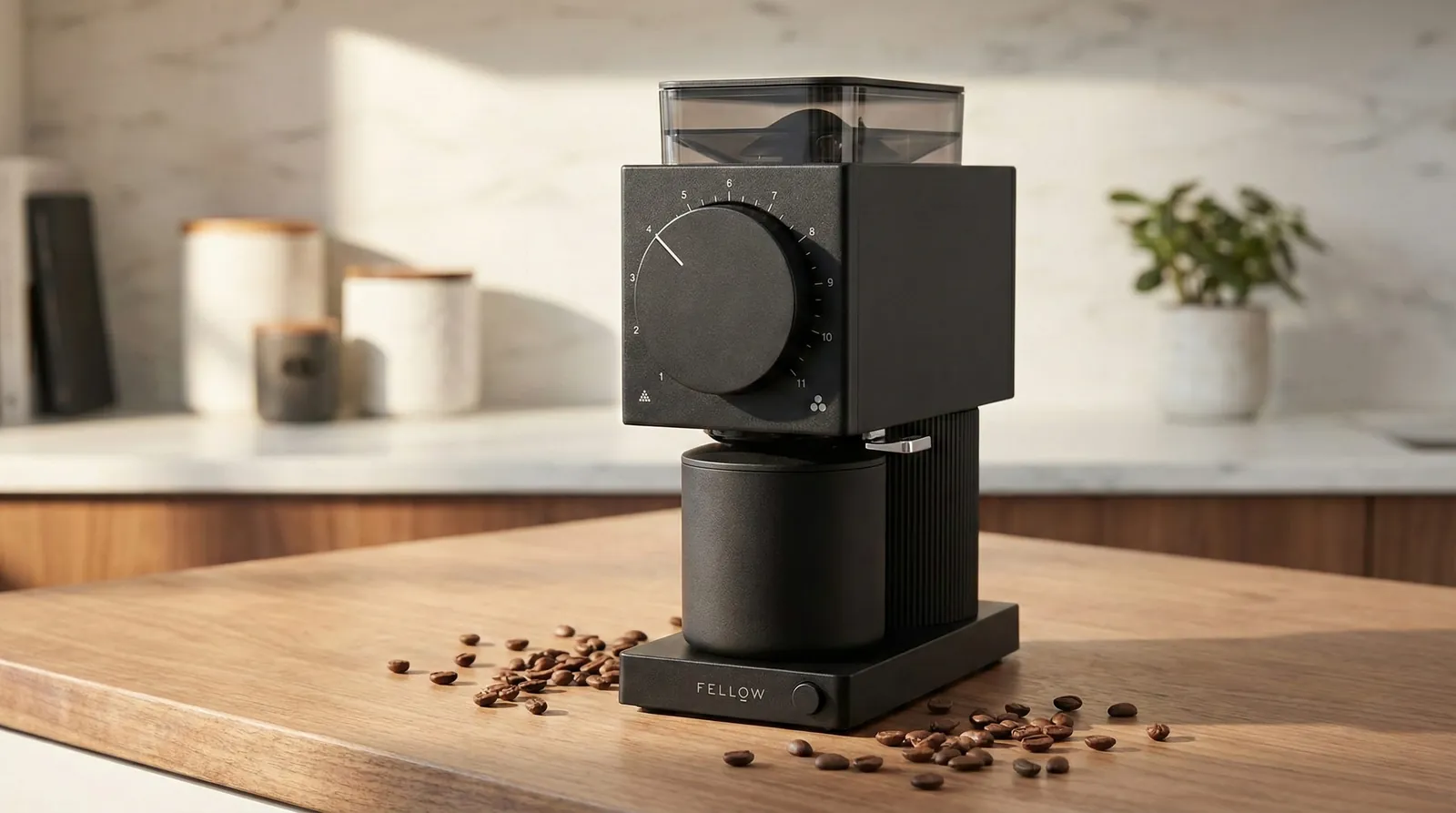
Fellow
Fellow Ode Gen 2 Review
A single-dose grinder built specifically for pour-over and filter coffee enthusiasts — not intended for espresso.
Updated
Pick a brew method and dose, press start, and the timer tells you when to pour, the scale reading to pour to, and what comes next.
Ready
V600:00
Step
Bloom
Scale target
50 g
Next
First pour at 0:45
Next: Pour gently to wet every ground, then swirl.
Each recipe scales its scale readings from your dose: total water = dose × the method's ratio, the bloom is 2 to 2.5× the dose, and the pours split the rest.
Step times are common starting points for each method, not rules. Use them to keep brews consistent, then adjust grind if the total time drifts.
Every fixed figure the maths uses, so you can check the result against your own gear.
The starting recipe the timer follows for each method.
| Method | Ratio | Bloom | Target total time |
|---|---|---|---|
| V60 | 1:16 | 2–2.5× dose, 30–45 s | 2:30–3:30 |
| Chemex | 1:16 | 2–2.5× dose, 45 s | 4:00–4:30 |
| French press | 1:14 | None (full pour) | 4:00 steep, press by 5:00 |
| AeroPress | 1:15 | 2× dose, 30 s | About 2:00 |
Total time is the quickest check on your grind.
| What happened | Likely cause | Next brew |
|---|---|---|
| Finished well before target, tastes sour or thin | Grind too coarse | Grind one step finer |
| Ran well past target, tastes bitter or dry | Grind too fine, or too many fines | Grind one step coarser |
| Time on target, still weak | Ratio too long | Use more coffee for the same water |
| Time on target, uneven or muddy | Pouring too hard, or uneven bed | Pour gently and swirl after the last pour |
Change one thing per brew. The coffee grind size chart shows where each method usually starts.
Brew time only tells you something when the grind is consistent. These are our top-rated burr grinders.
Fellow
A single-dose grinder built specifically for pour-over and filter coffee enthusiasts — not intended for espresso.
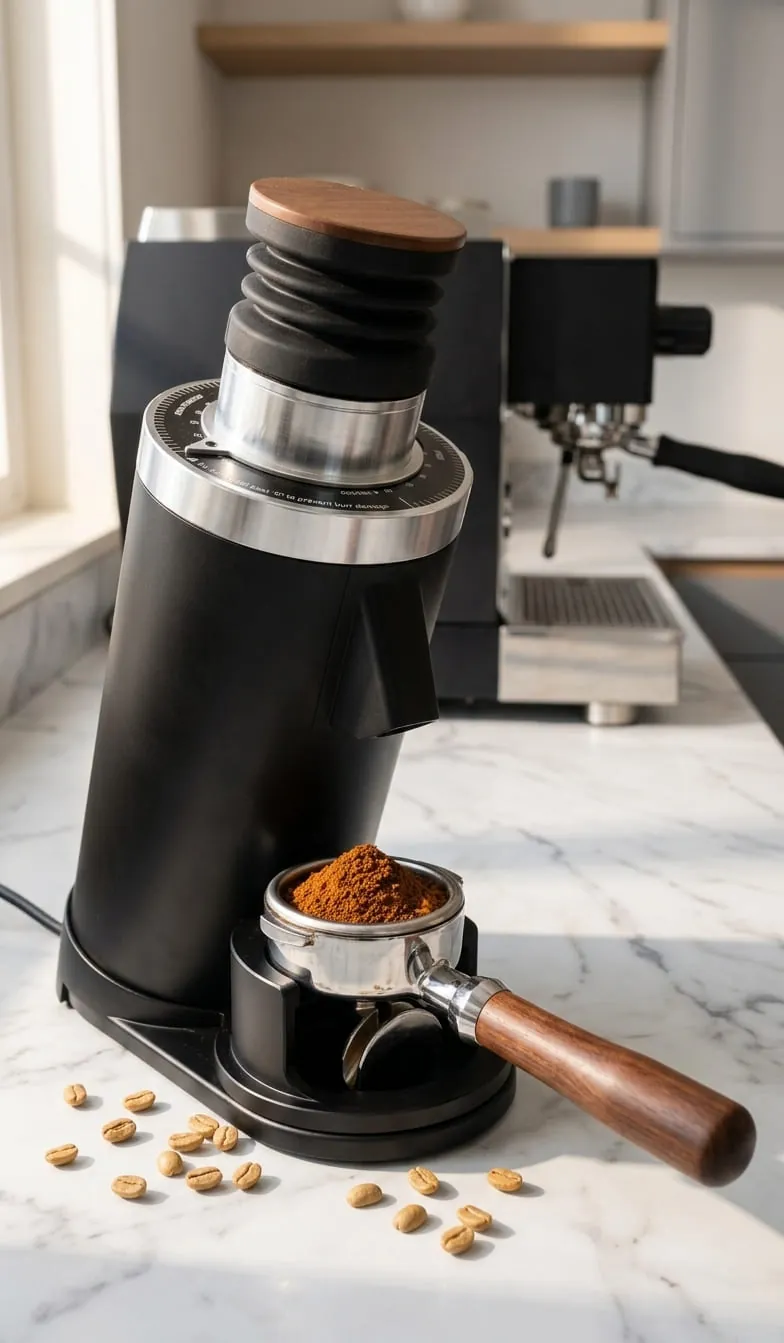
Turin
An electric grinder with factory-aligned 64mm flat burrs and very low retention, built for single-dose espresso workflows.
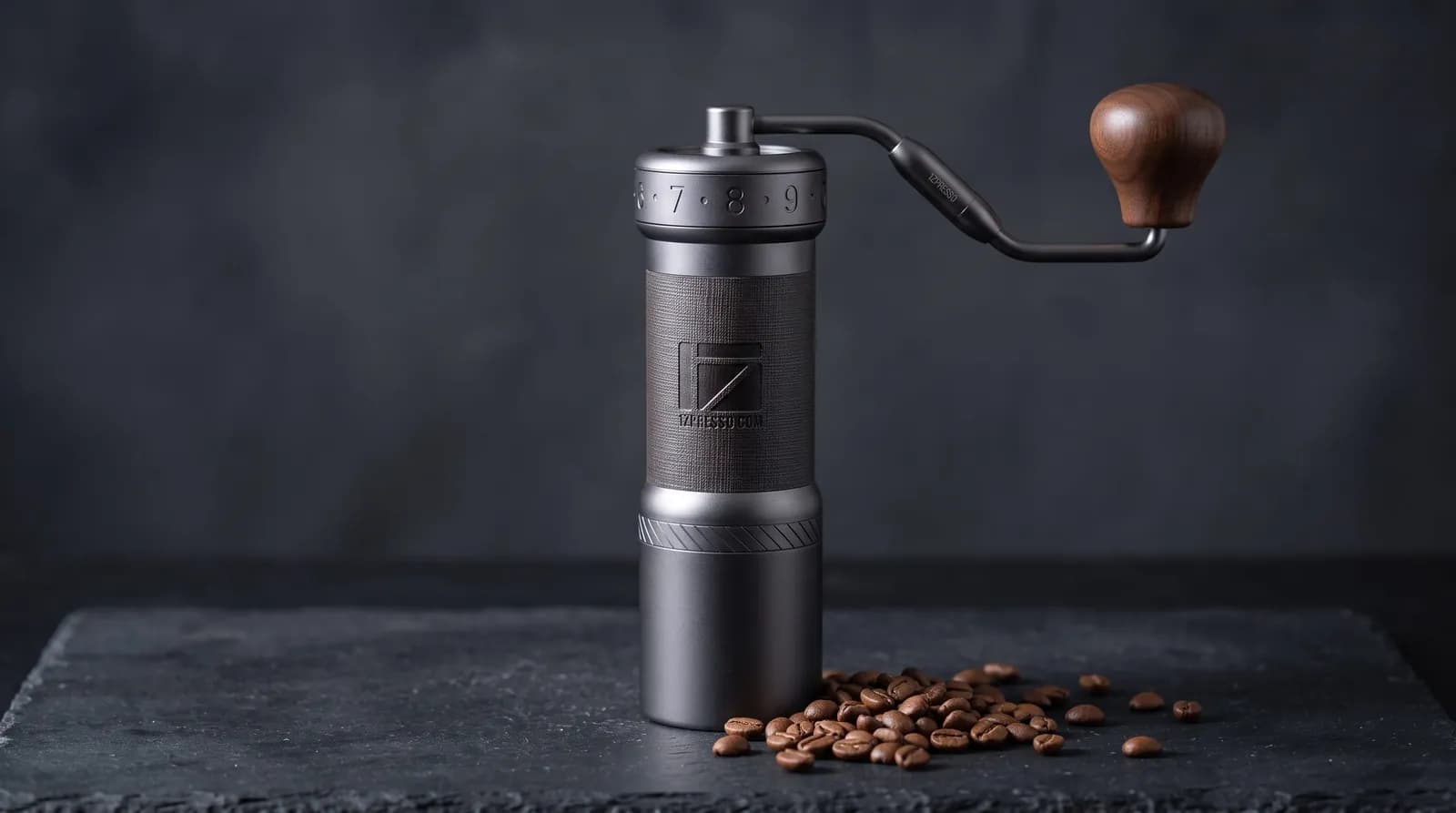
1Zpresso
A manual grinder with fine adjustment precision that handles both espresso dialing and filter coffee equally well.
Quick answers before you buy.
It helps.
Brew time is the main clue to whether your grind is right, and a step timer makes each pour land at the same moment every time, so you only change one thing between brews.
Yes, that is how it is designed.
Each step shows a scale reading in grams; pour until the scale shows that number.
Four minutes is the common start.
Break the crust at 4:00, skim, then press and pour at about 5:00 so the coffee stops brewing.
Yes.
It counts from when you pressed start, so switching apps or locking the screen briefly does not lose time.
Each method uses a common starting ratio.
For a different ratio, work out the water in the matching calculator and pour to that total instead.
About 2:30 to 3:30 for a single V60, 4:00 to 4:30 for a Chemex, around 2:00 for AeroPress and 4:00 plus pressing for French press.
If you land well outside that, change the grind first.
Keep reading: more guides on the same topic.
 Explained
Brewing7 min read
What is pour over coffee? Learn how it works, a starting recipe, grind size and water temperature, and which dripper to buy.
 How to
Espresso6 min read
Learn how to dial in espresso: a starting recipe, grind changes by shot time and taste, and fixes for sour or bitter shots.
 Explained
Coffee Education5 min read
What is coffee bloom? CO2 degassing explained, how to bloom with 2–3 times the coffee weight in water, and which beans and brew methods benefit most.
 Explained
Grinder6 min read
Coffee grind size chart with micron ranges for espresso, moka pot, AeroPress, pour over, French press and cold brew, plus how to adjust.