What Is a Doppio? The Standard Double Espresso Shot Explained
Why the doppio became the default espresso, how it differs from a single, and what it means for every drink on the café menu — explained by a former barista trainer
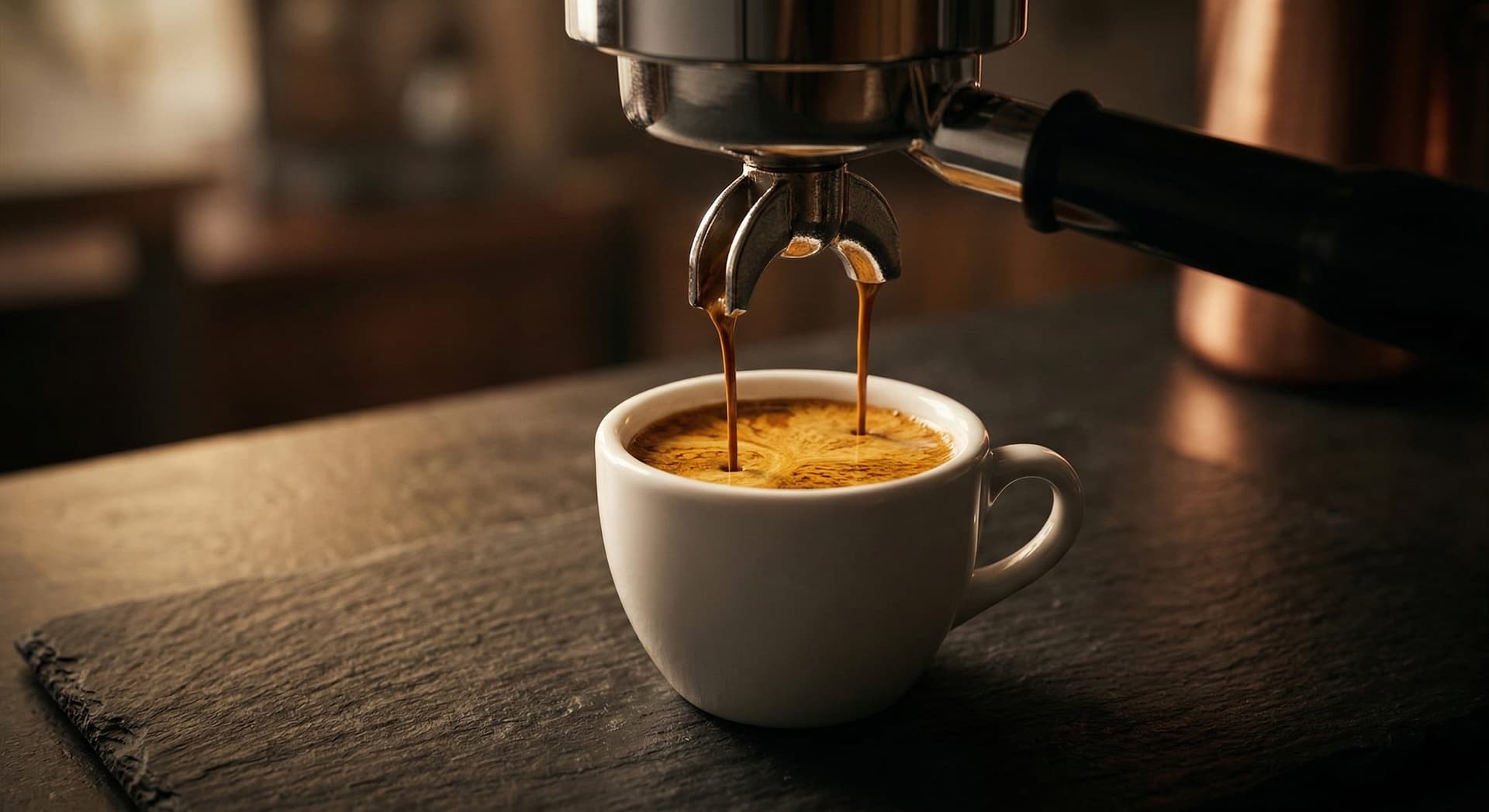
A doppio is a double espresso shot — and the reason you need to know about it is that it's almost certainly what you're already drinking every time you order espresso at a café. The word is Italian for “double,” and since the 1990s the double-shot pull has quietly replaced the single as the industry standard. Order an espresso at a specialty café in London, Melbourne, or New York and you'll almost certainly receive a doppio without anyone mentioning it.
I've been training baristas for over 15 years, and the doppio comes up in every single session — usually when a trainee asks why we never use the single basket. The short answer: the double basket produces better espresso, more consistently, and it's the foundation for every other drink on the menu. Here's everything that actually matters.
Doppio at a Glance
Doppio (Standard Double)
- Dose:16–20g (typically 18g)
- Yield:34–40g liquid
- Brew ratio:1:2
- Time:25–32 seconds
- Caffeine:~120–140mg
- Volume:~60ml in the cup
Single Espresso (Solo)
- Dose:7–9g
- Yield:15–20g liquid
- Brew ratio:1:2
- Time:20–28 seconds
- Caffeine:~60–70mg
- Volume:~30ml in the cup
What “Doppio” Actually Means
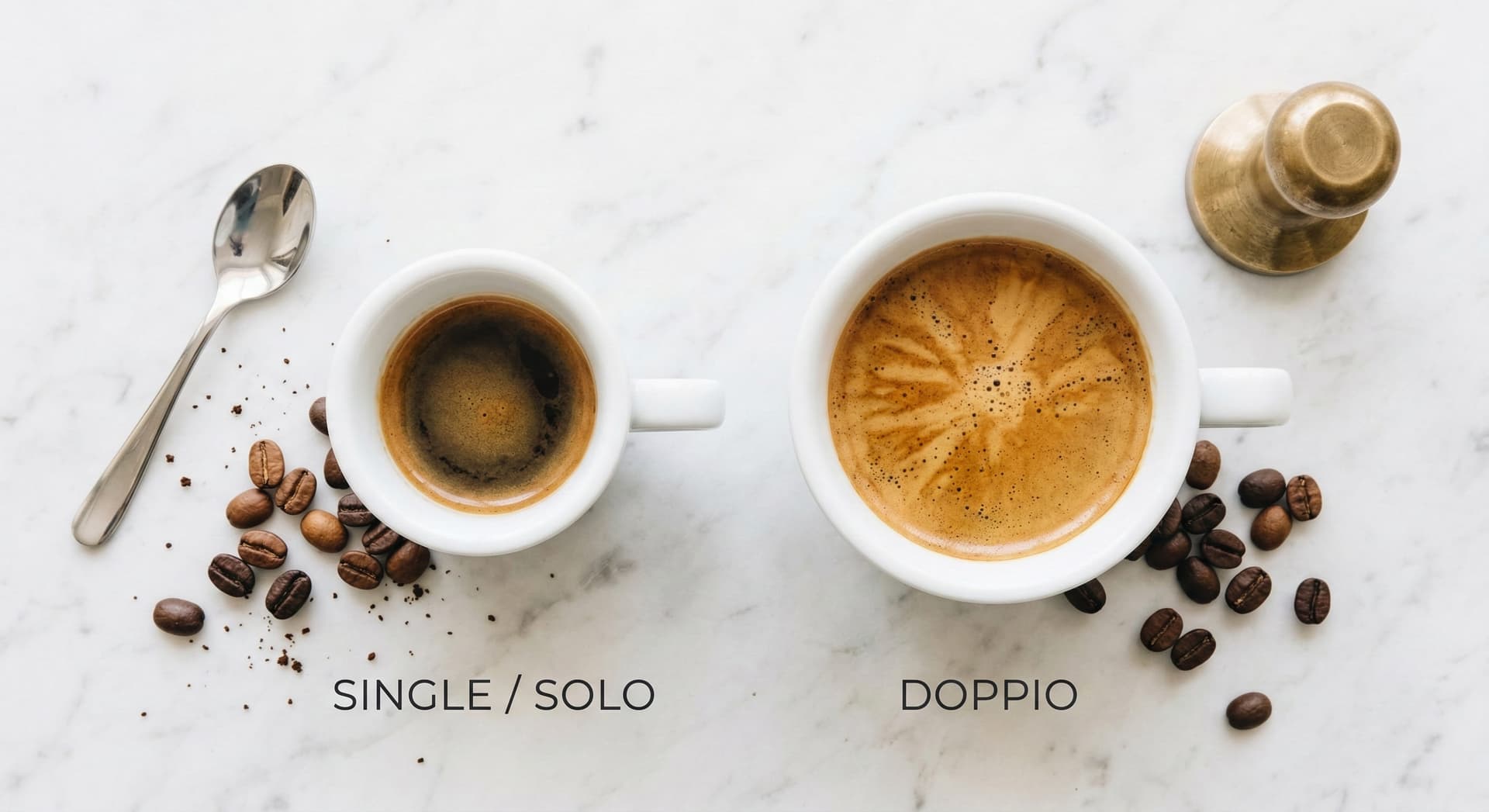
Doppio is the Italian word for “double.” In espresso terminology it refers specifically to a double-shot espresso pulled through a double-basket portafilter — as opposed to the single, or solo, which uses a smaller single basket. The naming convention is straightforward: doppio is twice the coffee, twice the yield, roughly twice the caffeine of a solo.
The doppio's origins trace back to Italian espresso bars in the post-war era, where the single-shot tradition evolved as café culture spread and customer demand shifted toward larger, milkier drinks. A flat white or a latte made with a solo tasted watery and thin. The doppio fixed that — the higher dose and yield provided enough espresso intensity to hold its own against steamed milk.
By the time the specialty coffee movement gained momentum in the early 2000s, the doppio had become so universal that most barista training curricula simply dropped the single from the standard workflow. At the schools where I trained, we handled single baskets once — to understand what they were — and then worked exclusively with doubles for the rest of the programme.
Doppio vs Single Shot: The Real Difference
The obvious difference is volume and caffeine — the doppio produces roughly twice as much liquid from twice as much coffee. But the more interesting difference is in extraction quality, and this is the reason the industry moved away from singles.
Why the Double Basket Extracts Better
A double basket typically holds 58–60mm of coffee puck depth, compared to around 30–35mm in a single basket. That extra depth has real consequences for extraction quality:
- More even water distribution: Water has a longer puck to travel through, which means any minor inconsistency in distribution or tamping has less impact on the final shot. In a shallow single puck, a small void or dense patch dramatically affects flow.
- Better resistance consistency: The deeper double puck provides more predictable flow resistance, which translates to more consistent 9-bar extraction across the entire shot.
- Easier tamping: A larger, deeper puck surface is easier to tamp evenly without tilting or creating pressure differentials. Single baskets are notoriously unforgiving of slight tamp angles.
- Richer crema: More coffee mass means more emulsified CO2 and oil, producing a thicker, more stable crema layer with better flavor.
| Feature | Doppio (Double) | Solo (Single) |
|---|---|---|
| Coffee dose | 16–20g (typically 18g) | 7–9g |
| Liquid yield | 34–40g | 15–20g |
| Brew ratio | 1:2 | 1:2 |
| Extraction time | 25–32 seconds | 20–28 seconds |
| Puck depth | ~58mm | ~30–35mm |
| Crema thickness | Rich, stable layer | Thinner, less stable |
| Consistency | Higher — more forgiving tamp | Lower — very sensitive to tamp |
| Caffeine per shot | ~120–140mg | ~60–70mg |
| Best use | All café drinks — default base | Traditional Italian espresso bars |
Standard Doppio Parameters
These are the parameters I teach in every barista training programme as the starting point for a balanced double espresso. They're not rigid rules — bean variety, roast level, and personal preference all shift the ideal slightly — but they're the most defensible defaults across the widest range of coffees.
Coffee Dose
18g (range: 16–20g)
Most double baskets are designed for 18g. Adjusting dose changes body and intensity. Go higher for more richness; lower for a lighter cup. Always weigh — do not rely on basket fill level.
Liquid Yield
36g (range: 34–40g)
Target weight in the cup, not volume. Use a scale under the cup. Stopping at 34g gives a richer, slightly concentrated shot; 40g produces a lighter, longer shot.
Brew Ratio
1:2 (18g in → 36g out)
The universal starting point. A tighter 1:1.5 ratio produces ristretto-style intensity; a 1:2.5–1:3 ratio trends toward lungo territory. Neither is wrong — they are different drinks.
Extraction Time
25–32 seconds
Measured from the moment pump engages to stopping the shot. Under 20 seconds usually means under-extraction. Over 35 seconds usually means over-extraction or too fine a grind.
Water Temperature
93°C / 199°F (range: 90–96°C)
Lighter roasts benefit from higher temperatures (94–96°C) to fully extract complex compounds. Medium-dark roasts work better at 90–93°C. Machines without PID temperature control may need temperature surfing to hit this range.
Brew Pressure
9 bars
The SCA standard. Some modern machines offer pressure profiling with ramp-up and ramp-down phases — useful for nuanced single origins, but not necessary to understand the doppio itself.
For a deeper understanding of how these parameters interact — and what happens when extraction goes wrong — see our guide to espresso extraction, which covers under-extraction, over-extraction, channeling, and brew ratio in detail. For the complete picture of what espresso is and how it's made, the beginner's espresso guide covers grind size, tamping, crema, and equipment from first principles.
Why the Doppio Became the Default
This isn't arbitrary industry convention. The doppio displaced the single for three converging reasons: drink composition, equipment design, and barista workflow efficiency.
Drink Composition
A latte made with a single shot tastes diluted and thin when mixed with 200–250ml of steamed milk. The coffee flavour simply can't hold its own against the volume and fat content of the milk. A doppio, with twice the dissolved solids and twice the intensity, delivers a coffee-forward drink even at a large latte size. When cafés in the US and Australia started scaling up milk drink sizes in the 1990s, the single shot became structurally inadequate and the doppio took over.
Equipment Design
Modern commercial espresso machines — La Marzocco, Synesso, Nuova Simonelli — are engineered around the double basket. Group head geometry, flow rate, and dispersion screens are all calibrated for a 58mm double puck. Portafilters now come standard with double baskets; single baskets are an optional add-on at most suppliers. The machinery itself pushed the industry toward the doppio as a practical standard.
Workflow and Consistency
In a high-volume café pulling 400 shots a day, the double basket is significantly more forgiving and faster to dial in. Single baskets require more precise distribution and tamping, produce more shot-to-shot variance, and are slower to work with at speed. Training a new barista to pull consistent singles on a busy bar is substantially harder than training them on doubles. The efficiency gain alone would have pushed commercial cafés toward doppios even without the quality benefits.
The Doppio as a Base for Café Drinks
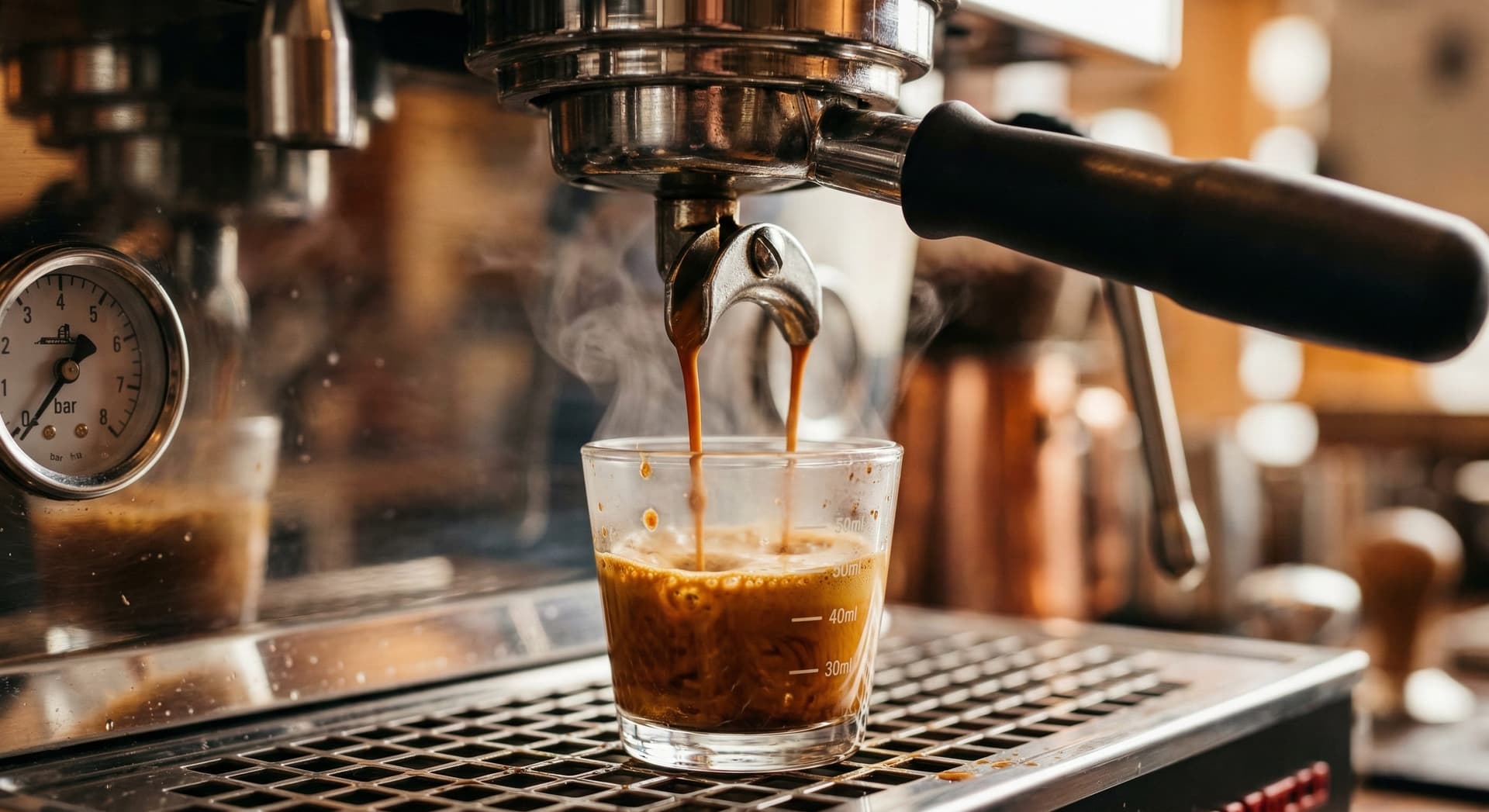
Every espresso-based drink on a café menu is built from a doppio. Understanding this makes the entire menu legible. You're not ordering different types of espresso; you're ordering different ratios of the same doppio base to milk or water.
Americano
Doppio + 60–120ml hot water
Espresso: water ≈ 1:2 to 1:3
Diluted to filter-coffee strength. The doppio is pulled first, then water is added.
Cappuccino
Doppio + equal parts steamed milk + thick foam
Espresso: milk: foam ≈ 1:1:1
150–180ml total. The doppio provides enough intensity to cut through the milk and foam without being lost.
Flat White
Doppio (often ristretto-style) + 100–130ml microfoam
Espresso: milk ≈ 1:2.5
The strongest milk drink by espresso ratio. Requires the doppio base to have maximum intensity — many cafés use a tighter 1:1.5 double (closer to ristretto) for flat whites specifically.
Latte
Doppio + 150–200ml steamed milk + thin foam
Espresso: milk ≈ 1:4 to 1:5
Mildest milk drink. The high milk volume dilutes even a doppio considerably — which is why a single would taste watery here.
Cortado
Doppio + 40–60ml steamed milk (no foam)
Espresso: milk ≈ 1:1 to 1:1.5
Spanish in origin. Just enough milk to soften the doppio without diluting it. Strong, balanced, no foam layer.
Macchiato
Doppio + small amount of steamed milk or foam
~1–2 teaspoons milk or foam only
The name means "stained." The doppio is "stained" with just a dash of milk — enough to soften the edge, not enough to change the character.
For a comprehensive breakdown of how these drinks differ in taste, intensity, foam technique, and when to order each one, our guide to coffee drink differences covers the full menu from single origin espresso to cold brew.
Doppio vs Ristretto vs Lungo
All three use the same double basket and the same dose. What changes is the yield — how much water passes through the puck. This single variable produces dramatically different drinks.
| Shot Type | Dose | Yield | Ratio | Flavor Profile | Best Use |
|---|---|---|---|---|---|
| Ristretto | 18g | 18–22g | 1:1–1:1.2 | Very sweet, syrupy, low bitterness | Flat white base, straight sipping |
| Doppio | 18g | 34–40g | 1:2 | Balanced: sweet, full-bodied, slight bitter finish | All café drinks — universal default |
| Lungo | 18g | 50–60g | 1:3–1:3.5 | Lighter, more bitter, larger volume | Black coffee drinkers wanting more volume |
Ordering a Doppio: What to Expect
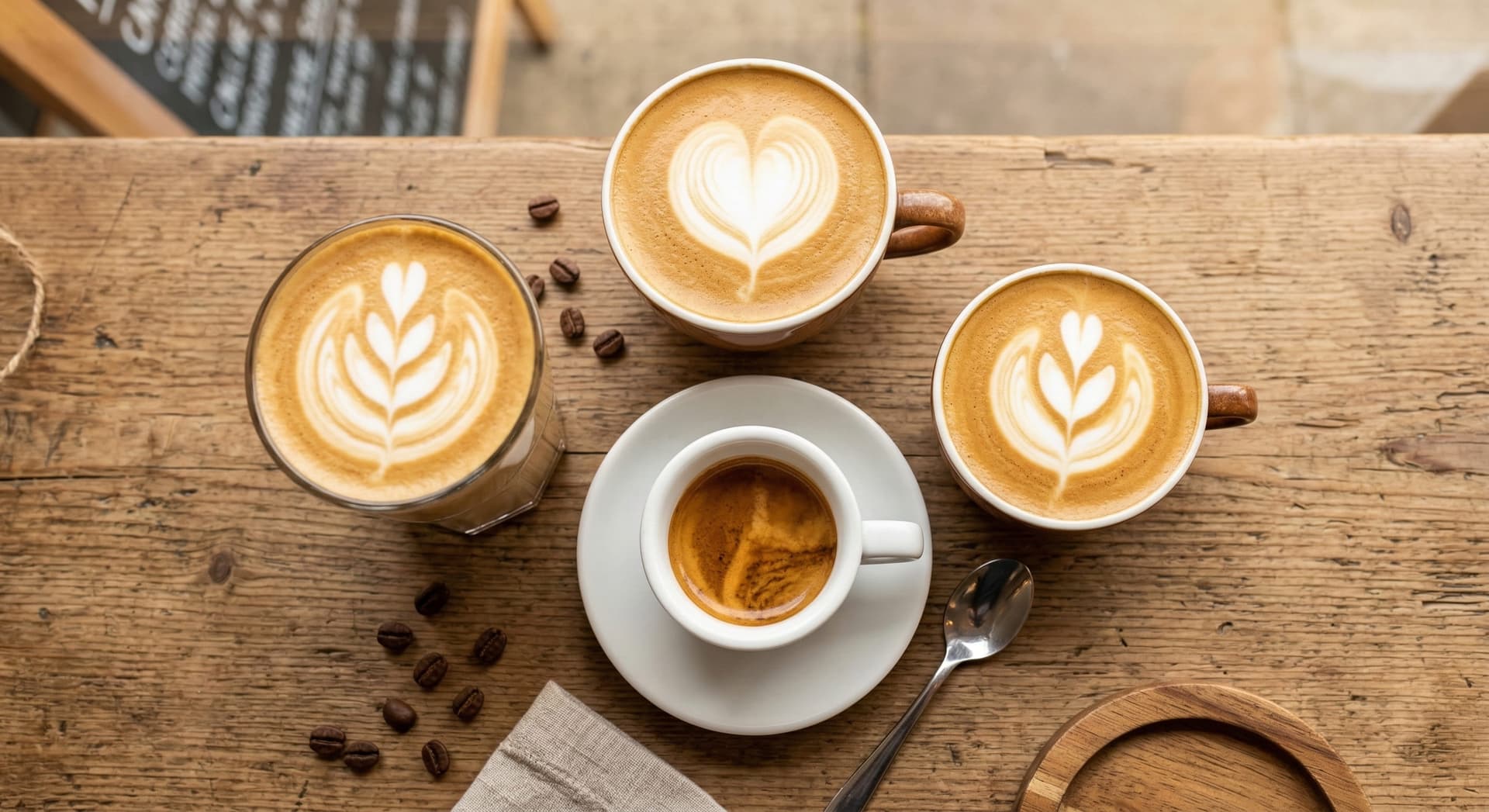
In a specialty café, ordering a doppio gets you a straightforward double espresso — typically served in a pre-warmed demitasse or small glass, around 60ml of liquid. You might see a small amount of crema dissipating if the shot is left sitting, which is normal.
A few things worth knowing:
- In most cafés, “espresso” already means doppio. You don't need to specify. If you want a single and the café uses double baskets, they may tell you they don't offer singles — which is common in specialty coffee shops.
- Drink it quickly. Espresso starts degrading from the moment it's pulled. Crema oxidises, temperature drops, and the flavour evolves (not always pleasantly) within 2–3 minutes. Stir the crema in before drinking if you want the most integrated flavor.
- Temperature matters. A doppio served at the right cup temperature (around 67–70°C drinking temperature) will taste significantly better than one that's been sitting. Don't hesitate to ask for it in a pre-warmed cup if the café doesn't do this as standard.
- In an Italian bar, ask specifically. In Italy, “un caffè” means a single. If you want a double, say “un caffè doppio” or “un doppio.” The single-shot tradition is alive and well there, especially in Rome and Naples.
Brewing a Doppio at Home
If you have an espresso machine with a double basket — which is almost every home machine sold today — you're already set up for the doppio. The workflow is straightforward once you understand the variables.
The Process
- Dose and grind: Weigh 18g of freshly ground coffee. Use a burr grinder on a fine espresso setting — target grind size somewhere between table salt and powder. Fresh beans (ideally 5–21 days off roast) are non-negotiable for proper crema.
- Distribute: Use a distribution tool or the WDT (Weiss Distribution Technique) to break up clumps and level the grounds in the basket before tamping. This step makes a measurable difference to extraction evenness.
- Tamp: Apply 15–25kg of downward pressure with a level tamp. What matters most isn't the specific force but the evenness — a perfectly level tamp at 15kg beats an uneven tamp at 30kg every time.
- Pull the shot: Target 36g in the cup in 25–32 seconds at 9 bars and 93°C. Use a scale under the cup and stop when you hit your target weight, not by timer or visual.
- Taste and adjust: Sour and thin means under-extracted (grind finer or increase dose). Harsh and bitter means over-extracted (grind coarser or reduce yield). Make one change at a time.
Common Problems and Fixes
Shot runs too fast (under 20 seconds)
Cause: Grind too coarse, dose too low, or tamping pressure too light
Fix: Grind finer first. If still fast, increase dose by 0.5g increments.
Shot runs too slow (over 35 seconds)
Cause: Grind too fine, dose too high, or channeling from uneven tamp
Fix: Grind coarser. If still slow, check distribution before tamping.
Shot tastes sour or thin
Cause: Under-extraction: water moved through the puck too quickly
Fix: Grind finer, increase dose slightly, or raise water temperature 1°C.
Shot tastes bitter and dry
Cause: Over-extraction: too many compounds pulled from the grounds
Fix: Grind coarser, reduce yield to 34g instead of 36–38g, or lower temperature.
Thin or absent crema
Cause: Stale beans (CO2 has degassed), grind too coarse, or under-dosing
Fix: Use fresher beans roasted within the last 3 weeks. Grind slightly finer.
Ready to get started? See our tested picks for best espresso machines across every budget, or jump straight to our best coffee grinders guide if the grinder is your next upgrade.
Frequently Asked Questions
Frequently Asked Questions
A doppio is a double espresso shot — two shots pulled simultaneously through a double-spout portafilter basket using approximately 18g of ground coffee and yielding 34–40g of liquid in 25–32 seconds.
" In most cafés today, when you order an espresso, you are almost certainly getting a doppio — it has been the de facto standard dose since the 1990s and is the base shot for virtually every espresso drink on a café menu.
Get Coffee Tips
Join our newsletter for expert reviews and brewing guides.