Espresso Crema Explained: What It Is and Does It Actually Matter?
The golden foam on your espresso shot — what it is, why it forms, what good crema really looks like, and the honest answer on whether it matters for taste
The first time someone asked me whether crema actually matters for espresso taste, I was mid-training session with a group of new baristas at a specialty shop in Glasgow. We'd been pulling shots for two hours, and one of them had been chasing the thickest crema she could get — adjusting grind, dose, pressure — all with crema thickness as her only metric. Her shots looked beautiful. They tasted mediocre.
That moment is why I wanted to write this guide. Crema is one of the most visually compelling things about espresso, and it's genuinely useful information — but only when you understand what it's actually telling you. Used correctly, crema gives you real insight into bean freshness, extraction pressure, and how well your shot is pulling. Used incorrectly, it sends you chasing aesthetics at the expense of flavour.
In 15+ years of testing espresso equipment and training baristas, I've pulled shots from hundreds of machines and tasted crema on everything from single-origin light roasts to commercial dark blends. Here's what I've actually learned.
Espresso Crema at a Glance
What It Is
- CO2 + coffee oil emulsion
- Forms under 9-bar pressure
- Dissipates within 1–3 min
Good Crema Looks Like
- Golden-hazelnut colour
- Tiger-stripe marbling
- 3–5mm thick, smooth surface
Does It Matter?
- Useful freshness indicator
- Not a taste quality proxy
- Stir in before drinking
What Is Espresso Crema?
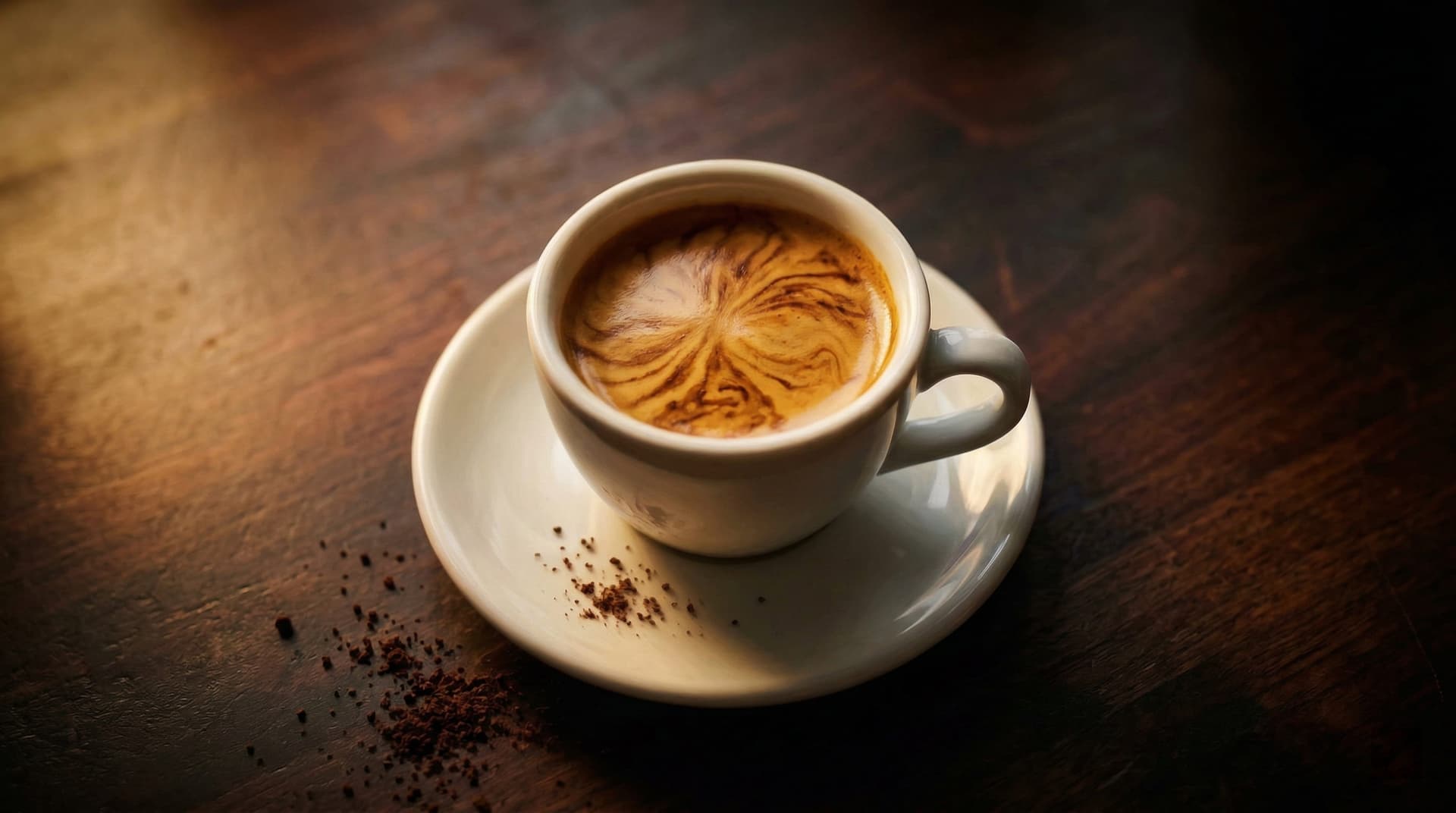
Espresso crema is the layer of reddish-brown foam that crowns a freshly pulled espresso shot. Its espresso crema meaning is both physical and chemical: crema is a colloidal emulsion of CO2 gas bubbles suspended in a matrix of emulsified coffee oils and water, stabilised by surface-active compounds extracted from the coffee grounds.
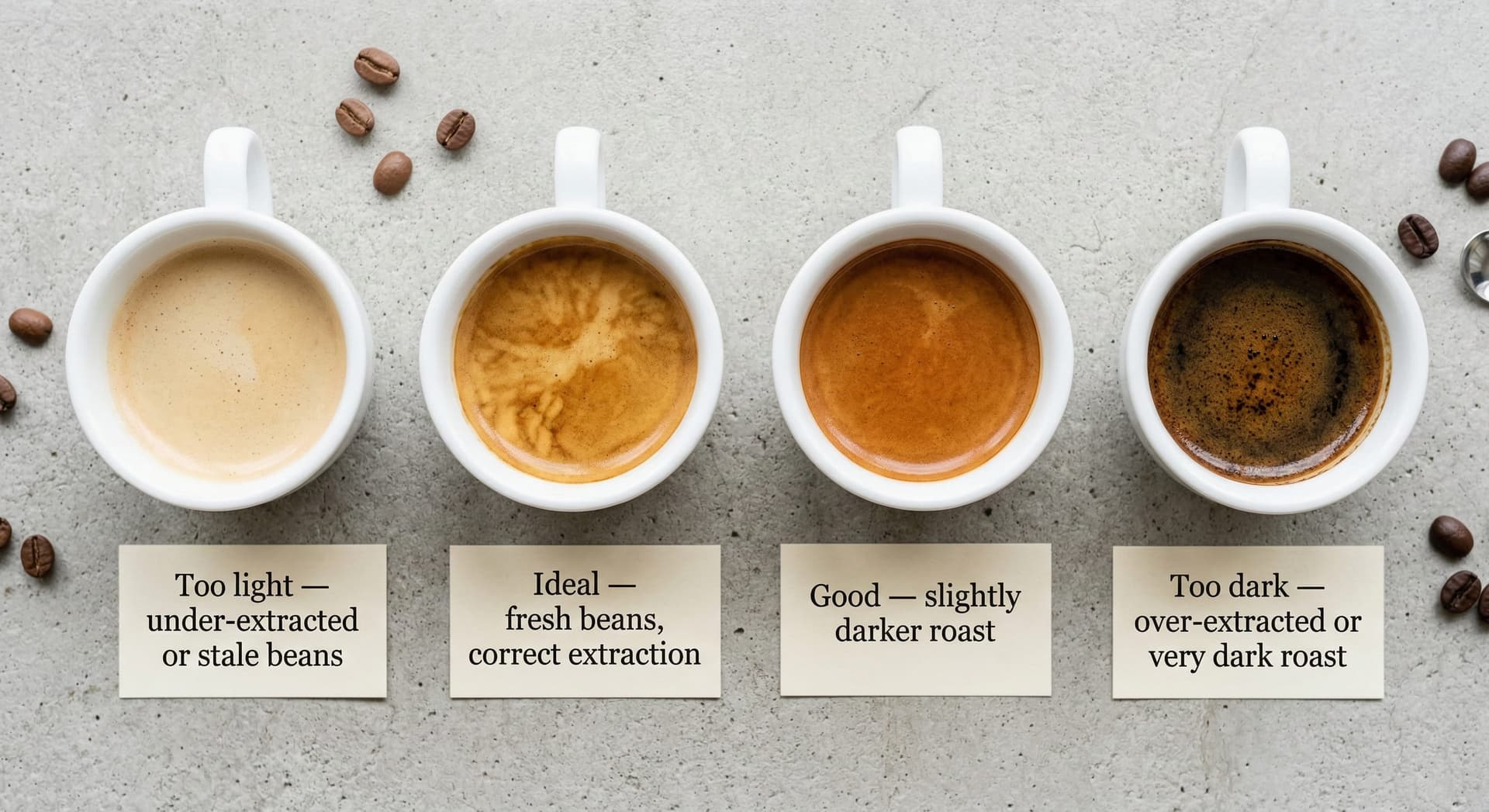
In plain terms: when water under 9 bars of pressure contacts fresh coffee grounds, it dissolves the CO2 trapped within those grounds and emulsifies the oils present in the coffee. When that pressurised liquid exits the portafilter and the pressure drops suddenly, the dissolved CO2 rapidly expands out of solution — forming millions of tiny oil-coated bubbles. Those bubbles are the crema.
The foam structure is relatively stable because of the surfactants present in coffee — melanoidins, proteins, and other compounds formed during roasting. These act like stabilisers, preventing the bubbles from coalescing and collapsing immediately. A well-pulled shot on fresh beans produces crema that persists for 1–3 minutes before slowly dissipating into the liquid below.
Crema is unique to espresso specifically because of the pressure requirement. No other brewing method operates at pressure high enough to both dissolve and then rapidly release CO2 in the same way. Moka pot, AeroPress, French press — none of them produce true crema, even if they occasionally create superficially similar surface foam that dissipates within seconds.
What Causes Crema to Form?
Three things have to come together for crema formation: fresh beans with available CO2, sufficient pressure, and the right extraction chemistry. Remove any one of these and crema suffers.
1. Bean Freshness (CO2)
During roasting, coffee beans generate CO2 as a byproduct of the Maillard reaction and caramelisation. This CO2 remains trapped in the bean structure and slowly degasses over weeks. Fresh beans (within 1–4 weeks of roast) contain abundant CO2 — the raw material of crema. Stale beans have exhausted their CO2 and produce thin, rapidly-dissipating crema regardless of machine quality.
2. Pressure (9 Bar)
The 9-bar pressure of espresso extraction does two things simultaneously: it dissolves CO2 into the liquid under pressure (Henry's Law — gases dissolve more readily under higher pressure), and it emulsifies coffee oils that wouldn't otherwise be water-soluble. When pressure drops at the portafilter exit, the dissolved CO2 comes out of solution rapidly, nucleating around emulsified oil droplets to form the crema foam matrix.
3. Extraction Chemistry
Crema stability depends on melanoidins, proteins, and surface-active compounds extracted from the coffee grounds during the shot. These compounds act as foam stabilisers, coating the CO2 bubbles and preventing them from merging and popping immediately. This is why extraction quality affects crema persistence: a properly extracted shot dissolves more stabilising compounds than an under-extracted one.
This is also why bean variety matters. Robusta beans contain significantly more CO2 (and different oil profiles) than Arabica, which is why commercial espresso blends often include a Robusta component specifically for crema production. Many traditional Italian espresso blends use 10–30% Robusta precisely because it produces abundant, persistent crema that Italian espresso culture prizes aesthetically.
Single-origin Arabica beans — especially lightly roasted ones — produce thinner crema by comparison, not because they're lower quality, but because they have different CO2 levels and oil profiles. I've pulled stunning shots from a washed Ethiopian Yirgacheffe with 2mm of crema that outperformed thick-crema Italian blends on every flavour dimension. Crema thickness is a roast and variety characteristic, not a quality ranking.
What Good Crema Looks Like
After testing 500+ coffee products and countless shots across 15 years, here's what I look for in crema before I even taste a shot.
Colour: The Golden Crema Standard
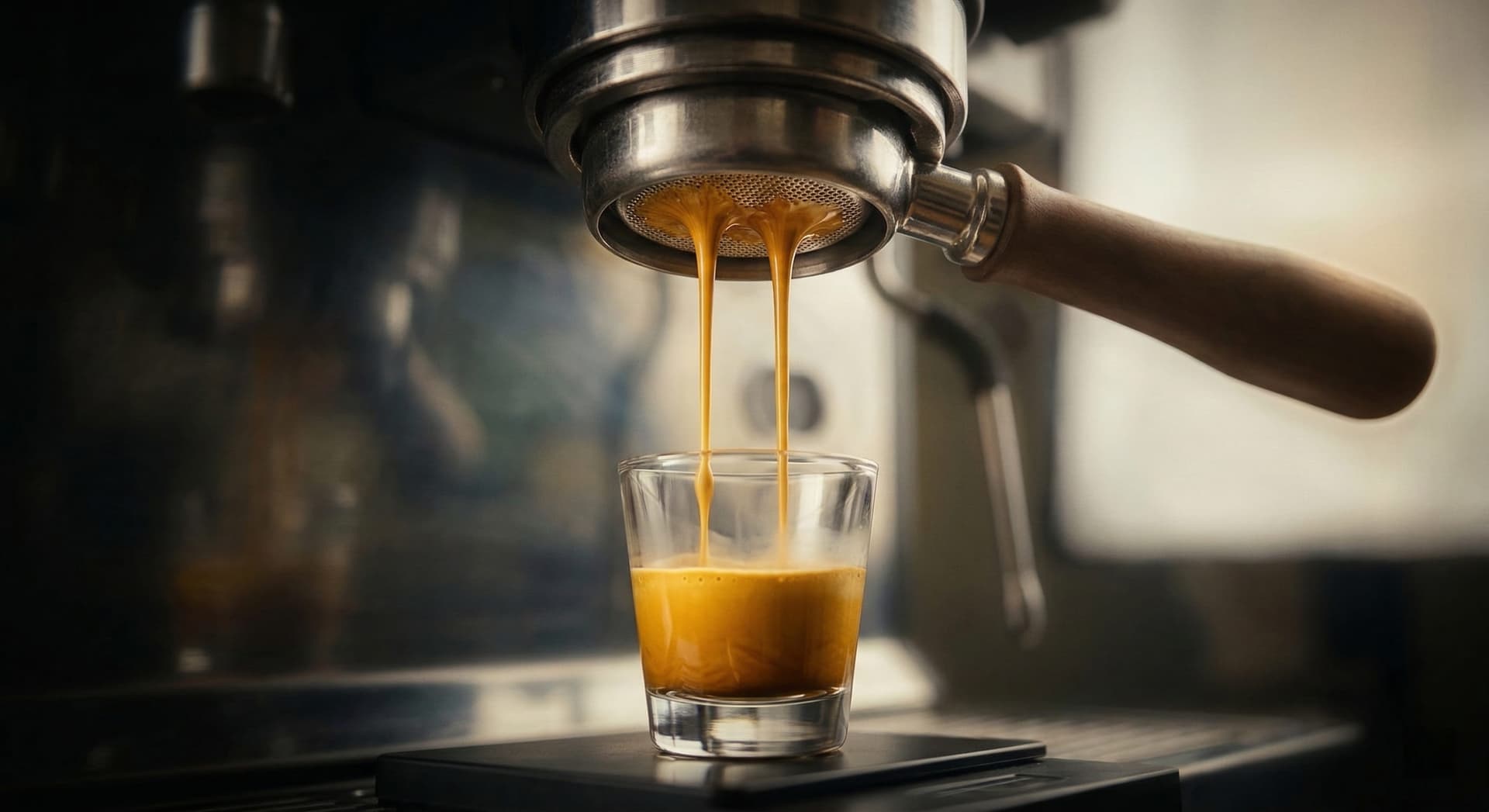
Ideal golden crema sits in the hazelnut-to-amber range — the colour of caramel or dark honey. This indicates a medium-to-dark extraction with fresh beans and balanced pressure. Colour varies by roast level: lighter roasts tend toward lighter golden-amber crema; darker roasts push toward deeper reddish-brown.
Crema Colour Reference Guide
Tiger Stripe Crema: The Pattern That Matters
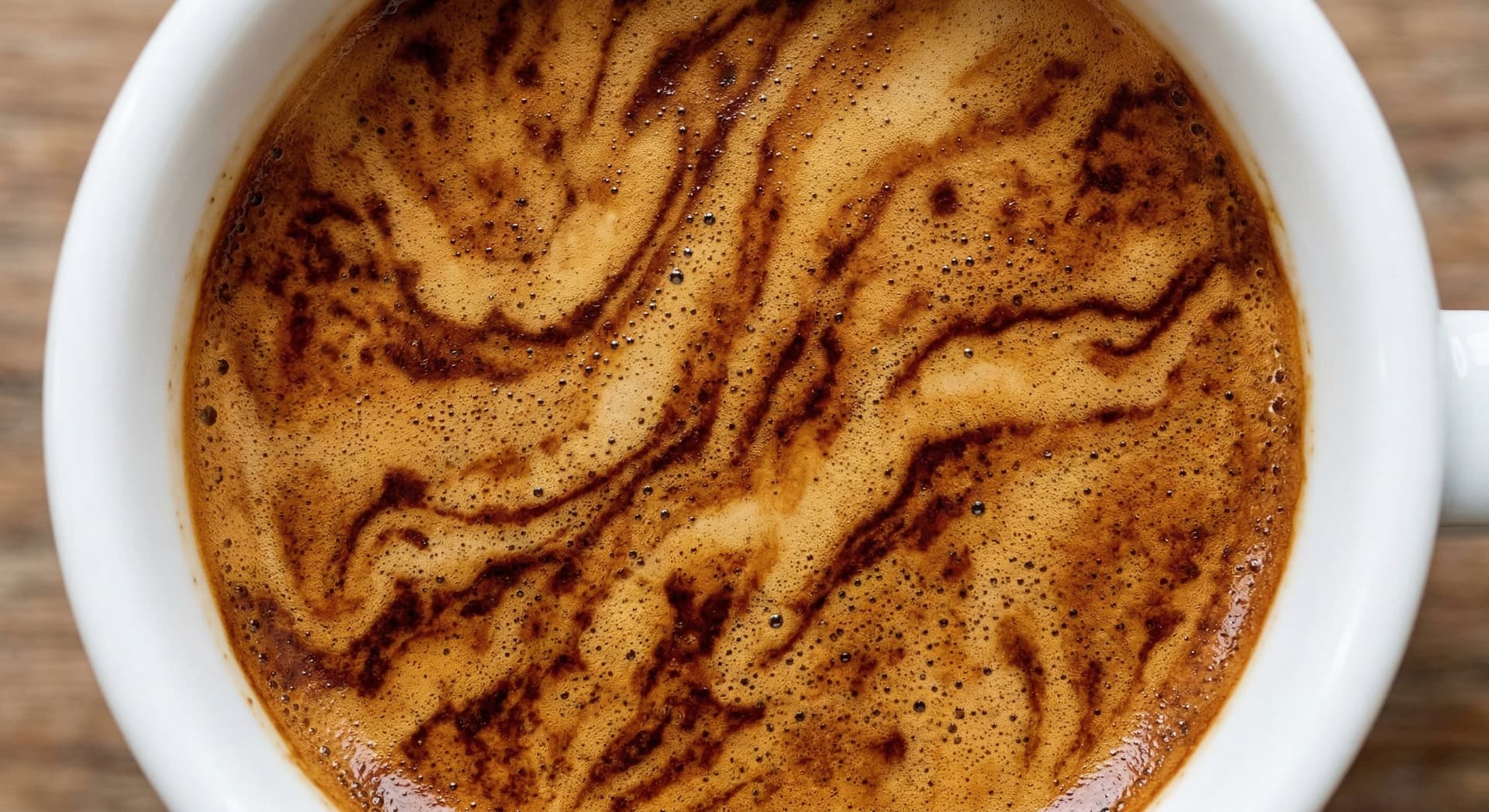
Tiger stripe crema — the dark and light streaking pattern across the crema surface — is one of the most recognisable signs of a well-pulled shot. It forms because CO2 concentrations within the puck aren't perfectly uniform. Areas with denser CO2 produce darker, richer crema; lighter zones reflect sections where CO2 exhausted slightly faster during extraction.
Pronounced tiger stripes indicate relatively even extraction pressure across the puck and fresh, CO2-rich beans. Very uniform, featureless crema (no striping at all) can indicate older beans where CO2 is depleted more evenly, or unusually fast extraction. Channeling — where water finds a path of least resistance through the puck — usually produces irregular, asymmetric crema patterns rather than the clean marbled striping of a well-prepared shot.
On a bottomless portafilter, you can watch crema forming in real time as the shot extracts. A symmetrical, even curtain of espresso that transitions smoothly from dark honey to golden as the shot progresses usually produces the most defined tiger stripe pattern.
Thickness and Persistence
Thick crema espresso shots typically show 3–5mm of crema depth in a standard 30ml double. The crema should hold its structure for at least 60 seconds, ideally 1–3 minutes before visibly thinning or collapsing. On a properly pulled shot with fresh beans, a teaspoon of sugar sprinkled on the crema surface should rest momentarily rather than sinking immediately through — a traditional visual check used in Italian cafés.
Crema that collapses in under 30 seconds usually signals stale beans or under-extraction. Crema that persists for 5+ minutes and feels almost rubbery in texture often comes from Robusta-heavy blends or very dark roasts, where the crema stability is high but the flavour complexity tends to be lower.
What Does Crema Actually Taste Like?
This is one of those questions where honesty serves baristas better than romanticisation. Crema espresso taste, when isolated and tasted on its own, is predominantly bitter, slightly astringent, and aromatic — not particularly pleasant. It concentrates the volatile aromatic compounds (which is why espresso smells so good) along with some of the harsher compounds extracted at the tail end of the shot.
The bitterness of crema comes from the same melanoidins and other roasted compounds that give dark-roasted coffee its characteristic notes. These compounds are concentrated in the foam because they're surface-active — they preferentially migrate to the gas-liquid interface of the bubbles.
When crema is integrated into the espresso body by stirring — which I'd almost always recommend — the bitterness balances with the sweeter, more syrupy liquid beneath. The result is more harmonious than either component separately. Think of it like the crema adding top-note bitterness to contrast the rounded sweetness of the espresso body — in combination, it works.
Crema also plays a much larger role in aroma than in direct taste. The volatile aromatic compounds that give espresso its distinctive scent — caramel, roasted nuts, stone fruit, florals depending on origin — concentrate heavily in the crema. This is why a freshly pulled shot smells extraordinary even before you taste it. The crema is essentially an aromatic concentrate sitting on top of your espresso.
Does Crema Actually Matter for Taste?
Here's the honest answer that took me years of testing to fully internalise: crema is a useful diagnostic indicator and a meaningful contributor to aroma, but it is a poor direct proxy for espresso flavour quality.
The disconnect becomes clear when you compare a Robusta-heavy commercial blend with a specialty-grade single-origin Arabica pulled on the same machine. The Robusta blend will produce thick, impressive, persistent crema that lasts 5 minutes and survives the sugar test. The Arabica single-origin might produce a modest, thinner crema with less marbling. In a blind taste test, the Arabica single-origin wins on flavour complexity almost every time.
I ran this comparison informally during a training session in Dublin — 14 baristas blind-tasting shots from a Robusta-inclusive commercial blend versus a washed Guatemalan single-origin on the same machine and settings. Twelve of the fourteen preferred the Guatemalan on taste. It had noticeably thinner crema.
Where Crema Does Matter
- ✓Freshness indicator: Thin or absent crema reliably signals stale beans — a legitimate quality issue worth addressing
- ✓Pressure indicator: Consistently missing crema can signal a pressure problem with your machine
- ✓Aroma contribution: Crema concentrates volatile aromatics — it genuinely enhances the smell of your espresso
- ✓Mouthfeel: Integrated crema adds texture and a slight creamy coating to the espresso body
Where Crema Misleads You
- ✗Thick crema ≠ great flavour: Dark roasts and Robusta produce more crema but often less flavour complexity
- ✗Thin crema ≠ bad espresso: Light roasts and high-quality single-origins naturally produce less crema
- ✗Tiger stripes ≠ perfect extraction: Beautiful patterning is aesthetic, not a reliable extraction measurement
The most useful mental model: treat crema as a secondary indicator, not a primary quality measure. Let taste be your primary measure — always. Use crema as a quick pre-taste checkpoint (very pale or absent crema suggests a problem worth investigating) before evaluating the shot properly on the palate.
What Crema Tells You About Your Shot
Used correctly, crema is a fast visual diagnostic before you taste. Here's how to read it.
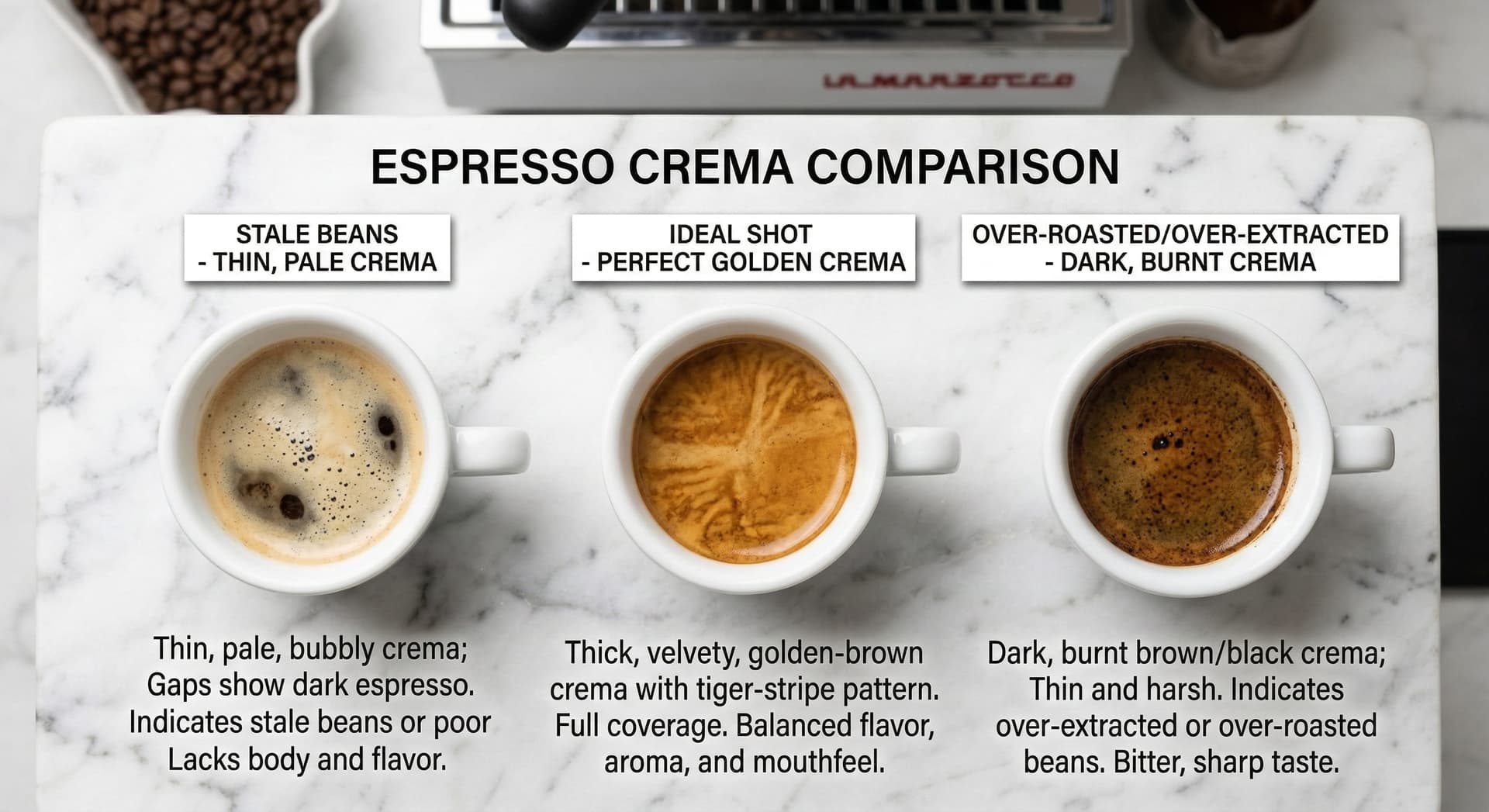
Thick, golden, tiger-striped crema that holds 2+ minutes
Good signs: fresh beans, correct extraction pressure, reasonable shot time. Doesn't guarantee great taste, but all prerequisite conditions appear to be met. Taste to confirm.
Pale blonde crema with large bubbles that collapses quickly
Likely cause: stale beans (most CO2 has degassed), under-extraction (grind too coarse, shot too fast), or beans that are brand-new (within 24 hours of roast). Check bean freshness first — this is the most common cause. Also check your shot time: if pulling in under 20 seconds, grind finer.
Very dark, near-black crema with almost no golden tones
Likely cause: very dark roast, over-extraction (shot running too long), or water temperature too high. Expect bitterness and harshness in the shot. If you're working with medium-roast beans, grind coarser or reduce water temperature. If using a dark roast, this may be intrinsic to the beans.
Thin crema with irregular patches or gaps
Often indicates channeling — water is finding a path of least resistance through the puck rather than extracting evenly. Check your puck preparation: distribution before tamping, tamp levelness, and basket condition. A bottomless portafilter will show this very clearly during extraction.
Abundant crema on what tastes like a flat, flavourless shot
Classic Robusta or very dark roast signature. The beans are producing crema from CO2 abundance and specific oil profiles, but the flavour complexity isn't there. Consider trying better quality beans — our guide to picking espresso beans covers what to look for in specialty-grade beans that deliver flavour as well as crema.
Troubleshooting Crema Problems
If your crema consistently looks wrong, here's a structured diagnosis. Work through these in order — most crema problems resolve at step one or two.
Problem: No Crema or Very Thin Crema
- 1Check bean freshness: When were they roasted? Beans more than 4–6 weeks past roast date will produce minimal crema. This is the single most common cause. Buy fresher beans.
- 2Check shot time: If your shot pulls in under 20 seconds at a 1:2 ratio, you're under-extracting. Grind finer. Under-extraction doesn't generate enough emulsification for stable crema.
- 3Check machine pressure: Use a pressure gauge portafilter if available. If your machine isn't reaching 8–9 bars, crema formation will be limited. OPV may need adjustment.
- 4Consider bean variety: Very lightly roasted single-origin Arabica naturally produces less crema. This isn't a problem to fix — it's a characteristic of the bean.
Problem: Very Dark or Burnt-Looking Crema
- 1Check shot time: Over 35 seconds at 1:2 indicates over-extraction. Grind coarser immediately.
- 2Check water temperature: Above 96°C increases extraction rate and darkens crema. Reduce if your machine supports temperature adjustment.
- 3Evaluate the beans: Very dark roasts produce darker crema inherently. If you want golden crema, use a medium or medium-dark roast.
Problem: Patchy or Uneven Crema
- 1Check distribution: Uneven ground distribution before tamping creates density variations that cause channeling. Use a distribution tool or the WDT (Weiss Distribution Technique) — swirling a thin tool through the grounds before tamping.
- 2Check tamp levelness: An angled tamp creates a tilted puck that channels water to one side. Tamp with a spirit level or invest in a levelling tamper if consistency is an issue.
- 3Check basket condition: Old or worn baskets develop irregular hole patterns that affect flow. If your basket is more than 3–5 years old and heavily used, it may be worth replacing.
For a deeper dive into extraction troubleshooting beyond crema — including diagnosing under- and over-extraction by taste, understanding brew ratio, and fixing channeling — see our complete guide to espresso extraction. And if you're still learning the fundamentals of how espresso works before diving into crema specifics, start with our beginner's guide to espresso which covers grind size, pressure, dose, and the basics of what happens during extraction.
Frequently Asked Questions
Frequently Asked Questions
Espresso crema is the reddish-brown foam layer that sits on top of a freshly pulled espresso shot. It forms when water under 9 bars of pressure dissolves CO2 from fresh coffee grounds and emulsifies coffee oils.
When that pressurised liquid exits the portafilter and pressure drops suddenly, CO2 rapidly expands out of solution, creating millions of tiny oil-coated bubbles — that foam is the crema. Good crema is hazelnut to amber in colour, thick enough to persist for 1–3 minutes, and may show tiger-stripe marbling from uneven CO2 concentrations across the puck.
Get Coffee Tips
Join our newsletter for expert reviews and brewing guides.