How to Make the Best Espresso at Home (Complete Guide)
This is the complete home espresso guide — machine selection, grinder choice, puck preparation, and pulling a great shot. Every variable explained by someone who has spent 15 years doing this for a living.
I have trained over 200 baristas and tested more than 500 coffee products in 15 years. And the question I get asked more than any other is still: how do I actually make a good espresso at home? Not a decent one. A genuinely great one — the kind that makes you stop buying takeaway coffees.
The honest answer is that home barista espresso is not difficult, but it has more variables than any other brew method, and most guides skip the important ones. This home espresso guide covers everything from machine and grinder selection through to puck preparation, pulling the shot, and dialling in — all the way to understanding what your shot is telling you when it tastes wrong.
If you want to understand what espresso actually is at a fundamental level before diving in, start there. When you are ready to troubleshoot specific shot problems at a deeper level, our espresso extraction guide covers under-extraction, over-extraction, channeling, and brew ratio in full detail.
Quick Summary: What You Need
Before anything else: home espresso requires more equipment investment than any other brew method. You cannot make proper espresso with a £30 stovetop pot and a blade grinder. The minimum viable setup involves an espresso machine that achieves genuine 9-bar brew pressure and a burr grinder capable of fine, consistent grinding. Everything else can be basic.
Minimum Home Espresso Setup
- Espresso machine:9-bar pump pressure, temperature stability
- Burr grinder:Fine adjustment range, consistent particle size
- Digital scale:0.1 g resolution (dose and yield)
- Coffee beans:Roasted 7–21 days ago, espresso-suitable roast
- WDT tool:£8–£15, major consistency improvement
- Shot timer:Your phone is fine
Budget entry point is roughly £300–£400 for a machine and separate grinder that can actually make good espresso. Below that you are largely in the territory of compromised results. There are all-in-one options (Breville Barista Express, Sage Barista Touch) that include machine and grinder in a single unit — a practical starting point that I will cover in the machine section.
Choosing Your Espresso Machine
The most important specification when choosing a home espresso machine is genuine 9-bar brew pressure at the group head. This is not the same as the pump pressure rating printed on the box — many entry-level machines rate their pumps at 15 or 19 bar but have an OPV (over-pressure valve) that limits actual brew pressure. Some machines do not have an OPV at all and genuinely push 15 bar through the puck, which over-extracts and scorches coffee. Look for machines where the brew pressure is confirmed at 9 bar or where the OPV is adjustable.
Temperature stability is the second critical factor. Water temperature at the group head must be consistent shot to shot — even 2°C variation meaningfully changes extraction. Machines with a PID (Proportional-Integral-Derivative) temperature controller hold temperature within ±1°C. The Rancilio Silvia Pro X, Breville Dual Boiler, and Sage Oracle all have PID. The base Rancilio Silvia does not — experienced home baristas can temperature-surf it, but it adds complexity to the workflow.
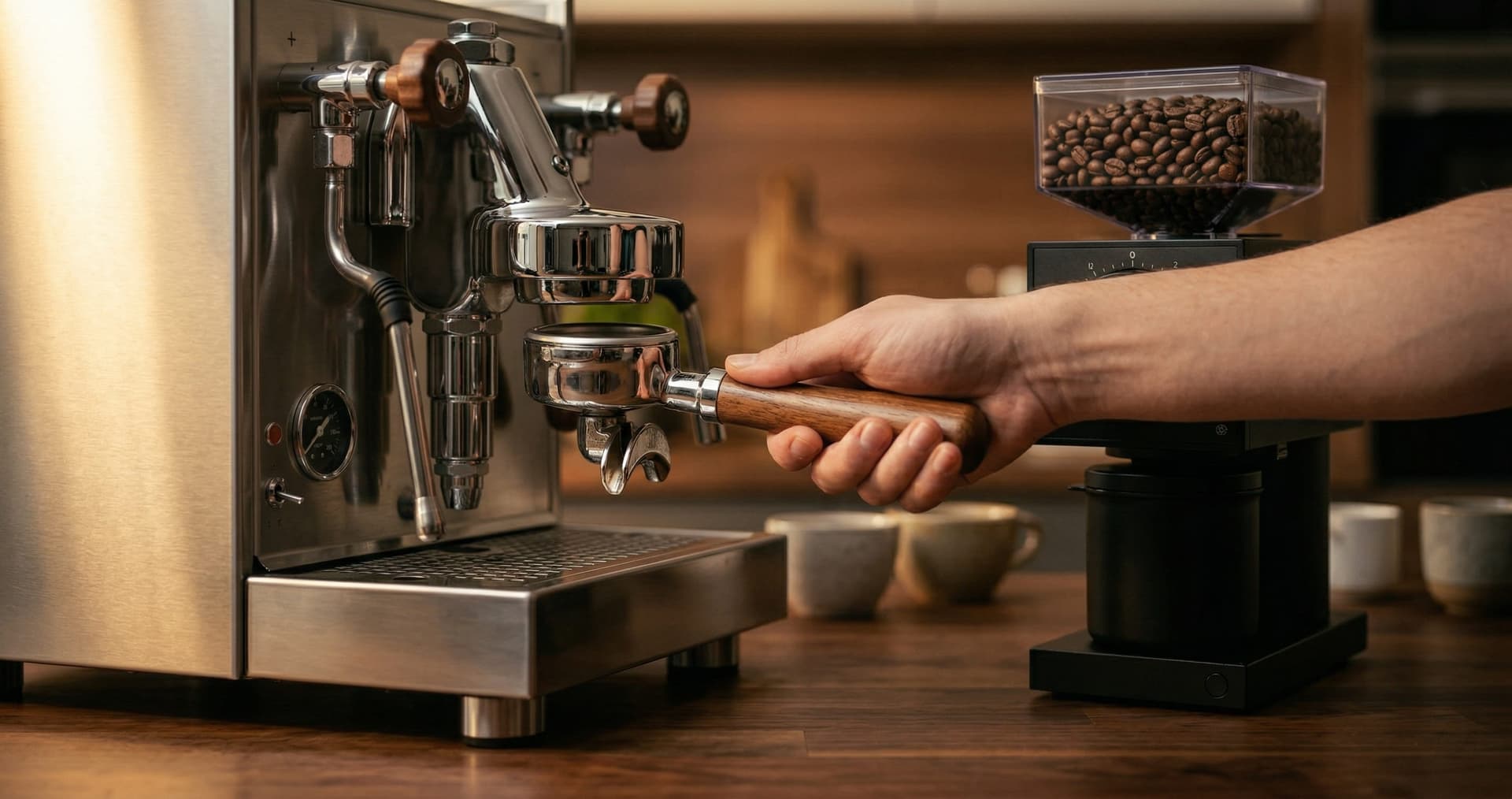
A dedicated grinder alongside your espresso machine is the most impactful quality upgrade in any home espresso setup.
My recommended starting machines for most home baristas, based on hands-on testing:
Breville Barista Express (£600–£700)
All-in-one with built-in grinder. Good PID, 54 mm basket, 9-bar OPV. The grinder is a genuine conical burr unit with adjustable settings — better than expected at this price. Best value entry point for home barista espresso without managing two separate machines.
Rancilio Silvia (£500–£550)
Commercial-grade group head in a home chassis. 58 mm basket, extremely durable, upgradeable. No PID on the base model — requires temperature surfing. With a third-party PID kit (£80–£120) it becomes an outstanding prosumer machine. Requires a separate grinder.
Sage Bambino Plus (£280–£320)
Entry-level but genuinely competent. ThermoJet heating means it is ready in 3 seconds; PID temperature control is included. 54 mm basket. The machine itself is not the limitation at this price — the included grinder is. Pair with a Baratza Encore or Eureka Mignon for serious results.
Lelit Mara X (£900–£1,000)
Heat exchanger machine with E61 group head. The X model includes an innovative dual-mode system that prevents temperature spikes between espresso and steam use. 58 mm basket, full PID, and proper prosumer build quality. Worth the step up once you have outgrown entry-level.
For a full comparison of tested machines across every budget, our best espresso machines guide covers 20+ machines with hands-on testing notes — including which ones actually hit 9 bar and which are misleadingly marketed.
Choosing Your Grinder
If I could give one piece of advice to every new home barista, it would be this: spend more on the grinder than the machine. A mediocre machine with an excellent grinder will consistently outperform an excellent machine with a mediocre grinder. Grind consistency — uniform particle size, minimal fines — is the single most controllable variable in espresso quality.
Espresso requires grinding finer than any other brew method. At this fineness, grinder quality differences become magnified: a budget grinder produces a wide spread of particle sizes (a mix of powder and small chunks), which means some grounds extract too fast and some too slow simultaneously. The result is a shot that tastes both bitter and sour at once — a problem no amount of technique adjustment can fix at its source.
My tested recommendations at each price point:
- Baratza Encore (£160–£190): Entry-level but capable. 40 mm conical burrs, 40 grind steps. Reaches espresso fineness for most machines, though it sits near its limit and the stepless adjustment some setups require is not available. Good for Breville/Sage 54 mm machines, not ideal for commercial 58 mm setups.
- Eureka Mignon Silenzio (£260–£300): 50 mm flat burrs, stepless micrometric adjustment, extremely quiet motor. The stepless adjustment makes dialling in precise increments possible in a way stepped grinders cannot match. This is my default recommendation for a standalone espresso grinder under £300.
- Baratza Sette 270 (£330–£370): Grind-by-weight with macro/micro adjustment. Unusual planetary gear design means the burrs move relative to each other rather than a central spindle — very fast grinding, low retention. Excellent for home espresso with a digital scale workflow.
- Niche Zero (£500–£550): Single-dose conical grinder. Virtually zero retention — every gram you put in comes out, with no previous coffee contaminating the dose. Outstanding particle consistency. The standard recommendation for serious home barista espresso setups above the £400 budget.
For a full breakdown of tested grinders across budget ranges — including which ones have sufficient fine adjustment for espresso — see our best coffee grinders guide.
The Right Coffee
Freshness is non-negotiable. Espresso amplifies every characteristic of the bean — including staleness. Coffee begins off-gassing CO2 from the moment it is roasted; this CO2 is responsible for crema and contributes to the perceived freshness of the shot. Beans roasted more than 4–5 weeks ago produce flat, dull espresso with poor crema regardless of every other variable. Aim for beans roasted within the last 7–21 days.
Very fresh beans (roasted less than 5–7 days ago) present the opposite problem: excessive CO2 causes the puck to resist water flow aggressively, producing unpredictable shot times and sour-tasting shots even with correct settings. I recommend a 7–10 day rest from roast date before using beans for espresso. Most specialty roasters print the roast date on the bag — buy from roasters who do this.
For roast level: medium roasts (roughly city to full city) are the most forgiving for home espresso. They extract reliably within a normal temperature range, produce balanced flavour, and dial in faster than light or dark roasts. Light roasts require higher temperatures (94–96°C) and finer grind to extract their complex acidity without sourness — beautiful when done right, but less forgiving. Dark roasts extract bitter compounds easily and need careful temperature control and often a slightly shorter yield (1:1.7–1:1.9 ratio) to avoid harsh finish.
Machine Setup and Temperature
Allow your machine to warm up for at least 20–25 minutes before pulling shots. This is not optional — it is the difference between a machine that is thermally stable and one that shifts temperature throughout your session. The boiler reaches operating temperature relatively quickly (5–10 minutes), but the group head, portafilter, and basket need the full 20–25 minutes to reach thermal equilibrium. A cold group head will draw heat from the brew water and drop the actual extraction temperature by 3–5°C below your set point.
Lock the portafilter into the group head empty during warm-up — not after, but during. A cold portafilter sitting on the counter while the machine warms up will cool rapidly and produce a noticeably colder extraction on the first shot. By locking it in during warm-up, it reaches the same temperature as the group head.
Flush the group head before each shot: run 2–3 seconds of hot water through the group head without the portafilter to clear any residual coffee oils and bring the temperature of the shower screen to brew temperature. This is particularly important on machines with E61 group heads, which have a thermosyphon system that can accumulate water above boiler temperature between shots.
Target brew temperature for a medium-roast espresso blend: 92–94°C at the group head. If your machine has a PID, set it to 93°C and leave it. If it does not, learn the temperature surfing technique specific to your machine model — this involves timing the wait between the steam light cycling off and pulling the shot. The Rancilio Silvia, for example, has a well-documented sweet spot of approximately 8 seconds after the light goes out.
Grind Setting and Dose
Grind size is the primary control variable in espresso. It determines how fast or slow water flows through the puck, which determines shot time, which determines how much of the coffee is dissolved into your cup. Finer = slower flow = more extraction. Coarser = faster flow = less extraction. For a standard double shot (18 g in, 36 g out), you want the shot to run in 25–32 seconds from pump start to stopping at your target yield.
Dose is the weight of dry ground coffee you put into the portafilter basket. For most 58 mm double baskets, the standard dose is 18 g. For 54 mm baskets (Breville/Sage), it is typically 17–18 g. Always weigh your dose — a 1 g variation at espresso scale translates to a meaningful change in puck depth, resistance, and shot time. I use a 0.1 g resolution scale for every single shot. It becomes second nature within a week.
A simple starting recipe for most home setups:
Starting Home Espresso Recipe
- Dose (in):18 g
- Yield (out):36 g
- Ratio:1:2
- Shot time:25–32 seconds
- Water temperature:93°C
Lock these numbers in and adjust only grind size until you hit the target time range. Do not change dose or yield during initial dial-in — changing multiple variables simultaneously makes it impossible to understand what is causing what. Grind first, everything else second.
Puck Preparation
Puck preparation — distribution and tamping — is where most home baristas lose consistency. A perfectly set grind and perfectly weighed dose can be undone in five seconds by poor puck prep. The goal is a dense, uniform bed of coffee that forces water to pass evenly through every gram of grounds.
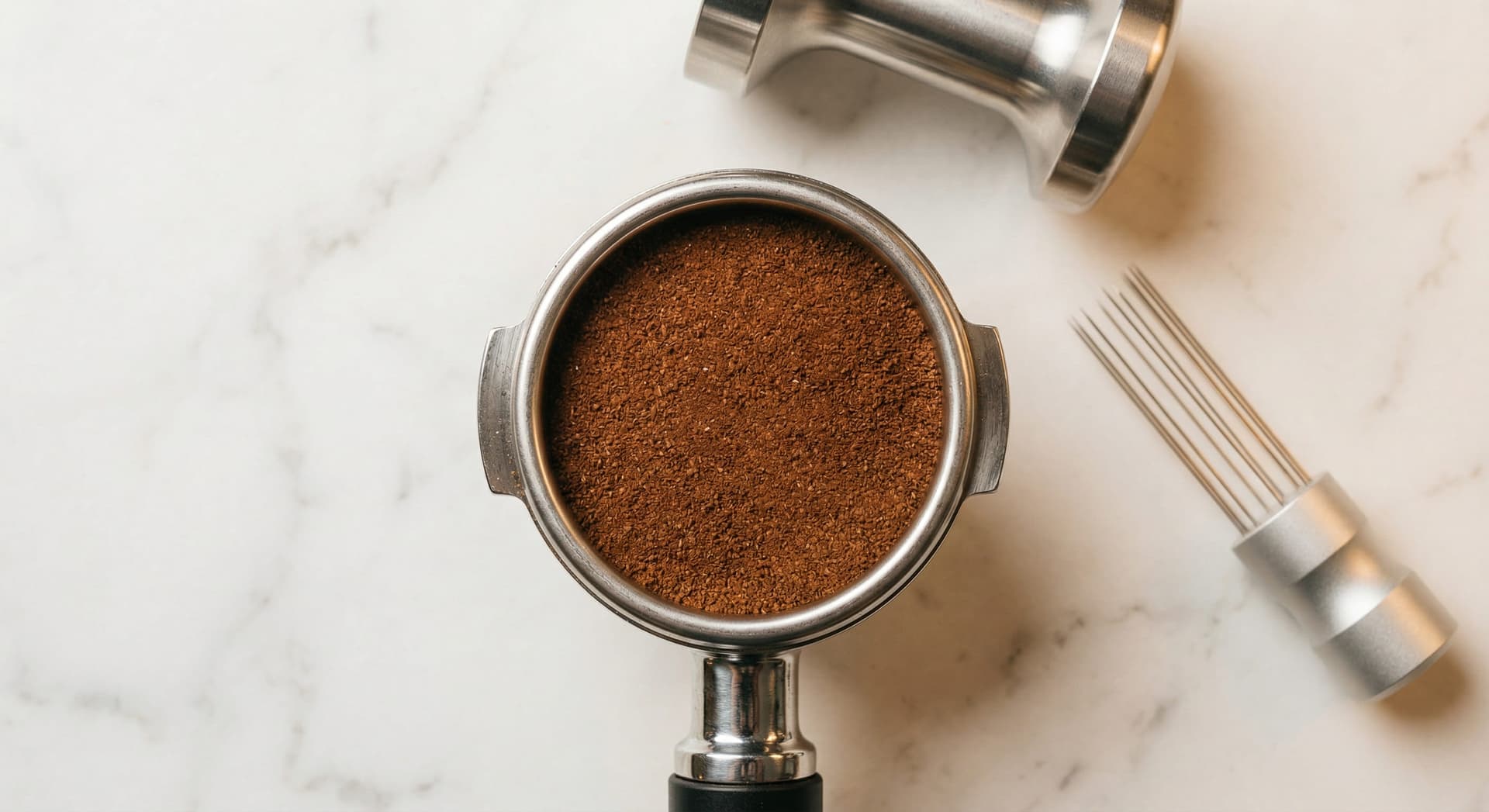
Evenly distributed grounds before tamping — no mounds, no gaps, no clumps. This is what a correct puck looks like before the tamper goes in.
Distribution
After grinding into the basket, the grounds are not evenly distributed — they form an uneven mound with clumps from the grinder chute. Use a WDT tool (thin needles mounted in a handle) to stir the grounds in a circular motion, breaking up clumps and homogenising the bed. Make 10–15 passes in alternating directions. This single step reduces channeling more than any other puck prep change I have observed across hundreds of training sessions.
If you do not have a WDT tool, the Stockfleth technique is a usable alternative: place your index finger on the surface of the grounds and rotate the portafilter, sweeping the grounds level. Less thorough than WDT for clumpy grinds, but significantly better than nothing.
Tamping
After distribution, tamp with 15–25 kg of downward force, keeping the tamper perfectly level. Levelness matters more than pressure — a tilted tamp creates a sloped puck surface that directs water toward the lowest edge, causing channeling on every single shot regardless of how good everything else is. Use a tamping mat to hold the portafilter stable, and apply pressure with your elbow at roughly 90°, using upper body weight rather than wrist force.
For a detailed walkthrough of every puck preparation step — including tamper sizing, the full WDT process, and how to diagnose channeling — our tamping guide covers the complete technique.
Pulling the Shot
Lock the portafilter into the group head and start your timer and pump simultaneously. Place a scale and cup under the portafilter spouts — you need to weigh the liquid espresso coming out (yield) as the shot pulls to stop the pump at exactly your target weight. Do not guess by eye. A 3 g difference in yield (stopping at 33 g versus 36 g) measurably changes the concentration and flavour balance of the shot.
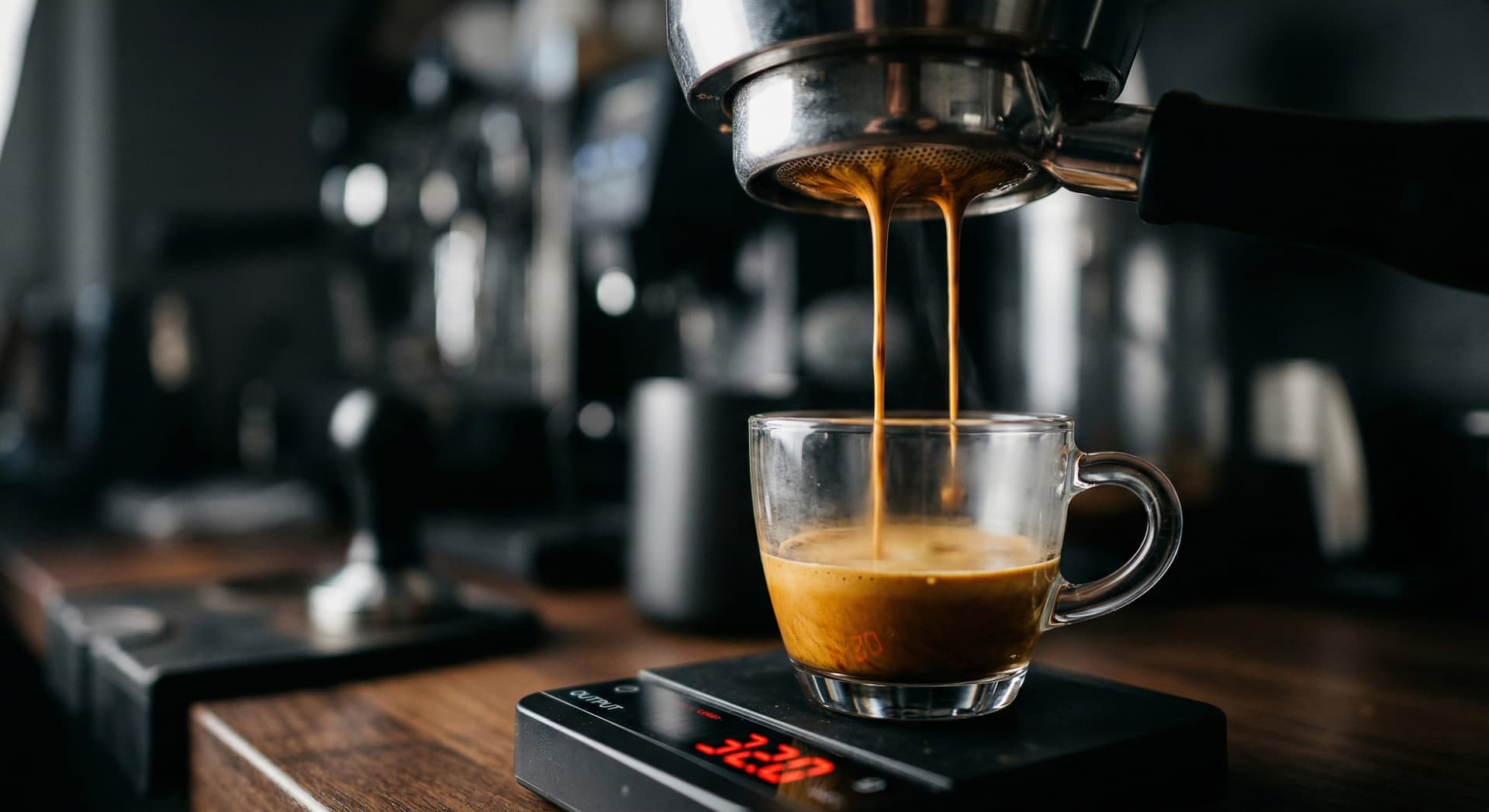
Weigh the yield as it pulls — stop the pump when you hit your target weight, not by time or visual inspection alone.
Watch the shot as it pulls. The first liquid should appear at roughly 6–10 seconds after pump start — this is the pre-infusion phase where water saturates the puck under low pressure before full brew pressure engages. Then espresso should flow in a thin, dark stream that gradually lightens to golden-caramel as the shot progresses. If the flow is uneven — dripping from one spout only, spraying sideways, or pulsing irregularly — these are signs of channeling.
Stop the pump when you hit your target yield (36 g for a standard 18 g dose / 1:2 ratio). Note the time. If it ran in 25–32 seconds, your grind is in the right zone. If it ran faster, grind finer next shot. If it ran slower, grind coarser. Then taste the shot before making any more adjustments — time is a diagnostic tool, taste is the result you are chasing.
A well-pulled shot should display the espresso crema that is characteristic of fresh, correctly extracted espresso — a golden-brown layer with a consistent colour and texture. See our guide on espresso extraction for a detailed breakdown of what your shot's appearance and colour tell you about extraction.
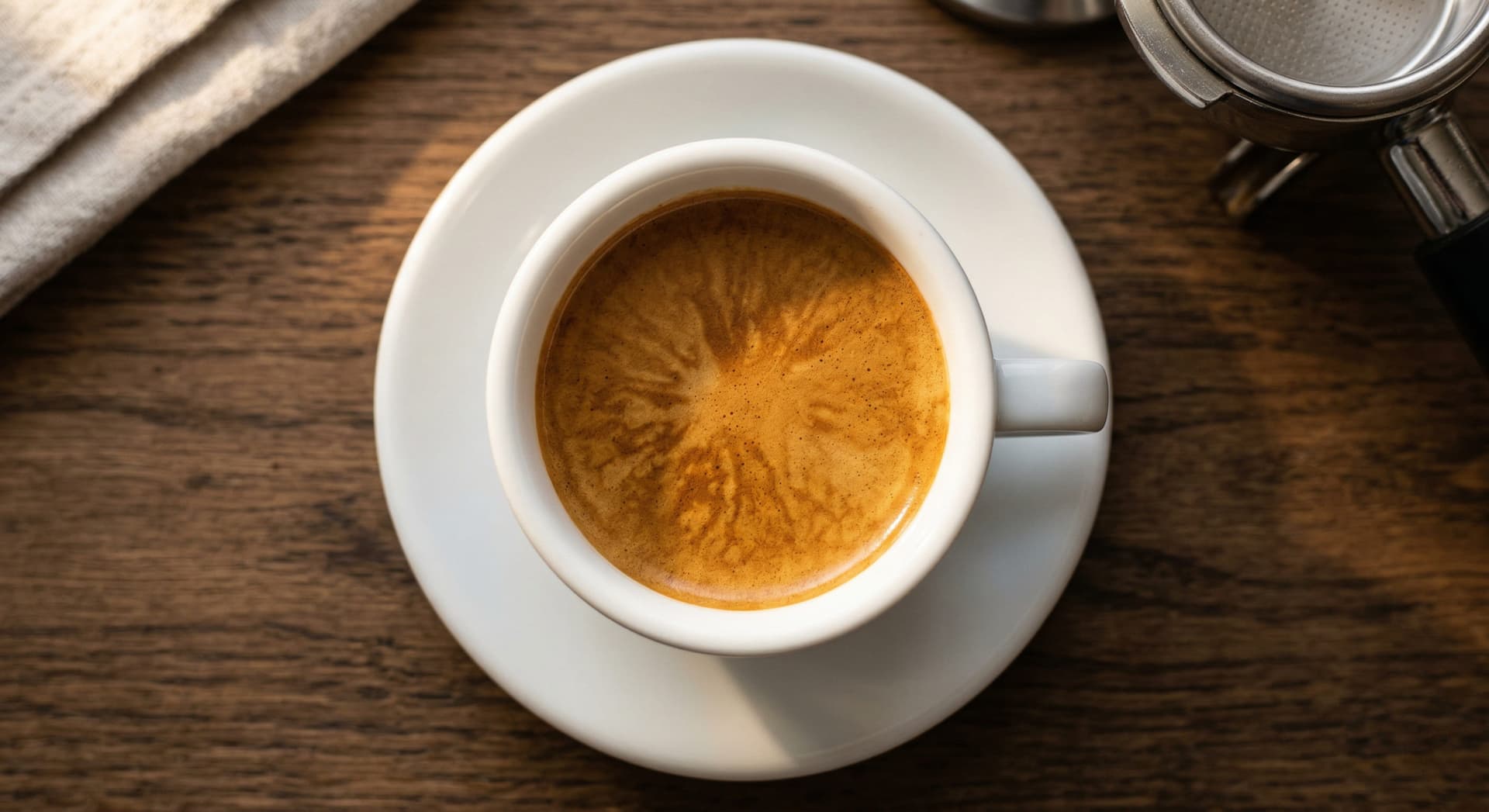
Golden-brown crema that dissipates slowly — a visual indicator of a correctly extracted espresso from fresh beans.
Dialling In and Tasting
Dialling in is the iterative process of adjusting your grind setting until shots taste balanced and pull at the correct time. With a new bag of beans, expect 3–6 adjustment shots before you find the right setting. This is normal — every bag is different, and even the same beans from the same roaster can extract differently depending on roast date and freshness level.
The tasting framework I use with every new trainee:
Sour / Thin / Weak → Under-extracted
Grind finer. The shot ran too fast, dissolving only the light, acidic compounds without reaching the balancing sweetness. One or two clicks finer on the grinder, retest.
Bitter / Dry / Harsh → Over-extracted
Grind coarser. The shot ran too slow, extracting bitter late-stage compounds. One or two clicks coarser, retest.
Bitter and Sour simultaneously → Channeling
Not a grind problem — a puck prep problem. Water channeled through a gap, over-extracting that path (bitter) while under-extracting the rest (sour). Improve distribution with WDT and ensure your tamp is level before adjusting grind.
Sweet / Balanced / Round → Dialled In
Both sourness and bitterness are present but neither dominates. You notice distinct flavour notes, sweetness comes through clearly, and the finish is clean. Record this grind setting.
For the full step-by-step process — including how to adjust yield and dose once grind is locked, and how to handle specific troubleshooting scenarios — our dial-in guide covers the complete process in detail.
Common Mistakes
After running over 200 barista training sessions, these are the mistakes I see most often in new home espresso setups — and the ones that take the longest to diagnose because their cause is not immediately obvious:
1. Not weighing dose and yield
Scooping coffee or stopping shots by eye introduces 1–2 g of variation per shot — at espresso scale, that is the difference between a well-balanced shot and a noticeably over-extracted one. Use a scale for every shot, every time. It takes 10 extra seconds and it is the highest-return consistency habit you can build.
2. Pulling shots on a cold machine
A machine that has not fully warmed up extracts at a lower temperature than its set point, producing sour, under-developed shots even with correct grind and dose settings. 25 minutes minimum warm-up; lock the portafilter in during warm-up.
3. Using stale beans
Beans roasted more than 5–6 weeks ago produce flat, dull shots regardless of technique. No amount of grind adjustment compensates for oxidised, CO2-depleted coffee. If your shots taste lifeless and lack crema, check the roast date before changing anything else.
4. Changing too many variables at once
Adjusting grind, dose, and yield in the same session after bad shots makes it impossible to identify which change helped. One variable per shot. Write down results. Build a picture over 4–6 shots rather than trying to find the answer in two.
5. Blaming the machine for grinder problems
A budget grinder paired with an excellent machine will consistently underperform a mid-range machine with an excellent grinder. If shots are simultaneously bitter and sour regardless of grind adjustments, the grinder's particle size distribution is the likely cause — not the machine.
6. Skipping distribution
Tamping on top of clumpy, unevenly distributed grounds creates channeling regardless of tamping technique. Spend 15 seconds with a WDT tool before every tamp. This one change improved shot consistency measurably in every training session I have run.
Frequently Asked Questions
1 g, and fresh coffee beans roasted within the last 7–21 days.
Optional but highly recommended: a WDT distribution tool (£8–£15), a tamping mat, and a shot timer.
Do not try to use a blade grinder for espresso — the inconsistent particle size makes dialling in effectively impossible.
Get Coffee Tips
Join our newsletter for expert reviews and brewing guides.