
How to Fix Bitter Espresso (Step-by-Step Diagnosis)
Grind, temperature, dose, channeling, or dirty equipment — here's how to find your root cause fast and pull a balanced shot every time
Bitter espresso is almost always fixable — but only if you target the right variable. I've trained over 200 baristas, and the single biggest mistake I see home brewers make when troubleshooting bitter espresso is adjusting everything at once. Change one thing, pull a shot, taste it. That's the only way to know what actually caused the problem.
This guide walks you through a structured, step-by-step diagnosis of the most common espresso bitterness causes — over-extraction, brew temperature, dose and yield, channeling, machine cleanliness, and bean quality — in the order I'd check them myself. Fix bitter espresso the right way, and you'll understand your machine well enough to prevent the problem from coming back.
Quick Diagnosis: What Kind of Bitter?
Not all espresso bitterness has the same cause. Before adjusting anything, taste the shot carefully and match what you're experiencing to one of these profiles:
| What You Taste | Likely Cause | Where to Start |
|---|---|---|
| Harsh, astringent, drying finish | Over-extraction (grind too fine, yield too high, or temperature too high) | Start with Step 1 — grind |
| Balanced but still slightly harsh on first sip | Temperature slightly high — usually fixable without changing grind | Jump to Step 2 — temperature |
| Bitter despite correct shot time — high liquid volume | Brew ratio too long — too much liquid extracted from the same dose | Jump to Step 3 — dose and yield |
| Bitter AND sour in the same shot | Channeling — part of the puck over-extracts, part under-extracts | Jump to Step 4 — channeling |
| Bitter residue that lingers mid-palate, slightly rancid | Dirty equipment — rancid coffee oils from previous shots | Jump to Step 5 — cleanliness |
| Flat, papery, bitter with little aroma | Stale beans — nothing can extract well from oxidised coffee | Jump to Step 6 — beans |
Over-Extraction: The Root Cause of Most Bitter Espresso
Understanding why espresso goes bitter requires a quick look at what extraction actually does. When pressurised hot water passes through ground coffee, it dissolves compounds in a predictable order: acids and sweetness first, balanced body in the middle, and bitter compounds — quinic acid, chlorogenic acid lactones, diketopiperazines — last. Pull too much water through, grind too fine, or brew too hot, and you drag those bitter compounds into the cup before you stop the shot.
This is over-extraction — and it is, by a significant margin, the most common cause of bitter espresso I encounter in home setups. The good news is it's usually fixable with a single grind adjustment.
Over-Extracted Espresso
Harsh, bitter, astringent. Drying sensation at the back of the palate. Dark, thin, mottled crema. Shot often finishes faster than expected. Bitterness overwhelms any sweetness.
Under-Extracted Espresso
Sour, sharp, thin. Flavour disappears within seconds. Weak body. Blonde, pale crema. No real bitterness — just hollow acidity and a flat finish.
Well-Extracted Espresso
Balanced sweetness with mild, pleasant bitterness. Full body. Rich crema. Flavours linger but don't become grippy. Clean, long finish with a hint of chocolate or fruit.
Step 1 — Grind Adjustment
Grind size is the single variable with the most direct impact on extraction rate. A finer grind increases the surface area exposed to water, accelerating extraction. If the grind is too fine for your machine and dose, water spends too long in contact with coffee grounds that are already releasing bitter compounds — and you end up with over-extracted espresso regardless of what else you do right.
I always start here when troubleshooting bitter espresso because it's the easiest variable to adjust, the effect is immediate, and it fixes the problem in the majority of cases. Grind one click coarser, pull a shot, taste it. The shot should run slightly faster (shorter extraction time) and bitterness should decrease noticeably within one or two adjustments.
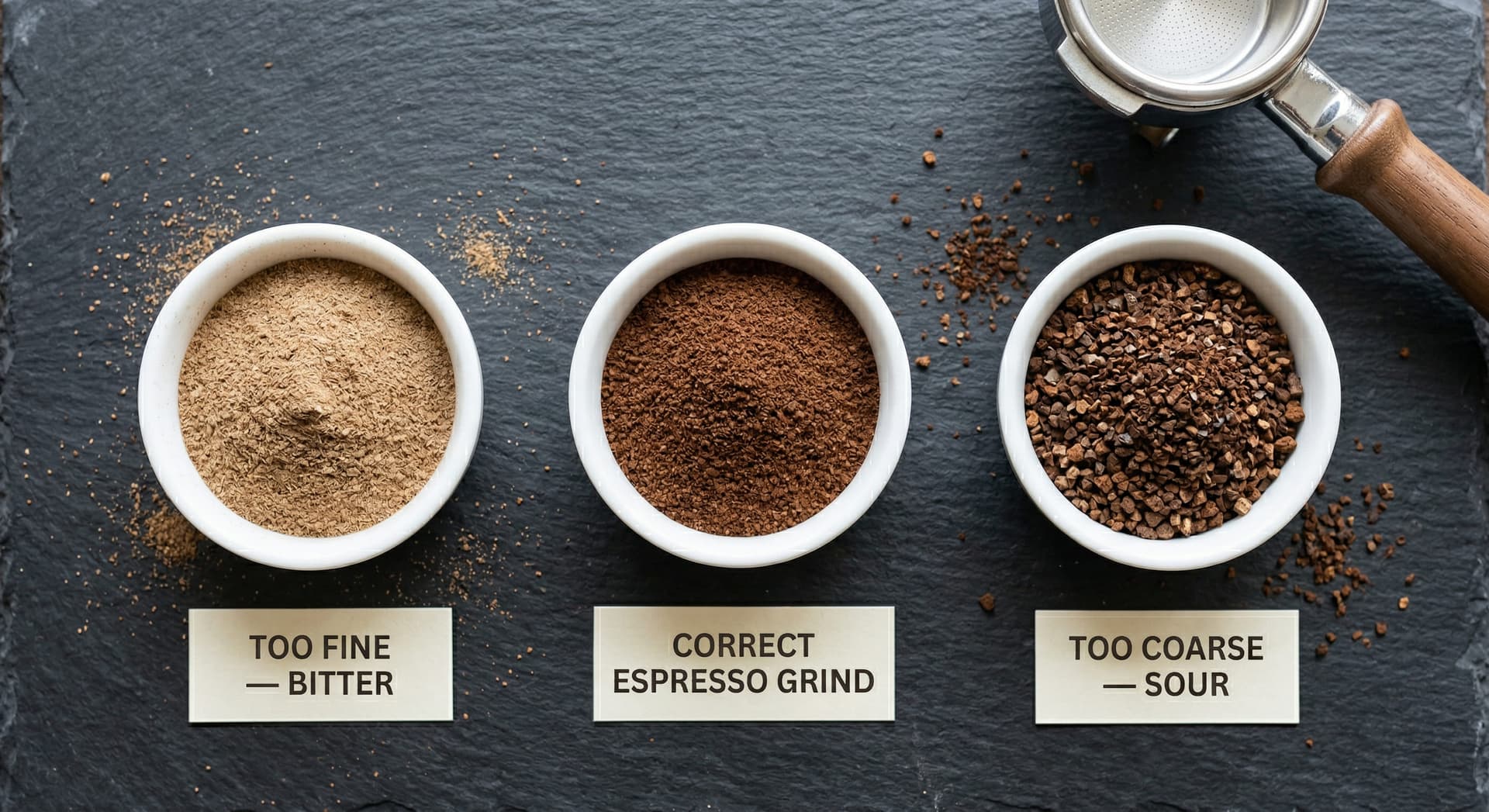
How to Diagnose a Too-Fine Grind
Grind Adjustment Protocol
- 1Adjust grind one click coarser (or one step on stepless grinders).
- 2Pull a fresh shot with the same dose and target yield.
- 3Taste. If still bitter, go one click coarser again.
- 4Stop when bitterness resolves and you start detecting sweetness or chocolate notes.
- 5If the shot becomes sour or sharp after several coarser adjustments, you've gone too far — step back one click.
Step 2 — Brew Temperature
The ideal espresso brewing temperature sits between 90°C and 93°C (194–200°F) for most medium roasts. Specialty coffee professionals often target 92°C as a starting point. Above 96°C, bitter compounds extract aggressively — the higher the temperature, the faster and more complete the extraction of those unwanted compounds.
Many home espresso machines in the mid price range — particularly boiler-based machines without a PID temperature controller — brew at 96–98°C by default. I've tested this extensively: the same shot at 92°C versus 97°C produces a dramatically different result, with the hotter version consistently bitter and harsh even with an otherwise dialled-in grind and dose.
| Temperature | Effect | Typical Result |
|---|---|---|
| Below 88°C | Under-extraction | Sour, thin, weak |
| 90–93°C | Optimal range for most roasts | Balanced, sweet, full |
| 93–96°C | Slightly elevated — still workable | Slightly aggressive, less sweetness |
| Above 96°C | Over-extraction risk | Harsh, bitter, astringent |
Temperature Fixes by Machine Type
Machine with PID (Breville Barista Express, higher-end machines)
Lower the set temperature by 2–3°C. Most PID-equipped machines allow temperature adjustment in settings. Start at 92°C for medium roasts; try 90–91°C for dark roasts.
Non-PID machine (entry-level boiler machines)
Use temperature surfing: trigger a blank shot (no portafilter, or portafilter empty) for 3–5 seconds immediately before locking in your portafilter and pulling. This drops the group head temperature by 2–4°C and can meaningfully reduce bitterness.
Thermoblock machines (Nespresso Vertuo excluded)
Thermoblock machines heat quickly but often overshoot. Let the machine heat up fully, then run one full blank cycle before your actual shot to flush out the hottest water sitting in the block.
Step 3 — Dose and Yield (Brew Ratio)
Brew ratio — the weight of dry coffee going in versus the weight of liquid espresso coming out — is the variable most often overlooked by home brewers troubleshooting bitter espresso. Shot time tells you something, but it doesn't tell you how much espresso you actually extracted. Only a scale does that.
A standard espresso ratio is 1:2 — 18 g of ground coffee yielding approximately 36 g of liquid espresso in 25–30 seconds. Pulling beyond 1:2.5 or 1:3 means you're extracting significantly more volume from the same amount of coffee, and the later-stage extraction is dominated by bitter compounds. In my testing, pulling to 1:3 (54 g out of 18 g in) consistently produces a noticeably harsher, more bitter shot than the same dose pulled to 1:2.
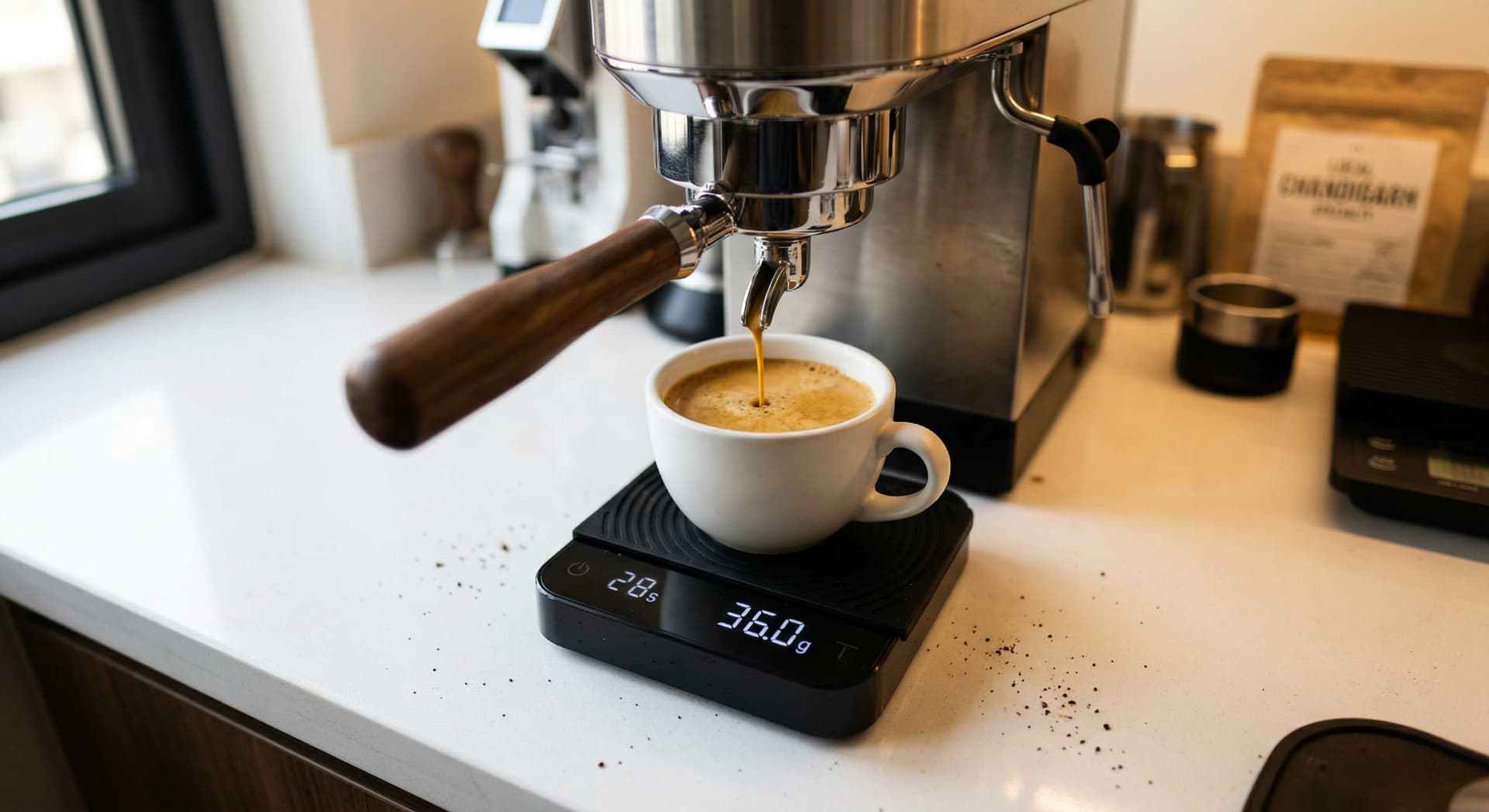
Brew Ratio Reference
| Ratio | Example (18 g dose) | Best For |
|---|---|---|
| 1:1.5 (ristretto) | 18 g in → 27 g out | Milk drinks, intense sweetness |
| 1:2 (standard) | 18 g in → 36 g out | Most roasts, balanced extraction |
| 1:2.5 | 18 g in → 45 g out | Light roasts, specialty beans |
| 1:3 (lungo) | 18 g in → 54 g out | Over-extraction risk — bitter for most roasts |
Step 4 — Channeling
Channeling is the specific failure mode where pressurised water finds a gap, crack, or weak spot in the puck and tunnels through it rather than flowing evenly through all the grounds. The channel over-extracts severely — every bitter compound in that path gets pulled out — while the rest of the puck barely extracts. The result is a shot that simultaneously tastes bitter AND sour, which is confusing if you don't know what caused it.
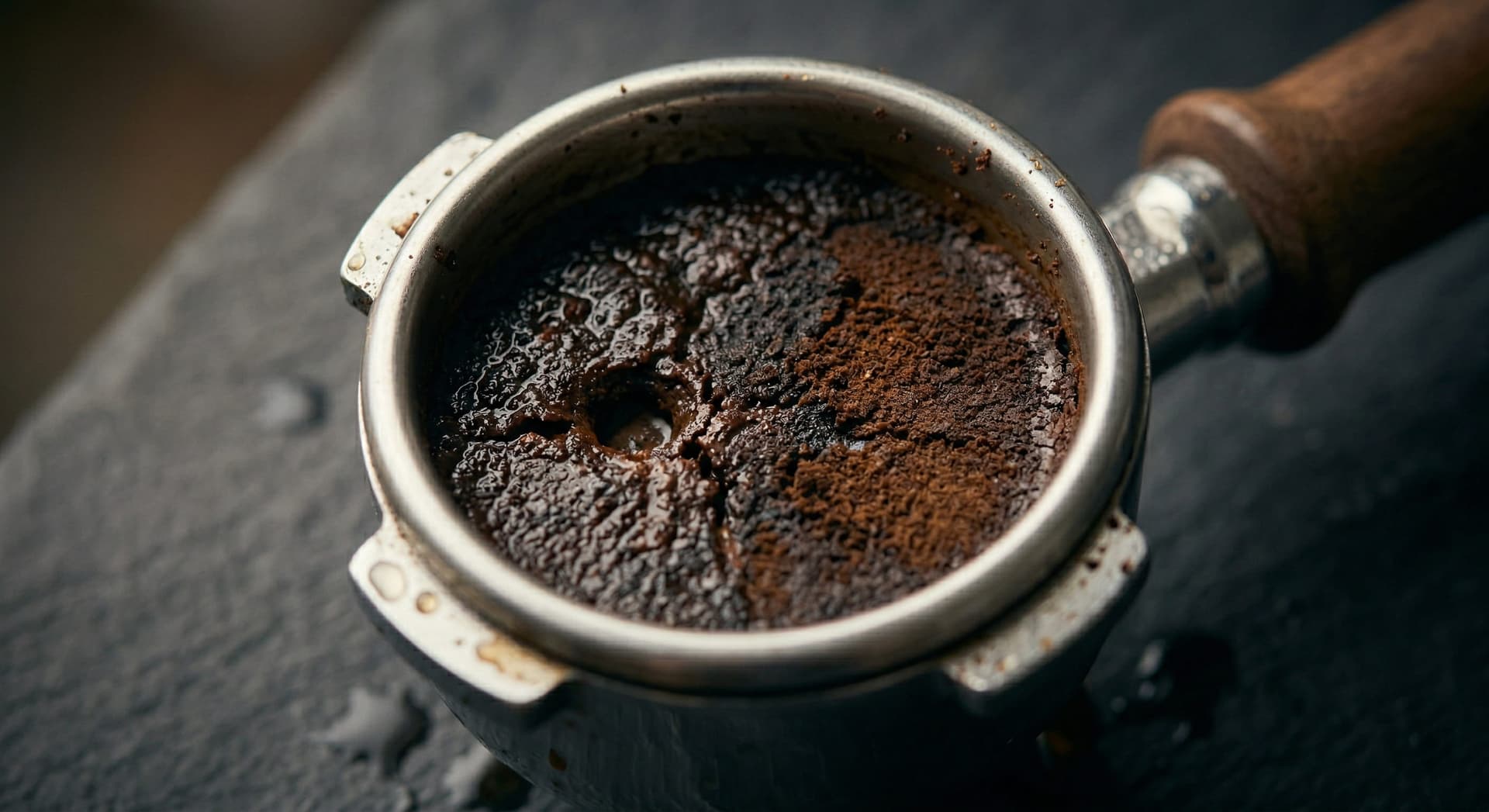
Signs of Channeling
How to Fix Channeling
1. Improve distribution before tamping
Uneven distribution is the most common channeling cause. Use a WDT tool (a thin needle to stir and level the grounds) or a distribution tool to create a flat, even bed before tamping. Even a simple tap of the portafilter on the counter to settle the grounds helps, though WDT is more consistent.
2. Match your tamper to your basket diameter
A tamper that is even 1 mm smaller than your basket leaves a visible gap around the edge. Water finds this gap immediately and channels down the basket wall on every single shot. Measure your basket with a calliper — commercial machines use 58 mm, many entry-level home machines use 51 mm or 53 mm.
3. Check your grind consistency
Worn or cheap burrs produce inconsistent particle sizes. Fine particles clump and block flow; coarse particles create gaps. Both outcomes promote channeling. If you've improved distribution and tamping and still see channeling, your burrs may need replacing or it's time to upgrade to a better grinder.
Step 5 — Machine Cleanliness
Rancid coffee oils are one of the most underdiagnosed causes of persistent espresso bitterness. Coffee oils oxidise within hours of contact with air and heat. A portafilter basket that hasn't been properly cleaned adds a rancid, lingering bitterness to every shot regardless of how well-calibrated your grind and dose are. I've tasted some surprisingly bad espresso from otherwise good setups where the entire problem traced back to a portafilter basket that hadn't been scrubbed in weeks.
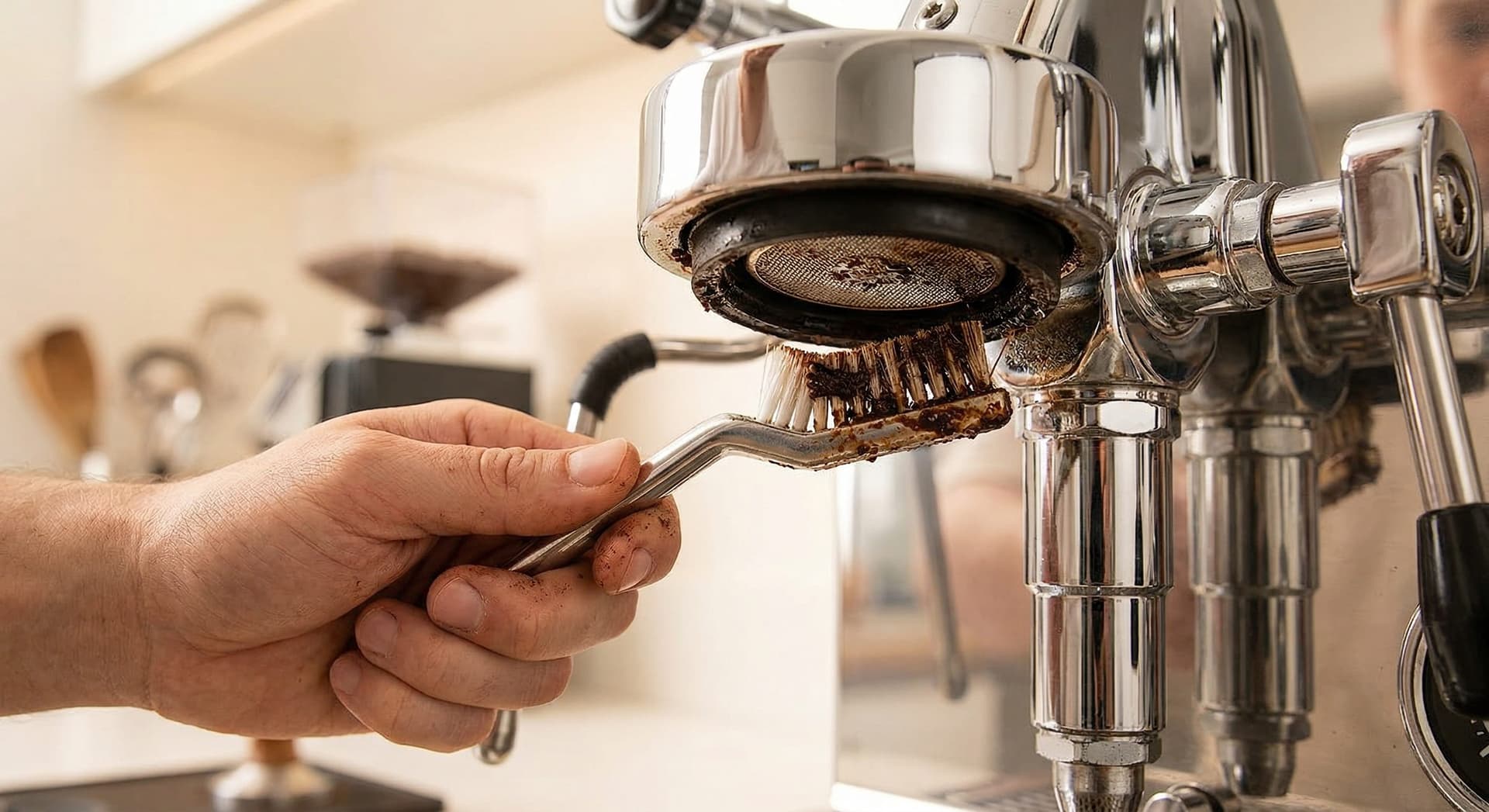
Cleaning Routine for Better-Tasting Espresso
Knock out the puck, rinse the portafilter basket under hot water, wipe the shower screen with a damp cloth. Takes 30 seconds.
Purge the group head with a 3–5 second blank shot (no portafilter) to flush stale water and bring temperature to steady state.
Backflush with group head cleaner (Cafiza, Puly Caff) on machines with a 3-way solenoid valve. Soak the portafilter basket in hot water and group cleaner.
Remove and soak the shower screen. Inspect the group head gasket for coffee residue. Deep clean the steam wand.
Descale according to water hardness. Scale buildup affects temperature stability and can make shots taste minerally and harsh.
Step 6 — Bean Freshness and Roast Level
Stale beans are a dead end. No technique — no matter how skilled — extracts well from oxidised coffee. The volatile compounds that create sweetness, fruit, and complexity degrade within weeks of roasting. What's left behind are the more stable, bitter compounds that extract easily and dominate the cup.
Peak espresso flavour runs from about 5 days to 3–4 weeks after roasting. Still very good through 5–6 weeks. By 2–3 months past the roast date, the cup will taste flat and bitter regardless of extraction parameters. The majority of supermarket coffee — with no visible roast date — was often roasted months before it reached the shelf.
Stale Bean Indicators
- ✗ No roast date on the bag (only a “best by” date)
- ✗ Little to no aroma when you open the bag
- ✗ Beans look dull, matte, no visible oil
- ✗ Very little crema on the shot despite correct grind
- ✗ Flat, papery taste with persistent bitterness
Fresh Bean Indicators
- ✓ Roast date printed on the bag — within 5 weeks
- ✓ Strong, pleasant aroma when you open the bag
- ✓ Visible one-way valve on the bag (indicates fresh packaging)
- ✓ Rich crema forms within the first 2–3 seconds of extraction
- ✓ CO₂ off-gassing when you bloom or grind
Dark Roast and Bitterness
Very dark roasts contain significantly more inherent bitter compounds — melanoidins and degraded chlorogenic acids produced by the extended roasting process — than medium roasts. They also extract faster. The practical fix: use a slightly coarser grind, target a shorter ratio (closer to 1:2 than 1:2.5), and reduce temperature by 1–2°C if your machine allows it.
If every dark roast tastes bitter regardless of your adjustments, your palate may simply prefer medium roasts. That's completely valid — medium roasts are more forgiving to extract, produce a wider range of flavour notes, and are less inherently bitter from the start. Try a medium roast from the same origin or roaster before assuming your technique is the problem.
Reading Your Shot in Real Time
The most efficient way to fix bitter espresso long-term is to learn to read each shot as it pulls. These real-time signals — flow rate, crema colour, stream thickness — give you extraction feedback before you even taste the cup. For a deeper breakdown of how to interpret every visual signal and correlate it to under or over-extraction, our espresso extraction guide covers the full diagnostic framework.
Shot drips slowly for the first 5–8 seconds, then stream appears
Normal for well-prepared puck with pre-infusion
Action: No adjustment needed if taste is good
Immediate fast flow from the first second — light blonde stream
Under-extraction — grind too coarse, or puck has channeled
Action: Grind finer, or improve distribution if taste is both sour and bitter
Very slow drip throughout, dark near-black crema
Over-extraction — grind too fine or dose too high
Action: Grind coarser, or reduce dose by 0.5–1 g
Shot runs fast then suddenly slows or stops midway
Channeling — channel formed then clogged with fines
Action: Improve distribution technique and check tamper size
Rich, hazelnut-brown crema with even tiger-stripe pattern
Well-extracted espresso
Action: Taste and record — this is the benchmark to replicate
Frequently Asked Questions
If coarsening the grind hasn't fixed the bitterness, run through the other variables: brew temperature (too high is a very common culprit on machines without PID control), brew ratio (pulling too long concentrates bitter compounds), and machine cleanliness.
A group head with weeks of coffee oil buildup will make every shot taste bitter regardless of grind setting.
Also check bean age — beans older than 6–8 weeks past roast date will taste flat and bitter at any grind.
Get Coffee Tips
Join our newsletter for expert reviews and brewing guides.
Affiliate Disclosure: We may earn a commission when you purchase through links on our site. This comes at no extra cost to you and helps us continue providing expert coffee guidance.