
How to Make an Iced Latte at Home
Espresso over ice with cold milk — the right ratio, the right pour order, and how to avoid the watered-down version.
The iced latte is one of those drinks that looks simple and gets made badly most of the time. I have tested this recipe across three different espresso machines, four types of milk, and more ice-to-liquid ratios than I care to admit — and the gap between a good homemade iced latte and a watery, flat one comes down to a handful of specific decisions that most people get wrong by default.
A cold latte recipe is genuinely straightforward once you understand why each step matters. The ingredients are just espresso, cold milk, and ice — but the ratio, the pour order, and the timing all affect the finished drink. Get them right and you have something genuinely better than most café versions, at a fraction of the cost.
This guide covers everything for making an iced latte at home: the correct ratio, step-by-step method, how to pick the right milk, how a homemade iced latte differs from iced coffee, and the most common mistakes that leave people with a watered-down glass. If you want to understand where the iced latte sits in the broader picture of espresso drinks, our coffee drinks differences guide covers the full espresso-based drink spectrum in detail.
Iced Latte at a Glance
- Base: Double espresso (18–20 g in, 36–40 g out, 25–30 second extraction)
- Milk: 150–180 ml cold whole milk or barista oat milk
- Standard ratio: 1:3 to 1:4 (espresso to milk, before ice)
- Glass size: 350–400 ml tall glass
- Caffeine: 120–140 mg (same as a double espresso)
- Pour order (recommended): Ice → cold milk → hot espresso on top
- Total prep time: 4–5 minutes
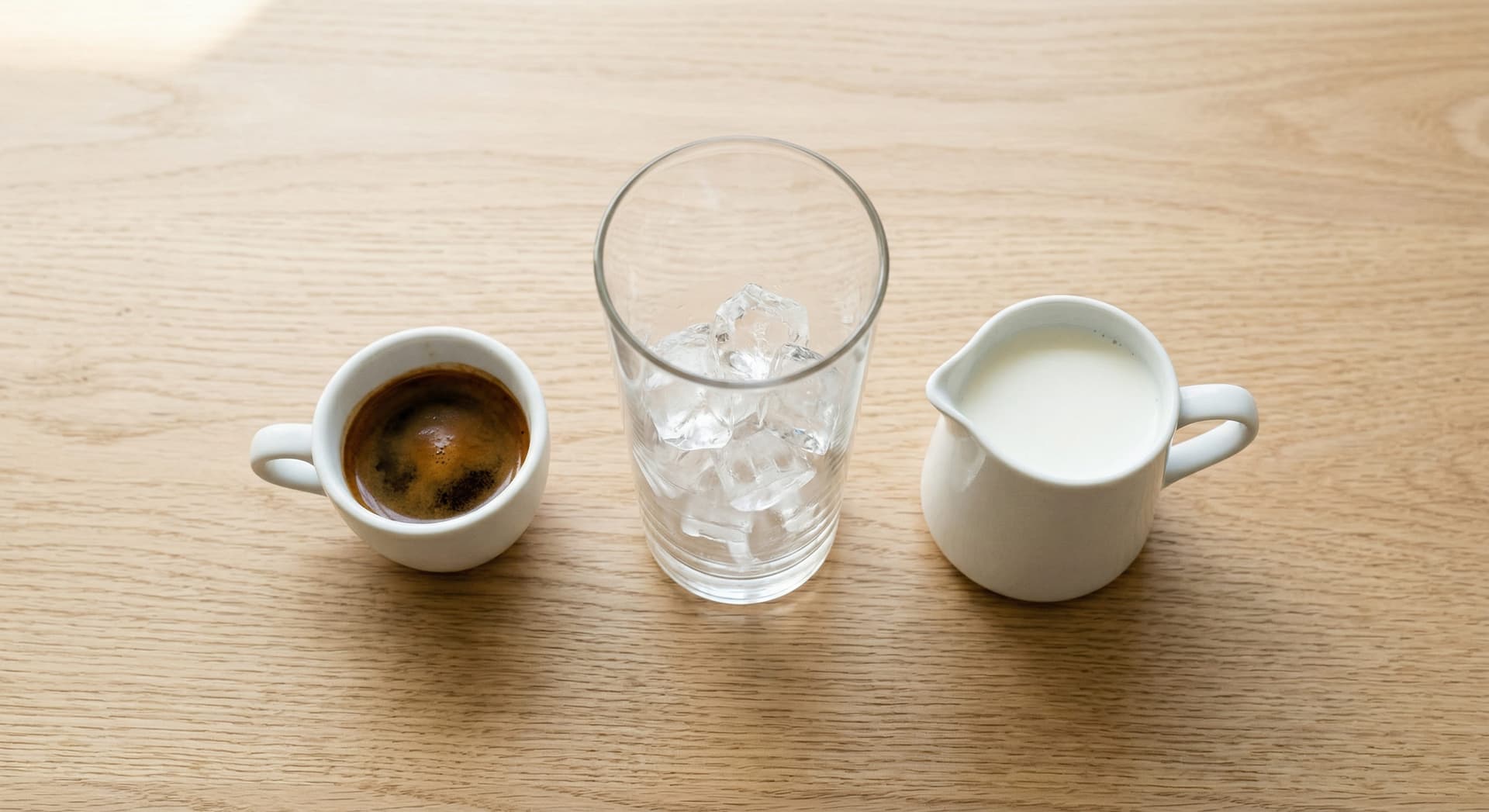
The homemade iced latte ratio: one double espresso (60 ml) over 150–180 ml cold milk and a glass half-filled with ice. The ice dilutes as it melts — starting at 1:3 keeps the drink from going watery.
What You Need
The equipment list is short, but every item influences the result. A weak espresso base is the most common reason a cold latte recipe fails — the ice and milk dilute everything, so if the shot is wrong, the whole drink is wrong.
Espresso machine
Any machine pulling proper 9-bar espresso with crema. Entry-level semi-automatics — the Breville Bambino, DeLonghi Dedica, or De'Longhi La Specialista — all work well. The espresso needs to be well-extracted and full-flavoured; it will be diluted, so a thin shot tastes much worse here than it does in a hot drink. If you are still choosing a machine, our best espresso machines guide covers every price tier with hands-on testing notes.
Burr grinder
Fresh-ground coffee matters more for iced espresso drinks than hot ones, counterintuitively — cold milk suppresses some flavour, so starting with the most flavour-rich espresso possible gives you a bigger margin. Pre-ground loses volatile aromatics fast. A mid-range burr grinder produces a noticeably more consistent shot than blade-ground or pre-ground. See our best coffee grinders guide for tested options at every budget.
Tall glass (350–400 ml)
A tall straight-sided glass shows off the layered effect and holds the volume correctly. Pre-chilling the glass in the freezer for 5 minutes before you start slows ice melt noticeably — worth doing if you want the drink to last more than a few minutes without going flat.
Cold milk and ice
Use milk straight from the fridge — the colder it is, the slower the espresso dilutes the drink. Larger ice cubes melt more slowly than crushed ice, which is important for maintaining flavour concentration. Cocktail-style large ice cubes or standard cubed ice from a tray both work better than convenience-store crushed ice.
The Right Ratio — Avoiding a Watered-Down Result
This is the part most guides gloss over, and it is the single biggest reason homemade iced lattes disappoint. The issue is not the recipe — it is that most people do not account for dilution from ice melt when they set their ratio.
A café iced latte is typically built at a 1:3 to 1:4 ratio of espresso to milk before ice. By the time the drink is finished — five to ten minutes after assembly — ice melt has added another 30–50 ml of water to the glass. If you started at 1:5 or 1:6 because it looked like “enough espresso,” you end up drinking something that tastes like cold, vaguely coffee-flavoured milk.
My recommendation for a standard 350 ml glass: one double espresso (60 ml), 150 ml of cold milk, ice filling roughly half the glass. That starting ratio of approximately 1:2.5 finishes at around 1:3.5–1:4 after ice melt — which is where the drink tastes best. If you prefer a milkier result, use 170 ml of milk and accept that you need to drink it quickly before further dilution.

Left: correctly proportioned iced latte — rich, espresso-forward colour. Right: over-diluted from starting with too little espresso and too much milk. The ice melt accounts for the difference between these two outcomes.
How to Make an Iced Latte — Step by Step
The complete cold latte recipe. Follow this order exactly — the pour sequence affects both the flavour and the visual result.
- Prepare your espresso. Grind fresh — medium-fine, the same setting you use for any double shot. Dose 18–20 g into the portafilter, distribute and tamp level, then lock into your machine. Do not pull the shot yet.
- Fill the glass with ice. Use a tall 350–400 ml glass. Fill it roughly half to two-thirds full with ice cubes. If your glass has been in the freezer, great — if not, a quick rinse with cold water cools it quickly.
- Add 150 ml of cold milk. Pour straight from the fridge — whole milk, semi-skimmed, or barista oat milk. Do not heat or steam it. Cold milk is what makes this an iced espresso drink rather than a standard latte that has gone cold.
- Pull the double espresso directly over the milk and ice. Start the shot and pull it straight into the glass, over the cold milk. The hot espresso hitting the cold milk and ice creates a rapid-chill effect — you will see it cloud and diffuse through the milk immediately. This is correct.
- Wait 15–20 seconds, then stir once. Let the espresso settle and the glass cool. Give it one gentle stir from the bottom to blend the layers slightly — or leave it layered and stir as you drink. Either approach works; the layered approach looks better, the stirred approach tastes more consistent from the first sip.

Pouring hot espresso directly over cold milk and ice — the density difference creates the characteristic layering that makes a properly made iced latte visually distinct from a stirred blend.
Choosing the Right Milk
Milk choice matters more for iced lattes than for hot ones — you are not steaming it, which means the fat content and natural sweetness of the milk are the only things contributing texture to the drink. Here is what I found across multiple tests:
| Milk Type | Result | Notes |
|---|---|---|
| Whole milk | Richest, creamiest | Best overall — full mouthfeel, natural sweetness balances espresso bitterness |
| Semi-skimmed (2%) | Clean, good balance | Café default — slightly less body than whole, still works well |
| Skimmed | Thin, watery | Makes dilution issues worse — not recommended |
| Oat milk (barista) | Creamy, slightly sweet | Best plant-based option — closest texture to semi-skimmed dairy, doesn't split |
| Almond milk | Thin, nutty | Low fat makes drink thinner; some brands add grit when cold |
| Soy milk | Good body, mild | Can curdle slightly when hot espresso hits cold soy — pre-chill shot by 30 sec or stir immediately |
One thing worth noting from testing: the oat milk “barista edition” distinction matters. Standard (non-barista) oat milk is thinner and sweeter than barista versions, which are formulated with a higher fat content to hold texture when mixed with hot liquid. For an iced latte, barista oat milk stays creamy where standard oat milk goes thin.
Iced Latte vs Iced Coffee
These are genuinely different drinks, and the confusion between them is worth clearing up — partly because it changes what you order at a café, and partly because knowing the difference tells you whether you actually need an espresso machine to make what you want at home.
| Factor | Iced Latte | Iced Coffee |
|---|---|---|
| Coffee base | Double espresso | Brewed drip or filter coffee (chilled) |
| Milk | Cold milk (full amount — 150–180 ml) | Optional — splash or none |
| Texture | Creamy, full-bodied | Light, thin |
| Flavour | Rich espresso with creamy milk | Lighter, sometimes more acidic |
| Equipment needed | Espresso machine (or Moka pot for an approximation) | Any brew method — drip, French press, pour over |
| Caffeine | ~120–140 mg (from double espresso) | ~95–150 mg (depends on brew strength) |
The practical difference is concentration. Espresso is 6–8x more concentrated than drip coffee, which is why a 60 ml double shot can hold its flavour against 150 ml of cold milk and a glass of ice. Brewed filter coffee diluted with the same amount of milk over ice tastes pale and thin — because it was never concentrated enough to begin with.
If you are making an iced espresso drink — creamy, rich, espresso-forward — you need proper espresso. If you want a lighter cold coffee with just a splash of milk, iced filter coffee is a better choice and easier to make. For a deeper look at how these drinks relate to each other, the coffee drinks differences guide covers every category with clear rationale.
Making an Iced Latte Without an Espresso Machine
A true iced latte uses proper 9-bar espresso — that concentration and the crema it produces are what make the finished drink taste genuinely good. But if you do not have an espresso machine, there are workable alternatives:
Moka pot (best alternative)
A Moka pot brews at 1.5–3 bar of pressure — not true espresso, but the output is significantly more concentrated than drip. Brew a 3- or 6-cup Moka pot on a fine-to-medium grind setting and use 60–80 ml of the output as your iced latte base. The result lacks crema and has slightly more bitterness than machine espresso, but it is the closest approximation without a proper machine. Use less milk (120–140 ml) to compensate for the lower concentration.
AeroPress (concentrated method)
AeroPress on an inverted setup with a fine grind, 15 g of coffee, 60 ml of water, and a 60-second steep produces a concentrated espresso-style output that works reasonably well as an iced latte base. It is more acidic than machine espresso and the mouthfeel is different, but it is genuinely drinkable — and considerably better than using filter or drip.
Cold brew concentrate
Cold brew concentrate (made at a 1:4 to 1:5 coffee-to-water ratio over 12–18 hours) produces a smooth, low-acidity base that works well with cold milk and ice. It does not replicate the flavour profile of an espresso-based iced latte — cold brew reads as darker, roastier, and less aromatic — but it is a legitimate cold latte variant that many people prefer. Use 60–80 ml of concentrate per drink.
Common Mistakes
1. Starting with too weak an espresso
Cold milk and ice dilute everything. A thin, under-extracted shot that tastes acceptable hot tastes genuinely bad cold. Taste the shot before building the drink — it should taste rich, sweet, and concentrated. If it tastes flat or sour, pull another shot with a finer grind or higher dose.
2. Using too much milk
A 1:5 ratio looks fine when you build it. After five minutes of ice melt, it is closer to 1:6 and tastes like almost nothing. Build at 1:2.5 to 1:3 and let the ice do the diluting. If you find yourself adding flavoured syrup to cover up a flat drink, the ratio is almost always the underlying problem.
3. Chilling the espresso before adding it
Letting espresso cool in a separate container before adding it to the iced latte kills aromatic brightness noticeably. The volatile compounds that make espresso smell and taste good escape quickly as the shot cools slowly. Pour it hot, directly over the ice — the rapid chill is what preserves the flavour.
4. Using crushed ice
Crushed ice has enormous surface area, which means it melts very fast — often before you have finished a quarter of the drink. Use cubed ice: standard cubes from a tray are fine, large ice cubes are better. The slower melt gives you more control over dilution and keeps the drink colder for longer without turning it into cold coffee-water.
5. Using warm milk
Room-temperature or warm milk immediately accelerates ice melt. Cold milk, straight from the fridge, is not optional here — it is structural. The colder the milk, the slower the ice melts, the longer the drink stays at the right concentration and temperature.
Frequently Asked Questions
The standard ratio for a homemade iced latte is 1 part espresso to 3–4 parts milk, with ice filling roughly half the glass. For a 350 ml glass: one double espresso (approximately 60 ml), 150–180 ml of cold milk, and ice.
If you want a stronger, more espresso-forward drink, use a 1:2 ratio. If you prefer something milder and milkier, push to 1:5.
The ice dilutes the drink as it melts, so starting slightly stronger than your target always produces a better result.
Get Coffee Tips
Join our newsletter for expert reviews and brewing guides.