How to Clean an Espresso Machine (Step-by-Step)
Daily, weekly, and monthly cleaning routines for portafilter, group head, steam wand, and backflushing — everything I've used training 200+ baristas
I've trained over 200 baristas in extraction techniques and milk texturing, and if there's one thing that separates a consistently great espresso from an inconsistent one, it's machine cleanliness. I don't mean gleaming-chrome-for-photos clean — I mean functionally clean. Residue-free group head, soak-clean baskets, and a steam wand that gets purged every single time. In my testing of 500+ coffee machines across twelve categories, dirty equipment is responsible for more "unexplained" flavor problems than any grind setting or bean choice combined.
This guide gives you the exact cleaning routines I've refined through years of hands-on testing — structured by frequency so you can follow them without thinking too hard at 7am. We cover everything: daily portafilter and steam wand care, weekly backflushing, and monthly deep cleans of shower screens and group gaskets. If you also need to tackle mineral buildup, pair this with our full descaling guide — cleaning and descaling address different problems and both are necessary.
Espresso Machine Cleaning — Quick Overview
Daily (2–3 min)
- Knock puck, rinse portafilter and basket under hot water
- Run 3–5 seconds of water through the group head
- Purge steam wand, wipe exterior while warm
- Empty drip tray
Weekly (8–10 min)
- Backflush with clean water (5 × 10-second cycles)
- Soak steam wand tip in hot water with cleaning powder
- Scrub group head gasket groove with group brush
- Wipe down exterior and clean drip tray thoroughly
Monthly (20–25 min)
- Backflush with cleaning powder (Cafiza / Puly Caff)
- Remove and soak shower screen and portafilter basket
- Inspect and clean group gasket, replace if cracked
- Deep-clean drip tray and grounds drawer
Full step-by-step instructions for each routine below.
Why Regular Cleaning Matters: The Science of Coffee Oil Rancidity
Coffee oils — the aromatic compounds that make a fresh espresso smell extraordinary — turn rancid within 24 to 48 hours of exposure to air and heat. Every shot you pull leaves a thin film of these oils on the portafilter, the basket, the shower screen, and the group head gasket. At room temperature, that film goes stale before your next morning session.
The result is cumulative bitterness. I first noticed this pattern systematically when testing a batch of Breville machines — I ran the same Guatemalan single-origin through each machine, with one machine cleaned daily and one cleaned only weekly. By day four, the uncleaned machine's shots were noticeably more bitter and astringent at the finish. Same beans, same grind, same dose. The only variable was portafilter residue.
Flavor Impact
Rancid coffee oils contribute harsh bitterness and an astringent aftertaste — completely masking the sweetness and clarity of well-extracted espresso.
Extraction Impact
Oil residue on shower screens reduces water distribution uniformity, encouraging channeling — where water finds easy paths through the puck rather than extracting evenly.
Machine Longevity
Accumulated residue in the solenoid valve and group head restricts flow over time, causing pressure inconsistencies that are expensive to diagnose and repair.
Espresso Machine Cleaning Supplies You Actually Need
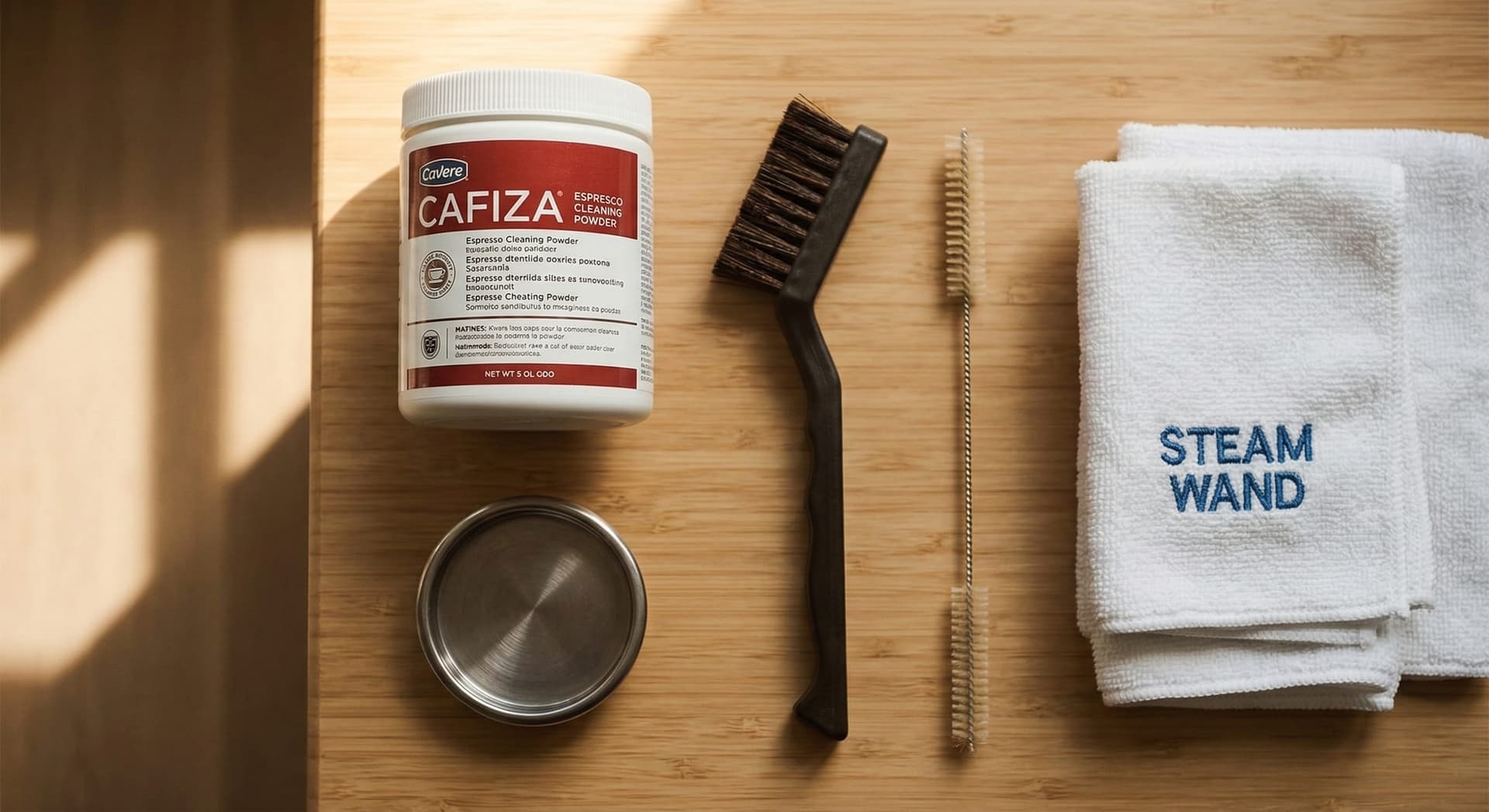
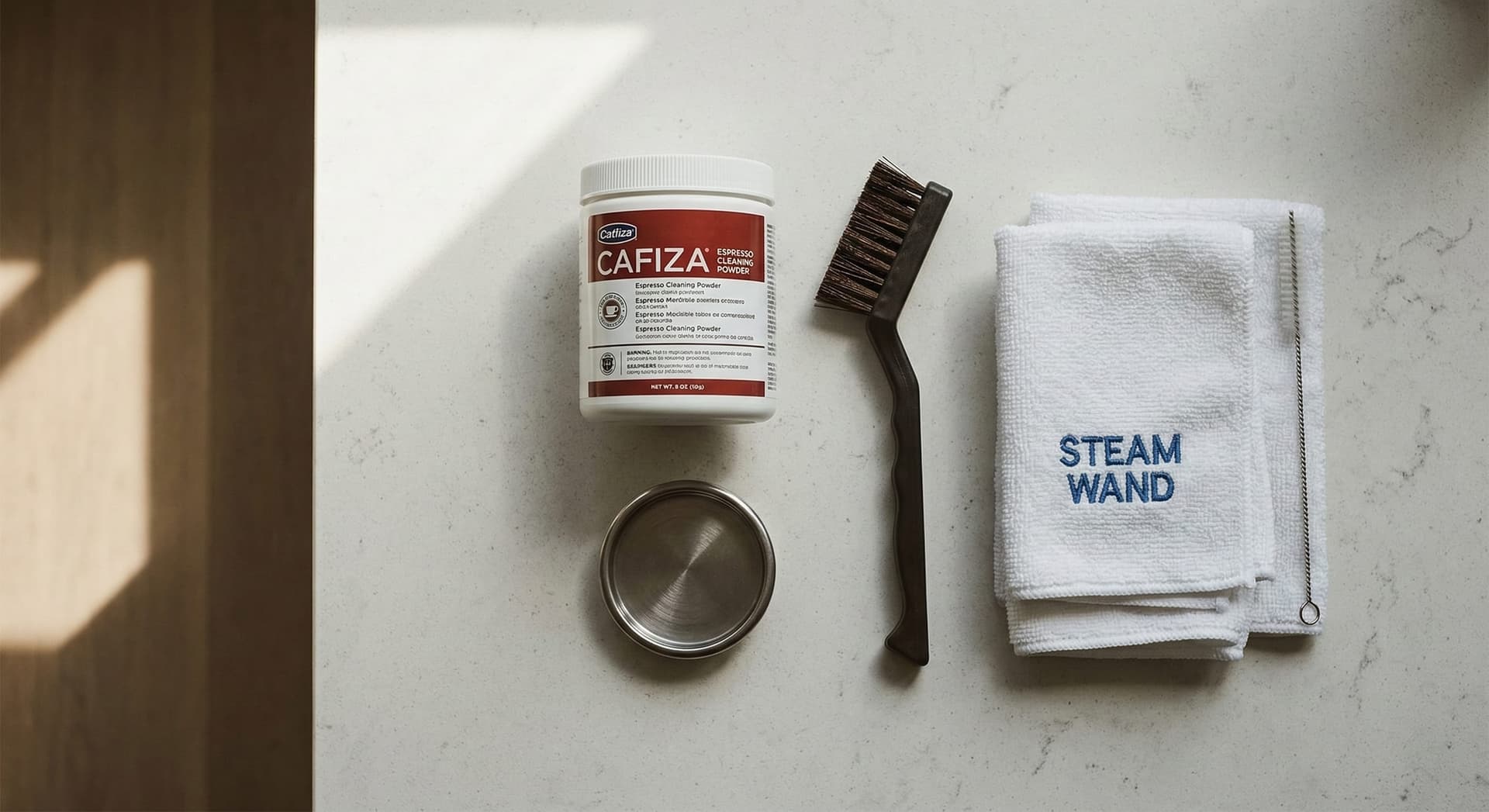
You don't need a complicated kit. After years of testing different products across commercial and home machines, this is what I consistently reach for:
Espresso Cleaning Powder (Cafiza or Puly Caff)
The industry standard for backflushing and basket soaks. Both are sodium percarbonate-based and designed specifically for coffee oil removal. Urnex Cafiza and Puly Caff are the two products I see in every professional café environment I've visited. Either works; buy whatever's available.
Blind Basket (Backflush Disc)
A portafilter basket with no holes. Required for backflushing machines with a three-way solenoid valve. Most Breville, De'Longhi, and Gaggia machines come with one. If yours did not, check the manufacturer part number — they are inexpensive and essential.
Group Head Brush
A stiff-bristled brush sized for the group head. Used to scrub the gasket groove and shower screen diffuser during weekly cleaning. The Pallo Coffeetool or any dedicated group brush works fine — avoid metal bristles which can scratch the screen.
Microfiber Cloths (dedicated)
Keep two: one for the steam wand (mark it clearly), one for the machine exterior. Microfiber removes milk protein residue from the steam wand far better than terry cloth, and keeping them separate prevents cross-contamination.
Steam Wand Brush
A thin wire brush for clearing blocked steam tip holes. Most steam tip clogs are just dried milk protein in one or two holes — a quick scrub with the right brush clears them in seconds.
Daily Cleaning Routine (2–3 Minutes)
The daily routine is about preventing buildup before it starts. None of these steps takes more than 30 seconds individually — the hard part is making them automatic. Once they're habit, they become invisible. I drill these into every barista I train as the absolute baseline, non-negotiable minimum.
Step 1: Knock the Puck — Immediately
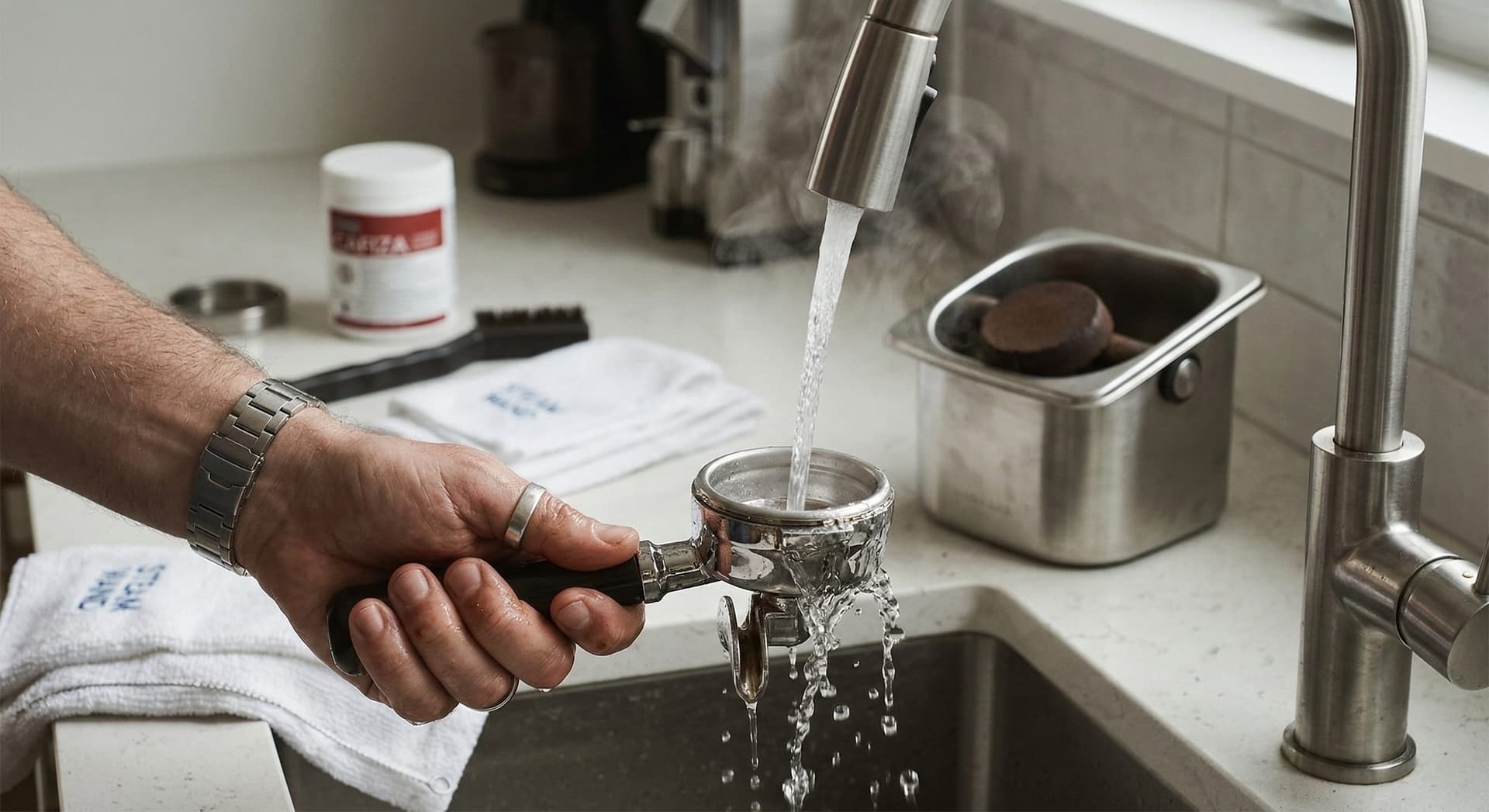
The moment brewing is done, knock the spent puck into the knockbox and rinse the portafilter and basket under hot running water. Do not let the puck sit and cool — wet puck residue sticks to the basket walls and gets harder to remove as it dries. Thirty seconds under hot water is all you need. No soap, no scrubbing.
Step 2: Flush the Group Head
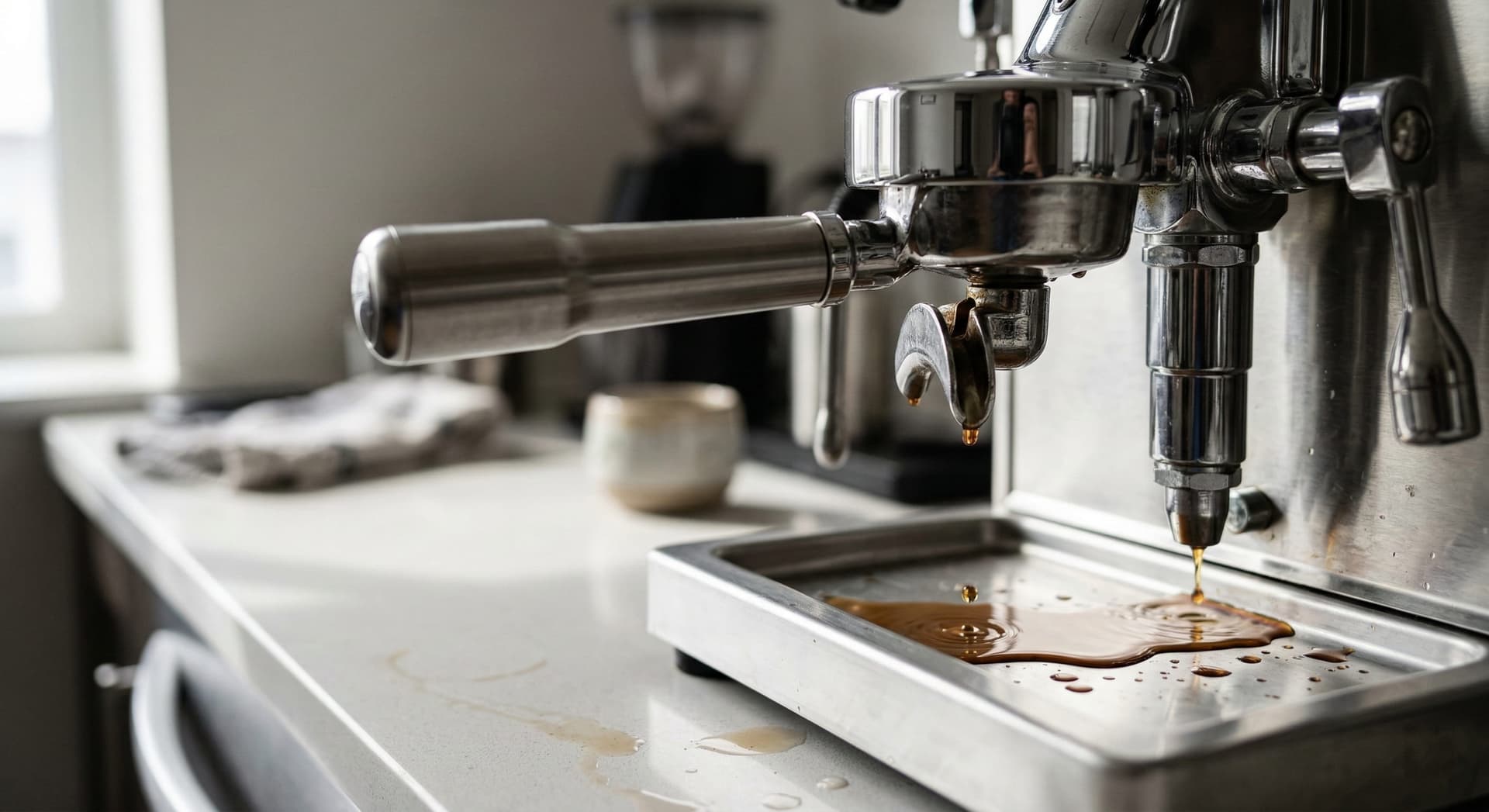
Run the brew cycle for 3–5 seconds with no portafilter attached. This flushes residual coffee grounds and oils from the shower screen. I usually do this before and after pulling a shot on my home machine — it takes five seconds and makes a tangible difference to shower screen cleanliness over time.
Step 3: Purge and Wipe the Steam Wand
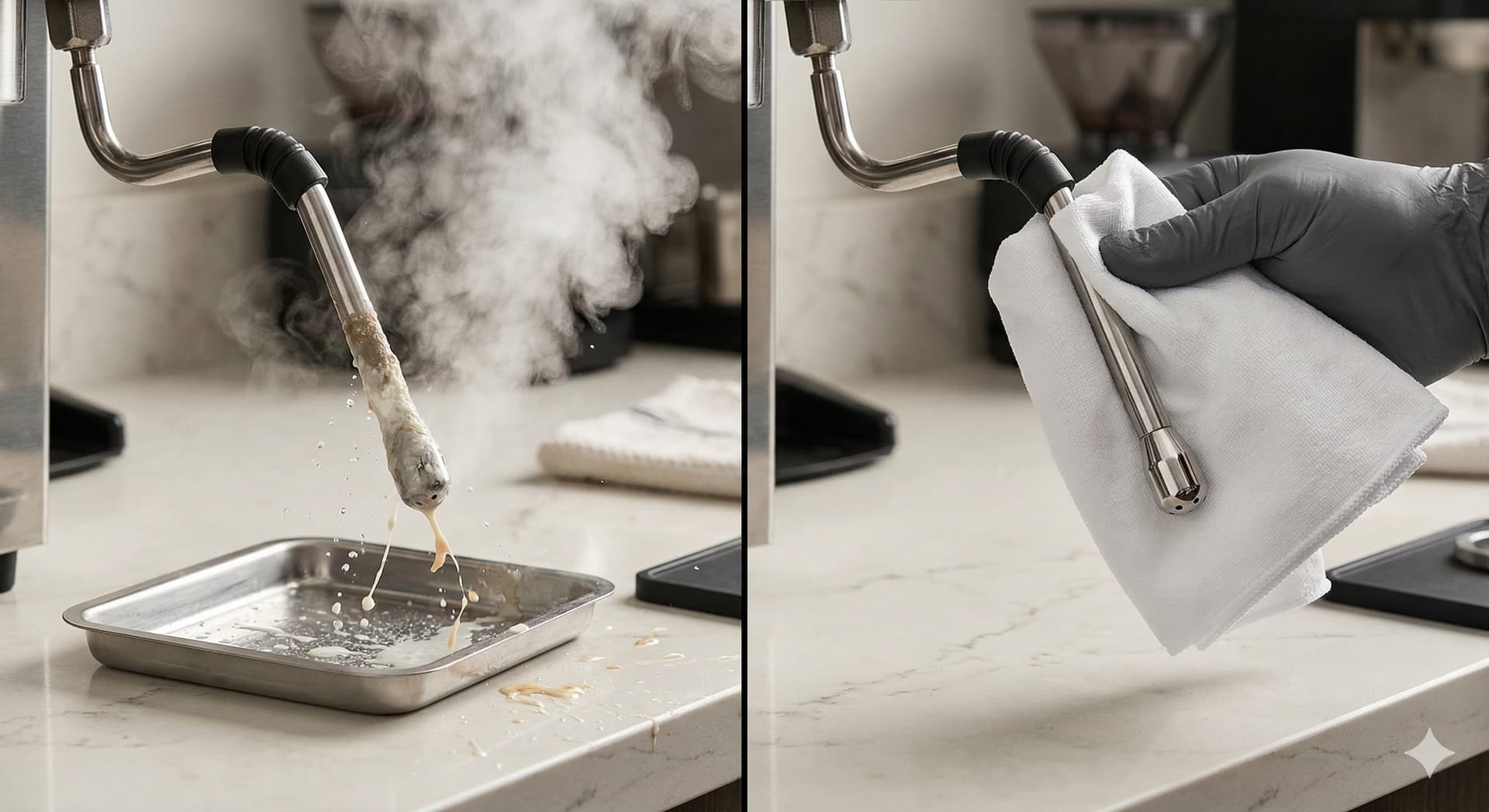
Immediately after steaming milk: open the steam valve for one to two seconds to purge any milk that entered the tip. Then wipe the wand exterior with a dedicated damp microfiber cloth while it's still warm. Milk protein on a warm surface wipes away effortlessly; the same residue after it cools and bakes on requires soaking. This is the single habit that most dramatically extends steam wand tip lifespan.
Step 4: Empty the Drip Tray
If the drip tray float has risen or the tray is close to full, empty it. Standing water in the drip tray harbors bacterial growth and creates unpleasant odors. A quick rinse under the tap takes ten seconds.
Weekly Cleaning Routine (8–10 Minutes)
Weekly cleaning addresses what daily rinsing misses: the oil residue working its way into the solenoid valve and the protein buildup inside the steam tip. Pick one day — I do mine on Sunday evening when the machine has been through a full week of use.
Backflush With Water (No Chemical)
Insert the blind basket into your portafilter. Lock the portafilter into the group head. Activate the brew switch for 10 seconds, then stop. Water will build up in the group head and flush back through the three-way valve when you stop — you'll hear a hiss and see water discharge into the drip tray. Repeat 5 times. This water-only backflush removes loose coffee oils from the solenoid pathway.
Note: Only machines with a three-way solenoid valve can be backflushed. This includes virtually all prosumer and enthusiast machines (Breville, De'Longhi La Specialista, Gaggia Classic Pro, Rancilio Silvia). Pod machines and most entry-level machines cannot be backflushed.
Soak the Steam Wand Tip
Fill a small cup with hot water and add a pinch of cleaning powder. Submerge the steam tip (or remove it if it unscrews) and let it soak for 15 minutes. Use a steam wand brush to clear any partially blocked holes. Rinse thoroughly and purge the wand before your next session to clear any cleaning product residue.
Scrub the Group Head Gasket Groove
With the portafilter removed, use your group head brush to scrub the rubber gasket and the groove around it in circular motions. Coffee grounds pack into this groove over time and contribute to poor portafilter sealing and channeling. Run a brief flush cycle immediately after to clear loosened debris.
Monthly Deep Clean (20–25 Minutes)
Once a month, the machine gets a proper chemical backflush and all removable parts come off for a soak. This is when you're addressing the oil residue that water backflushing doesn't fully dissolve.
Monthly Chemical Backflush Protocol
- Add 1/2 teaspoon (≈1.5–2g) of Cafiza or Puly Caff to the blind basket
- Lock portafilter into group head, activate brew for 10 seconds
- Stop pump. Wait 10 seconds — cleaning solution sits in the group head pathway
- Repeat steps 2–3 for a total of 5 cycles
- Remove blind basket and rinse with clean water
- Reinsert blind basket (no powder) and run 5 more water-only cycles to flush cleaning product
- Pull one blank shot with an empty portafilter, then pull a test shot into a cup and check for any chemical taste
Soak Portafilter Baskets
Remove the basket from the portafilter (a thin coin or basket removal tool helps). Prepare a solution of 500ml hot water and 1/2 teaspoon of cleaning powder. Submerge the basket and let it soak for 20–30 minutes. Brown, oil-stained water is a normal and good sign — that's oxidised coffee oil lifting off. Scrub with a soft brush, rinse thoroughly, and reinstall.
Remove and Soak the Shower Screen
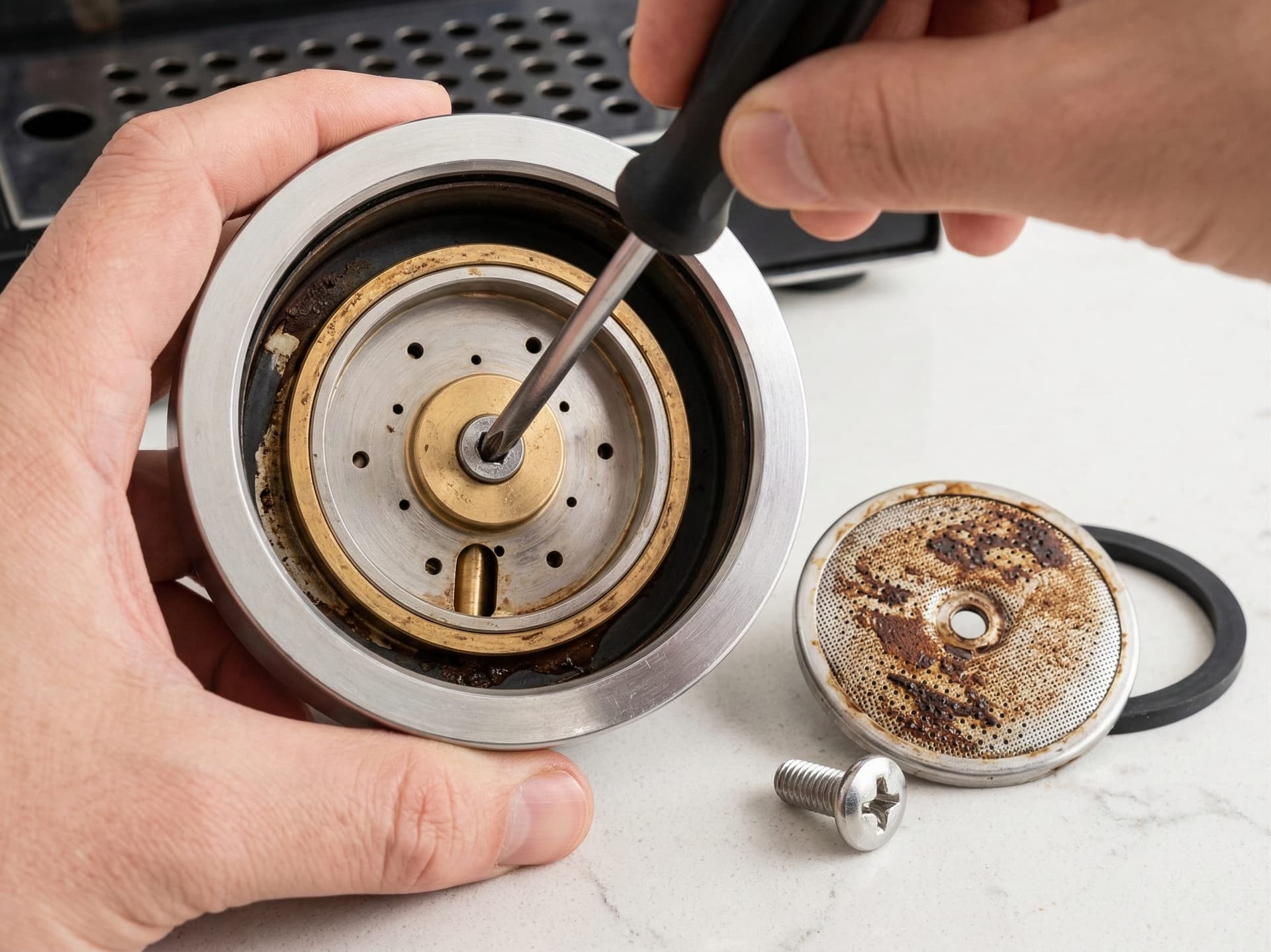
The shower screen (also called the dispersion screen) is held in by a central Phillips head screw on most machines. Remove it. Soak it in the same cleaning solution as the basket for 20–30 minutes. Use a brush to scrub both sides of the mesh — brown residue in the holes is coffee oil buildup and it should come off easily after soaking. While the screen is off, use your group brush to clean the diffuser block and the surrounding area.
Inspect the Group Head Gasket
The rubber group gasket (the O-ring that seals the portafilter) hardens and cracks over time, causing pressure leaks and inconsistent extraction. While the shower screen is off, inspect the gasket carefully. If it feels hard rather than slightly springy, or if you see surface cracking, replace it. Gaskets are inexpensive ($5–15) and replacement is straightforward — this is one of the highest-value maintenance tasks on the machine.
How to Clean the Portafilter and Basket
The portafilter and basket are in direct contact with ground coffee at high temperature and pressure every single shot. They need the most consistent attention.
After Every Shot
- ✓ Knock puck immediately
- ✓ Rinse basket under hot running water
- ✓ Wipe portafilter exterior and spouts
- ✗ Don't use soap — leaves residue
- ✗ Don't let puck sit and cool
Monthly Soak Protocol
- ✓ Remove basket from portafilter body
- ✓ Soak 20–30 min in cleaning powder solution
- ✓ Scrub basket holes with a soft brush
- ✓ Rinse thoroughly under running water
- ✓ Dry before reinstalling
How to Clean the Group Head
The group head is where the machine meets the coffee — and it's the area that accumulates the most significant oil and residue buildup over time. A clean group head means uniform water distribution and a clean-tasting shot; a dirty one means channeling, inconsistency, and that persistent background bitterness that no grind adjustment can fix.
Daily Group Head Flush
Run the brew switch for 3–5 seconds before and after pulling a shot. Before: to bring the group head to correct temperature and flush any stale water. After: to rinse residual grounds from the shower screen. This is the minimum viable group head maintenance.
Weekly Group Head Brush
With the portafilter out and the machine warm (not at full pressure), use a group head brush to scrub the gasket groove and the face of the shower screen in circular motions. Ground coffee and oil collects in the gasket groove in particular. Run a flush cycle after to wash loosened debris into the drip tray.
Monthly Shower Screen Removal
Turn off and allow the machine to cool slightly (the group area is hot). Locate the central screw holding the shower screen — on most E61 and commercial-style group heads it's a Phillips head. Remove the screw and shower screen. You'll likely see a brown coating — that's what you're cleaning. Soak and scrub as described in the monthly routine above.
How to Clean the Steam Wand
The steam wand is the piece of kit I see neglected most often — even in cafés that are otherwise well-maintained. The combination of heat, pressure, and milk protein creates an almost permanent baked-on residue if the wand isn't wiped immediately after every use. Once baked on, the residue creates hygiene problems (milk protein is an excellent bacterial growth medium) and eventually blocks the steam holes, reducing steam output.
After Every Use: Purge and Wipe
This is non-negotiable. The moment you finish steaming: open the steam valve for one to two seconds to purge — milk that's been sucked into the tip during steaming gets blown clear before it can heat and bake. Then immediately wipe the wand with a dedicated damp microfiber cloth, rotating the cloth around the wand in one motion to remove all exterior milk.
Weekly: Tip Soak
Fill a small cup or shot glass with hot water and add a pinch of espresso cleaning powder. Submerge the steam tip (not the entire wand — keep water away from the body connections) for 15–20 minutes. If the tip unscrews, remove it for a more thorough soak. Use a steam wand brush or a thin pipe cleaner to clear individual holes. After soaking, run a long purge to clear any remaining cleaning solution from the tip.
Clearing Blocked Steam Holes
If you notice reduced steam pressure or uneven steam direction, check the tip holes with a steam wand brush or a straightened paperclip. One or two blocked holes significantly reduce steaming performance. After clearing, soak the tip for 30 minutes and run a full purge. If multiple holes are blocked despite regular cleaning, the tip may need replacement — these are inexpensive spare parts from your machine manufacturer.
How to Backflush an Espresso Machine
Backflushing is the most important periodic cleaning task for any espresso machine with a three-way solenoid valve, and it's the one most home baristas either skip or do incorrectly. When done right, it cleans the internal pathway between the group head and the solenoid — an area you cannot reach any other way.
Step-by-Step Backflush Sequence
| Step | Action | Frequency |
|---|---|---|
| 1 | Insert blind basket into portafilter | Weekly + Monthly |
| 2 | For monthly only: add 1/2 tsp cleaning powder to basket | Monthly only |
| 3 | Lock portafilter into group head | Weekly + Monthly |
| 4 | Activate brew switch for 10 seconds, then stop | Weekly + Monthly |
| 5 | Wait 10 seconds (solution rests in group pathway) | Weekly + Monthly |
| 6 | Repeat steps 4–5 for 5 total cycles | Weekly + Monthly |
| 7 | Remove blind basket, rinse under water | Monthly only |
| 8 | Re-insert clean blind basket, repeat 5 water-only cycles | Monthly only |
| 9 | Pull one blank shot and one test shot to confirm clean taste | Monthly only |
If you want a broader understanding of how different espresso machine types handle maintenance differently — including which machines require backflushing and which use alternative cleaning systems — that guide covers it in detail.
For the full monthly maintenance schedule — including gasket inspection intervals, descaling timing, and a task-by-task breakdown with time estimates — see the espresso machine maintenance guide.
Common Espresso Machine Cleaning Mistakes
These are the mistakes I've seen consistently across hundreds of barista training sessions and machine testing evaluations. Most of them are simple to fix once you know about them.
✗ Leaving the portafilter locked in the group head when the machine is off
✓ The gasket takes a set over time from the pressure of the locked portafilter. Always remove it after your last shot. Hang it on the side of the machine or rest it on the drip tray.
✗ Rinsing with cold water instead of hot
✓ Hot water dissolves coffee oils; cold water solidifies them. Always use the hottest tap water available when rinsing baskets and portafilters daily.
✗ Using too much cleaning powder for backflushing
✓ 1/2 teaspoon is the correct dose for most home machines. More is not better — excess cleaning chemical is harder to rinse completely and may leave taste contamination. Follow the product instructions.
✗ Skipping rinse cycles after a chemical backflush
✓ Always run a minimum of 5 water-only backflush cycles and one blank shot pull after any chemical backflush. Residual cleaning solution tastes terrible and is genuinely unpleasant to ingest.
✗ Confusing cleaning with descaling
✓ Cleaning removes coffee oil residue. Descaling removes mineral limescale deposits. They address completely different problems using different products. Your machine needs both on separate schedules.
✗ Not purging the steam wand before wiping
✓ If you wipe first, you drag milk residue along the wand before the internal milk has been cleared. Purge first (one to two seconds of steam) — then wipe. The purge clears internal milk; the wipe removes external residue.
Looking for a Machine That's Easier to Maintain?
Some espresso machines are significantly easier to clean than others — better drip tray access, removable shower screens, tool-free group head cleaning, and automatic cleaning reminders all make a real difference in daily maintenance burden. We've factored cleanability into every machine we've tested.
See our top-rated espresso machines →Frequently Asked Questions
Daily cleaning takes two to three minutes and should happen after every session: purge the group head, wipe and purge the steam wand, knock out the puck and rinse the portafilter. Weekly cleaning adds a backflush with water and a thorough steam wand soak — about ten minutes.
Monthly, you soak portafilter baskets and the shower screen in cleaning solution, which takes around twenty minutes including soak time. Machines used commercially or multiple times daily need this schedule accelerated.
Get Coffee Tips
Join our newsletter for expert reviews and brewing guides.