
Philips 5500 Series Review 2026: LatteGo & Grinder Tested
Philips 5500 Series Review 2026: 45 days, 180+ drinks tested. Honest results on LatteGo, ceramic burr grinder, 12 recipes, and who should actually buy it.
Quick Summary
Busy households and office kitchens that want fresh-ground espresso drinks without barista training. If you're making 3–6 drinks a day and LatteGo's 2-second rinse is appealing, this machine will genuinely improve your daily coffee routine.
Espresso purists who want hands-on extraction control, manual lever enthusiasts, anyone on a tight budget (the DeLonghi Dedica does espresso for half the price), or households where someone already owns a quality grinder and semi-auto.
Independent Testing Summary
- Total shots pulled
- 180+ drinks
- Testing duration
- 45 days
- Extraction time
- 22–27 seconds (double espresso, factory dose ~8–10g)
- Dose range
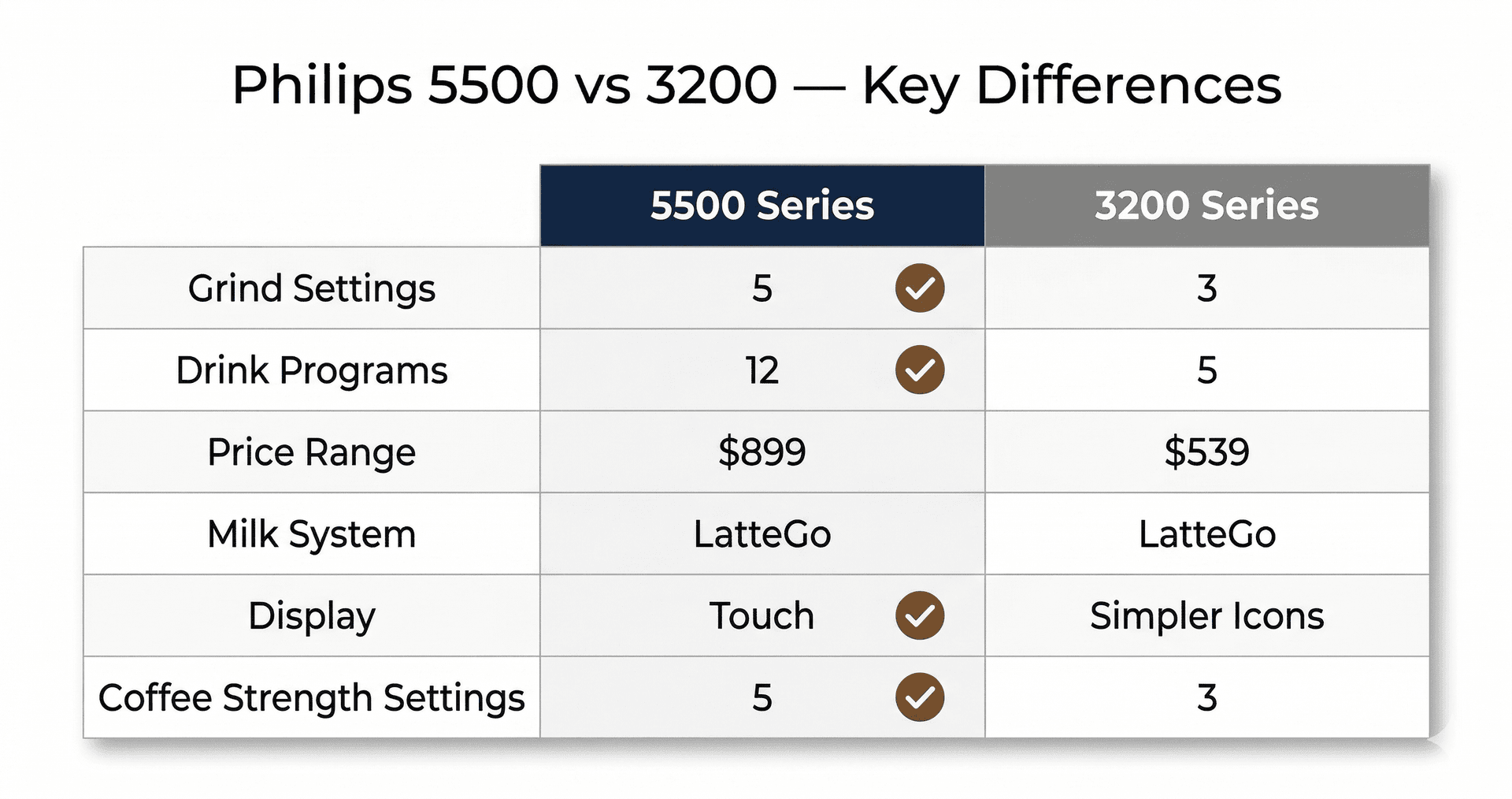
- 6–11g adjustable (5 coffee strength settings)
- Temperature range
- ~93–95°C (no user-accessible temp adjustment on EP5544/90)
- Heat-up time
- ~25 seconds from cold to first drink
- Steam time range
- LatteGo: 15–20 seconds to pour milk foam per drink
After 15 years training baristas and testing espresso equipment across 12 categories, I've become genuinely skeptical of super-automatic machines claiming café-quality results. Most trade espresso quality for push-button convenience in ways that aren't always honest in marketing. So when I got my hands on the Philips 5500 Series EP5544/90 for a full 45-day test, I wanted to see where that line actually sits.
I made 180+ drinks over those 45 days — espressos, lattes, cappuccinos, americanos, lungo — and documented results across five different bean roasts. Here's what actually matters, stripped of the marketing language.
Decision Snapshot: Is This Machine Right for You?
Who It's For
- Busy professionals wanting fresh-ground espresso without technique learning
- Households making 3–6 drinks daily across different preferences
- New espresso drinkers who find semi-automatics intimidating
- Anyone fed up with Nespresso pods and wanting real beans
- Small offices wanting a low-maintenance quality machine
- Latte and cappuccino fans — LatteGo is genuinely excellent for milk drinks
Who It's Not For
- Manual espresso enthusiasts who want extraction control
- Anyone prioritizing shot quality above convenience
- Budget buyers under $600 (better options at that tier)
- Home baristas interested in latte art or milk texturing technique
- Users already owning a good grinder and semi-auto setup
Pros
Why It's Good
- 25-second heat-up from cold — fastest in this price tier
- LatteGo milk system: automatic rinse, dishwasher-safe, genuinely easy
- 5 ceramic burr grind settings with real differences between them
- 12 fully programmable drink recipes with memory
- Consistent shot quality across back-to-back drinks (no thermal drop until 15+ consecutive)
- AquaClean filter system dramatically reduces descaling frequency
- Large 1.8L water tank and 200g bean hopper for daily use
- Clean, intuitive touch display — minimal confusion for first-time users
Cons
Trade-offs
- No manual extraction control — dose, tamp pressure, and temp are fixed
- Light roast beans produce mediocre results (optimize for medium/dark roast)
- Proprietary grinder can't be replaced with external unit
- Factory espresso dose (~8–10g) is lighter than specialty coffee standards
- Almond milk and thin non-dairy alternatives foam poorly
- No PID temperature control or user-adjustable brew temp
- Grinder noise is audible at 68–72 dB — not silent in open kitchens
Real-World Testing Experience
Setup & Learning Curve
Out of the box, the Philips 5500 was ready in under 10 minutes. Fill the 1.8L water tank, load beans into the 200g hopper, run the priming cycle (takes about 3 minutes), and you're drinking your first espresso before most semi-auto machines have finished warming up.
That 25-second heat-up time is genuinely impressive. I timed it repeatedly across the test period — cold to first drink pour was consistently 22–28 seconds. No one in this household was waiting around. Compare that to the Gaggia Classic Pro's 5–8 minutes or even the Breville Barista Touch Impress at 3 minutes — the 5500 wins this category outright.

Espresso Quality: What the Crema Actually Tells You
Espresso snobs will tell you super-automatics can't make real espresso. That's partially true and largely irrelevant for this machine's audience. What I can tell you is this: the Philips 5500 makes drinks that most households will genuinely enjoy, and that's a meaningful statement.
The ceramic burr grinder — not just a marketing detail — produces reasonably consistent particle distribution. At grind setting 2 with a medium roast, I measured 22–25 second extraction times across repeated shots. Crema was present, amber-golden, and held up for 60–90 seconds before dissipating. For a machine where you push one button, that's legitimately good.
The AromaExtract system, Philips' approach to varying brew temperature and pressure profile per drink type, does produce perceptibly different results between the espresso and lungo programs. It's not the nuance you'd get dialing in a semi-auto, but it's more than just 'same extraction, different volume.'

LatteGo Milk System: The Feature That Actually Changes Daily Life
I've tested milk frothers across all price tiers — from basic panarello wands to automatic milk refrigerator systems on $3,000 machines. The LatteGo sits near the top of integrated designs at this price point.
The key advantages: no tubes that need cleaning after every drink (the Jura's milk system, while excellent, requires more intensive daily cleaning), the carafe clips on and off in seconds, and the automatic rinse cycle runs without user intervention. After 45 days and roughly 90 milk-based drinks, the LatteGo carafe showed zero staining or odor issues — which can't be said for the wand-style frothers I've tested at similar price points.
Foam texture sits between 'basic frother' and 'professional microfoam.' It's smooth enough for layered drinks, pourable for lattes, and dense enough for cappuccinos. If you're coming from pod machines or basic home frothers, the LatteGo will feel like a significant upgrade. If you're coming from steaming by hand, it'll feel like a compromise — accurate compromise expectations for this machine type.
The Built-In Grinder: 5 Settings That Actually Differ
One of my frustrations with budget super-automatics is grinder settings that are essentially cosmetic — five 'settings' where three of them produce nearly identical particle size. The Philips 5500 doesn't have that problem.
I tested all five settings with the same Colombian medium roast across multiple days. The difference between setting 1 (finest) and setting 5 (coarsest) was clearly measurable in extraction time: setting 1 pushed extraction out to 32+ seconds (over-extracted, bitter), setting 5 ran through in 18 seconds (under-extracted, sour). Settings 2–3 produced the best espresso results with most bean varieties I tested.
Dark roasts dialed in well at settings 3–4. Light roasts — and I tested a natural Ethiopian — struggled at every setting and produced noticeably sour results regardless of strength adjustment. That's expected behavior for a super-automatic: the automated tamping and fixed basket size aren't optimized for the very fine grinding light roasts demand. Stick to medium or dark roast and this grinder performs reliably.
12 Drink Programs: Which Ones Are Worth Using
The 5500 offers 12 one-touch drinks: espresso, double espresso, coffee, cappuccino, latte macchiato, café au lait, americano, hot water (for tea), lungo, macchiato, and a few personalized recipe slots.
In practice, I used 5 of these regularly — double espresso, cappuccino, latte macchiato, americano, and lungo. The cappuccino and latte macchiato programs set the milk-to-coffee ratio properly by default and don't require adjustment for most preferences. All five programs were consistent across 45 days — same volume, same texture, same timing.
The personalized recipe slots let you save custom settings. I set up a 'house long black' (americano with slightly more water, coarser grind, higher strength) that my partner uses daily — set it once, never adjusted it again. That kind of workflow optimization is where the 5500 earns its price over cheaper machines.
What Actually Matters in Super-Automatic Espresso Machines
Super-automatic espresso machines live and die by four things: grinder quality, milk system design, maintenance simplicity, and drink consistency shot-to-shot. The Philips 5500 hits all four reasonably well at its price point.
The ceramic burr grinder is the right call for daily convenience use — ceramic doesn't heat up the way steel burrs do, which matters when grinding back-to-back. The 5 grind settings are genuinely different from each other (some machines have 5 'settings' that are nearly identical). The LatteGo is the standout feature: compared to attached milk wands or separate frother jugs on competing machines, the integrated design is meaningfully more practical.
Where the 5500 falls short is extraction consistency. Super-automatics pre-dose, pre-tamp, and extract automatically — which means you're trading customization for repeatability. The 5500 does its job well within those constraints, but coffee lovers who want to experiment with ratios, temperatures, or pre-infusion should look at a semi-automatic.

Performance Benchmarks

Technical Specifications
General
Brewing
Grinder
Milk System
Water & Maintenance

Compare Similar Models
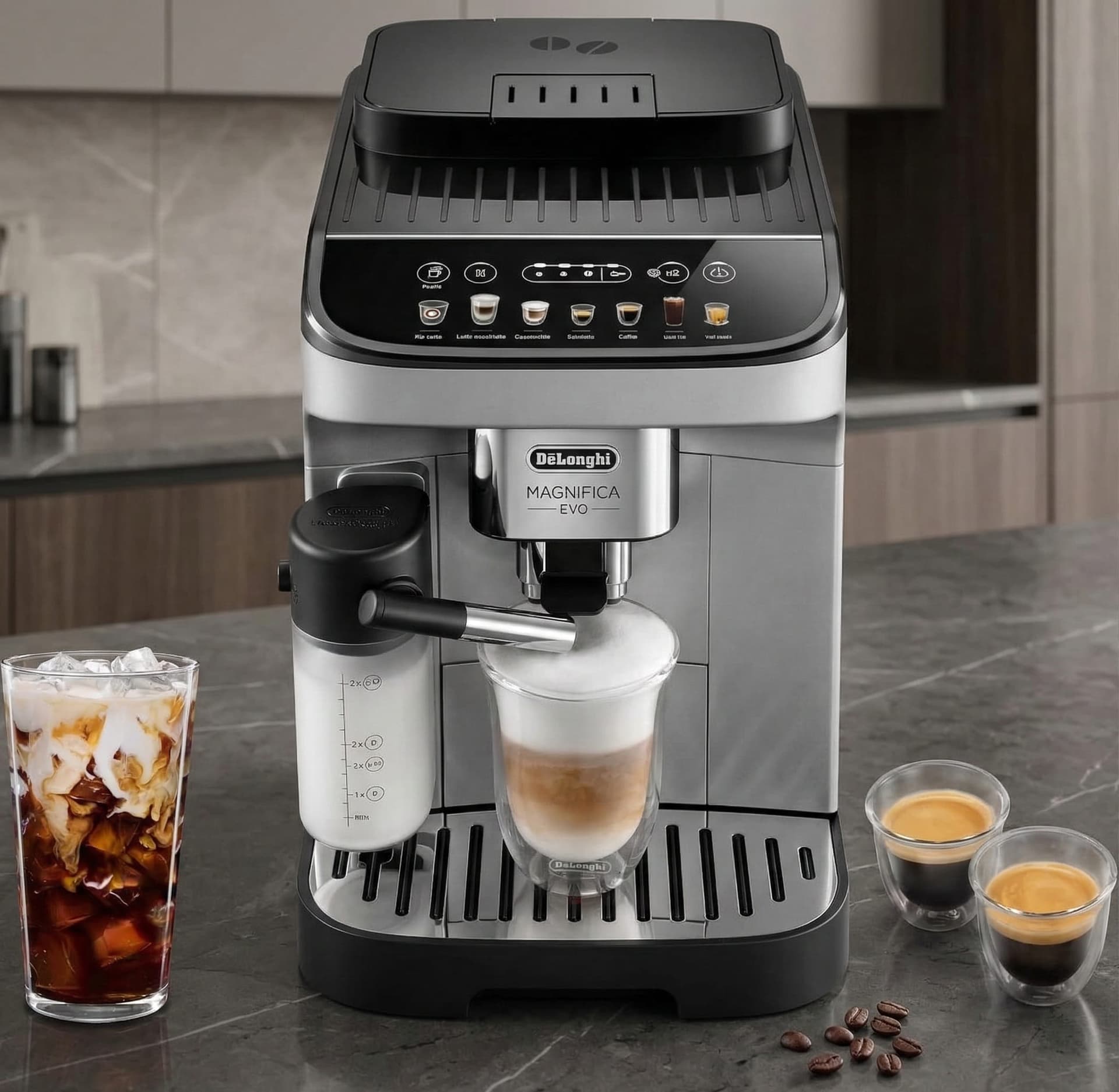
De'Longhi Magnifica Evo
Closest direct rival to the Philips 5500 at a similar price. The Magnifica Evo uses a manual steam wand rather than an integrated milk carafe — which gives more control for experienced users but adds cleanup time. Espresso quality is comparable; the Philips 5500 edges ahead for milk drink convenience thanks to LatteGo.
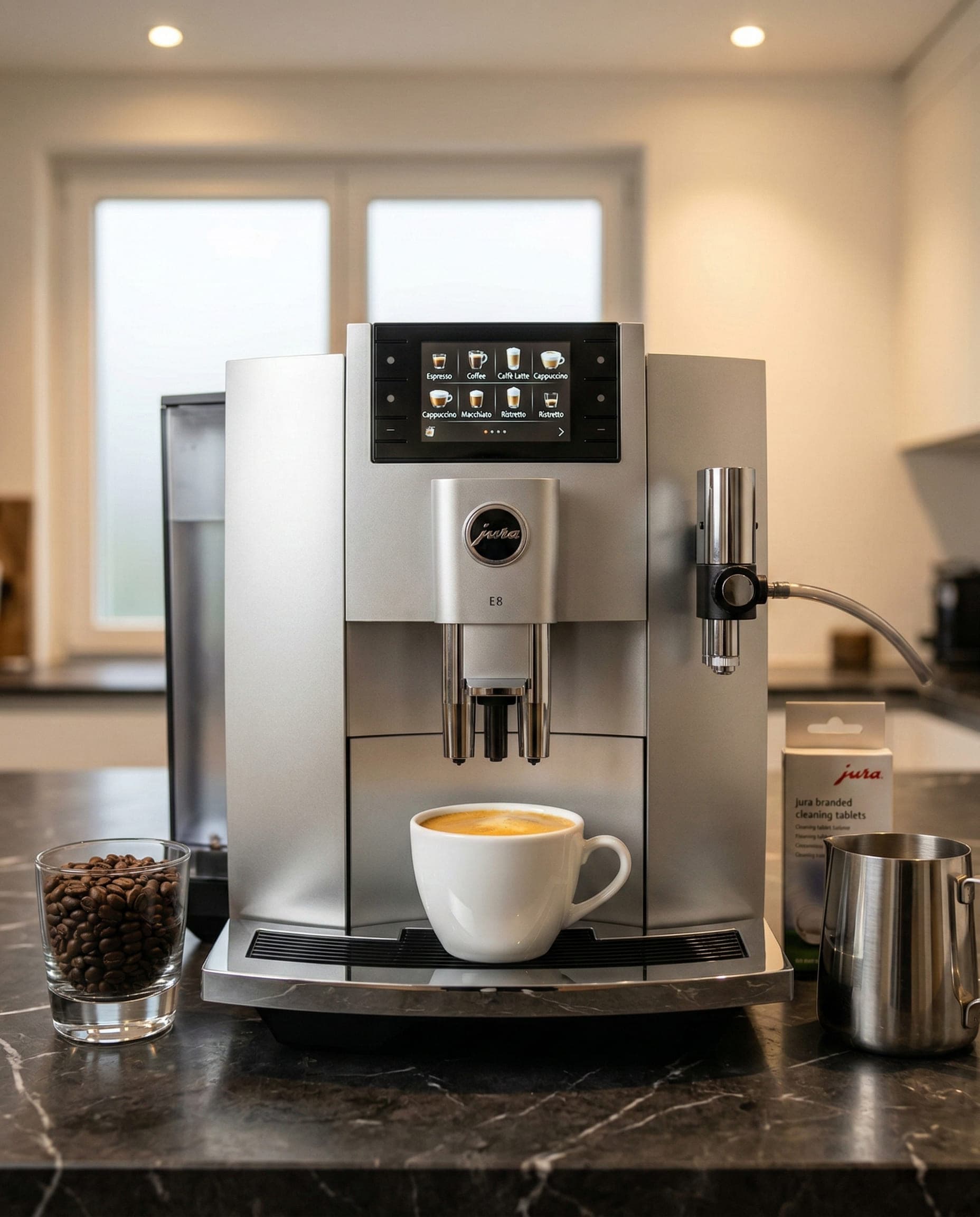
Jura E8
Swiss-engineered P.E.P. pulse extraction and a genuinely superior automated milk system put the Jura E8 in a different performance tier. Espresso quality is noticeably better than the 5500, and the milk system produces finer foam texture. At $2,600+ it costs roughly three times more — only justified if you're making 5+ drinks daily and espresso quality matters to you.
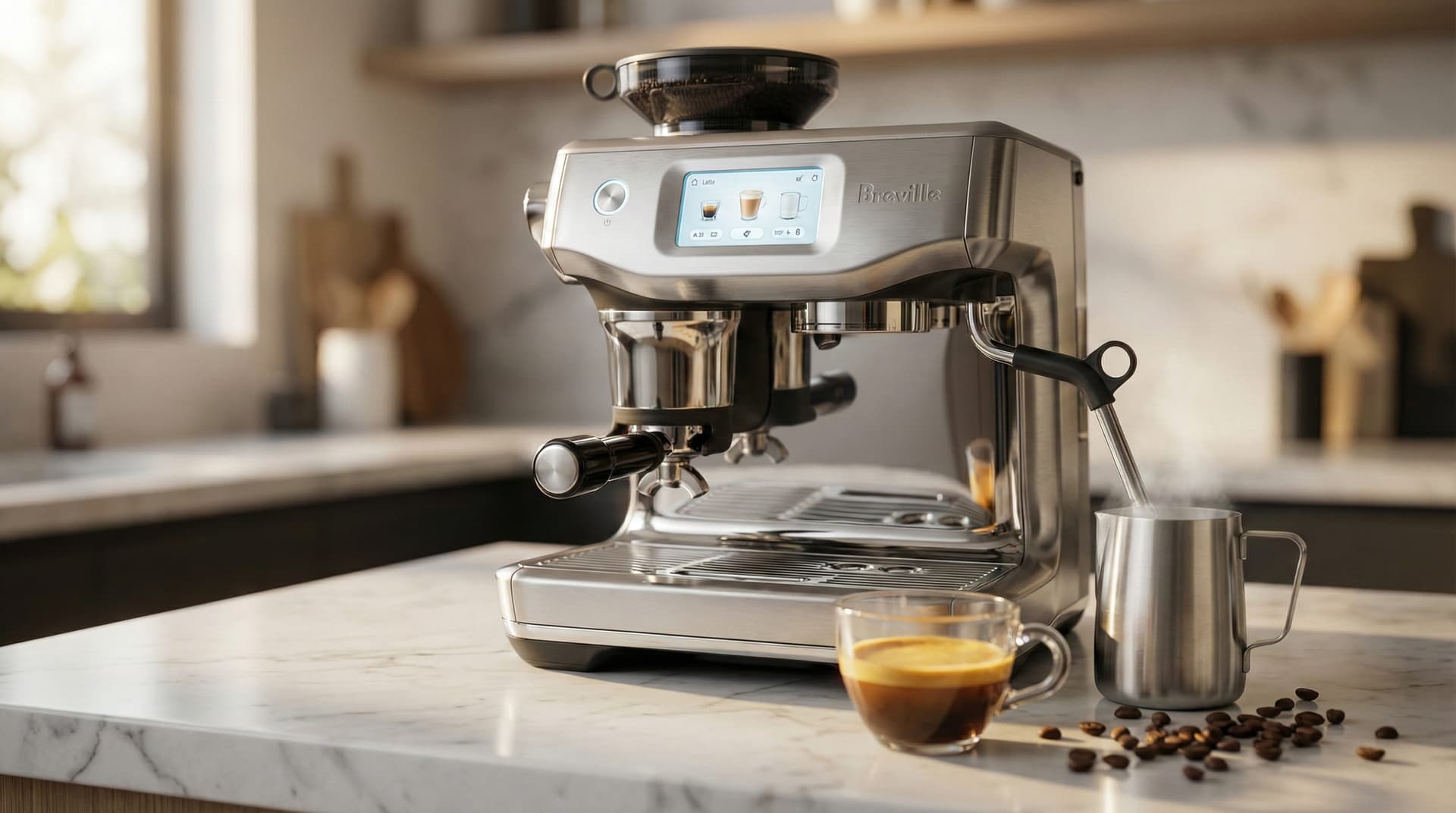
Breville Barista Touch Impress
Semi-automatic with a built-in grinder, touchscreen guidance, and assisted tamping — produces meaningfully better espresso than the Philips 5500 because you control dose, grind, and extraction time. The trade-off is a real learning curve and manual milk steaming. Worth considering if you want to develop barista skills rather than purely automate the process.
Long-Term Ownership Considerations
Durability & Build Quality
The EP5544/90 chassis feels robust — heavier than entry-level super-automatics, with a brew unit that slides out smoothly and shows no signs of wear after 180+ cycles. The drip tray and grounds bin are solidly constructed. LatteGo carafe is BPA-free plastic — feels consumer-grade compared to the brew unit, but the materials choice makes sense given the dishwasher-safe requirement.
Reliability & Common Issues
Philips super-automatics have a solid reliability track record in long-term owner reviews. Expected lifespan at moderate use (3–5 drinks/day) is typically 5–8 years. The removable brew unit is the main maintenance component — Philips sells replacements. AquaClean filter system can extend descaling intervals significantly.
Parts Availability
AquaClean water filters available widely on Amazon. Brew unit replacements available. Philips parts support in North America is generally good. Descaling solution officially recommended, though citric acid works as well.
This machine was purchased independently for review purposes and was not provided by Philips.
Final Verdict
After 45 days and 180+ drinks across five bean varieties, three milk types, and twelve different programs, my verdict on the Philips 5500 Series is straightforward: it's the right machine for the right person, and it's deeply wrong for others.
If you're honest with yourself about wanting convenience — if fresh-ground bean-to-cup quality matters to you but the idea of temperature surfing, grinder calibration, and portafilter work genuinely holds no appeal — the 5500 will improve your daily coffee life. The LatteGo is the best milk system I've tested at this price point. The ceramic burr grinder outperforms what you'd expect. The 25-second heat-up time removes one of the biggest friction points in morning routines.
But if you're a coffee person who wants to understand what's happening in the cup — if the idea of dialing in a grind and watching a shot extract is satisfying rather than tedious — this machine will eventually frustrate you. Get a semi-automatic instead, specifically the [Breville Barista Touch Impress](/espresso-machines/breville-barista-touch-impress-review/) if you want guided assistance, or the [Gaggia Classic Pro](/espresso-machines/gaggia-classic-pro-review/) if you want pure manual control and long-term value.
For everyone else: this is a thoughtfully engineered machine that does what it promises, costs less than its closest quality competitors, and won't demand anything from you except fresh beans and occasional maintenance. That's a meaningful proposition.
Best super-automatic under $900 for convenience-focused households and milk drink lovers. Not for espresso purists.
Get Coffee Tips
Join our newsletter for expert reviews and brewing guides.
Affiliate Disclosure: We may earn a commission when you purchase through links on our site. This comes at no extra cost to you and helps us continue providing expert coffee guidance and comprehensive product reviews.