What Is Espresso? The Beginner's Complete Guide
From grind size and 9-bar pressure to crema, extraction ratios, and tamping—a former barista trainer with 15+ years testing explains everything you need to pull great shots at home
I still remember the first time I tasted a properly pulled espresso shot—not the bitter, over-extracted sludge I'd suffered through at airport kiosks, but a real one. Golden crema sitting intact, caramel-sweet aroma rising from a tiny ceramic cup, and a complexity you wouldn't believe from just 1.5 ounces of liquid. That was twenty years ago, and it set me on a path that eventually led to training over 200 baristas and hands-on testing of 500+ coffee products.
So what is espresso exactly? Most people assume it's a type of bean, a roast level, or just “very strong coffee”—and that assumption is the core of the espresso vs coffee difference most beginners miss. Espresso is a brewing method: this specific espresso brewing method forces hot water through finely-ground coffee under 9 bars of pressure, producing a concentrated, complex liquid unlike anything from other techniques. This guide explains how espresso is made step by step, and how to make espresso at home—from grind size and tamping to dialing in your first shot.
What Is Espresso, Exactly?
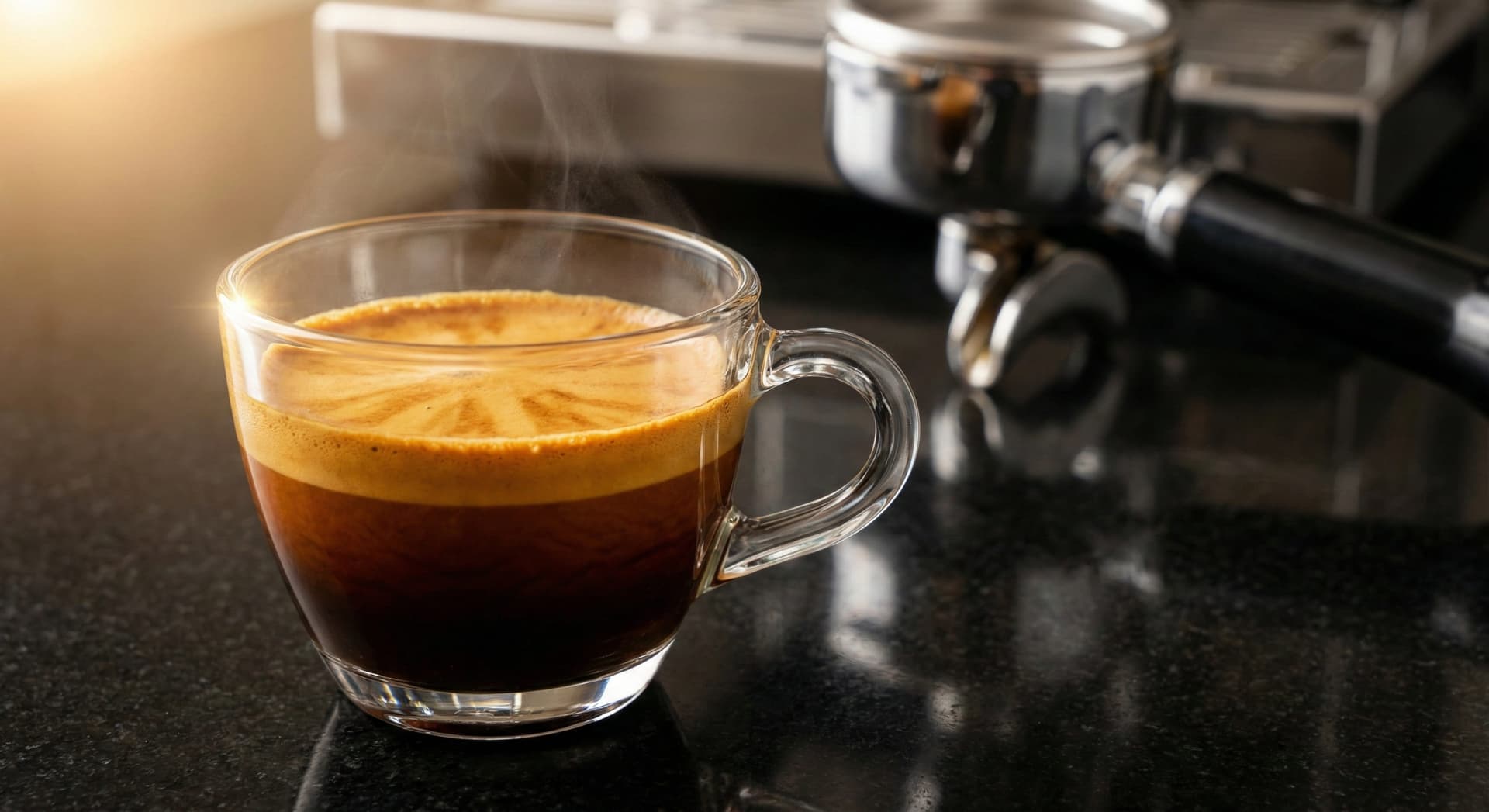
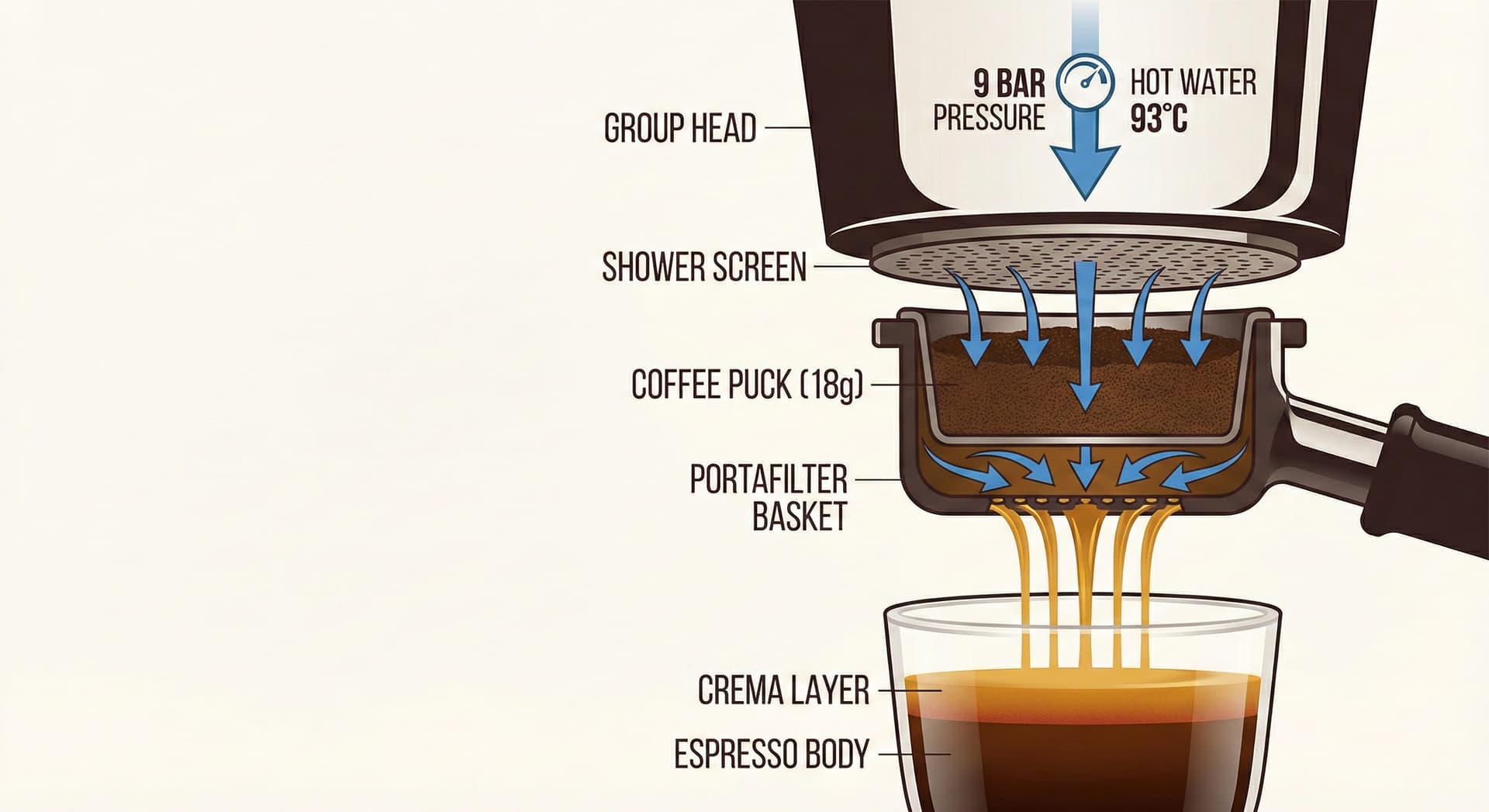
Espresso is a coffee brewing method in which hot water—typically 90–96°C (194–205°F)—is forced through a compact puck of finely-ground coffee under approximately 9 bars of atmospheric pressure. The entire extraction takes 25–30 seconds and produces 1–2 ounces (30–60ml) of intensely concentrated coffee liquid topped with a layer of reddish-brown foam called crema.
It's not a roast level. You can make espresso from light roasts, medium roasts, or dark roasts. It's not a type of bean—any Arabica or Robusta variety can be used. And it's not just “strong coffee.” The pressurized extraction process emulsifies coffee oils and CO2 into the liquid in a way that's physically impossible with gravity-based methods, creating a syrupy body and flavor intensity that's unique to this method.
What makes espresso chemically distinct is its composition. A properly extracted shot contains roughly 8–12% dissolved solids (Total Dissolved Solids, or TDS), compared to 1–2% in drip coffee. It also contains emulsified coffee oils suspended in the liquid—these oils are filtered out in drip coffee by paper filters but pass freely through espresso's metal basket. Those oils contribute to espresso's rich mouthfeel, aromatic complexity, and caloric density.
| Variable | Ideal Range |
|---|---|
| Pressure | 9 bars |
| Temperature | 90–96°C |
| Dose | 18g (double) |
| Yield | 36g |
| Time | 25–30 seconds |
Espresso vs Regular Coffee: Key Differences
One of the most common questions I get from barista trainees is: “Is espresso just strong coffee?” The answer is no—and understanding why explains a lot about what makes espresso special.
| Factor | Espresso | Drip Coffee |
|---|---|---|
| Pressure | 9 bars (≈130 psi) | Gravity only (1 bar) |
| Extraction Time | 25–30 seconds | 4–6 minutes |
| Grind Size | Fine (like table salt) | Medium (like sand) |
| Serving Size | 1–2 oz (30–60ml) | 8–16 oz (240–480ml) |
| TDS (Concentration) | 8–12% | 1–2% |
| Caffeine per Serving | ~128mg (double shot) | ~180–240mg (12 oz) |
| Crema | Yes (emulsified oils + CO2) | No |
| Oil Content | High (unfiltered) | Low (paper-filtered) |
Notice the caffeine comparison—a surprise for most people. Despite espresso's intensity, a double shot delivers less total caffeine than a large mug of drip coffee. Espresso feels stronger because you consume it quickly in a highly concentrated form, delivering caffeine rapidly. Drip coffee spreads a larger dose over a longer drinking period.
How Espresso Is Made: Step by Step
I've pulled tens of thousands of espresso shots over my career. The process looks simple from the outside—press a button, get coffee. Under the surface, a lot is happening that determines whether your shot is extraordinary or merely adequate.
Grind the Coffee
Freshly grind 7–10g (single) or 14–21g (double) of coffee to a fine consistency. Grind immediately before brewing—ground coffee stales within minutes as volatile aromatic compounds dissipate. This single step affects the shot more than almost any other variable.
Dose and Distribute
Weigh your dose using a precision scale (0.1g accuracy). Distribute grounds evenly in the portafilter basket using a distribution tool or the Stockfleth method (rotating finger across the surface). Uneven distribution creates channels where water takes the path of least resistance, bypassing properly packed sections.
Tamp
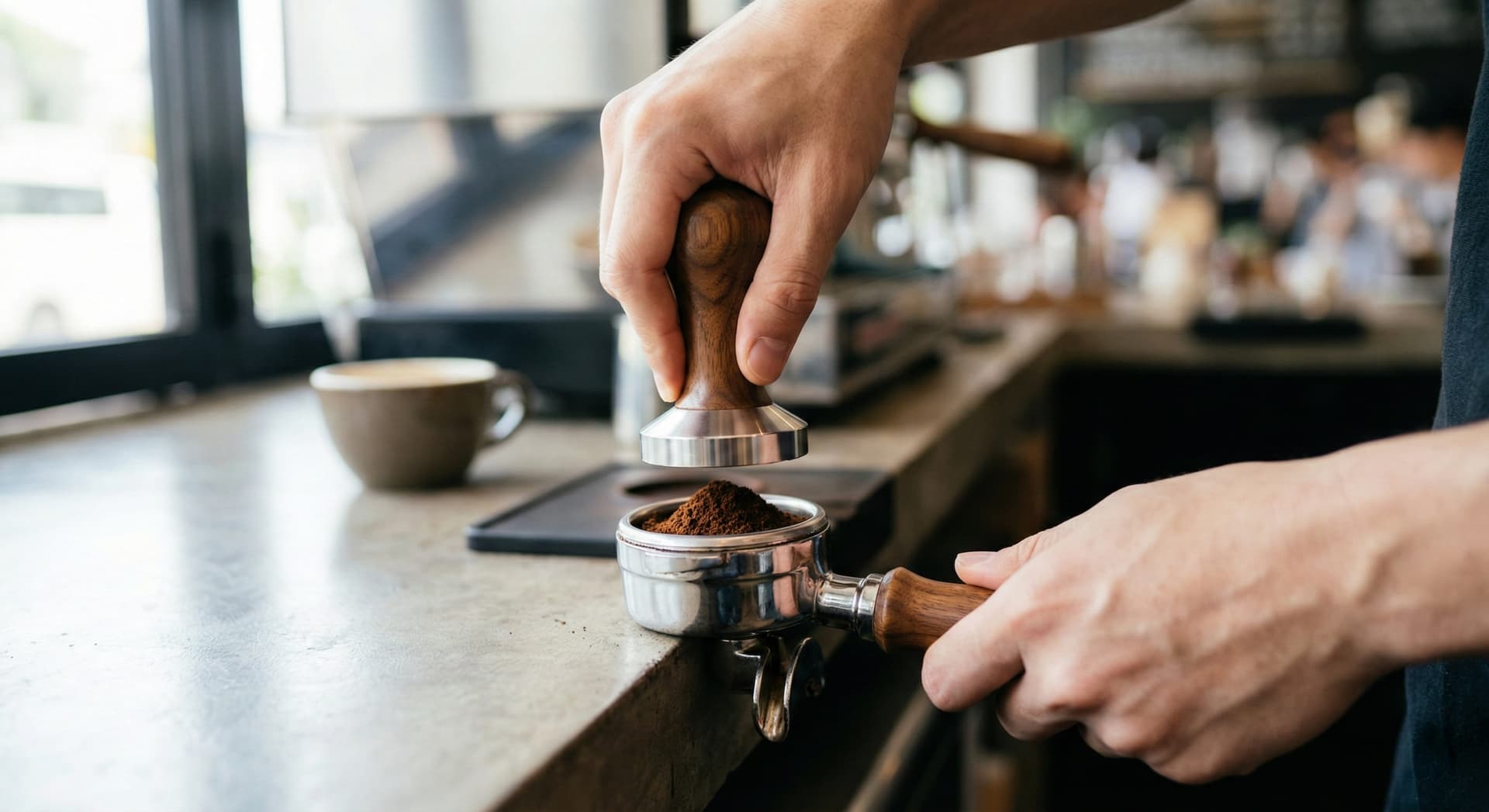
Press the tamper down onto the grounds with approximately 30 lbs (13.5kg) of force—about the effort of a firm handshake. The goal is a level, compressed puck. Angle matters more than exact pressure: an unlevel tamp creates an uneven puck density, causing channeling. After the main tamp, a gentle “polish” twist seals the surface.
Lock In and Pre-Infuse
Lock the portafilter into the group head. Many modern machines pre-infuse—applying low pressure (2–4 bars) for 3–8 seconds before ramping to full extraction pressure. Pre-infusion saturates the puck evenly, reducing channeling and producing more uniform extraction.
Extract at 9 Bars
The pump drives hot water at 9 bars through the puck. First drops emerge (the “blonde”—highest concentration, sweetest), followed by the main body, then the tail (increasingly bitter, watery). Time this carefully: a double shot of 36–40g should emerge in 25–30 seconds. Stop the shot at the right moment—don't just let it run.
Taste and Adjust
Every shot is a data point. Taste it, note extraction time and yield, and adjust one variable at a time. This is the step most beginners skip—tasting and systematically adjusting is what transforms inconsistent espresso into reliably excellent shots.
Grind Size: The Biggest Variable in Espresso
If I had to identify the single most important variable in espresso, it's grind size. Nothing else comes close. In my barista training workshops, I spend more time on this topic than everything else combined—because getting it right unlocks consistency, and getting it wrong makes everything else irrelevant.
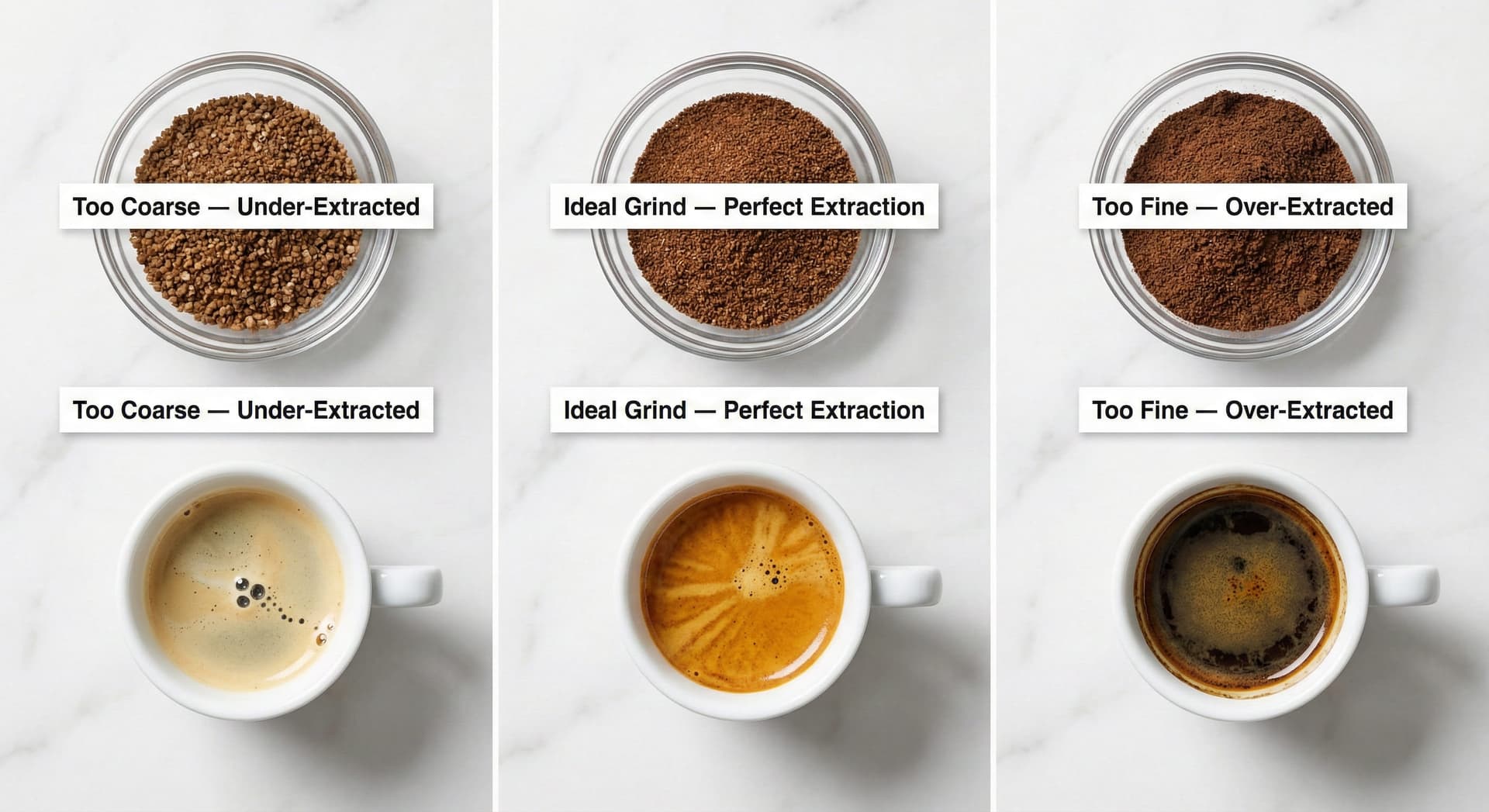
Espresso requires a fine grind—significantly finer than drip coffee or pour-over. Think of the texture of table salt, maybe slightly finer. The reasoning is hydraulic: at 9 bars of pressure, water needs enough resistance to slow down and extract properly. Too coarse, and water rushes through in 10–15 seconds, under-extracting and tasting sour. Too fine, and water can barely pass, over-extracting and tasting bitter, or channeling through weak spots.
Why Freshness Affects Grind Setting
Freshly roasted beans are saturated with CO2. As that gas dissipates over days and weeks, the beans become denser and less porous. Fresh beans (roasted within 1–2 weeks) often need a coarser grind because CO2 acts as additional resistance. Beans roasted 3–4 weeks ago, with less CO2, typically need a finer grind to achieve the same resistance and extraction time. This is why your espresso tastes different with a new bag of beans even if you change nothing else—and why “dialing in” at the start of a new bag is a necessary ritual rather than an obsession.
Burr Grinder vs Blade Grinder for Espresso
A blade grinder—the spinning-blade type—produces an inconsistent particle size distribution, from powder to chunks. For espresso, this is catastrophic: fine particles over-extract while coarse ones under-extract in the same puck, creating a muddled, harsh shot with no clear flavor identity. I genuinely cannot recommend blade grinders for espresso. A quality burr grinder (flat or conical) crushes beans between two abrasive surfaces, producing a far more consistent particle size and vastly better espresso. Budget $100–$200 minimum for a dedicated espresso burr grinder—it's the best investment in your coffee setup. Our best coffee grinders guide covers the top-tested options at every price point.
9-Bar Pressure: Why It Matters (And Why More Isn't Better)
Every espresso machine marketing brochure you've ever seen says “15 bars” in large font. You might reasonably assume that higher bar pressure means better espresso. It doesn't. The coffee industry standard is 9 bars of pressure at the puck—the pressure the water actually reaches when it contacts the coffee grounds. The 15-bar pumps in consumer machines generate maximum pump pressure, but the actual brewing pressure at the group head is (or should be) regulated down to 9 bars.
Why 9 bars specifically? It's the pressure at which espresso extraction reaches its optimal balance between efficiency (extracting desirable compounds) and selectivity (not forcing out excessive bitterness). Research by the Specialty Coffee Association and practical decades of espresso tradition converged on 8.5–9.5 bars as the sweet spot. Below 7 bars, you get under-extracted, thin shots with poor crema. Above 11 bars, the increased force can cause channeling through the puck and over-extract harsh compounds.
Pressure Profiling: Advanced Extraction Control
High-end machines now offer pressure profiling—the ability to vary pressure throughout the extraction (for example: starting at 4 bars, ramping to 9, then tapering back to 6 bars at the end). This mimics the characteristics of vintage lever machines and allows extraordinary control over flavor development. For beginners, constant 9-bar pressure is the target. Pressure profiling is a tool for experienced extractors working with specific beans to coax out particular flavor profiles.
Understanding Espresso Crema
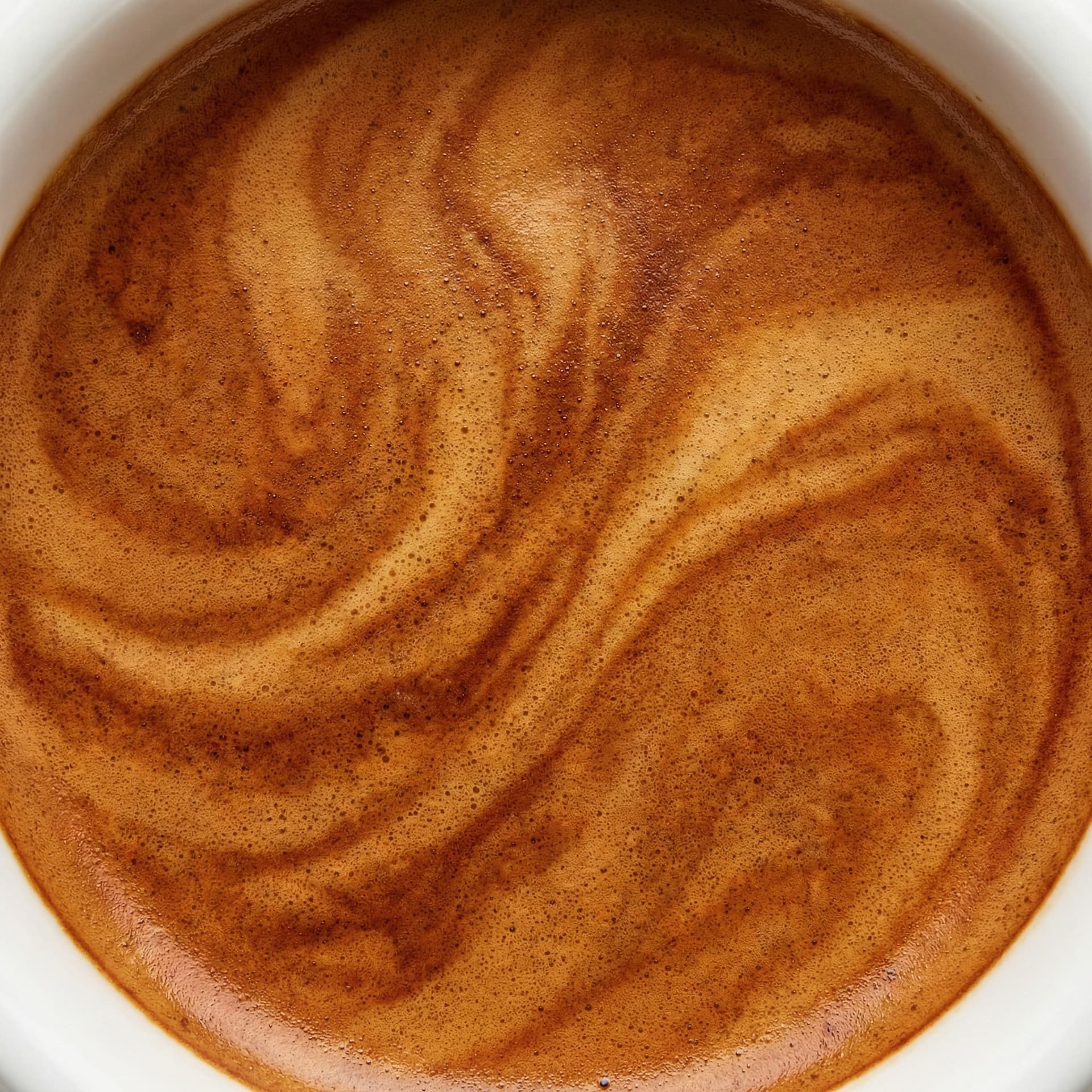
Crema is the layer of reddish-brown foam that crowns a properly pulled espresso shot. It forms through a specific mechanism: when water under 9 bars of pressure contacts coffee grounds, it dissolves CO2 gas and emulsifies coffee oils. When that pressurized liquid exits the portafilter and pressure drops, CO2 rapidly expands out of solution, forming millions of tiny bubbles coated in oil—the crema.
Good crema is reddish-brown (sometimes called “hazelnut”) with tiger-stripe patterns caused by varying CO2 concentrations in different parts of the puck. It should persist for at least 2–3 minutes after extraction. A properly textured crema provides both aesthetic appeal and contributes to the mouthfeel and aromatic experience of the shot.
What Crema Tells You (And What It Doesn't)
- Thick, persistent crema suggests fresh beans and proper extraction. Beans produce more CO2 when recently roasted; that CO2 abundance creates abundant crema.
- Thin, quickly dissipating crema typically indicates stale beans (most CO2 has degassed) or under-extraction.
- Dark, very bitter crema often comes from over-extraction or very dark roasts—the compounds responsible are bitter, not pleasant.
- Pale, blonde crema can indicate under-extraction or beans that are simply too fresh (just-roasted beans, within 48 hours, produce unstable crema from excess CO2).
- Thick crema doesn't guarantee great flavor—Robusta beans and very dark roasts produce impressive crema but often lack the flavor complexity of well-extracted Arabica.
For a complete breakdown of crema — including what golden crema and tiger stripes actually indicate, why thick crema isn't always a quality signal, and how to troubleshoot crema problems — see our dedicated espresso crema guide.
Dose, Yield, and Brew Ratio: The Numbers That Matter
Before specialty coffee embraced measurement culture, espresso was made by feel—a practiced scoop, a tamp that felt right, a shot that looked done. Today, weighing both the dry input (dose) and liquid output (yield) has become standard practice in serious cafés. Here's why those numbers matter.
Dose (Input)
The dry weight of coffee grounds in the portafilter basket. Standard double shot: 14–21g depending on basket size. Most modern double baskets are designed for 18–20g. Weigh with a precision scale—1g difference noticeably affects the shot.
Yield (Output)
The liquid weight of espresso in the cup. For a 1:2 brew ratio with 18g dose, target 36g yield. Weigh your cup on the scale before extraction and watch the number climb—stop when you hit your target weight.
Brew Ratio
Dose ÷ Yield. The classic espresso ratio is 1:2 (e.g., 18g in / 36g out). Ristretto runs 1:1.5 for sweeter, more concentrated shots. Lungo stretches to 1:3+ for milder, larger extractions.
When I started training baristas in the early 2010s, scales weren't common on espresso bars. The shift to measuring yield transformed consistency—baristas could reproduce a great shot the next day instead of chasing a feeling. If you're serious about home espresso, a $15–$30 drip tray scale is one of the highest return-on-investment purchases you can make.
Extraction: Under, Over, and Just Right
Extraction refers to how much of the soluble material in coffee grounds transfers into your cup. The Specialty Coffee Association identifies 18–22% extraction yield as the “ideal” range for balanced espresso. Under-extraction (below 18%) leaves pleasant compounds behind, producing a sour, one-dimensional shot. Over-extraction (above 22%) pulls out undesirable harsh, bitter, and astringent compounds. For a deeper look at every variable that controls this — grind size, brew ratio, channeling, pre-infusion, and how to diagnose a bad shot — see our complete espresso extraction guide.
Under-Extracted
- • Sour, acidic, sharp taste
- • Thin, watery body
- • Pale, blonde crema
- • Shot runs too fast (<20 sec)
- • Fix: Grind finer, raise temperature, increase dose
Properly Extracted
- • Sweet, balanced, complex
- • Syrupy, coating body
- • Rich reddish-brown crema
- • 25–30 second shot time
- • Result: Balanced acidity, sweetness, bitterness
Over-Extracted
- • Bitter, harsh, astringent
- • Dry, uncomfortable finish
- • Dark, bitter crema
- • Shot runs too slow (>35 sec)
- • Fix: Grind coarser, lower temperature, reduce dose
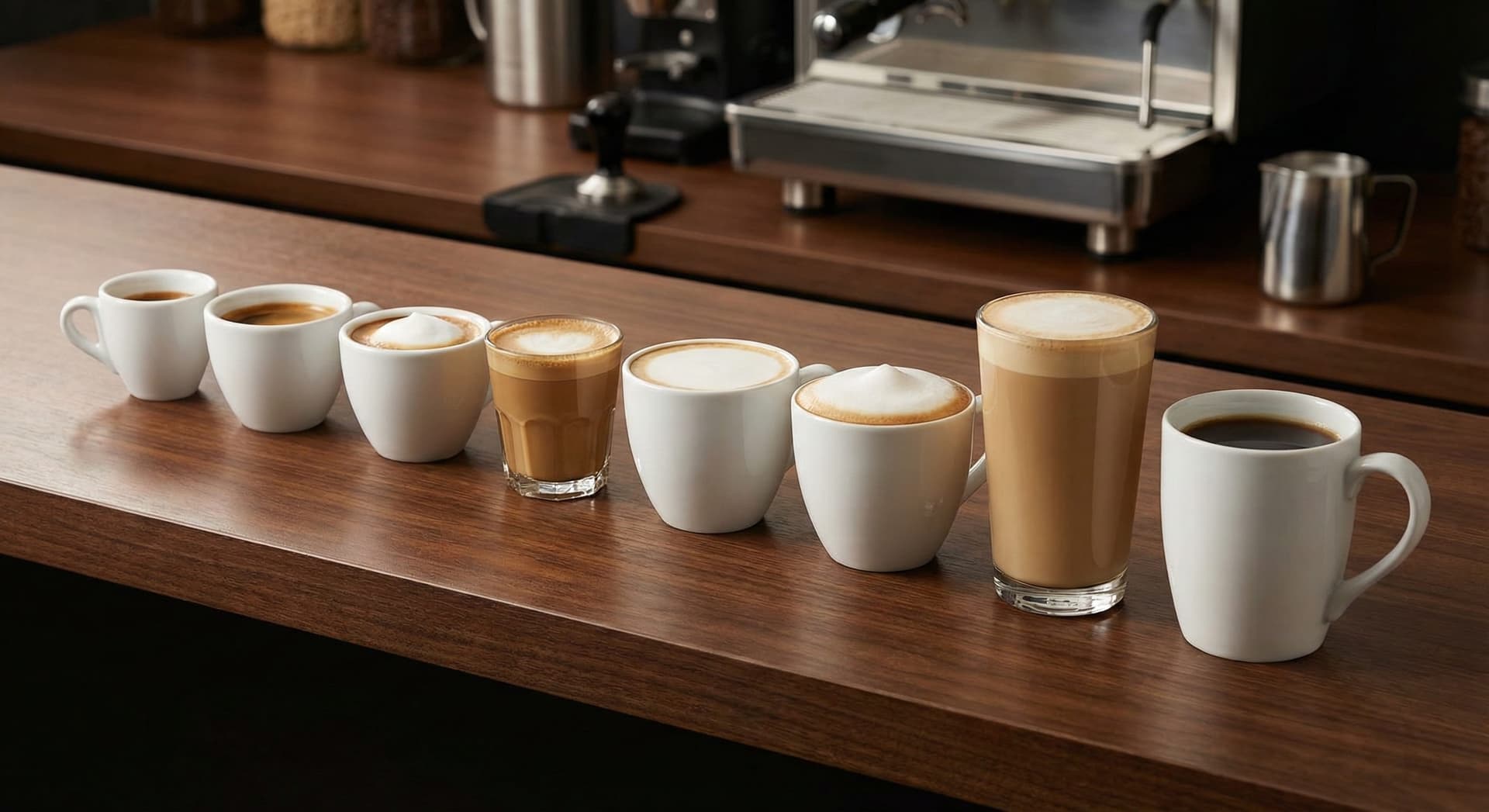
Espresso as a Base: The Drinks It Creates
Espresso is the foundation of the vast majority of café drinks worldwide. Understanding that foundation changes how you read a café menu—every item makes more sense when you understand what the espresso base is doing.
Equipment You Actually Need
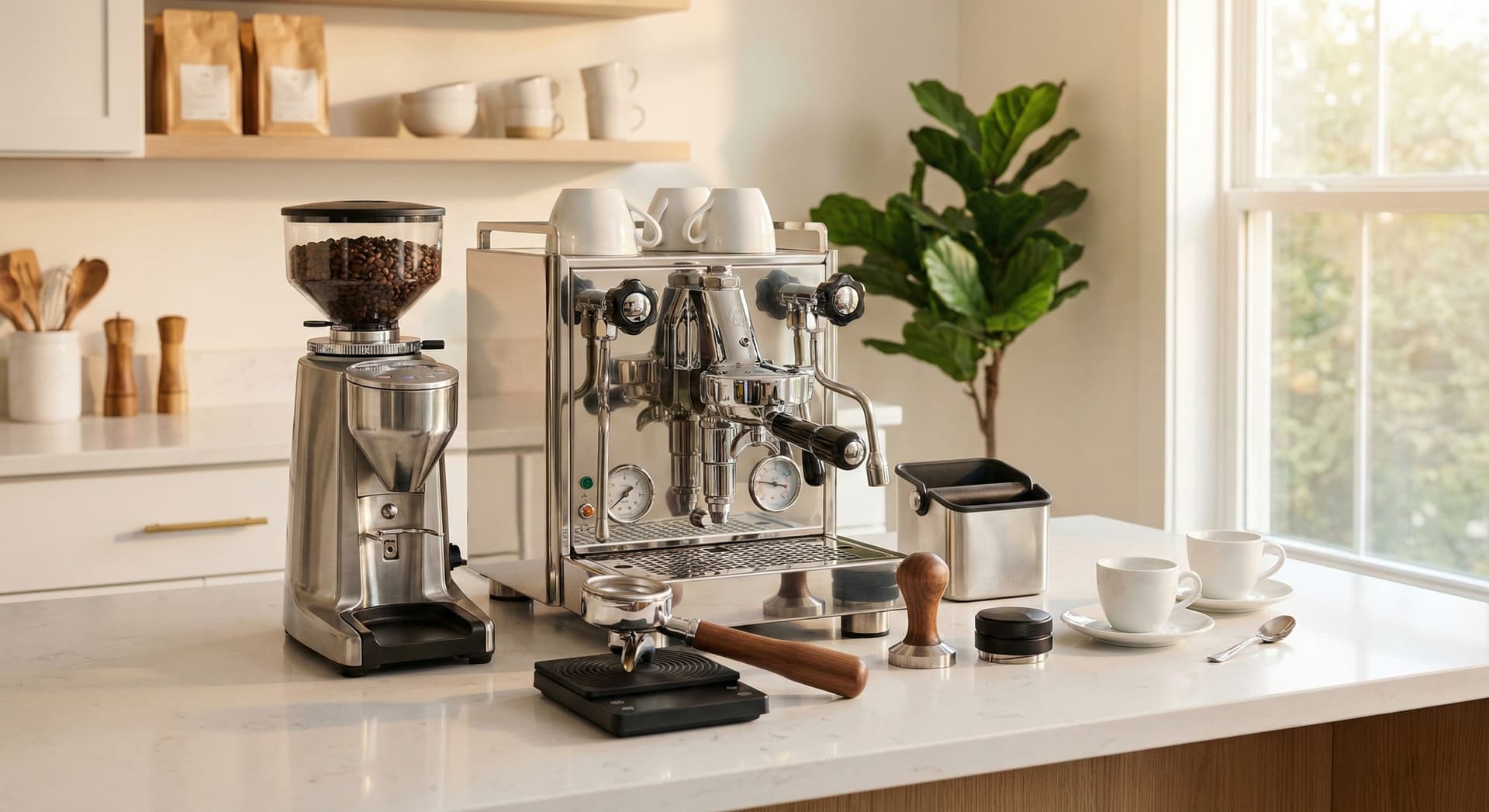
After testing 500+ coffee products, I have clear opinions about what actually matters versus what's marketed aggressively but makes little difference. Here's what matters for espresso, in priority order:
Burr Grinder (Highest Priority)
I cannot overstate this: a quality burr grinder matters more than an expensive espresso machine. The grind consistency from a burr grinder is the foundation of everything. Entry-level dedicated espresso grinders (Baratza Sette 270, DF64 Gen 2, Eureka Mignon Specialita) in the $150–$350 range outperform $1,000+ machines paired with blade grinders. If you have $600 to spend total, put $250 on the grinder and $350 on the machine.
Espresso Machine with Pressure Regulation
Look for: 9-bar pressure regulation (OPV), temperature stability, and a real steam wand if you want milk drinks. For beginners: Breville Bambino Plus ($300–$350), De'Longhi Dedica Arte ($200–$250). Intermediate step-up: Breville Barista Express (built-in grinder, $700), Gaggia Classic Pro ($449–$499). These machines deliver consistent pressure and temperature that budget machines can't match. Not sure which type suits you? Our espresso machine types guide breaks down every category, and our best espresso machines page shows top-tested picks at every budget.
Precision Scale (0.1g Accuracy)
A $15–$30 scale that fits under your portafilter and reads to 0.1g transforms your espresso consistency. Weigh dose in, weigh yield out. Repeatability is the goal—once you find a recipe that works (e.g., 18g in / 36g out / 28 seconds), a scale lets you reproduce it exactly every morning.
Fresh, Quality Beans
Buy beans roasted within the past 2–4 weeks. (Our guide to picking espresso beans covers this in depth.) Check the roast date (not “best by” date—that's meaningless). Specialty roasters print roast dates; supermarket bags usually don't. Look for Arabica-dominant blends with flavor notes you enjoy (chocolate/caramel for approachable espresso, fruity/floral for adventurous profiles). Store in an airtight container away from heat and light.
Tamper (Level and Calibrated)
Match tamper diameter to your basket (most are 58mm for commercial, 54mm for Breville machines). A calibrated tamper that clicks at 30 lbs of pressure ($30–$60) is helpful for beginners. More important than pressure consistency is angle—a level tamp creates an even puck. A simple distribution tool ($10–$25) helps distribute grounds evenly before tamping. For the full step-by-step process, our espresso tamping guide covers distribution, levelness, and pressure in detail.
Beginner Brewing Tips: What I Tell Every New Barista
After training 200+ baristas, I've seen the same mistakes and breakthroughs repeatedly. Here are the most impactful tips for beginners:
Ready to try pulling your first shot? Explore our Best Espresso Machines and Coffee Grinder guides.
Frequently Asked Questions
Not quite. Espresso is a specific brewing method that forces hot water through finely-ground coffee under 9 bars of pressure.
Yes, it's more concentrated than drip coffee—roughly 4 to 8 times more dissolved solids per ounce—but 'strength' doesn't tell the whole story. The pressurized extraction emulsifies coffee oils, creates crema, and develops a syrupy body you simply can't replicate with any other brewing method, even if you made a tiny, super-strong cup of pour-over coffee.
The flavor profile, mouthfeel, and texture of espresso are categorically different from strong drip coffee.
Get Coffee Tips
Join our newsletter for expert reviews and brewing guides.