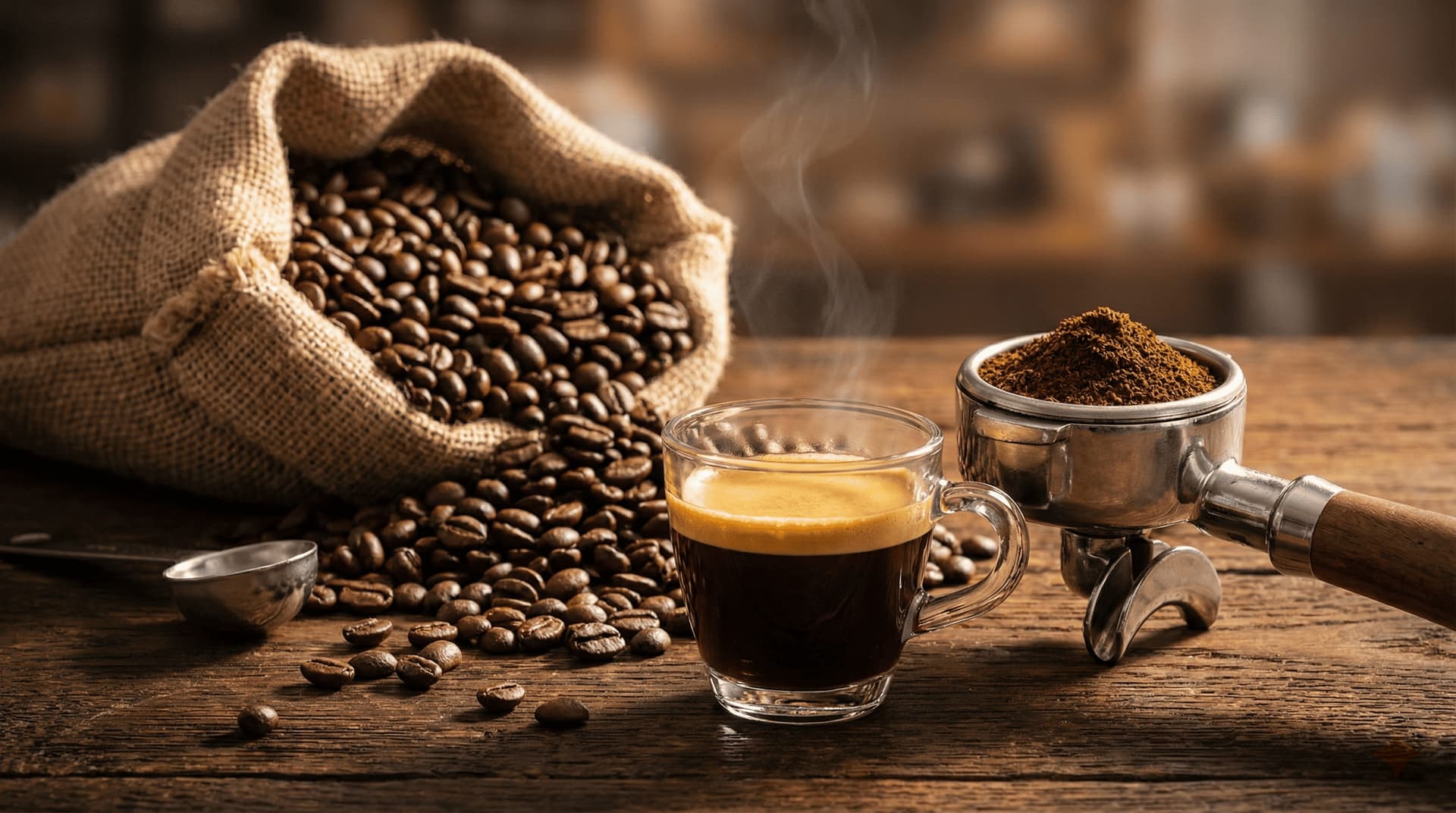
How to Pick Espresso Beans (Complete Buying Guide)
Expert guidance for selecting the perfect espresso beans for your taste and brewing style
After fifteen years training baristas and testing 500+ coffee products, I can tell you that learning how to pick espresso beans is the single most impactful decision for home espresso quality—more critical than your machine, grinder, or technique. The best espresso beans for home use transform every shot; yet most people don't know how to choose espresso beans beyond grabbing what looks good on a shelf. This guide demystifies that process, covering everything from espresso beans vs regular coffee beans to roast levels, origins, and freshness.
Having cupped and extracted thousands of espresso varieties—from micro-lot single-origins to championship-winning blends—I've learned that bean quality, freshness, and proper selection determine 60-70% of your final shot's flavor profile, crema production, and overall excellence.
Through my work training over 200 baristas across specialty cafés from Portland to Sydney, I've witnessed firsthand how the right espresso beans deliver balanced sweetness, complex flavor clarity, rich crema, and harmonious acidity—characteristics that no amount of technical skill or expensive equipment can compensate for when starting with inferior coffee. I've personally tested over 25 different espresso bean varieties in 2026 alone, conducting blind cupping sessions comparing everything from Ethiopian single-origins to Italian-style dark roast blends.
Having visited dozens of specialty roasters—from Counter Culture in Durham to Stumptown in Portland—I can confirm that stale supermarket beans cannot produce the aromatic complexity, flavor depth, and crema quality that freshly roasted specialty-grade beans deliver. The difference between beans roasted two weeks ago versus two months ago is immediately apparent even to coffee beginners.
This comprehensive 2026 espresso bean buying guide synthesizes fifteen years of professional experience—demystifying everything from Arabica versus Robusta to decoding tasting notes, evaluating single-origin versus blend compositions, and implementing proper storage protocols. Let's transform your daily espresso ritual through informed bean selection.
How to Pick Espresso Beans – Quick Summary
- →Prefer chocolatey & low acidity → Medium or medium-dark blend
- →Prefer fruity & bright → Light roast single-origin
- →Want thick crema → Blend with a small % Robusta
- →Brew mostly milk drinks → Medium-dark blend
- →Brew straight espresso → Medium roast single-origin
Understanding Espresso Beans vs Regular Coffee Beans
Here's a surprising truth that confuses many coffee newcomers: there's no botanical or agricultural difference between "espresso beans" and "regular coffee beans." Both originate from the same Coffea plant species—primarily Coffea arabica and Coffea canephora (Robusta). The term "espresso beans" refers to marketing designation and roasting approach rather than a distinct bean variety or origin.
What makes espresso beans different: The distinction lies entirely in how coffee roasters develop, profile, and package beans specifically optimized for espresso extraction's unique brewing parameters—high pressure (9 bars), fine grinding, short contact time (25-30 seconds), and concentrated output. Roasters select bean origins, blend compositions, and roast development curves specifically engineered to excel under these demanding conditions.
Traditional espresso roasting emphasizes darker development levels that create soluble compounds extracting efficiently during espresso's brief brew cycle. This extended roasting reduces acidity, amplifies body, develops chocolatey and caramelized flavor notes, and increases surface oils that contribute to crema formation—that coveted golden-brown foam crowning properly extracted espresso shots.
However, modern specialty coffee roasters increasingly challenge traditional dark-roasted conventions. Third-wave espresso embraces lighter roast development that preserves origin characteristics, bright acidity, and complex fruit-forward flavor profiles. These contemporary approaches require exceptional bean quality, precise grinding, and careful extraction parameter adjustment—but reward skilled baristas with unprecedented flavor clarity and origin expression in espresso format.
Technical reality: Technically, you can brew espresso using any coffee bean—Ethiopian natural-process light roast, Colombian washed medium roast, or Indonesian dark roast. The question isn't capability but optimization. Beans roasted specifically for espresso deliver superior results because roasters intentionally develop flavor profiles, solubility characteristics, and extraction dynamics optimized for pressurized brewing.
What "espresso roast" really means: When you see "espresso roast" labeling, it signals the roaster's intended application—these beans have been developed (typically darker, though not always) to perform optimally in espresso machines. The roast profile balances sweetness, reduces harsh acidity, develops body, and creates adequate solubility for short extraction times. You can absolutely use these beans for drip coffee or French press, though they may taste heavier and less nuanced than beans roasted specifically for those brewing methods.
The inverse also holds true: beans labeled for pour-over or drip coffee can work for espresso, particularly if you enjoy bright, acidic, fruit-forward shots. However, they may extract inconsistently, produce thin crema, or taste excessively sour unless your dialing-in skills and equipment quality are exceptional. For beginners and intermediate home baristas, choosing beans explicitly roasted for espresso simplifies the learning curve and delivers more consistent results.
New to espresso? What is espresso? Complete beginner's guide →
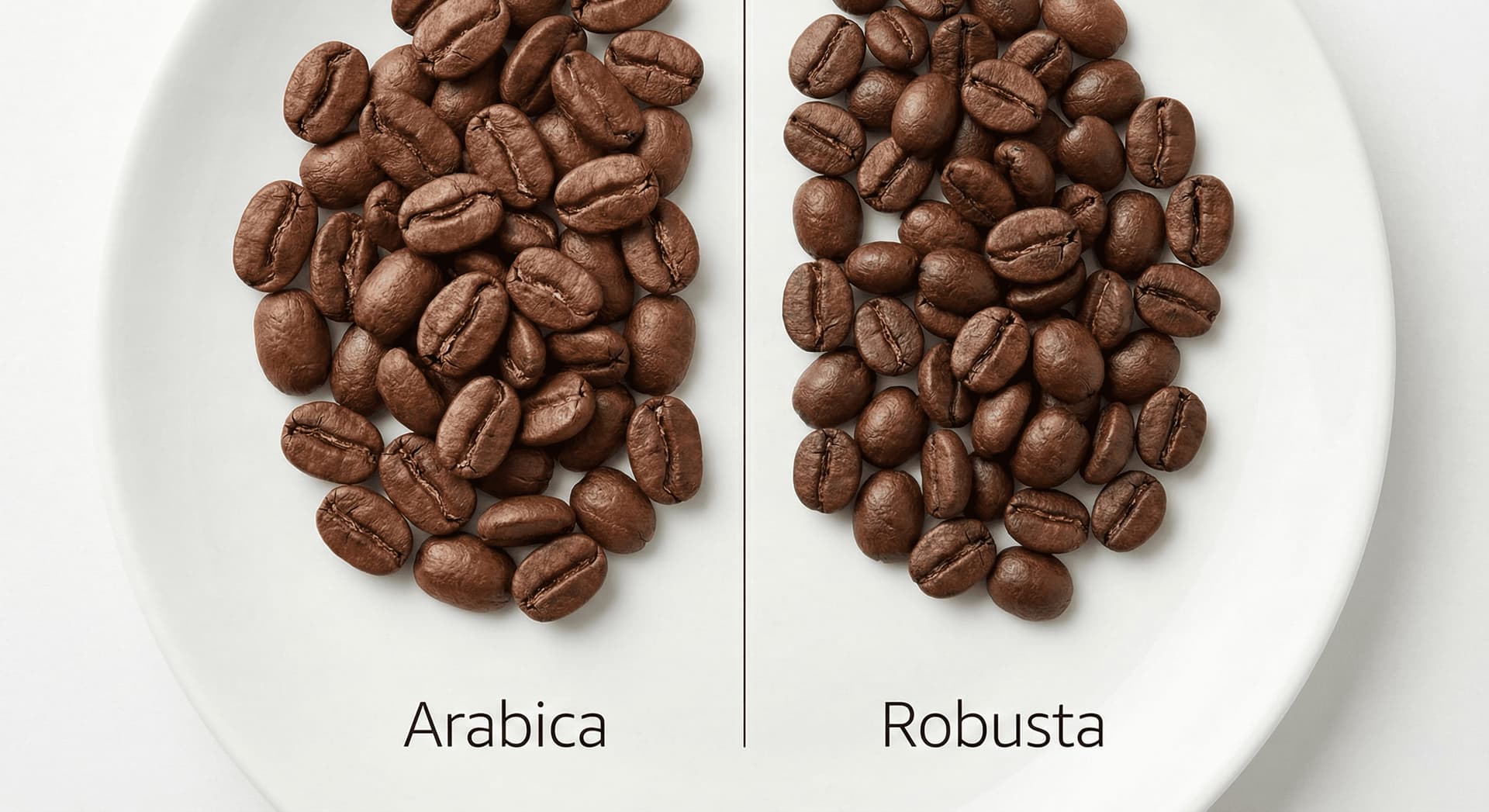
Arabica vs Robusta: What's Best for Espresso?
The Arabica versus Robusta debate represents one of specialty coffee's most polarizing discussions. Understanding these two primary coffee species' fundamental biological, chemical, and sensory differences empowers informed bean selection aligned with your taste preferences, brewing goals, and quality expectations for home espresso.
Arabica (Coffea arabica): The Specialty Coffee Standard
Arabica coffee accounts for approximately 60-70% of global coffee production and dominates the specialty coffee landscape almost exclusively. This species evolved in the high-altitude Ethiopian highlands (1,200-2,200 meters elevation), developing delicate, complex flavor chemistry that discerning coffee drinkers cherish and specialty roasters showcase through careful sourcing, roasting, and brewing.
- •Flavor Complexity: Arabica delivers nuanced flavor spectrums ranging from bright citrus acidity and floral aromatics to stone fruit sweetness, berry complexity, and chocolate richness—depending on origin terroir, processing method, and roast development
- •Natural Sweetness: Contains nearly twice the natural sugar content (6-9%) compared to Robusta, translating to inherent sweetness, caramelization potential, and balanced flavor profiles without harsh bitterness
- •Acidity Profile: Exhibits bright, pleasant acidity (malic, citric, phosphoric acids) that specialty coffee enthusiasts describe as "brightness" or "liveliness"—contributing to flavor clarity and complexity
- •Caffeine Content: Contains approximately 1.2-1.5% caffeine—roughly half of Robusta's concentration, resulting in smoother taste without excessive bitterness
- •Growing Conditions: Requires specific high-altitude climates, careful cultivation, and intensive agricultural management—factors contributing to superior quality but higher production costs
- •Lipid Content: Higher fat content (15-17%) compared to Robusta contributes to smooth mouthfeel, aromatic complexity, and crema quality in espresso extraction
- •Price Range: Premium single-origin Arabica beans command $15-40/lb for specialty-grade coffee, with micro-lot and competition coffees exceeding $50-100/lb
Robusta (Coffea canephora): Crema Production and Caffeine Power
Robusta coffee represents approximately 30-40% of global production, primarily grown in lower-altitude regions across Vietnam, Brazil, Indonesia, and Africa. While traditionally associated with commercial-grade coffee and instant coffee production, high-quality Robusta increasingly appears in specialty espresso blends—particularly Italian-style espresso where body, crema, and caffeine intensity are prized characteristics.
- •Crema Production: Robusta's higher carbon dioxide retention and specific protein structures create thick, stable, long-lasting crema—the visual hallmark of Italian espresso aesthetic
- •Caffeine Concentration: Contains approximately 2.2-2.7% caffeine—nearly double Arabica levels, delivering powerful energy boost but contributing bitter, harsh flavor notes
- •Flavor Characteristics: Typically exhibits earthy, woody, nutty, or grain-like flavors with pronounced bitterness and minimal acidity—flavors many specialty coffee drinkers find undesirable but traditional espresso enthusiasts appreciate
- •Body and Texture: Delivers full, heavy body with substantial mouthfeel—particularly valued in milk-based espresso beverages where coffee flavor must penetrate through dairy sweetness and fat
- •Cultivation Efficiency: Grows at lower altitudes (200-800 meters), resists diseases better, produces higher yields per plant, and tolerates warmer climates—dramatically reducing production costs
- •Cost Advantages: Typically prices 30-50% lower than equivalent Arabica, making it economically attractive for commercial blends and budget-conscious consumers
Arabica/Robusta Espresso Blends: Combining Strengths
Many traditional Italian espresso blends and commercial espresso roasters strategically combine Arabica and Robusta in carefully calibrated ratios—typically 70-90% Arabica with 10-30% Robusta. This blending approach attempts to capture Arabica's flavor complexity and sweetness while leveraging Robusta's crema production, body enhancement, and caffeine boost.
Common blend ratios and characteristics:
- •90/10 Arabica/Robusta: Primarily Arabica character with subtle crema enhancement and slight body boost—minimal Robusta impact on flavor
- •80/20 Arabica/Robusta: Balanced approach delivering Arabica flavor complexity with noticeable crema improvement, enhanced body, and moderate caffeine increase
- •70/30 Arabica/Robusta: Traditional Italian espresso blend ratio emphasizing body, crema, and caffeine while maintaining reasonable flavor quality
Premium espresso blenders source high-quality washed Robusta from India or Brazil rather than commodity-grade Vietnamese Robusta—dramatically improving blend quality while maintaining crema benefits. These carefully selected Robusta beans contribute cleaner flavors, reduced bitterness, and complementary characteristics rather than overwhelming Arabica's delicate qualities.
| Characteristic | Arabica | Robusta |
|---|---|---|
| Flavor Profile | Complex, sweet, nuanced, fruity, floral | Earthy, bitter, woody, nutty, grain-like |
| Caffeine Content | 1.2-1.5% | 2.2-2.7% (nearly double) |
| Sugar Content | 6-9% | 3-7% |
| Acidity | Bright, pleasant, complex | Low to neutral |
| Crema Production | Moderate, lighter colored | Thick, persistent, darker |
| Body | Light to medium, silky | Full, heavy, syrupy |
| Price Range | $15-40/lb (specialty grade) | $8-15/lb |
| Best For | Straight espresso, pour-over, single-origin appreciation | Espresso blends, milk drinks, crema enhancement |
Expert Recommendation:
For home espresso enthusiasts prioritizing flavor quality, complexity, and specialty coffee experience, choose 100% Arabica beans or blends with minimal Robusta (10-15% maximum). For traditional Italian espresso lovers who value thick crema, substantial body, and higher caffeine content—particularly for milk-based drinks like cappuccinos and lattes—consider quality Arabica/Robusta blends in 80/20 or 70/30 ratios. Avoid 100% Robusta espresso unless you specifically enjoy intensely bitter, full-bodied coffee with maximum caffeine impact.
Roast Levels for Espresso: Light, Medium, Dark
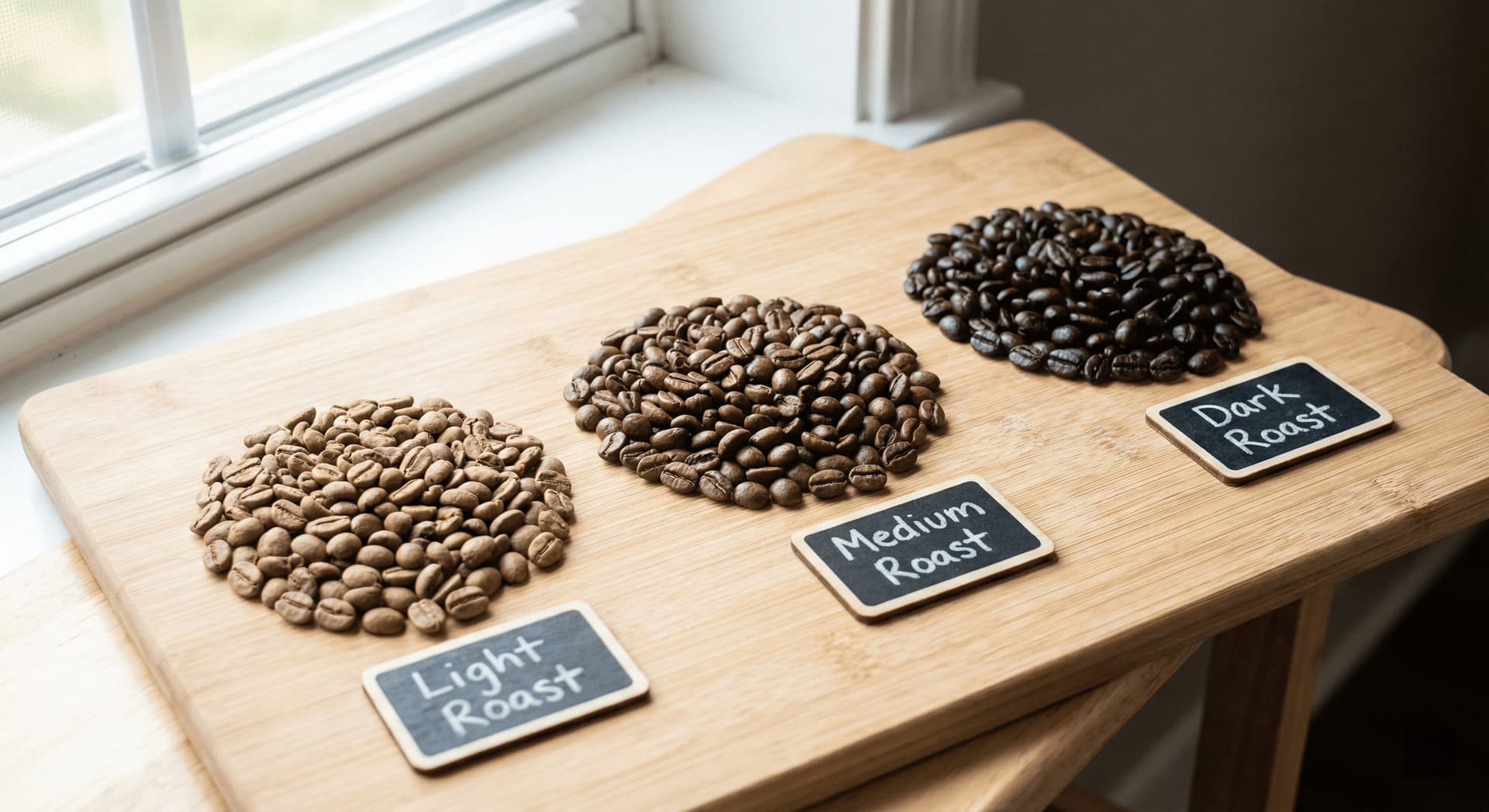
Roast level profoundly influences espresso flavor, extraction dynamics, crema characteristics, and sensory experience. Understanding how light, medium, and dark roasts affect your espresso shots empowers informed selection aligned with personal taste preferences, brewing equipment capabilities, and specialty coffee exploration goals.
Light Roasts: Third-Wave Specialty Espresso
Light-roasted espresso represents specialty coffee's cutting edge—emphasizing origin transparency, bright acidity, complex fruit-forward flavors, and delicate aromatics that darker roasting would obliterate. Modern third-wave coffee shops increasingly serve light-roasted single-origin espresso to showcase terroir-driven flavor profiles. (See origin characteristics in the Flavor Profiles section below.)
Flavor characteristics: Bright, vibrant acidity; floral aromatics; fruit-forward tasting notes; tea-like clarity; delicate sweetness; nuanced complexity; minimal bitterness; transparent origin expression.
Extraction challenges: Light roasts require careful dialing-in expertise because their dense cellular structure extracts more slowly. Underdevelopment causes sour, grassy, astringent shots. Successful light-roasted espresso demands precision grinding (slightly finer than dark roasts), higher brewing temperatures (200-204°F versus 195-200°F for dark roasts), and potentially extended extraction times (30-35 seconds versus standard 25-30 seconds). For a practical walkthrough of how to diagnose and adjust these variables, see our espresso extraction guide.
Equipment considerations: Light roasts benefit from high-quality grinders producing exceptional particle uniformity and temperature-stable espresso machines maintaining consistent brew temperatures. Entry-level equipment may struggle to extract light roasts properly, resulting in sour, underdeveloped shots.
Best for: Experienced home baristas, specialty coffee enthusiasts exploring flavor diversity, straight espresso drinkers who appreciate bright acidity and fruit-forward complexity, those with temperature-stable machines and quality grinders. Light-roasted single-origins also shine when pulled as a ristretto — the restricted yield tames sharpness and concentrates the best fruit-forward characteristics.
Medium Roasts: Balanced Sweetness and Versatility
Medium-roasted espresso delivers optimal balance between origin characteristics preservation and roast-developed sweetness—the sweet spot for most home baristas and specialty coffee roasters. This roast level develops caramelized sugars and Maillard reaction compounds creating chocolate, nut, and caramel flavors while maintaining enough origin acidity and fruit notes for complexity and brightness.
Flavor profile: Balanced acidity and sweetness; chocolate and caramel notes; moderate fruit flavors; smooth body; approachable complexity; minimal bitterness; clean finish; versatile across brewing parameters.
Extraction benefits: Medium roasts offer forgiving extraction windows—slight grinding or temperature variations won't drastically ruin shots. This roast level works excellently across diverse espresso machines, from entry-level thermoblock units to high-end dual-boiler systems, making it ideal for beginners developing dialing-in skills.
Versatility advantages: Medium-roasted beans excel in both straight espresso and milk-based beverages. The balanced flavor profile provides sufficient intensity to penetrate steamed milk in lattes and cappuccinos while offering enough nuance for straight espresso appreciation.
Dark Roasts: Traditional Italian Espresso Power
Dark-roasted espresso represents traditional Italian café culture—emphasizing bold body, low acidity, bittersweet chocolate flavors, smoky notes, and substantial crema production. While specialty coffee's third wave has moved toward lighter roasting, dark roasts remain beloved by traditional espresso enthusiasts and excel in milk-based beverages where coffee flavor must dominate dairy sweetness.
Roasting development: Extended roasting time develops surface oils visible on beans, creates brittle cellular structure facilitating easy extraction, eliminates most origin acidity, and produces readily soluble compounds that extract quickly even at lower temperatures. These characteristics make dark roasts extremely forgiving for home baristas—nearly impossible to under-extract, though over-extraction causes excessive bitterness.
Crema production: Dark roasts typically generate thick, dark, persistent crema due to increased carbon dioxide retention from extended roasting. Traditional Italian espresso aesthetics prioritize this visual characteristic—though crema thickness doesn't necessarily correlate with flavor quality.
Limitations: Dark roasting inevitably obscures origin characteristics and terroir expression. Ethiopian Yirgacheffe and Colombian Huila taste remarkably similar when roasted to Italian dark levels because roast-developed flavors overwhelm origin nuances. Specialty coffee purists argue dark roasting "covers up" inferior bean quality—though skilled roasters can create excellent dark-roasted espresso using premium beans.
Matching Roast Level to Your Espresso Machine:
Entry-level machines (thermoblock, single boiler): Medium to dark roasts work best. Temperature instability and lower brewing temperatures suit beans requiring less precise extraction.
Mid-range machines (heat exchanger, dual boiler): All roast levels work well. Temperature stability supports light roast extraction while maintaining dark roast quality.
High-end machines (commercial-grade, PID control): Optimal for light roasts. Precise temperature control and stability unlock delicate flavor complexity requiring exact extraction parameters.
Learn more: Complete guide to espresso machine types →
Single-Origin vs Espresso Blends
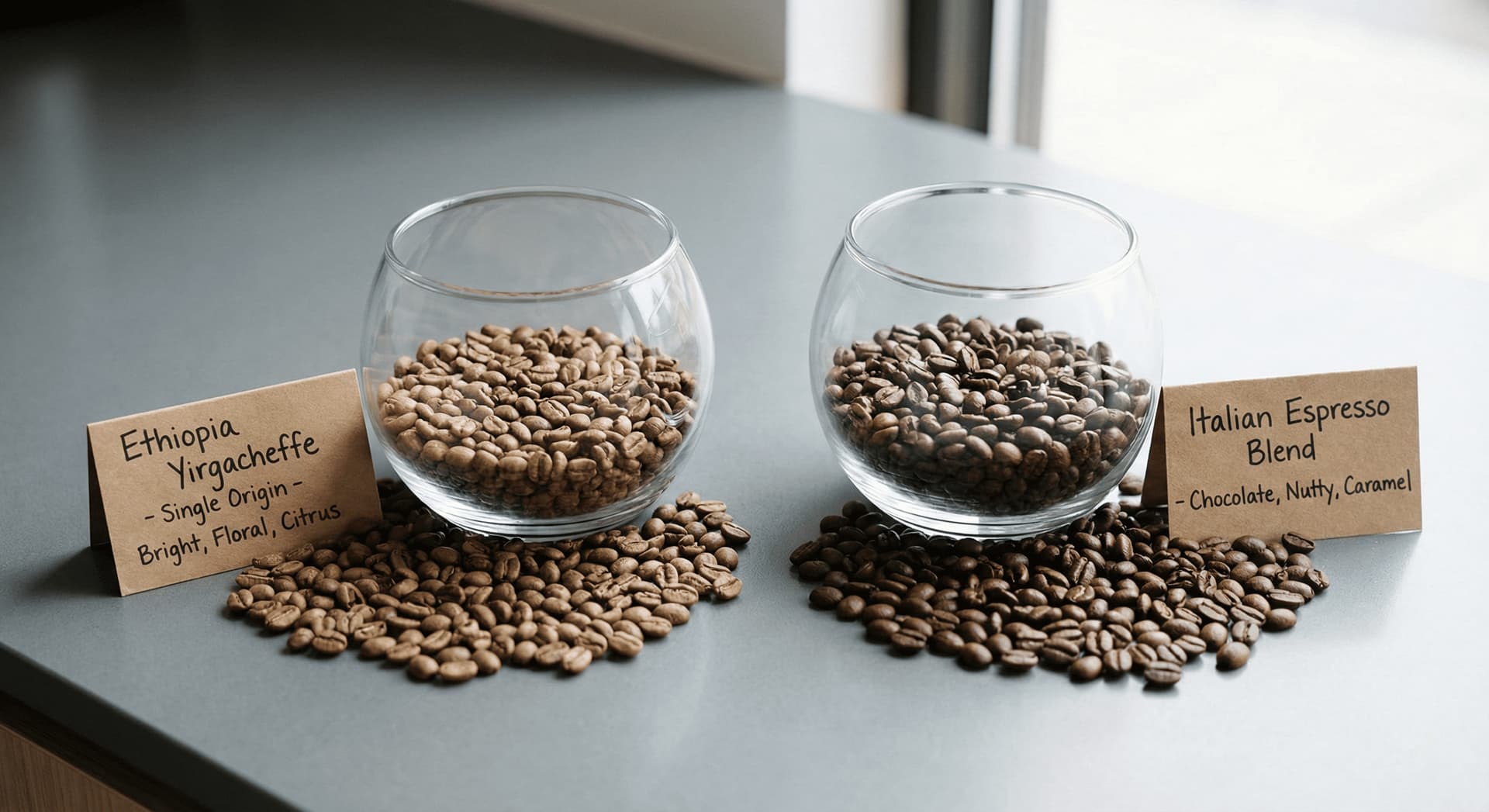
The single-origin versus espresso blend decision fundamentally shapes your coffee experience—determining flavor consistency, seasonal variation, complexity characteristics, and cost considerations. Both approaches deliver exceptional espresso when executed properly, but they serve distinctly different purposes and appeal to different coffee preferences.
Single-Origin Espresso: Terroir and Clarity
Single-origin espresso showcases coffee from one specific geographic region, farm, or even micro-lot—highlighting unique terroir characteristics, processing method influences, and origin-specific flavor profiles. This approach mirrors fine wine philosophy: expressing distinctive characteristics from particular places, vintages, and production methods.
Advantages:
- ✓Terroir expression: Experience distinct flavor profiles reflecting specific growing regions—Ethiopian fruit-forward complexity, Colombian balanced sweetness, or Sumatran earthy body
- ✓Flavor clarity: Single-origin espresso delivers transparent flavor presentation without blending obscuration—ideal for appreciating specialty coffee nuances
- ✓Educational exploration: Tasting different single-origins develops palate sophistication and coffee origin knowledge
- ✓Seasonal variety: Rotating single-origins prevent taste fatigue and offer continuous flavor discovery
- ✓Direct trade transparency: Many single-origins come from traceable sources supporting sustainable coffee farming and farmer premiums
Disadvantages:
- ✗Seasonal availability: Coffee harvests occur once yearly per origin—favorite beans may become unavailable for months
- ✗Flavor variability: Crop-to-crop variation means the same origin tastes different each year, requiring re-dialing extraction parameters
- ✗Challenging extraction: Single-origins may exhibit flavor imbalances—excessive acidity, thin body, or one-dimensional profiles—requiring precise brewing to optimize
- ✗Price premium: Specialty single-origin beans often cost $20-40/lb versus $15-25/lb for quality blends
- ✗Acquired taste: Some single-origin flavor profiles (intense Ethiopian florals, funky Indonesian earthiness) polarize drinkers
Best for: Specialty coffee enthusiasts, flavor explorers, straight espresso drinkers, those with developed palates appreciating nuanced complexity, coffee geeks enjoying seasonal variety
Espresso Blends: Consistency and Complexity
Espresso blends combine beans from multiple origins, sometimes including different roast levels and processing methods, creating intentionally balanced, complex, and consistent flavor profiles year-round. Skilled roasters craft blends like chefs develop recipes—selecting complementary components that together create something greater than individual parts.
Advantages:
- ✓Year-round consistency: Roasters adjust blend components as crops change, maintaining consistent flavor profile regardless of season
- ✓Balanced complexity: Blending combines different origins' strengths—Ethiopian brightness + Brazilian body + Colombian sweetness = perfectly balanced espresso
- ✓Forgiving extraction: Balanced blends tolerate broader extraction parameters, reducing shot-to-shot variation and simplifying dialing-in
- ✓Milk beverage optimization: Roasters design specific blends for lattes and cappuccinos, ensuring coffee flavor penetrates milk without excessive bitterness
- ✓Better value: Blending allows roasters to use cost-effective base components while maintaining quality
- ✓Predictable performance: Once you dial in a blend, it works consistently for months—ideal for daily routine brewing
Disadvantages:
- ✗Lack of terroir clarity: Blending obscures individual origin characteristics—you can't isolate Ethiopian fruit notes or Colombian chocolate
- ✗Quality variation risk: Some commercial blends use inferior components hidden by blending and dark roasting
- ✗Less educational: Blends don't teach origin recognition or terroir appreciation like single-origin exploration
- ✗Potential monotony: Drinking the same blend daily may cause taste fatigue for adventurous coffee drinkers
Best for: Daily espresso drinking, milk-based beverage enthusiasts, beginners learning extraction, those prioritizing consistency, café owners needing reliable year-round offerings
Popular Espresso Blend Compositions
Classic Italian Blend: 40% Brazilian natural (body, chocolate, sweetness) + 30% Colombian washed (balance, caramel) + 20% Central American (brightness, complexity) + 10% Indian Robusta (crema, caffeine)
Modern Specialty Blend: 50% Ethiopian washed (fruit, florals, brightness) + 30% Colombian (sweetness, balance) + 20% Brazilian pulped natural (body, chocolate)
Milk-Forward Blend: 60% Brazilian natural (chocolate, body) + 25% Indonesian (earthy depth, low acidity) + 15% Guatemalan (spice, complexity)
Expert Recommendation:
Start your espresso journey with quality blends from reputable specialty roasters—they provide consistency, forgiveness, and balanced flavor perfect for developing skills. Once comfortable dialing in extraction, explore single-origin espresso to discover flavor diversity and develop palate sophistication. Many experienced home baristas maintain both: reliable daily blend plus rotating single-origins for weekend exploration.
Fresh Roasted Beans: Why Freshness Matters
Freshness represents the most critical yet most neglected factor in espresso quality. Even the finest single-origin specialty beans roasted by championship-winning roasters become mediocre coffee when consumed months past their roast date. Understanding coffee freshness dynamics, optimal brewing windows, and degassing processes transforms your espresso quality more dramatically than any equipment upgrade.
Roast date importance: Coffee freshness is measured from the roast date, not purchase date or expiration date. Supermarket coffee often sits weeks or months in distribution chains before reaching shelves—then displays "best by" dates 12-18 months in the future that mean absolutely nothing for flavor quality. Premium specialty roasters print exact roast dates on bags because they understand freshness fundamentally determines coffee excellence.
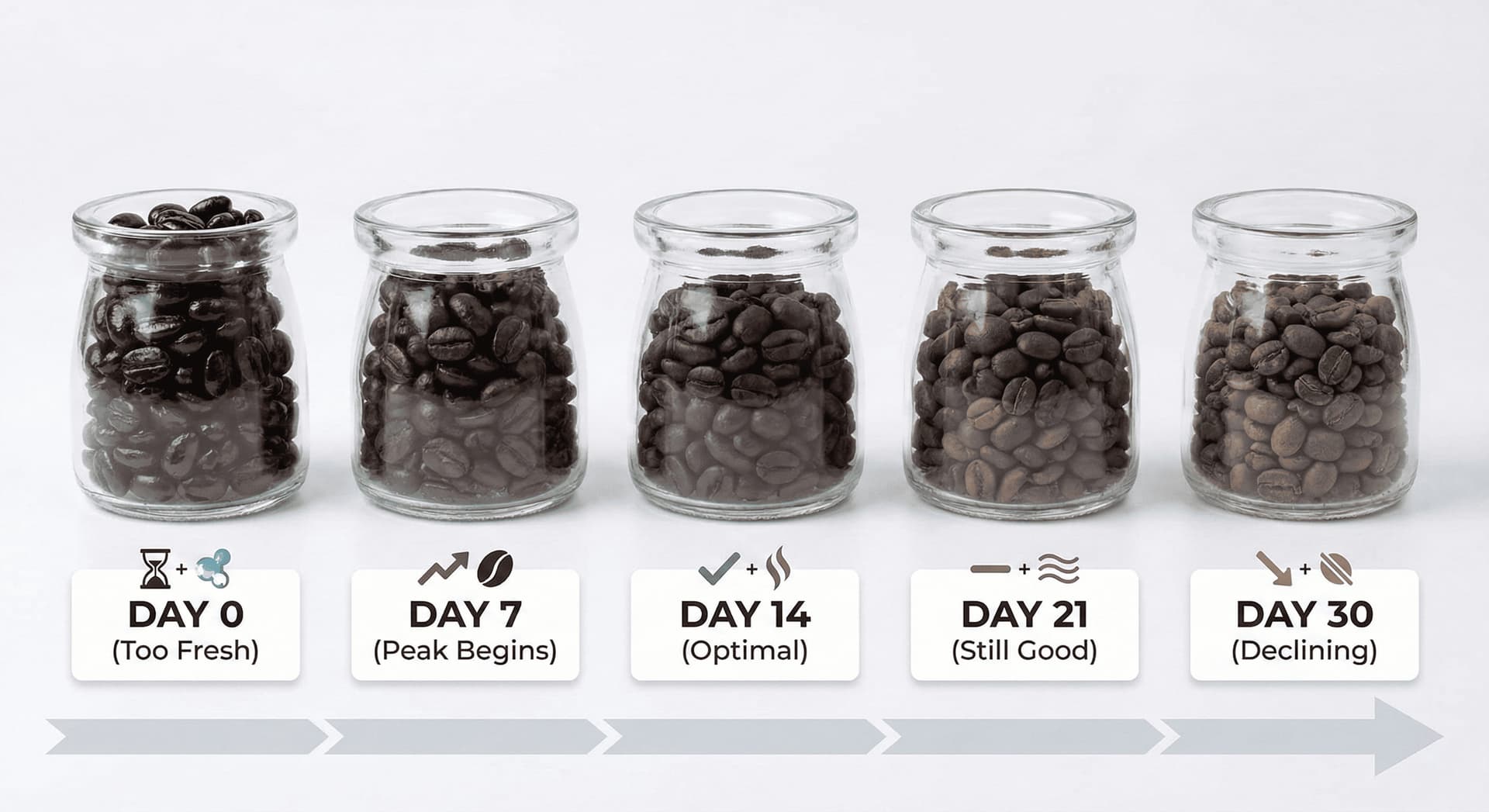
Optimal Brewing Window: The 7-21 Day Sweet Spot
Days 0-2 (Too Fresh): Immediately after roasting, beans contain excessive carbon dioxide trapped within cellular structure during roasting. Brewing these ultra-fresh beans causes unpredictable extraction, excessive channeling, and sour flavors as CO2 disrupts water contact with coffee grounds. Professional baristas and specialty roasters always rest beans before brewing.
Days 3-7 (Degassing Period): Beans continue releasing CO2 while aromatics stabilize. Light roasts require 5-7 days degassing; medium roasts need 3-5 days; dark roasts only need 2-3 days due to more porous structure from extended roasting. During this period, flavors settle and extraction becomes more predictable—though beans haven't reached peak yet.
Days 7-14 (Peak Freshness): Optimal espresso quality window. CO2 levels stabilize, aromatic compounds reach maximum expression, volatile oils remain vibrant, and flavor complexity peaks. Professional coffee competitions, cupping sessions, and quality evaluations occur within this window because it represents coffee at its absolute best.
Days 14-21 (Still Excellent): Beans remain in excellent condition though subtle degradation begins. Experienced palates may detect slight reduction in aromatic intensity and flavor brightness, but coffee remains vastly superior to anything outside this freshness window.
Days 21-30 (Acceptable): Noticeable flavor degradation accelerates. Aromatics diminish, flavors flatten, complexity reduces, and crema quality decreases. Coffee remains drinkable and acceptable for daily consumption but lacks the vibrant character of peak-fresh beans.
Days 30+ (Stale): Significant quality deterioration. Beans taste flat, cardboard-like, or rancid as volatile aromatic compounds oxidize and evaporate. Crema becomes thin and dissipates quickly. While technically safe to consume, stale coffee delivers disappointing experiences that don't justify specialty bean pricing.
Signs of Stale Espresso Beans
- •No roast date visible: Absence of roast dating is the primary red flag—reputable roasters always date bags
- •Weak aroma: Fresh beans emit powerful, pleasant aromatics when the bag opens; stale beans smell faint, flat, or musty
- •Thin, pale crema: Fresh espresso produces thick, golden-brown crema persisting 2-3 minutes; stale beans create thin, dissipating crema
- •Flat, one-dimensional flavor: Complexity collapses as beans stale—vibrant, multifaceted profiles become boring, monotonous coffee
- •Cardboard or papery taste: Oxidation creates distinct cardboard-like off-flavors unmistakable once experienced
- •Rancid oil notes: Oily dark roasts develop rancid, paint-like flavors as surface oils oxidize
Where to Buy Fresh Espresso Beans
Local specialty roasters: Absolute best source for maximum freshness. Many roast multiple times weekly, ensuring beans sold are often 3-7 days old—entering peak freshness window immediately. Build relationships with local roasters who'll recommend beans matching your preferences and notify you about new offerings.
Online subscription services: Reputable coffee subscriptions (Trade Coffee, Blue Bottle, Intelligentsia, Counter Culture) ship beans days after roasting—typically arriving 5-10 days post-roast. Subscriptions prevent running out of fresh beans and introduce variety. Verify subscription services date their bags and ship quickly after roasting.
Specialty coffee retailers: Some online retailers (Sweet Maria's, Prima Coffee) partner with roasters shipping beans immediately after roasting. Check individual product roast dates before ordering.
Avoid: Supermarket coffee aisles (beans likely months old), big-box stores, gas stations, convenience stores, Amazon third-party sellers (storage conditions unknown), any retailer not displaying roast dates.
Pro Tip - Buying Strategy:
Purchase smaller quantities (8-12 oz bags) more frequently rather than buying bulk pounds. This ensures you're always brewing within the optimal 7-21 day window. A 12 oz bag lasts approximately 2 weeks for daily double-shot drinkers—perfect timing for peak freshness consumption.
One visible effect of bean freshness you will notice when brewing is the bloom — the CO2 degassing phase that occurs when hot water first contacts the grounds. Fresh beans bloom vigorously; stale beans barely rise. If you brew pour over or use an AeroPress, the bloom is both a freshness indicator and an important step for even extraction. See our complete guide to coffee bloom and CO2 degassing for a full breakdown of how it works and when it matters most.
Flavor Profiles and Tasting Notes
Understanding espresso flavor profiles empowers you to select beans matching your taste preferences and appreciate the incredible diversity specialty coffee offers. Coffee flavor complexity rivals fine wine—encompassing fruity, floral, chocolatey, nutty, spicy, and earthy characteristics influenced by origin terroir, processing methods, roast development, and brewing extraction.
Common Espresso Flavor Notes Explained
Chocolate and Cocoa: Most prevalent in medium to dark roasts, particularly from Brazilian, Colombian, and Central American origins. Ranges from milk chocolate sweetness to dark chocolate bitterness. Developed through Maillard reactions during roasting.
Caramel and Toffee: Result of sugar caramelization during roasting. Common in medium roasts, especially Brazilian natural-process and Colombian beans. Provides pleasant sweetness balancing acidity.
Nuts (Almond, Hazelnut, Walnut): Characteristic of Central American coffees and medium roasts. Delivers smooth, accessible flavor profiles appealing to traditional coffee drinkers.
Berry and Stone Fruit: Hallmark of Ethiopian and Kenyan coffees, particularly light to medium roasts. Expect blueberry, strawberry, blackberry, cherry, apricot, or peach notes. Specialty coffee enthusiasts prize these complex fruit characteristics.
Citrus: Bright acidity manifesting as lemon, orange, grapefruit, or lime notes. Common in light-roasted East African coffees and washed-process Central Americans. Provides refreshing brightness and complexity.
Floral: Jasmine, hibiscus, rose, or lavender aromatics prevalent in Ethiopian coffees, especially natural-process Yirgacheffe. Delicate, perfume-like qualities distinguishing exceptional specialty coffee.
Spice: Cinnamon, clove, cardamom, or pepper notes from Indonesian, Indian, and some Central American coffees. Adds complexity and exotic character.
Earthy and Woody: Characteristics of Indonesian coffees (Sumatra, Sulawesi) and some African naturals. Describes forest floor, tobacco, cedar, or mushroom notes—polarizing but beloved by some enthusiasts.
Regional Characteristics: Espresso Bean Origins
Ethiopia: The birthplace of coffee delivers wildly diverse profiles. Expect bright fruit-forward flavors (blueberry, strawberry, tropical fruit), intense floral aromatics, tea-like body, and complex acidity. Natural-process Ethiopians showcase wine-like fermented characteristics. Best for adventurous specialty coffee lovers.
Colombia: Benchmark for balanced, approachable espresso. Delivers caramel sweetness, milk chocolate notes, bright citrus acidity, medium body, and clean finish. Extremely versatile—works excellently in blends and single-origin espresso. Ideal for beginners and daily drinking.
Brazil: World's largest coffee producer emphasizes nutty, chocolatey, low-acid profiles with substantial body. Natural-process Brazilians add fruity sweetness. Perfect espresso blend base component and excellent for milk-based beverages.
Kenya: Produces intensely bright, complex espresso with blackcurrant, tomato, grapefruit, and winey characteristics. Full body with syrupy mouthfeel. Polarizing acidity—loved by enthusiasts, overwhelming for some palates.
Guatemala and Central America: Delivers chocolate, caramel, nut, and stone fruit flavors with balanced acidity and medium body. Reliable, approachable profiles perfect for espresso blends and daily drinking.
Sumatra and Indonesia: Characterized by earthy, herbal, tobacco, and cedar notes with very low acidity and heavy body. Wet-hulled processing creates distinctive flavor profiles. Excellent for dark roasting and milk-based beverages.
Understanding Tasting Notes:
Coffee tasting notes describe flavor characteristics—not added ingredients. "Blueberry" notes mean the coffee naturally tastes similar to blueberries through chemical compounds created during growing and roasting, not that blueberries were added. Approach tasting notes as guides, not guarantees—individual palate sensitivity, brewing parameters, and water chemistry all influence perceived flavors.
Finding Your Preference
Developing flavor preferences requires exploration and experimentation. Start with approachable, balanced origins like Colombian or Brazilian medium roasts. Gradually explore flavor extremes—bright Ethiopian naturals, earthy Sumatran dark roasts, fruit-forward Kenyan light roasts—to discover your preferences. Palates evolve; variety prevents taste fatigue.
Price Ranges: What to Expect
Espresso bean pricing reflects complex factors including bean quality grade, origin rarity, processing methods, roaster reputation, freshness guarantees, and supply chain transparency. Understanding price tiers helps set realistic expectations and identify genuine value versus marketing markup.
Budget Beans ($10-15/lb): Entry-Level Espresso
Budget espresso beans typically consist of commercial-grade Arabica or Arabica/Robusta blends using commodity coffee from high-volume producers. While dramatically superior to pre-ground supermarket coffee, these beans exhibit limited complexity, may lack roast dating, and often arrive weeks or months past roasting.
Characteristics: Generic flavor profiles (chocolate, nuts, caramel), minimal origin distinction, medium to dark roasting masking bean defects, adequate crema production, acceptable for milk-based beverages but uninspiring for straight espresso.
Examples: Large commercial roasters, supermarket brands advertising espresso suitability, budget online retailers.
Best for: Extreme budget constraints, high-volume milk drink consumption, experimentation before investing in quality beans, office environments.
Mid-Range Beans ($15-25/lb): Specialty Quality Sweet Spot
This price range represents exceptional value—accessing genuine specialty-grade coffee (SCA 80+ score) from reputable roasters who date bags, source transparently, and roast carefully. Most serious home baristas find optimal quality-to-price ratio here, with beans delivering complex flavors, proper freshness, and consistent quality.
Quality characteristics: Specialty-grade green coffee (minimal defects), traceable origins, roast date guarantees (usually shipped within 1-2 weeks of roasting), developed flavor complexity, origin characteristics clearly expressed, excellent crema production, satisfying straight espresso and milk beverages.
Sources: Regional specialty roasters, reputable online roasters (Intelligentsia, Counter Culture, Blue Bottle, Verve, Heart), quality-focused subscriptions, local roasters with established reputations.
This tier includes both excellent espresso blends and solid single-origin offerings. Roasters at this level typically provide detailed sourcing information, tasting notes, and brewing recommendations—educational resources enhancing coffee appreciation.
Best for: Daily specialty espresso drinking, home baristas serious about quality, those exploring specialty coffee, balanced value and quality priority, most enthusiasts' primary purchasing range.
Premium Beans ($25-40/lb): Competition Grade and Micro-Lots
Premium espresso beans represent coffee's upper echelon—featuring competition-winning micro-lots, rare varietals, exceptional processing methods (anaerobic fermentation, carbonic maceration), direct-trade relationships, and SCA 85+ quality scores. These beans deliver extraordinary complexity, clarity, and unique flavor profiles impossible to find in lower price tiers.
Premium characteristics: Micro-lot specificity (single farm, sometimes single processing day), rare heirloom varietals (Gesha, SL28, Bourbon), experimental processing creating unique flavors, championship competition beans, complete supply chain transparency with farmer premiums.
Flavor expectations: Exceptional clarity revealing nuanced complexity—distinct fruit notes, complex acidity, unique processing characteristics, memorable sensory experiences distinguishing these beans from standard specialty offerings.
Sources: Championship roasters, specialty coffee auction lots, limited-release offerings from top-tier roasters, rare varietals from renowned farms.
Considerations: Premium beans require excellent equipment and skilled extraction to showcase quality. Mediocre grinders or inconsistent espresso machines waste premium bean potential. Additionally, exotic flavor profiles may challenge palates accustomed to traditional espresso—bright Ethiopian Gesha tastes radically different from standard dark-roasted blends.
Best for: Special occasions, coffee geeks pursuing exceptional experiences, cupping and tasting sessions, those with high-end equipment capable of showcasing quality, exploring coffee's flavor possibilities.
Cost Per Cup Reality Check:
$20/lb beans = $0.56 per double shot (using 18g dose)
$30/lb beans = $0.84 per double shot
Compare this to $4-6 café espresso drinks—even premium beans deliver extraordinary value when brewing at home. The $0.28 difference between budget and premium beans per shot is negligible compared to café prices, making quality bean investment highly worthwhile for daily espresso drinkers.
How to Store Espresso Beans Properly
Proper storage dramatically extends coffee freshness, preserving aromatic compounds and flavor oils that oxidation, moisture, heat, and light rapidly degrade. Implementing optimal storage protocols maximizes your investment in quality beans—protecting precious flavors from staling until you're ready to brew.
Airtight Containers: Essential Protection
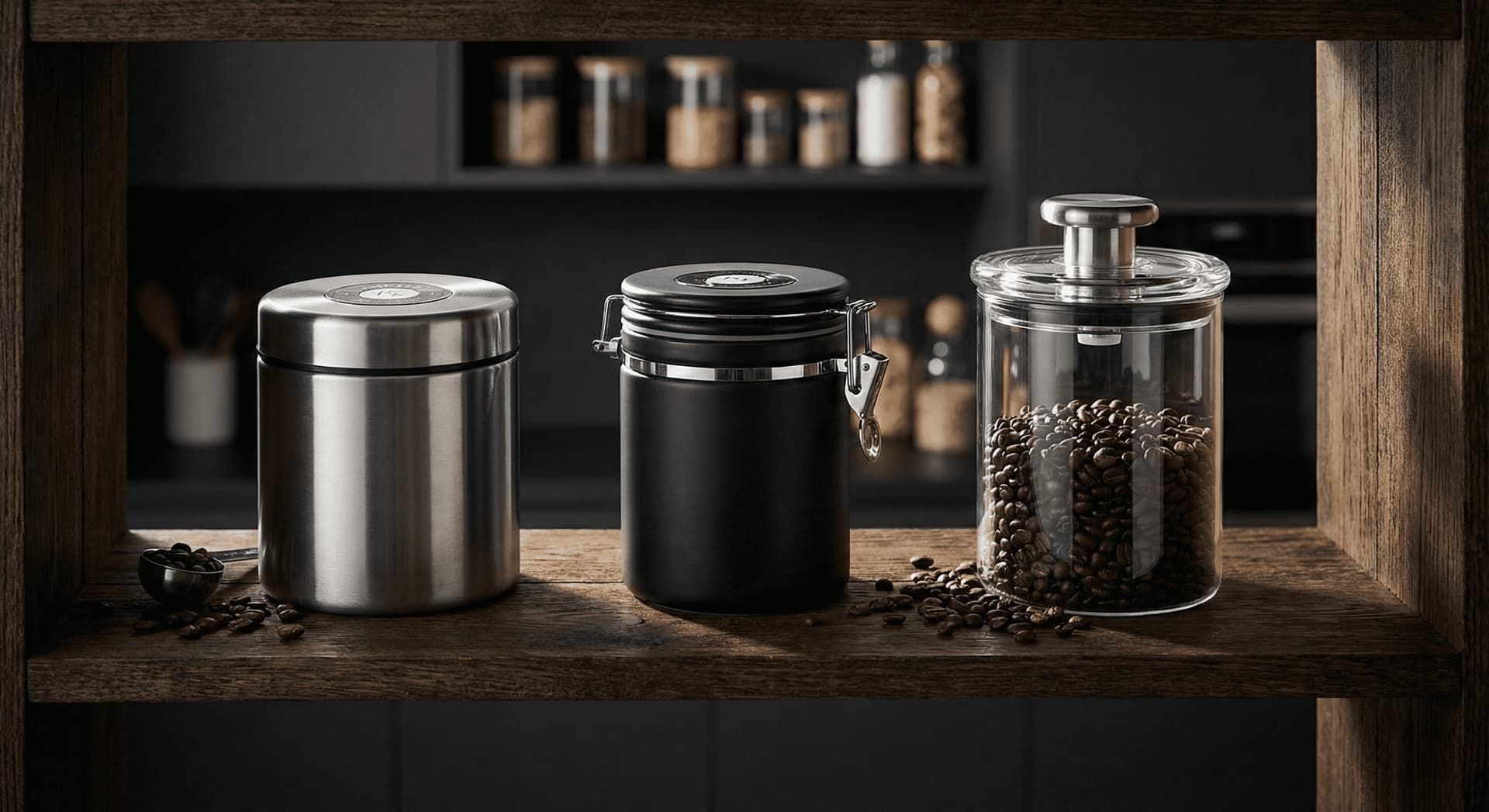
Oxygen exposure represents coffee's primary enemy—oxidation reactions degrade flavor compounds, turn oils rancid, and flatten aromatics within days. Transfer beans from original packaging into truly airtight containers immediately after opening. Look for containers with robust rubber gasket seals, not simply tight-fitting lids that still allow air infiltration.
Recommended containers: Vacuum-sealed canisters with one-way CO2 valves (Airscape, Fellow Atmos), stainless steel containers with silicone seals, opaque ceramic jars with airtight lids, glass containers with gasket seals stored in dark locations.
Avoid: Clear containers exposing beans to light, decorative containers with poor seals, original bags without resealing mechanisms (roll-top closures don't maintain freshness).
Cool, Dark Locations: Protecting from Heat and Light
Store coffee in cool, dark pantry locations away from heat sources (ovens, stoves, dishwashers, sunlight). Ideal storage temperature ranges 60-75°F. Heat accelerates chemical reactions degrading flavor compounds—beans stored next to warm appliances stale significantly faster than cool pantry storage.
Light exposure, particularly UV radiation, breaks down aromatic molecules and accelerates oxidation. This is why quality roasters package beans in opaque bags with light-blocking layers rather than clear bags showcasing beans attractively but destroying freshness.
Freezer Storage: Debunking the Myth
Conventional wisdom says never freeze coffee beans—and for daily-use beans, this advice holds true. Freezing whole beans causes several problems: condensation when removing beans from freezer (moisture damages flavor), freezer odor absorption (coffee absorbs surrounding smells), and inconvenience of frozen bean grinding.
However, long-term freezer storage (1-3 months) can preserve beans when executed properly: portion beans into individual airtight, opaque containers or vacuum-sealed bags (one container per usage period), freeze completely, then remove individual portions allowing them to reach room temperature before opening (preventing condensation). Never repeatedly freeze/thaw beans.
For most home baristas, buying smaller quantities frequently eliminates freezing necessity—far simpler than managing frozen bean protocols.
One-Way Valve Bags: Built-In Freshness
Many specialty roasters package beans in bags featuring one-way degassing valves—allowing CO2 to escape while preventing oxygen entry. These bags work excellently for storage when properly resealed with clips or folded tightly. However, they're not as effective long-term as dedicated airtight containers because residual air trapped during resealing gradually oxidizes beans.
If storing beans in original valve bags, squeeze excess air out before sealing, then store in dark location at room temperature.
Portioning for Maximum Freshness
Pro strategy: When buying larger quantities, immediately portion beans into smaller airtight containers—one for daily use (holding 3-5 days of beans), others sealed for future use. This minimizes how frequently you expose the entire bean supply to oxygen. Each time you open a container, oxygen enters and degradation accelerates.
Daily-use portions ensure you're opening containers frequently (exposing beans to oxygen) while the majority remains sealed and protected. This approach is particularly valuable for 1-pound or larger purchases.
Golden Rule of Bean Storage:
The best storage solution is buying smaller quantities more frequently. No storage method preserves freshness as effectively as consuming beans within the optimal 7-21 day window. A perfectly stored 2-month-old bean still tastes inferior to a 10-day-old bean stored adequately. Prioritize purchase timing over storage optimization.
Common Mistakes to Avoid
Buying Pre-Ground Espresso
Pre-ground coffee stales within 15-30 minutes of grinding as exponentially increased surface area accelerates oxidation. Even vacuum-sealed pre-ground espresso tastes dramatically inferior to fresh-ground beans. The grinder investment pays for itself immediately through preserved flavor quality—no amount of careful storage saves pre-ground coffee from rapid deterioration.
Ready to invest in fresh grinding? Complete burr grinder buying guide →
Storing Beans in Clear Containers on Countertops
Attractive glass jar displays look aesthetically pleasing but destroy coffee freshness through constant light exposure and temperature fluctuation. Light degrades aromatic compounds within days; countertop heat sources accelerate oxidation. Beauty and freshness are incompatible—choose opaque containers stored in dark, cool locations.
Buying Bulk Without Considering Freshness Windows
Bulk purchasing seems economical but backfires when beans stale before consumption. A $40 three-pound purchase consuming two months means drinking stale coffee 75% of the time—false economy trading freshness for minimal savings. Better strategy: buy 12 oz bags frequently, ensuring peak freshness throughout consumption.
Ignoring Roast Dates
Roast dates are the single most important information on coffee packaging—yet many buyers ignore them or purchase beans without dates entirely. Absent roast dating signals roasters hiding age because beans are weeks or months old. Absolutely refuse purchasing coffee without clear roast dates—no exceptions. This simple rule instantly eliminates 80% of inferior coffee from consideration.
Not Experimenting with Different Beans
Many home baristas find one acceptable bean and never explore further—missing extraordinary flavor diversity specialty coffee offers. Taste preferences evolve; palates develop. Rotate origins, roast levels, and processing methods to discover favorites and prevent taste fatigue. Specialty coffee's infinite variety represents one of its greatest joys—embrace exploration rather than routine.
Prioritizing Price Over Quality and Freshness
Saving $5 per pound buying inferior beans wastes money compared to drinking exceptional $20/lb specialty coffee. The per-cup cost difference (perhaps $0.20) is negligible, but the quality gap is enormous. If budget constrains coffee spending, reduce consumption frequency rather than compromising quality—better to drink one exceptional espresso daily than three mediocre shots.
Making Your Final Selection
Choosing the perfect espresso beans requires balancing personal taste preferences, equipment capabilities, budget considerations, and freshness priorities. Start by honestly assessing what you value most—flavor complexity, consistency, affordability, or exploration—then select beans aligning with those priorities.
For beginners: Start with medium-roasted espresso blends from reputable specialty roasters. These offer balanced flavors, forgiving extraction, reasonable pricing, and year-round consistency perfect for developing skills. Brands like Counter Culture, Intelligentsia, Blue Bottle, or quality local roasters provide excellent entry points.
For flavor explorers: Pursue single-origin espresso rotating through different origins and processing methods. Subscribe to services curating diverse selections or purchase directly from adventurous roasters experimenting with exotic varietals and fermentation processes.
For milk drink enthusiasts: Choose medium to dark roasts with substantial body and bold flavor—Brazilian naturals, Indonesian coffees, or traditional Italian-style blends with modest Robusta percentages. These coffees penetrate milk effectively without disappearing.
For straight espresso purists: Invest in light to medium roasted single-origins showcasing exceptional clarity and complexity. Ethiopian, Kenyan, and experimental-process coffees reward discerning palates with memorable sensory experiences.
Testing different beans: Purchase small quantities (8-12 oz bags) from multiple roasters initially. This exploration investment pays dividends through discovered favorites and developed preferences. Many roasters offer sample packs or smaller sizes perfect for testing.
Building a rotation: Experienced home baristas often maintain 2-3 bean varieties simultaneously—reliable daily blend, adventurous single-origin for weekends, special occasion micro-lot. This prevents taste fatigue while ensuring consistency for routine brewing.
Local roasters vs mail order: Local specialty roasters offer unbeatable freshness, personal relationships, immediate purchasing, and community support. Mail order provides broader selection, rare offerings, convenience, and access to renowned roasters nationwide. Consider combining both—local roaster for daily beans, mail order for special explorations.
Subscription services: Quality coffee subscriptions eliminate decision fatigue, ensure constant fresh supply, introduce variety, and often provide detailed tasting notes and brewing recommendations. Services like Trade Coffee, MistoBox, or direct roaster subscriptions work excellently for busy enthusiasts prioritizing convenience and discovery.
Pairing great beans with the right machine? Browse our best espresso machines guide →
Ready to Elevate Your Espresso?
Explore our curated selection of espresso beans reviewed by coffee experts
Read Recommended Espresso Bean ReviewsFrequently Asked Questions
There's no single "best" roast—it depends on preference.
Traditional Italian espresso uses dark roasts (bold, chocolatey, low acidity), while third-wave specialty cafés favor medium to light roasts that highlight origin characteristics and fruity notes.
Medium roasts offer the best balance for most home baristas, delivering sweetness, body, and complexity without overwhelming bitterness or excessive brightness.
Conclusion
Selecting exceptional espresso beans transforms your home coffee experience more profoundly than any equipment upgrade. The difference between stale supermarket beans and fresh specialty coffee roasted within the optimal window is immediately apparent—even to complete beginners—delivering vibrant aromatics, complex flavors, and rich crema that inferior beans simply cannot produce.
Start by establishing your priorities: flavor preferences (bright and fruity versus chocolate and traditional), equipment capabilities (light roasts demand better machines), budget allocation (mid-range beans offer exceptional value), and convenience needs (subscriptions versus local purchasing). Armed with knowledge about Arabica versus Robusta characteristics, roast level impacts, single-origin terroir expression, freshness windows, and proper storage protocols, you can confidently select beans matching your specific espresso goals.
Remember that coffee preferences evolve. Beans you find too acidic or fruity today might become favorites as your palate develops. Embrace exploration, rotate varieties, support quality roasters committed to freshness and transparency, and never compromise on roast-dated beans. The specialty coffee world offers infinite discovery—from classic Italian espresso traditions to cutting-edge third-wave experimentation.
Perfect espresso beans exist for every coffee lover—from budget-conscious beginners to discerning enthusiasts pursuing competition-grade micro-lots. Invest in freshness, prioritize quality over quantity, experiment fearlessly, and remember that great espresso starts with great beans. Your journey toward exceptional home espresso begins with the beans you choose—make that choice wisely.
Get Coffee Tips
Join our newsletter for expert reviews and brewing guides.
Affiliate Disclosure: We may earn a commission when you purchase through links on our site. This comes at no extra cost to you and helps us continue providing expert coffee guidance.