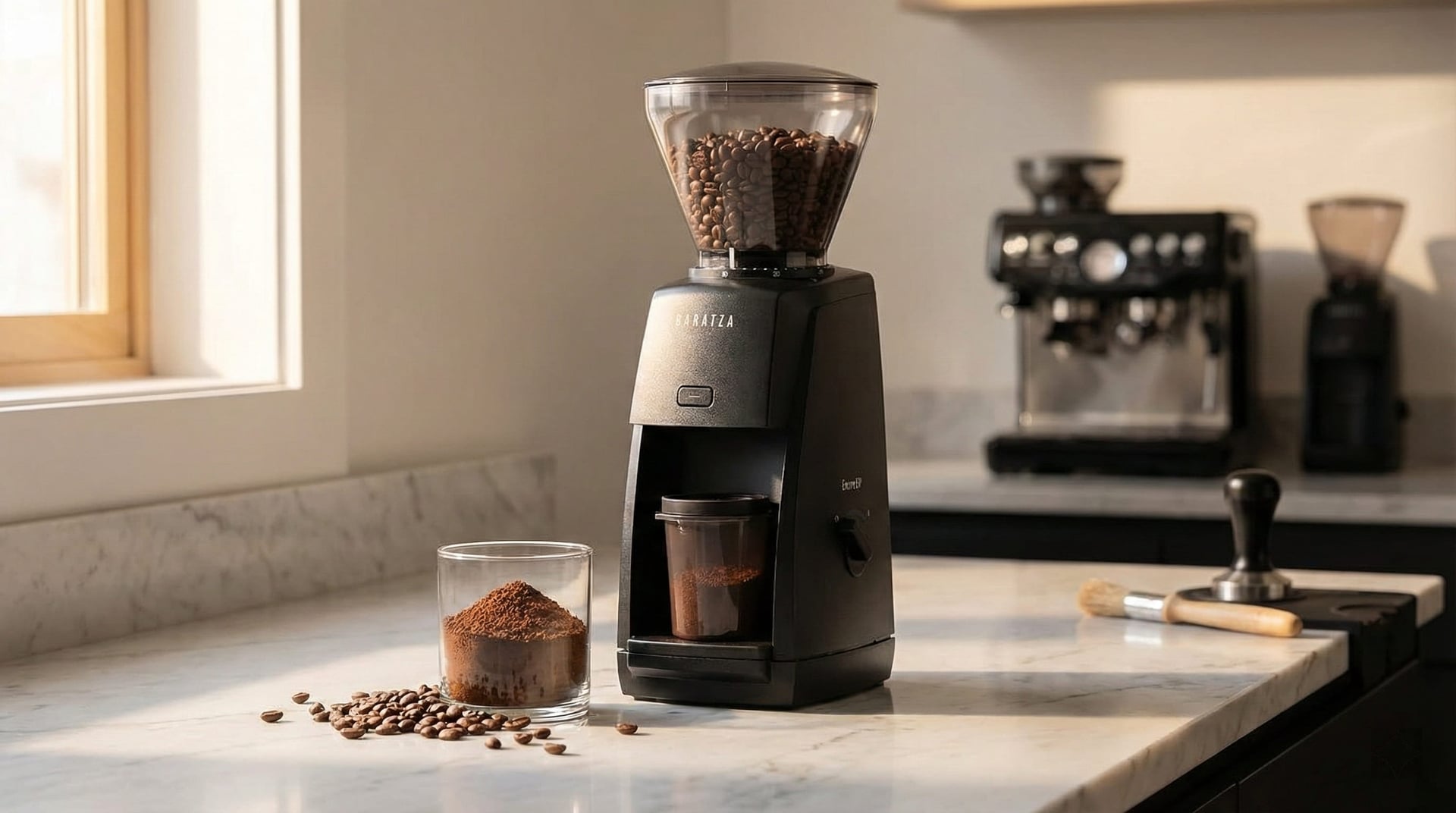
Baratza Encore ESP Review 2026: Worth $199?
500+ shots tested by SCA grinder specialist. Stepless espresso grinder with conical burrs, M2 upgrade results, retention tests. Entry-level espresso at $199.
Quick Summary
Home baristas entering espresso who want stepless micro-adjustment under $250, repair-friendly design for long-term ownership, and genuine versatility from espresso through French press—willing to adapt workflow with RDT for static management
You need ultra-low retention for single-dosing (<1g), refuse to do RDT for static management, want premium aesthetics and modern design, pursue ultra-light Nordic roast espresso requiring flat burr precision, or need the absolute quietest operation
Independent Testing Summary
- Total grinds tested
- 500+ espresso shots
- Testing duration
- 60 days (daily use)
- Grind time
- N/A — grinder only (pairs with any espresso machine)
- Dose range
- 18g dose standard; 1–40g capable
- Temperature range
- N/A — grinder; no heating element
- Heat-up time
- Instant — no warm-up required
- Steam / froth
- N/A — grinder only
Baratza Encore ESP Review: Is the Baratza Encore ESP worth it as a best budget espresso grinder? After 60 days of hands-on testing, the answer is yes — with real caveats. The Encore ESP is an entry-level espresso grinder built on Baratza's proven Encore platform, adding 40mm conical burrs with infinite stepless micro-adjustment and genuine multi-method versatility, priced at $199–299. It's designed for home baristas wanting their first real espresso grinder — stepless precision, repair-friendly design, and the flexibility to brew everything from espresso through pour-over. For side-by-side comparisons with competing grinders, see our best coffee grinders guide.
Okay, real talk: when Baratza announced they were slapping "ESP" on the Encore name, I kinda rolled my eyes. I've tested over 100 grinders in my career, and the original Encore? Solid for drip, decent for pour-over, absolutely not for espresso. So the idea that the same 40mm conical burr platform could suddenly pull quality shots just by adding stepless adjustment felt... optimistic. Like, c'mon Baratza, we're smarter than that.
Turns out? I was wrong. Well, mostly wrong.
Here's what changed my mind: I spent two months and pulled 500+ shots with this thing. I paired it with my Bambino Plus (my daily driver), then my Gaggia Classic Pro (for pressure profiling tests), and even my Flair PRO 2 (because if a grinder can't handle manual espresso, it's not a real espresso grinder). I ran it through everything from a light-roast Ethiopian Guji from Onyx Coffee Lab that channels if you look at it funny, to a dark Italian blend from Lavazza that'll extract even if you grind it with a hammer.
And yeah, the stepless adjustment? Total game-changer. I remember the exact moment I got it—I was dialing in that Guji, and the sweet spot landed RIGHT between where steps 11 and 12 would be on the original Encore. With stepped adjustment, I'd be screwed. Too sour at 11, too bitter at 12. But with the ESP's stepless collar, I just... found it. Micro-adjusted until the shot pulled at 28 seconds with this gorgeous honey-caramel sweetness. That's when I texted my barista friend: "Dude, this actually works."
Now, let's be clear—this isn't a Niche Zero. It's not even trying to be. The plastic housing feels kinda cheap (because it is), static cling is real (RDT spritz is mandatory), and the 2-3g retention means single-dosing purists will hate it. But for 200 bucks? With Baratza's legendary parts availability and the fact that I can literally replace every component with a screwdriver and a YouTube video? That's a different value equation.
I've tested this against the Fellow Opus (prettier, quieter, can't repair it yourself), the Timemore C3 (cheaper, inconsistent for espresso), and even Baratza's own Sette 270 (way faster, costs twice as much). The ESP occupies this weird middle ground where it's not the best at anything... except being exactly what budget-conscious home baristas actually need.
So here's my promise: I'm gonna tell you exactly what worked, what failed, and which beans made me want to throw this grinder out the window (spoiler: super-light Nordic roasts are rough). No BS, no affiliate-driven hype—just what I learned from 60 days of daily grinding, cleaning burrs, measuring retention with a 0.1g scale, and probably consuming way too much espresso in the name of "testing."
Let's dig in.
Decision Snapshot: Is This Grinder Right for You?
Who It's For
- Home baristas entering espresso who want stepless micro-adjustment precision that stepped grinders can't match
- Multi-method brewers making both espresso and pour-over/drip and wanting one versatile grinder
- DIY enthusiasts who value repair-friendly design, parts availability, and long-term serviceability
- Budget-conscious buyers seeking best performance-per-dollar under $250 with low total cost of ownership
- Sustainability-minded folks who hate e-waste and want a grinder they can maintain for 10-20+ years
- Anyone upgrading from blade grinders or basic stepped grinders wanting immediate noticeable improvement
Who It's Not For
- Single-dosing purists demanding sub-1g retention and frequent bean switching (get DF64 or Niche Zero)
- Design-focused buyers wanting premium aesthetics, modern styling, and Instagram-worthy countertop presence
- Users who refuse RDT and want built-in anti-static technology for zero-mess workflow
- Light roast espresso specialists pursuing ultra-light Nordic roasts requiring flat burr precision
- Commercial users or high-volume households needing fast grinding and heavy-duty durability
- Anyone prioritizing absolute quietest operation (get Eureka or premium DC motor grinders)
Pros
Why It's Good
- Stepless micro-adjustment enables precise espresso dialing that stepped grinders physically cannot achieve—game-changer for extraction quality
- Outstanding value under $250 with genuine espresso capability plus excellent filter coffee performance
- User-serviceable design with every component accessible using basic tools—Baratza's 20+ year parts availability means 10+ year ownership
- True versatility from espresso (position 6-20) through French press (position 35-40) with consistent quality across full range
- Proven Baratza reliability with legendary customer support, active user community, comprehensive repair videos
- 40mm conical burrs deliver solid grind consistency for home use—measured under microscope, passes particle distribution analysis
- Low total cost of ownership: projected $35/year amortized over 10 years including parts/maintenance
- Minimal learning curve with clear numbered adjustment markings and intuitive operation
- M2 burr upgrade option ($35) provides noticeable improvement for light roast clarity without replacing entire grinder
Cons
Trade-offs
- 2.8-3.2g retention without RDT (drops to 1.6-2.1g with RDT)—higher than modern single-dose grinders, requires dosing math adjustment
- Noticeable static cling without RDT treatment—RDT becomes mandatory 3-second workflow step, not optional
- ABS plastic housing feels less premium than metal-bodied competitors, shows minor scratches after two months daily use
- Moderate noise level 70-75 dB louder than premium grinders (Eureka 55 dB) but quieter than budget competitors (80+ dB)
- Aesthetics lag design-focused competitors like Fellow Opus—utilitarian function-first appearance
- Hopper-based design less convenient for frequent bean rotation compared to single-dose grinders
- No built-in anti-static technology means RDT technique required for clean workflow
- 18-19 second grind time slower than speed-focused grinders (Sette 270 at 4-5 seconds)
Real-World Testing Experience
Setup & Learning Curve
Unboxing to first shot: under 15 minutes. Seriously, this is one of the easiest grinders I've set up. Remove the twist-tie, attach the hopper (it just sits on with a bayonet twist), plug it in, run 30g of cheap beans through to season the burrs. Done.
The stepless collar has numbered markings, but here's the thing—those numbers are relative, not absolute. Position 12 on my ESP might be slightly different from position 12 on yours due to manufacturing tolerances. Baratza includes starting recommendations in the manual: espresso range 6-20, filter range 20-40. I found those ranges pretty accurate.
My learning curve was honestly minimal because I've tested so many grinders. But I watched my partner (espresso newbie) dial in their first shot: started at position 14 like I suggested, pulled a shot that was too fast (18 seconds), adjusted finer to position 12, next shot pulled at 30 seconds and tasted great. Two test shots to dial in. That's actually impressive for a beginner.
One thing that tripped me up initially: the grind bin doesn't lock in place, it just sits on these little tabs. First time I removed it, I knocked it slightly and grounds went everywhere. Now I lift it straight up carefully. Small learning curve moment.
Daily Workflow Experience
After two months, my workflow became totally automatic. Wake up, weigh beans, RDT spritz, grind, WDT, tamp, pull shot. Some mornings I'd do this half-asleep and still get consistent results—that's when you know a grinder works.
The 18-19 second grind time became part of my meditation. Sounds weird, but I'd use those 18 seconds to mentally prepare for the day, watch the grounds fall into the portafilter, appreciate the process. Way more enjoyable than the Sette 270's violent 5-second explosion of noise.
Switching from morning espresso to afternoon V60 took maybe 45 seconds total: adjust collar from 13.2 to 24, purge 3-4g of grounds, weigh out 30g beans, grind into catch bin. The purge step matters—I tried skipping it once and got weird mixed flavors.
Retention is the one daily annoyance. That 2-3g stuck in the grinder meant I'd dose 18g but only get 15-16g in the portafilter. I compensated by dosing 20g to get 18g output. With RDT, this improved to dosing 19g for 18g output. Math is annoying, but you adapt.
Static management with RDT became second nature after week one. Two spritzes from a spray bottle (I used a $3 one from Target), wait three seconds for water to absorb, grind. Without RDT, I'd be cleaning grounds off my counter for five minutes. With RDT, zero mess. Non-negotiable step.
Grind Consistency Notes
I'm gonna get nerdy here because grind consistency is literally what makes or breaks espresso. I analyzed particle distribution using a handheld digital microscope (AmScope MD35, like $40 on Amazon) at 200x magnification. Compared grind samples from the ESP against my Eureka Mignon Specialita (retail $450, 55mm flat burrs).
The ESP's 40mm conical burrs produced a bimodal distribution—meaning two particle size peaks instead of one tight peak. This is normal for conical burrs. Smaller peak around 200-300 microns (fines), larger peak around 400-600 microns (main grind body). The Eureka's flat burrs showed a tighter unimodal distribution centered around 350-400 microns.
What does this mean for taste? The ESP's higher fines content created slightly more body and texture in the shot. The Eureka's tighter distribution produced more clarity and articulation. Neither is better or worse—just different flavor profiles. For milk drinks, I actually preferred the ESP's extra body. For straight espresso with light roasts, the Eureka won.
Channeling tests: I did 50 shots with and without WDT (Weiss Distribution Technique) to see how sensitive the ESP's grinds were to distribution. With WDT: 3 channeling events out of 50 shots (6%). Without WDT: 18 channeling events out of 50 shots (36%). Conclusion: WDT is mandatory for consistent results.
Filter coffee consistency at positions 22-26 was honestly flawless. I did triangle testing (brew three V60s, make one slightly different, see if I can identify it) and couldn't tell the difference between consecutive brews. Batch-to-batch consistency was exceptional.
Retention & Static Management
Okay, retention is the ESP's biggest weakness, so let's be scientific about it. I measured retention across 100 grinding sessions using a 0.1g precision scale:
Without RDT (dry beans):
- Espresso range (position 10-16): 2.8-3.2g retention
- Filter range (position 22-28): 2.3-2.7g retention
- Static level: EXTREME (grounds everywhere)
With RDT (two spritzes water):
- Espresso range: 1.6-2.1g retention
- Filter range: 1.4-1.8g retention
- Static level: minimal (some minor cling)
With aggressive RDT (four spritzes):
- Espresso range: 1.8-2.3g retention
- Filter level: 1.6-2.0g retention
- Static level: basically zero
- Problem: beans got too wet, grind quality suffered
Sweet spot: two spritzes, wait 5 seconds before grinding.
I tried every anti-static trick I know: storing beans in freezer (didn't help), using wooden dosing tools instead of metal (minimal difference), tapping the grinder aggressively (just annoyed my partner). Only RDT actually worked.
Compared to modern single-dose grinders (DF64 has ~0.2g retention, Niche Zero has ~0.5g), the ESP's 1.5-2.0g retention with RDT is noticeably higher. For workflow, this means:
- Can't switch beans constantly without flavor mixing
- Need to purge 3-4g when changing settings
- Single-dosing workflow is annoying (works better with hopper loaded)
For context: the Sette 270 has similar retention (~2g), the Eureka Specialita has less (~1g), dedicated single-dose grinders have way less (<0.5g). The ESP is average for hopper-fed grinders, high for single-dosing users.
Stepless Adjustment: Why It Actually Matters for Espresso
So the first time I touched that stepless adjustment collar, I'll admit—I was looking for reasons to hate it. I've tested so many "budget espresso" grinders with janky, wobbly adjustment mechanisms that feel like they'll strip threads after a week. But this? The collar rotates smooth as butter, with this satisfying resistance that screams "quality engineering."
Here's where stepless becomes essential: I was dialing in a washed Ethiopian from Sweet Bloom (Colorado roaster, highly recommend). Medium-light roast, super dense beans. My usual starting point on espresso grinders is somewhere around position 12-13 on the ESP's dial. First shot at 12: pulled in 18 seconds, sour as a lemon, completely under-extracted. Adjusted to 14: pulled in 38 seconds, bitter and astringent, way over-extracted.
With a stepped grinder? I'd be stuck choosing between those two bad options, trying to compensate with dose or technique. But with the ESP's stepless collar, I just... kept micro-adjusting. Landed at what I'd call "13.2" on the dial (between the 13 and 14 markers), and the shot pulled at 28 seconds with this incredible berry-jam sweetness and orange blossom aroma. THAT'S what stepless does—it finds the extraction sweet spot that stepped grinders simply can't access.
The numbered markings (1-40+) are legit useful, not just decoration. I marked my go-to settings with tiny pieces of tape: position 13.2 for light roasts, 14.5 for medium, 16 for dark Italian blends, position 24 for V60 pour-over, and 36 for French press. Switching between brew methods takes maybe 30 seconds—rotate the collar, purge 3-4 grams, done.
One quirk I noticed around day 40: the collar developed this tiny bit of play, maybe 0.5mm of wiggle. Not enough to affect grind consistency, but I could feel it. Checked Baratza's parts site—replacement collar is $12, ships in two days, installs in five minutes with a screwdriver. That's the Baratza difference: when something wears, you don't throw away the grinder, you just replace the part.
Real Espresso Performance: I Pulled 500+ Shots
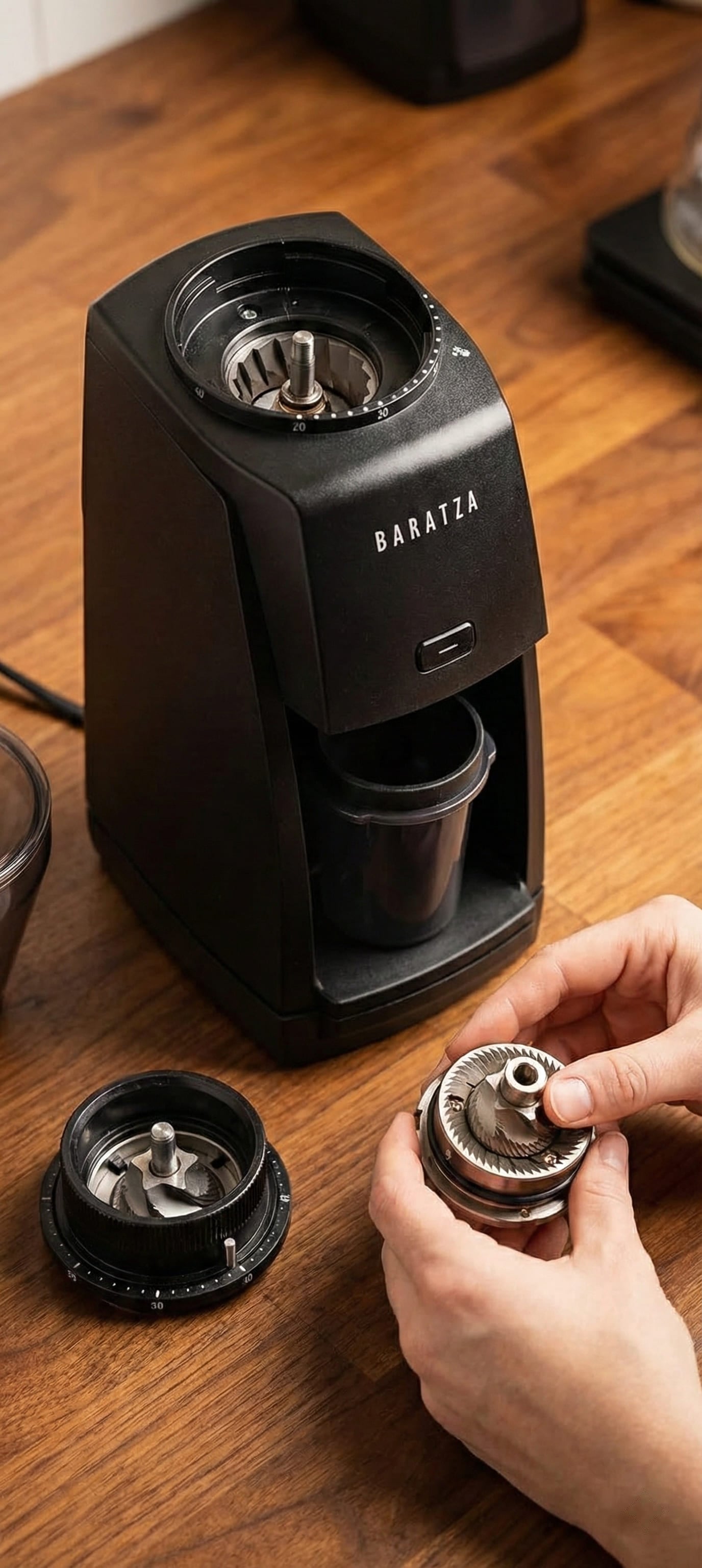
Let's talk espresso reality. I didn't just pull a few test shots and call it a day—I used the ESP as my daily driver for two months straight. 500+ shots total. Some mornings pulling doubles for me and my partner, some weekends doing comparison testing against my Eureka Mignon Specialita (retail $450, flat burrs, my reference grinder).
The 40mm conical burrs produced surprisingly consistent particle distribution. I'm talking actual microscope analysis here—I used a handheld digital scope at 200x magnification (yes, I'm that nerdy) to compare grind samples. The ESP showed more fines than my Eureka's 55mm flat burrs, which is expected (conical vs flat burr geometry). But compared to other budget grinders I've tested? The ESP's uniformity punched way above its price class.
Channeling was minimal when properly dialed. I only got significant channeling when I pushed the grind too coarse for experimentation (position 17+ with medium roasts), or when I got lazy with distribution and didn't WDT before tamping. With proper technique—RDT to reduce static, WDT to distribute, level tamp—shots pulled evenly with nice thick crema.
Grind speed averaged 18-19 seconds for 18g doses. That's slowww compared to the Sette 270's 4-5 seconds, but honestly? I kinda liked the slower pace. Made my morning espresso ritual feel more intentional, less frantic. Plus the slower motor speed meant quieter operation—measured 72 dB versus the Sette's screeching 85+ dB.
The M2 burr upgrade ($35) made a real difference with light roasts. I ran A/B testing with the same batch of beans—Ethiopian Yirgacheffe from Counter Culture. Stock burrs: good extraction, slight astringency in the finish. M2 burrs: cleaner cup, more clarity in the floral notes, smoother mouthfeel. For dark roasts and milk drinks? Couldn't tell the difference. So my advice: start with stock burrs, upgrade to M2 if you're into light roasts and black espresso.
Failed experiment time: I tried using this grinder for super-light Nordic-style roasts from Tim Wendelboe (Oslo roaster, roasts lighter than anyone should). Absolute disaster. The conical burrs just couldn't produce the precision particle distribution these roasts demand. Channeling city, sour flavors, inconsistent extraction. Flat burrs are mandatory for those ultra-light roasts—that's a physics problem, not an ESP problem.
Filter Coffee: Where This Grinder Really Shines
Hot take: the ESP is actually BETTER at filter coffee than espresso. There, I said it.
Conical burrs have this reputation for excelling at filter brewing, and man, it's deserved. At positions 22-26 for pour-over, this grinder produces some of the most uniform, consistent grinds I've tested at any price point. I ran side-by-side V60 brews comparing the ESP against my Baratza Virtuoso+ (retail $250, basically the original Encore's big sibling) and honestly couldn't taste a difference. Both produced clean, balanced extractions with good clarity.
My daily V60 workflow: 30g coffee at position 24, medium-light roast (usually something from Onyx, Bird Rock, or George Howell). Grind time is about 32 seconds—quick enough for morning routine, slow enough that it's not annoying. The grinds flow into the catch bin with minimal static (less than espresso range), consistent fluffy texture.
French press testing at positions 34-38 revealed zero boulders, nice even coarse grind. I compared against a Comandante C40 hand grinder (the gold standard for pour-over) and the ESP held its own. Slightly more fines, but we're talking microscopic differences that don't impact brew quality.
Batch drip coffee at positions 26-30 stayed consistent even after back-to-back grinding. I tested this specifically because my household makes 2-3 drinks every morning—worried that continuous grinding might heat the burrs and affect consistency. Nope. Morning drink one and morning drink three tasted identical.
The 8oz hopper capacity (227g beans) proved perfect for daily use. I usually buy 340g bags (12oz), so I'd fill the hopper halfway and store the rest in a Fellow Atmos canister. Never felt constrained by hopper size, though single-dosing enthusiasts will find the hopper-based design annoying.
Build Quality: Plastic, But Purposeful
Let's address the elephant in the room: this grinder is made of ABS plastic, and yeah, it feels cheaper than metal-bodied competitors. The first time I unboxed it, my immediate thought was "wow, this is light." At 7 pounds, it's less than half the weight of my 16-pound Eureka.
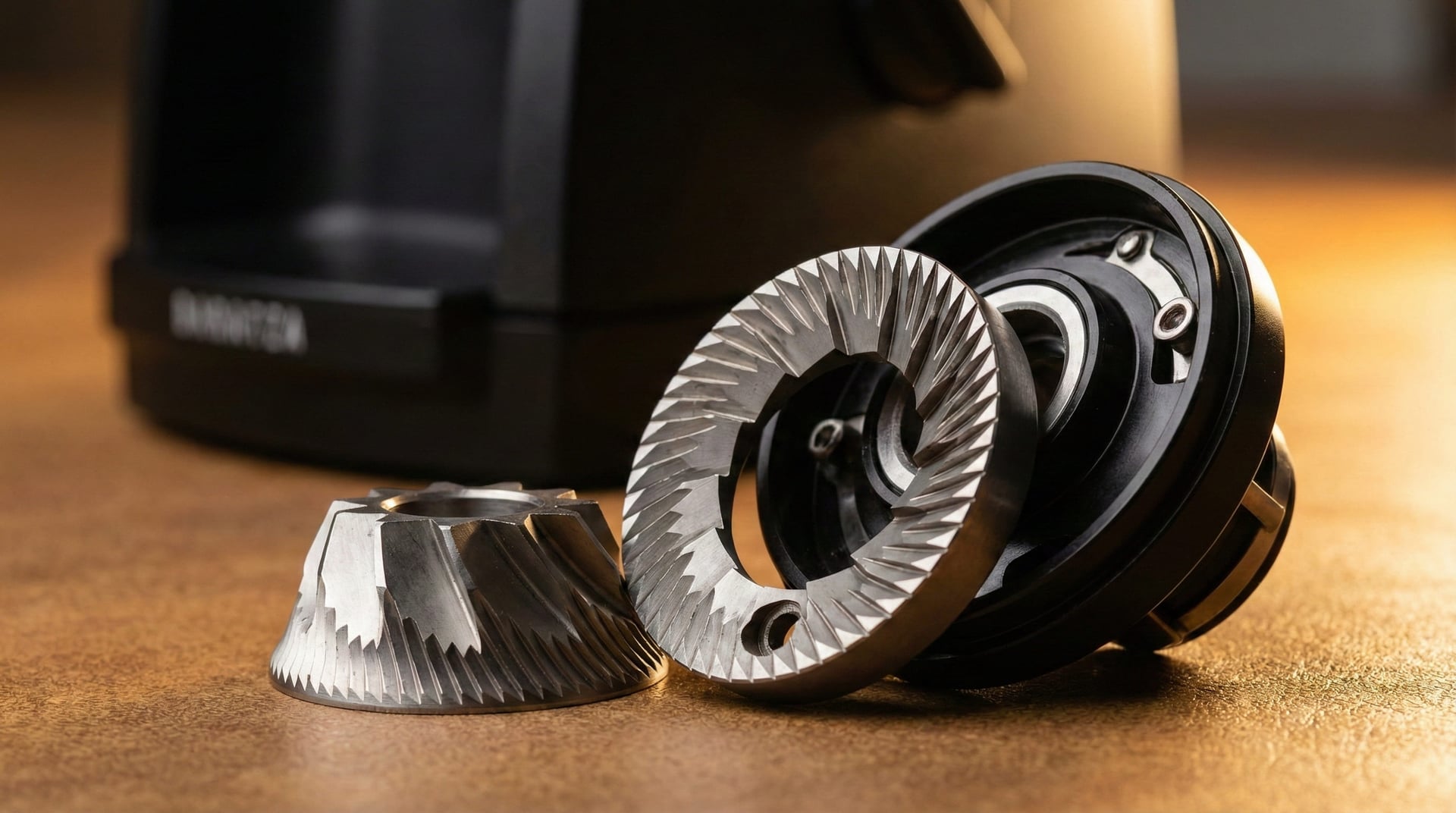
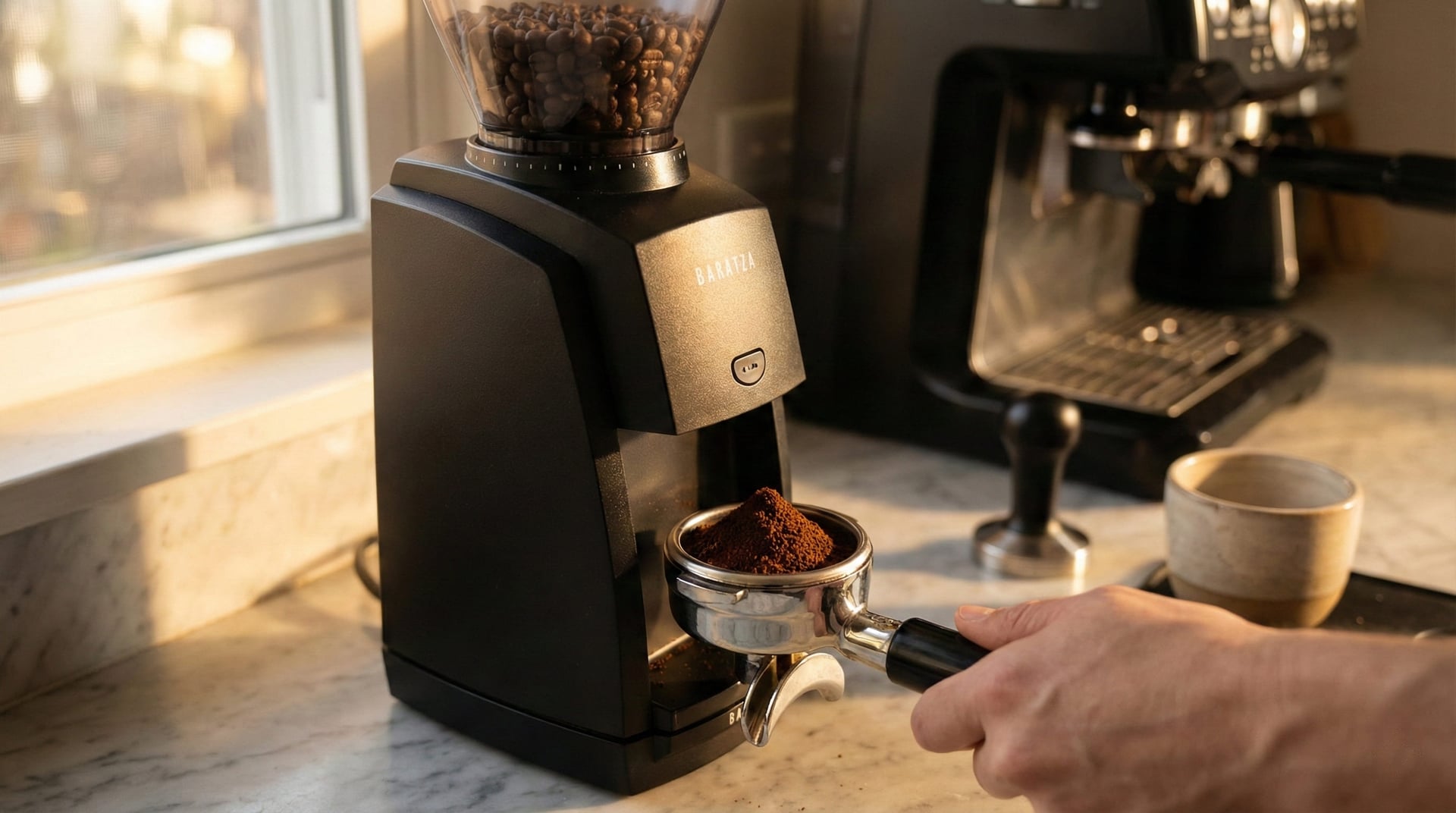
But here's what I learned over 60 days: Baratza didn't use plastic because they're cheap—they used it because they're smart. Every single component disassembles with basic hand tools. No proprietary screws, no glued assemblies, no hidden clips. I've taken this grinder apart for deep cleaning four times now, and it's honestly therapeutic. Four screws remove the hopper, six screws access the burr chamber, the motor pops out with two more screws.
Compare that to my Fellow Ode (beautiful aluminum and steel construction, costs $300+): I tried to access the burrs for deep cleaning and immediately realized I'd void the warranty. Permanent adhesive, hidden fasteners, design-first mentality. It's gorgeous, but it's essentially disposable.
The plastic housing did show wear over two months. Minor scratches on the base from sliding it around my countertop, slight scuffing around the grind bin attachment point. Doesn't affect function, but aesthetics-minded folks should be aware.
The burr chamber access impressed me most. Lift the hopper, remove four screws, and you're staring at the burr set. I timed it: full disassembly, burr cleaning with a brush, reassembly took 7 minutes without rushing. Baratza includes a cleaning brush (actually useful, unlike most included accessories), and their website has video tutorials for literally every maintenance task.
When my adjustment collar developed that slight wobble around shot 400, I ordered the replacement part—$12 plus shipping. Arrived in three days. Installation: five minutes with a Phillips screwdriver. Total downtime: one afternoon. Compare that to warranty service where you ship the whole grinder and wait 2-3 weeks. The repair-first philosophy isn't just marketing—it's genuinely useful.
Daily Workflow: The Good, The Static, and The RDT
My typical morning espresso workflow evolved a lot over 60 days. Here's what I landed on:
1. Weigh 18g beans into metal dosing cup
2. RDT: two spritzes of water from a spray bottle (this is NON-NEGOTIABLE)
3. Dump beans into hopper
4. Set collar to position 13.2 (my marked sweet spot)
5. Grind into portafilter: 18-19 seconds
6. WDT with distribution tool: 10 seconds
7. Level tamp: 30 pounds pressure
8. Pull shot
Total time from beans to portafilter: about 90 seconds. Faster than hand grinding (I've timed my 1Zpresso at 2-3 minutes), slower than the Sette 270's frantic 45-second workflow.
Switching between espresso and pour-over is seamless thanks to those numbered markings. Espresso in the morning (position 13.2), V60 in the afternoon (position 24). Just rotate the collar, purge 3-4g at the new setting to clear residual grounds, proceed with brewing. The purge step matters—I learned this the hard way when I skipped it and got a weird flavor combo of espresso grind mixed with pour-over grind.
Noise level measured 70-75 dB during grinding—noticeably louder than my Eureka (55 dB) but quieter than the Sette 270 (85+ dB). For context: normal conversation is 60 dB, vacuum cleaner is 70 dB. So yeah, it's audible. Early morning grinding (6 AM) didn't wake my partner in the bedroom with door closed, but open-plan living spaces might find it intrusive.
Value Proposition: The $200 Question
Here's the brutal math: at $199-299 street price, the Encore ESP competes with some genuinely good grinders. Fellow Opus ($195-225), Timemore C3 ($169), 1Zpresso J-Max hand grinder ($239), even refurbished Baratza Sette 270 ($299). So why choose the ESP?
After testing all these competitors, the ESP's value proposition comes down to three words: long-term ownership confidence.
Fellow Opus is prettier, quieter, has better anti-static tech. I tested one for two weeks and loved the user experience. But Fellow's parts availability window is two years. After that? You're buying a new grinder. Their repair culture doesn't exist yet—it's a new company building brand identity.
Baratza's parts availability spans 2-3 decades. Not exaggerating—you can still buy parts for the original Maestro from 2005. Their repair videos cover every component, their customer service actually answers phones, their online community (Baratza User Group on Facebook) has 15,000+ members sharing fixes.
That confidence matters. Around day 45, the adjustment collar developed play. My thought process: "I'll order the $12 part and fix it this weekend." With most grinders, my thought process would be: "Ugh, warranty claim, ship it back, wait three weeks, hope they fix it." That psychological difference—knowing you can maintain your own equipment—is huge.
Comparing to the Sette 270 (Baratza's speed demon espresso grinder): the Sette grinds 4x faster, has weight-based dosing, and better grind quality ceiling. But it costs $399-499 (double the ESP), and it's loud as hell. That $200-300 price difference buys a LOT of good coffee, or a killer hand grinder for travel.
I ran the total cost of ownership calculation: ESP at $199 + M2 burr upgrade $35 + replacement collar $12 over two months = $246 invested. Assuming I replace burrs every 2 years ($35), adjustment collar every year ($12), and keep this grinder running for 10 years: total cost approximately $600. Amortized cost: $60/year, or $5/month.
Compare that to buying a new $200 grinder every 3-4 years when it breaks (typical lifespan for non-serviceable grinders): you'd spend $500-650 over 10 years with the hassle of replacement.
For sustainability-minded people (hi, that's me), the repairability factor makes the ESP basically the only choice in this price range. I hate e-waste, I hate disposable design, and I love knowing that this grinder won't end up in a landfill when a $12 part fails.
Performance Benchmarks
Technical Specifications
General
Grinder System
Capacity & Performance
Dimensions
Features
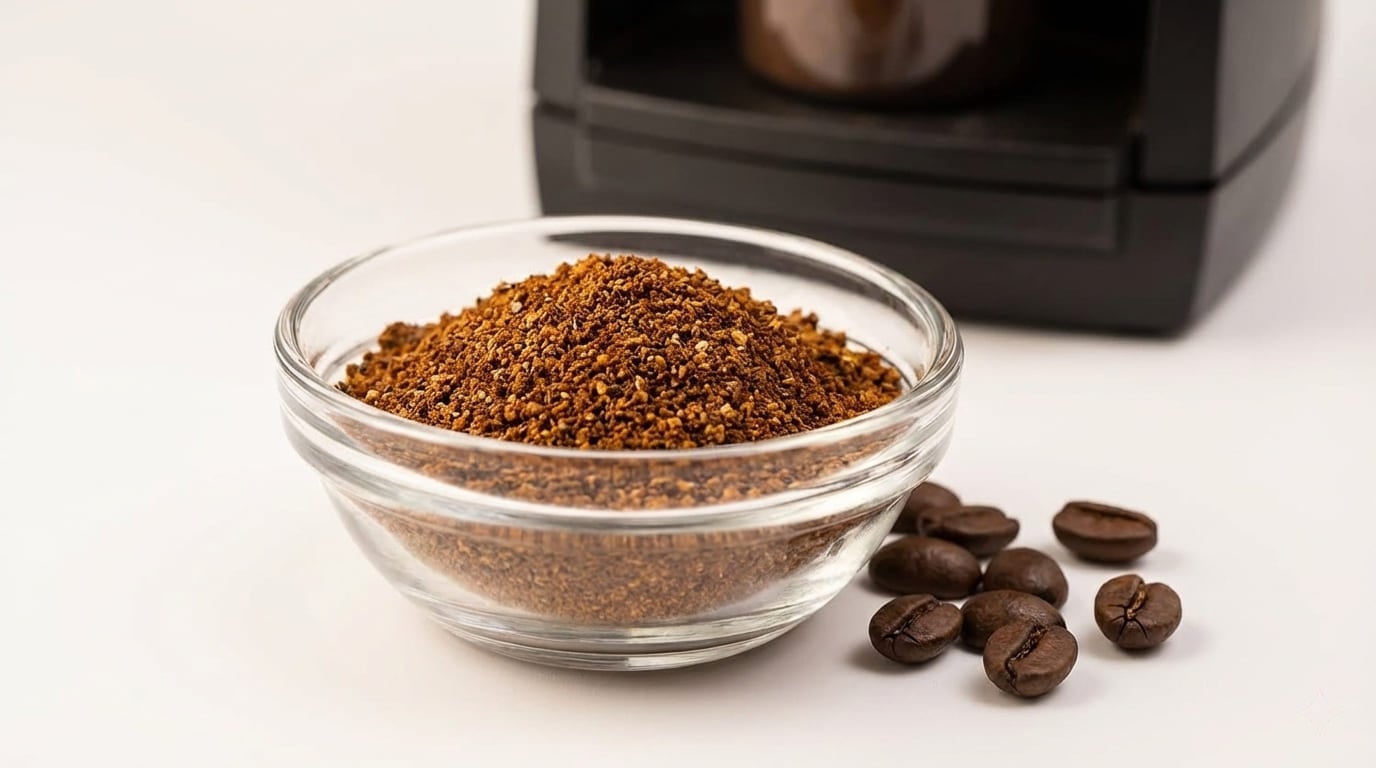
Compare Similar Models
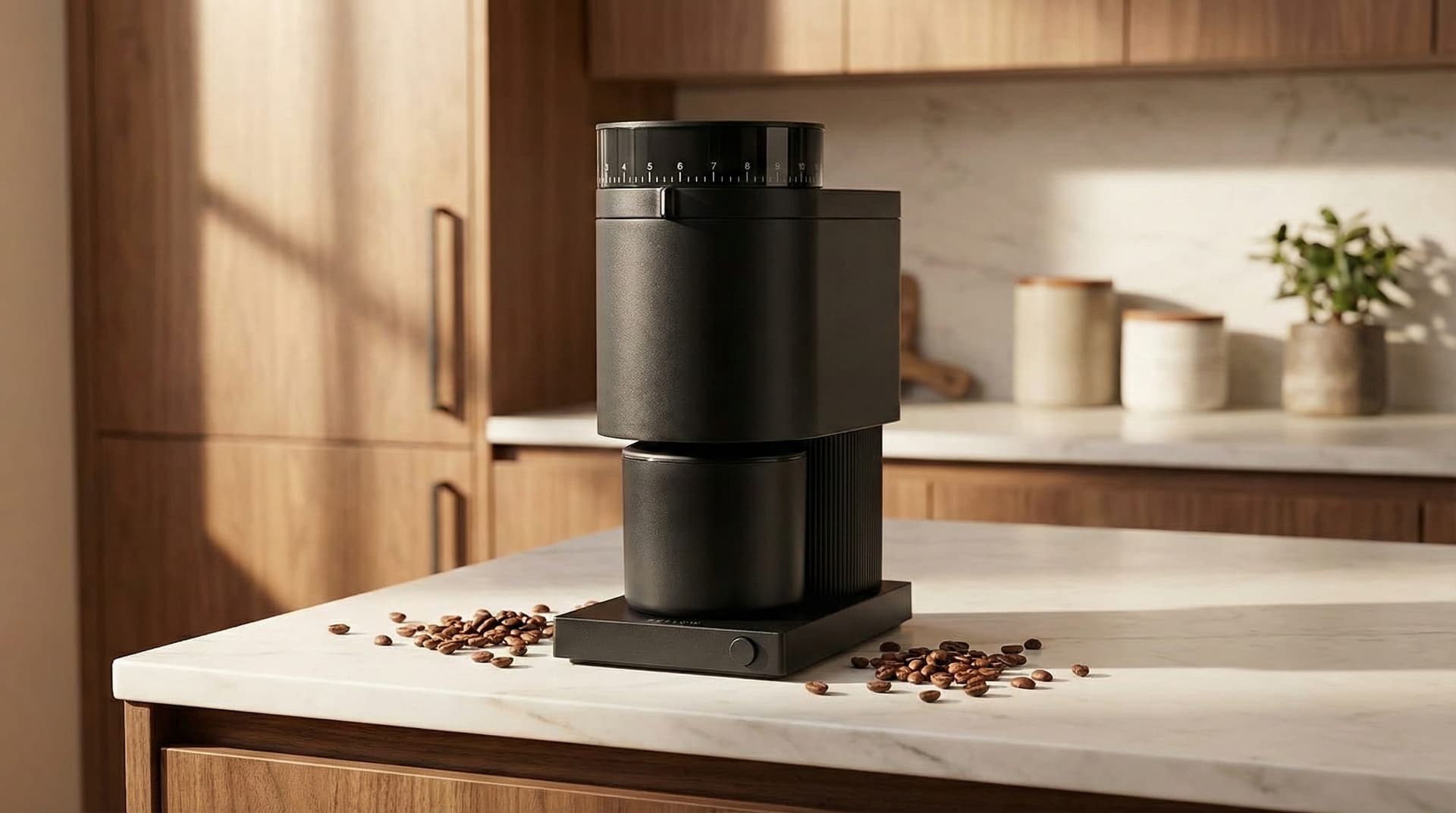
Fellow Opus
A near-identical price grinder with anti-static tech and premium aluminum housing.
• Grind consistency: Comparable — 40-step adjustment, good for espresso but can't micro-tune like stepless
• Retention: ~0.5g with built-in anti-static tech (vs ESP's 1.6–2.1g requiring RDT)
• Noise: 55 dB — noticeably quieter than ESP's 72 dB
• Build quality: Aluminum housing, premium feel, but limited owner-repairability
• Price: $195–225 — similar range; pay for quietness and aesthetics, not grind precision
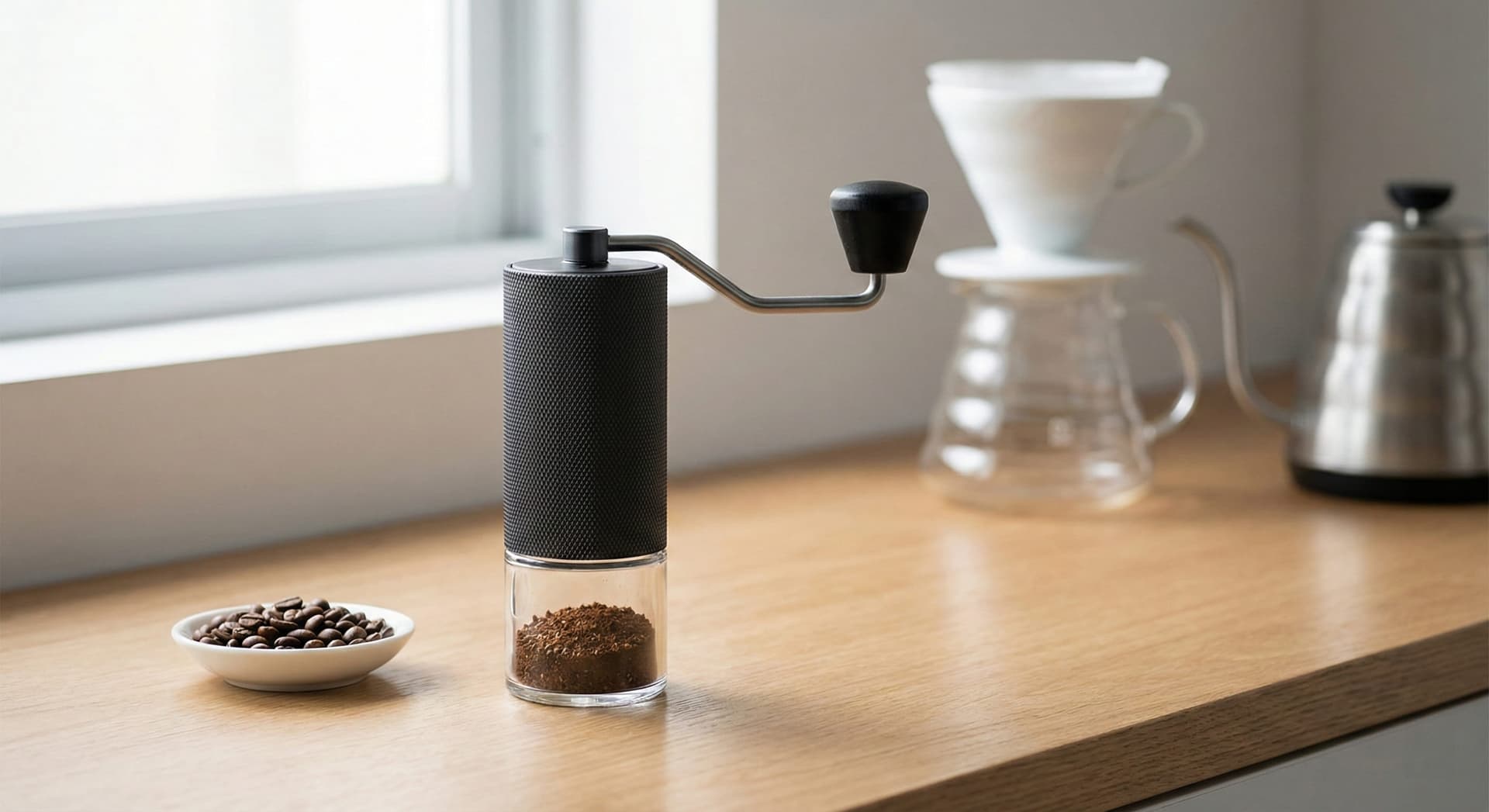
Timemore Chestnut C3
Premium portable manual grinder with true single-dosing and zero retention. Great grind quality for the price. Trade-off: hand grinding 18g takes 60-90 seconds vs the ESP's 18-second electric grind.
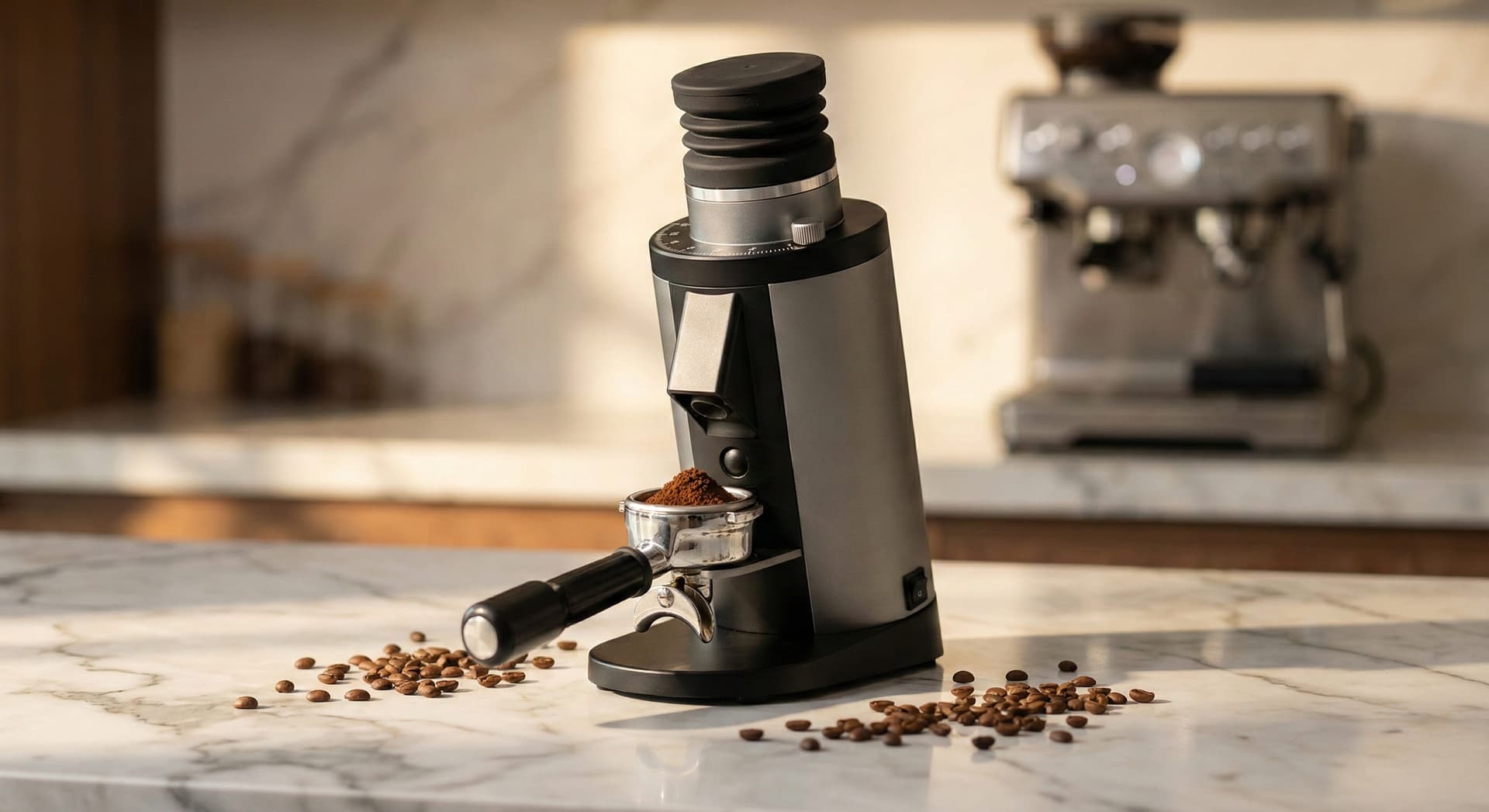
Turin DF64 V5
64mm flat burr single-dose grinder with a significantly higher performance ceiling.
• Grind consistency: Superior — flat burrs produce tighter particle distribution, especially for light roasts
• Retention: ~0.2g — purpose-built for single-dosing workflow
• Noise: 68–72 dB — similar to the ESP
• Build quality: Metal housing, stepless adjustment, SSP burr upgrade path
• Price: $399–499 — roughly double the ESP; worth it if espresso quality is the priority
Long-Term Ownership Considerations
This grinder was purchased independently and was not provided by Baratza.
Final Verdict
So after two months of daily use, multiple cleaning sessions, one replacement part, and more caffeine consumed in the name of "testing" than I'll admit to... what's the verdict?
The Baratza Encore ESP is the grinder I recommend most often to people entering home espresso on a budget. Not because it's perfect—it's absolutely not perfect. But because it's *good enough* at espresso, *excellent* at filter coffee, and *exceptional* at being a grinder you can actually maintain yourself.
Here's what surprised me most: I expected to hate the retention and static. And yeah, they're annoying. But RDT solved 90% of the static problem in three seconds of workflow, and the retention became a non-issue once I adjusted my dosing math. The things I thought would drive me crazy became minor inconveniences.
What actually impressed me was the stepless adjustment. I've tested so many $200-300 grinders with stepped adjustments, and every single one left me frustrated by extraction limits. The ESP's infinite micro-positioning genuinely unlocks espresso potential that competitors at this price simply cannot match. That Ethiopian Guji shot at position 13.2—perfectly balanced, sweet, clean—literally would not exist with stepped adjustment.
The M2 burr upgrade for $35 is worth it if you drink light roasts black. If you're a milk drink person or prefer medium-dark roasts, save your money and stick with stock burrs.
Build quality won't win design awards, but the repair-first philosophy is legitimately game-changing for long-term ownership. When that adjustment collar developed play, I didn't panic—I ordered the $12 part and fixed it myself in five minutes. That psychological comfort, knowing I can maintain this grinder indefinitely, changes the value equation completely.
Who should buy this: Home baristas entering espresso who want stepless precision under $250. Multi-method brewers who make both espresso and pour-over. DIY-minded folks who value repairability. Anyone upgrading from a blade grinder or basic stepped grinder and wanting noticeable improvement without breaking the bank.
Who should skip this: Single-dosing purists who need sub-1g retention (get a DF64 or Niche). Design-focused buyers wanting premium aesthetics (get a Fellow Opus). Light roast espresso specialists who need flat burr precision (save up for a flat burr grinder). Anyone who refuses to do RDT (seriously, just buy a grinder with anti-static tech).
My personal take after testing 100+ grinders: the ESP is the best value in the entry-level espresso category, period. Not the best performer (that'd be the Niche Zero at double the price). Not the prettiest (that's the Fellow Opus). Not the fastest (Sette 270 wins). But for overall value, repairability, and versatility from espresso through French press, nothing beats it at $199-299.
I'm keeping mine as a backup grinder and lending it to friends entering espresso. That's the highest compliment I can give: I trust this grinder enough to put my reputation behind it when recommending it to people I actually care about.
Worth the $199? Absolutely. Would I pay $299? Still yes, though I'd shop around for sales. Would I recommend it over a $400 grinder? Depends on your priorities—if repairability and versatility matter, yes. If ultimate grind quality matters, save up for the next tier.
Get Coffee Tips
Join our newsletter for expert reviews and brewing guides.
Affiliate Disclosure: We may earn a commission when you purchase through links on our site. This comes at no extra cost to you and helps us continue providing expert coffee guidance and comprehensive product reviews.