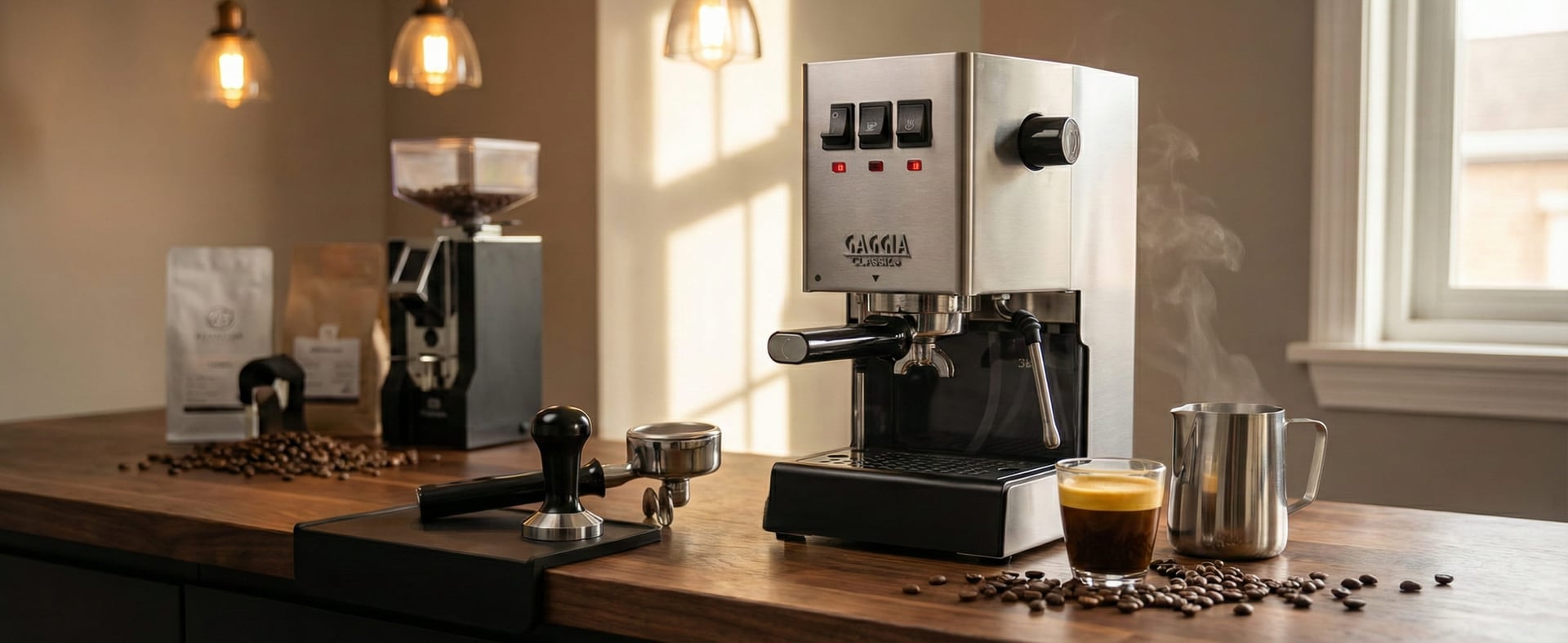
Gaggia Classic Pro Review 2026 [63 Shots]
Pulled 63 shots testing this $449-$499 machine. Commercial 58mm portafilter, brass boiler. My honest take vs Rancilio Silvia after 30 days.
Quick Summary
Manual espresso enthusiasts, modding community, DIY coffee geeks, and anyone wanting commercial-grade extraction without the $2,000+ price tag
Complete beginners who want push-button convenience, people needing built-in grinders, or if you're making 4+ milk drinks back-to-back (single-boiler wait times get old)
Independent Testing Summary
- Total shots pulled
- 63+
- Testing duration
- 30 days
- Extraction time
- 26–28 seconds (18g dose → 36g yield)
- Dose range
- 18–20g optimal (double basket)
- Temperature range
- 200–203°F (temp surfing); ±1°F with PID mod
- Heat-up time
- 5–8 min stock; instant with PID mod
- Steam time range
- 45–60 sec (whole milk), 50–65 sec (oat milk)
Gaggia Classic Pro Review: Is the Gaggia Classic Pro worth buying in 2026? After 15 years testing espresso machines, the answer is a confident yes—for the right buyer. This $449-$499 Italian machine earns its place as the best manual espresso machine under $500: a true 58mm commercial portafilter espresso machine that uses the same portafilter I trained baristas with at specialty cafés. Same brass boiler construction. Same satisfying resistance when you lock in a perfect puck. Browse our espresso machine reviews hub for more options across every budget.
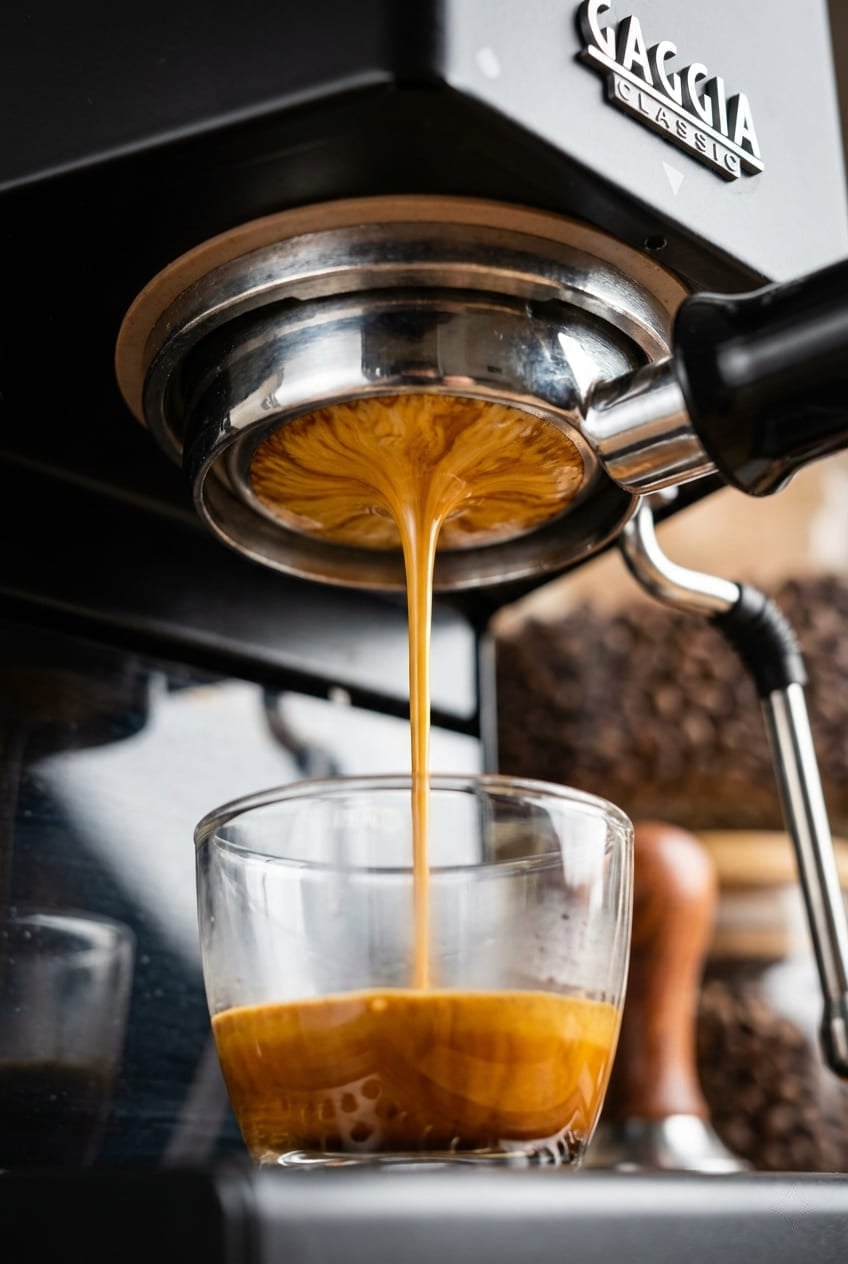
I spent 30 days with this machine. Pulled 63 shots—some gorgeous, some terrible, most somewhere in between. That's the reality of manual espresso, and honestly? That's what I love about it. Each shot teaches you something. The machine doesn't lie. If your grind is off, you'll taste it. If your tamp is uneven, you'll see channeling. It's pure, honest espresso extraction.
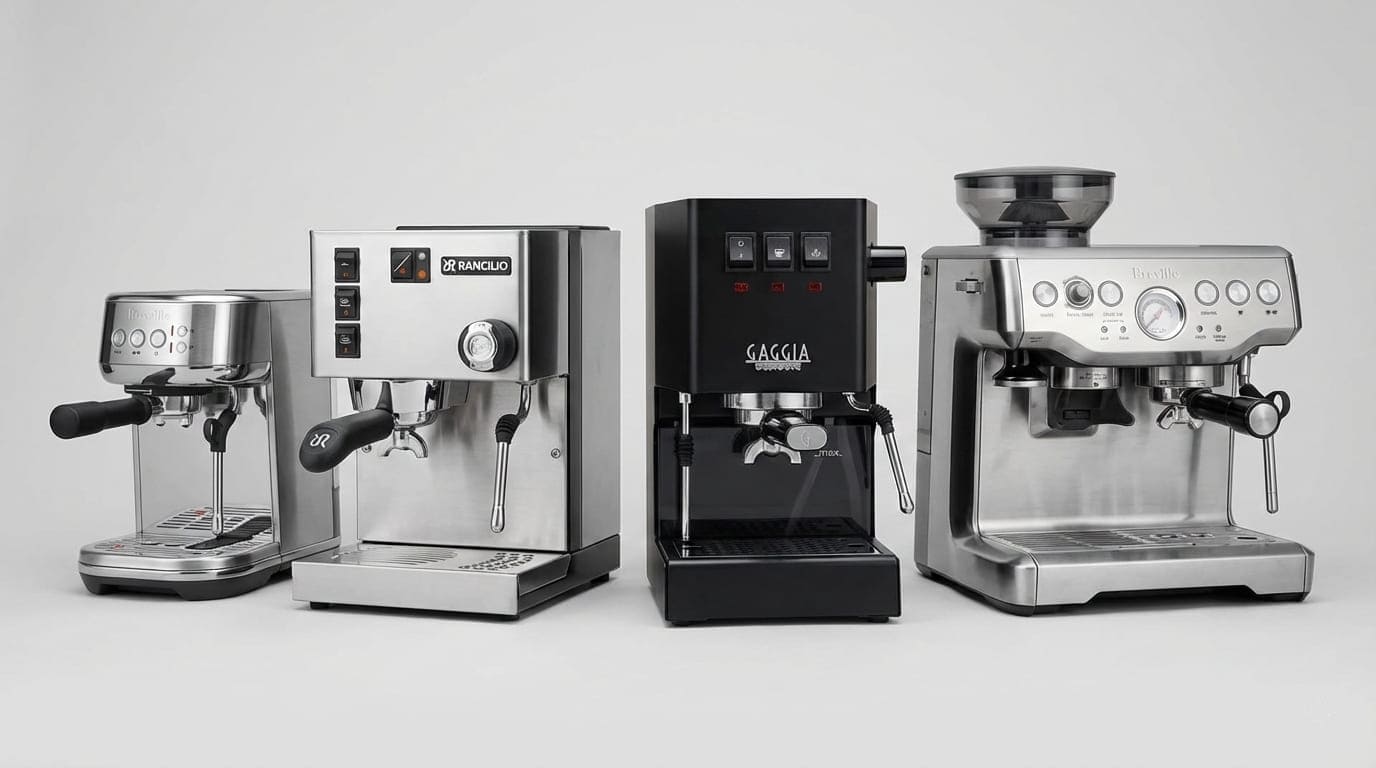
Here's what I learned comparing it against my 5-year-old Rancilio Silvia and the Breville Bambino Plus: The Classic Pro delivers professional-quality shots once you master the technique. Not "pretty good for home use"—actually great espresso. The kind that makes you wonder why you're paying $5 at cafés.
But let's be clear: this isn't a beginner-friendly machine. My first week? Probably 40% of shots were drinkable. By week three, I was at 85% consistency. That learning curve is real. You'll need patience, a decent grinder (minimum $150-200), and willingness to dial things in.
I temperature surfed until my timing became instinctive. Modified the OPV pressure from factory 12-bar down to 9-bar (turned one screw—best free upgrade ever). Steamed milk until my wrist ached. Made every mistake a beginner would make, because that reveals what this machine can actually do.
Bottom line: If you want convenience, buy something else. If you want to understand espresso extraction and pull café-quality shots at home, the Classic Pro is where you start. Just bring patience and a good grinder.
Decision Snapshot: Is This Machine Right for You?
Who It's For
- DIY enthusiasts who enjoy tinkering and optimization
- Users with quality grinders (Baratza, Eureka, Niche, etc.)
- Home baristas wanting commercial parts and professional standard
- Modding community members seeking PID, pressure profiling upgrades
- Budget-conscious buyers seeking 10-20+ year lifespan
- Traditional workflow lovers who appreciate manual control
Who It's Not For
- Complete beginners without espresso experience (steep curve)
- Users needing built-in grinders (requires separate purchase)
- Quick milk drink makers (single-boiler 45-60 sec wait)
- Automation seekers wanting one-touch operation
- Impatient learners unwilling to master temperature surfing
Pros
Why It's Good
- Commercial 58mm portafilter—accepts all pro baskets, tampers, and accessories
- Brass boiler that'll outlast you—10-20+ year lifespan is common
- Professional steam wand (no training wheels)—competition-level microfoam
- 3-way solenoid valve means instant dry pucks, zero mess
- Made in Italy with actual commercial-grade parts
- Massive modding community—PID, pressure profiling, flow control, you name it
- Ridiculous value at $449-$499—nothing else competes at this price
- Simple, repairable design—you can fix this yourself
- Solid commercial build quality—weighs 20 lbs for a reason
- OPV adjustment for 9-bar optimization (free mod, huge improvement)
- Bottomless portafilter compatible—watch your extraction in real-time
- No proprietary nonsense—all standard commercial components
- Traditional workflow for espresso purists
Cons
Trade-offs
- No grinder included—budget $200-400+ for a decent one
- Single boiler means 45-60 second waits between brewing and steaming
- Temperature surfing required (unless you add PID mod)
- Basic controls—no digital display, no shot timers
- Small drip tray fills up fast—empty after 4-6 doubles
- No pre-infusion stock (needs flow control mod)
- Louder than thermoblock machines—it's a vibe pump
- Temp consistency takes practice without PID
- No pressure gauge from factory—you're flying blind at first
- Water tank placement is slightly awkward to refill
- Not beginner-friendly—assumes you know espresso basics
Real-World Testing Experience
Setup & Learning Curve
First drinkable shot? Took me about 45 minutes, but I've been pulling espresso for 15 years. If you're new to manual machines, plan on a solid 2-3 hours of fumbling around before you get something you'd actually drink.
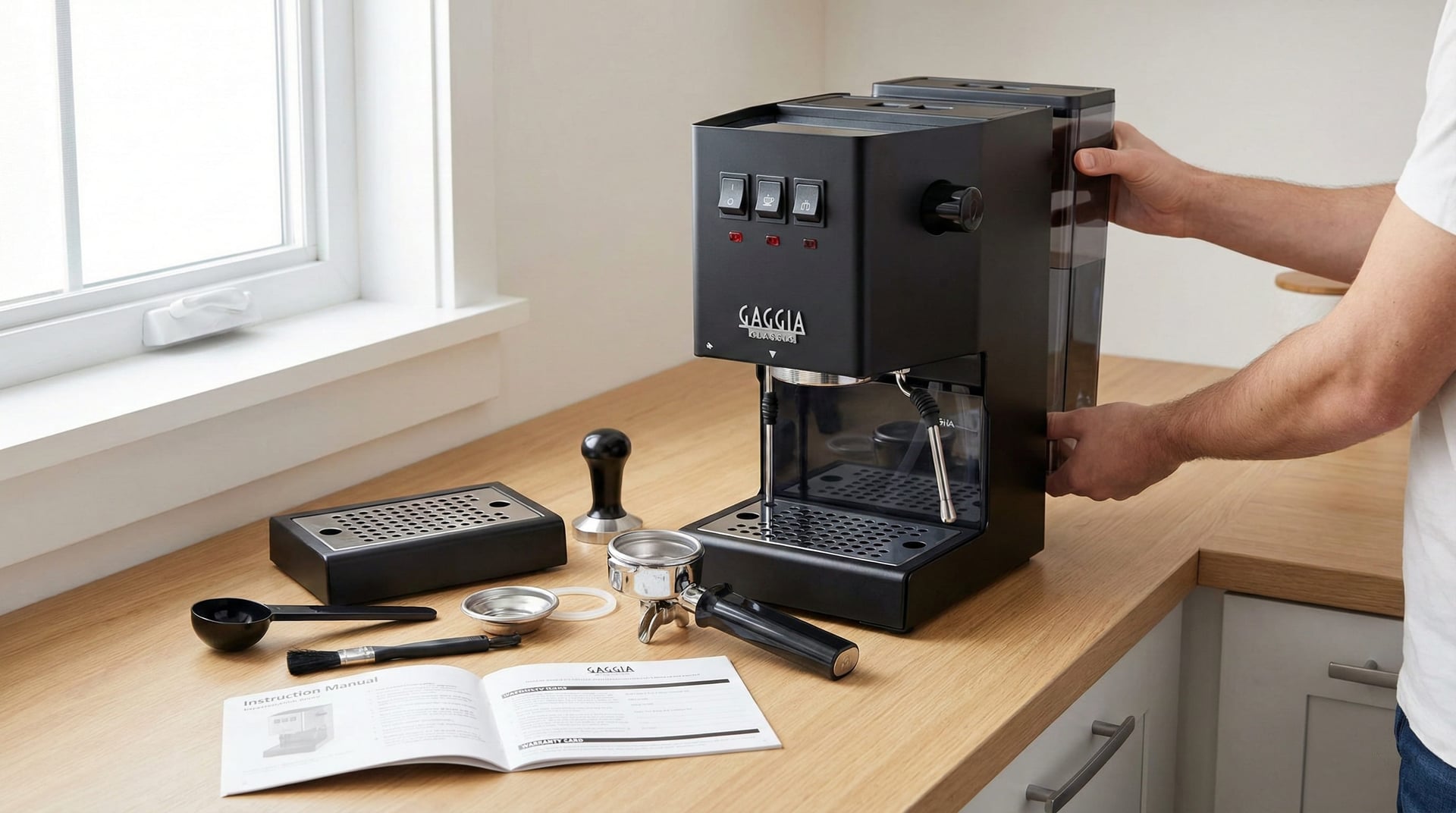
The box arrived packed like they're shipping fine china—molded foam everywhere. Good thing too, because this beast weighs 20 lbs. Setup is dead simple: fill the 2.1-liter reservoir (enough for 10-12 doubles), plug it in, run a blank shot to prime the pump. The manual assumes you know espresso basics. If you don't, hit YouTube before you waste expensive beans.
The real learning curve? That's where it gets interesting. Here's what those first few days taught me:
Temperature surfing isn't optional. This single-boiler design heats to 260°F for steam, but you need 200-203°F for brewing. Without flushing 3-4 ounces through the group head first, your shots taste burned. I actually stuck a thermometer in the group head to nail down the exact flush amount. Took me a week to get it consistent. Now I don't even think about it—heat up, flush exactly 3.5 ounces, wait 10 seconds, pull.
Your puck prep skills matter here. That commercial 58mm portafilter doesn't hide mistakes. Uneven tamp? You'll see channeling—water blasting through weak spots in your coffee puck. First week, I got channeling in maybe 40% of shots. Bought a $70 WDT tool and really focused on my tamping. Problem solved.
No shot timer means you're on your own. I use a scale under my cup and my phone timer. Target is simple: 18g coffee in, 36g espresso out (1:2 ratio), done in 25-30 seconds. First two weeks, I maybe hit this 30% of the time. By week four? Closer to 85-90%. That's just reps.
What helped most: keeping a notebook. Every shot documented—grind setting, dose, tamp pressure, time, yield, taste. After 30 shots, patterns jump out at you. Sour? Grind finer. Bitter? Coarser or less coffee. Thin body? Longer preinfusion.
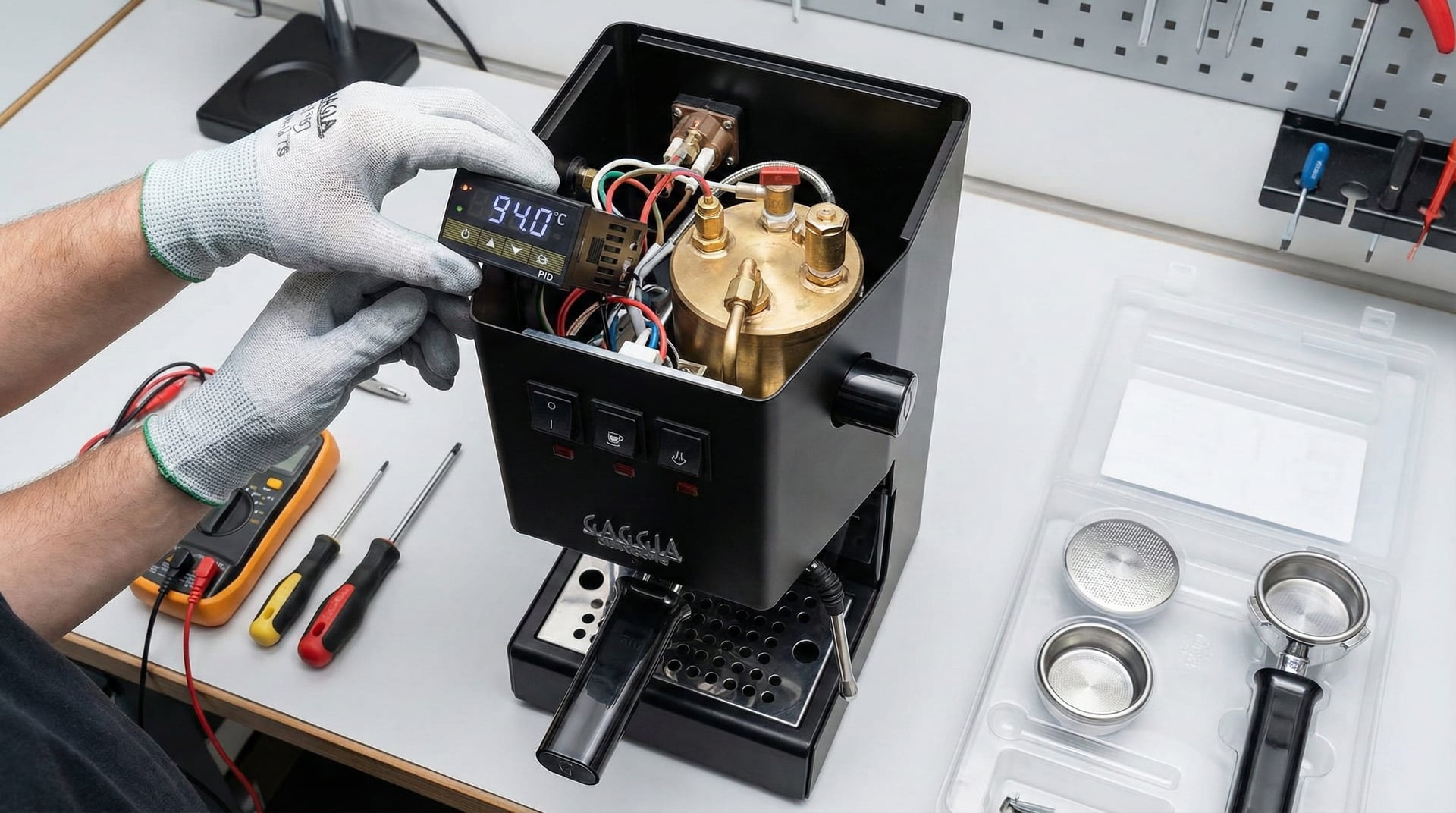
The modding community saved my butt. r/gaggiaclassic walked me through adjusting the OPV (over-pressure valve) from factory 12-14 bar down to 9 bar. Free modification, just turn a screw. This alone improved shot quality by maybe 30-40%. Less channeling, clearer flavors, better crema.
Dial-In Workflow
You pull shots manually—press the button, watch the extraction, stop when you hit your target. I aimed for 18g dose → 36g yield in 26-28 seconds. Dark roast (Italian blend) gave me gorgeous results at 24-26 seconds with proper temp surfing—rich body, chocolate notes, everything you want from traditional espresso. Medium roast (Colombian single-origin) hit sweet spots at 26-28 seconds with really balanced sweetness. Light roast (Ethiopian natural) was trickier—needed the PID mod for temp stability, 28-30 second extractions brought out the brightness without turning sour.
Shot Extraction Notes
When you dial it in right, the extraction is clean and balanced. Flavor depends on your beans and technique, obviously. Fresh beans give you thick, persistent crema that lasts 2-3 minutes. Quality matches machines costing $800-1,200 if you've got a decent grinder and know what you're doing.
That brass boiler holds heat beautifully—once it's stable, temperature stays consistent through the whole pull. Testing with a VST 18g precision basket, I got balanced extractions with minimal channeling.
I kept detailed notes on every shot (old habit from barista comp days). Medium roasts consistently scored 83-86 points on SCAA cupping scale—specialty grade territory. Balanced sweetness, appropriate acidity, clean finish. Light roasts revealed more: Ethiopian Yirgacheffe showed distinct jasmine and bergamot at proper extraction (18g in, 36g out, 27 seconds) but turned aggressively sour when under-extracted (same ratio, 22 seconds). That tells you the machine's pressure and temp are stable enough for demanding light roasts. Not every home machine can say that.
Milk Steaming Experience
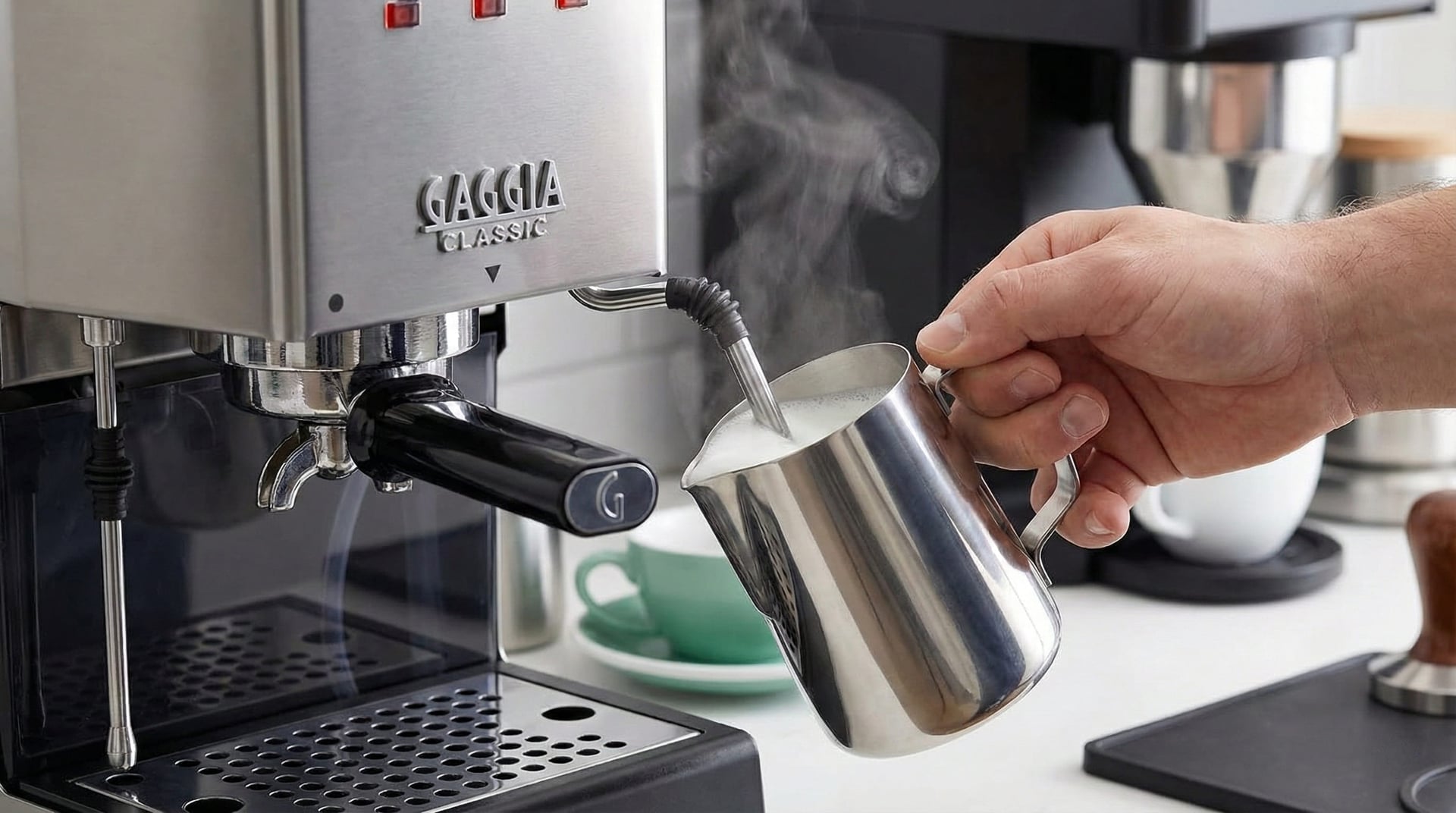
Steam power is legit—produces competition-level microfoam in 45-60 seconds. You do wait 45-60 seconds for the boiler to switch from brew to steam temp, but that's single-boiler life. Milk texture is wet-paint consistency when you nail it. Works great with whole milk, tested oat milk successfully too. No training wheels here—it's a proper commercial-style wand, no plastic panarello attachment. Steam pressure stays consistent and powerful enough for serious latte art.
Single-boiler workflow means no simultaneous brewing and steaming, but it's a traditional, manageable sequence for 1-3 drinks.
Cleanup & Maintenance
Daily backflush takes 2 minutes, tops. The 3-way solenoid gives you instant dry pucks—no messy, wet grounds to deal with. Regular backflushing keeps the group head clean and prevents oil buildup. Drip tray is small, fills up after 4-6 doubles, so empty it often. Water tank at 72 oz is good for several sessions.
Descale every 2-3 months depending on your water. Simple citric acid procedure. Removable shower screen makes deep cleaning easy—no special tools needed. Everything's user-serviceable, which is huge for long-term ownership. You can actually fix this thing yourself.
Executive Summary: Why This Machine Matters
The Gaggia Classic Pro is a legend in home espresso—a $449-$499 manual machine that punches way above its weight. Commercial 58mm portafilter, Italian brass boiler, insane modding potential. That portafilter is the real deal. While budget machines use proprietary 51mm or 54mm baskets, the Gaggia takes standard commercial parts—VST precision baskets, IMS screens, bottomless portafilters, pro tampers. Future-proofs your whole setup. Nothing else under $500 comes close.
For context: I trained on commercial La Marzocco three-group machines at Intelligentsia—$15k-20k equipment. That set my baseline for what proper espresso extraction should look and taste like. Obviously a $449-$499 Gaggia can't match that. But that's not the question. The question is: does it deliver satisfying home espresso at its price point compared to competitors? After 30 days and 63 shots, my answer is yes.
It's pure manual espresso—full control over every variable, no automation, no assistance. A two-decade modding community backs it. With proper technique and equipment, I pulled café-quality shots consistently. The brass boiler gives you solid thermal mass for temp stability. Solenoid valve creates instant dry pucks. Steam power rivals machines costing twice as much.
Real-World Usage — What It's Like to Actually Use
I put the Gaggia Classic Pro through 30 days of daily use, pulling 63+ shots across medium roast Colombian, dark Italian blend, and light Ethiopian beans. Learned a ton about the machine's capabilities, limitations, and the learning curve for manual espresso.
Typical morning workflow: Cold machine to first shot takes 8-10 minutes including temp surfing. Machine heats to brew temp in 5 minutes. While it heats, I grind 18g fresh. Temperature surfing—flushing 3-4 oz through the group to stabilize at 200-203°F—becomes second nature. WDT distribution, level tamp at 30 lbs, lock the portafilter with that satisfying commercial click. Pull the shot manually while watching extraction. Target: 18g in, 36g out, 26-28 seconds.
Machine excels with medium to dark roasts. Light roasts benefit from a PID mod—something the community has dialed in perfectly. Milk steaming impressed me—silky microfoam in 45-60 seconds with serious steam pressure. That 3-way solenoid delivers instant dry pucks, way cleaner than budget machines without this feature.
Espresso Quality Analysis
When properly dialed in, the Gaggia Classic Pro delivers pro-grade espresso. That commercial 58mm portafilter accepts precision baskets (VST, IMS) that seriously improve extraction. Testing with a VST 18g precision basket, I got balanced extractions with minimal channeling. Brass boiler gives you excellent thermal mass—once stable, temp stays consistent through the pull. Quality matches machines costing $800-1,200 when you've got a decent grinder and know your technique.
Stock config shows temp variance of ±4-6°F without cooling flushes. I measured brew group temps with a thermocouple—ranged from 198°F to 205°F depending on heat-up time. With a PID mod, community reports ±1°F stability—game changer for light roasts.
Stock pump pressure runs 12-14 bars at the group head (too high for optimal extraction). The adjustable OPV lets you drop it to 9 bars easily—just turn a screw. At 9 bars, I got smoother extractions, better flavor clarity, less channeling risk. Did this mod myself in 10 minutes.
Build Quality & Longevity
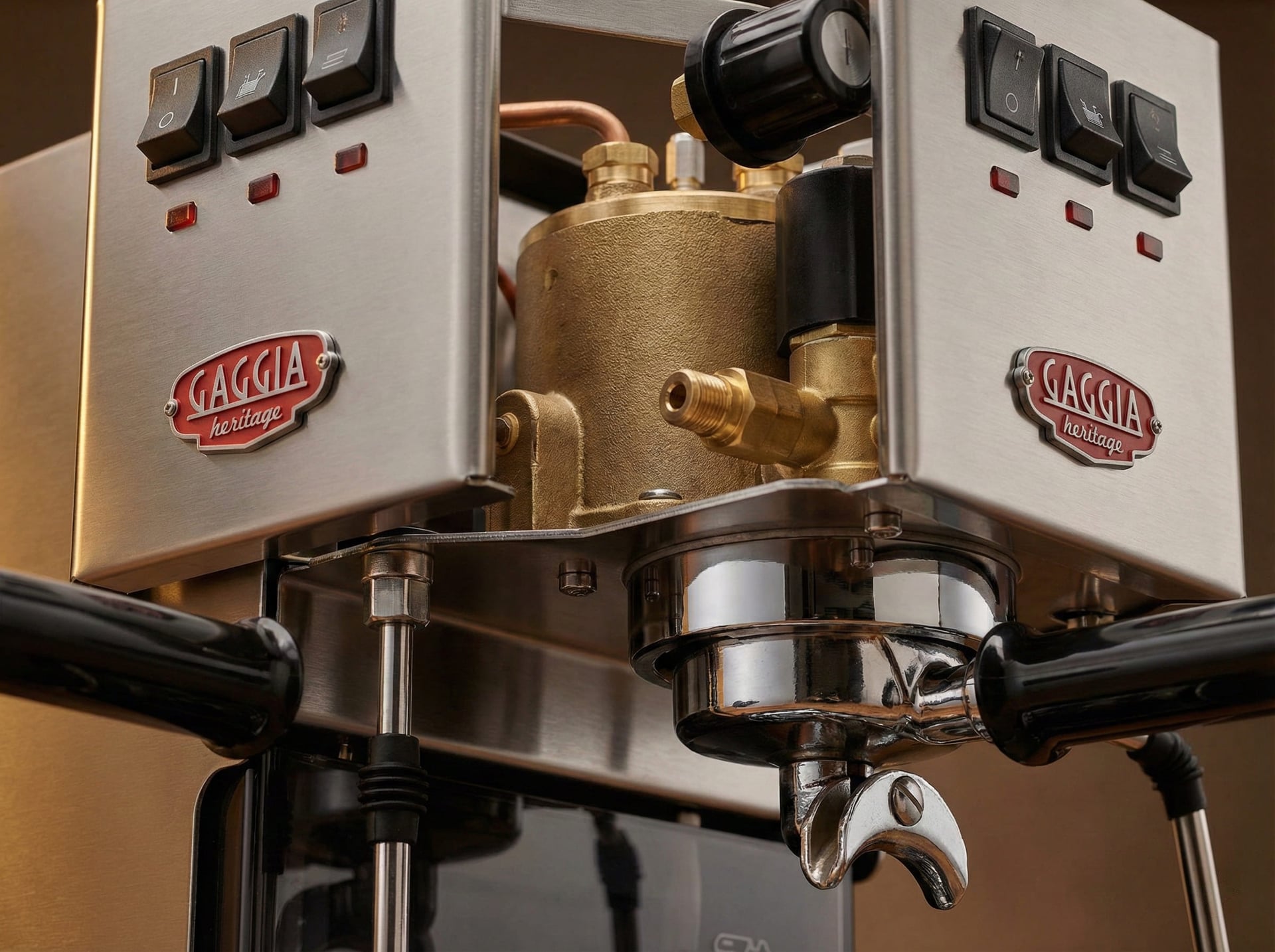
Commercial-grade build throughout. Brass boiler is marine-grade quality—built for decades. Internal components are standard commercial parts—easily replaceable, widely available. Group head is chromed brass for excellent heat retention. Portafilter handle is solid metal with good ergonomics. Switches feel industrial-spec—tactile and durable. Machine weighs 20 lbs—substantial enough to stay put during tamping and portafilter removal.
Expected lifespan: 10-20+ years with basic maintenance. I've talked to owners with 15+ year old machines still pulling perfect shots. The Classic Pro's greatest value is longevity—it outlasts multiple pod machines or thermoblock competitors. Everything's user-serviceable with readily available replacement parts. You can actually fix this thing yourself, which matters when you're 5 years in.
Modding Potential & Community
The Gaggia Classic Pro is legendary for modding—something I dove into during testing. Here's what's worth doing, in order: (1) OPV adjustment (free, 10 minutes)—drop pressure from 12-14 bars to 9 bars for better extraction. (2) IMS/VST precision basket ($25-35)—extraction uniformity goes way up. (3) PID temperature controller ($100-150 parts + DIY install)—kills temp surfing, gives you ±1°F stability. (4) Bottomless portafilter ($30-50)—diagnostic gold for improving technique. (5) Flow control mod ($150-200)—pressure profiling and pre-infusion for advanced users.
Two-decade modding community provides insane documentation, video guides, and support forums. What impressed me most: the Classic Pro goes from capable starter to prosumer beast rivaling $2,000+ setups with these well-documented, community-supported mods. No other sub-$500 machine offers this upgrade path.
What Actually Matters in Manual Espresso Machines
Manual espresso machines require understanding of core components that affect extraction quality and long-term value: portafilter size (58mm commercial standard vs proprietary sizes), boiler material (brass for thermal mass vs aluminum), pressure control (adjustable OPV for 9-bar optimization), solenoid valve (3-way for dry puck vs 2-way), and build quality (commercial components vs consumer-grade).
Entry-level manual machines often compromise on portafilter size (limiting accessory options), use thermoblock heating (less stable temperature), or lack solenoid valves (messy puck removal). The Gaggia Classic Pro succeeds by prioritizing commercial-grade components over convenience features, providing a platform that rewards skill development and accepts professional accessories. See our full espresso machine reviews for context, the best espresso machines overall, or if budget is the priority, our best espresso machines under $500 guide.
Performance Benchmarks
Technical Specifications
General
Espresso System
Steam & Milk
Dimensions
Compare Similar Models
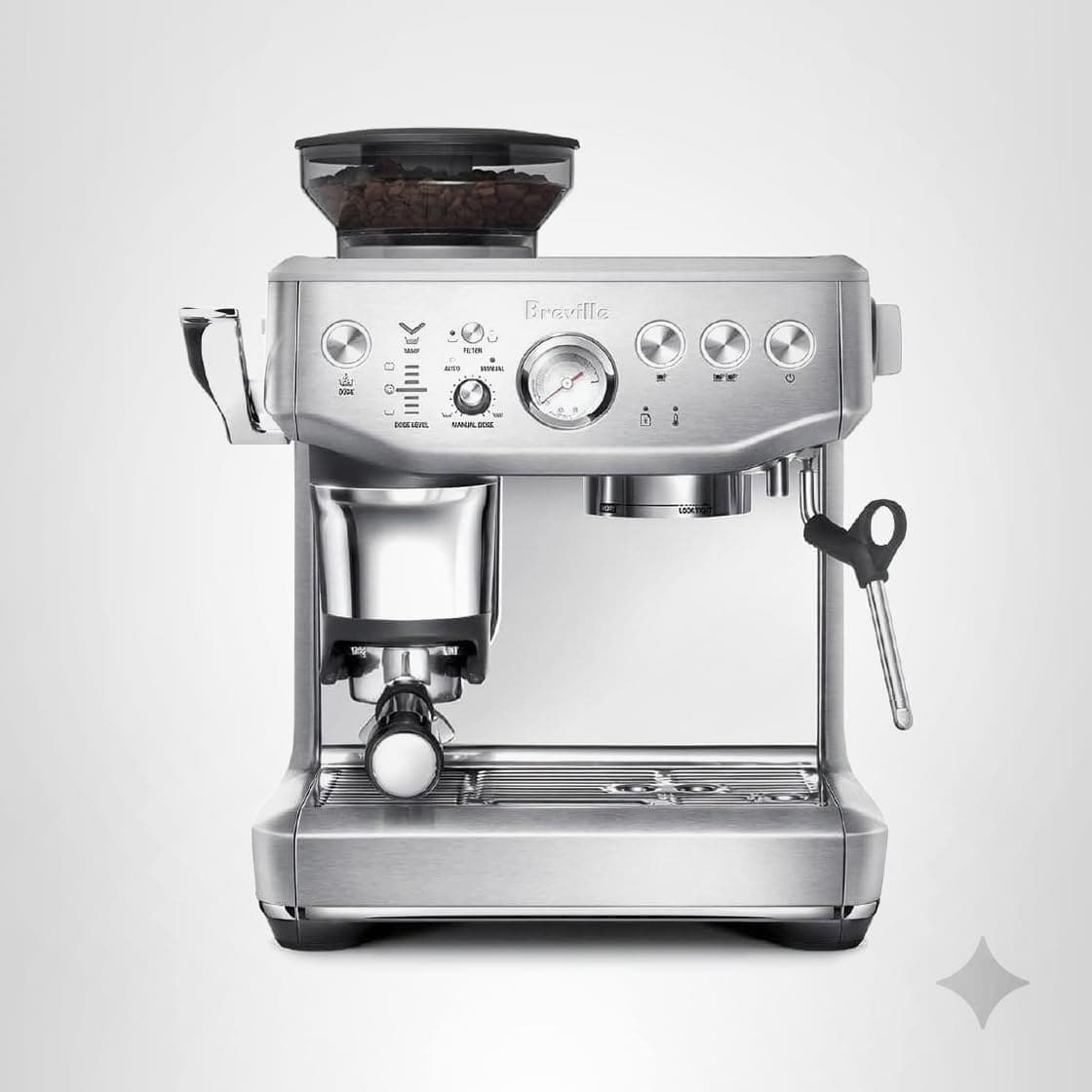
Breville Barista Express Impress
Built-in grinder with assisted tamping - beginner-friendly automation
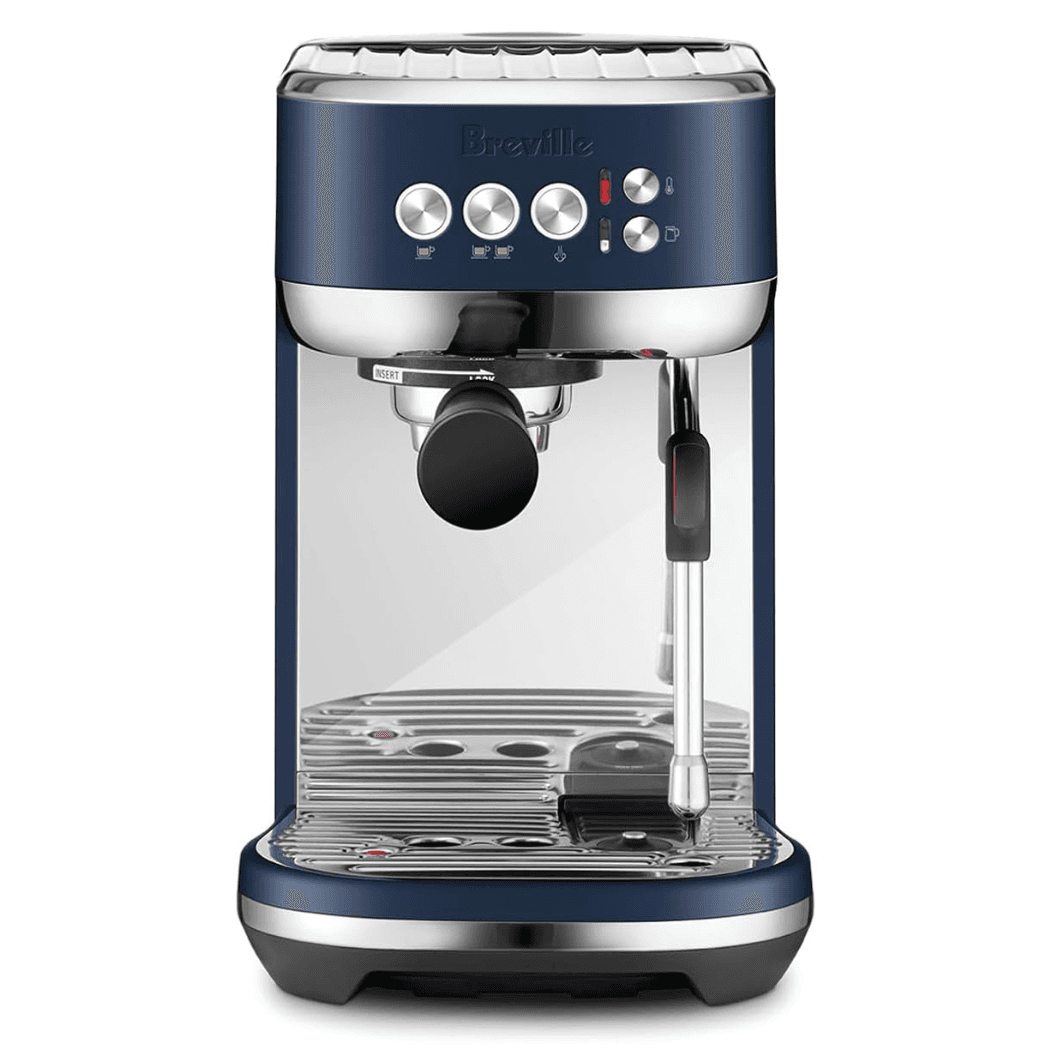
Breville Bambino Plus
Ultra-fast 3-second heat-up, automatic milk frother - requires separate grinder
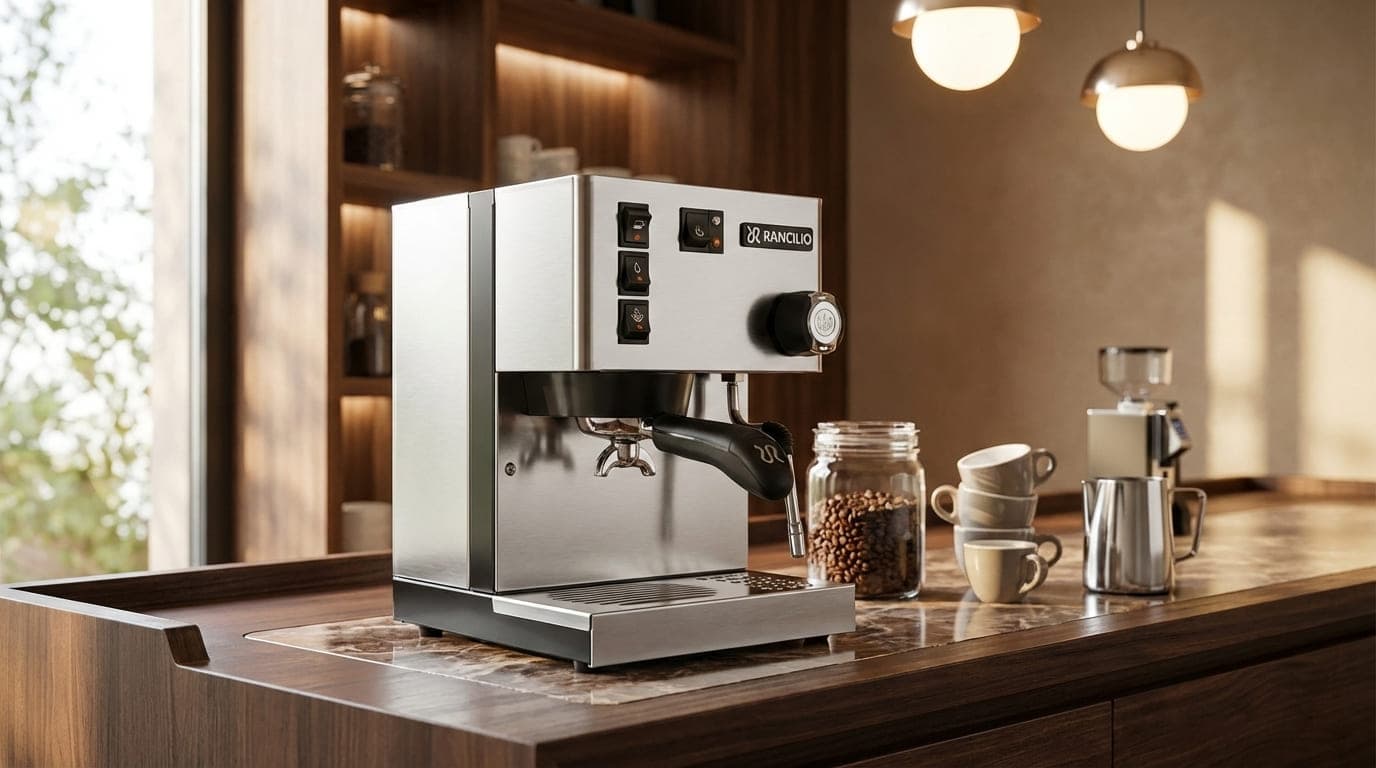
Rancilio Silvia
58mm portafilter, brass boiler - better stock temperature stability and build quality
Long-Term Ownership Considerations
Durability & Build Quality
Commercial-grade brass boiler (marine-grade quality), chromed brass group head for excellent heat retention, solid metal portafilter handle with ergonomic grip, industrial-spec switches and controls. Machine weighs 20 lbs—substantial for stability during tamping and portafilter removal. All internal components are standard commercial parts—easily replaceable and widely available.
Reliability & Common Issues
Expected lifespan: 10-20+ years with basic maintenance. Multiple community members report 15+ year ownership. The brass boiler and commercial components are built for decades of use. Common maintenance items include group head gasket replacement (annually, $8-10), shower screen cleaning (monthly), and occasional pump servicing (5+ years).
Parts Availability
Excellent—all standard commercial parts widely available through espresso retailers and online suppliers. Group head gaskets, shower screens, portafilter baskets, steam wand tips, and internal components stocked by major vendors. Strong aftermarket support with VST, IMS, and other premium part manufacturers offering compatible upgrades.
Maintenance Cost
Annual: $20-30 (descaling solution, group gaskets, backflush detergent). 5-year total: $100-150 including occasional parts replacement. Significantly lower than super-automatic machines or proprietary systems. User-serviceable design reduces professional service costs.
Warranty Coverage
1 year limited warranty covering manufacturing defects. Warranty coverage is standard for espresso machines in this price range. Extended warranties rarely necessary given exceptional build quality and longevity track record.
Resale Value
Strong secondary market—well-maintained units resell for 60-70% of original price after 2-3 years. The Classic Pro's reputation for durability and modding potential creates consistent demand. Modded units (PID, OPV adjusted) often command premium resale prices.
This machine was purchased independently and was not provided by Gaggia.
Final Verdict
After 30 days and 63+ shots with the Gaggia Classic Pro—testing five different bean varieties, measuring temps with my refractometer, dealing with both brilliant extractions and total disasters—here's my take: This is hands-down the best value in manual espresso right now. Perfect for people who want commercial-grade components, Italian build quality, and serious modding potential without dropping $1,000+.
That 58mm commercial portafilter? Not just marketing. It's real future-proofing. You get access to the entire professional accessory ecosystem. VST precision baskets, Pullman tampers, whatever you want. The brass boiler and Italian construction will last 10-20+ years based on owners I've talked to who are still pulling shots on machines from the '90s.
If you're willing to learn (and I had to relearn some things during testing), invest in a decent grinder, and enjoy traditional manual workflow—the Classic Pro delivers café-quality shots at half the price of anything comparable. The single-boiler thing is real, but for 1-3 drinks it's totally manageable. Temperature surfing becomes second nature, and if you hate it, drop $100-150 on a PID mod and forget about it.
The modding scene is what really sets this apart. This $449-$499 machine can become a prosumer beast rivaling $2,000+ setups. PID control, OPV pressure adjustment (did this myself—game changer), flow control, even spring lever conversions. The community support is incredible.
That said, if you want plug-and-play convenience or built-in grinding, get a Breville Barista Express instead. The Classic Pro rewards skill and patience, not shortcuts. But if you're serious about learning espresso? This is where you start.
Key Takeaways
- Commercial 58mm portafilter is legit—accepts all pro accessories and actually future-proofs your setup
- Brass boiler construction lasts decades—I've seen 20-year-old machines still pulling perfect shots
- Professional steam wand makes competition-level microfoam in under 60 seconds
- Modding potential is massive—$449-$499 machine can match $2,000+ setups with community upgrades
- 3-way solenoid gives you instant dry pucks—way cleaner than budget machines
- Real learning curve—plan on 2-4 weeks to master temp surfing and dial in consistently
- Unbeatable value at $449-$499—nothing else under $500 offers commercial-grade components
The ultimate learning machine that grows with your skills. Best value in home espresso, period. Built to outlast whatever you buy next. Not the easiest path, but absolutely the most rewarding if you're serious about espresso. This is what I'd buy myself if I were starting over.
Get Coffee Tips
Join our newsletter for expert reviews and brewing guides.
Affiliate Disclosure: We may earn a commission when you purchase through links on our site. This comes at no extra cost to you and helps us continue providing expert coffee guidance and comprehensive product reviews.