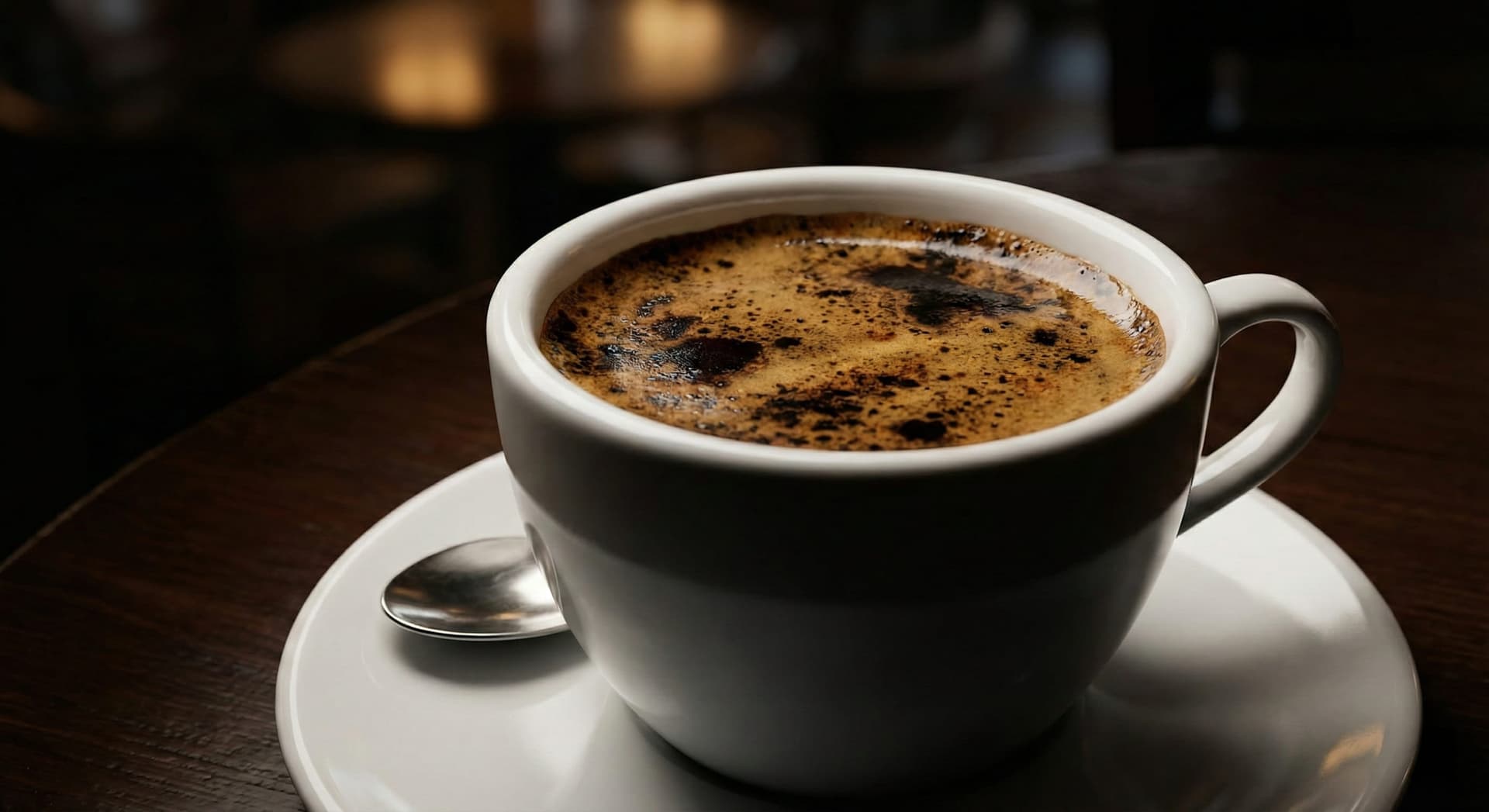
Why Does My Coffee Taste Bitter? (Causes & Fixes)
Over-extraction, grind size, water temperature, brew time, dirty equipment, or stale beans—here's how to diagnose exactly which issue you have and fix it for good
If you're asking “why is my coffee bitter?” — you're not alone. Bitter coffee is one of the most common home-brewing complaints, and it can trace back to five completely different root causes. I've trained over 200 baristas and I can tell you: nearly every bitter cup traces back to the same handful of issues. The good news is that once you know your specific bitter coffee cause, most fixes take less than five minutes.
This guide covers every bitter coffee cause — over-extraction, grind size, water temperature, brew time, dirty equipment, and stale beans — and shows you exactly how to fix bitter coffee for good. I'll also point you toward the two upgrades that solve the most problems for home brewers: a better grinder and fresher beans.
Bitter Coffee – Quick Fix Checklist
- →Harsh & drying — Grind coarser
- →Burnt taste — Lower water temperature
- →Strong & heavy — Shorten brew time
- →Flat & bitter — Clean equipment
- →Dull & bitter — Use fresher beans
What Actually Makes Coffee Bitter: Over-Extraction Explained
Before getting into individual causes, you need to understand the core mechanism. When hot water contacts coffee grounds, it dissolves different compounds in a predictable order: fruity acids and sweetness extract first (in the first 30–60 seconds of contact), balanced body and flavor in the middle, and bitter, astringent compounds—chlorogenic acid lactones, quinic acid, diketopiperazines— last.
Over-extraction happens when the brewing process goes too far—too much contact time, too fine a grind, or too hot water all accelerate compound extraction—and you end up pulling out those bitter compounds that should stay in the grounds. Think of it like over-steeping black tea: perfect at 3 minutes, genuinely unpleasant at 8 minutes from the same leaves. If you're troubleshooting espresso specifically, our espresso extraction guide covers the full diagnosis framework — under vs over, channeling, brew ratio, and fix-by-fix checklists. For a focused, step-by-step walkthrough specifically targeting how to fix bitter espresso — including grind, temperature, dose, channeling, and machine cleanliness in one place — that guide covers the full espresso-specific process.
Signs of Over-Extraction
Harsh, bitter finish. Astringent drying sensation at the back of the palate. Dark, mottled crema in espresso. Strong bitterness that overwhelms all other flavors.
Signs of Under-Extraction
Sour, sharp, thin flavor. Weak body. Flavor disappears quickly. No bitterness—just a hollow, acidic taste. Blonde crema in espresso.
Signs of Good Extraction
Balanced sweetness with mild pleasant bitterness. Round, full body. Clean finish. Flavors linger but don't become grippy or astringent.
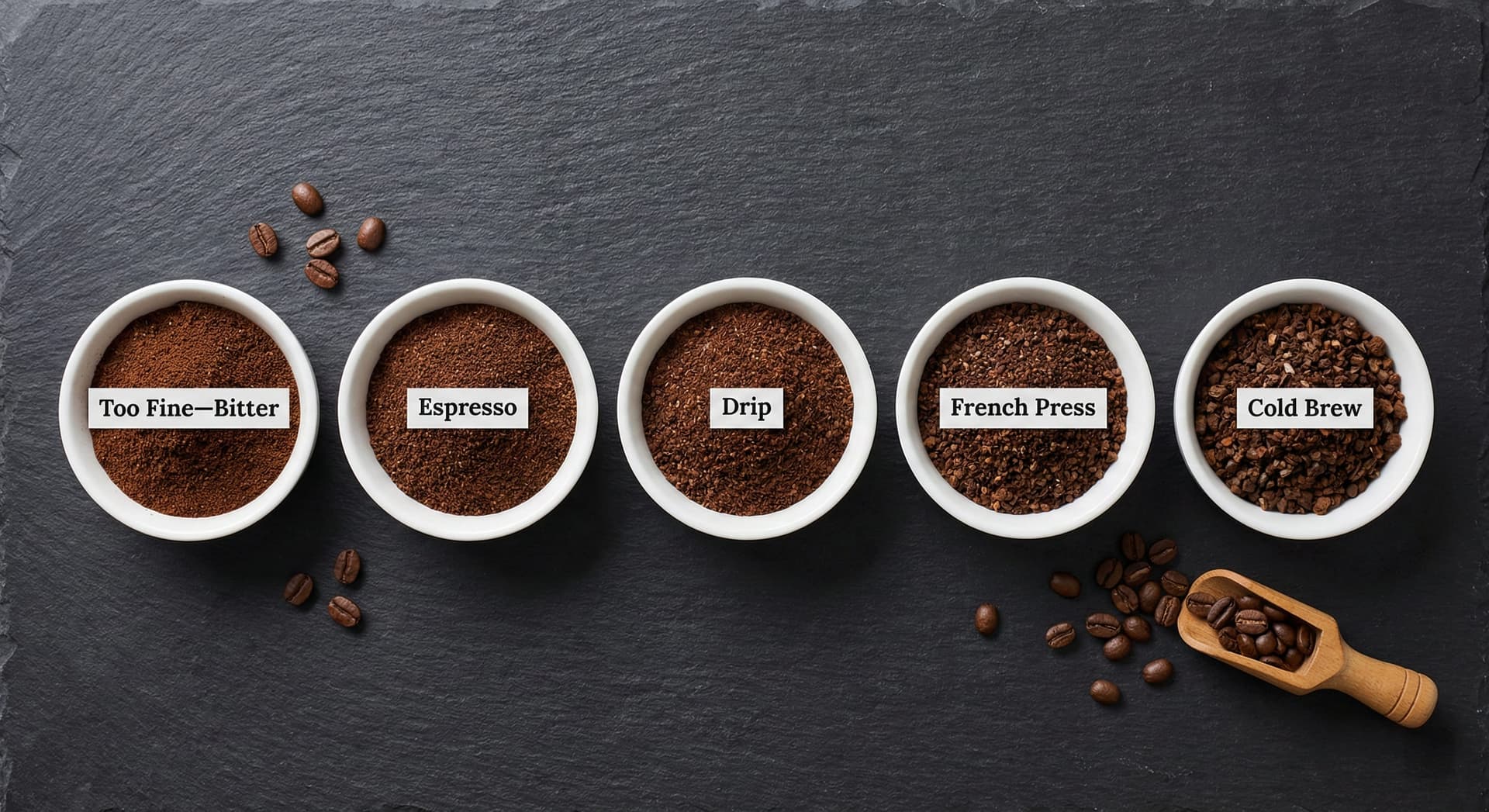
Cause #1: Grind Too Fine
This is the single most common cause of bitter coffee I encounter from home brewers. A finer grind means more particle surface area, which means water extracts compounds faster. If you're grinding at espresso fineness for a French press or pour-over, you'll hit the bitter zone long before the brewing process finishes—the very fine particles over-extract dramatically while the normal ones are still barely started.
How to Diagnose a Too-Fine Grind
Shot takes longer than 35 seconds to finish pulling
Total brew time exceeds 5–6 minutes for a 12 oz cup
Extremely thick, muddy, bitter cup—grounds in the cup after pressing
Coffee drips very slowly, machine struggles, cup tastes harsh
Plunger requires significant force to press down
Fix: Dial Your Grinder Coarser
Adjust your burr grinder one click or step coarser, brew a fresh cup, and taste. Repeat in small increments until the bitterness resolves and you start tasting sweetness and balance. Resist the urge to make large adjustments—small changes have big flavor impacts. For a full grind size reference covering every brew method, our coffee grind size chart lists exact micron targets and calibration signals for espresso, French press, pour over, and more. See our guide to choosing a burr grinder or browse best coffee grinders if you're ready to upgrade.
For a full breakdown of exactly what blade grinders do to coffee particle distribution — and why no technique adjustment fixes it — see our burr grinder vs blade grinder comparison.
Cause #2: Water Too Hot
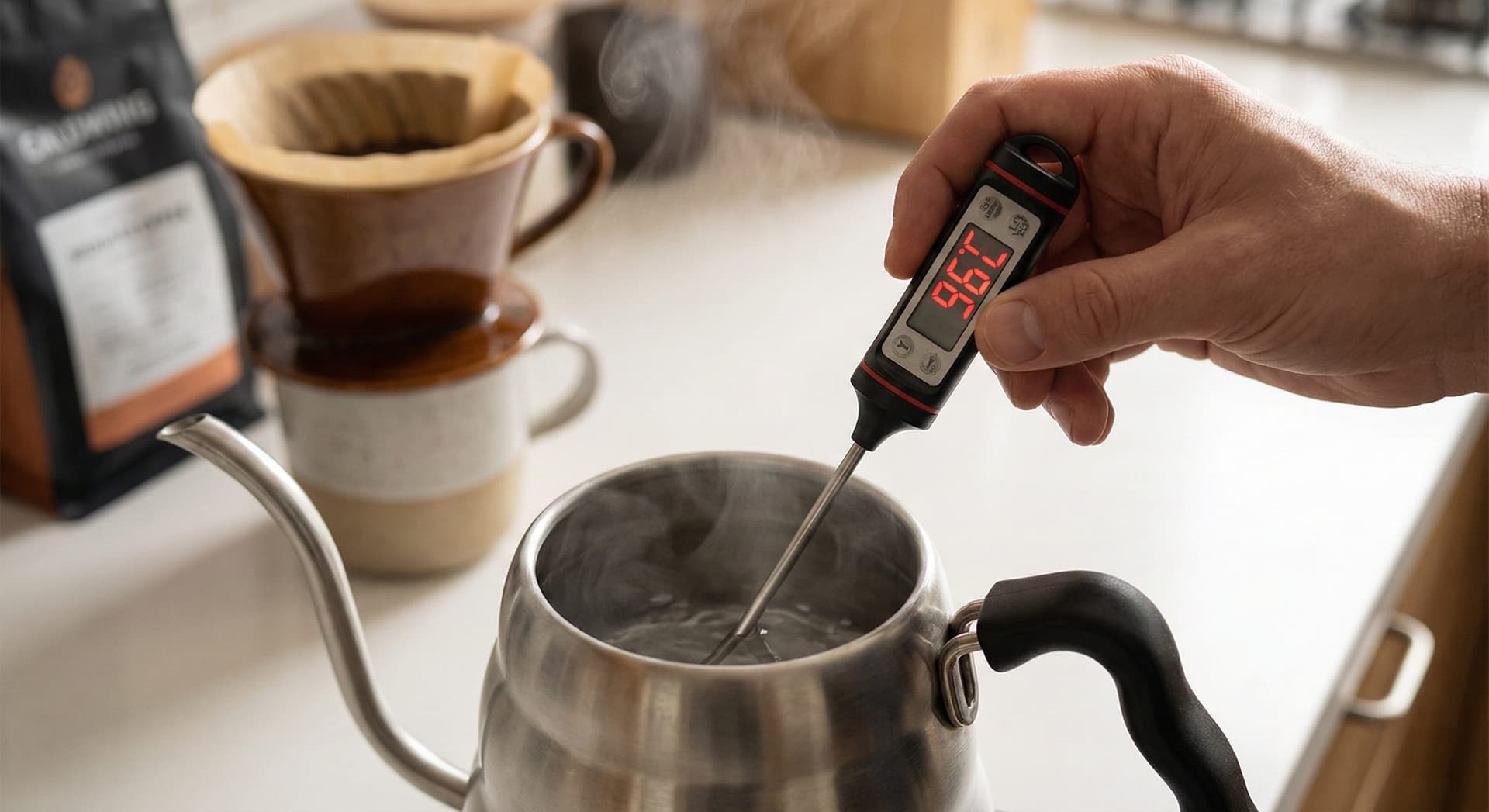
The optimal brewing temperature for coffee is 90–96°C (195–205°F). Most specialty coffee professionals target 92–94°C for espresso; pour-over and drip brewing typically performs best at 93–96°C. Water at or above 100°C (boiling) extracts bitter compounds almost immediately—it's essentially scorching the grounds.
I've tested this directly: using identical beans, grind, and brew time, a pour-over brewed at 100°C versus 93°C produces a dramatically different cup—the 100°C version consistently tests bitter and harsh, the 93°C version balanced and sweet. The difference is that significant.
How to Diagnose a Temperature Problem
If your kettle has no temperature control and you pour immediately after boiling, your water is 98–100°C. If bitter coffee appeared specifically after switching to darker roasts (which extract faster), temperature may be amplifying the issue. Consumer drip machines vary widely—some brew at proper temperature, others run hot or have uneven heating.
Fix: Cool the Water Before Brewing
Kettle (no temperature control)
After boiling, wait 30–45 seconds before pouring. This drops temperature from 100°C to approximately 93–95°C.
Variable-temperature kettle
Set to 93°C for medium roasts, 90–92°C for dark roasts. This is the most reliable fix and removes all guesswork.
Espresso machine
Run a blank shot (water only, no coffee) before brewing to cool the group head. Some machines run slightly hot from first heat-up.
Consumer drip machine
Research your specific model's brew temperature. Some brew too cool (under-extraction) and some too hot (over-extraction). Specialty drip machines like the Breville Precision Brewer maintain accurate temperature.
Cause #3: Brew Time Too Long
Every brewing method has a target time range; consistently going beyond it pushes extraction into the bitter zone. Use the table below to check whether your brew time is in range.
| Brewing Method | Target Brew Time | Too Long (Bitter Risk) |
|---|---|---|
| Espresso | 25–30 seconds | 35+ seconds |
| Pour-Over (V60, Chemex) | 3–4 minutes | 5+ minutes |
| French Press | 4 minutes | 6+ minutes (or leaving grounds in) |
| AeroPress | 1.5–2.5 minutes | 4+ minutes |
| Cold Brew | 12–18 hours | 24+ hours |
Fix: Time Your Brew and Adjust Accordingly
Use a timer consistently—it's the simplest quality-control tool in coffee brewing. If your brew time is running long, coarsen the grind slightly to speed up water flow. For French press users specifically: press and pour at exactly 4 minutes. If you let the grounds continue steeping in the liquid after pressing, over-extraction continues and bitterness builds steadily.
Learn how to fix this in our step-by-step guide to descaling a coffee machine.
Cause #4: Dirty Equipment
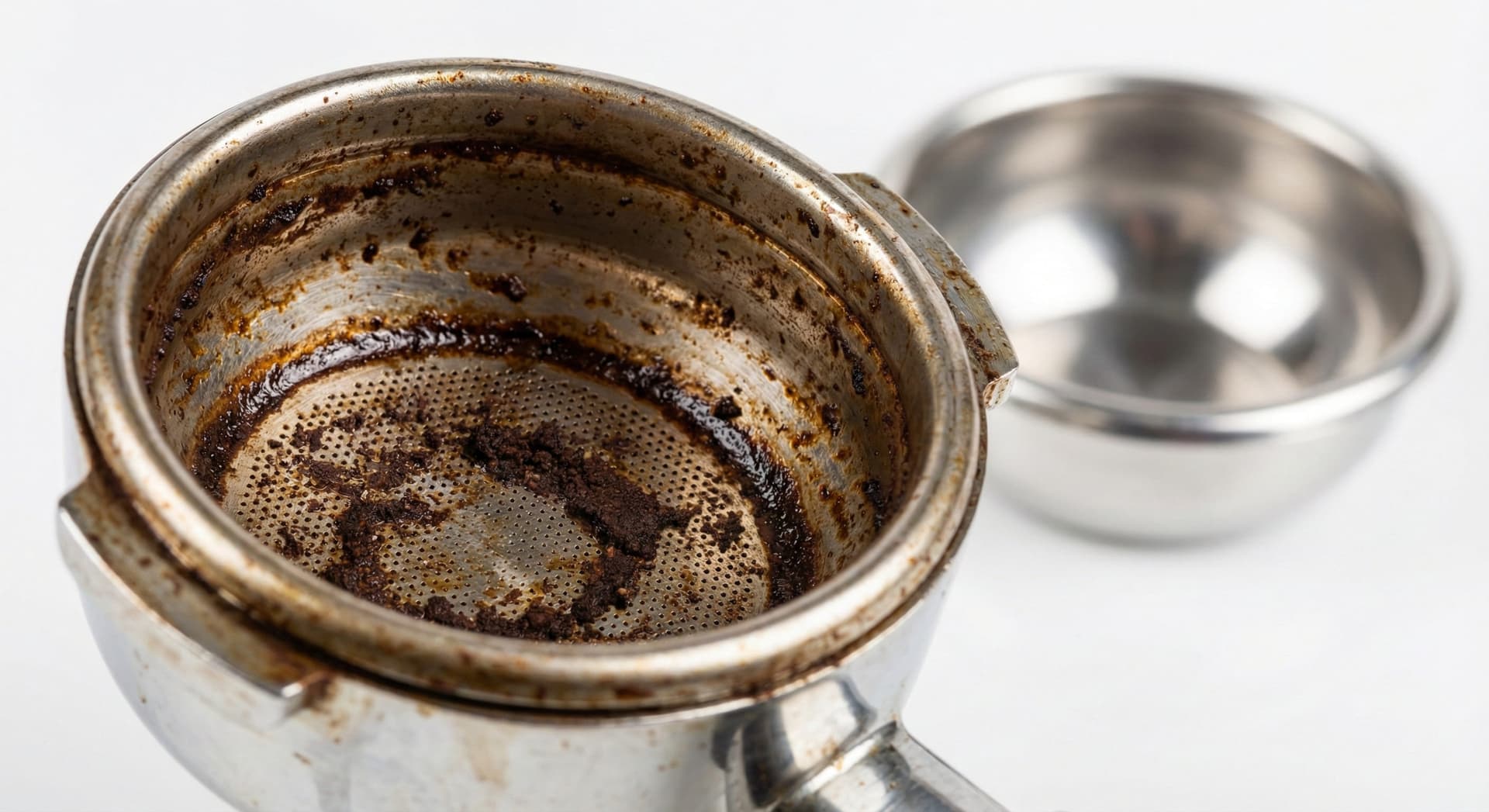
This surprises people more than any other cause I discuss, but rancid equipment is responsible for a significant portion of “why does my coffee taste bitter” complaints I get from home brewers. Coffee oils left in the portafilter, basket, carafe, or French press plunger turn rancid within hours at room temperature. That rancid oil contaminates every subsequent brew with its bitter, musty flavor— completely independently of your technique.
In training baristas, I'd demonstrate this deliberately: brew a perfect shot through a clean portafilter, then brew the identical dose through an unwashed portafilter that had sat for 24 hours. Same beans, same grind, same parameters—dramatically different cups. The dirty portafilter shot was consistently rated bitter and stale.
How to Diagnose Dirty Equipment as the Cause
Smell your brewing equipment. Smell the portafilter basket, the inside of the French press carafe, the carafe lid. If there's a stale, musty, or faintly sour smell—especially from a component that hasn't been washed with soap recently—that's rancid coffee oil. Also check: if your coffee started tasting bitter after a period of heavier use without extra cleaning, equipment residue is a strong suspect.
Equipment Cleaning Schedule to Prevent Bitterness
After Every Use
- ✓Knock out grounds from portafilter immediately; rinse basket under hot water
- ✓Run a blank water shot through the group head to purge oils
- ✓Purge and wipe the steam wand immediately after use
- ✓Rinse the French press carafe and plunger with hot water
- ✓Empty and rinse the drip carafe—don't let brewed coffee sit
Weekly Deep Clean
- ✓Soak portafilter basket in hot water 20 minutes to dissolve coffee oil buildup
- ✓Wash French press plunger with dish soap—the mesh traps oils
- ✓Backflush espresso machine group head with water
- ✓Wash the drip carafe with soapy water, not just a rinse
- ✓Clean the grinder chute and burrs with a dry brush to remove stale grounds
Cause #5: Low-Quality or Stale Coffee Beans
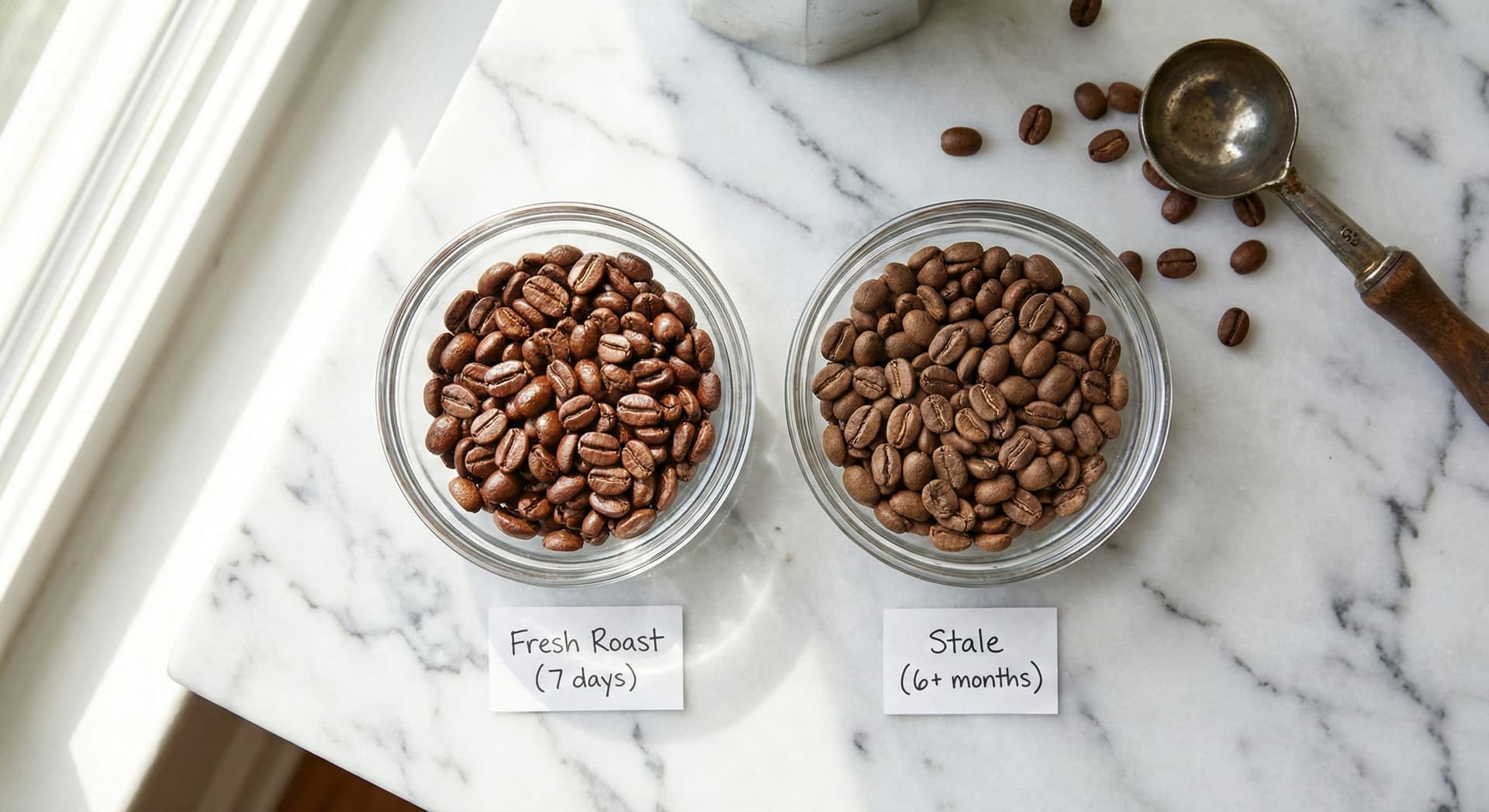
Fresh specialty-grade beans are sweet, complex, and forgiving of minor technique errors. Old or commodity-grade beans have lost their bright, sweet compounds through oxidation—leaving behind the bitter, harsh notes that were always present but previously balanced by the good stuff. No technique adjustment compensates for beans that simply don't have good flavor left to extract.
How to Diagnose Stale Beans
Specialty coffee roasters always print a roast date. If your bag only has a "best by" date, assume the beans are old—"best by" dates are often 1–2 years from packaging, meaning the coffee could be 6–18 months post-roast already.
Fresh beans smell intensely of whatever flavor profile they represent—fruity, nutty, chocolatey, floral. Stale beans smell faint, flat, or vaguely papery. If you open the bag and don't get an immediate rich aroma, the beans are past their best.
Medium and dark roast beans should have a visible sheen of coffee oil on their surface when fresh. Matte, dry-looking beans often indicate they've been sitting long enough for those surface oils to oxidize.
Most supermarket coffee, especially in branded cans and large warehouse packs, was roasted months before it reaches you. It's designed for shelf life, not freshness. The specialty coffee world operates on an entirely different standard.
For more on choosing fresh, quality beans, see our guide to picking espresso beans.
How to Diagnose Your Specific Bitter Coffee Problem
Here's the exact diagnostic framework I use when troubleshooting bitter coffee. Work through these in order—starting with the most common and easiest-to-fix causes.
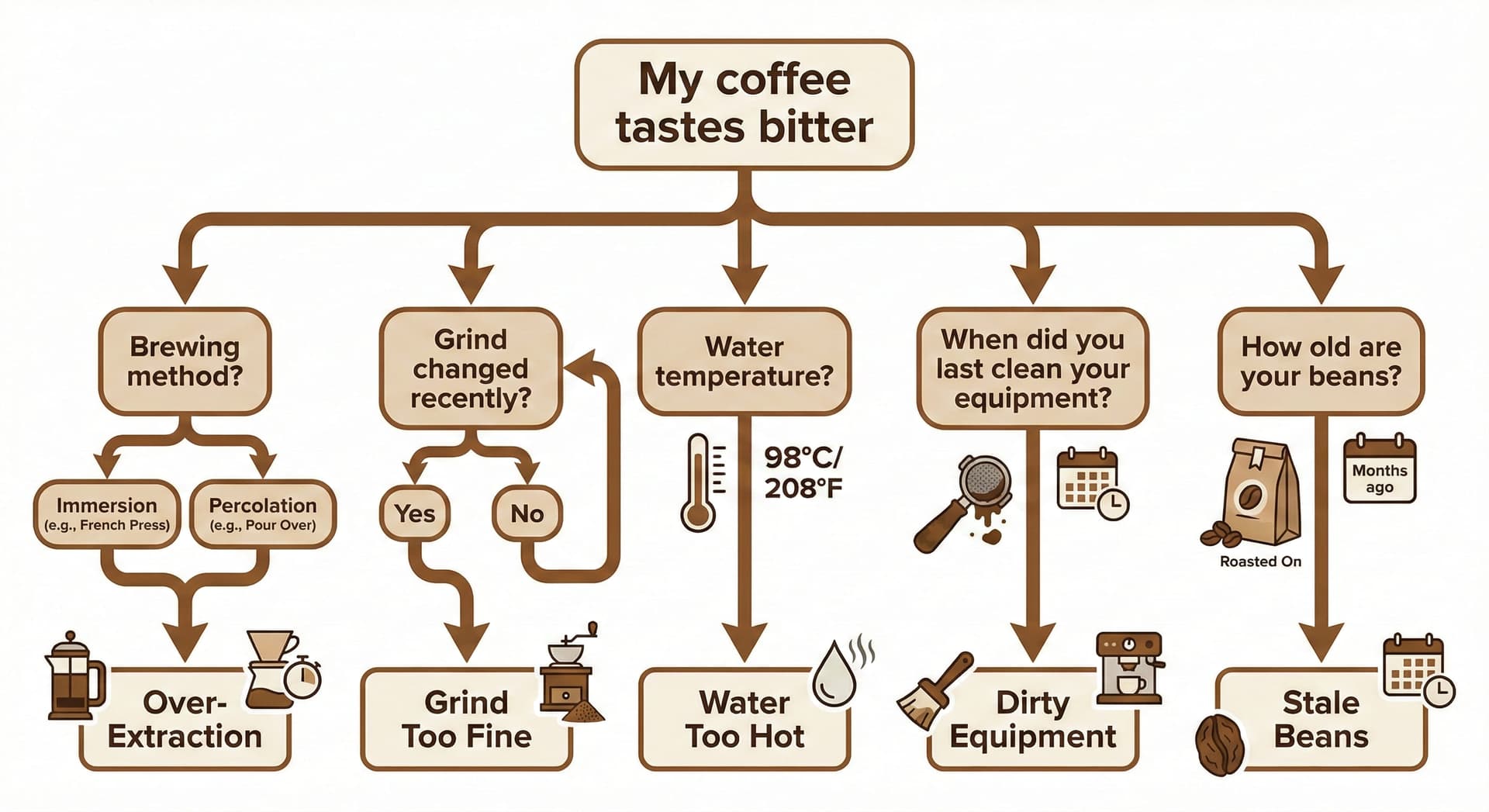
Start with Beans and Equipment (5 minutes)
Check roast date on your beans—if over 6 weeks old, get fresh beans before doing anything else. Smell your portafilter, carafe, or press. If they smell stale, wash with soap and hot water. Stale beans and dirty equipment are the two causes that no technique adjustment can compensate for.
Check Water Temperature
Are you pouring immediately after boiling? Boiling point is 100°C—too hot. Let water rest 30–45 seconds after boiling, or use a variable-temperature kettle set to 93°C. This is especially impactful for dark roast bitterness.
Time Your Brew
Set a timer on your next brew. Is your espresso taking 35+ seconds? Is your pour-over still dripping at the 5-minute mark? Is your French press sitting for 6+ minutes? Overly long brew times are almost always caused by a grind that's too fine—move to the next step.
Adjust Grind One Step Coarser
Dial your burr grinder one increment coarser. Brew and taste. Repeat in single increments until bitterness resolves. If you're on a blade grinder, consider upgrading—it's the most impactful single change for consistent, non-bitter coffee.
Isolate One Variable at a Time
Change only ONE thing between brew sessions. If you adjust grind and temperature simultaneously and the coffee improves, you won't know which fixed it—and you may overshoot. Patient one-variable-at-a-time testing is the fastest path to a consistently good cup.
The Two Grinder Upgrades That Solve Most Bitter Coffee Problems
After years of helping home brewers troubleshoot coffee quality, I can tell you that upgrading to a quality burr grinder addresses more bitter coffee problems than any other single change. Here are the two grinders I've personally tested and recommend at different price points.
Baratza Encore ESP — Best Entry-Level Burr Grinder
The Encore ESP is the grinder I recommend to home brewers who are coming from a blade grinder and experiencing persistent bitter coffee. It produces uniform particle size with 40 grind settings ranging from espresso to French press—consistent grounds that extract evenly and let you dial in extraction precisely. I've tested dozens of entry-level grinders; the Encore ESP at this price point has no serious competition for consistent grind quality. Switching from a blade grinder to this model is the single upgrade I've seen fix bitter coffee most reliably and dramatically.
Fellow Ode Gen 2 — Best Mid-Range Burr Grinder for Filter Coffee
If you brew pour-over, drip, or French press and want to step up to a grinder that professionals use, the Fellow Ode Gen 2 is outstanding. Dual-purpose 64mm flat burrs, 31 grind settings with a convenient single-dose workflow, and a low-retention design that keeps stale grounds from building up in the chute. I've tested it extensively and the grind uniformity is excellent—noticeably better than entry-level options for filter methods. Note: designed for filter brewing, not espresso.
Quick Recap: Fix Bitter Coffee in 5 Minutes
Most bitter coffee problems are solved by working through this order: check bean freshness first, clean your equipment, verify water temperature, time your brew, and then dial your grind coarser. Change one thing at a time until the bitterness clears. Here's a fast summary of every cause and its fix:
| Cause | Symptom | Fix |
|---|---|---|
| Grind too fine | Harsh, drying, astringent | Grind one step coarser |
| Water too hot | Burnt, scorched taste | Let water cool 30–45 sec after boiling |
| Brew time too long | Strong, heavy, bitter | Shorten contact time; check grind |
| Dirty equipment | Flat, lingering bitterness | Wash with soap; descale machine |
| Stale beans | Dull, flat, bitter | Switch to beans roasted within 6 weeks |
Frequently Asked Questions
Check two things first: water quality and equipment cleanliness. Very hard tap water adds a metallic edge to every brew—try filtered water.
Then smell your portafilter, French press plunger, or carafe. Rancid coffee oil is nearly odorless when dry but distinctly bitter-tasting.
Once you've ruled out dirty equipment and hard water, work through grind size, temperature, and brew time one at a time.
Get Coffee Tips
Join our newsletter for expert reviews and brewing guides.