What Is a Ristretto? The Concentrated Shot Explained
Same dose, half the water — ristretto vs espresso, why it tastes sweeter, and the one grind adjustment that makes or breaks it
A ristretto is a short espresso shot pulled with the same coffee dose but roughly half the water yield of a standard double. Same 18g of grounds — but instead of extracting 36g of liquid, you stop at around 20–22g. That constraint changes everything: the resulting shot is sweeter, more syrupy, and noticeably less bitter than a regular espresso, because you're capturing the early, sweeter extraction compounds and leaving the harsher ones behind in the puck.
I've been pulling ristrettos professionally for over 15 years — across La Marzocco Lineas in high-volume specialty cafés and Breville dual-boilers in home testing setups. In that time I've tuned ratios for different origins, compared them side by side against standard doubles, and used them as the espresso base for thousands of flat whites. What follows is what actually matters in practice.
Ristretto at a Glance
Ristretto
- Dose:18g
- Yield:18–22g liquid
- Brew ratio:1:1 to 1:1.2
- Time:14–20 seconds
- Flavor:Sweet, syrupy, no bitterness
Standard Double Espresso
- Dose:18g
- Yield:34–40g liquid
- Brew ratio:1:2
- Time:25–32 seconds
- Flavor:Balanced, slight bitter finish
What “Ristretto” Actually Means
Ristretto is Italian for “restricted” or “limited.” The restriction is on the water — same dose, shorter pull. The name comes from traditional Italian espresso bar practice where skilled baristas would manually watch the extraction and cut the shot early, stopping at the point where sweetness peaked before bitterness had a chance to dominate.
This isn't a modern specialty coffee invention. Italian baristas were making ristrettos in the 1950s, long before brew ratios became the obsession of third-wave coffee. The concept is simple: espresso extraction extracts different compounds at different rates. The sweet, caramelised, fruity compounds come first. The bitter, astringent ones come last. A ristretto is a deliberate choice to stop before you get to those later compounds.
Ristretto vs Espresso: The Real Difference
The honest answer is: it's not as dramatic as you might expect from reading about it, but it's unmistakable once you've tasted both side by side.
The Extraction Chemistry
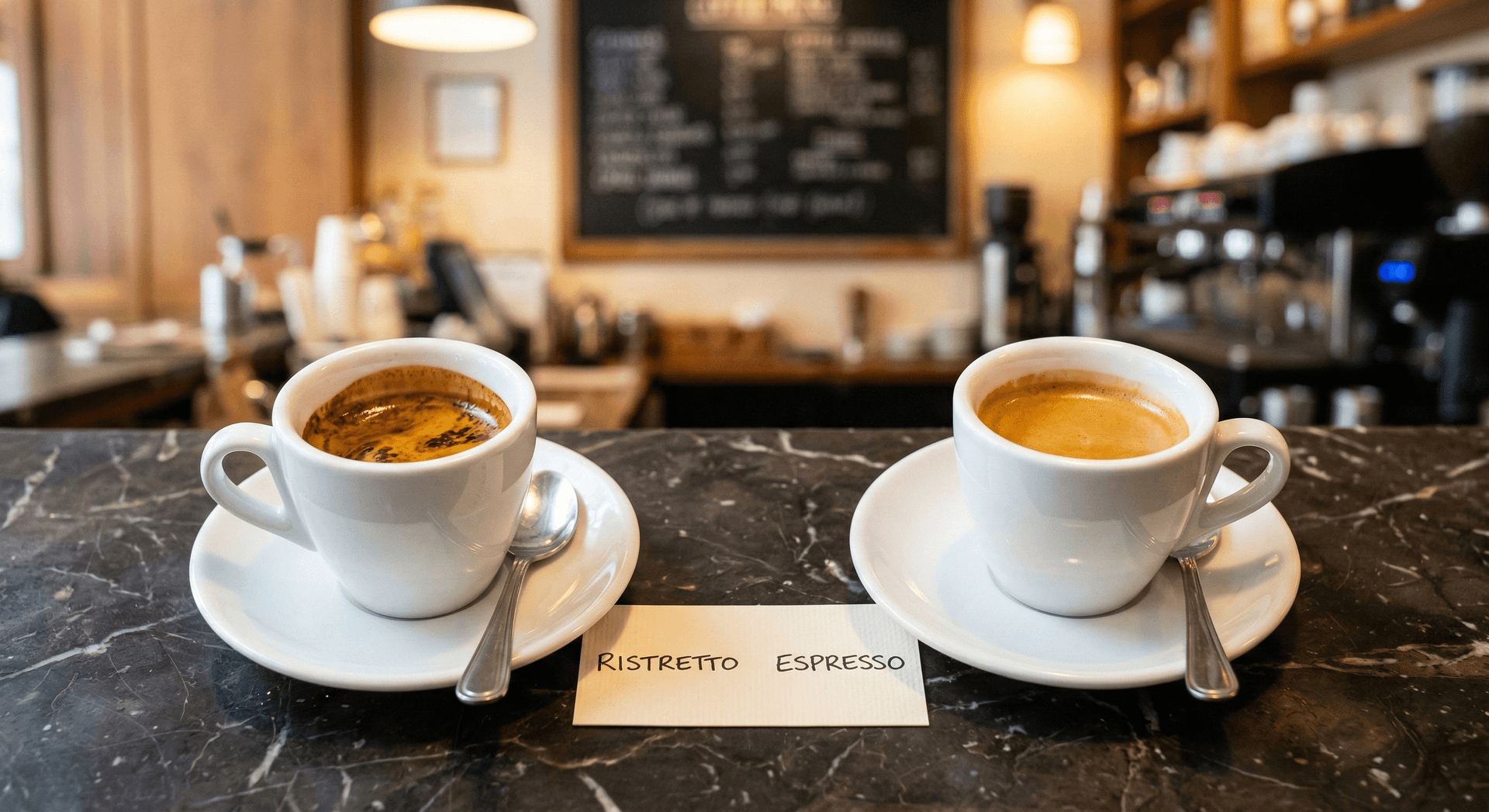
At roughly 15–20 seconds into an espresso extraction, you've pulled out most of the sweetness, caramelised sugars, and fruit-forward acids. You've got almost none of the bitter, drying compounds that dominate the back end. A ristretto stops there. The standard double runs for another 10–12 seconds, picking up compounds that deepen flavor but also introduce more bitterness and a slightly drying finish.
Neither is objectively better — they're optimised for different experiences. Understanding the difference is also directly relevant to understanding why your espresso might taste bitter: see our complete espresso guide for how extraction time, pressure, and dose interact, or our dedicated espresso extraction guide for the full breakdown of under-extraction, over-extraction, brew ratio, and channeling.
| Feature | Ristretto | Standard Double Espresso |
|---|---|---|
| Coffee dose | 18g | 18g |
| Liquid yield | 18–22g | 34–40g |
| Brew ratio | 1:1 to 1:1.2 | 1:2 |
| Extraction time | 14–20 seconds | 25–32 seconds |
| Body | Thick, syrupy | Full but less viscous |
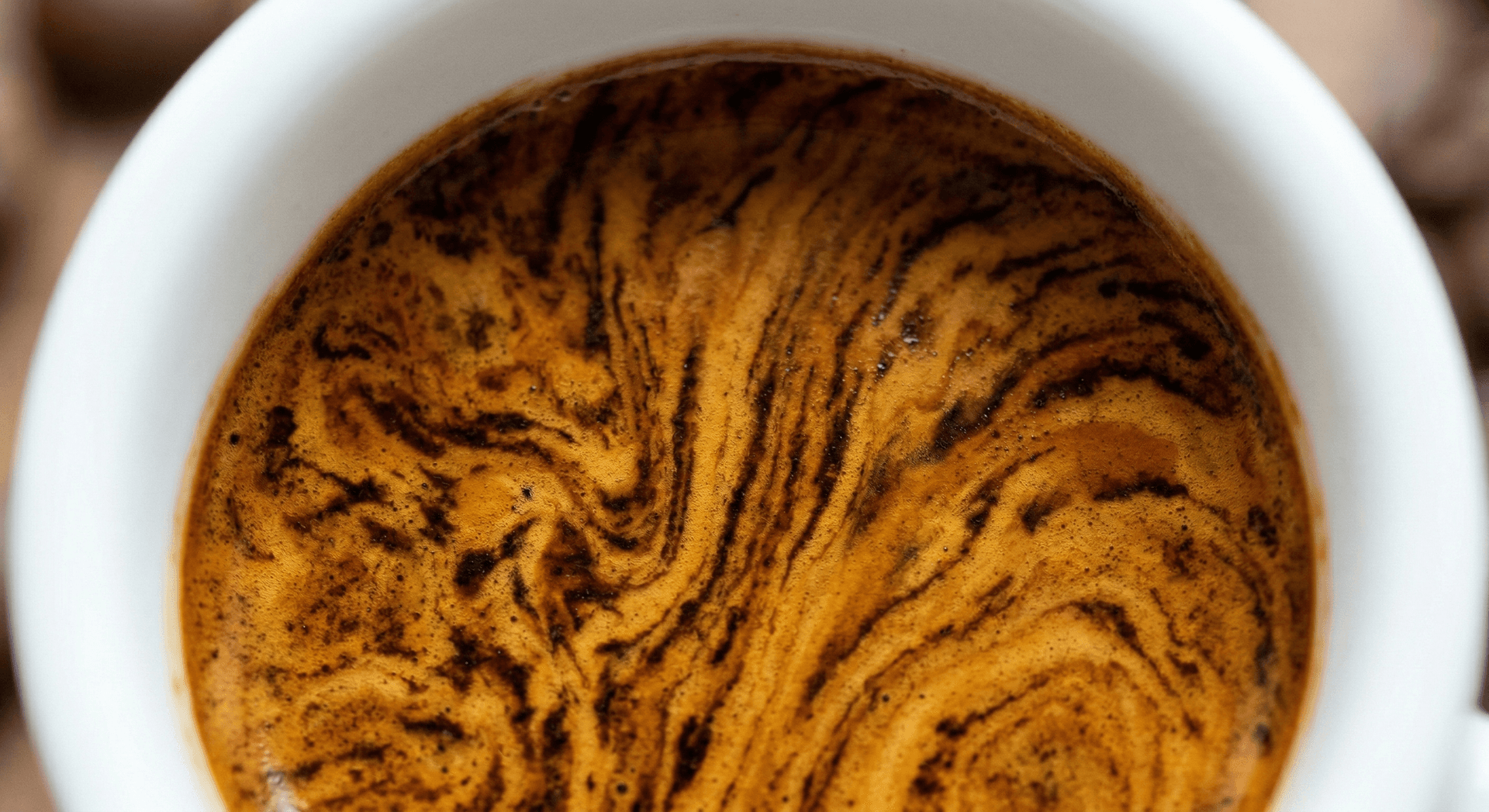
| Crema | Dense, tiger-striped | Standard crema layer |
| Bitterness | Very low | Moderate |
| Sweetness | High — caramel, fruit | Moderate |
| Best use | Flat white base, straight shot | Standard espresso drinks |
Side-by-Side Taste Test
In my testing sessions with a Breville Dual Boiler (BES920) using Colombian Huila beans (medium roast, 14 days off roast), here's what I found pulling the same dose to different yields:
Ristretto (18g → 20g, 1:1.1)
- Aroma: Caramel, dried cherry, dark chocolate
- First sip: Immediate sweetness — rounded, no sharp edge
- Mid-palate: Dense, coating; fruit and caramel integrate
- Finish: Clean, medium-short; zero bitter aftertaste
- Overall: Sweet and concentrated — almost dessert-like
Standard Double (18g → 36g, 1:2)
- Aroma: Caramel and fruit, lighter in intensity
- First sip: Balanced — sweetness present but diluted
- Mid-palate: Classic espresso structure; slight dryness
- Finish: Slightly bitter, lingering — pleasant not harsh
- Overall: Classic espresso balance
Ristretto Recipe: The Parameters That Matter
Standard Ristretto Parameters
- Dose: 18g ground coffee
- Yield: 18–22g liquid (20g is the sweet spot for most medium-roast beans)
- Brew ratio: 1:1 to 1:1.2
- Extraction time: 14–20 seconds
- Water temperature: 93–95°C (200–203°F)
- Pressure: 9 bars
The Grind Adjustment Most People Get Wrong
This is where most people fail. They pull a normal espresso and just stop the shot early — but that gives you under-extracted, weak, often sour liquid. Not a ristretto.
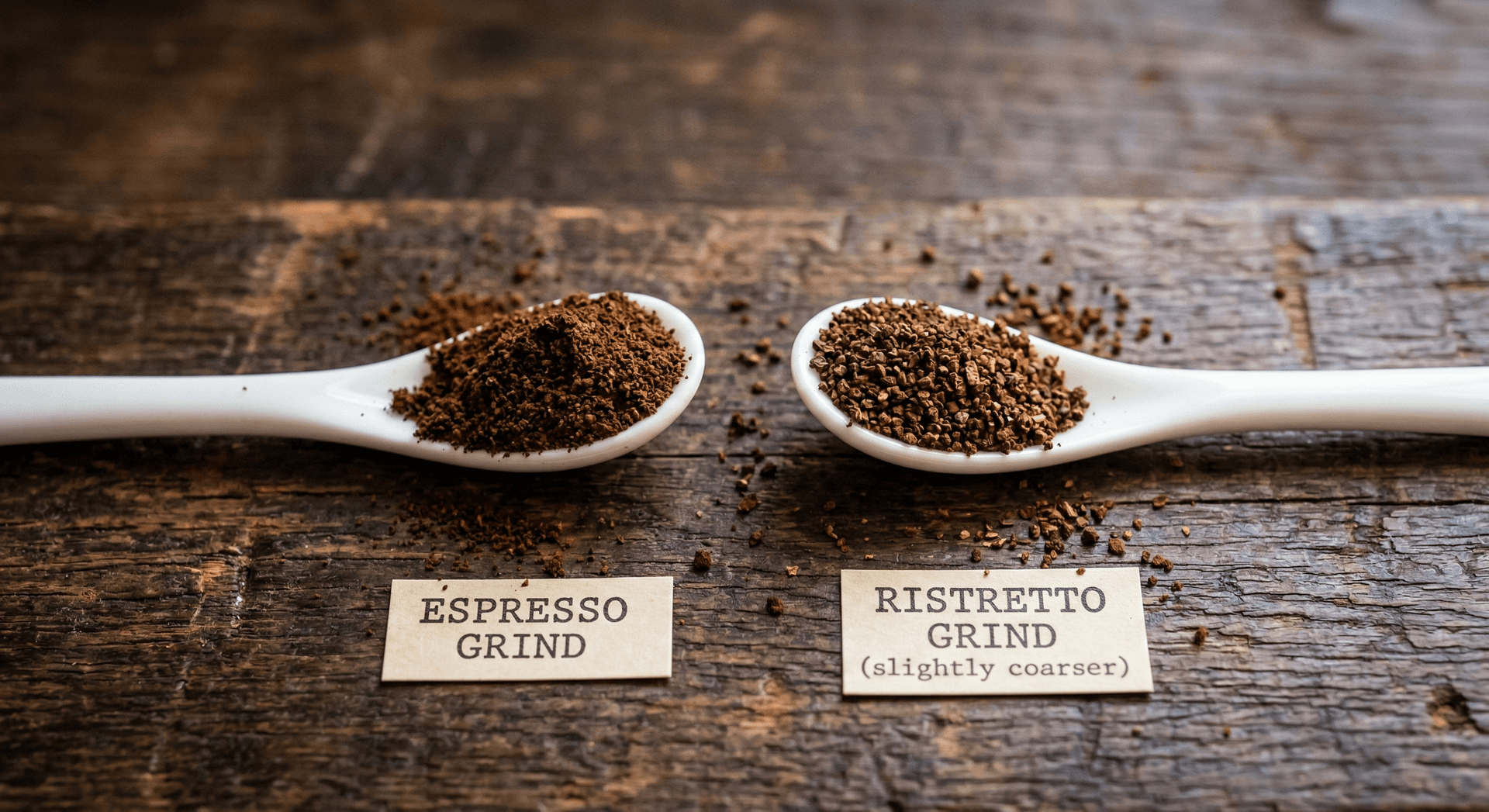
A ristretto requires a coarser grind than a standard espresso, not finer. Here's why: if you use the same fine espresso grind and just stop at 20g, the shot will stall or barely drip — you'll get nothing or an astringent mess. A slightly coarser grind lets water flow through in 14–20 seconds, but you stop before the bitter back-end arrives.
My Tested Grind Settings (Mazzer Mini E, Colombian Huila)
- Standard double: Setting 3.8 → 18g in / 36g out in 27 seconds
- Ristretto: Setting 4.2 (1–2 clicks coarser) → 18g in / 20g out in 17 seconds
- Both shots had proper espresso appearance and thick crema. The ristretto crema was marginally denser and more tiger-striped.
Temperature Note
Ristrettos benefit from the higher end of the standard range — 94–95°C rather than 92–93°C. The shorter extraction time means slightly higher temperature helps ensure proper dissolution of sweet compounds before the shot ends. If you're getting thin or flat ristrettos, temperature is often the cause. Bean freshness is equally critical — ristretto magnifies the quality of the espresso base. Our guide to picking espresso beans explains which roast levels and origins work best at restricted ratios.
When Would You Actually Want a Ristretto?
Three situations where I consistently reach for a ristretto over a standard double:
1. As the base for a flat white
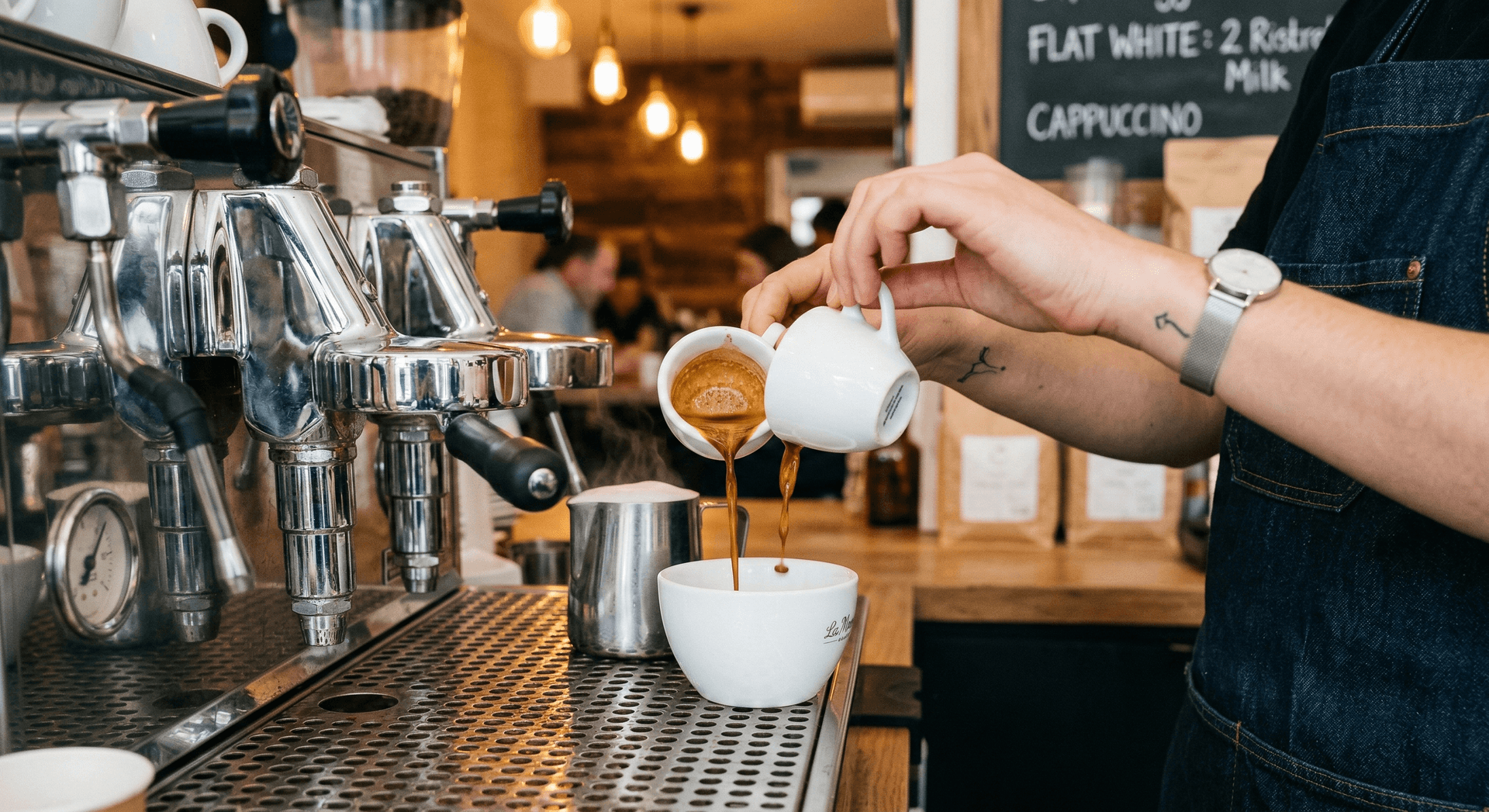
This is the most common use in specialty cafés. The ristretto's sweetness integrates beautifully with steamed whole milk — you get a more caramelised, sweeter flat white without adding any sugar. Starbucks uses ristretto shots for their flat whites, which is one of the better decisions they've made technically.
2. When using light-roasted single-origin beans
Light-roast espresso can get sharp and sour if over-extracted. Pulling a ristretto from a washed Ethiopian or Kenyan bean often transforms an aggressive shot into something floral, sweet, and complex. The restricted extraction respects the bean's brightness without letting it tip into harsh acidity.
3. After a heavy meal
The ristretto's low bitterness and high sweetness makes it an excellent post-meal digestif. Italian tradition of espresso after dinner actually makes more sense as ristretto — it's less harsh and doesn't interfere with the meal's flavor memory.
Ristretto vs Lungo: The Full Spectrum
While we're here, it's worth placing ristretto on the full espresso yield spectrum:
| Shot Type | Brew Ratio | Yield (from 18g) | Character |
|---|---|---|---|
| Ristretto ✓ | 1:1 to 1:1.2 | 18–22g | Sweet, dense, no bitterness |
| Standard Espresso | 1:2 | 36g | Balanced, slight bitter finish |
| Lungo | 1:3 to 1:4 | 54–72g | Bitter, thinner, more caffeine |
The lungo (Italian for “long”) is the opposite of ristretto — more water, longer extraction, more bitterness and a thinner body. Some people like the extra volume, but it's not my preferred approach for single-origin espresso.
Does Ristretto Have More Caffeine?
This is one of the most persistent myths about ristretto. No — a ristretto has slightly less caffeine than a standard espresso, not more.
Caffeine is extracted relatively uniformly throughout the espresso pull. A ristretto captures roughly 50–55% of the caffeine the same dose would produce as a standard double. You're extracting less of everything — including caffeine.
The misconception comes from the fact that ristretto tastes more intense — so people assume it must have more caffeine. Intensity of flavor and caffeine content are not the same thing. In informal testing measuring identical batches in concentration (not volume), a ristretto consistently runs about 5–8% lower in total caffeine than the equivalent standard double.
How Ristretto Fits Into Espresso Drinks
Ristretto is used as the base shot in several specialty drinks:
- Flat white (specialty version): Two ristretto shots + 4–5 oz steamed whole milk. The sweet, dense base integrates differently with milk than a standard double.
- Cortado (some preparations): A small number of Spanish bars use ristretto for cortados, though a standard double is more traditional.
- Gibraltar in third-wave cafés: Many specialty cafés use ristretto to create a more balanced 1:1 milk drink.
- Traditional macchiato: Some Italian baristas prefer ristretto for espresso macchiatos because the smaller volume is easier to “stain” with a single foam dollop.
For the complete picture of how espresso base shots interact with milk and how different drinks compare, see our macchiato vs latte guide — which covers how espresso intensity determines flavor balance across the full range of milk drinks.
Equipment Notes: Does Your Machine Matter?
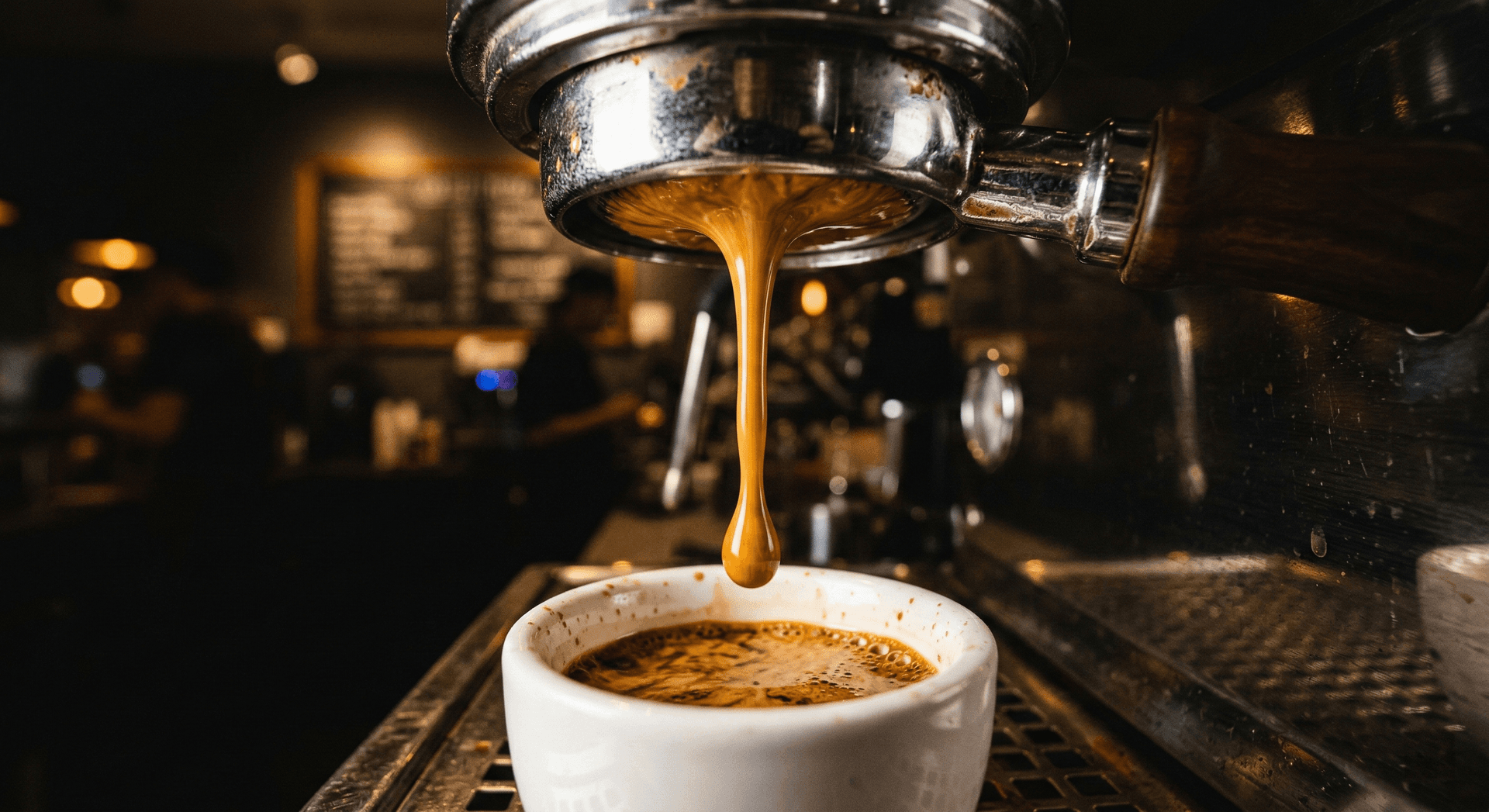
Yes — significantly. To pull a good ristretto, your machine needs consistent 9-bar pressure throughout the shot. This is exactly what distinguishes quality espresso machines from entry-level ones.
Here's the technical issue: at a coarser grind (required for ristretto), resistance in the puck is lower. Machines that already struggle to maintain 9 bars against fine espresso resistance will produce inconsistent pressure on a coarser ristretto grind, causing channeling and uneven extraction. The shot will taste thin or hollow despite stopping at the right weight.
Machines with good pump regulation and stable boilers — like the Gaggia Classic Pro, Breville Dual Boiler, or La Marzocco Linea Mini — handle ristretto reliably. Entry-level thermoblock machines can work, but you'll see more shot-to-shot variance.
Grinder precision matters at least as much as the machine. The coarser ristretto grind demands very consistent particle size — any wide distribution creates uneven flow that produces channeling before you hit your target yield. Our best coffee grinders guide covers every tested burr grinder from entry-level to prosumer so you can find the right match. For the full picture of how grind size, pressure, and temperature interact in espresso extraction, our complete espresso guide goes deep on the science behind every variable that determines shot quality.
Frequently Asked Questions
Frequently Asked Questions
A ristretto is a "restricted" espresso shot — pulled with the same coffee dose as a standard double (typically 18g) but stopped at roughly half the liquid yield (18–22g instead of 36g). The result is a sweeter, more concentrated, and noticeably less bitter espresso.
The name comes from the Italian word for "restricted," referring to the restricted water volume. It is the foundation shot for flat whites in most specialty cafés.
Get Coffee Tips
Join our newsletter for expert reviews and brewing guides.