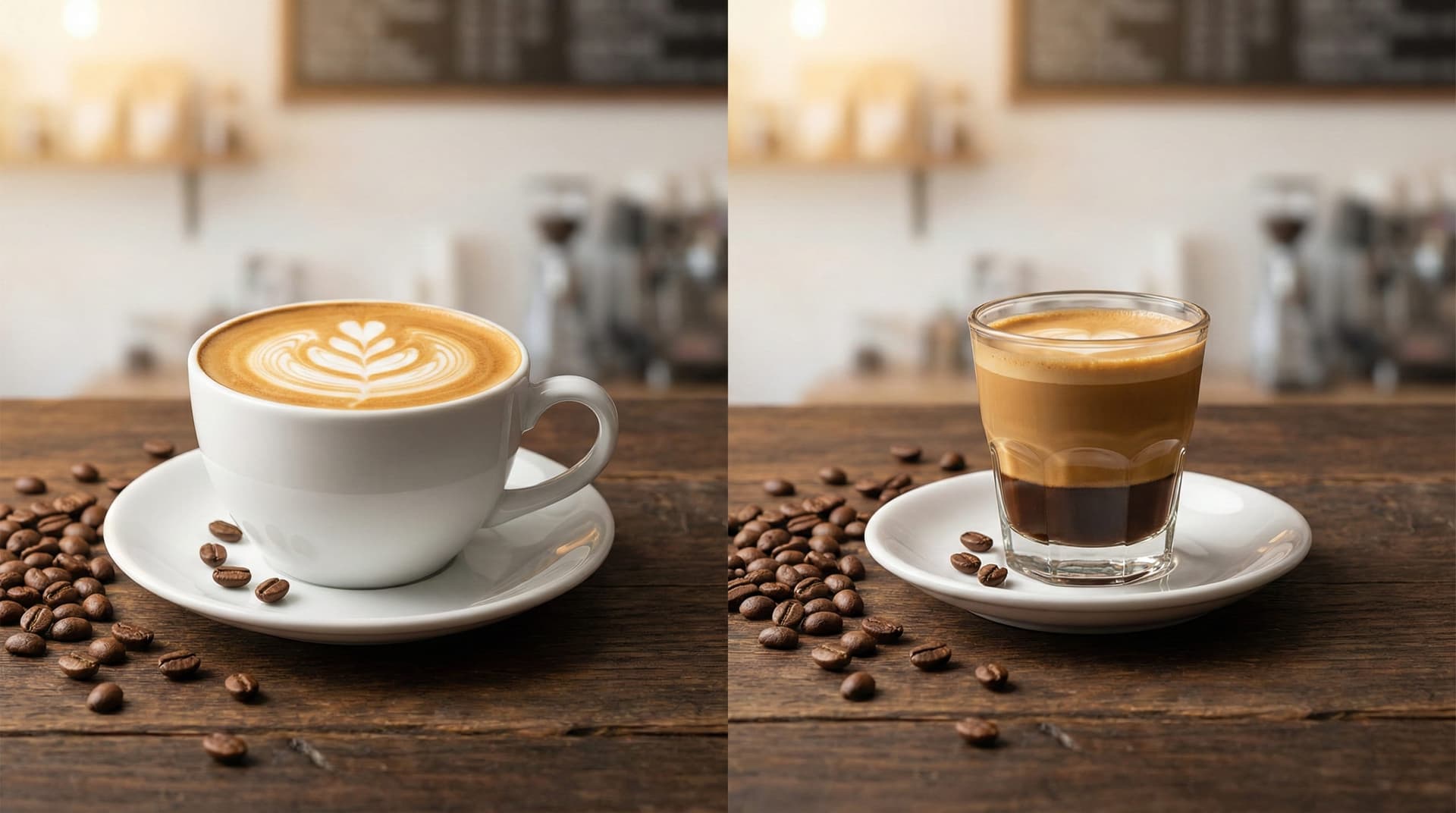
Latte vs Cortado: Which Espresso Drink Is Stronger?
Expert breakdown of strength, flavor intensity, and caffeine content
After fifteen years behind the espresso machine, I've learned that the difference between latte and cortado often comes down to what you mean by “stronger.” When it comes to cortado vs latte caffeine, both drinks are equal—each is built on the same double espresso shot, delivering 120–150mg. If you're asking which is stronger, latte or cortado, in terms of flavor the cortado wins decisively. And when latte vs cortado calories matter, cortado is the lighter choice at just 35–40 calories versus a latte's 180–220.
If you're asking about caffeine, latte and cortado contain the same amount. If you're asking about flavor intensity, cortado is stronger because it contains less milk.
Latte vs Cortado – Quick Answer
- More caffeine?Same (120–150mg)
- Stronger flavor?Cortado
- More milk?Latte
- Higher calories?Latte
- Better for beginners?Latte
Why This Question Gets Asked So Often
“Which is stronger—latte or cortado?” ranks among the most frequently asked questions in specialty coffee. The confusion stems from the word “stronger” itself, which coffee drinkers use to mean different things:
- Caffeine content: Will this keep me more awake?
- Flavor intensity: Which tastes more like coffee versus milk?
- Bitterness level: Which has more intense/bitter flavor?
- Perceived strength: Which feels more substantial or impactful?
The answer depends entirely on which definition you're using. This guide clarifies each dimension of “strength” so you can confidently choose the right drink for your needs.
The Answer: It Depends What You Mean by “Stronger”
Caffeine Content: TIE - Both contain 128-150mg (same double espresso shot)
Flavor Intensity: CORTADO WINS - 7/10 vs 4/10 due to 1:1 ratio vs 1:5 ratio
Caffeine Comparison: The Definitive Answer
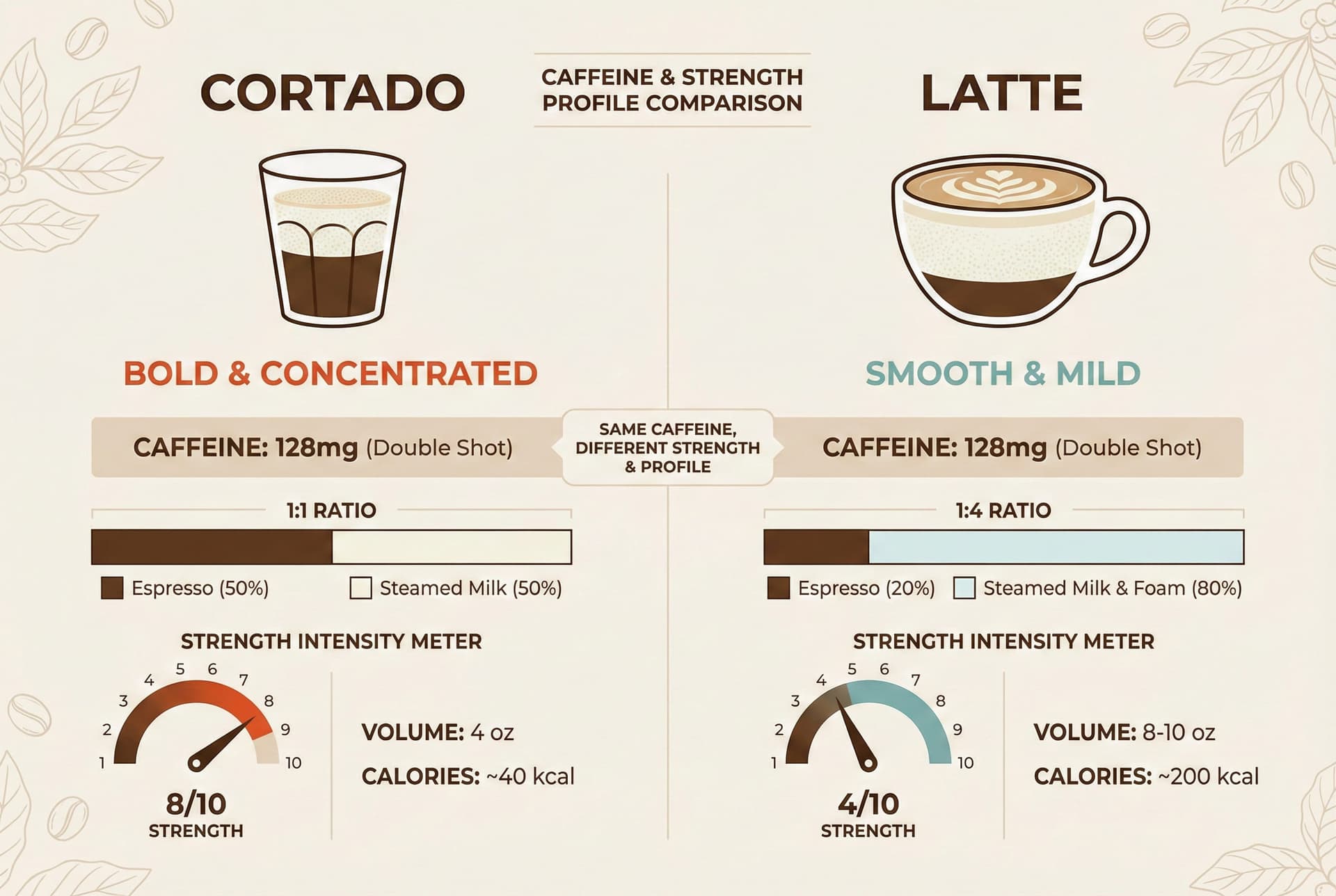
Let's settle this once and for all: latte and cortado contain identical caffeine when made with the same espresso shots. The size difference is all milk, which has zero caffeine.
Latte (8-16 oz, typically 12 oz)
- 2 oz espresso (double shot):128-150mg caffeine
- 8-10 oz steamed milk:0mg caffeine
- Total caffeine:128-150mg
Cortado (4 oz)
- 2 oz espresso (double shot):128-150mg caffeine
- 2 oz steamed milk:0mg caffeine
- Total caffeine:128-150mg
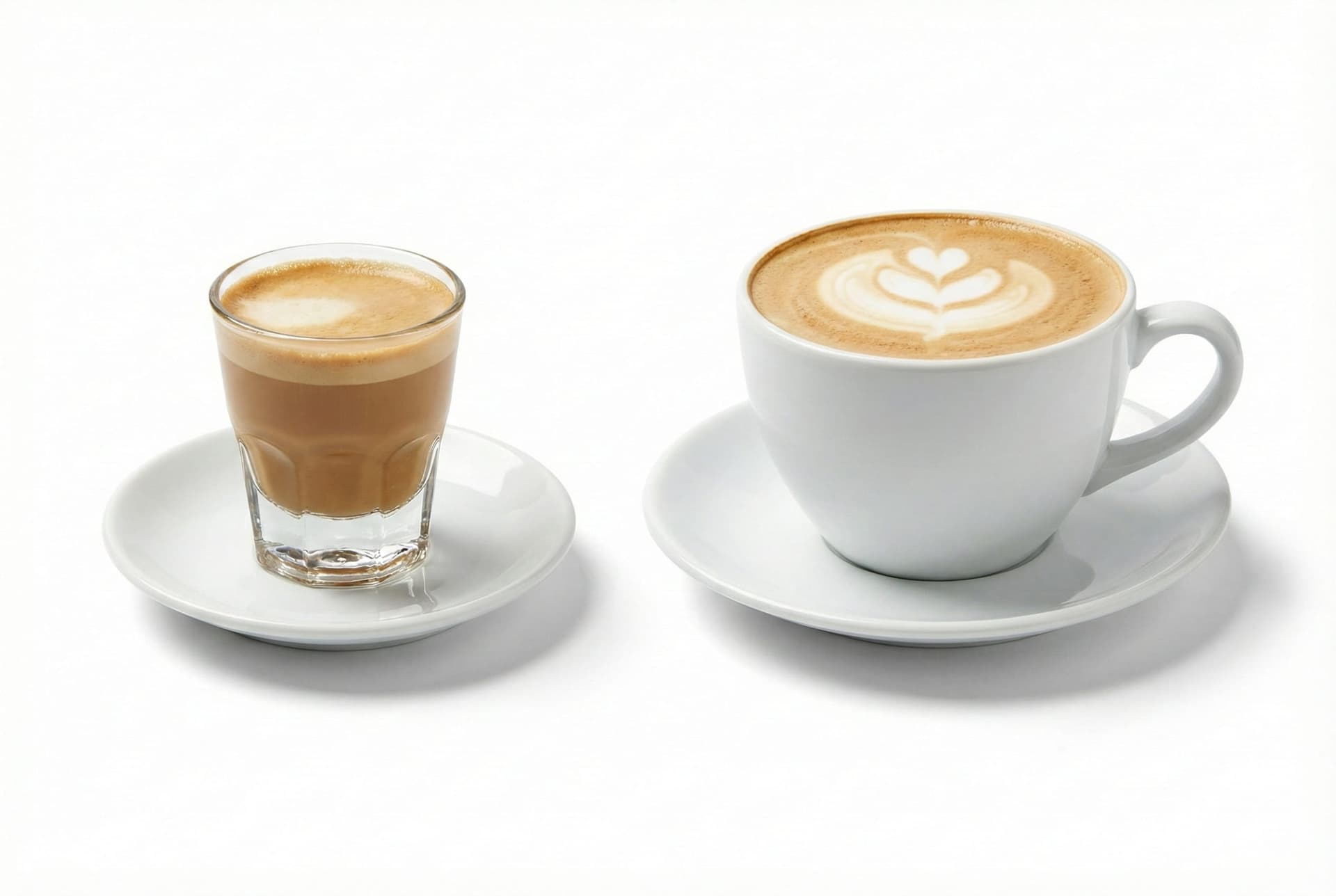
Key Caffeine Facts:
- Both drinks = same caffeine when using double espresso shots
- Milk has zero caffeine—it only dilutes flavor, not stimulant content
- Want more caffeine? Request triple shot (190-225mg) in either drink
- Single-shot versions (less common) deliver 64-75mg caffeine
- Espresso concentration doesn't matter for total caffeine—only shots used
Caffeine Absorption and Effects
While total caffeine is identical, absorption speed differs slightly due to milk content. Milk's fat and protein slow gastric emptying, potentially delaying caffeine absorption by 10-15 minutes. This means:
- Cortado: Less milk = faster absorption = slightly quicker caffeine hit (peaks around 30-45 minutes)
- Latte: More milk = slower absorption = more gradual caffeine delivery (peaks around 45-60 minutes)
The difference is minor and most people won't notice. Both drinks deliver peak caffeine effects within an hour and last 3-5 hours before metabolizing to half-concentration.
Flavor Intensity Comparison: Where Cortado Wins
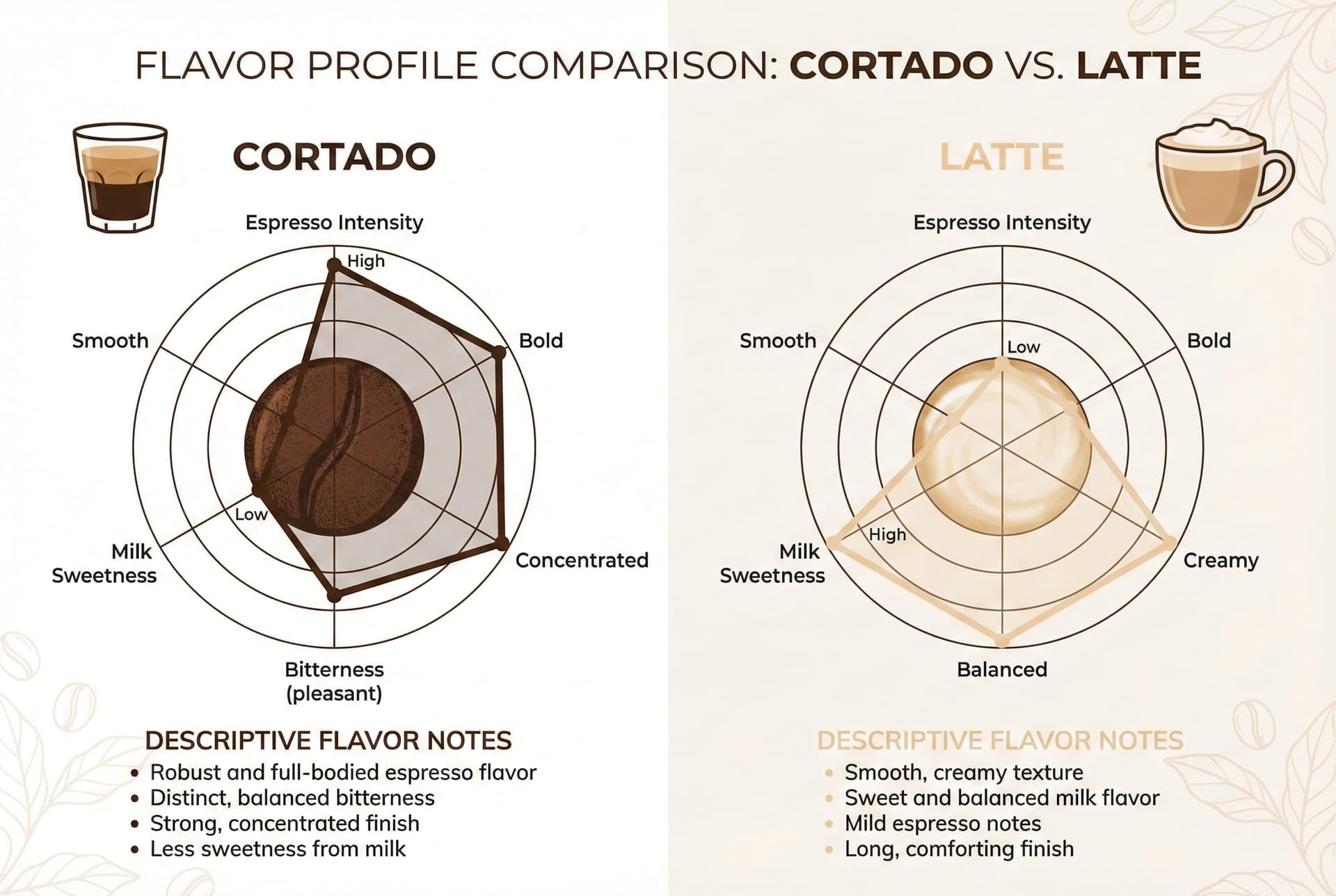
When people ask “which is stronger,” they usually mean flavor intensity—and here, cortado wins decisively. The difference isn't subtle; it's dramatic and immediately obvious from first sip.
| Feature | Latte | Cortado |
|---|---|---|
| Espresso:Milk Ratio | 1:5 (15-20% espresso, 80-85% milk) | 1:1 (50% espresso, 50% milk) |
| Flavor Intensity | 4/10 - Gentle, milk-forward | 7/10 - Bold, coffee-forward |
| Coffee Taste Prominence | Background - milk dominates | Foreground - coffee dominates |
| Total Size | 8-16 oz (typically 12 oz) | 4 oz (compact) |
| Consumption Time | 15-20 minutes (leisurely) | 4-6 minutes (quick) |
| Calories (whole milk) | 180-220 cal | 35-40 cal |
| Milk Volume | 8-14 oz | 2 oz |
| Foam Layer | 0.25-0.5" microfoam | 0.1-0.15" minimal foam |
Understanding the Ratio Impact
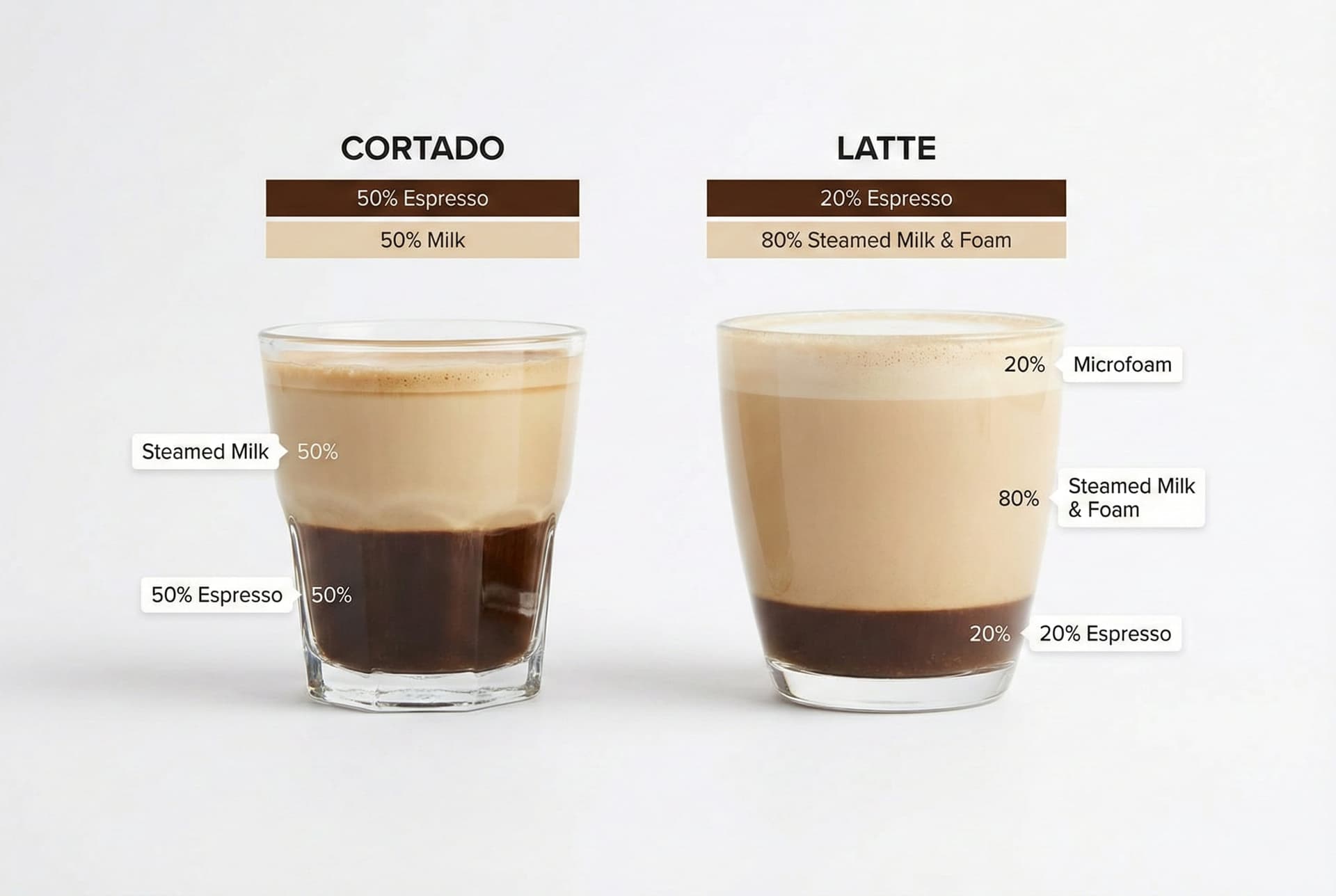
The 1:5 ratio (latte) versus 1:1 ratio (cortado) creates fundamentally different taste experiences:
Latte Experience
With only 15-20% espresso, every sip is predominantly milk. The espresso provides background flavor and color—coffee-flavored milk rather than milk-softened coffee. This makes lattes:
- Smooth and gentle—ideal for beginners
- Sweet from milk's natural lactose
- Subtle coffee flavor—won't overwhelm
- Forgiving of mediocre espresso—milk hides flaws
Cortado Experience
With 50% espresso, every sip delivers concentrated coffee character. The milk softens edges without masking flavor. This makes cortados:
- Bold and intense—for coffee lovers
- Less sweet—coffee flavor dominates
- Complex—origin characteristics shine through
- Unforgiving—quality espresso essential
💡 The cortado's 1:1 ratio means you taste 2.5x more espresso per sip compared to latte's 1:5 ratio. This isn't a subtle difference—it's the distinction between coffee-flavored milk and milk-softened coffee.
Latte: Complete Breakdown
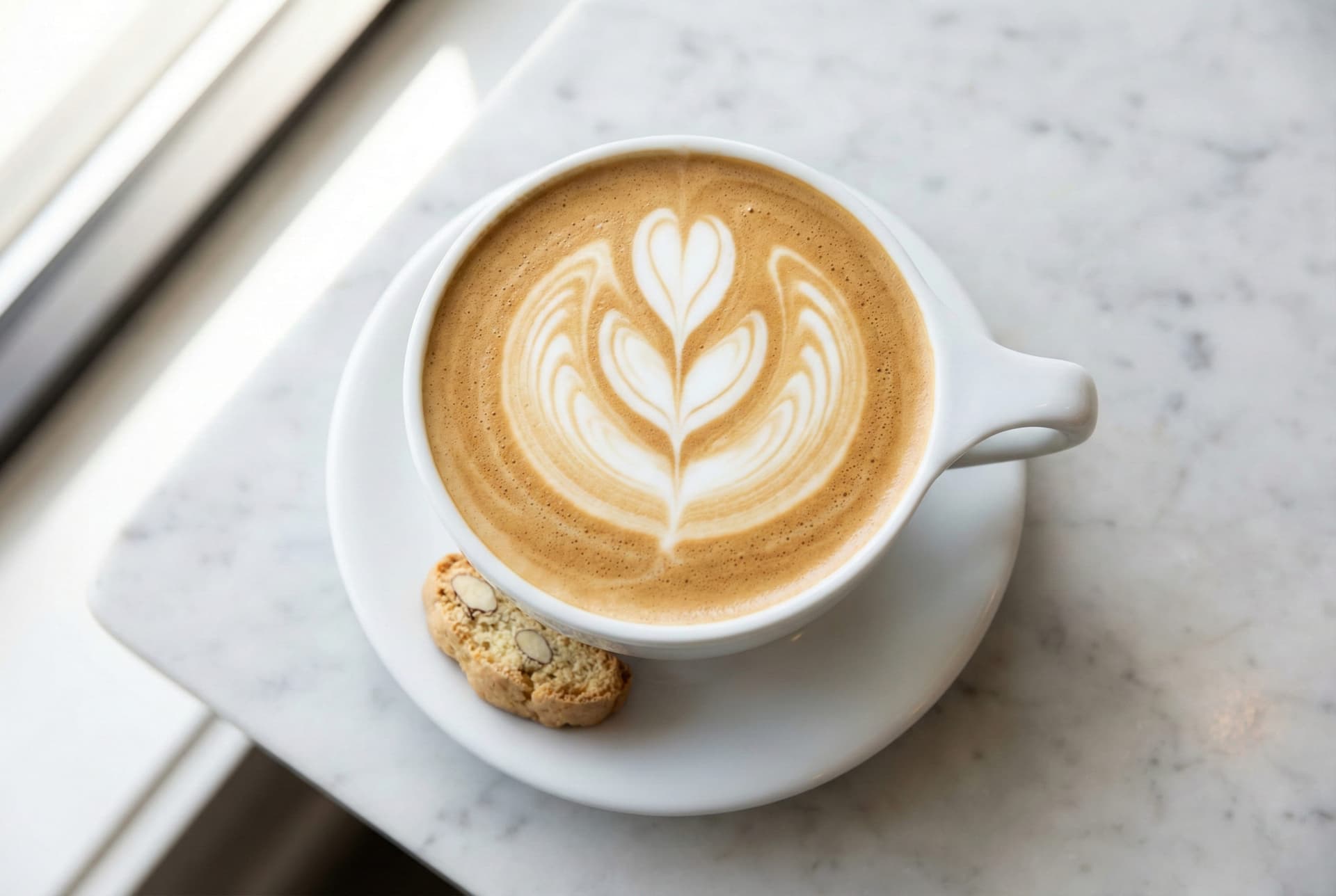
The caffè latte (Italian for “milk coffee”) represents the gentle end of the espresso spectrum—generous milk creating smooth, approachable coffee perfect for those who find straight espresso too intense. Originally an Italian breakfast drink, the latte evolved in America during the 1980s-90s to become the mainstream coffee shop standard.
Modern latte culture transformed what Italians intended as a simple morning beverage into an art form—literally, through elaborate latte art, and figuratively, through countless flavor variations (vanilla latte, caramel latte, seasonal spice lattes). Yet the traditional latte remains beautifully simple: espresso, steamed milk, thin microfoam layer. For a comparison with another milk-based classic, see our Macchiato vs Latte guide, and if you want to understand the traditional espresso macchiato versus latte macchiato in detail, our What Is a Macchiato guide covers both versions fully.
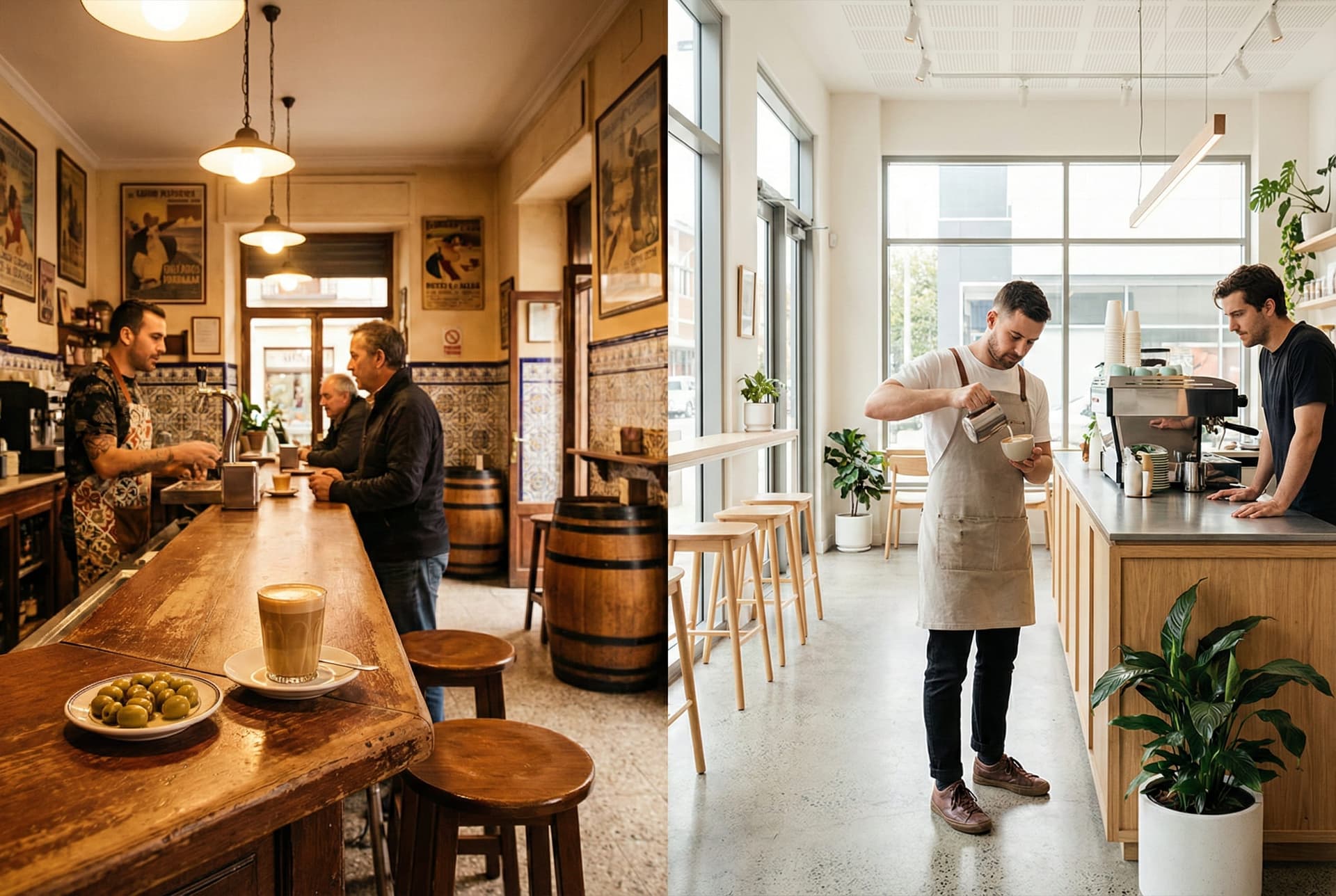
Complete Latte Composition
- Espresso base: 1-2 shots (1-2 oz), typically double shot for standard latte
- Steamed milk: 6-14 oz depending on size ordered (8-10 oz for standard 12 oz latte)
- Microfoam layer: 0.25-0.5 inch on surface—just enough for latte art
- Total volume: 8-16 oz (small to large), with 12 oz being most common
- Ratio: 1:4 to 1:6 espresso:milk (approximately 15-20% espresso, 80-85% milk)
- Temperature: 150-160°F—comfortable for immediate drinking
- Intensity rating: 4/10—gentle, approachable, milk-forward
- Calories: 180-220 with whole milk (12 oz standard)
- Protein: 12-14g from milk—substantial nutritional contribution
- Calcium: 300-400mg—nearly half daily requirement
Why Lattes Work
The latte's genius lies in its approachability without blandness. The generous milk serves multiple purposes:
- Softens intensity: Milk's fat and protein molecules bind with bitter compounds in coffee, making them less perceptible to taste buds. This creates smooth delivery even with boldly roasted beans.
- Adds natural sweetness: Steaming breaks down lactose into simpler sugars (galactose and glucose) that taste sweeter than cold milk. Well-steamed milk (150-160°F) tastes noticeably sweet without added sugar.
- Creates canvas for art: The thin microfoam layer on properly steamed latte allows baristas to pour intricate designs—hearts, rosettas, tulips, swans. This visual appeal enhances the overall experience.
- Provides substance: 12 oz latte delivers significant volume, making it feel like a proper beverage rather than quick shot. The 15-20 minute consumption time makes it suitable for extended cafe sessions or work meetings.
- Nutritional value: Unlike cortado's minimal milk, latte provides substantial protein and calcium—it's breakfast in a cup for many people.
Latte Taste Journey
First sip (immediate): Smooth, creamy texture dominates. Milk's sweetness hits first, followed by gentle coffee flavor in background. Temperature is perfect—warm and comforting without burning. The thin microfoam adds silky mouthfeel without being foamy. You taste coffee presence but it doesn't dominate—this is milk-forward beverage.
Mid-drink (5-12 minutes): Consistency remains uniform throughout most of the latte. Each sip delivers similar balance: predominantly milk with coffee accent. As drink cools to 140-145°F, you may detect subtle flavor notes that high heat initially masked—chocolate undertones, caramel sweetness, mild fruitiness depending on bean origin. The generous volume makes this extended drinking phase leisurely and social.
Final sips (12-20 minutes): Espresso concentration increases slightly at bottom as you've consumed most milk from middle of cup. However, the increase is subtle—latte maintains its gentle character even at the end. Temperature has dropped to 130-135°F, cool enough that you can drink more quickly. Well-made latte should taste pleasant from first to last sip without dramatic shifts.
Finish (aftertaste): Gentle milk-coffee aftertaste with prominent sweetness from milk sugars. The heavy milk content leaves coating on palate that prevents bitter compounds from lingering harshly. Aftertaste should be clean, pleasant, mildly sweet—lasting 3-5 minutes without turning sour or bitter.
Cortado: Complete Breakdown
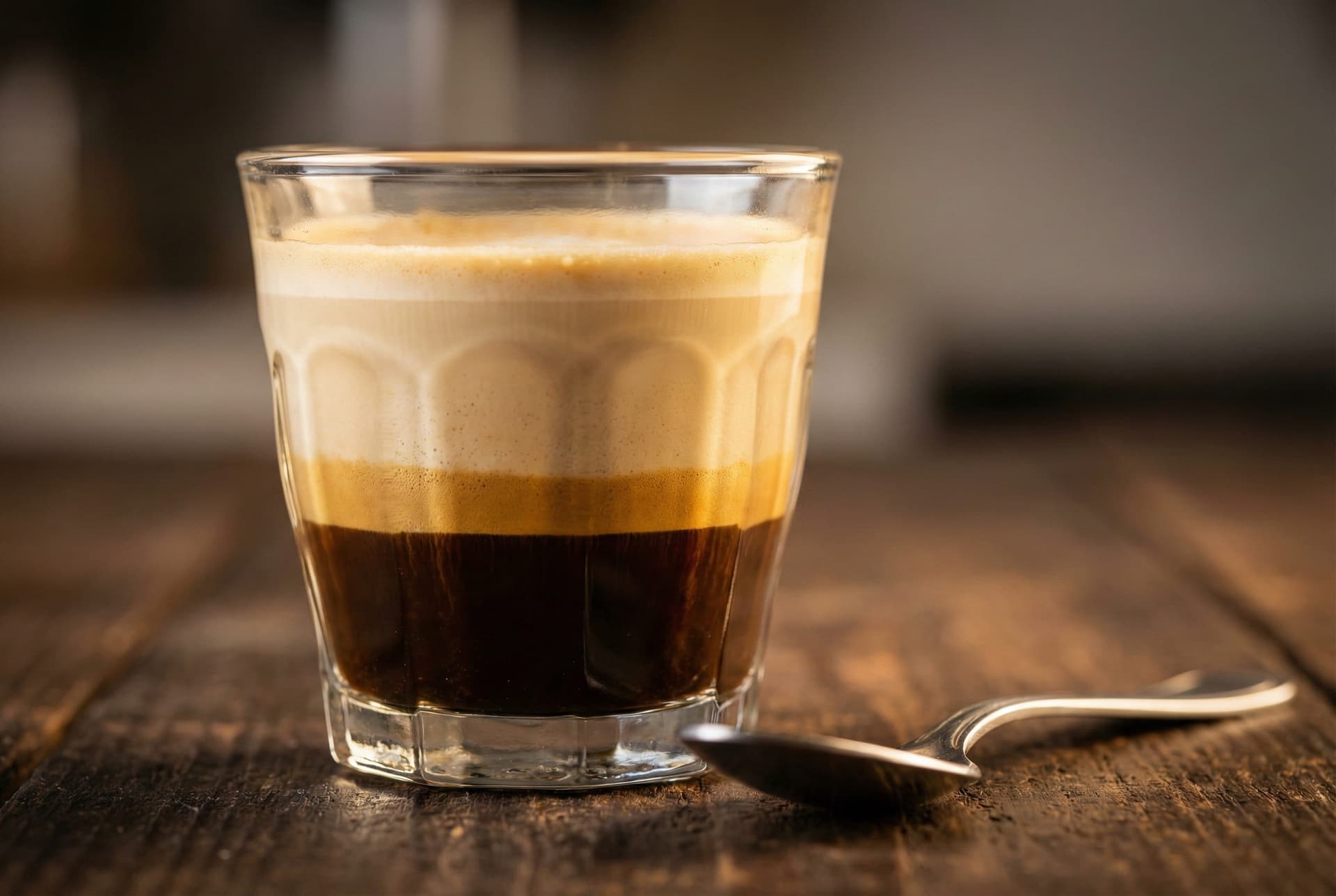
The cortado emerged from Spanish café culture in the 1960s as the perfect compromise: espresso's intensity softened just enough to be smooth, yet not so diluted that coffee character disappears. “Cortar” means “to cut” in Spanish—this is espresso cut with equal milk, creating perfect 1:1 balance.
Unlike latte's approachable gentleness, cortado targets experienced coffee drinkers who want bold flavor delivered smoothly. It's the drink you order when you love espresso but want to temper its sharp edges—when you want to taste the coffee, not just feel its caffeine effects. If you're looking for a middle ground between the cortado and the latte, our What Is a Flat White guide covers exactly where it fits. For a full three-way comparison, see our Flat White vs Cappuccino vs Cortado guide.
Complete Cortado Composition
- Espresso base: 2 oz (double shot)—provides bold foundation
- Steamed milk: 2 oz (equal to espresso)—softens without diluting
- Foam: Minimal 0.1-0.15 inch surface layer—barely present
- Total volume: 4 oz (compact, concentrated)
- Ratio: Perfect 1:1 (50% espresso, 50% milk)
- Temperature: 155-165°F—immediately drinkable
- Intensity rating: 7/10—coffee-forward while remaining smooth
- Calories: 35-40 with whole milk (minimal caloric impact)
- Protein: 2-3g—nominal
- Calcium: 60-80mg—minor contribution
Why Cortado Works
The cortado achieves something difficult: maximum coffee flavor with minimum harshness. The precise 1:1 ratio creates balance:
- Preserves origin characteristics: With only 50% milk versus latte's 80-85%, you taste beans' natural flavors clearly. Ethiopian brightness, Colombian body, Brazilian nuttiness—all come through distinctly.
- Smooths without masking: The 2 oz milk is just enough to soften espresso's sharp acidity and potential bitterness. It doesn't hide flavor; it reveals it by removing harsh elements that might otherwise dominate palate.
- Perfect temperature control: Small volume means drink reaches ideal temperature quickly and stays there. No waiting for cappuccino to cool or rushing to finish latte before it gets cold.
- Efficiency: 4-6 minute consumption time makes cortado perfect for quick coffee break. You get serious coffee flavor without extended time commitment.
- Minimal calories: At 35-40 calories, cortado delivers coffee satisfaction without dietary impact. Perfect for those watching calorie intake or having multiple coffees daily.
Cortado Taste Journey
First sip (immediate): Bold espresso flavor hits immediately—this is coffee-forward drink from first contact. The milk provides smoothness and subtle sweetness but doesn't mask espresso's character. You taste everything: origin notes, roast profile, extraction quality. Temperature is perfect for immediate drinking—no wait time needed. Mouthfeel is liquid-smooth (minimal foam) with just enough milk richness to create satisfying body.
Mid-drink (2-4 minutes): Remarkable consistency throughout. The 1:1 ratio prevents layer separation—cortado tastes the same at halfway point as it did initially. This predictability is intentional: you know exactly what you're getting from start to finish. As it cools slightly (150-155°F), subtle complexity emerges—fruit notes in light roasts, chocolate in medium roasts, caramel in darker roasts. The minimal milk means bean quality shines through completely.
Final sips (4-6 minutes): Balance persists to the end. Because espresso and milk were equal from start, you don't get cappuccino's espresso-heavy finish or latte's milk-heavy persistence. Last sip delivers same coffee-forward character as first—just cooler. This consistency makes cortado reliable: if you liked the first sip, you'll like the last.
Finish (aftertaste): Clean espresso finish with subtle milk sweetness. Because there's less milk than latte, coffee aftertaste is more prominent—but not harsh. Quality espresso leaves pleasant complexity: fruit, chocolate, caramel, or nutty notes depending on origin. Aftertaste should linger pleasantly for 4-6 minutes, revealing espresso's true character without bitter harshness.
Preparation Techniques for Perfect Results
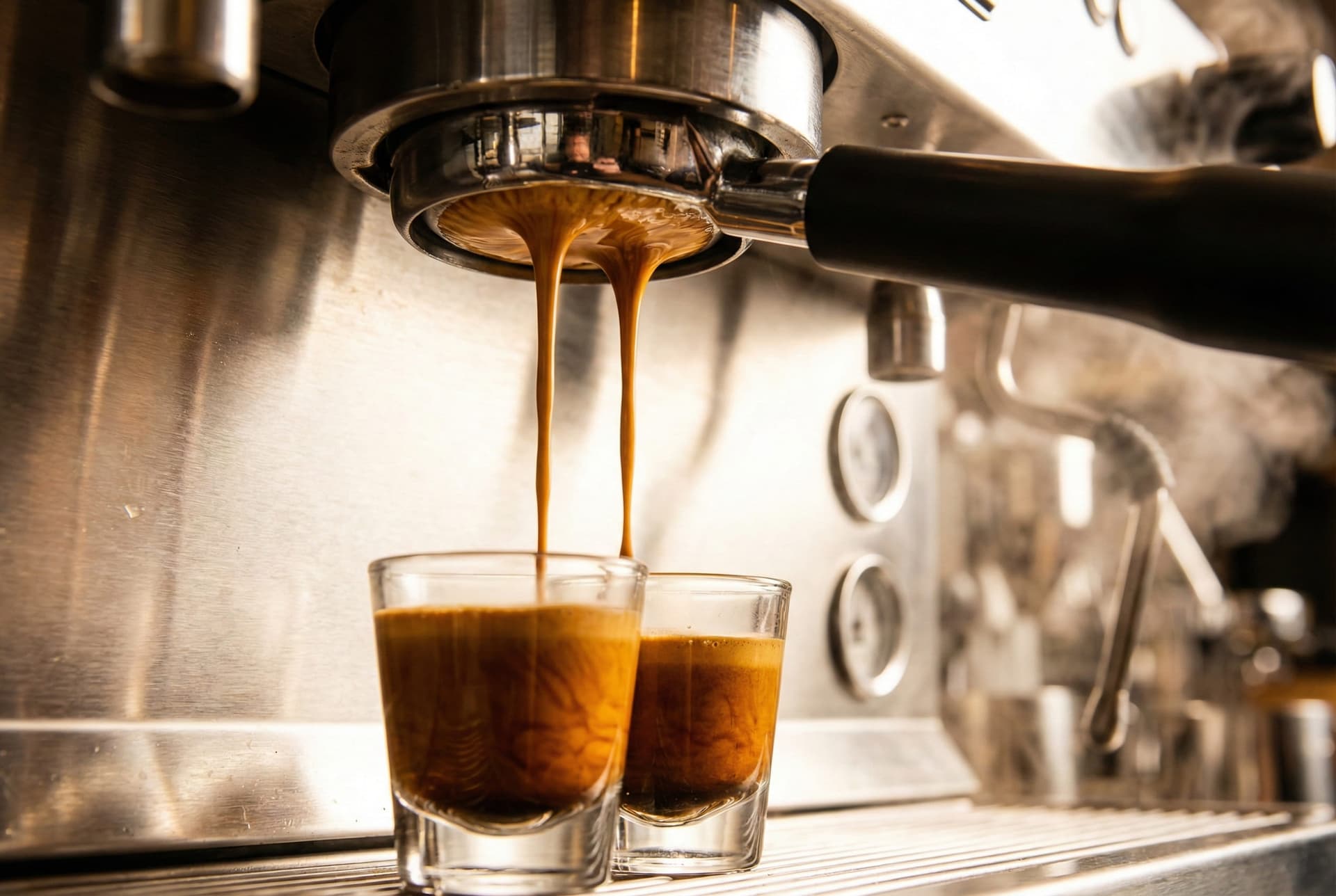
Making excellent lattes and cortados requires understanding espresso extraction and milk steaming fundamentals. While the drinks share espresso base and steamed milk, the techniques differ significantly due to volume and ratio requirements. For a deeper primer on espresso, visit our What Is Espresso guide. For a dedicated deep-dive on the cortado's ratio, glassware, and step-by-step recipe, see our What Is a Cortado guide.
Latte Step-by-Step
- Pull double espresso: Use 18-20g ground coffee, extract 2 oz in 25-30 seconds targeting rich golden crema. Pour immediately into preheated 12-16 oz cup (or size ordered).
- Steam milk with light aeration: Use 10-12 oz cold whole milk in 20 oz pitcher. Introduce air for 3-4 seconds (brief hissing sound). Goal is microfoam integrated throughout, not thick foam layer.
- Create rolling vortex: After brief aeration, submerge steam wand to create whirlpool effect. This breaks up bubbles while continuing to heat milk evenly.
- Heat to 150-160°F: Stop when pitcher feels very hot but still touchable. Over-heating (165°F+) destroys sweetness and creates scalded taste.
- Tap and swirl thoroughly: Tap pitcher 2-3 times on counter to collapse large bubbles. Swirl vigorously for 15-20 seconds until milk looks like glossy wet paint—uniform texture without visible bubbles.
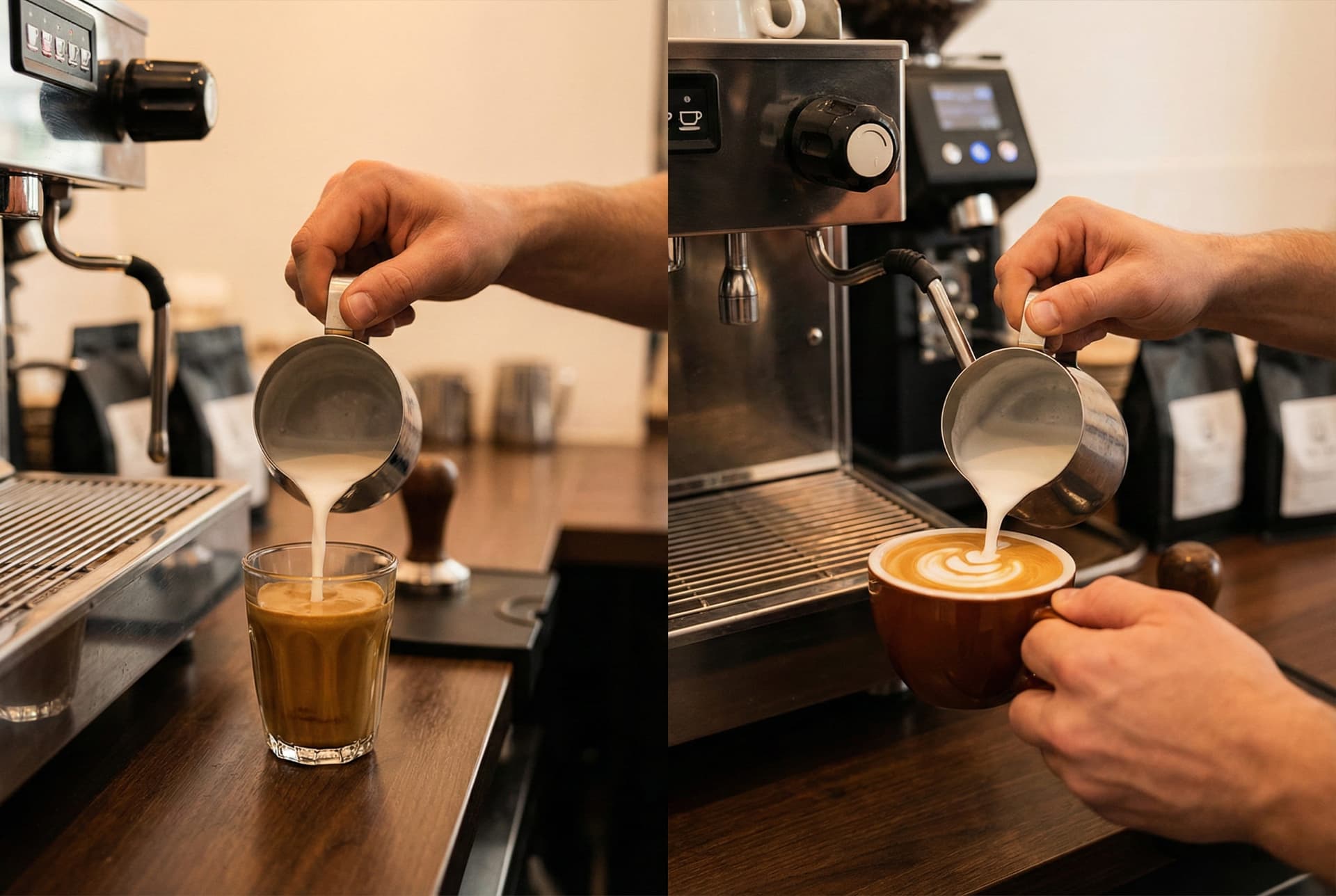
- Pour with latte art technique: Start pour from 2-3 inches height to mix with espresso. As cup fills to 70%, lower pitcher close to surface and increase flow to create art (heart, rosetta, tulip).
- Serve immediately: Latte should be ready to drink instantly. Optimal drinking temperature is 140-150°F—comfortable without burning tongue.
Cortado Step-by-Step
- Pull double espresso: Extract 2 oz using 18-20g ground coffee in 25-30 seconds. Pour into preheated 4-5 oz Gibraltar glass or small ceramic cup.
- Steam milk with minimal aeration: Use exactly 3-4 oz cold milk in 12 oz pitcher (smaller pitcher for better control). Introduce air for only 2-3 seconds—barely audible hissing. Goal is heated liquid milk, not foam.
- Heat to 145-150°F only: Cortado requires cooler milk than latte. As soon as pitcher feels warm (not hot), you're done. Over-heating creates unwanted foam and ruins the drink's character.
- Skip tapping, minimal swirl: Cortado milk should be liquid enough that tapping isn't necessary. Quick swirl to ensure even temperature distribution.
- Pour gently and directly: Pour from 1-2 inches height straight into espresso center. Goal is smooth integration, not latte art or layering. Pour should be controlled and steady.
- Serve immediately in proper vessel: Traditional Gibraltar glass or 4-5 oz cup shows the beautiful gradient where espresso meets milk. Drink is ready for instant consumption.
Espresso Extraction Fundamentals (Both Drinks)
Both latte and cortado depend on quality espresso extraction. Poor extraction ruins even perfect milk technique:
- Use fresh beans: Roasted within 2-4 weeks. Stale beans (4+ weeks old) lose flavor complexity and produce flat, bitter shots that no amount of milk can fix.
- Grind immediately before brewing: Pre-ground coffee loses aromatics within minutes. Invest in quality burr grinder ($200+ minimum for espresso).
- Dose consistently: Use scale to measure 18-20g for double shot. Variation of even 1g affects extraction dramatically.
- Distribute evenly: Use WDT tool (Weiss Distribution Technique) or distributor to break up clumps and create level coffee bed. Uneven distribution causes channeling.
- Tamp firmly and level: 30 lbs pressure, perfectly level. Uneven tamping creates channels where water flows too quickly, under-extracting coffee.
- Target 25-30 second extraction: Too fast (under 25 seconds) = sour, weak. Too slow (over 35 seconds) = bitter, harsh. Adjust grind size to hit target time.
- Look for golden crema: Rich, golden-brown crema indicates proper extraction. Pale/thin crema = under-extraction. Dark/patchy crema = over-extraction.
Common Mistakes and How to Avoid Them
Universal Mistakes (Both Drinks)
- ✗Using stale beans: Coffee degrades rapidly after roasting. Beyond 4 weeks, flavor is noticeably compromised. Always check roast date, never buy beans without visible roast date, and store in airtight container away from light/heat.
- ✗Over-heating milk: Temperature above 165°F destroys milk's natural sweetness and creates scalded taste. Always stop at 155-160°F maximum. If pitcher is too hot to touch, you've gone too far.
- ✗Wrong grind size: Most common extraction problem. Too fine = bitter, over-extracted. Too coarse = sour, under-extracted. Adjust grinder in tiny increments and test. Target 25-30 second extraction.
- ✗Not preheating cups: Cold cups drop drink temperature 10-15°F instantly. Warm cups with hot water before pulling shots. This simple step dramatically improves drink quality.
- ✗Dirty equipment: Coffee oils turn rancid within days. Backflush espresso machine daily, clean steam wand after every drink, replace portafilter screens monthly, deep clean grinder weekly.
Latte-Specific Mistakes
- Under-aerating milk: Insufficient aeration creates flat texture without silky microfoam. Need 3-4 seconds of audible hissing to create proper texture.
- Large bubbles: Indicates poor technique—insufficient vortex motion failed to break up bubbles. Should tap pitcher firmly to collapse large bubbles before pouring.
- Pouring too high: Pouring from 6+ inches height prevents latte art and creates excessive surface foam. Start high (2-3 inches), lower as cup fills.
- Using skim milk for home lattes: Skim milk foams but lacks body and sweetness. If managing calories, use 2% minimum—worth the slight calorie increase for vastly better taste and texture.
- Oversizing: 16-20 oz lattes at chains are milk with coffee hint. Order 8-12 oz maximum for proper ratio, or request extra shot in larger sizes.
Cortado-Specific Mistakes
- Wrong ratio: Most common error. Some cafés serve 2 oz espresso with 3-4 oz milk and call it cortado. Not accurate—authentic cortado is strict 1:1 ratio (2 oz + 2 oz).
- Too much foam: Visible thick foam layer means wrong steaming technique. Cortado should be liquid steamed milk with barely-there surface foam.
- Over-heating milk: Temperature above 150°F creates unwanted foam. Cortado requires gentler heating than latte—145-150°F maximum.
- Using mediocre espresso: Cortado's minimal milk means quality matters enormously. Stale beans, poor extraction, or dirty equipment show immediately. Always use freshest possible beans.
- Excessive aeration: More than 3 seconds aeration creates too much foam. Keep aeration minimal for liquid texture.
- Wrong vessel: Served in large cup, cortado looks tiny and inadequate. Proper 4-5 oz Gibraltar glass or small ceramic cup presents the drink appropriately.
When to Choose Each Drink
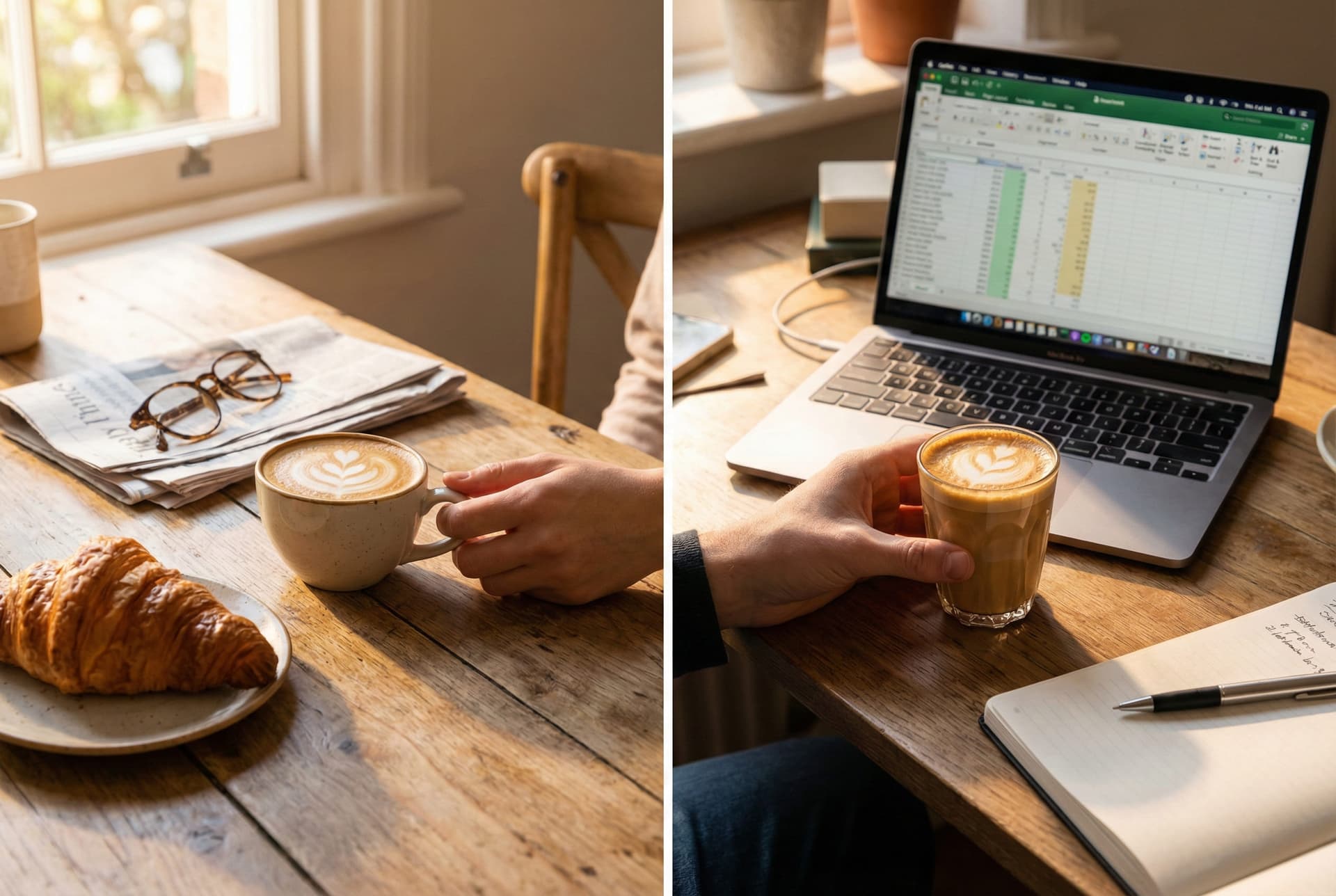
Choose Latte If:
- You want smooth, approachable coffee
- You prefer gentle coffee flavor
- You need longer drink (15-20 minutes)
- You want substantial volume
- You're using coffee as meal replacement (180-220 cal)
- You love creamy texture and latte art
Choose Cortado If:
- You want strong coffee flavor
- You love espresso character
- You need quick hit (5 minutes)
- You prefer minimal volume
- You're watching calories (35-40 cal)
- You want to taste bean characteristics
Taste Experience
Latte Experience
- First sip: Smooth, creamy, gentle coffee presence
- Mid-drink: Milk sweetness dominates, coffee provides background
- Finish: Mild coffee aftertaste, mostly milk coating
- Description: Coffee-flavored milk — smooth and approachable
Cortado Experience
- First sip: Bold coffee hit, immediate espresso character
- Mid-drink: Balanced integration, neither dominates
- Finish: Clean espresso finish with subtle milk sweetness
- Description: True coffee-milk balance — bold yet smooth
Equipment for Home Preparation
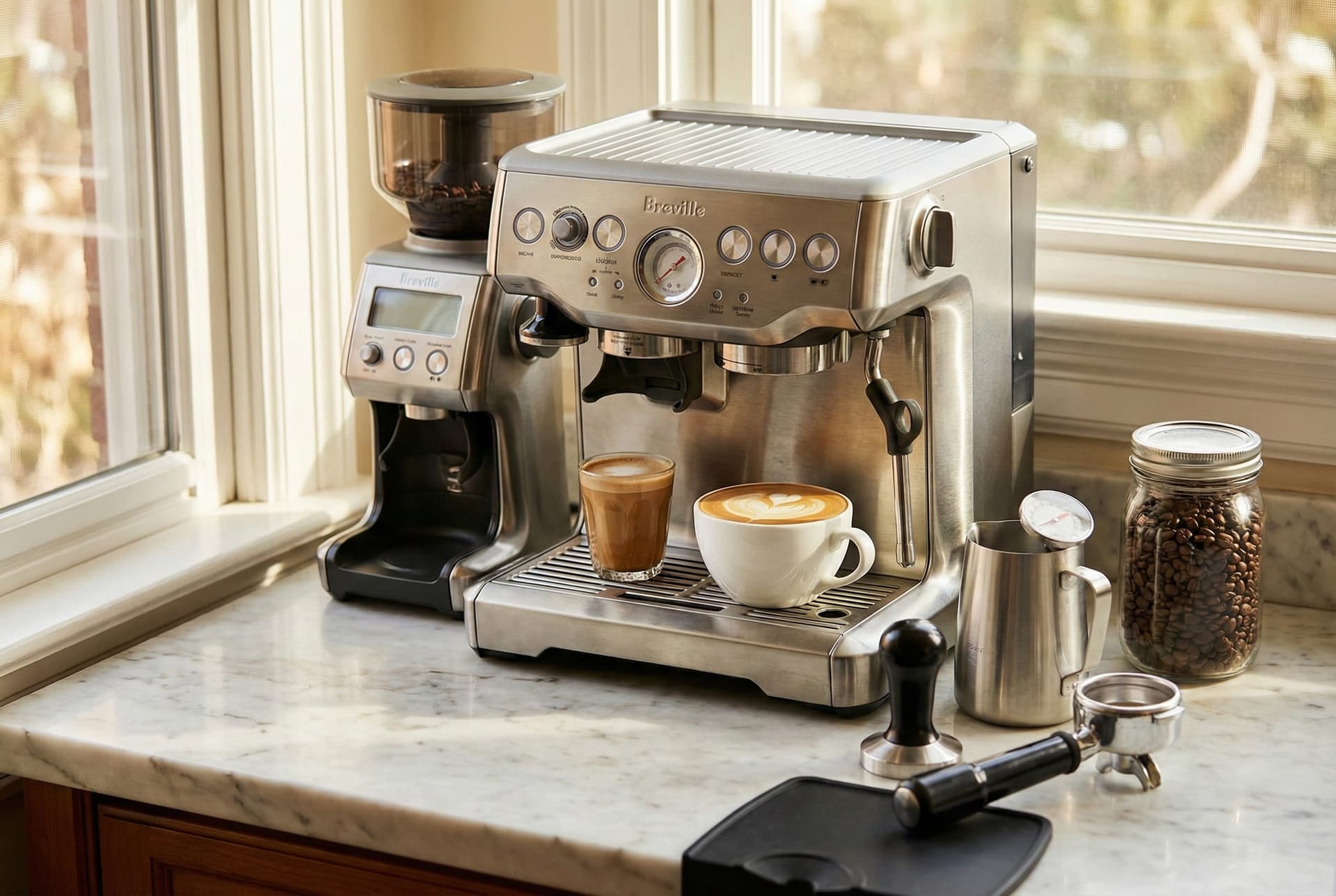
Making café-quality lattes and cortados at home requires proper equipment. After testing hundreds of machines, here are my recommendations for different budgets.
Essential Equipment Checklist
- ✓Espresso machine with steam wand: Minimum 9 bars pressure, powerful steam (1000W+ boiler preferred). Budget: $300-2000+
- ✓Quality burr grinder: Stepless or micro-step adjustment essential. Budget: $200-800
- ✓Milk pitcher: 12 oz for cortado, 20 oz for latte. Stainless steel with spout. Budget: $15-40
- ✓Thermometer (initially): Clip-on or instant-read for milk. Budget: $10-25
- ✓Scale (0.1g precision): For weighing coffee dose consistently. Budget: $15-50
- ✓Proper cups/glasses: 12-16 oz ceramic for latte, 4-5 oz Gibraltar glass for cortado. Budget: $5-15 each
Machine Recommendations by Budget
Budget ($300-500)
Breville Bambino Plus ($350-400): Best entry-level machine. Fast heat-up, automatic milk frothing option, compact design. Decent steam power for both lattes and cortados with practice. Limitations: smaller water tank, less temperature stability.
Best for: Beginners who want quality without huge investment.
Mid-Range ($500-1000)
Breville Barista Express ($600-700): Built-in grinder, PID temperature control, powerful steam wand. Great all-in-one solution producing excellent lattes and cortados. Limitations: integrated grinder less flexible for future upgrades.
Gaggia Classic Pro ($449-$499): Commercial-style components, excellent steam power, huge modding community. Produces café-quality drinks with skill. Limitations: requires manual control, no PID (can be added).
Best for: Enthusiasts ready to develop barista skills.
Enthusiast ($1000-2000)
Rancilio Silvia Pro ($1700-1900): Dual boiler (steam and brew simultaneously), PID control, commercial build. Makes professional-level lattes and cortados. Limitations: large footprint, premium price.
Lelit Elizabeth ($1400-1600): Dual boiler, PID, excellent steam power, flow profiling. Outstanding value. Produces café-indistinguishable results.
Best for: Serious home baristas wanting pro-level results.
Grinder Importance
Don't skimp on grinders. A $200 grinder with $400 machine produces better espresso than $800 machine with $50 grinder. Grind quality directly affects extraction.
- Budget: Baratza Encore ESP ($200): Entry-level espresso grinder with stepless adjustment. Produces acceptable grind consistency for learning.
- Mid-range: Baratza Sette 270 ($400): Specifically designed for espresso, micro-step adjustment, excellent particle uniformity. Makes dialing in easy.
- Premium: Niche Zero ($600-700): Single-dose workflow, professional-level grind quality, quiet operation. Produces café-level consistency.
- Professional: Eureka Mignon Specialita ($500-700): Commercial build quality, exceptional consistency, stepless adjustment. Café-level performance at home.
Frequently Asked Questions
Ratio is everything. The same espresso diluted with 5x more milk (latte) vs equal milk (cortado) creates dramatically different taste experiences.
Your taste buds detect concentration, not total amount. Think of it like orange juice concentrate vs diluted juice—same vitamin C, vastly different intensity.
The Bottom Line
If you're asking about caffeine: They're identical (128-150mg).
If you're asking about flavor intensity: Cortado is dramatically stronger (7/10 vs 4/10).
Most people asking “which is stronger” actually want to know about flavor intensity—in that case, cortado wins decisively.
Get Coffee Tips
Join our newsletter for expert reviews and brewing guides.