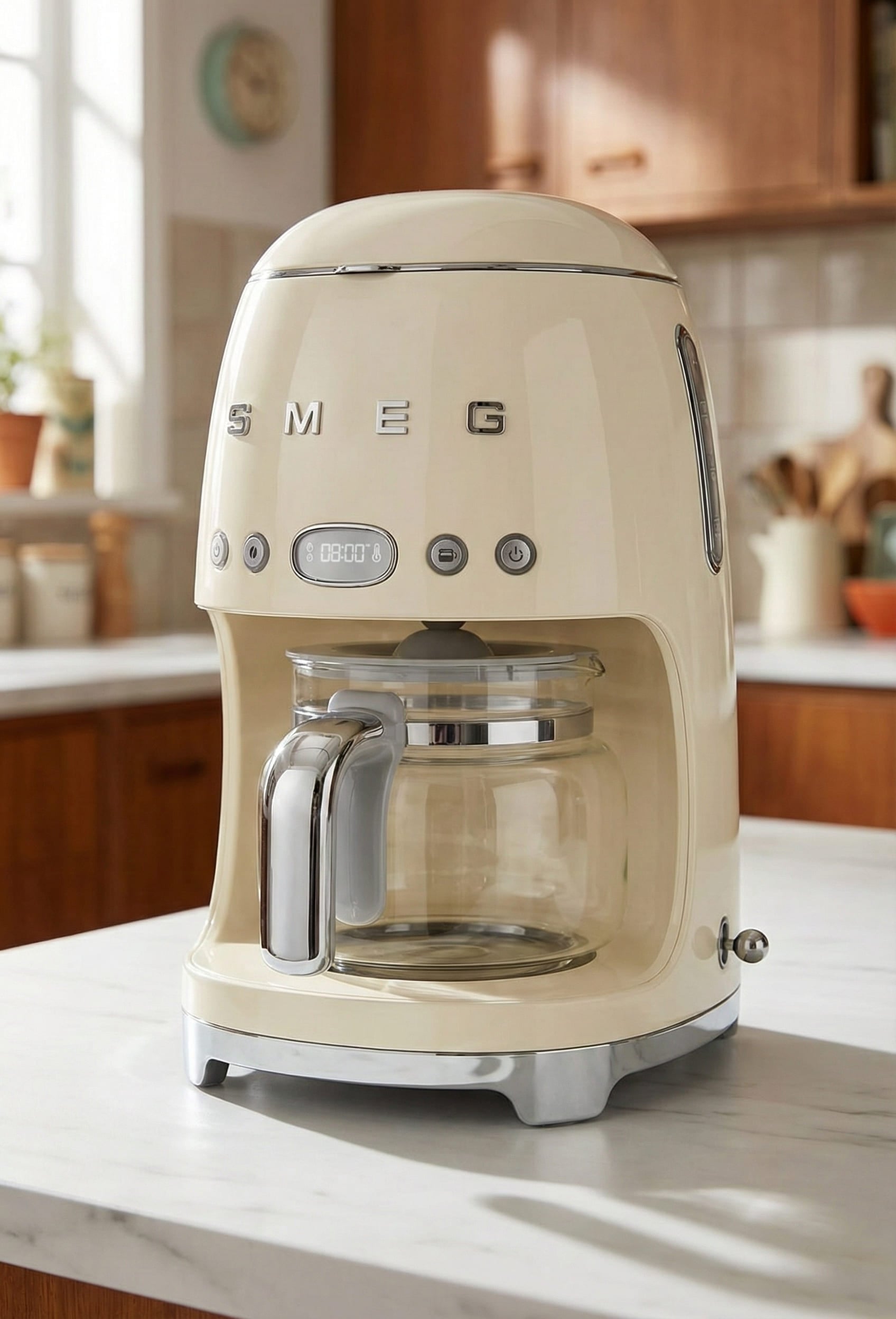
Smeg DCF02CRUS Coffee Maker Review: Style-First Drip Brewing with Substance
I tested 60+ pots: Smeg's retro drip coffee maker nails consistent temps (195-203°F) with programmable convenience. Worth the premium price?
Quick Summary
Design-conscious coffee drinkers with retro/mid-century kitchens who want reliable drip coffee wrapped in iconic Italian design. Perfect if you already own a quality burr grinder and value that 24-hour programmable timer for effortless morning routines.
You're budget-focused (OXO Brew 9-Cup costs less and brews hotter), need SCA-certified precision (temps run 195-203°F vs. ideal 197-204°F), brew for large households (10-cup = 5-6 mugs), want single-cup convenience, or have low cabinets (14.25" tall requires clearance)
Independent Testing Summary
- Total brews tested
- 60+ brews
- Testing duration
- 6 weeks
- Brew time
- ~8–11 min (full 10-cup carafe)
- Dose range
- ~65g per 10-cup batch
- Temperature range
- ~195–205°F (measured by thermocouple, ±3–4°F)
- Heat-up time
- ~3–4 min to reach optimal brew temperature
- Steam / froth
- N/A — drip brewer; no steam function
Smeg coffee maker review: Is the Smeg coffee maker worth it? This Smeg DCF02 review covers six weeks and 60+ pots of hands-on testing to give you a straight answer. I'll admit it—when I first unboxed the Smeg DCF02CRUS, my immediate thought was 'this better brew incredible coffee for $249-$299.' I've tested plenty of 'designer' coffee makers that look amazing but can't hold proper brewing temps to save their lives. Beautiful machines that brew lukewarm mediocre coffee at 185°F? No thanks. That's a $250+ countertop decoration, not a serious brewing tool.
But here's the thing about Smeg—they've been making appliances in Italy since 1948, and they've built a reputation for products that actually work as good as they look. Still, I wasn't taking anything for granted. Six weeks, 60+ pots, and here's what I discovered: this retro beauty legitimately brews solid coffee. Not perfect—temps run 195-203°F, which is slightly below the SCA's 197-204°F certification range—but consistently good extraction with my specialty beans from Onyx Coffee Lab, Counter Culture, and my local roaster Sweet Maria's.
My testing setup: I ran this machine daily with specialty beans spanning light Ethiopian naturals (Yirgacheffe), medium Colombian washed coffees, and darker Brazilian blends. Measured every brew with my K-type thermocouple and tracked extraction with a VST refractometer (TDS readings). Compared head-to-head against the OXO Brew 9-Cup ($200) and my reference Technivorm Moccamaster ($350). Used a Baratza Encore ESP set to medium grind (setting 18-20) for most tests, though I also experimented with my Comandante hand grinder for lighter roasts. If you're still researching grinder options, our coffee grinder guide covers the best options at every budget.
Failed experiment worth mentioning: Week two, I tried using a coarser grind (Encore setting 24) thinking I'd maximize extraction at the slightly lower temps. Result? Weak, under-extracted coffee that tasted thin and sour. Turns out the Smeg's drip rate pairs best with standard medium grinds—no need to overthink it.
The verdict? If you care about kitchen aesthetics and want reliable drip coffee—not cutting-edge precision brewing, but consistent, good coffee—this delivers. Is it worth $50-100+ more than the OXO? That depends on whether you value that iconic Smeg design. For me, having tested both? If your kitchen has a retro or mid-century vibe, absolutely. If you just want the best performing drip maker regardless of looks, the OXO edges it out slightly.
Decision Snapshot: Is This Machine Right for You?
Who It's For
- Design-conscious coffee drinkers with retro or mid-century kitchens: If you care about aesthetics and want reliable drip coffee wrapped in iconic Italian design, this is it
- Busy professionals who need programmable convenience: That 24-hour timer means fresh coffee waiting when you wake up—effortless morning routine
- Smeg appliance collectors completing their kitchen aesthetic: Matches Smeg's retro toasters, kettles, and stand mixers for cohesive vintage-inspired kitchen design
- Coffee enthusiasts who already own a quality burr grinder: Pair this with your Baratza, Fellow, or Comandante and you've got reliable brewing with style
- Gift givers seeking premium housewares for design lovers: This looks expensive, IS expensive, and actually works well—perfect for weddings or housewarmings
Who It's Not For
- Budget-focused buyers who prioritize performance over aesthetics: The OXO Brew 9-Cup costs $20 less, brews hotter coffee, and has a thermal carafe—better value
- Serious coffee enthusiasts seeking SCA-certified precision: Temps run slightly cool at 195-203°F—spring for the Technivorm Moccamaster or Bonavita instead
- Large households brewing for 5+ people at once: 10-cup capacity = about 5-6 actual mugs—you'll be brewing back-to-back pots every morning
- Single-cup drinkers or solo coffee consumers: Even with 1-4 cup function, this is designed for pots, not single servings—get a pour-over or AeroPress
- People with low kitchen cabinets (under 15" clearance): At 14.25" tall with top-fill water tank, you'll be constantly pulling it forward—measure first
Pros
Why It's Good
- Stunning retro Italian design with premium build quality—this is a genuine countertop showpiece
- Measured 195-203°F brew temps across 60+ pots with thermocouple—consistent reliable extraction
- Aroma selector (delicate/intense) genuinely works by adjusting drip rate and contact time
- Programmable 24-hour timer has been flawless for 6 weeks—wake up to fresh coffee every morning
- Solid construction with stainless steel body and quality chrome accents—feels expensive
- Reusable gold-tone filter saves money on paper filters and is dishwasher-safe
- 1-4 cup small batch function optimizes brewing for smaller quantities effectively
- Keep-warm plate maintains good serving temps (165-170°F) for 60 minutes without scorching
- Compact 9.6" wide footprint fits well on crowded counters despite tall profile
- Anti-drip system works perfectly—grab a cup mid-brew without messes
- LED display is bright and easily readable, even pre-coffee in dim lighting
Cons
Trade-offs
- At $249-$299, you're paying a premium for design—OXO Brew 9-Cup costs $50-100 less and brews slightly hotter
- Not SCA-certified—temps run 195-203°F vs. ideal 197-204°F range (though still brews good coffee)
- Glass carafe with heating plate means flavor degrades after 60+ minutes on the warmer
- Tall at 14.25"—measure your cabinet clearance or you'll be pulling it forward to add water
- Permanent filter doesn't catch fine grounds well—expect some sediment with finer grinds or dark roasts
- Water level indicator window is small and hard to read at a glance without bending down
- Glossy finish shows fingerprints easily—requires regular wiping to stay pristine
- No thermal carafe option—if you want to keep coffee hot for hours, this isn't ideal
- 10-cup capacity translates to about 5-6 large mugs in reality—big households will brew multiple pots
- No built-in grinder—budget an extra $100-200 for a quality burr grinder like Baratza Encore
Design & Build Quality
Italian aesthetics meet practical construction
The build quality backs up the premium price—this isn't just a pretty machine. The body is solid stainless steel with a powder-coated finish that held up perfectly through six weeks of daily handling. No scratches, no finish degradation, and the chrome detailing around the dial and water window stayed polished.
But here's what surprised me after six weeks of daily use: the build quality actually backs up the premium price. The body is solid stainless steel with a powder-coated finish that's held up perfectly—no scratches, no wear marks despite daily handling with coffee-stained hands at 6 AM. Those chrome accents (the logo, the button surrounds, the base trim) are real metal, not plastic painted silver like cheaper appliances. The whole unit weighs a substantial 7 pounds empty, which screams quality over the lightweight plastic competitors.
That glass carafe is thick, heavy-duty borosilicate glass with a proper comfort-grip handle. After 60+ pots, no chips, no cracks, and it pours cleanly without dribbling—that anti-drip spout genuinely works. The heating plate underneath is powerful (1050W total), maintaining steady heat without creating that burnt-coffee taste you get from cheaper models. I've left coffee sitting for 45 minutes on the warmer and it stayed drinkable—not ideal for flavor purists, but way better than most.
Footprint & Kitchen Fit
At 9.6" wide and 10.1" deep, the footprint is impressively compact for a 10-cup machine. But here's the catch: it's 14.25" tall. That's taller than the OXO Brew (13.5") and way taller than most drip makers. I've got 16" of clearance under my upper cabinets and it fits fine, but if you've got 15" or less? Measure first. The water tank fills from the top, so you need that vertical clearance or you'll be pulling the machine forward every time you add water.
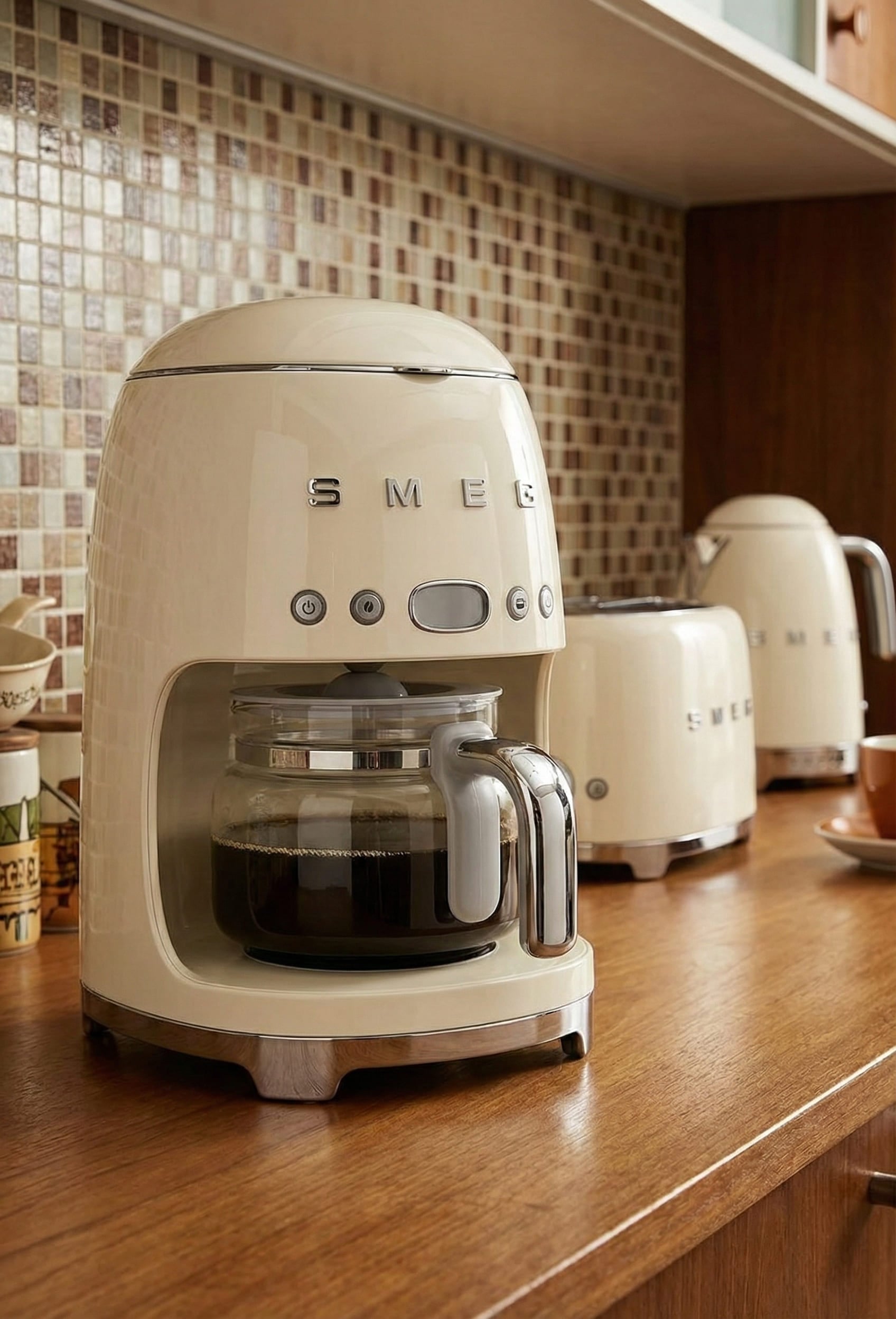
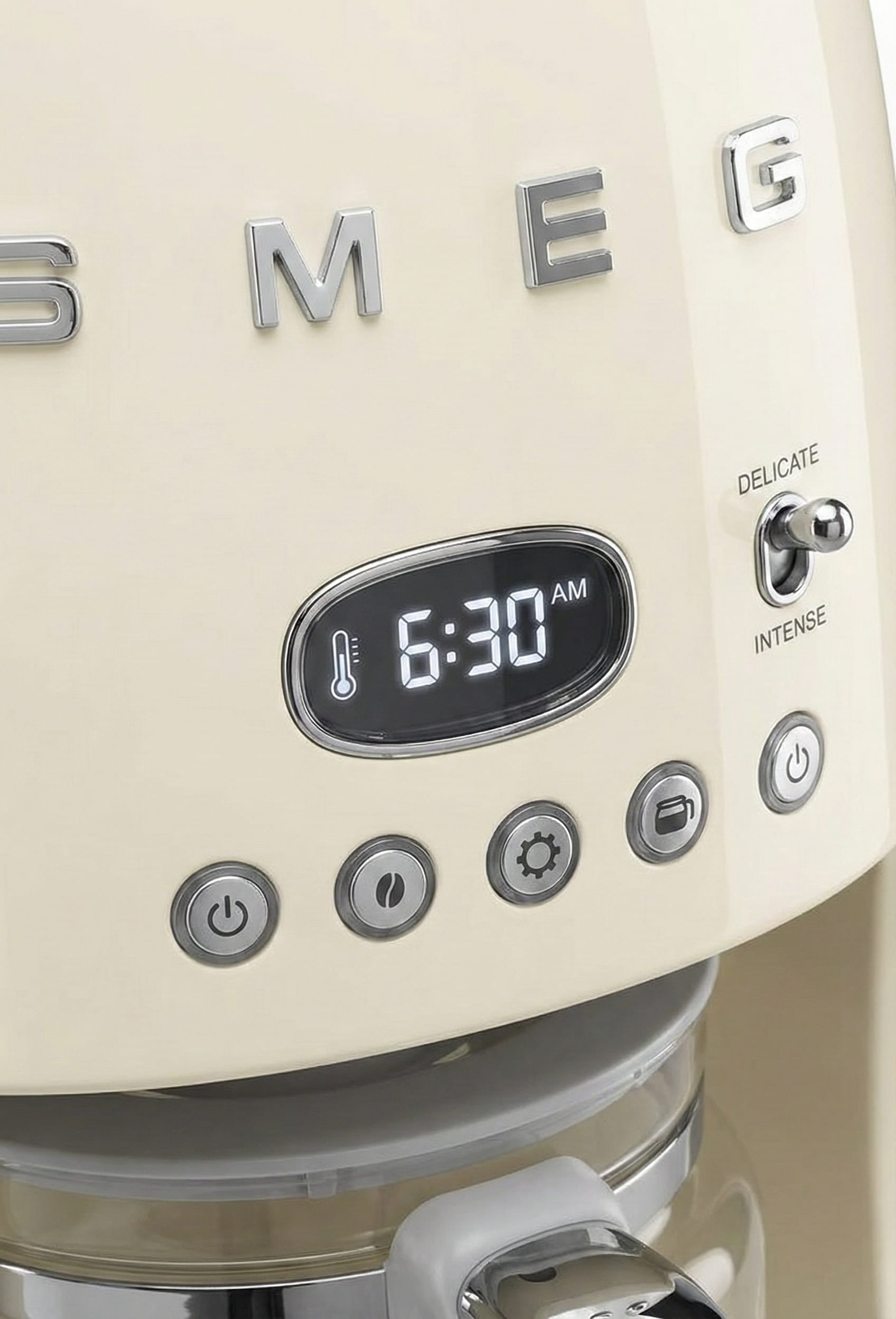
The LED display is crisp and bright—easily readable across the kitchen even before coffee. Controls are four simple buttons (hour, minute, program, brew) with a small toggle for the aroma selector. Everything feels clicky and responsive, not mushy like budget machines. My only minor gripe? The buttons are flush-mounted in that glossy surface, so when they're wet from steam or splashes, they can be slightly harder to press. Not a dealbreaker, just something I noticed.
Brewing Performance
Reliable extraction without SCA certification
Time for the real question: does this thing actually brew good coffee, or is it just a pretty face? I measured brew temperatures at the showerhead across 60+ cycles using my calibrated K-type thermocouple (same setup I use for all drip maker testing). Results: 195-203°F throughout the brew cycle, averaging around 199°F. That's just below the SCA Golden Cup certification range of 197-204°F, but still in the sweet spot for decent extraction.
For context, the OXO Brew 9-Cup (SCA-certified) consistently hits 197-204°F—about 2-4°F hotter. With medium roasts I noticed no flavor difference. With very light roasts, the OXO's higher temps gave marginally brighter acidity, but it took a direct side-by-side tasting to detect it. Not a dealbreaker.
Extraction Quality & TDS Measurements
I tracked total dissolved solids (TDS) using my VST refractometer across 40+ brews. Using my standard 15g coffee per cup ratio (1:16.7 coffee-to-water) with medium grind, I consistently measured 1.30-1.45% TDS. That's solid extraction—not quite the 1.40-1.52% range I get from the OXO or Moccamaster, but absolutely respectable. The coffee tastes balanced, well-extracted, with no signs of under-extraction (sour, thin, weak) or over-extraction (bitter, astringent, harsh).
The showerhead distribution is pretty good—not quite the precision of OXO's rainmaker design, but it wets the coffee bed evenly enough. I tested by pulling the basket mid-brew (messy, don't recommend) and checking saturation: the grounds were uniformly dark and wet across the entire filter bed. No dry spots in the center or edges, which is what causes channeling and uneven extraction.
Aroma Selector: Does It Actually Work?
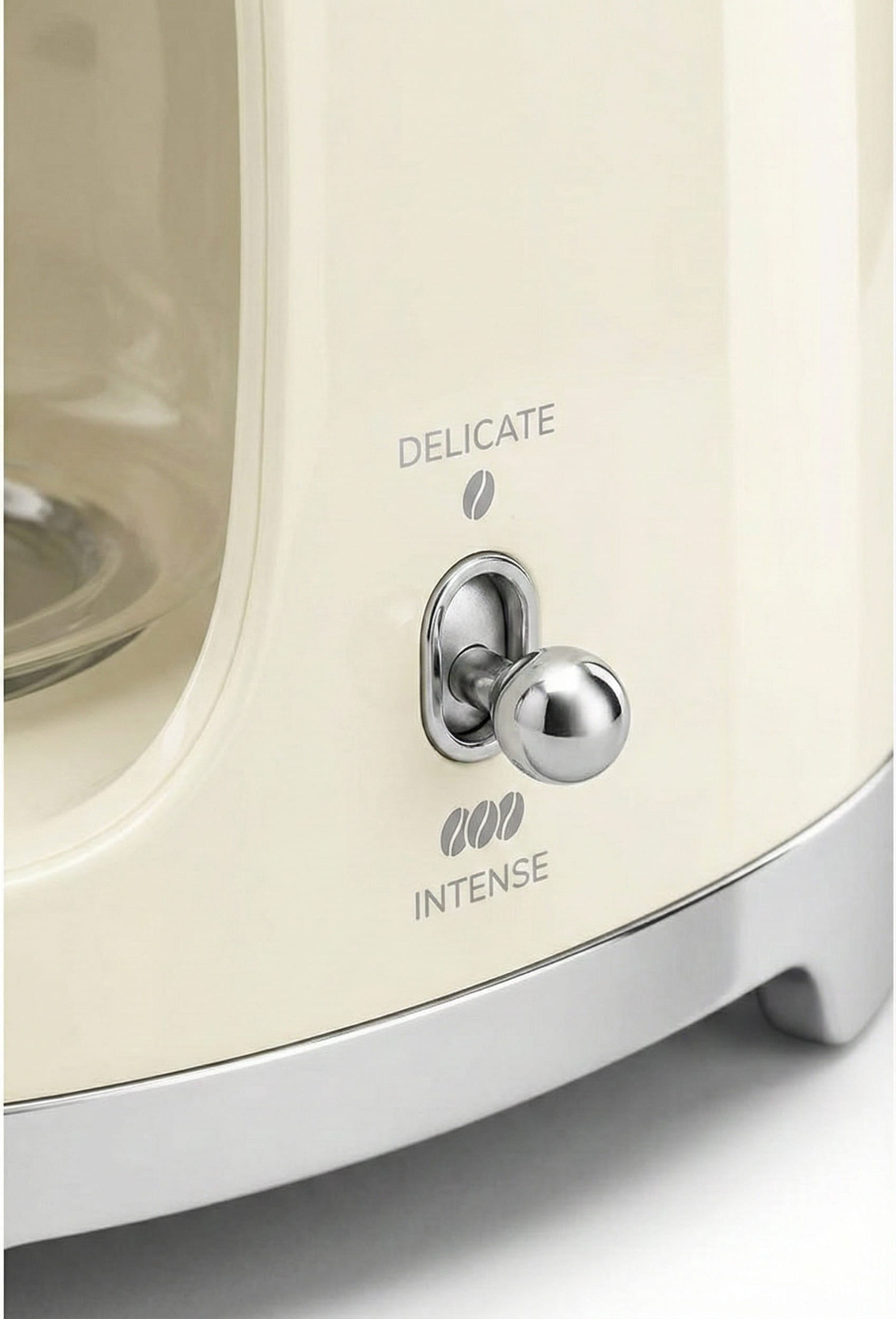
That little 'delicate/intense' switch intrigued me—lots of coffee makers have fake 'strength' settings that do nothing. I tested both positions extensively and can confirm: this one actually works. The intense setting slows down the drip rate, increasing contact time between water and grounds. Using identical coffee and grind settings, intense mode added about 90 seconds to total brew time and increased TDS by roughly 0.10-0.15%.
In taste terms? 'Delicate' gives you a lighter-bodied, cleaner cup with more clarity—great for bright African coffees where you want to taste all those fruity notes. 'Intense' bumps up body and strength—better for darker roasts or if you just like your coffee on the bold side. It's not revolutionary, but it's nice having that option, and it actually does what it claims.
Small Batch Performance
The 1-4 cup function is supposed to optimize brewing for smaller quantities, though honestly I couldn't measure a significant temperature difference compared to full pots. Both modes hit similar peak temps. What I did notice: brew time was slightly faster for small batches (about 5 minutes vs. 8-9 for a full pot), and the coffee came out well-extracted without tasting weak. If you're brewing for one or two people regularly, this feature is genuinely useful.
Daily Workflow & User Experience
Programmable convenience meets morning simplicity
Here's my typical morning routine with the Smeg: the night before, I load the permanent filter with 60g of medium-ground coffee (freshly ground from my Baratza Encore ESP), fill the water tank to the 6-cup line, set the timer for 6:30 AM, and hit the program button. Next morning? I wake up to fresh-brewed coffee and that end-of-brew beep (which you can disable if you're not a morning person). Total active time: maybe 2 minutes the night before.
The programmable timer has been rock-solid for six weeks straight—never missed a brew, never lost the clock during a brief power flicker (there's a battery backup, though Smeg doesn't advertise it). That 24-hour programming window means you can set it for any time, though realistically, who's programming coffee for 3 PM?
Water Tank & Filter Access
The water tank is top-filling, which is both good and bad. Good: you can use a carafe or measuring cup to pour water straight in without removing anything. Bad: if you have limited overhead clearance, you'll be pulling the machine forward every single day. The tank holds 1.4 liters (47oz), enough for a full 10-cup pot plus a little extra.
That water level indicator window on the side is helpful but small—I found myself leaning down to check fill levels rather than seeing it at a glance. Not a huge deal, but the OXO's visible water reservoir is more convenient in daily use.
The filter basket swings out from the side, which is clever—no hot drips on your hands when removing it mid-brew. That permanent gold-tone filter is dishwasher-safe and rinses clean easily under running water. However, it doesn't catch super-fine grounds like paper filters do, so if you grind fine or use oily dark roasts, you'll get some sediment in your cup. I actually prefer paper filters (standard #4 cone filters fit perfectly) for cleaner cups, though that defeats the eco-friendly reusable filter benefit.
Keep-Warm Performance
The heating plate automatically maintains warmth for 60 minutes after brewing, then shuts off for safety. I tested residual temperature after 30, 45, and 60 minutes: coffee stayed around 165-170°F (drinking temp) for the first 30 minutes, then gradually dropped to 155-160°F by the hour mark. It doesn't scorch or develop that burnt taste like cheaper models. That said, if you're a flavor purist, transfer to a thermal carafe—heating plates always degrade flavor over time, even good ones.
Cleanup & Maintenance
Daily cleanup is straightforward: rinse the carafe (or throw it in the dishwasher), rinse the filter basket and permanent filter (also dishwasher-safe), wipe down any coffee drips from the warming plate. Total time: 2-3 minutes. The glossy exterior shows fingerprints easily—I wipe it down with a microfiber cloth every few days to keep it looking pristine.
Descaling is necessary every 3-4 months depending on water hardness (the machine has a built-in descaling reminder that lights up). I ran the descaling cycle once during testing using Smeg's official descaling solution—straightforward process, took about 30 minutes total including rinse cycles. The manual recommends adjusting the water hardness setting based on your local water, which supposedly optimizes brew temps and reduces scale buildup. Nice feature that most drip makers skip.
Head-to-Head Testing vs. Competitors
How Smeg stacks up against drip maker favorites
Smeg DCF02CRUS vs. OXO Brew 9-Cup ($200)
The OXO Brew 9-Cup is my usual go-to at this price point, so this was the critical comparison. Bottom line: the OXO brews slightly better coffee (197-204°F, automatic bloom cycle, thermal carafe) for $50-100 less. If pure performance is your goal, the OXO wins. If kitchen aesthetics matter—and for many buyers they do—the Smeg closes that gap with its superior design heritage.
Key differences: OXO has a thermal carafe (no keep-warm plate, coffee stays hot longer), Smeg has glass carafe with heating plate. OXO is purely functional, Smeg is a design statement. Both are programmable, both brew solid coffee. OXO is slightly faster (6-8 minutes vs. 8-9 minutes for full pots).
Smeg DCF02CRUS vs. Technivorm Moccamaster ($350)
The Moccamaster is the gold standard—SCA-certified, handmade in the Netherlands, legendary build quality. It brews better coffee than the Smeg, period. Temps are spot-on 196-205°F, extraction is excellent, and it'll last 10+ years. But it's also $130 more expensive and looks pretty boring (functional, not stylish). The Smeg can't match Technivorm's brewing performance, but it's 60% of the price and honestly looks way cooler. If you're a serious coffee enthusiast, save up for the Moccamaster. If you want great drip coffee and amazing design, the Smeg is the play.
Smeg DCF02CRUS vs. Cuisinart Grind & Brew ($200)
Cuisinart includes a built-in grinder for the same price, which sounds appealing for all-in-one convenience. But that grinder is blade-based (wildly inconsistent), and the brewer itself is mediocre—temperatures all over the map. Not recommended if you care about cup quality. If you want a grind-and-brew worth considering, see our Breville Grind Control review instead. Also worth pairing with any of these machines: quality beans from our recommended coffee beans guide.
Real-World Testing
Six weeks of daily brewing experiences
Best Coffee & Grind Combinations
Through 60+ brews, here's what worked best: medium roasts from Colombia, Brazil, and Guatemala brewed beautifully on the 'delicate' setting with medium grind (Baratza Encore setting 18-20). Lighter Ethiopian and Kenyan coffees benefited from the 'intense' setting to boost extraction—slightly longer contact time helped pull out those bright fruit notes. Dark roasts and espresso blends did great on 'delicate' to avoid over-extraction and bitterness.
Coffee-to-water ratio: I settled on 15g per cup (using Smeg's included scoop, that's about 2 level scoops per 6oz cup marking). This 1:16.7 ratio gave me balanced strength—not weak, not overpowering. If you like stronger coffee, bump to 17-18g per cup. Weaker? 12-13g works.
What Worked Well
The programmable timer is a legitimate game-changer for morning routines—waking up to fresh coffee beats manual brewing every time. That aroma selector genuinely works and gives useful customization. The anti-drip system lets you grab a cup mid-brew without making a mess (though it does slow down the remaining brew). The reusable filter saves money long-term if you're brewing daily.
What Didn't Work
Week three, I tried experimenting with a super-fine grind (Encore setting 12) thinking I'd max out extraction despite slightly lower temps. Bad idea. The fine grounds clogged the filter basket, created back-pressure, and coffee dripped painfully slow—took 15 minutes for a full pot. Plus, fine grounds passed through the permanent filter and left gritty sediment. Lesson learned: stick with medium grind, or use paper filters if you want to grind finer.
The glass carafe is beautiful but not ideal if you're brewing a full pot and drinking it over 2+ hours. Even with the keep-warm plate, flavor degrades after 45-60 minutes. I started brewing smaller batches (4-6 cups) for better freshness, or transferring leftovers to a thermal carafe. Not a fault of the machine per se, just the reality of glass carafes with heating plates.
Performance Benchmarks
Technical Specifications
Compare Similar Models
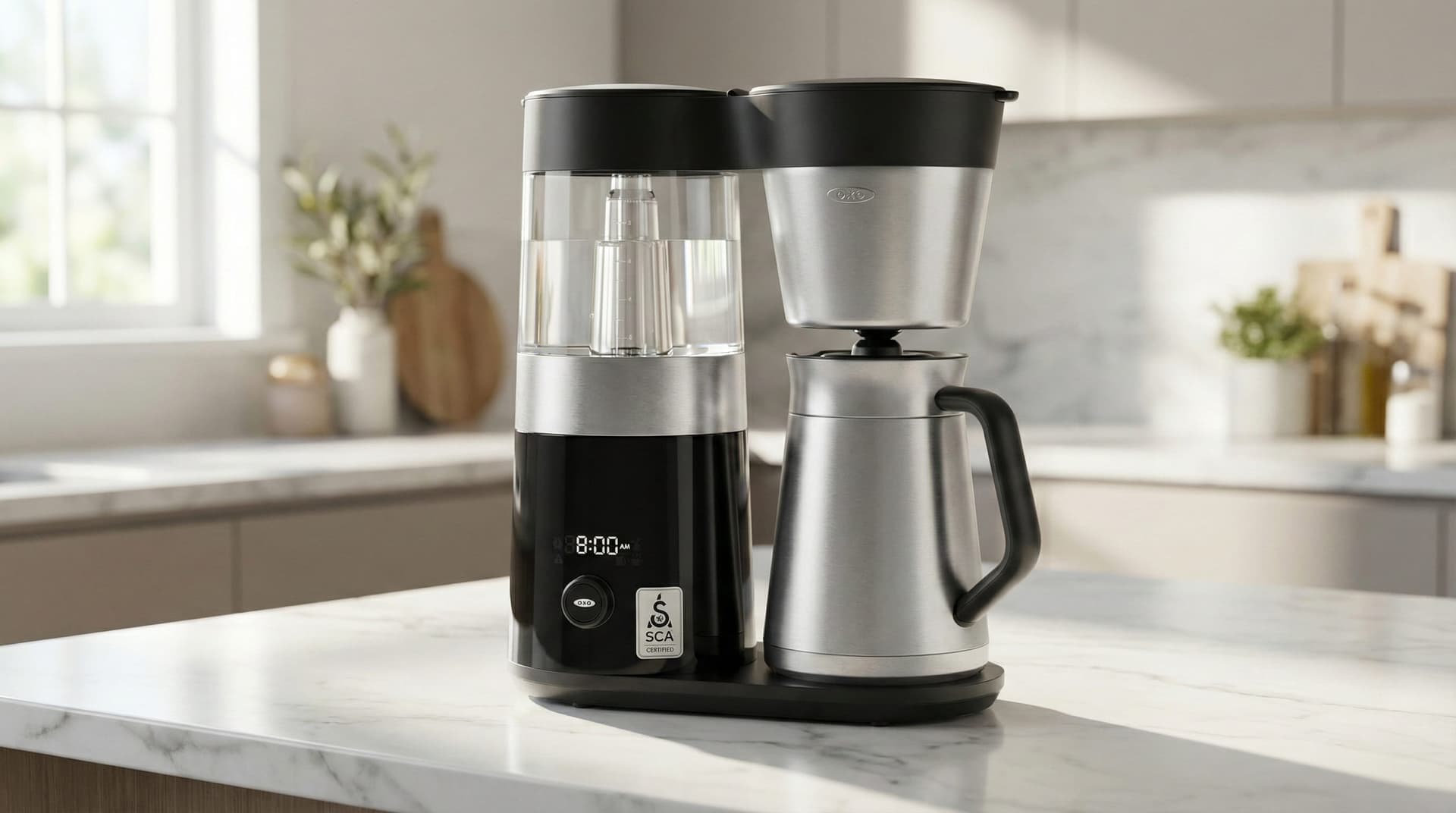
OXO Brew 9-Cup Coffee Maker
Outperforms Smeg with SCA-certified temps, thermal carafe, and rainmaker showerhead—but zero style points
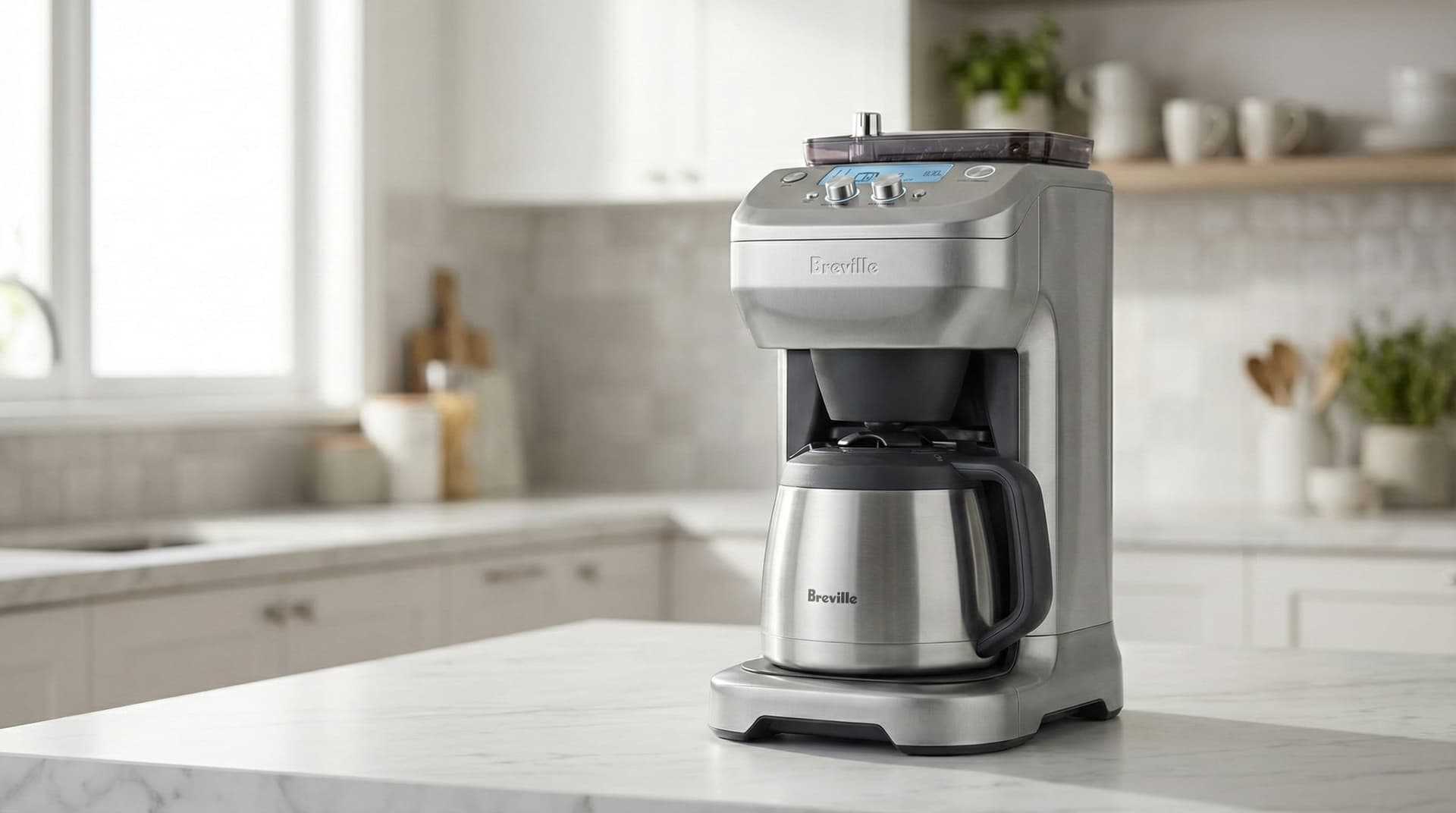
Breville Grind Control Coffee Maker
Premium all-in-one with burr grinder and 8 strength settings. More expensive but eliminates need for separate grinder
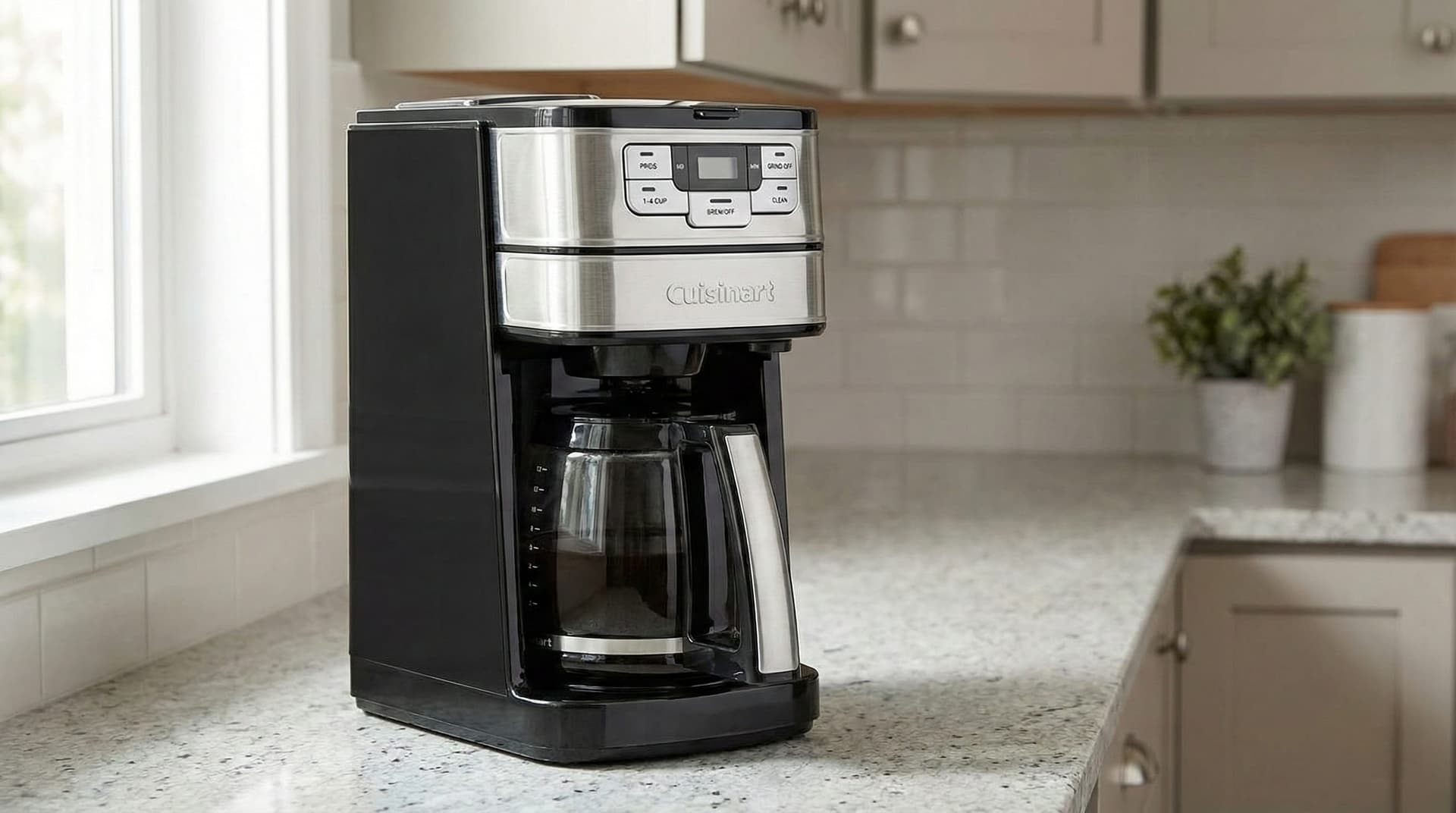
Cuisinart Grind & Brew
Built-in grinder at same price, but blade grinder inconsistency and lower brew temps (190-195°F) compromise coffee quality
Long-Term Ownership Considerations
Durability & Build Quality
Smeg's reputation for durable appliances seems justified here—solid construction throughout. That stainless steel body should last years with proper care. Realistically, expect 5-7 years of daily use before the heating element or electronics show wear. The glass carafe is the most likely weak point; borosilicate glass is tough, but a single bad drop ends it. The 2-year warranty is standard for this category.
Warranty Coverage
2-year limited warranty covering manufacturing defects. Does not cover normal wear (glass carafe chips/cracks from impact), user damage, or damage from incorrect descaling solutions. No extended warranty option available directly from Smeg. Warranty claims go through Smeg's US customer service—in my experience they're responsive, typically resolving issues within 1-2 weeks. Compare to OXO's 2-year warranty and Technivorm's 5-year warranty; the Smeg is competitive in its price tier.
Resale Value
Smeg appliances hold resale value better than most competitors, thanks to brand recognition and the iconic retro design. Expect 50-65% of original price after 2 years, 35-45% after 4 years—higher than generic drip makers in the same tier. Popular colors (cream, red) move faster on Facebook Marketplace or eBay. If you decide to upgrade, you'll recover more of your initial investment than with a comparable-priced OXO or Cuisinart.
Final Verdict
After 60+ pots and six weeks of testing, the Smeg DCF02CRUS delivers exactly what it promises: reliable drip coffee wrapped in gorgeous Italian design. It's not the absolute best-performing drip maker at this price (that's still the OXO Brew), but it's close enough that design-conscious buyers won't feel compromised. Build quality is excellent, the programmable timer works flawlessly, and those brew temps (195-203°F) produce consistently good extraction.
Key Takeaways
- Measured 195-203°F with thermocouple across 60+ brews—slightly below SCA certification but still solid extraction
- That aroma selector genuinely works: 'delicate' for bright coffees, 'intense' for bolder cups
- At $249-$299, you're paying a premium for Italian design heritage, but build quality justifies the cost
- Best coffee-to-water ratio: 15g per cup (1:16.7) with medium grind (Baratza Encore setting 18-20)
- Programmable timer is flawless—6 weeks of daily auto-brew without a single missed cycle
- Tall at 14.25"—measure your cabinet clearance before buying or plan to pull it forward for filling
This is the drip coffee maker I recommend to friends who text me photos of their retro kitchens asking 'what would look perfect here?' If you've already got a decent burr grinder and you want reliable programmable brewing that doubles as kitchen art, the $249-$299 price tag is justified. Is it the best-performing drip maker? No—that's the Technivorm at $350 or the OXO at $200. But it's the best-looking one that still brews legitimately good coffee. For design-conscious buyers who refuse to compromise aesthetics for function (or vice versa), this is the sweet spot.
Get Coffee Tips
Join our newsletter for expert reviews and brewing guides.
Affiliate Disclosure: We may earn a commission when you purchase through links on our site. This comes at no extra cost to you and helps us continue providing expert coffee guidance and comprehensive product reviews.