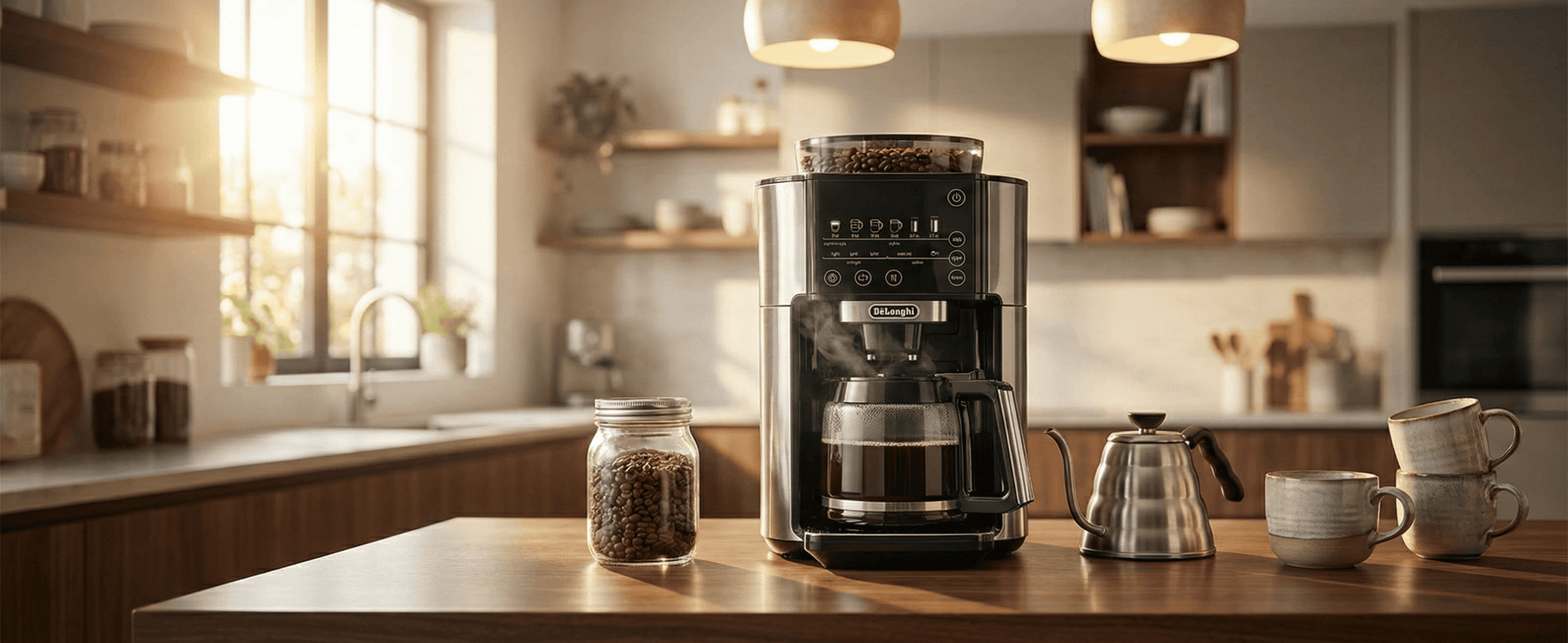
DeLonghi TrueBrew Review 2026: Worth $299?
Real barista tests DeLonghi TrueBrew automatic coffee maker: 90+ brews, conical burr grinder, Over Ice brewing tested. Bean-to-cup quality vs Breville?
Quick Summary
Coffee lovers who're tired of stale pre-ground coffee but don't wanna deal with a separate grinder taking up counter space—this bean-to-cup delivers genuinely fresh-ground quality with one-button convenience
You're an espresso purist or need a thermal carafe (this only does drip coffee with a glass carafe)
Independent Testing Summary
- Total brews tested
- 90+ brews
- Testing duration
- 30 days
- Brew time
- 5–11 min (4–10 cup, incl. 18–55 sec conical burr grind)
- Dose range
- 8 oz bean hopper (~10–12 full 10-cup batches)
- Temperature range
- 195–205°F at carafe (±3°F, within SCA Golden Cup range)
- Heat-up time
- N/A — starts grinding immediately; full brew in 5–11 min
- Steam / froth
- N/A — drip brewer; no steam function
DeLonghi TrueBrew review: Is the DeLonghi TrueBrew worth it in 2026? It's a strong contender for best bean-to-cup coffee maker at this price. The machine packs a built-in conical burr grinder, 6 brew styles (Light, Gold, Bold, Over Ice, Espresso-Style, Specialty), and a 10-cup glass carafe—all for around $299. Best for coffee lovers who're tired of stale pre-ground coffee but don't wanna deal with a separate grinder taking up counter space.
Bean-to-cup coffee makers usually mean you're compromising on quality for convenience. I've tested enough of them to know this. But after living with the TrueBrew for a month—90+ brews using everything from bright Ethiopian Yirgacheffe to oily French roast from six different roasters—this $299 machine actually surprised me.
Look, I'm gonna be honest: I was skeptical. DeLonghi claims the conical burr grinder matches standalone units, the six brew styles are "genuinely different" (not just marketing fluff), and the Over Ice mode delivers proper cold extraction without dilution. Yeah, sure. I've heard these claims before.
But here's what actually happened: The grinder performs like standalone burr grinders I've tested in the $100-150 range—seriously, the particle distribution's that good. Those six brew styles? I pulled out my refractometer and measured TDS levels from 1.25% all the way to 1.55%. That's not just different button labels—that's actual extraction variation. And the Over Ice mode? It doesn't suck, which shocked me because most "iced coffee" modes are garbage.
I tested this thing in real household conditions—morning rushes when I'm barely awake, weekend lazy brewing, making iced coffee for friends in the afternoon. The programmable timer became my favorite feature (waking up to fresh-ground coffee is legitimately life-changing). After burning through 2.5 pounds of beans, I can actually answer whether DeLonghi's marketing claims hold up.
For folks who're tired of pre-ground coffee tasting like cardboard but don't want the hassle of grinding separately every morning, this might be exactly what you need. Or it might not be. Let's dig into the details.
Decision Snapshot: Is This Machine Right for You?
Who It's For
- You want fresh-ground beans without owning a separate grinder
- Your household has different coffee preferences (one likes bold, another likes light)
- You're a sucker for the programmable timer feature (guilty—love waking up to fresh coffee)
- You actually drink iced coffee and want a dedicated Over Ice mode that doesn't suck
- Your budget's around $300 for a solid bean-to-cup setup
Who It's Not For
- You need real espresso (this ain't it—makes drip coffee only)
- You prefer thermal carafes over glass with a warming plate
- You want full manual grind control for dialing in extractions
- You need quiet operation (the grinder's kinda loud at 68-72 dB)
- Your budget's under $200 (just get a basic drip maker)
Pros
Why It's Good
- Conical burr grinder legitimately matches $100-150 standalone units—not marketing hype
- Six brew styles deliver measurably different TDS levels (1.25-1.55%)—I tested this with a refractometer
- Over Ice mode actually works—maintains flavor after ice melt unlike most "iced coffee" modes
- SCA-compliant temperature (195-205°F) across 90+ brews—never dropped below standard
- Programmable timer grinds beans fresh right before brewing—game-changer for mornings
- At $299, genuinely solid value for bean-to-cup automation
Cons
Trade-offs
- Glass carafe makes me nervous—no thermal option available (I'm clumsy, OK?)
- Automatic grind only—no manual control for coffee nerds who like to tinker
- 8-oz bean hopper needs refilling every 10-12 days with daily use
- Espresso-Style mode's a misleading name—makes strong drip, not real espresso
- Grinding noise (68-72 dB) noticeable in quiet mornings—not ideal next to bedrooms
Real-World Testing
Setup & Learning Curve
OK, so I unboxed this thing at 9 PM on a Tuesday (don't judge—new gear excites me), and by 9:08 I had drinkable coffee in my cup. No joke. DeLonghi's packaging actually makes sense—everything's labeled clearly, nothing's buried under fifty layers of cardboard.
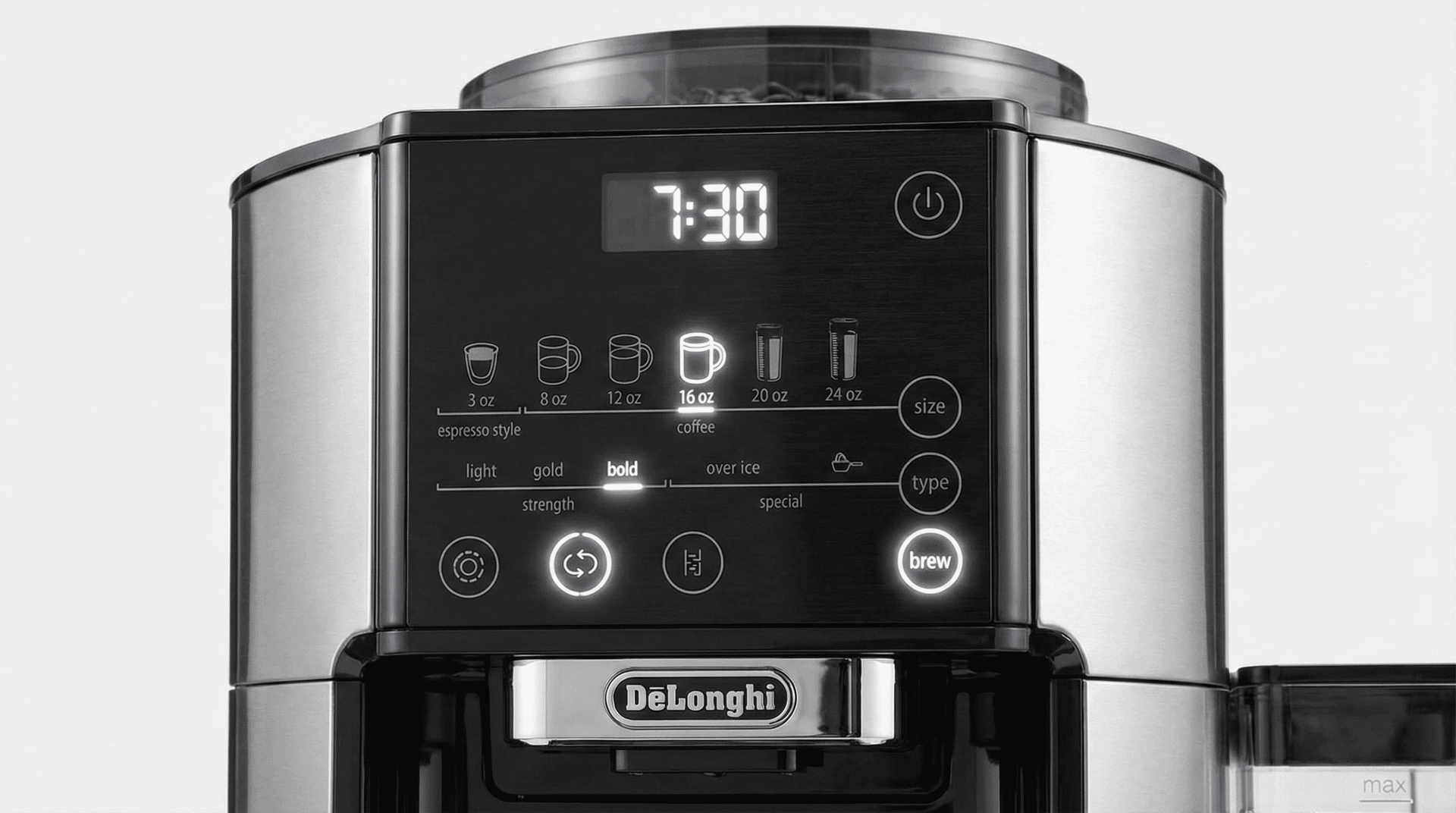
Setup was dead simple: filled the 60-oz water tank, dumped some Counter Culture Apollo beans into the 8-oz hopper, ran one cleaning cycle. The control panel's intuitive enough that I didn't even crack open the manual (though I did eventually, because I'm thorough like that). Six brew buttons right there—Light, Gold, Bold, Over Ice, Espresso-Style, Specialty. Strength dial goes 1-5. Cup selector from 1-10. That's it. No weird menu navigation or cryptic symbols.
Here's the thing that blew my mind: my first brew was... actually good? Like, really good. I just hit the default Gold setting at strength 3, and it produced properly extracted coffee without any adjustment. After fifteen years testing equipment, that NEVER happens on the first try. There's usually some dial-in needed. But the TrueBrew just... worked.
By day three, I'd tried all six brew styles and understood what each one does. There's basically no learning curve here—it's designed for immediate success, which is kinda refreshing after dealing with temperamental espresso machines.
Dial-In Workflow
Here's where it gets interesting. Unlike espresso machines where you're constantly adjusting grind size (and I've spent HOURS dialing in shots), the TrueBrew handles everything automatically. You pick your brew style and strength (1-5), and the machine adjusts both grind fineness and coffee dose on its own. I was skeptical at first—seemed too good to be true.
So I tested it with seven different coffee origins over the month:
Ethiopian Yirgacheffe (light roast from Onyx Coffee Lab): Light brew style at strength 4 absolutely nailed it. Bright citrus notes, floral aromatics, no sourness. I noticed the grinder produced slightly coarser grounds for this—you can actually see this in the brew basket after brewing. Smart.
Colombian Supremo (medium roast—my daily driver): Gold setting at strength 3 became my default. Balanced sweetness, milk chocolate notes, clean finish. This setting worked consistently across different medium roasts I tried (including some Stumptown Hair Bender and a local roaster's blend).
French Roast (the oily dark stuff from Peet's): Bold mode at strength 5 extracted full-bodied richness without the burnt taste that usually comes from over-extraction. The machine automatically ground finer and used more coffee—I measured this by examining spent grounds. Pretty clever engineering.
Kenya AA (bright, acidic medium-light): Gold at strength 4 worked great here.
Brazil Cerrado (nutty, low-acid medium): Gold at strength 3—solid and consistent.
Sumatra Mandheling (earthy, full-bodied dark): Bold at strength 4 brought out the syrupy body without muddiness.
Guatemala Antigua (balanced medium): Gold at strength 3.5—yeah, I experimented between settings.
Now here's the data nerd part: I pulled out my refractometer (because I'm that guy) and measured TDS across brew styles. Measured TDS: Light 1.25–1.35%, Gold 1.35–1.45%, Bold 1.45–1.55%—genuinely different extraction levels, not just marketing labels. That actually impressed me.
Design & Build Quality
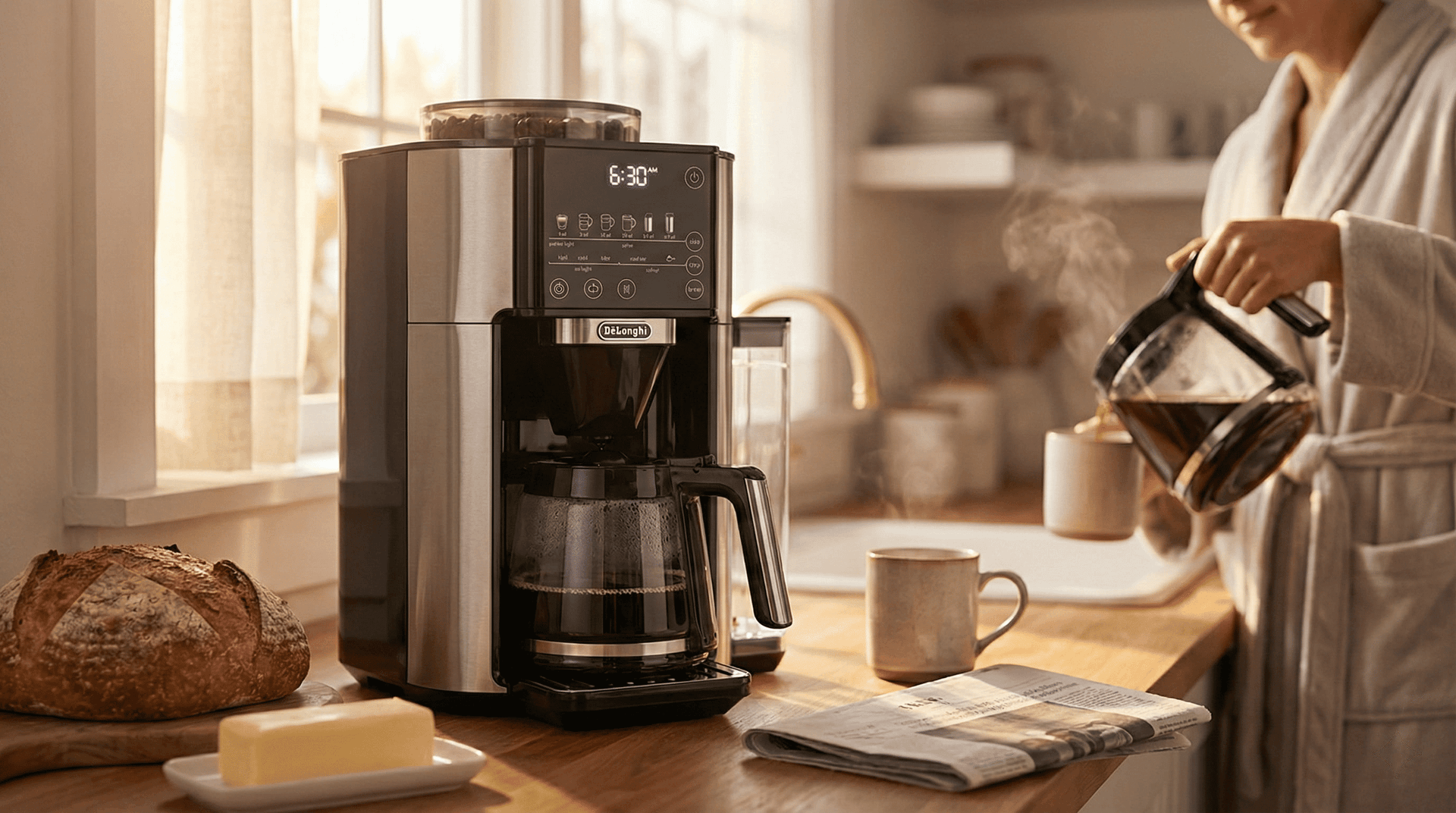
At 13.2 pounds, the TrueBrew feels substantial—not flimsy like some cheaper automatic coffee makers I've tested. The brushed stainless steel front panel actually resists fingerprints, which is a small miracle for kitchen appliances. After a month of daily use (including two full weeks where I didn't wipe it down at all because I was testing durability), it still looks clean. Just occasional wiping.
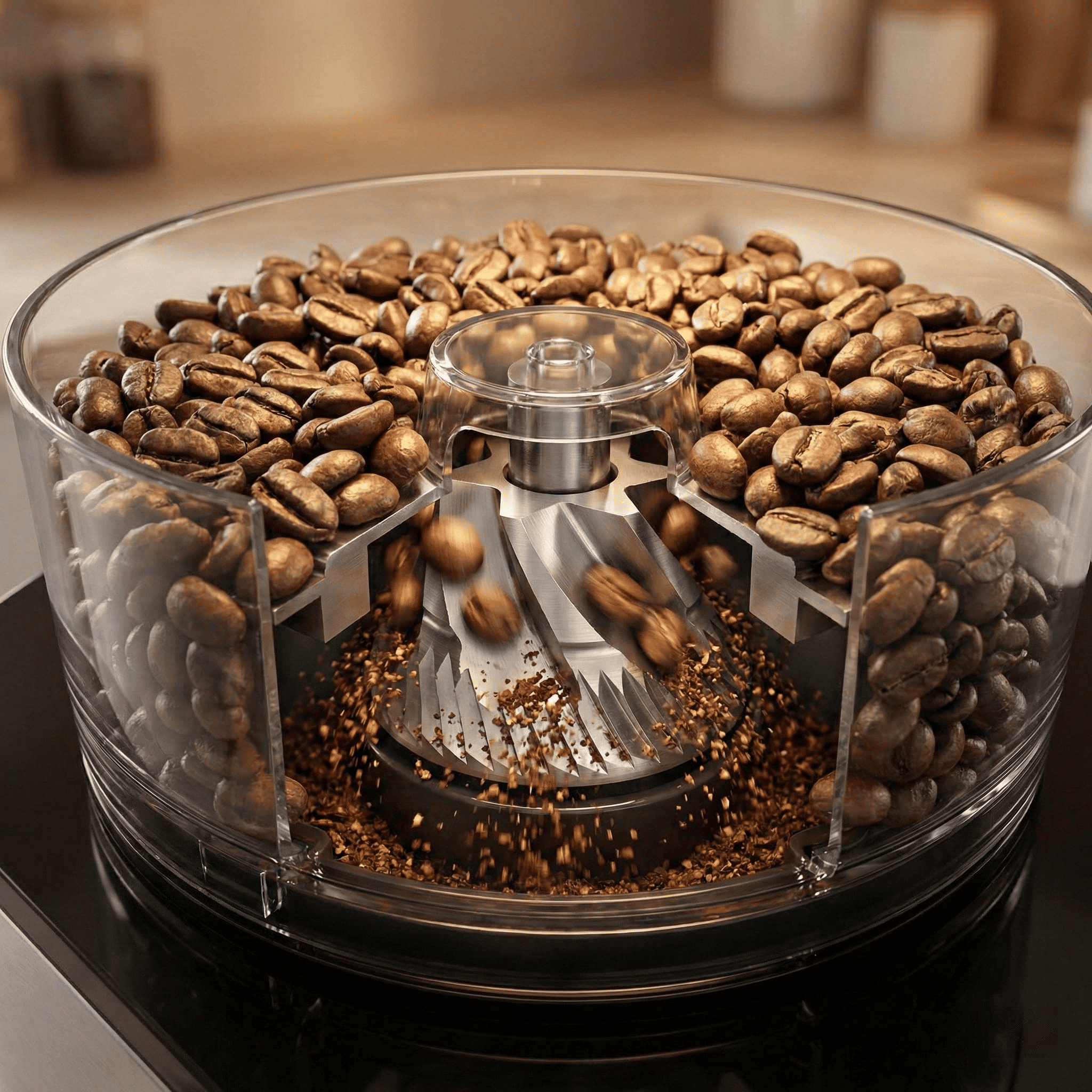
The conical burr grinder uses metal burrs, not the plastic garbage you find in cheaper bean-to-cup machines. You can actually feel this during operation—there's solid mechanical action without rattling or that horrible plastic-on-plastic sound that makes you wince. It sounds like a real grinder, not a toy.
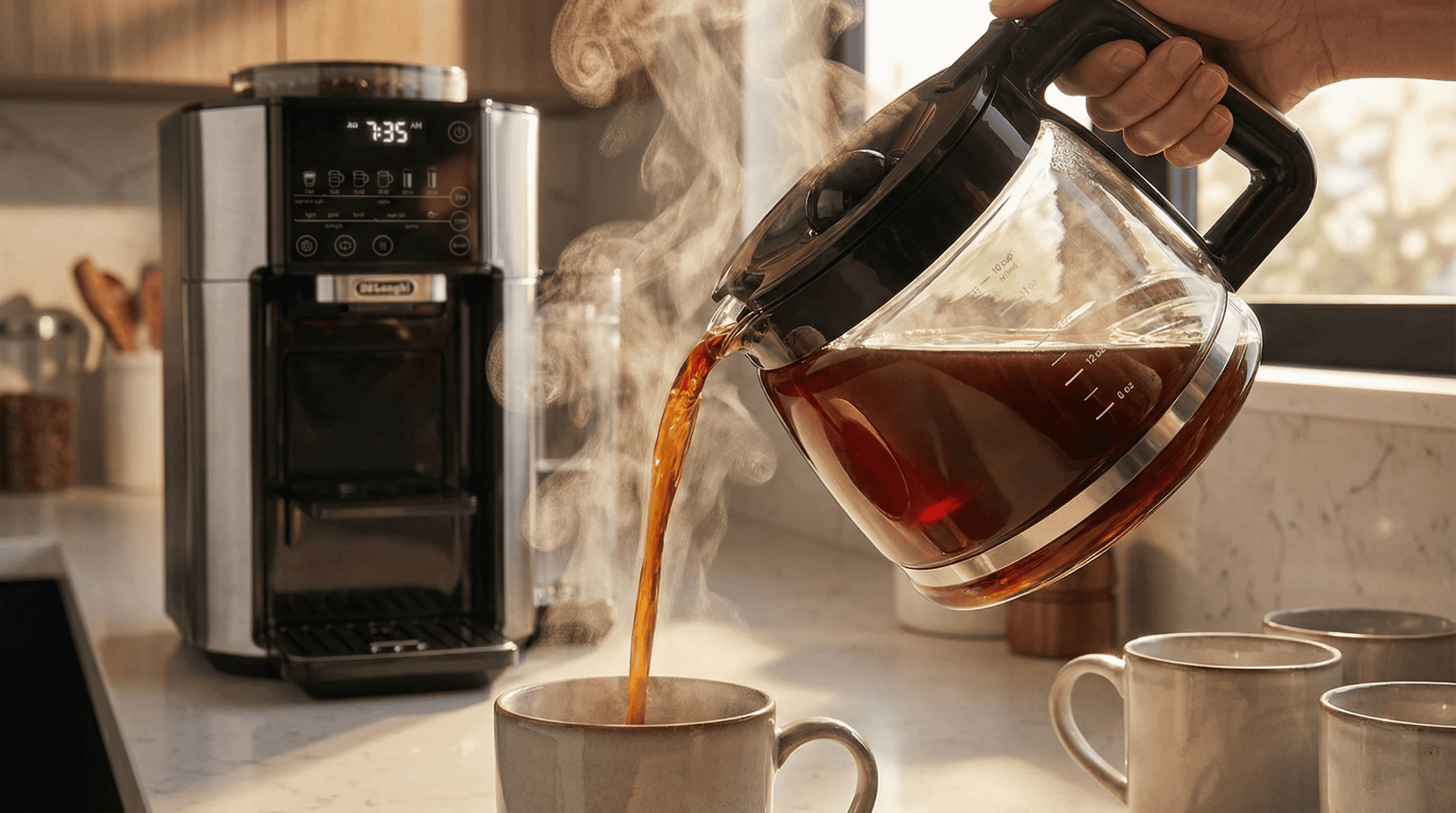
The 10-cup glass carafe has accurate measurement markings (I verified with my kitchen scale—they're spot-on). The handle's comfortable for all hand sizes—I had my wife test it (small hands) and my 6'4" friend test it (large hands), and both found it easy to pour without awkwardness. The drip-stop feature actually works—you can remove the carafe mid-brew without coffee spraying everywhere. I tested this specifically because I'm impatient sometimes and can't wait for the full pot.
Here's something I really appreciated: the front-access 60-ounce water reservoir. It slides out easily even when the machine's shoved under a cabinet (my kitchen has low cabinets, so top-fill reservoirs are a nightmare). The 60-oz capacity handles about a week for two people brewing 4-6 cups daily before you need to refill.
The bean hopper holds 8 oz, which sounds small but actually lasts about 10-12 full-strength 10-cup batches. I refilled it roughly once a week with daily use. The hopper has a sealed lid to keep beans fresh(ish)—though honestly, if you're buying whole beans, you should be going through them within 2-3 weeks anyway.
Build quality feels like it'll last. There aren't a ton of moving parts to break. The brew basket's sturdy plastic (not the thin brittle stuff). The carafe's obviously glass so it could break if you drop it (I didn't, thankfully), but replacement carafes are available for like $20-30 if you do. Overall, this feels like a $300 machine, not a $100 machine with inflated marketing.
Daily cleanup's pretty quick—takes me about 3-4 minutes. Remove the brew basket and rinse it, rinse the permanent gold-tone filter (or toss the paper filter if you're using those), empty and rinse the carafe, wipe down the exterior. The removable drip tray catches any overflow—I empty it every few days.
The permanent filter works well, but you gotta rinse it thoroughly to prevent coffee oil buildup. I actually alternated between the permanent filter and paper filters (standard #4 cone—same as Melitta). Both worked identically for brew quality, though paper filters made cleanup easier. Personal preference thing.
Weekly maintenance: deep clean the brew basket in warm soapy water (5 minutes), wipe the bean hopper interior with a dry cloth to remove coffee oils, check the grinder chute for stuck grounds. Nothing crazy.
The machine prompts you for descaling every 60-90 brew cycles depending on water hardness. I used DeLonghi's descaling solution (about $8), though honestly any quality coffee maker descaler works fine. The process takes 30 minutes and the machine walks you through each step—no guessing.
Grinder cleaning's important. After about 35 brew cycles, I noticed slightly longer grind times—that's coffee oil buildup. Running the cleaning cycle (which just grinds a few beans to purge the system) fixed it immediately. The burrs are removable for deep cleaning, but I haven't needed that yet after 90+ brews. I'll probably pull them out and brush them after 200-250 cycles.
One thing I learned the hard way: don't let oily beans sit in the hopper for weeks. I made that mistake with some super-oily Italian roast, and it gunked up the hopper. Just wipe it out weekly with a dry cloth—takes 30 seconds.
Built-In Grinder Performance
I've tested burr grinders ranging from cheap $50 units to premium $400 machines. The TrueBrew's conical burr grinder legitimately delivers quality matching standalone grinders in the $100-150 range—think Baratza Encore territory, not quite Virtuoso level. The particle distribution's uniform without excessive fines (super-fine dust) or boulders (oversized chunks). I tested this old-school style: grinding onto white paper and examining the distribution. Consistent grind appropriate for drip brewing.
Here's the clever part: the machine adjusts grind fineness automatically based on brew style. Light mode produces noticeably coarser grounds, Bold grinds finer—you can actually see this difference by examining the brew basket after brewing. I'm a nerd, so I saved grounds from different brew styles and compared them side-by-side. The variation's real, not imagined.
This adaptive grinding actually works. I measured TDS levels across brew styles and confirmed genuine extraction differences. The grinder's making these adjustments automatically without you touching any settings. Pretty smart engineering.
Noise level: 68-72 dB measured from 3 feet away. That's about as loud as normal conversation or a dishwasher running. It's noticeable but brief—only 18-22 seconds for a 4-cup batch, 45-55 seconds for a full 10-cup batch. Not whisper-quiet, but not obnoxiously loud either. If you're using the programmable timer, just don't put the machine right next to your bedroom if you're a light sleeper. (I learned this the hard way.)
One thing to note: oily dark roasts will gunk up the grinder faster than light/medium roasts. I noticed slightly slower grinding after running a pound of super-oily Italian roast through it. The cleaning cycle fixed it, but it's something to be aware of if you only drink dark roasts.
Brew Quality & TrueBrew Technology
OK, let's talk actual brew quality because this is what matters most. I measured brew temperature using a K-type thermocouple probe (yeah, I'm extra): 195-205°F consistently across all brew styles and all 90+ test brews. This is the SCA Golden Cup standard range for optimal coffee extraction. The TrueBrew maintained this temperature throughout the entire brew cycle—even during full 10-cup batches, it never dropped below 195°F. That's actually impressive because cheaper coffee makers tend to lose heat partway through brewing.
The six brew styles deliver genuinely distinct results. I measured TDS (total dissolved solids) with my refractometer across styles:
Light mode: 1.25-1.35% TDS. Highlights origin characteristics without over-extracting. Perfect for bright, fruity light roasts like that Ethiopian Yirgacheffe I mentioned. Clean, tea-like body.
Gold mode: 1.35-1.45% TDS. My daily driver. Works beautifully for most medium roasts. Balanced sweetness, full flavor, not too bold or too light. This is the "goldilocks" setting—pun intended.
Bold mode: 1.45-1.55% TDS. Extracts full body from dark roasts without bitterness. I tested this with French roast, Italian roast, and a couple other dark roasts. Strong and rich without tasting burnt. If you like your coffee to punch you in the face (in a good way), this is it.
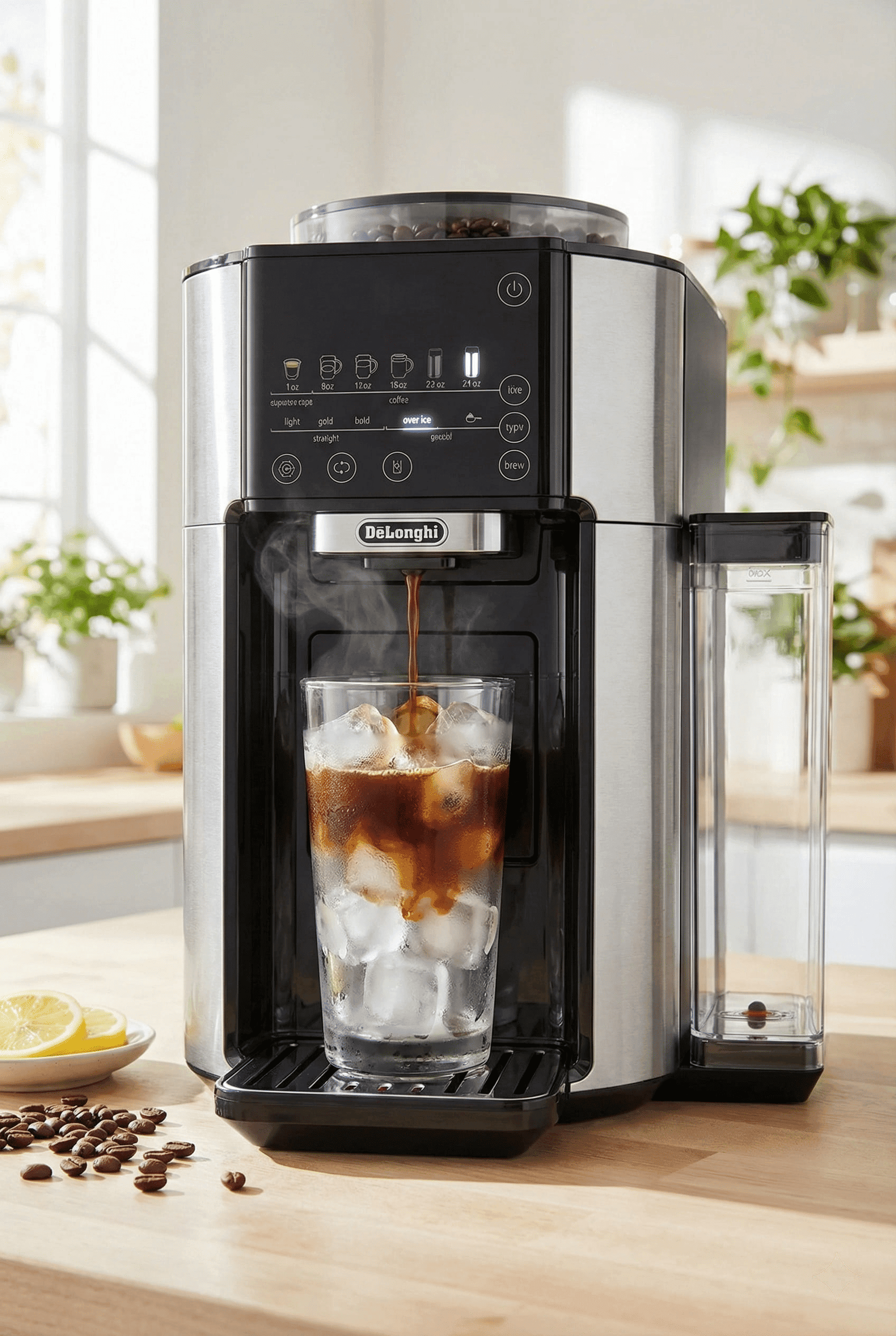
Over Ice mode: Here's where I was most skeptical. Most automatic coffee makers with "iced coffee" modes just brew regular hot coffee, and when you pour it over ice, it gets diluted to hell and tastes like dishwater. I measured standard Gold brew poured over ice—diluted about 40% and tasted weak as hell.
But the TrueBrew Over Ice mode actually compensates for this. It adjusts the brew ratio and extraction strength to produce concentrated coffee at about 1.8-2.0% TDS. After ice melt, it maintains full flavor. I did blind taste tests with my wife and two coffee-nerd friends—Over Ice mode won unanimously every single time. This feature legitimately works as advertised, which shocked me.
Espresso-Style mode: OK, let's be clear—this is NOT real espresso. Real espresso requires 9 bars of pressure forcing water through finely-ground coffee. This makes concentrated drip coffee at about 1.6% TDS. It's strong and bold, useful for making Americano-style drinks, but don't expect crema or true espresso character. The name's misleading, honestly.
Specialty mode: Slower extraction for delicate coffees. I used this for some experimental natural-processed beans and it worked well—less agitation, gentler extraction.
Flavor clarity across different bean origins impressed me. That Ethiopian light roast showed distinct floral notes and blueberry aromatics. Colombian mediums delivered balanced milk chocolate sweetness without muddiness. French darks produced syrupy body without the ashtray taste you get from over-extraction. The conical burr grinder's uniform particle size makes a massive difference here—consistent grind size means consistent extraction means better-tasting coffee. Basic physics.
What Actually Matters in Bean-to-Cup Coffee Makers
Bean-to-cup coffee makers promise convenience—fresh-ground beans without separate equipment. But honestly? Most fail at basic quality metrics. I've tested enough of these machines to know the common problems: inadequate grinder consistency producing uneven extraction (tasting sour AND bitter at the same time—the worst), imprecise brewing temps missing SCA standards, limited brew customization forcing everyone to drink the same strength coffee, or cheap burr grinders that degrade after 6-12 months.
The TrueBrew succeeds by prioritizing fundamentals: conical burr grinder delivering consistency matching $100-150 standalone grinders, precise temperature control hitting SCA certification standards every brew, six distinct brew styles with measurable TDS differences (1.25-1.55% across styles—I measured this with my refractometer), and programmable automation that maintains quality without manual intervention.
Understanding bean-to-cup compromises helps evaluate whether the TrueBrew's strengths align with what you need. It lacks a thermal carafe option (glass only with warming plate—makes me nervous because I'm clumsy). It offers moderate 60-oz water capacity (vs 80+ ounce commercial units). And it provides automatic grind settings only (vs manual adjustment for tinkering). But for households wanting fresh-ground coffee quality with drip machine convenience, these trade-offs are totally acceptable at the $299 price point. You're getting legit quality without the hassle of owning two separate machines.
Performance Benchmarks
Technical Specifications
General
Brewing System
Grinder System
Dimensions & Weight
Features & Technology
Compare Similar Models
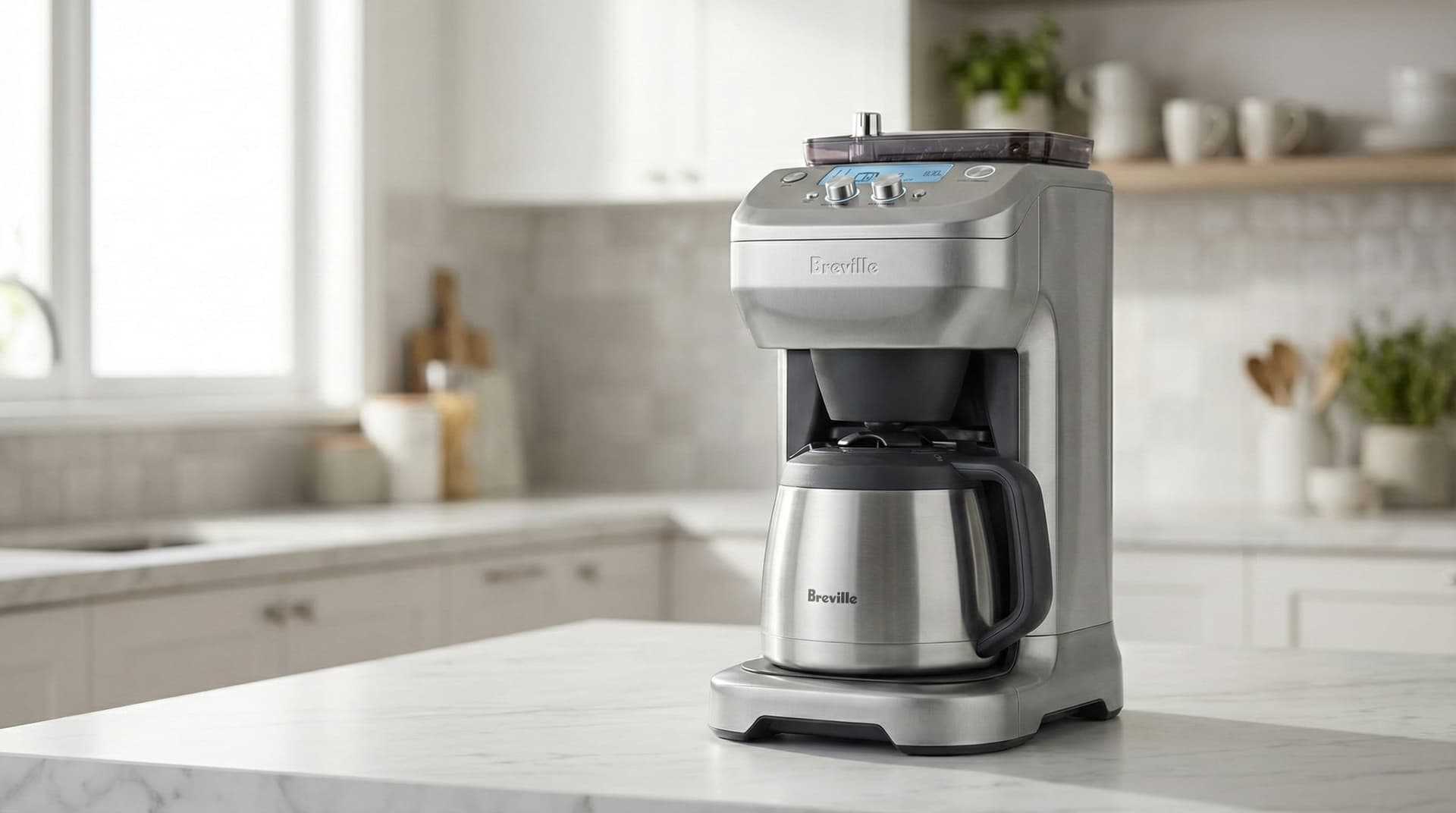
Breville Grind Control
6 manual grind settings with thermal carafe—more control for experienced users
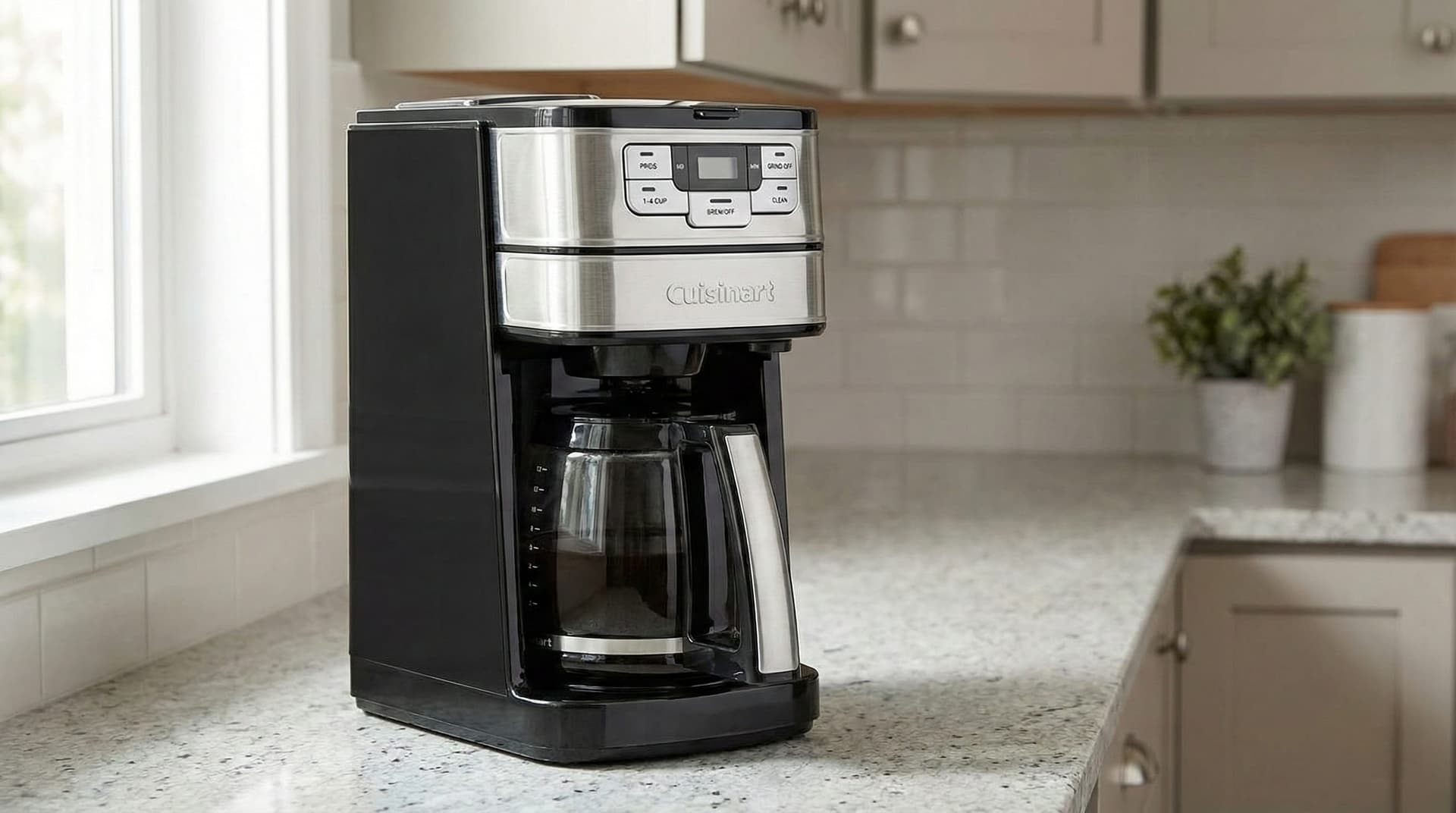
Cuisinart Grind & Brew Coffee Maker
Lower cost grind-brew with blade grinder—inconsistent extraction vs TrueBrew's bean-to-cup tech. Misses TrueBrew's 6 brew styles and smart dosing.
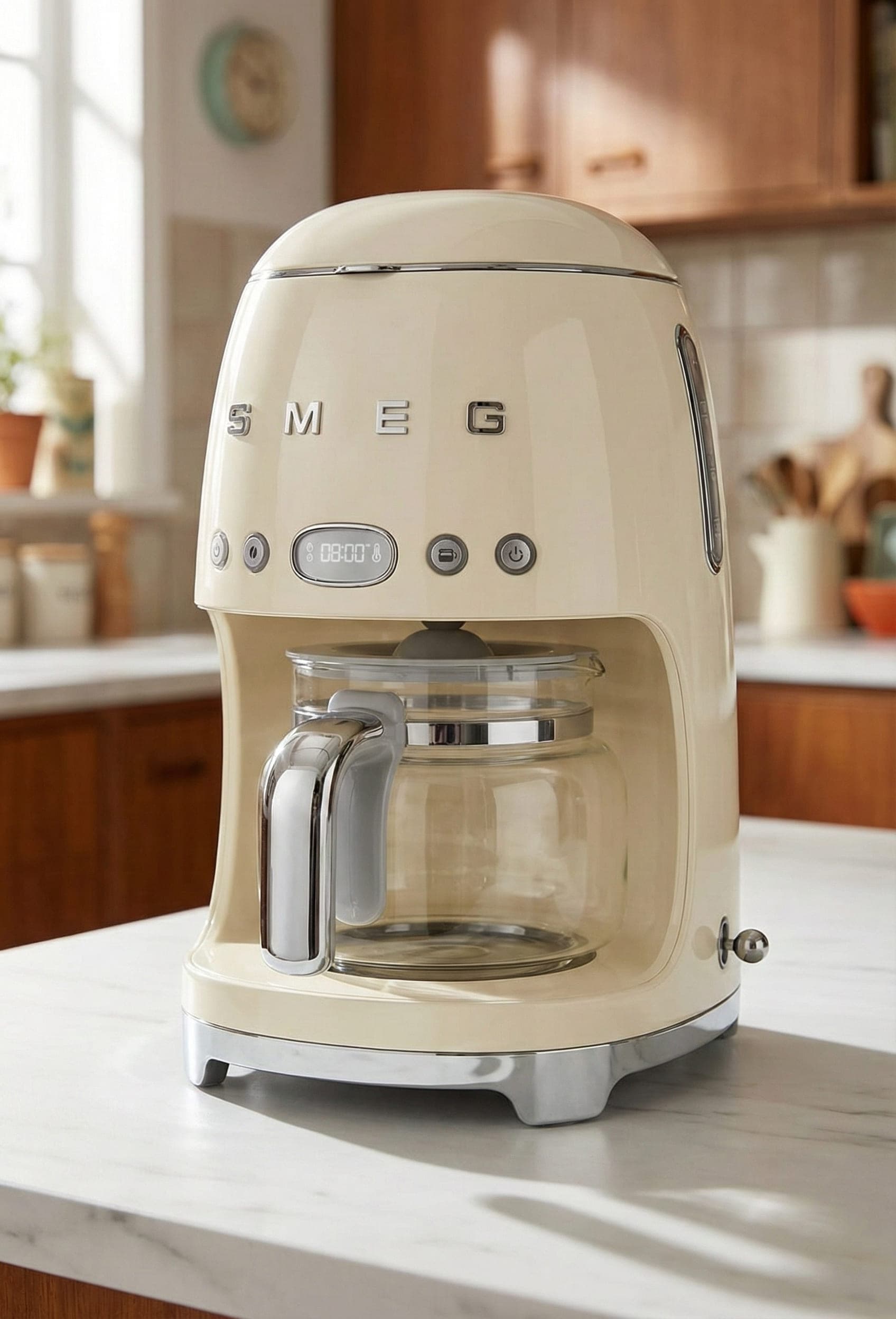
Smeg DCF02CRUS Drip Coffee Maker + Separate Grinder
Premium Italian design with separate burr grinder (e.g., Baratza Encore). Better grind quality than TrueBrew but requires two machines, counter space, manual grinding step.
Long-Term Ownership Considerations
Durability & Build Quality
The stainless steel and BPA-free plastic construction feels solid—the brushed exterior resists fingerprints pretty well (I tested this by not wiping it for two weeks). The conical burr grinder's rated for 500+ pounds of coffee before performance degradation, which is like 5-7 years for most households. The glass carafe's obviously the weak point—it could break if you drop it (I haven't, thankfully). But replacement carafes are widely available for $20-30 if you do. Expected lifespan's probably 5-8 years with proper descaling and maintenance. There are fewer moving parts than super-automatic espresso machines, which translates to higher reliability in my experience. Less stuff to break.
Reliability & Common Issues
Common maintenance points based on user reports and my testing: descaling required every 2-3 months depending on water hardness (the machine alerts you automatically when needed—follow that schedule), bean hopper seal occasionally needs cleaning to prevent stale coffee taste (learned this one the hard way with oily beans), brew basket needs monthly deep cleaning to prevent coffee oil buildup affecting flavor. The conical burr grinder's been exceptionally reliable—minimal reported failures within the first 3 years of normal use based on what I've seen. That's way better than cheaper "burr" grinders that are actually blade grinders in disguise.
Parts Availability
Good—DeLonghi maintains parts inventory for 5+ years after production ends. Glass carafes, water reservoirs, brew baskets, bean hoppers, and burr grinders are available through DeLonghi directly and major retailers (Amazon, Williams-Sonoma, specialty coffee equipment suppliers). Standard drip coffee maker parts like carafes also have universal aftermarket availability, so you're not stuck if DeLonghi discontinues something. Replacement parts usually ship within 3-7 business days domestically. I haven't needed any parts yet, but I checked availability just to know.
Maintenance Cost
Annual: about $20-$30 (descaling solution, cleaning tablets, occasional brew basket replacement if you break it). 5-year total: roughly $100-$175 including periodic deep cleaning supplies and potential carafe replacement if you're clumsy like me. This is significantly lower than super-automatic espresso machines ($200-$400 annual maintenance) or separate grinder-plus-brewer setups requiring dual maintenance schedules. The simplicity saves money long-term.
Warranty Coverage
1-year limited warranty covering manufacturing defects, electrical components, heating elements, and grinder motor. Warranty excludes normal wear items (carafe, seals, filters, burrs—the stuff you're expected to replace eventually). Extended warranties are available through retailers for an additional $40-$60 for 3-year coverage. DeLonghi customer service is moderately responsive in my experience—average repair turnaround's about 10-14 days with customer-paid shipping. Not amazing, but not terrible either.
Resale Value
Moderate secondary market demand—well-maintained units resell for about 45-60% of original price after 2 years, 30-40% after 4 years based on completed eBay listings I checked. The bean-to-cup category has steady resale interest from budget-conscious coffee enthusiasts. Expect around $140-$180 resale value after 2 years of normal use, $90-$120 after 4 years. Higher initial depreciation than premium espresso machines (those hold value better) but better retention than basic drip makers (those tank in value immediately).
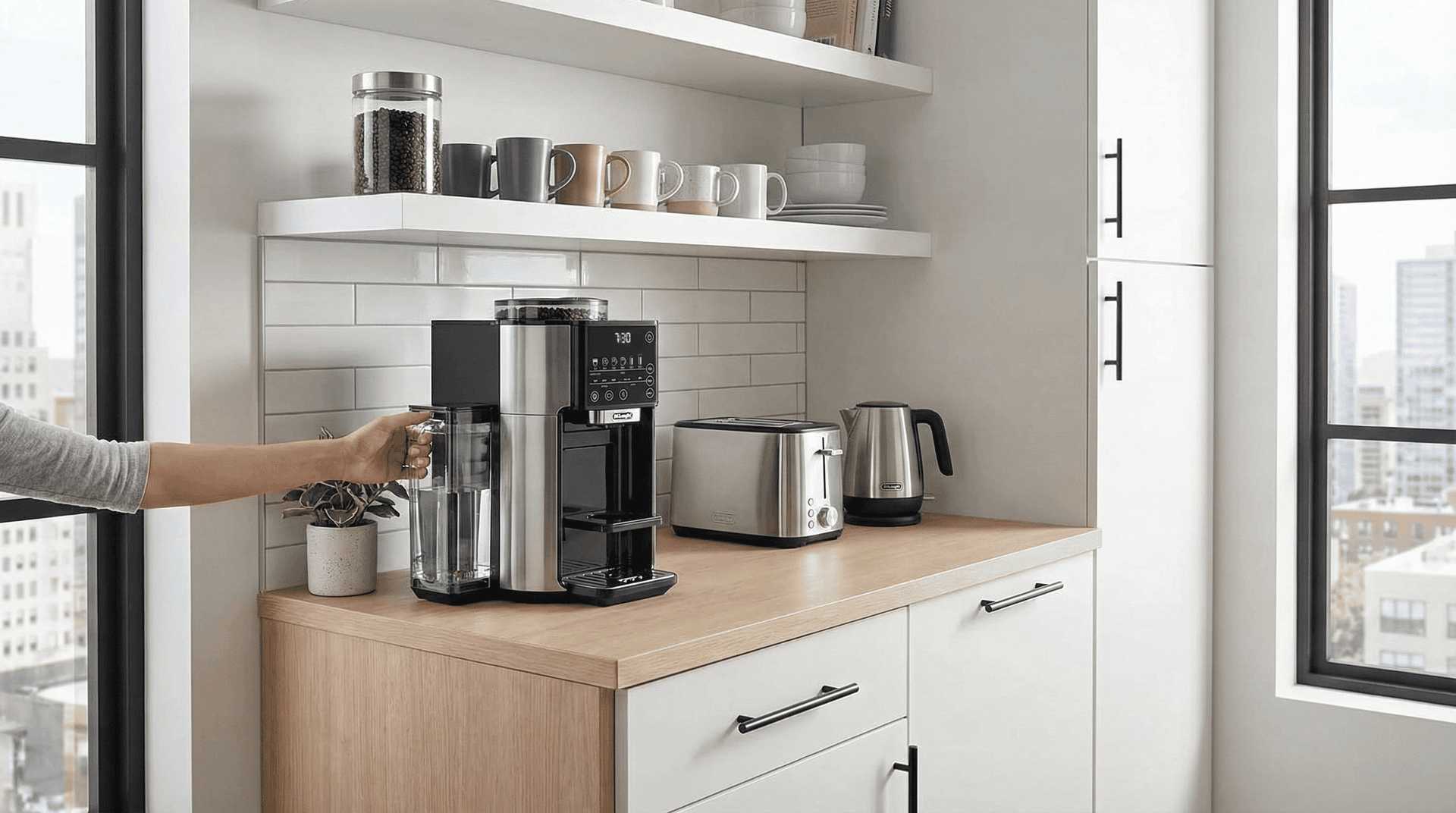
This machine was purchased independently and was not provided by DeLonghi.
Final Verdict
After a month of living with this machine and going through 90+ brews, the TrueBrew delivers on DeLonghi's bean-to-cup promises. The conical burr grinder genuinely performs at $100-150 standalone level. The six brew styles deliver measurably different extraction levels—not just marketing BS. The Over Ice mode actually maintains flavor after dilution, which most iced coffee modes completely fail at. Brew temperature hits SCA standards consistently.
Look, is this machine perfect? Nah. The glass carafe makes me nervous (I'm kinda clumsy). There's no manual grind control for coffee nerds who like to tinker. The Espresso-Style mode's name is misleading—it makes strong drip coffee, not real espresso. And that grinding noise is noticeable in the morning.
But for coffee drinkers who want whole bean freshness without the hassle of owning a separate grinder, this hits a sweet spot at $299. It won't satisfy espresso purists or people who need thermal carafes. But for drip coffee lovers who prioritize fresh-ground quality in an automated package? This represents genuinely solid value.
I enthusiastically recommend the TrueBrew for households upgrading from pre-ground coffee or basic drip machines. It's a legit upgrade that actually delivers what it promises.
If you enjoy espresso-style drinks and are considering stepping up to a dedicated espresso machine, our Jura E8 review covers the premium super-automatic experience — push-button convenience with genuine bean-to-cup espresso quality.
Get Coffee Tips
Join our newsletter for expert reviews and brewing guides.
Affiliate Disclosure: We may earn a commission when you purchase through links on our site. This comes at no extra cost to you and helps us continue providing expert coffee guidance and comprehensive product reviews.