What Is a Lungo? Long Espresso Shot, Taste & Ratios
Same dose, more water — lungo vs espresso, lungo vs americano, brew ratio, caffeine, and when the long shot actually makes sense
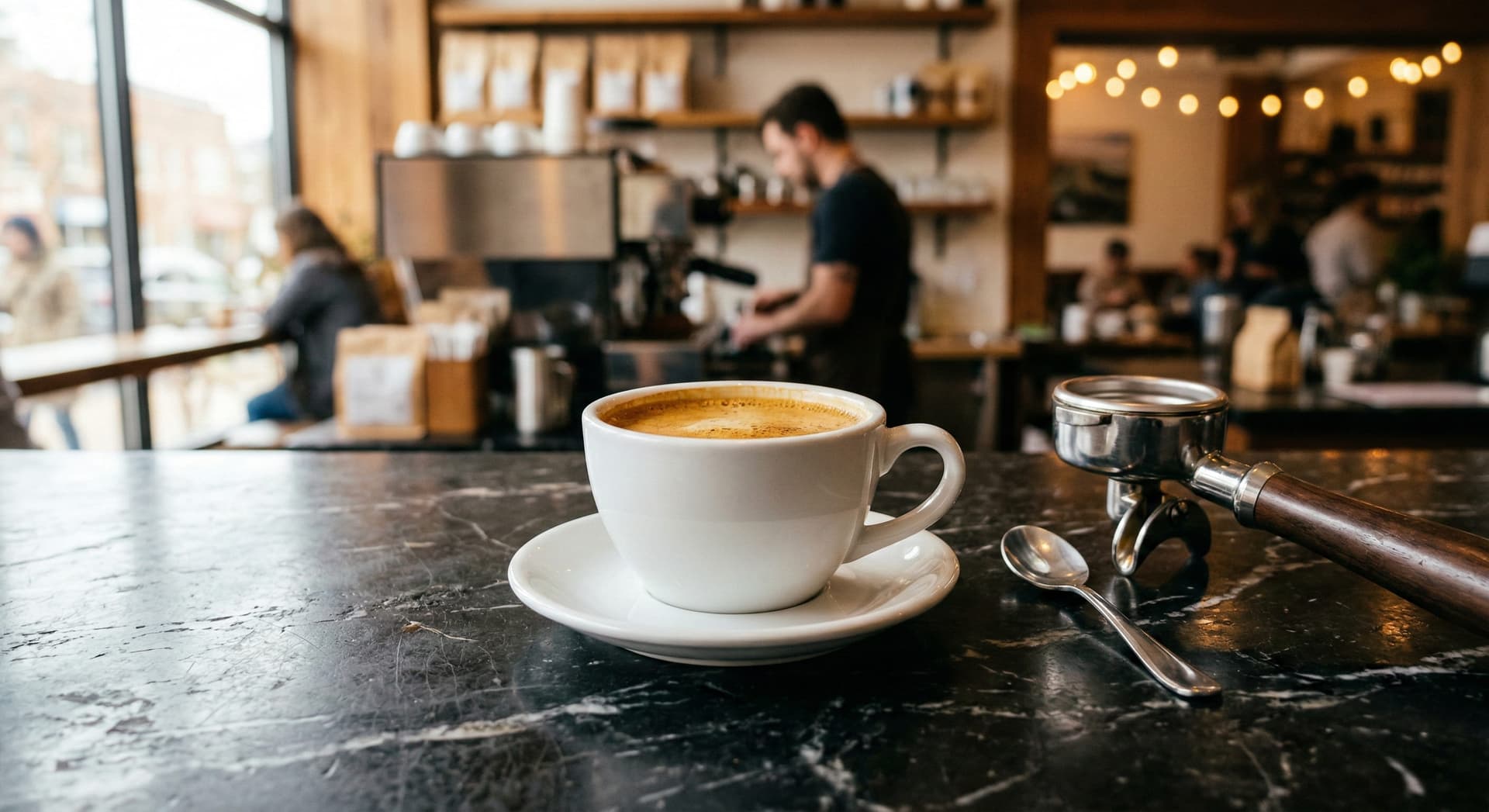
A lungo is a long espresso shot — pulled with the same coffee dose as a standard double but extended to roughly double or triple the liquid yield. Same 18g of grounds, but instead of stopping at 36g of liquid, you keep going to 54–72g. That extra water passes through the grounds under the same 9-bar pressure, extracting compounds a standard shot leaves behind. The result is a milder, more bitter espresso with a thinner body and, perhaps surprisingly, more caffeine.
I've been pulling lungos professionally for over 15 years — in high-volume specialty cafés on commercial La Marzocco machines and in home setups on Breville dual boilers. In that time I've tuned the grind for different beans, compared lungos side by side against standard doubles and americanos, and fielded every question about this drink from the café counter. What follows is what actually matters when it comes to the long espresso shot.
Lungo at a Glance
Lungo
- Dose:17–18g
- Yield:54–72g liquid
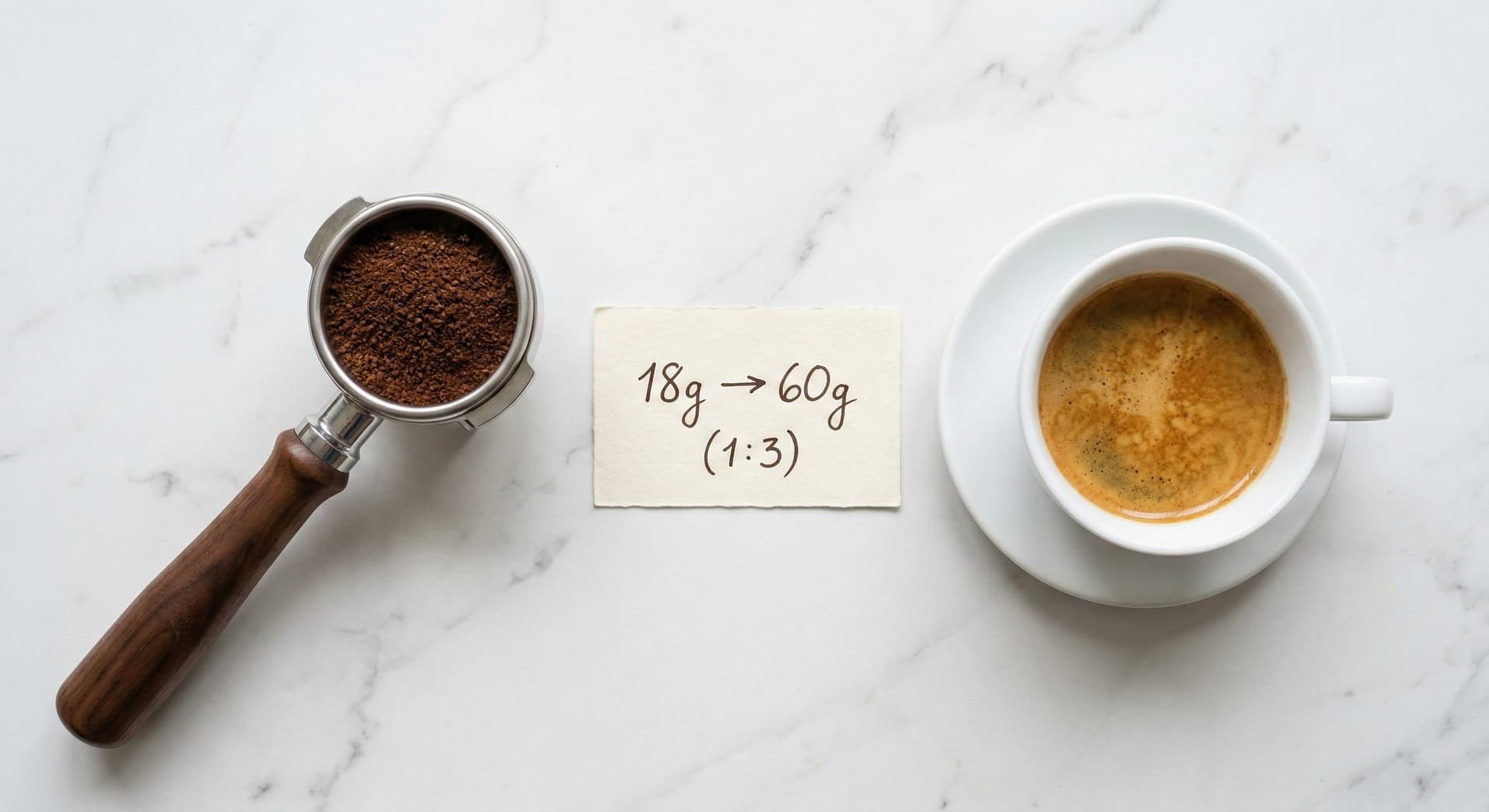
- Brew ratio:1:3 to 1:4
- Time:45–60 seconds
- Flavor:Mild, bitter, thin body
- Caffeine:Higher than espresso
Standard Double Espresso
- Dose:18g
- Yield:34–40g liquid
- Brew ratio:1:2
- Time:25–32 seconds
- Flavor:Balanced, slight bitter finish
- Caffeine:Moderate
What “Lungo” Actually Means
Lungo is Italian for “long.” The reference is to the extraction — a lungo is a long pull through the same grounds that would produce a standard double espresso. The name has been in use in Italian coffee culture since at least the 1950s, alongside its opposite, the ristretto (Italian for “restricted”). Where a ristretto stops early to capture only the sweetest early compounds, the lungo keeps going well past the point where bitterness starts to dominate.
Traditional Italian bars served lungos primarily for customers who wanted more volume without ordering two shots — it was a practical solution before the americano became widespread. Today, the lungo occupies a specific place on the espresso spectrum and is particularly prominent in Northern European coffee culture, where many café menus still list it as a standard offering.
Lungo Recipe: Brew Ratio & Parameters That Matter
Standard Lungo Parameters
- Dose: 17–18g ground coffee
- Yield: 54–72g liquid (60g is a practical midpoint for most medium-roast beans)
- Brew ratio: 1:3 to 1:4
- Extraction time: 45–60 seconds
- Water temperature: 93–95°C (199–203°F)
- Pressure: 9 bars
- Grind: 1–2 clicks finer than standard espresso
The Grind Adjustment Most People Miss
This is where most home baristas go wrong. They simply let their normal espresso shot keep running until more liquid accumulates — but that produces a channeled, hollow result. A proper lungo requires a finer grind than standard espresso, not the same or coarser.
The reasoning: a lungo extraction runs for 45–60 seconds instead of 25–32. If you use the same espresso grind, resistance in the puck drops sharply after the first 30 seconds as grounds compact and channels open. Water rushes through the path of least resistance, producing a sour, thin, uneven shot. A finer grind maintains adequate puck resistance throughout the longer extraction, giving you a consistent lungo rather than a ruined espresso.
My Tested Grind Settings (Eureka Mignon Specialita, Colombian Huila medium roast)
- Standard double: Setting 3.8 → 18g in / 36g out in 28 seconds
- Lungo: Setting 3.4 (1–2 clicks finer) → 18g in / 60g out in 50 seconds
- Both shots ran cleanly without channeling. The lungo had noticeably thinner crema and a more bitter, amber-colored liquid. Crema dissipated faster than the standard double.
Lungo vs Espresso: The Real Difference
The difference is more significant than it sounds on paper. Same dose, same machine, same beans — completely different drink. Here's why:
Extraction Chemistry
At 25–32 seconds (standard double), you've extracted most of the sweetness, the rich coffee oils, and a balanced portion of the mild bitterness. You've left behind the harsh, dry, astringent compounds that take longer to dissolve. A lungo continues for another 15–30 seconds, pulling those later-stage compounds into the cup.
This isn't a mistake — it's a deliberate extraction choice. For drinkers who want a larger volume of espresso-based coffee without diluting it with water (as in an americano), the lungo is a legitimate option. But you need to understand the flavor trade-off: you're trading sweetness and body for volume and caffeine. For a detailed look at how all espresso extraction variables interact, see our complete espresso guide.
| Feature | Ristretto | Standard Espresso | Lungo |
|---|---|---|---|
| Dose | 18g | 18g | 18g |
| Yield | 18–22g | 34–40g | 54–72g |
| Brew ratio | 1:1 to 1:1.2 | 1:2 | 1:3 to 1:4 |
| Extraction time | 14–20 sec | 25–32 sec | 45–60 sec |
| Body | Thick, syrupy | Full | Thin, watery |
| Sweetness | High | Moderate | Low |
| Bitterness | Very low | Moderate | High |
| Caffeine | Slightly less | Standard | More |
| Flavor intensity | Very high | High | Moderate |
Side-by-Side Taste Test
In my testing sessions with a Breville Dual Boiler (BES920) using Colombian Huila beans (medium roast, 12 days off roast), same 18g dose across all three:
Ristretto (18g → 20g)
- Aroma: Caramel, dried cherry
- Taste: Sweet, no bitterness
- Body: Thick, coating
- Finish: Clean, caramel
Espresso (18g → 36g)
- Aroma: Caramel, fruit, mild
- Taste: Balanced sweetness
- Body: Full, slight dryness
- Finish: Slight bitter, pleasant
Lungo (18g → 60g)
- Aroma: Lighter, slightly dry
- Taste: Mild, bitter forward
- Body: Thin, watery
- Finish: Dry, lingering bitter
Lungo vs Americano: Not the Same Drink
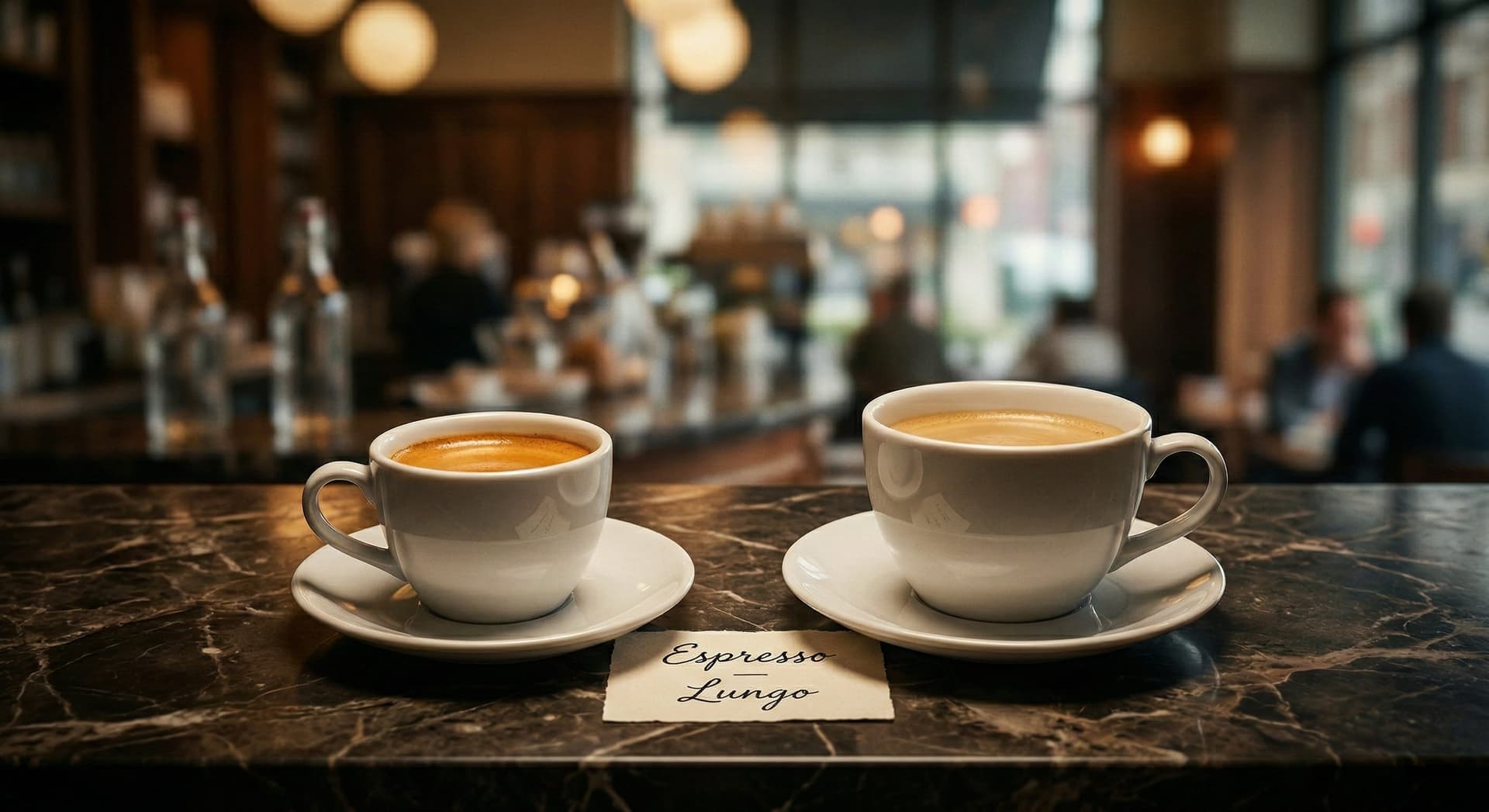
This is the comparison that generates the most confusion, and it matters because the two drinks taste very different despite having similar volumes of liquid in the cup. Understanding the distinction is one of the more useful things you can know about espresso-based drinks.
How Each Is Made
Lungo
Same dose (18g), more water forced through the grounds under 9 bars of pressure. The additional water extracts through the coffee puck — pulling out later-stage bitter compounds that a standard double leaves behind.
- Volume: ~60ml (2 oz)
- Water path: Through the puck under pressure
- Dilution: None — extraction, not dilution
- Crema: Thinner than espresso, present
- Taste: Bitter, mild, some espresso character
Americano
Standard double espresso (18g → 36g) pulled normally, then 4–6 oz of hot water added to the cup afterward. The espresso extraction itself is complete and correct — the water just dilutes it.
- Volume: ~180–240ml (6–8 oz)
- Water path: Added to already-extracted espresso
- Dilution: Yes — espresso diluted with hot water
- Crema: Disrupted by added water
- Taste: Mild, espresso sweetness preserved
The practical implication: if you want a larger, weaker espresso drink that still tastes like good espresso, order an americano. If you want a concentrated espresso experience with more volume and more caffeine but can tolerate more bitterness, a lungo is the right choice. Most people who think they want a lungo actually prefer an americano once they try both.
What Does a Lungo Taste Like?
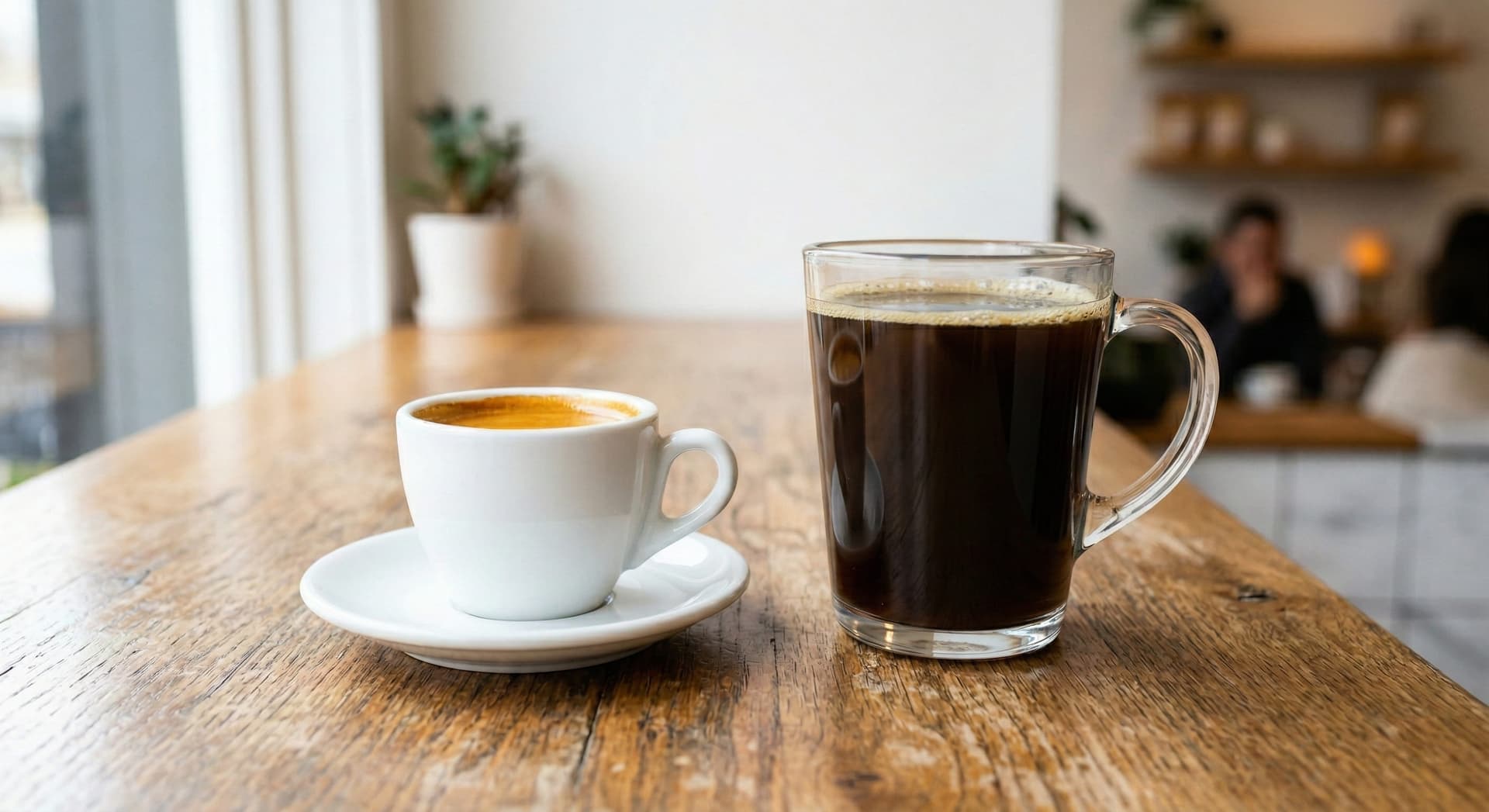
Honest answer: a lungo tastes like an espresso where the best part has been diluted by the worst part. That's not meant dismissively — it's the most accurate description. The sweetness and body of a good espresso are present in reduced form, while the bitterness that characterizes the later extraction stages moves to the foreground.
The crema is thinner and dissipates faster. The mouthfeel is closer to strong drip coffee than to espresso. There's still recognizably an espresso foundation — you're drinking something extracted through pressure, with the coffee oils and microfoam particles that only pressurized extraction produces — but the concentration is much lower.
Dark roast beans (Italian/French roast)
This is where lungo actually works well. Dark roasts are inherently bitter and less sweet, which means the extra bitterness a lungo extracts is less of a departure from the bean's character. The result is a bold, intensely roasted drink that holds up well over the longer extraction. If you enjoy dark roast espresso, a lungo from those beans is a valid, enjoyable drink.
Medium roast beans (specialty espresso blends)
Mixed results. The first half of a lungo from a medium-roast blend tastes excellent — you're getting the standard espresso extraction. The second half progressively introduces bitterness that competes with the caramel and fruit notes. The overall effect is a beverage that never quite delivers on what the beans are capable of. I personally find medium-roast lungos underwhelming compared to pulling them as a standard double.
Light roast single-origin beans
Not recommended. Light roasts are already more acidic and require careful extraction management to avoid sourness. Extending the extraction to lungo ratios tends to produce a harsh, simultaneously sour and bitter result. Light-roast espresso is best as a ristretto or standard double at controlled extraction parameters.
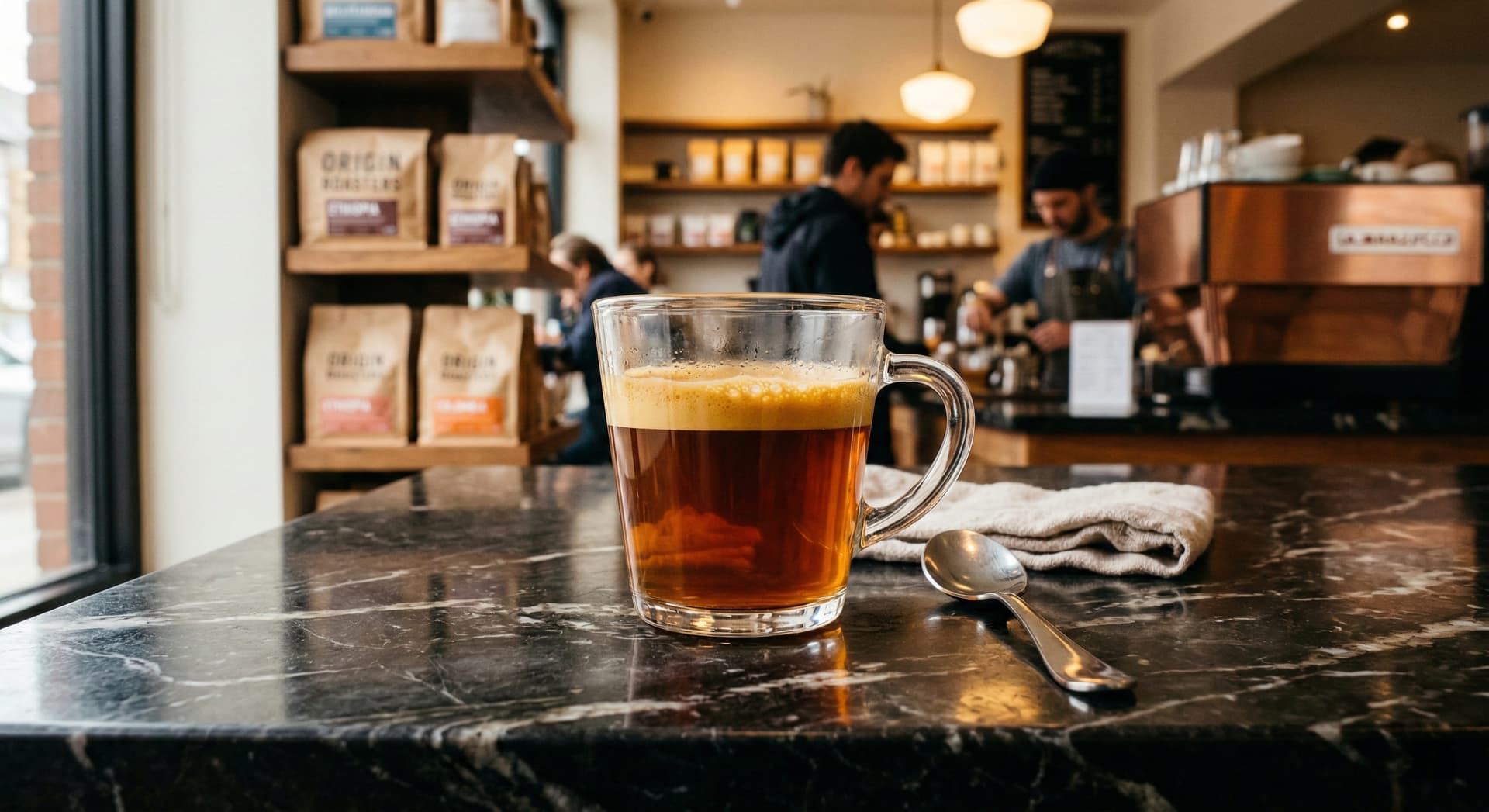
Lungo Caffeine: More or Less Than Espresso?
This surprises most people: a lungo has more caffeine than a standard double espresso pulled from the same dose.
Caffeine is a water-soluble compound that extracts continuously throughout the shot. More water through the grounds = more caffeine extracted. A lungo (18g → 60g) extracts roughly 10–15% more caffeine than a standard double (18g → 36g) because more total water passes through the grounds. The caffeine concentration per ml is lower (the lungo is more dilute), but the total caffeine in the cup is higher.
To put approximate numbers on it: a standard double shot typically contains 120–140mg of caffeine. A lungo from the same dose delivers roughly 130–160mg. The difference is modest but real — and it's the opposite of what most people assume based on the lungo's milder taste.
For context on the full caffeine picture across espresso-based drinks, and how drink size affects total caffeine intake, our complete espresso guide covers caffeine per serving across every standard preparation.
Lungo on Nespresso & Pod Machines
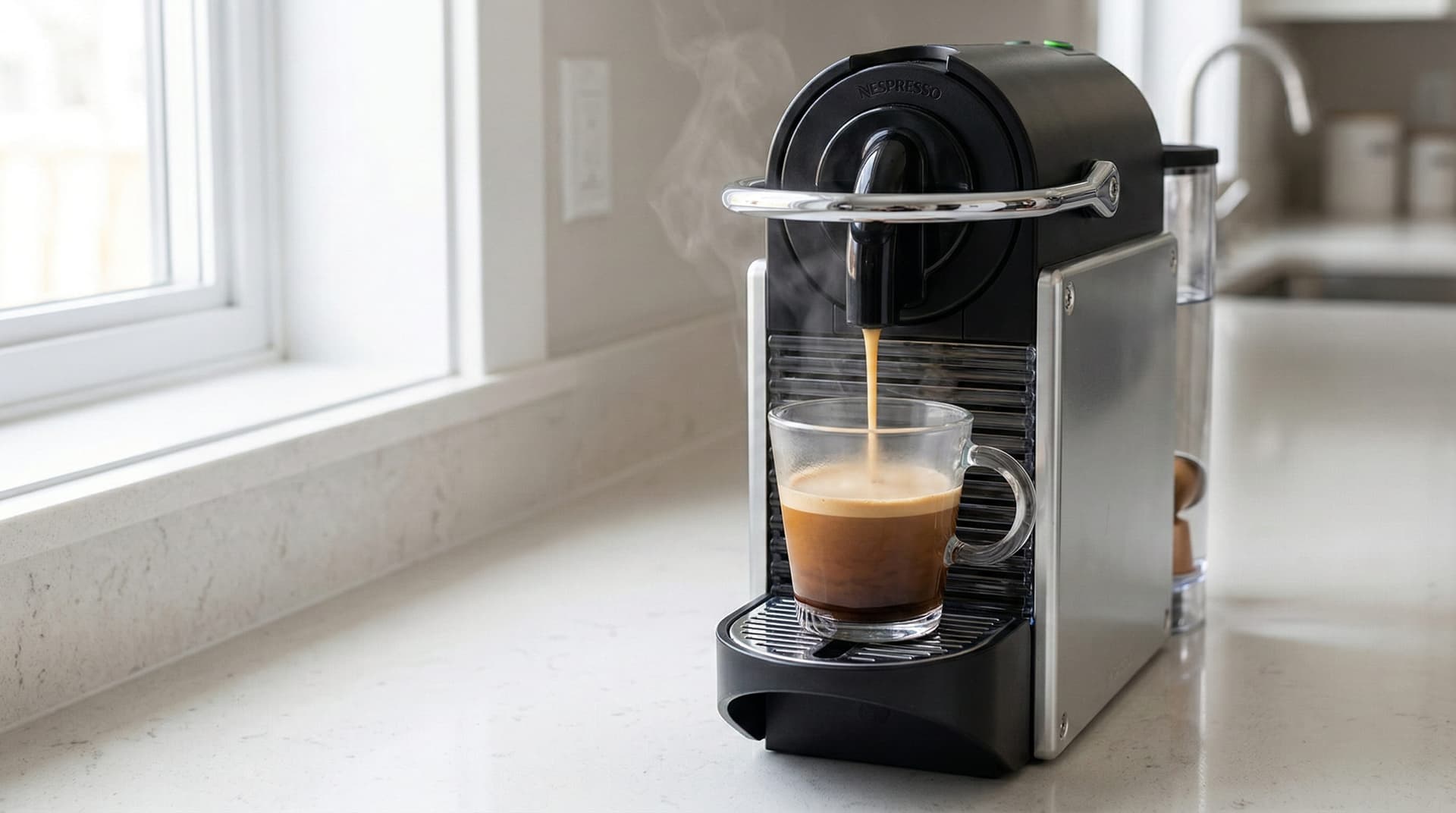
The lungo button on Nespresso machines is one of the most frequently asked-about settings I encounter, so it's worth addressing directly.
On Nespresso Original line machines, the lungo setting forces approximately 110ml (3.7 oz) of water through the capsule, compared to 40ml for the espresso setting. The same capsule, more water, more extraction. This is a genuine lungo in extraction terms — more water through the same grounds under pressure. The result is a milder, more bitter drink than the espresso setting, which is exactly correct.
Nespresso offers capsules specifically formulated for lungo extraction (such as the Fortissio Lungo and Vivalto Lungo lines on Original, and Gran Lungo on Vertuo). These capsules are designed to produce a balanced cup at lungo volumes — they typically use a coarser or lighter grind internally to compensate for the extended extraction. Using an espresso-optimized capsule at lungo volume will taste more bitter and thin than using a lungo-specific one.
Nespresso Volume Guide
| Setting | Volume | Character |
|---|---|---|
| Ristretto | 25ml (0.8 oz) | Sweet, concentrated |
| Espresso | 40ml (1.4 oz) | Balanced, standard espresso |
| Lungo | 110ml (3.7 oz) | Mild, slightly bitter — lungo |
When Would You Actually Want a Lungo?
I won't pretend the lungo is my go-to. For most beans at most roast levels, a standard double or a well-made americano delivers more from the coffee. But there are specific situations where a lungo is genuinely the right choice:
1. When using dark-roasted espresso blends
Dark roasts tolerate a lungo extraction well because the additional bitterness from extended extraction is less jarring against an already bold, roasty profile. Traditional Italian espresso blends (Lavazza, Illy, and similar) were designed for this drink. If you keep Italian-style dark roast at home, a lungo is an excellent option.
2. When you want more caffeine without an americano
The lungo extracts more caffeine than a standard double while staying in a smaller, more concentrated format than an americano. If you want a concentrated espresso-style drink with maximum caffeine in a smaller cup, a lungo delivers that better than adding a third shot.
3. On Nespresso with lungo-specific capsules
Nespresso's lungo capsules are genuinely formulated well for the lungo volume. The Gran Lungo on Vertuo and the Fortissio/Vivalto on Original are among the better-calibrated lungo experiences available without a traditional espresso machine.
4. When comparing espresso extraction across ratios
This is a legitimate use case for home baristas dialing in beans. Pulling the same dose to different yields — ristretto, standard double, lungo — reveals how those particular beans extract across the spectrum. It's educational, and occasionally you find a bean that tastes better at lungo ratios than expected.
To understand how the lungo fits into the broader landscape of espresso-based drinks — where it sits relative to macchiato, latte, flat white, and americano — our macchiato vs latte guide covers the full range of milk-based espresso drinks and how espresso intensity determines flavor balance across them.
Frequently Asked Questions
Frequently Asked Questions
A lungo is a long espresso shot — pulled with the same coffee dose as a standard double (typically 18g) but extended to a much higher liquid yield of 54–72g, giving a 1:3 to 1:4 brew ratio.
The name comes from the Italian word for "long," referring to the extended extraction time and larger volume.
The result is a milder, more bitter espresso with a thinner body than a standard double — more coffee in the cup, but with a weaker and more bitter flavor profile.
Get Coffee Tips
Join our newsletter for expert reviews and brewing guides.