Differences in Coffee Drinks (Beginner Menu Guide)
Master every espresso drink from latte to macchiato and navigate café menus with confidence
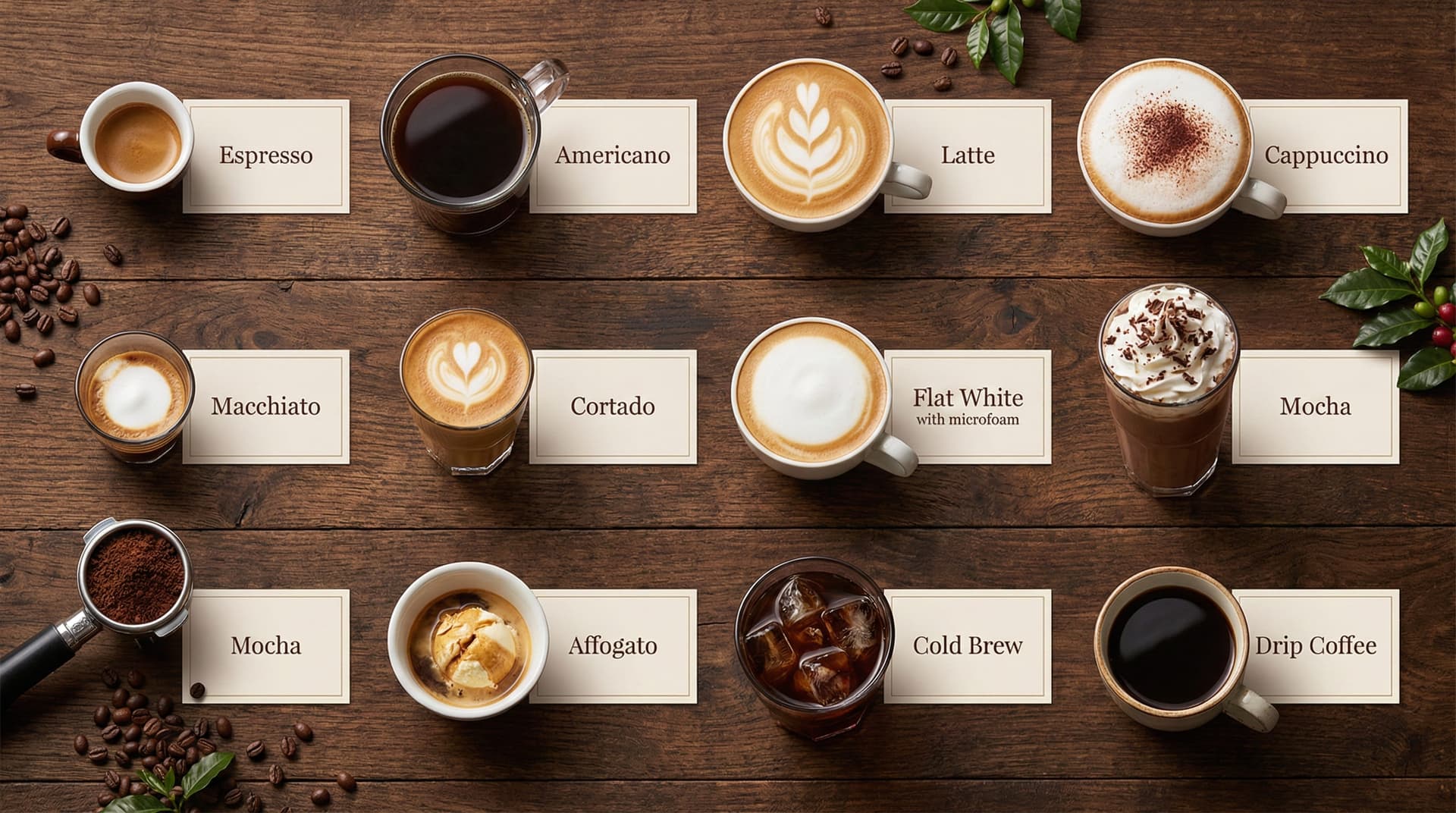
After fifteen years training baristas across the Pacific Northwest, I've heard the same confession hundreds of times: “I just order the same thing because I don't understand the menu.” If you've ever stared at a café board feeling overwhelmed, this guide has you covered. The differences in coffee drinks can seem daunting, but every drink follows predictable patterns once you know the rules. Think of this as your coffee menu explained—no Italian degree required.
This guide has the types of coffee drinks explained clearly: from drip and espresso basics through lattes, cappuccinos, flat whites, and cortados. We'll cover espresso drinks differences in plain English—what changes between them, how milk affects flavor, and which drink suits your taste. By the end, any café menu worldwide will feel instantly readable.
I've watched hundreds of customers order cappuccinos when they wanted lattes, or receive a 6-oz drink when they imagined a 16-oz one. Armed with the right knowledge, those surprises disappear. Let's start with the fundamentals.
Coffee Drinks Differences – Quick Overview
- →Drip coffee → Gravity brewed, larger volume, lighter body
- →Espresso → Pressurized, concentrated, 1–2 oz
- →Americano → Espresso + hot water
- →Latte → Espresso + lots of steamed milk
- →Cappuccino → Equal parts espresso, steamed milk, and foam
- →Flat White → Velvety microfoam, less milk than a latte
- →Cortado → Equal espresso & milk, low foam
What You'll Learn
- Order confidently at any café
- Understand espresso vs drip coffee
- Navigate milk-based drinks
- Choose drinks for your taste
- Communicate with baristas
Coffee Fundamentals: The Two Main Bases
Before diving into specific drinks, understanding a few key concepts makes everything else clear. In fifteen years testing coffee equipment and training baristas, I've found that most café confusion stems from not recognizing the fundamental split between drip coffee and espresso-based beverages. Think of these as the foundation of a house—everything else is built on top.
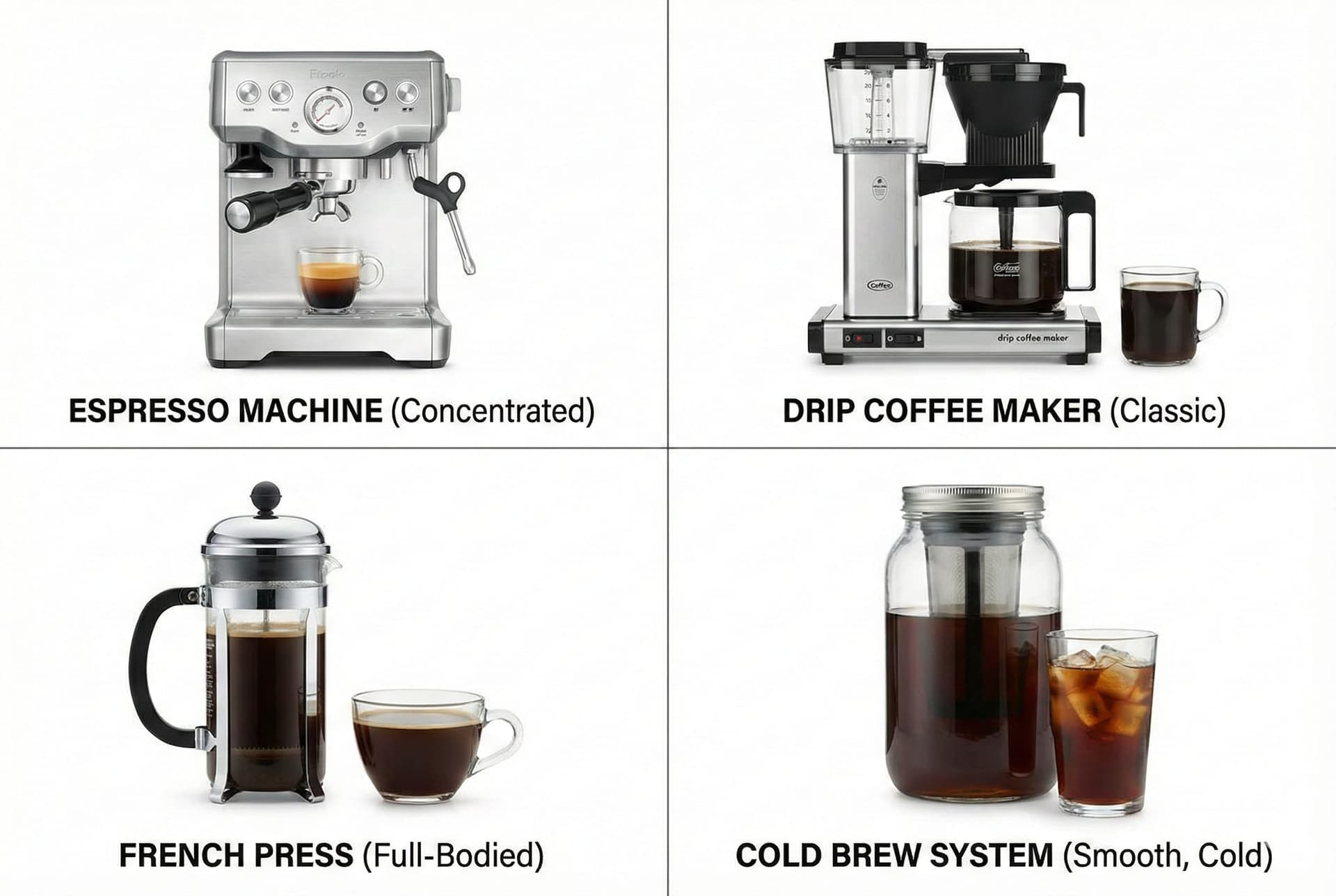
These two methods don't just produce different volumes—they create entirely different flavor profiles, textures, and chemical compositions. When hot water slowly drips through coffee grounds via gravity, you get a clean, nuanced extraction that highlights the coffee's origin characteristics. When pressurized water forcefully blasts through finely-ground coffee in 25-30 seconds (I dial in to 28 seconds for optimal extraction), you create an intensely concentrated liquid with a completely different structure. The presence or absence of crema (that golden foam layer on espresso) alone changes everything about how the drink tastes and feels.
Understanding pressure is crucial here. Drip coffee uses zero pressure—just gravity pulling water through grounds. Espresso machines generate 9 bars of pressure (about 130 pounds per square inch), which is roughly equivalent to three times the pressure in a car tire. This immense pressure extracts oils, colloids, and compounds that gravity-based brewing simply can't access. That's why espresso has that syrupy body and intense flavor concentration, while drip coffee tastes cleaner and lighter even when brewed strong.
The grind size reveals everything about these methods. Drip coffee uses medium grounds (like coarse sand) because water needs several minutes to extract properly. Espresso requires powder-fine grounds because extraction happens in just 25-30 seconds under high pressure. If you tried to make drip coffee with espresso-fine grounds, it would take hours and taste terrible. If you tried to pull espresso through coarse grounds, water would rush through too quickly, producing sour, weak shots. Through hands-on testing of over 50 different espresso machines and grinders, I've learned that the methods aren't interchangeable—they're fundamentally different approaches to extraction.
Here's why this matters practically: when you order “coffee” at a café, the barista needs to know which base you want. In most American cafés, “coffee” means drip coffee by default. But if you actually want a latte or cappuccino, you need to specify because those are espresso-based. This confusion causes thousands of ordering mistakes daily—people say “coffee” expecting something with milk, then receive plain drip coffee. Understanding this distinction prevents 90% of café ordering problems.
1. Drip/Filter Coffee
- Hot water passes through grounds via gravity
- Produces large quantities (8-60 oz)
- Lower concentration
- Brewing time: 3-8 minutes
- Examples: Drip coffee, pour-over, French press
2. Espresso
- Pressurized water (9 bars) forced through grounds
- Produces small shots (1-2 oz)
- High concentration
- Brewing time: 25-30 seconds
- Base for: lattes, cappuccinos, macchiatos, etc.
Want a deeper dive into espresso itself? What is espresso? Complete beginner's guide →
Espresso-Based Drinks by Milk Amount
Once you understand that espresso is the base, every espresso drink becomes a simple formula: espresso plus varying amounts of milk and foam. That's it. The entire espresso drink menu—from macchiatos to lattes—exists on a spectrum determined by one variable: the ratio of espresso to milk. Master this concept and you'll never be confused by a café menu again.
Through my hands-on equipment reviews, I've tested over 50 different espresso machines' steam wands. The difference between good microfoam and mediocre foam comes down to steam pressure consistency—quality machines maintain 1.0-1.2 bars of steam pressure, while budget models fluctuate wildly, creating inconsistent milk texture. This is why the same drink can taste dramatically different between cafés: proper milk steaming requires both skill and reliable equipment.
Temperature matters more than you think. Through years of sensory training with baristas, I've consistently demonstrated that milk steamed beyond 160°F starts breaking down proteins and sugars, creating a scalded taste. The sweet spot I recommend—and teach in my workshops—is 145-155°F (my preferred target is 150°F). You can still taste the coffee clearly, and the milk retains its natural sweetness. I use a steam thermometer in my testing protocol to verify this across different machines.
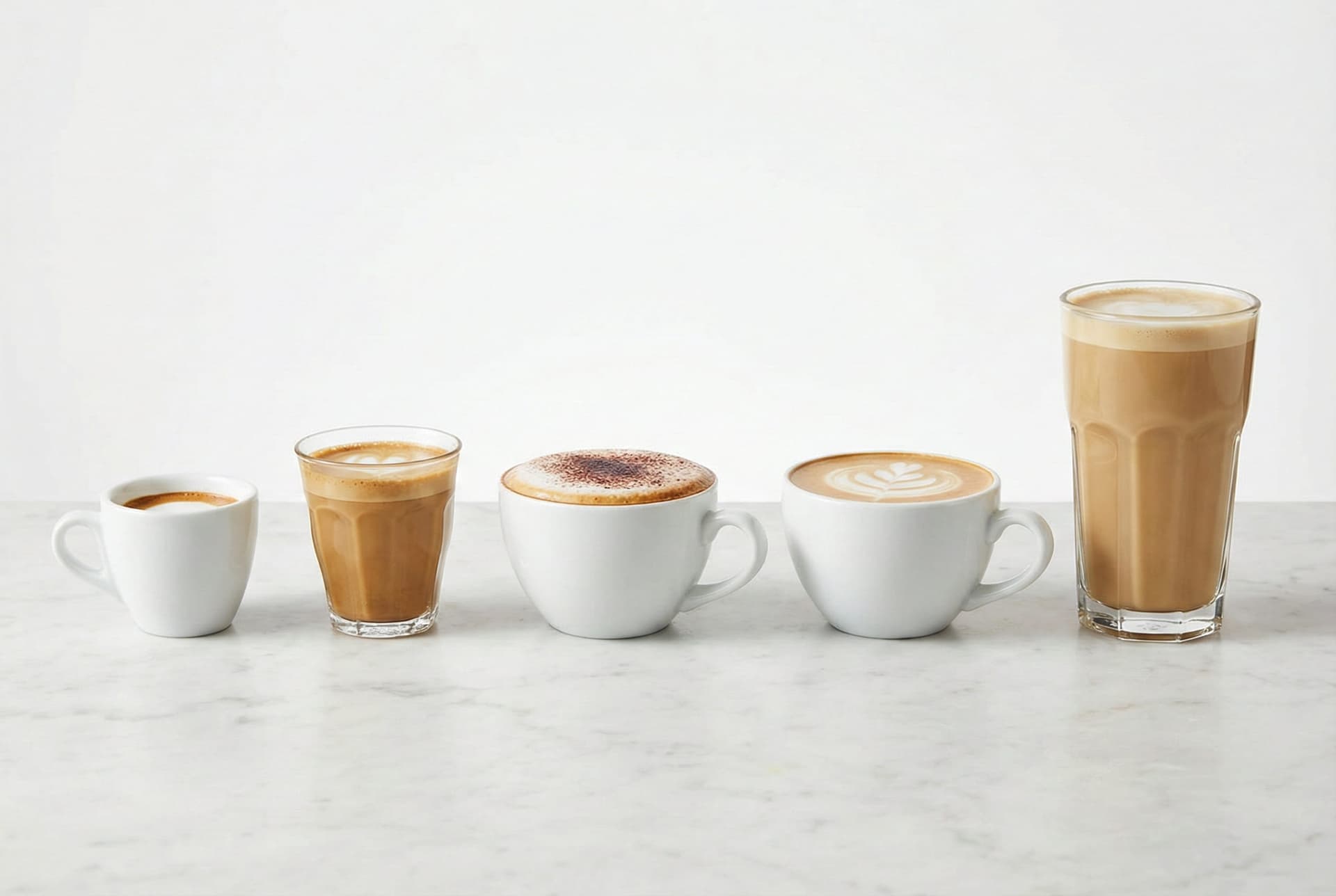
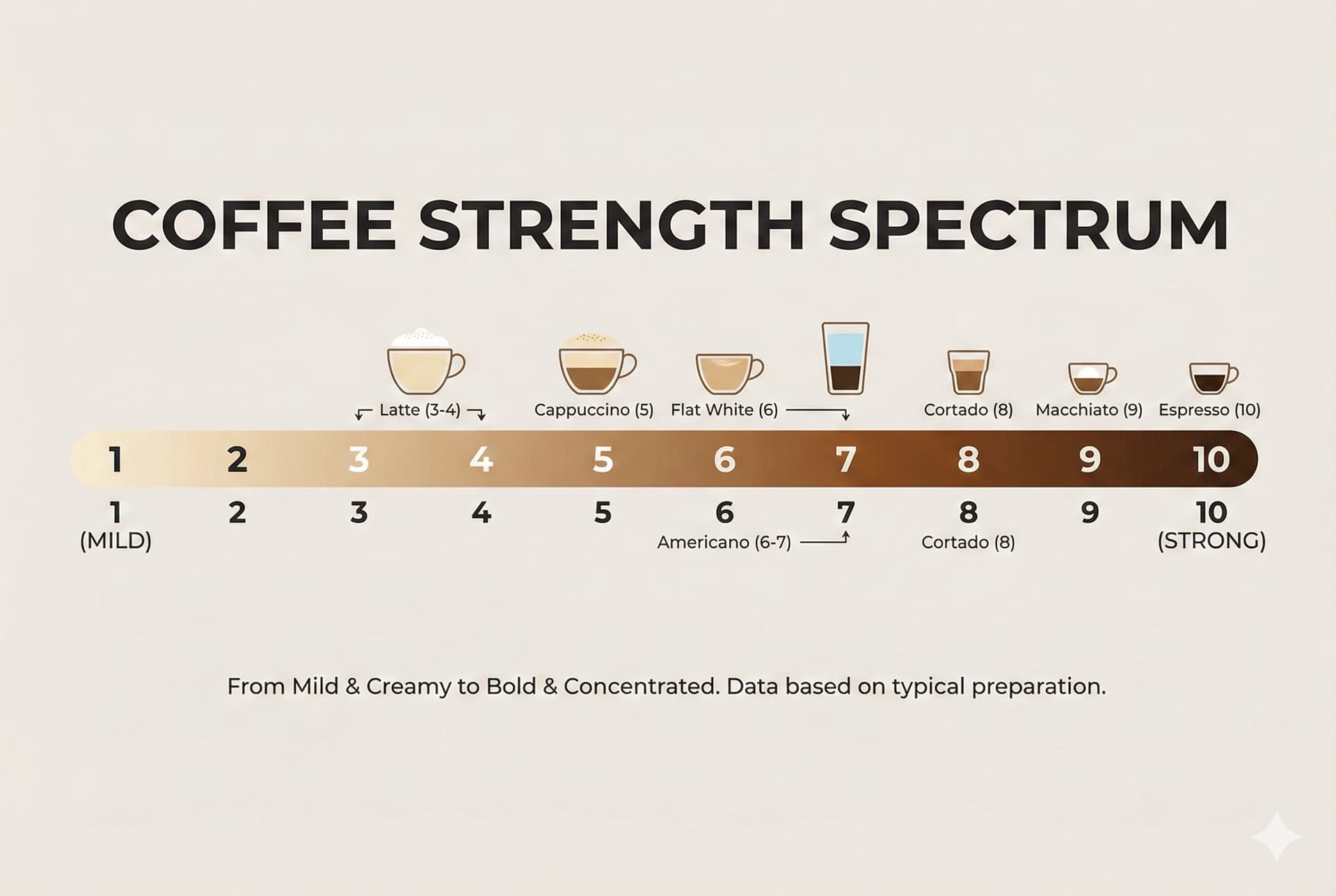
| Drink | Espresso | Milk | Total Size | Intensity |
|---|---|---|---|---|
| Espresso | 2 oz | 0 | 2 oz | 10/10 |
| Macchiato | 2 oz | 0.5 oz | 2-3 oz | 9/10 |
| Cortado | 2 oz | 2 oz | 4 oz | 7/10 |
| Cappuccino | 2 oz | 4 oz (milk+foam) | 6 oz | 6/10 |
| Flat White | 2 oz | 4-5 oz | 6-7 oz | 6/10 |
| Latte | 2 oz | 6-8 oz | 8-12 oz | 4/10 |
Straight Espresso: The Foundation
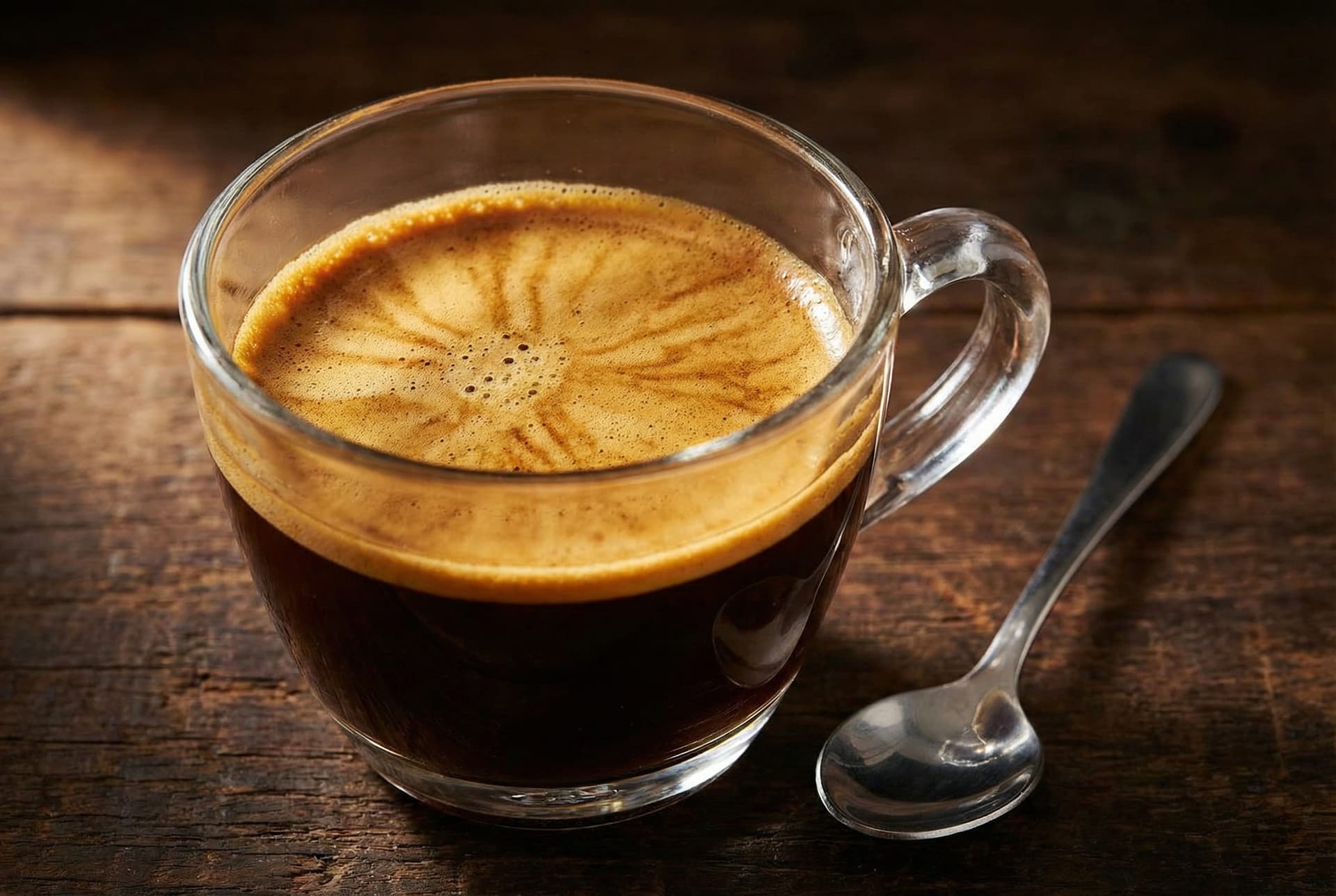
A double espresso shot (doppio) is the starting point for understanding all other drinks. It's 2 ounces of pure, concentrated coffee extracted under pressure in 25-30 seconds. The crema (golden foam) on top indicates proper extraction. Taste it once to understand what you're working with—it's intensely bitter, slightly sweet, with syrupy body. Most beginners find it overwhelming, which is why milk-based drinks exist.
When to Order: After meals (Italian tradition), when you need concentrated caffeine quickly (64-128mg in seconds), or when evaluating coffee quality (espresso reveals everything about bean quality and barista skill). Not recommended as a first coffee drink unless you enjoy bitter flavors.
What to Expect: Small cup (demitasse), served immediately, consumed within 60 seconds for optimal temperature and crema. At specialty cafés, often served with sparkling water to cleanse your palate before drinking. Price: $3-4.
Macchiato: Espresso with a Touch
The traditional espresso macchiato is a double shot “marked” (macchiato in Italian) with about half an ounce of foamed milk. This tiny dollop of foam slightly softens the espresso's intensity without masking its character. It's still 90% espresso-forward—you're barely tempering the bitterness, not creating a milk drink. The foam adds a touch of sweetness and textural contrast.
When to Order: When you want to appreciate espresso quality with slight mellowing. Popular in Italy as a mid-morning drink. For coffee enthusiasts who find straight espresso slightly too intense but don't want a full milk drink. Perfect size for tasting coffee bean characteristics without bitterness overwhelming your palate.
What to Expect: Served in small glass or demitasse (2-3 oz total), consumed quickly like espresso, pronounced coffee flavor dominates. Price: $3.50-4.50.
Common Confusion: At chains like Starbucks, “macchiato” refers to a Caramel Macchiato—a large latte with vanilla and caramel, bearing zero resemblance to traditional macchiatos. Specify “espresso macchiato” or “traditional macchiato” to avoid receiving the wrong drink.
Cortado: The Perfect Balance
Cortado means “cut” in Spanish—espresso cut with an equal amount of steamed milk (2 oz espresso + 2 oz milk = 4 oz total). This 1:1 ratio creates balanced harmony between coffee intensity and milk sweetness. The milk is steamed but barely foamed, creating a smooth, integrated drink where neither element dominates. Many baristas consider this the most technically perfect espresso-milk ratio.
When to Order: When you want pronounced coffee flavor with smoothness and drinkability. Perfect mid-morning drink—substantial enough to be satisfying but small enough not to fill you up. Ideal for specialty café orders where you want to appreciate their espresso quality. Popular with coffee professionals who want balance without excess milk.
What to Expect: Served in small glass (Gibraltar glass traditionally), 4 oz total volume, warm but not hot temperature (milk ratio keeps it drinkable immediately), balanced flavor profile. Price: $4-5.
Pro Tip: If a café makes excellent espresso, order a cortado to appreciate it with minimal milk interference. If their espresso is mediocre, order a latte where milk can compensate for coffee deficiencies.
Cappuccino: The Classic Trinity
The traditional Italian cappuccino follows a 1:1:1 ratio—equal parts espresso, steamed milk, and milk foam (2 oz each = 6 oz total). This creates a drink where coffee remains prominent but foam adds substantial texture and insulation. The foam cap should be thick enough to support a spoon, creating a distinct layered experience. When properly made, each sip delivers coffee flavor, milk sweetness, and airy foam texture simultaneously.
When to Order: Breakfast or morning drink (Italians never order cappuccinos after 11 AM). When you want a coffee-forward drink with substantial foam texture. Perfect for appreciating latte art while maintaining strong coffee presence. Ideal size when you want something more than espresso but less than a full latte.
What to Expect: Small cup (6 oz traditional, though chains often serve 12+ oz versions), thick foam layer on top, hotter temperature than cortado due to foam insulation, coffee flavor remains prominent. Price: $4-5.50.
Common Mistake: Ordering a “large cappuccino” at traditional cafés. True cappuccinos are small by definition. What chains call a “large cappuccino” is actually a latte with extra foam. If you want more volume, order a latte instead—don't ask for a traditional drink in non-traditional sizes. For the full breakdown — dry vs wet cappuccino, foam technique, and what separates a good cappuccino from a bad one — see our complete cappuccino guide.
Flat White: The Velvety Middle Ground
Originating from Australia/New Zealand, the flat white sits between a cortado and cappuccino—typically 2 oz espresso (often ristretto shots for intensity) with 4-5 oz of microfoam milk (6-7 oz total). The key distinction is the milk texture: velvety microfoam without the thick foam cap of a cappuccino. This creates a smoother, more integrated drink where milk and espresso blend seamlessly rather than layering distinctly.
When to Order: When you want something stronger than a latte but smoother than a cappuccino. Perfect for those who dislike thick foam but want coffee presence. Popular morning drink that delivers caffeine with balanced milk smoothness. The ristretto shots (shorter, sweeter extraction) make it ideal when you want intensity without bitterness.
What to Expect: Small to medium size (6-7 oz), glossy microfoam surface perfect for latte art, stronger coffee flavor than a latte despite similar size, velvety texture throughout. Price: $4.50-5.50.
Quality Indicator: A well-made flat white reveals barista skill—the microfoam should be silky smooth, not frothy. If you receive a drink with thick foam, it's actually a small cappuccino. The microfoam should pour like liquid velvet, creating glossy latte art without foam bubbles.
Latte: The Approachable Gateway
Caffè latte means “milk coffee” in Italian, and that's exactly what it is—2 oz espresso with 6-10 oz steamed milk (8-12 oz total), creating a drink that's approximately 80-85% milk. The generous milk ratio makes espresso accessible for beginners, softening its intensity while retaining coffee character. A thin layer of microfoam on top (about 0.25 inches) provides the canvas for latte art.
When to Order: Your first espresso drink ever—the milk ratio makes it impossible to be too strong or bitter. When you want something comforting and smooth. All-day drink (unlike cappuccinos). Perfect for flavored variations (vanilla, caramel) since the milk ratio can accommodate syrups without becoming too sweet. Ideal when working or studying—the larger volume and gentle flavor won't interrupt concentration.
What to Expect: Large cup (8-16 oz depending on size ordered), smooth and milky throughout, coffee flavor present but gentle, minimal foam (just enough for latte art), warm temperature ideal for slow sipping. Price: $4.50-6.
Progression Path: Start with a 12 oz latte. Once comfortable, try a cappuccino (less milk, more coffee presence). Then a flat white (smaller, stronger). Eventually a cortado (half milk, half espresso). This progression gradually increases coffee intensity as your palate adapts, preventing the shock of jumping straight to strong drinks.
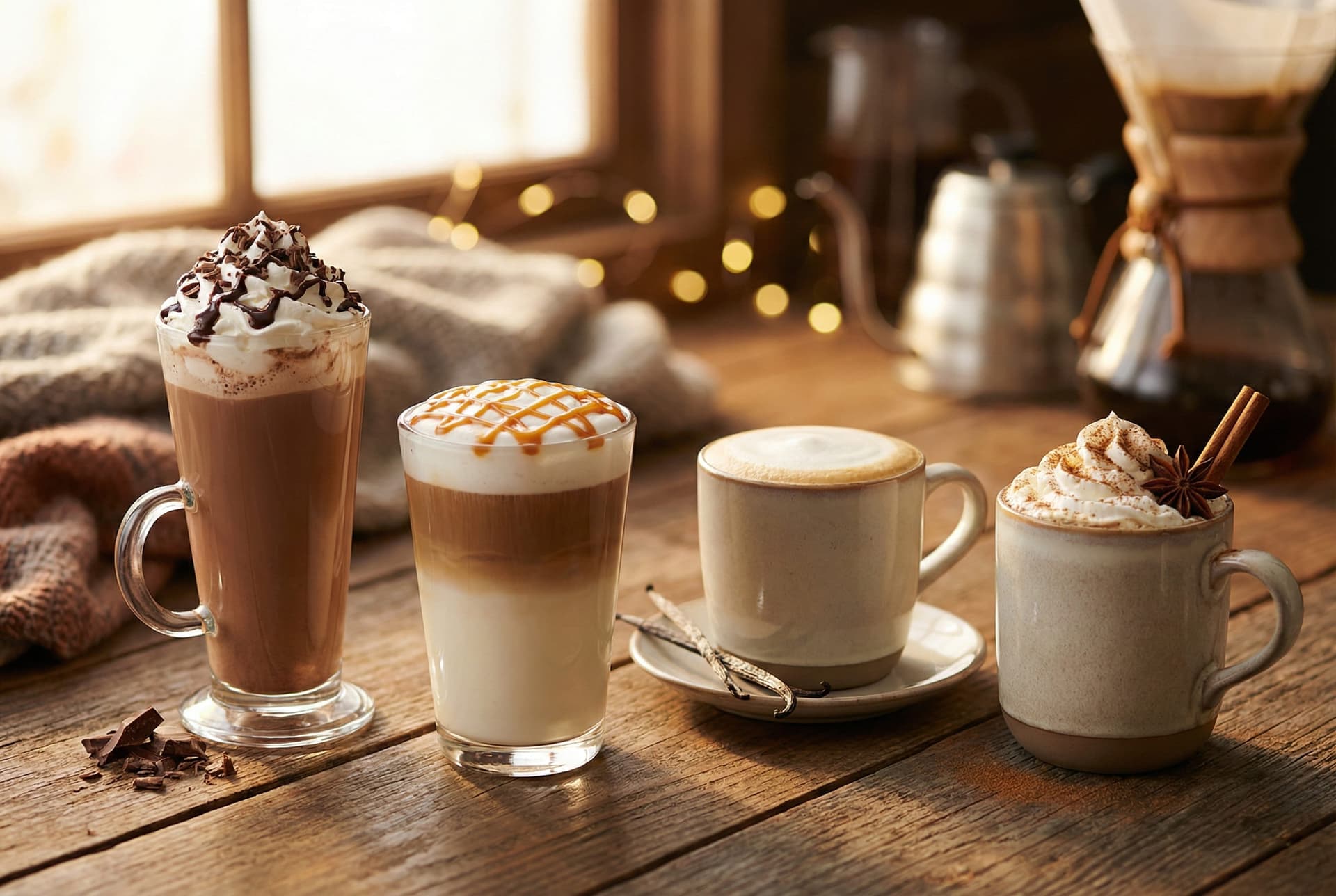
Looking for less common espresso-based drinks? Alternative espresso drinks guide →
Black Coffee Options
Black coffee is coffee without milk, but the brewing method dramatically changes the final product. Each method extracts different compounds from the beans, creating unique flavor profiles, body, and caffeine levels. Understanding these differences helps you choose the right black coffee for different situations and taste preferences.
Regular Drip Coffee
What It Is: Ground coffee brewed with hot water dripping through filter
Size: 8-20 oz | Caffeine: 95-200mg | Price: $2-3
The Process: Medium-ground coffee sits in a paper or metal filter. Hot water (195-205°F) slowly drips through via gravity over 4-6 minutes. The paper filter traps oils and fine particles, producing a clean, bright cup that highlights bean origin characteristics. This is the most common brewing method worldwide because it's simple, consistent, and produces large quantities simultaneously.
Flavor Profile: Clean, bright, with nuanced flavors depending on bean origin. Ethiopian beans might taste fruity and floral. Colombian beans lean toward nutty chocolate notes. The clarity of drip brewing lets you taste these subtleties. Body is light to medium—it drinks more like tea than syrup. Acidity (brightness) is typically pronounced, creating a crisp, refreshing sensation.
When to Order: All-day drinking since it's gentle enough for multiple cups. Breakfast pairing (acidic brightness cuts through fatty foods). When you want to actually taste the coffee bean's origin characteristics. Perfect for working or studying—you can sip slowly without it getting too cold or concentrated. Most economical caffeine source at cafés.
Common Mistakes: Adding sugar before tasting (masks the nuanced flavors you paid for). Drinking it scorching hot (burns your palate and hides flavor). Expecting espresso intensity (drip is intentionally gentler and cleaner). Letting it sit on the burner for hours (becomes bitter and burnt-tasting after 20 minutes).
Americano
What It Is: Espresso shots diluted with hot water
Size: 8-16 oz | Caffeine: 128-255mg | Price: $3-4.50
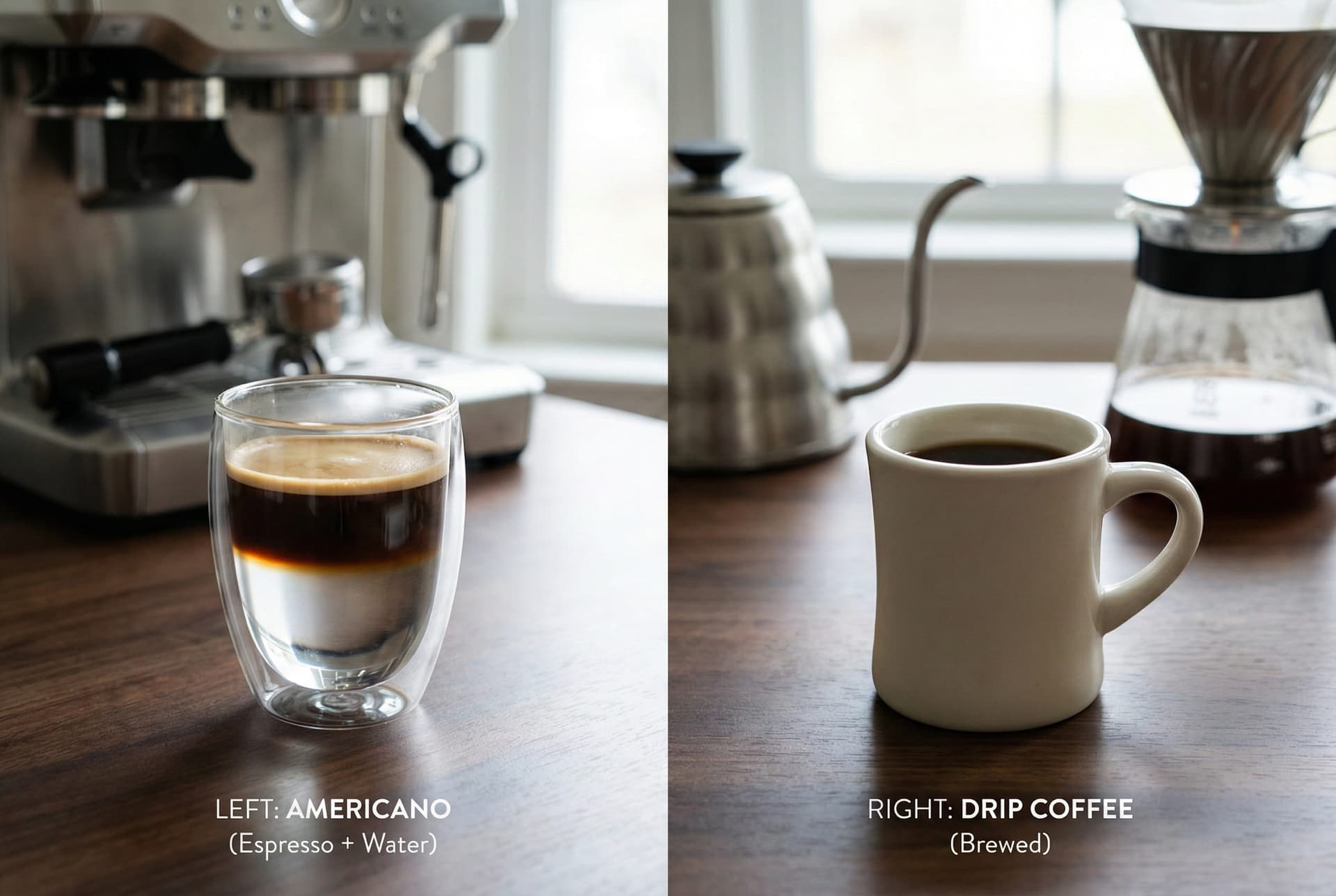
The Process: Pull double espresso shots (2 oz) using finely-ground coffee and 9 bars of pressure. Add 6-14 oz of hot water depending on desired strength. The water dilutes concentration but can't undo espresso's unique extraction profile. Originated during WWII when American soldiers in Italy wanted larger, less intense coffee drinks—they diluted espresso to approximate drip coffee volume.
Flavor Profile: More intense and syrupy than drip coffee despite similar volume. The espresso extraction creates bolder, darker flavors with less acidity and more bitterness. You'll taste roasted notes, chocolate, and caramel more prominently. Body is fuller and more coating than drip coffee. The crema from espresso adds subtle sweetness and aromatic oils that drip coffee lacks entirely.
When to Order: When you want espresso flavor in a larger, slower-drinking format. If drip coffee tastes too thin or weak for your preference. Morning drink when you want substantial caffeine (a 16 oz Americano with triple shots delivers 192mg). When café drip coffee is stale or poorly made (Americanos are made fresh for each order). Perfect for savoring espresso quality without the intensity of straight shots.
Customization Tip: Order “room for cream” if you want to add milk—many people prefer Americanos with just a splash. Specify “extra shot” for more caffeine without changing the drink's volume ratio. Request “long black” style (hot water first, then espresso) if you want to preserve more crema on top. For the complete step-by-step method at home, our americano recipe guide covers ratio, pour order, and how to make an iced americano.
Cold Brew
What It Is: Coffee steeped in cold water for 12-24 hours
Size: 8-16 oz | Caffeine: 150-300mg | Price: $4-6
The Process: Coarse-ground coffee steeps in room temperature or cold water for 12-24 hours. Time replaces heat for extraction. The result is concentrated coffee (often diluted 1:1 with water or milk before serving). Cold extraction pulls different compounds than hot brewing—fewer acids and bitter compounds, more smooth chocolate and sweet notes. Most cafés prepare large batches that last several days.
Flavor Profile: Exceptionally smooth and sweet with almost zero acidity. Tastes like chocolate, caramel, and nuts without the bright acidic bite of hot-brewed coffee. The cold brewing process doesn't extract chlorogenic acids and quinic acids that create bitterness and sourness. Result: naturally sweet coffee that most people can drink black without sugar. Body is full and syrupy because the long extraction time pulls more oils and colloids.
When to Order: Hot weather when you want refreshing cold coffee (not cooled-down hot coffee). When you find regular coffee too acidic or bitter. Afternoon energy boost that won't taste harsh. Perfect for people who typically add sugar to coffee—cold brew's natural sweetness might let you skip it. Be cautious with caffeine—16 oz of cold brew can contain more caffeine than an entire pot of drip coffee.
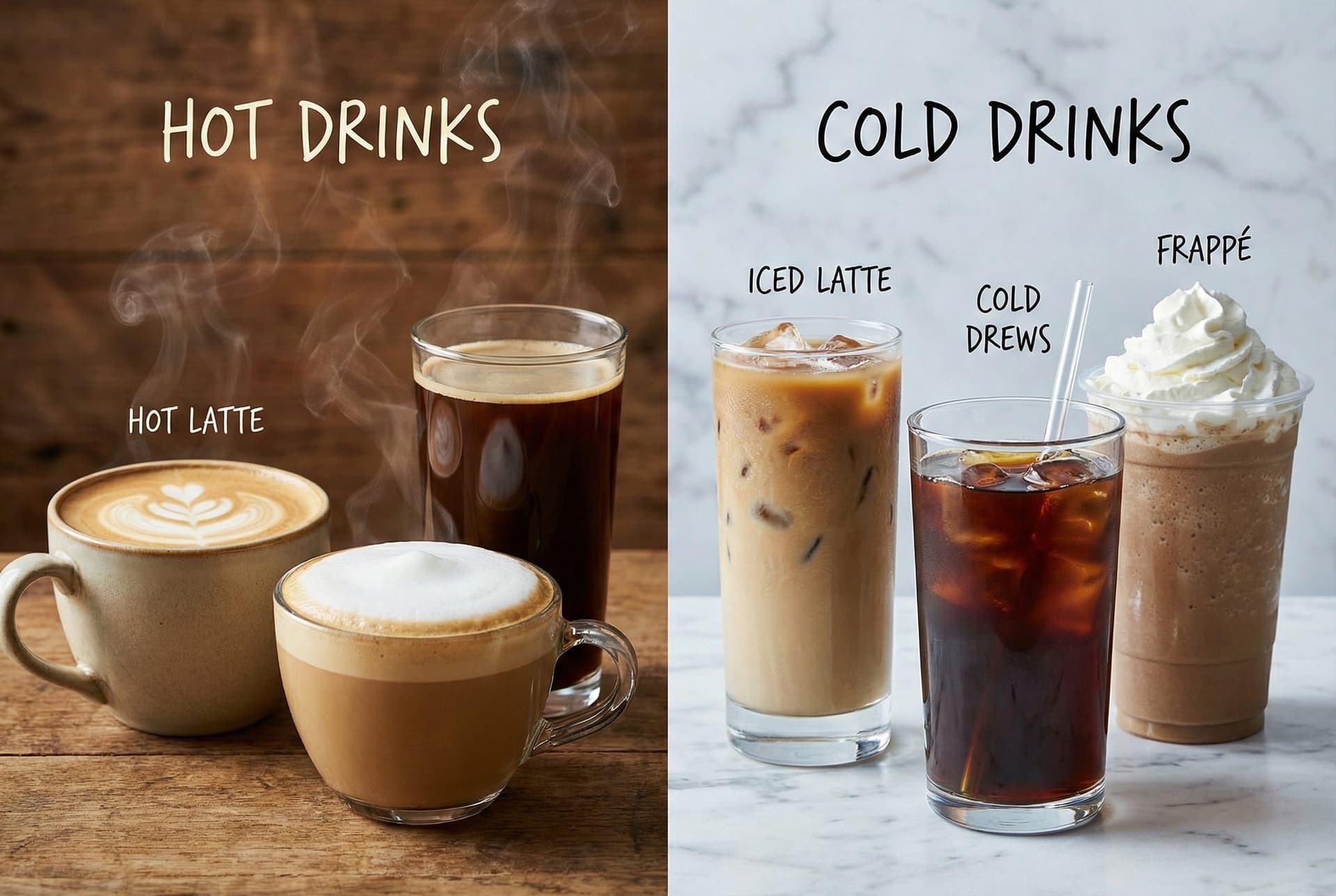
Iced Coffee vs Cold Brew: Iced coffee is hot-brewed coffee poured over ice (becomes diluted and can taste sour as it cools). Cold brew is never heated and maintains its smooth profile. They're completely different products despite both being cold. If you've tried iced coffee and disliked it, cold brew might surprise you.
Money Note: Cold brew is expensive ($4-6) because it requires 12-24 hours of brewing time and uses significantly more coffee per serving than hot brewing methods. You're paying for the time, coffee quantity, and ultra-smooth flavor profile. Want to save money and make a better cup than most cafés? Our cold brew recipe guide walks through the exact ratio, steep time, and filtering method I use.
Pour Over
What It Is: Hand-poured coffee brewed through filter in circular motion
Size: 8-12 oz | Caffeine: 100-180mg | Price: $4-6
The Process: Similar to drip coffee but with manual control. Barista pours hot water in circular motion over medium-fine grounds in a conical filter (often V60, Chemex, or Kalita). The pour pattern, water temperature, and timing dramatically affect the final flavor. Takes 3-4 minutes of active pouring. This method gives complete control over extraction, allowing baristas to highlight specific bean characteristics.
Flavor Profile: Exceptionally clean and complex when done well. The manual process allows precise extraction of floral, fruity, and tea-like notes. Often highlights single-origin beans' unique characteristics better than automatic drip. Brightness and clarity are pronounced. Body tends to be light and delicate. This is coffee for tasting and appreciating, not just caffeinating.
When to Order: At specialty cafés featuring rare or single-origin beans you want to fully appreciate. When you have time to wait (preparation takes 4-5 minutes). When you want to experience coffee as craft rather than commodity. Perfect for comparing different bean origins side-by-side. Not recommended when rushed or when you primarily want caffeine.
Understanding Milk Drinks
Milk transforms espresso from an intense, bitter concentrate into an approachable beverage—but not all milk drinks are created equal. The difference between a mediocre latte and an exceptional one comes down to three critical variables: milk amount, texture, and temperature. Master these concepts and you'll understand why some cafés charge $6 for a latte while others charge $3, and why it's worth the difference.
The Three Milk Variables
1. Amount: From minimal (macchiato with 0.5 oz) to substantial (latte with 10 oz). This ratio determines coffee intensity. More milk = gentler drink. Less milk = stronger coffee presence. The same espresso base tastes completely different with different milk amounts.
2. Texture: Steamed milk, microfoam, or thick foam. Steaming introduces air bubbles of different sizes. Microfoam has tiny bubbles (0.1-0.2mm) creating silky texture. Thick foam has large bubbles (2-5mm) creating airy, spoonable texture. Texture affects mouthfeel and how milk integrates with espresso.
3. Temperature: Cold (iced drinks with chilled milk) or hot (140-155°F for optimal sweetness without scalding). Too cold and milk tastes flat. Too hot (over 160°F) and milk proteins break down, creating burnt flavor and killing sweetness. Temperature dramatically affects perceived flavor.
How Milk Affects Coffee Drinks
Milk isn't just adding liquid volume—it's chemically interacting with espresso in complex ways. Milk proteins bind to bitter compounds in coffee, softening perceived bitterness. Lactose (milk sugar) adds natural sweetness that balances espresso's acidity. Milk fats coat your palate, creating smooth mouthfeel and carrying flavor compounds. This is why whole milk lattes taste richer and more balanced than skim milk versions—the fat content matters significantly.
When baristas steam milk, they're not just heating it—they're denaturating proteins and breaking down fats to create new textures. The steam wand injects air while heating, creating foam. Skilled baristas control exactly how much air is incorporated: minimal for flat whites (creating velvety microfoam), moderate for lattes (smooth with thin foam layer), generous for cappuccinos (thick, spoonfuls of foam). This control requires technique—bad baristas produce either scalded milk or bubbles that separate immediately.
Temperature precision matters more than most people realize. Between 140-155°F, lactose tastes sweetest and proteins create optimal texture. Below 140°F, the drink tastes flat and milk seems thin. Above 160°F, proteins coagulate, creating unpleasant texture and burnt taste. Above 165°F, you've essentially ruined the milk—it will taste scorched and lose sweetness entirely. Quality cafés use thermometers or experienced touch to hit that 140-155°F sweet spot consistently.
Understanding Foam Types
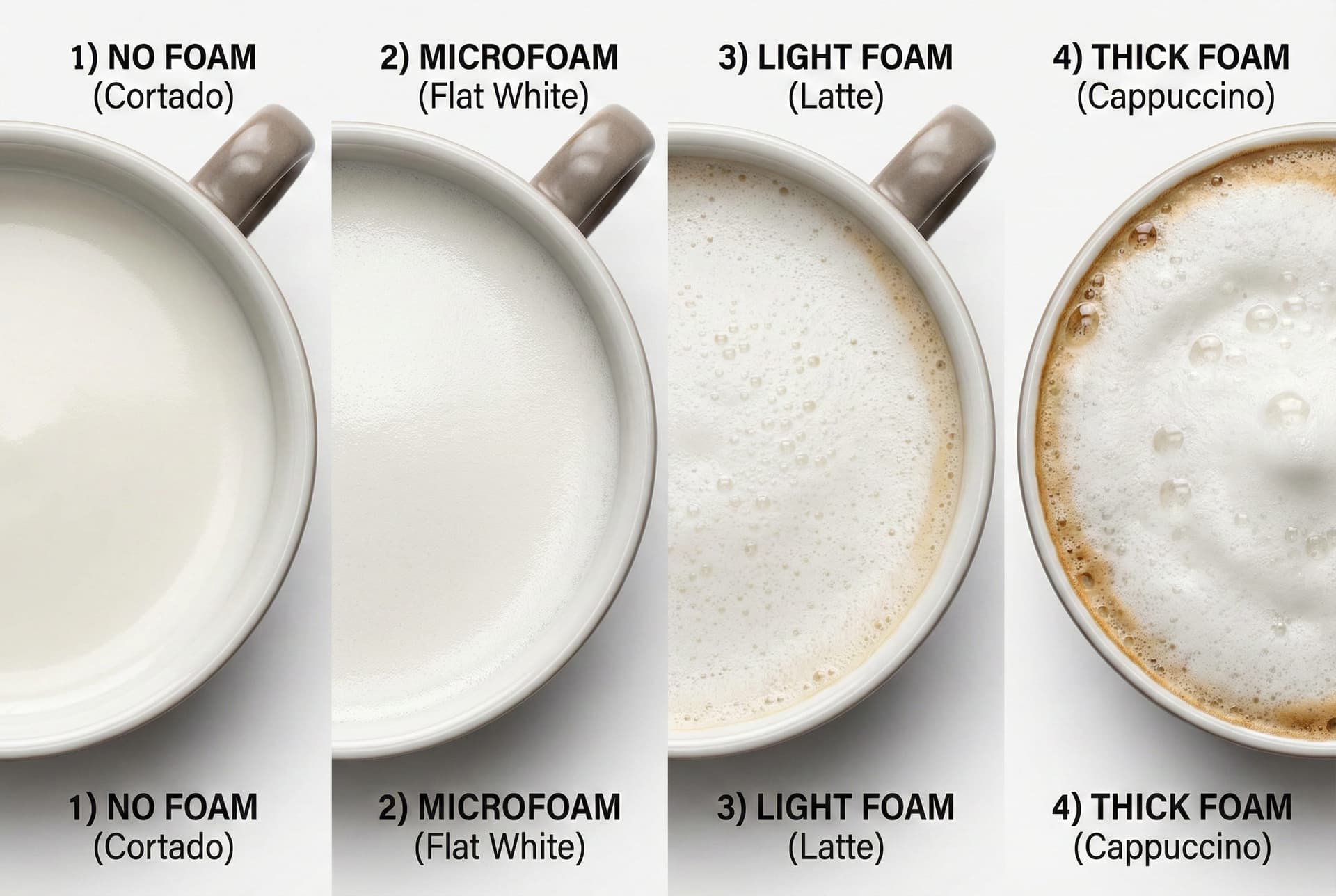
Microfoam (Flat White, Latte)
What It Is: Milk with tiny, uniform bubbles (0.1-0.2mm diameter) that create glossy, paint-like texture. When poured, it looks wet and shiny like liquid silk. The foam is so fine that milk and foam are indistinguishable—they pour as one integrated liquid.
How It's Made: Steam wand just below milk surface, introducing minimal air while heating. Constant swirling motion breaks large bubbles into microscopic ones. Requires 10-15 seconds of gentle aeration followed by heating with no additional air. The result is velvety texture throughout the milk pitcher.
Purpose: Creates smooth, integrated drinks where milk and espresso blend seamlessly. Perfect for latte art because the fine texture allows controlled pouring. Mouthfeel is luxurious and coating rather than airy and light.
Thick Foam (Cappuccino, Macchiato)
What It Is: Milk with visible, larger bubbles (1-5mm diameter) that create distinct foam layer. When spooned, it holds shape and sits on top of liquid milk rather than integrating. You can see the foam as a separate layer from the milk below.
How It's Made: Steam wand introduced with more aggressive aeration, pulling substantial air into milk during steaming process. Less swirling action, allowing larger bubbles to remain. Creates distinct separation between liquid milk and foam cap.
Purpose: Creates textural contrast—liquid base with airy foam top. Insulates drink (stays hot longer). Traditional cappuccino experience requires this thick foam that you can spoon off. Provides distinct layers in the drinking experience.
Temperature and Texture: The Connection
Temperature and texture aren't independent variables—they're intimately connected. Cold milk (below 100°F) won't foam properly regardless of technique because proteins haven't denatured sufficiently to trap air bubbles. Overheated milk (above 165°F) produces dry, separated foam because proteins coagulate too much. The ideal temperature range (140-155°F) allows proteins to partially denature, creating stable foam while maintaining smooth texture.
This is why iced lattes taste different from hot lattes beyond just temperature. Cold milk cannot create microfoam—it stays as liquid. Iced drinks mix espresso and cold milk without the textural transformation that steaming provides. Some people strongly prefer iced drinks specifically because they want straightforward milk-coffee mixing without foam texture. Others find hot milk drinks more satisfying because the texture adds complexity and richness. If you want to make a homemade iced latte, our iced latte recipe guide covers ratio, pour order, and how to avoid the watered-down version in detail.
Professional baristas can feel temperature through the metal pitcher—it becomes uncomfortable to hold around 140°F. This tactile feedback allows experienced baristas to nail perfect temperature without thermometers. If your barista uses their hand to judge temperature rather than a thermometer, they're likely experienced. If they steam until milk is scalding hot (can't touch the pitcher), they've overheated it and the drink will taste burnt.
Latte vs Cappuccino
Latte (8–12 oz): ~80% steamed milk, thin microfoam, smooth and milk-forward. Perfect for slow sipping; approachable for beginners.
Cappuccino (6 oz): 1:1:1 espresso/milk/foam, thick foam cap, coffee-forward with textural contrast. Consumed quickly; traditionally a morning drink.
Flat White vs Latte
Flat White (6–7 oz): Velvety microfoam throughout, higher espresso-to-milk ratio, stronger coffee presence—no distinct foam layer.
Latte (8–12 oz): Larger and milder, thin microfoam on top, most forgiving for flavored syrups, ideal beginner drink.
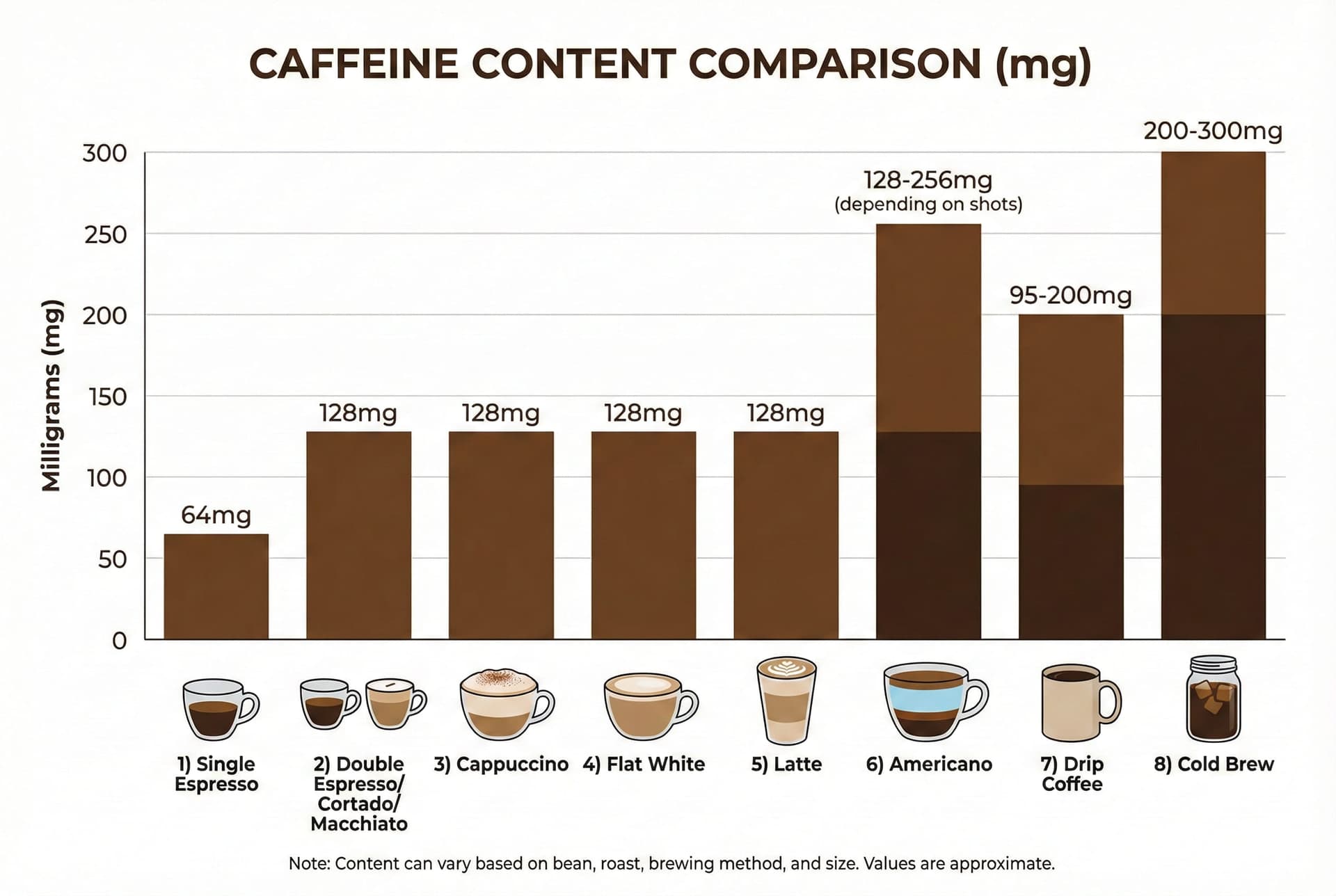
Caffeine Comparison
| Drink | Typical Caffeine | Notes |
|---|---|---|
| Single Espresso | 64mg | Baseline |
| Double Espresso | 128mg | Standard for most drinks |
| Drip Coffee (12 oz) | 180mg | Varies by brew |
| Cold Brew (12 oz) | 200-300mg | Highly concentrated |
| Latte/Cappuccino | 128mg | Same as double espresso |
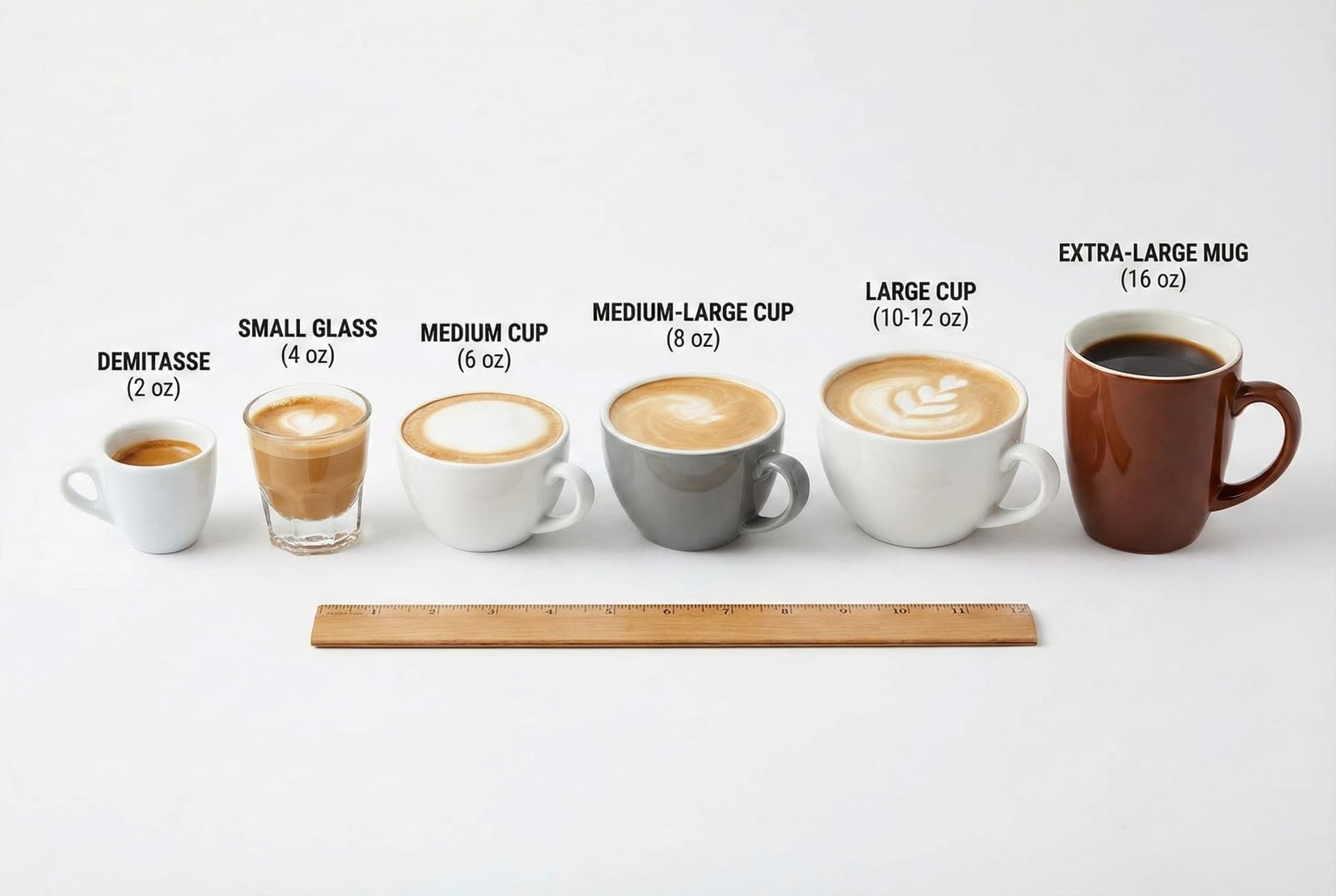
How to Order Like a Pro
Confident ordering comes from understanding what you want and communicating it clearly. Different café types have different expectations, terminology, and customization options. Knowing these differences prevents miscommunication and ensures you get exactly the drink you're imagining. Here's how to navigate each environment effectively.
At Specialty/Third-Wave Cafés
These cafés focus on coffee quality, traditional preparation, and highlighting bean characteristics. Baristas are trained professionals who take pride in their craft. They typically follow traditional European sizing and preparation methods.
- Ask about featured beans: “What's your coffee of the day?” or “What single origins do you have for espresso?” They'll appreciate your interest and guide you.
- Use traditional sizing: Cappuccinos are automatically 6 oz. If you want larger, order a latte instead—don't ask for large cappuccinos.
- Trust default preparations: These cafés dial in their drinks carefully. Unless you have specific preferences, ordering a “cappuccino” without modifications will get you a properly-made traditional version.
- Ask questions: “What's the difference between your flat white and cortado?” Baristas enjoy educating interested customers.
- Be specific with modifications: “Extra hot” often means overheated. Instead say: “I prefer around 150°F if possible.”
Example Order: “Hi, I'd like a cortado with your Ethiopia single origin, please.” (Simple, specific, shows knowledge)
At Chain Cafés (Starbucks, Peet's, etc.)
Chains have proprietary terminology, Americanized sizing, and extensive customization menus. They prioritize consistency and speed over traditional preparation. Understanding their systems prevents confusion.
- Learn their sizing system: Tall = 12 oz (small), Grande = 16 oz (medium), Venti = 20 oz (large). These don't correspond to traditional sizes at all.
- Specify “espresso macchiato” not “macchiato”: Just saying “macchiato” gets you a Caramel Macchiato (flavored latte), not traditional macchiato.
- Request “less sweet” or “half pumps” for flavored drinks: Default syrup amounts are very sweet. Start with half the standard pumps.
- Use mobile ordering: Shows all customization options clearly, lets you see exactly what you're getting, avoids miscommunication in noisy environments.
- Know shot defaults: Tall drinks get 1 shot, Grande/Venti get 2 shots. Order “extra shot” if you want more caffeine.
- Understand flavor limitations: Chains use syrups and sauces. Specialty cafés won't have “caramel drizzle” or “pumpkin spice.”
Example Order: “Grande latte with oat milk, one pump vanilla, extra shot.” (Uses their terminology, specifies modifications clearly)
At European Cafés (Traditional Italian, French, etc.)
These cafés follow centuries-old traditions. Drinks are small, strong, and consumed quickly. Expect minimal customization options and adherence to traditional preparation.
- Embrace traditional sizing: Cappuccinos are 6 oz, period. Macchiatos are 2.5 oz. Don't ask for large sizes—it's not how these drinks are made.
- Timing matters: Cappuccinos are morning drinks only (before 11 AM in Italy). Ordering one after lunch marks you as a tourist.
- Minimal customization: These cafés won't have syrups, alternative milks, or extensive modification options. The menu is what you get.
- Standing vs. sitting: Coffee at the bar (standing) costs less than table service in many European cafés. Know the pricing structure.
- Use Italian terms correctly: “Caffè” means espresso. “Caffè americano” for diluted espresso. “Caffè latte” (though usually ordered just at breakfast).
Example Order: “Un caffè, per favore.” (An espresso, please) or “Un cappuccino.” (A cappuccino—before 11 AM only)
Real Conversation Examples
Scenario: First time at a specialty café
You: “I usually order lattes at chains—what would you recommend here?”
Barista: “Try a cortado—smaller but balanced espresso and milk. Or a flat white if you want more volume with stronger coffee than a latte.”
Scenario: Need maximum caffeine
You: “I need a lot of caffeine. What should I get?”
Barista: “16 oz drip coffee is about 200mg. For espresso flavor, a large Americano with an extra shot is 192mg.”
Scenario: Unclear menu
You: “What's the difference between a cortado, flat white, and cappuccino?”
Barista: “Cortado is 4 oz, equal milk and espresso. Flat white is 6 oz with velvety foam, stronger than a latte. Cappuccino is 6 oz with thick foam—classic Italian style.”

Common Ordering Mistakes
Everyone makes ordering mistakes—even experienced coffee drinkers. These errors usually stem from terminology confusion, false assumptions about how drinks are made, or not understanding café-specific conventions. Recognizing these common pitfalls helps you avoid disappointment and order exactly what you actually want.
❌ Ordering "Coffee" Without Specifying Type
The Problem: Saying “Can I get a coffee?” is ambiguous. Do you want drip coffee? An espresso drink? A latte? The barista will assume you mean drip coffee (the default), but you might be expecting a milk drink.
✓ Instead Say: “I'd like a latte” or “Can I get a regular drip coffee?” Be specific about which type of coffee drink you want.
❌ Confusing Americano with Drip Coffee
The Problem: These drinks look similar (both are black coffee in large cups) but taste completely different. Americano is espresso + hot water (bold, concentrated flavor). Drip coffee is brewed through filter (cleaner, brighter flavor). Ordering one when you want the other leads to disappointment.
✓ Instead Say: If you want that classic diner coffee taste, ask for “drip coffee” or “regular coffee.” If you want intense espresso flavor in large format, ask for “Americano.”
❌ Assuming More Milk = More Caffeine
The Problem: Beginners often think a large latte has more caffeine than a small cappuccino because it's bigger. Wrong. Both have the same espresso (same caffeine). Milk adds zero caffeine—it only affects taste and volume. A 20 oz latte and a 6 oz cappuccino have identical caffeine if they use the same number of espresso shots.
✓ Instead Say: To increase caffeine, ask for “an extra shot” (+64mg per shot). Drink size and milk amount don't affect caffeine—only the number of espresso shots matters.
❌ Ordering "Large Cappuccino" at Traditional Cafés
The Problem: Traditional cappuccinos are 6 oz by definition—the 1:1:1 ratio of espresso/milk/foam only works at this size. Asking for a “large cappuccino” is like asking for a “large shot of whiskey”—it contradicts the drink's definition. Baristas will either make a latte with extra foam or refuse the order.
✓ Instead Say: If you want more volume, order a latte (8-16 oz with milk). If you want more coffee intensity, order “a cappuccino with an extra shot.” Accept that cappuccinos are small drinks—that's their nature.
❌ Ordering "Macchiato" at Chains Without Clarifying
The Problem: At Starbucks, “macchiato” means Caramel Macchiato (a large flavored latte). At traditional cafés, “macchiato” means espresso macchiato (2 oz espresso with foam dollop). Same word, completely different drinks. This causes massive confusion.
✓ Instead Say: At chains, specify “Caramel Macchiato” or “espresso macchiato” so they know which you want. At specialty cafés, “macchiato” alone is fine—they'll make traditional version.
❌ Requesting "Extra Hot" Without Understanding Consequences
The Problem: “Extra hot” usually means 170-180°F, which scalds milk proteins and destroys sweetness. You'll get a drink that stays hot longer but tastes burnt and flat. The milk loses its velvety texture and natural sweetness.
✓ Instead Say: If drinks cool too quickly for you, order a smaller size (less surface area = slower cooling) or drink faster. If you must have hotter drinks, request “150-155°F if possible” instead of “extra hot.”
❌ Not Specifying Iced vs Hot
The Problem: Baristas assume hot unless you specify otherwise. If you want an iced latte but just order “latte,” you'll receive a hot one. This wastes time and requires them to remake it.
✓ Instead Say: Always specify temperature first: “Iced latte” or “Hot cappuccino.” Make it the first word of your order.
❌ Over-Customizing at Specialty Cafés
The Problem: Specialty cafés dial in drinks carefully for optimal flavor. Requesting extensive modifications (“half-caf, extra hot, no foam, two pumps vanilla, caramel drizzle”) at a specialty café means they can't make the drink properly. Also, they often don't have flavored syrups at all.
✓ Instead Say: At specialty cafés, order drinks as designed. If you need heavy customization, chains are better suited for that. Save modifications for truly necessary ones like “oat milk instead of dairy.”
❌ Assuming All Cafés Have the Same Options
The Problem: Chains have extensive customization (10+ syrups, alternative milks, extra options). Traditional cafés have minimal options (whole or skim milk, no flavors). Assuming your usual chain order works everywhere leads to awkward conversations.
✓ Instead Say: Check the menu board first or ask: “Do you have alternative milks?” or “Do you offer flavored syrups?” Adapt your order to what's actually available.
Building Your Coffee Palate Progressively
Most beginners make the mistake of trying to appreciate complex drinks immediately. Your palate needs training—coffee is bitter and complex, and most people need time to develop appreciation. Here's a progressive path that builds your palate systematically:
- Week 1-2: Start with Lattes (12 oz) - Gentle introduction, mostly milk, approachable flavor. Try different sizes and temperatures. Get comfortable with basic espresso taste.
- Week 3-4: Try Cappuccinos (6 oz) - Less milk, more coffee presence, experience foam texture. Compare directly to lattes to understand the difference.
- Week 5-6: Explore Flat Whites (6-7 oz) - Similar size to cappuccino but smoother texture, stronger coffee flavor. Appreciate quality espresso with less milk dilution.
- Week 7-8: Experience Cortados (4 oz) - Equal parts espresso and milk, true balance point. This reveals whether you prefer milk-forward or coffee-forward drinks.
- Week 9-10: Try Macchiatos (2-3 oz) - Mostly espresso with minimal foam. Tests whether you can appreciate espresso with minimal mellowing.
- Week 11+: Straight Espresso and Beyond - At this point, you can taste espresso quality directly. Explore pour-overs, different bean origins, and become a true coffee appreciator.
This progression takes 3 months of regular coffee drinking. Don't rush it. Each step prepares your palate for the next. Most people who say “I hate coffee” jumped straight to black coffee or espresso without building tolerance first.
Frequently Asked Questions
A latte is larger (8–12 oz) with ~80% steamed milk and a thin microfoam layer—smooth, milky, and coffee-gentle. A cappuccino is smaller (6 oz) with equal thirds espresso, steamed milk, and thick foam.
Cappuccinos are coffee-forward with textural contrast; lattes are milk-forward and approachable. At chains, a "large cappuccino" is really a latte with extra foam.
Your Coffee Journey Starts Now
Understanding coffee drink differences transforms your café experience from intimidating to empowering. You now know the fundamental building blocks that create every drink on any menu worldwide.
Start tomorrow with a traditional cappuccino. Compare it to your usual latte. Notice the differences. Your coffee education has begun.
Get Coffee Tips
Join our newsletter for expert reviews and brewing guides.