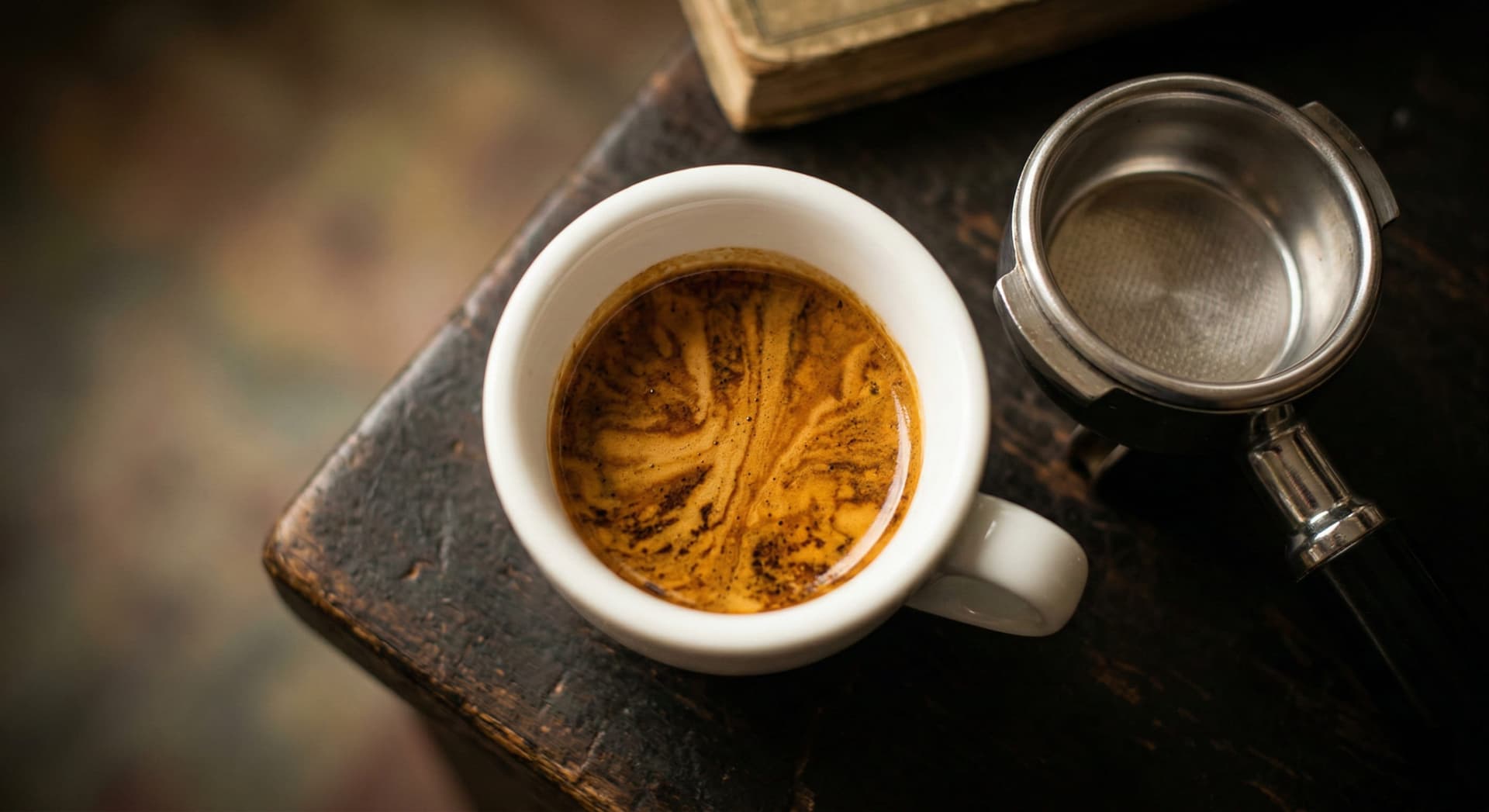
What Is a Macchiato? Espresso vs Latte Macchiato Explained
Two drinks, one name — traditional espresso macchiato vs latte macchiato explained: ratios, taste, glassware, and which to order
A macchiato is one of the most misunderstood drinks on any café menu — and the confusion is legitimate. There are actually two drinks called “macchiato” that are almost nothing alike. The traditional espresso macchiato is a 2–3 oz shot of espresso “stained” with a teaspoon of microfoam. The latte macchiato is a tall layered drink built the opposite way: steamed milk “stained” by espresso poured through it. Same name. Opposite construction.
I've been making both versions professionally for over 15 years — at Italian-influenced espresso bars, specialty third-wave cafés, and in my own testing setup at home. This guide covers both: the ratios, preparation techniques, taste differences, and exactly how the Starbucks versions relate to (and diverge from) the originals.
What Is a Macchiato – Quick Answer
Espresso Macchiato
- Size:2–3 oz
- Espresso:1–2 shots (base)
- Milk:1 tbsp microfoam only
- Vessel:Small demitasse
- Flavor:Espresso-dominant
Latte Macchiato
- Size:8–10 oz
- Espresso:1–2 shots (added last)
- Milk:5–7 oz steamed
- Vessel:Tall clear glass
- Flavor:Milk-forward, layered
What “Macchiato” Actually Means
“Macchiato” is Italian for “stained” or “marked.” The drink's name is descriptive: in the traditional espresso macchiato, the espresso is stained by milk. In the latte macchiato, the milk is stained by espresso. Understanding which liquid is being stained tells you exactly what you're getting.
The original caffè macchiato emerged in Italian espresso bars sometime in the mid-20th century, as a way for baristas to distinguish their “macchiato” orders (espresso with a touch of milk) from a pure espresso on a busy service counter. The foam dollop on top made the drink visually distinct at a glance. There's no elaborate origin mythology here — it was a practical solution to a service problem that happened to produce a genuinely excellent drink.
Espresso Macchiato: The Traditional Version
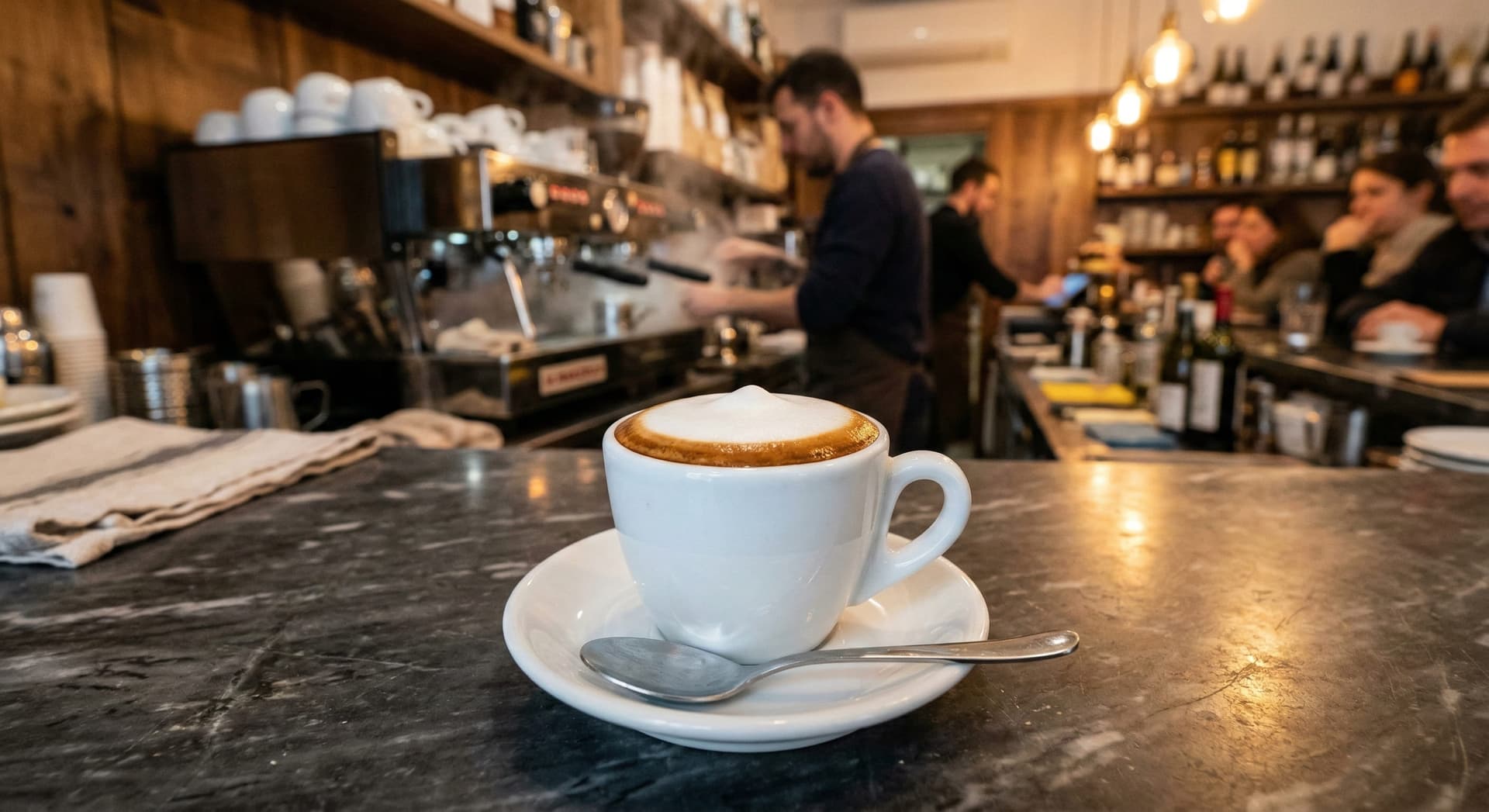
The espresso macchiato is, at its core, a double espresso with a tablespoon of microfoam on top. The milk doesn't dilute the espresso — it softens the crema and adds a brief, silky introduction before the full espresso character takes over. The drink is consumed in two or three sips.
Equipment Used in My Testing
- Espresso machine: Breville Dual Boiler (BES920)
- Grinder: Mazzer Mini E (Type A)
- Serving vessel: 3 oz ceramic demitasse
- Milk pitcher: 6 oz stainless (Motta Europa)
- Milk: Whole milk, 4°C at start of steaming
The Espresso Macchiato Recipe
Espresso Parameters
- Dose: 18g ground coffee
- Yield: 36g espresso (1:2 brew ratio, standard double)
- Extraction time: 26–30 seconds
- Water temperature: 94°C (201°F)
- Pressure: 9 bars
Milk Parameters
- Volume: 30–40 ml whole milk (small pitcher)
- Steam target: 60°C (140°F) — stop early, you need very little
- Aeration: 3–4 seconds at surface to build dense, tight microfoam
- Texture target: Stiff enough to hold a spoon shape, but not dry foam
Assembly
- Warm the demitasse with hot water, discard
- Pull the double shot directly into the demitasse
- Steam milk briefly — you need roughly one tablespoon of microfoam
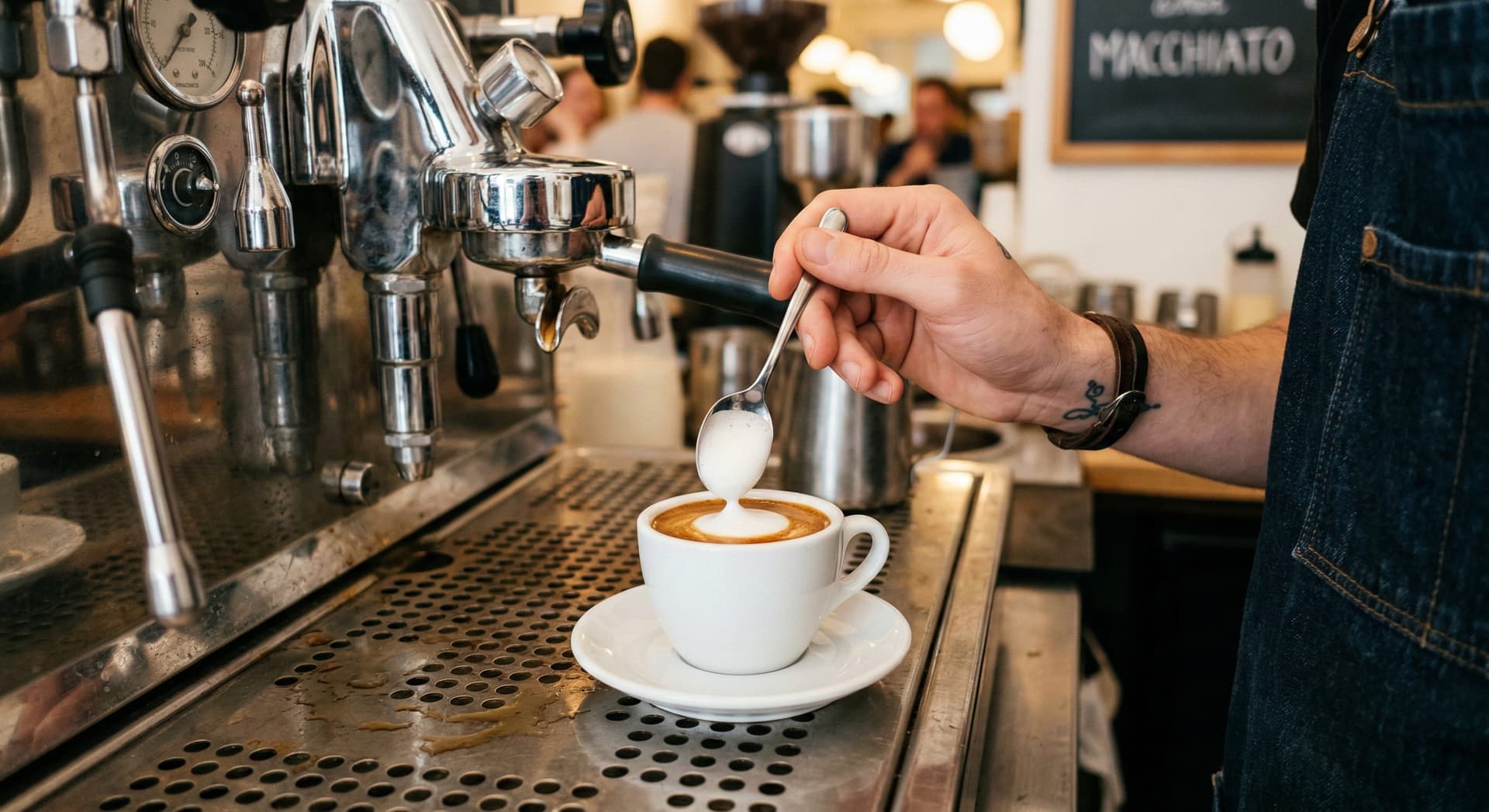
- Spoon (don't pour) a generous dollop of microfoam onto the espresso surface
- Serve immediately — the window is 60 seconds before the foam collapses
What an Espresso Macchiato Tastes Like
My tasting notes from a well-pulled double espresso macchiato using Ethiopian Yirgacheffe beans (light-medium roast, 12 days off roast):
- Aroma: Jasmine, bergamot, brown sugar — floral character prominent
- First sip: Microfoam softens the crema entry; espresso intensity follows immediately
- Mid-palate: Full espresso concentration — bright acidity, fruit notes, complexity intact
- Finish: Clean, short — the espresso is the story, start to finish
- Overall: Espresso in its most direct form, only slightly modified
Latte Macchiato: The Layered Version
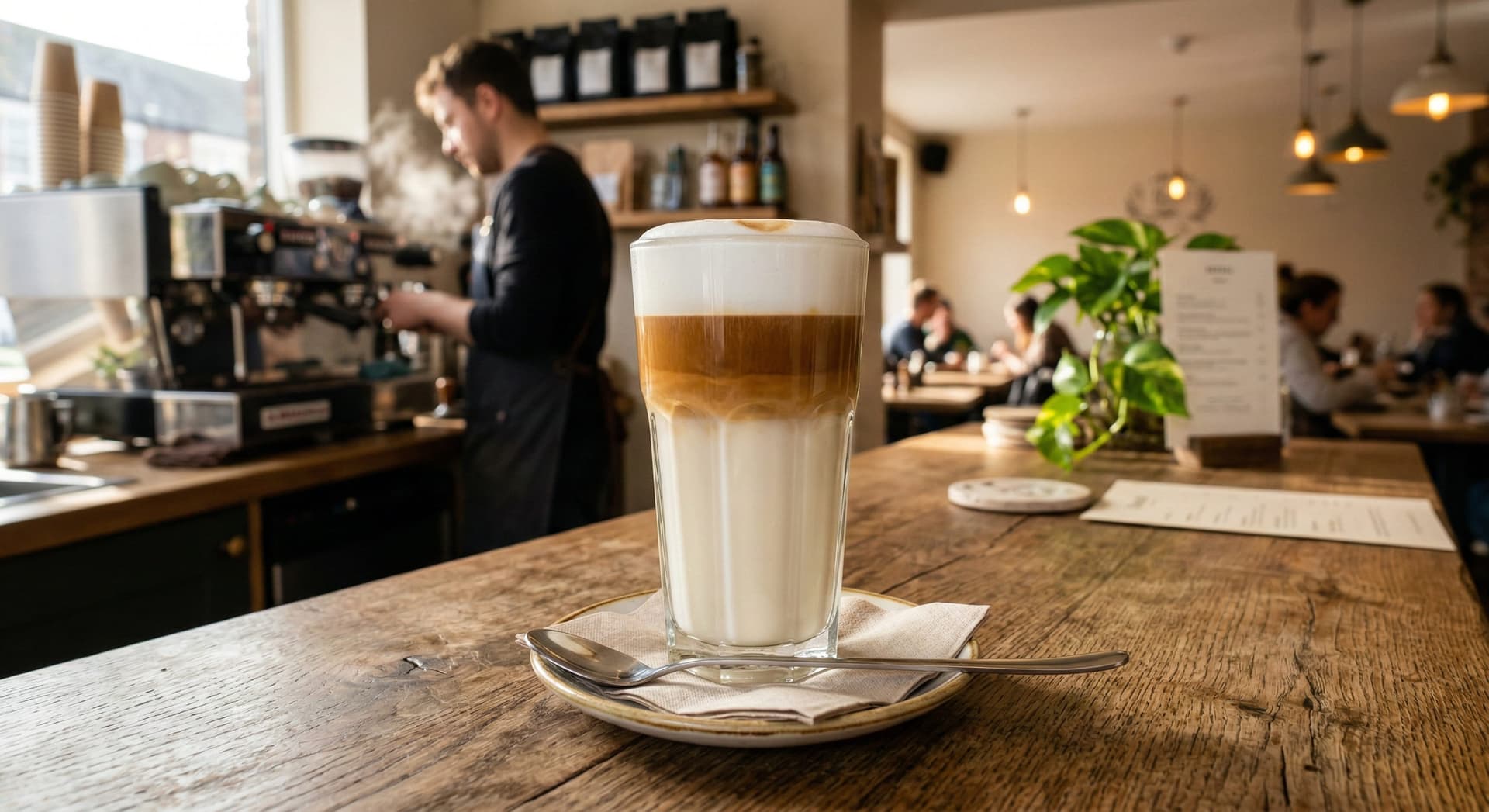
The latte macchiato is built in reverse. You start with steamed milk in a tall glass, then slowly pour the espresso shot through the foam so it sinks and creates a distinct visual layer. The milk is stained by the espresso — not the other way around.
This produces a drink with three distinct layers when properly made: a milk base, an espresso layer in the middle (created by the density difference between hot espresso and steamed milk), and a foam cap on top. The layers are both aesthetic and functional — each sip has a slightly different flavor balance depending on where you drink from.
How to Make a Latte Macchiato
Ingredients
- 180 ml (6 oz) whole milk
- 1 double espresso shot (pulled after milk is steamed)
- Tall glass, minimum 10 oz
Process
- Steam 180 ml whole milk to 65°C — more aeration than a flat white, less than a dry cappuccino
- Pour steamed milk into the tall glass, filling to about 70%
- Pull the double espresso shot — time it to be ready within 30 seconds of the milk
- Pour espresso slowly over a spoon held just above the milk surface — this breaks the fall and encourages the espresso to sink into the foam rather than mixing
- The espresso should settle mid-glass, creating the three-layer appearance
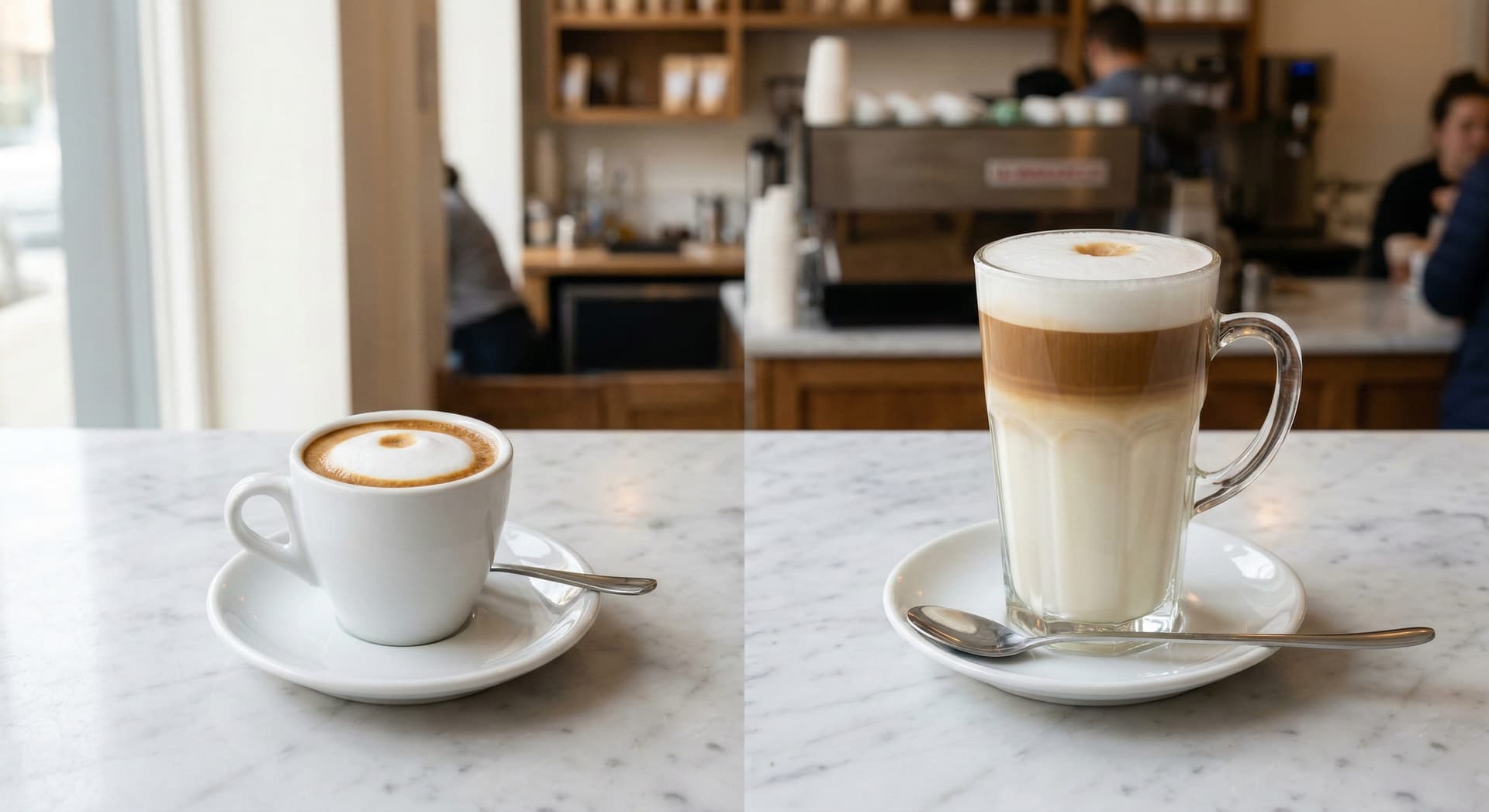
Espresso Macchiato vs Latte Macchiato: Side-by-Side
| Feature | Espresso Macchiato | Latte Macchiato |
|---|---|---|
| Construction | Espresso first, foam added | Milk first, espresso added |
| Size | 2–3 oz | 8–10 oz |
| Milk | 1 tbsp microfoam | 5–7 oz steamed |
| Espresso character | Dominant | Moderate (in layers) |
| Visual | Dark with white dollop | Three distinct layers in tall glass |
| Vessel | Small demitasse | Tall clear glass |
| Drinking experience | 2–3 sips, intense | Multiple sips, layered |
Starbucks Macchiato vs Traditional Macchiato
This is where the confusion really compounds. Starbucks offers two macchiato products, and neither is a traditional espresso macchiato.
Starbucks Caramel Macchiato: This is a vanilla latte with caramel drizzle on top, built in a reverse layered order. The espresso is poured on top of the vanilla syrup and steamed milk — which is actually closer to a latte macchiato construction, though with flavoring and much larger volume. It's a good drink. It's not a macchiato in the traditional sense.
Starbucks Latte Macchiato: Closer in spirit to the traditional latte macchiato. Built with milk first, espresso shots poured slowly through the foam to create a visual layer. Still served in a large cup with significant milk volume. A reasonable approximation for a chain setting.
| Feature | Traditional Espresso Macchiato | Starbucks Caramel Macchiato | Starbucks Latte Macchiato |
|---|---|---|---|
| Size | 2–3 oz | 12–24 oz | 12–16 oz |
| Milk | Tiny foam dollop | Full steamed + vanilla | Full steamed milk |
| Sweetener | None | Vanilla syrup + caramel | None (optional) |
| Construction | Espresso → foam | Vanilla → milk → espresso → caramel | Milk → foam → espresso |
| Espresso-forward? | Yes | No | Moderate |

Macchiato vs Latte: The Key Difference
The macchiato vs latte comparison depends on which macchiato you're talking about.
Quick Callout: Macchiato Comparisons
- Espresso macchiato vs latte: The macchiato is 2 oz of nearly-pure espresso with a foam mark. The latte is 8–12 oz with 6–10 oz of steamed milk. One is an espresso drink with a tiny milk modifier; the other is a milk drink with an espresso base.
- Latte macchiato vs latte: Both use similar milk volumes. The latte macchiato pours espresso into milk (layered); a café latte pours milk into espresso (blended). Once stirred, the flavor difference is small but the construction is opposite.
- Macchiato vs cappuccino: Cappuccino is 5–6 oz with equal thirds of espresso, milk, and foam. The espresso macchiato is 2–3 oz, almost all espresso with a single foam dollop. The macchiato is more concentrated; the cappuccino is more balanced.
For a comprehensive head-to-head with ratios, foam texture, and taste notes, see our macchiato vs latte guide.
How a Macchiato Differs from a Cappuccino
The cappuccino gets confused with the espresso macchiato because both are small, espresso-forward, and served in similar-sized cups. The key differences:
| Feature | Espresso Macchiato | Cappuccino |
|---|---|---|
| Size | 2–3 oz | 5–6 oz |
| Milk | 1 tbsp foam only | Equal thirds: espresso, milk, foam |
| Foam | Tiny dollop | 1–2 cm dome |
| Espresso character | Maximum intensity | Balanced with milk and foam |
| Texture | Espresso + small softening mark | Creamy, layered throughout |
The macchiato is more intense. The cappuccino is more structured — each component plays a defined role. For a full breakdown across flat white, cappuccino, and cortado comparisons, see our flat white vs cappuccino vs cortado guide.
Macchiato Recipe: How to Make It at Home
Espresso Macchiato at Home
You need an espresso machine with a steam wand (or a Moka pot and a handheld milk frother as a substitute):
- Pull a double shot (18g in, 36g out) into a pre-warmed demitasse
- Froth 30 ml milk to a thick, spoonable microfoam — higher air incorporation than a flat white, you want a dollop that holds its shape on a spoon
- Spoon one generous dollop of foam onto the espresso — aim for 1–2 cm depth in the center of the cup
- Serve and consume within 60 seconds — the foam collapses quickly
For context on where the cortado sits on the espresso-to-milk spectrum relative to the macchiato, see our latte vs cortado guide.
Latte Macchiato at Home
- Steam 180 ml milk to 65°C with moderate aeration — more than a flat white, less than a dry cappuccino
- Pour into a tall glass (at least 8 oz) up to 70% full; allow to settle for 15–20 seconds
- Pull the double espresso shot while the milk settles
- Pour espresso slowly over a spoon just above the milk surface — this creates the layers
- The espresso should sink and settle mid-glass
If the espresso doesn't layer, your milk was either too hot or under-foamed. Aim for milk slightly stiffer than a flat white preparation — you need enough foam body to hold the espresso temporarily before it sinks. For more on milk texture in espresso drinks, see our what is a flat white guide.

Frequently Asked Questions
Frequently Asked Questions
A macchiato is an Italian espresso drink where one component is "stained" by another.
The traditional espresso macchiato is a double espresso with a small dollop of microfoam — roughly 2–3 oz total.
The latte macchiato is built in reverse: steamed milk stained by espresso poured through it, served in a tall glass at 8–10 oz.
Get Coffee Tips
Join our newsletter for expert reviews and brewing guides.