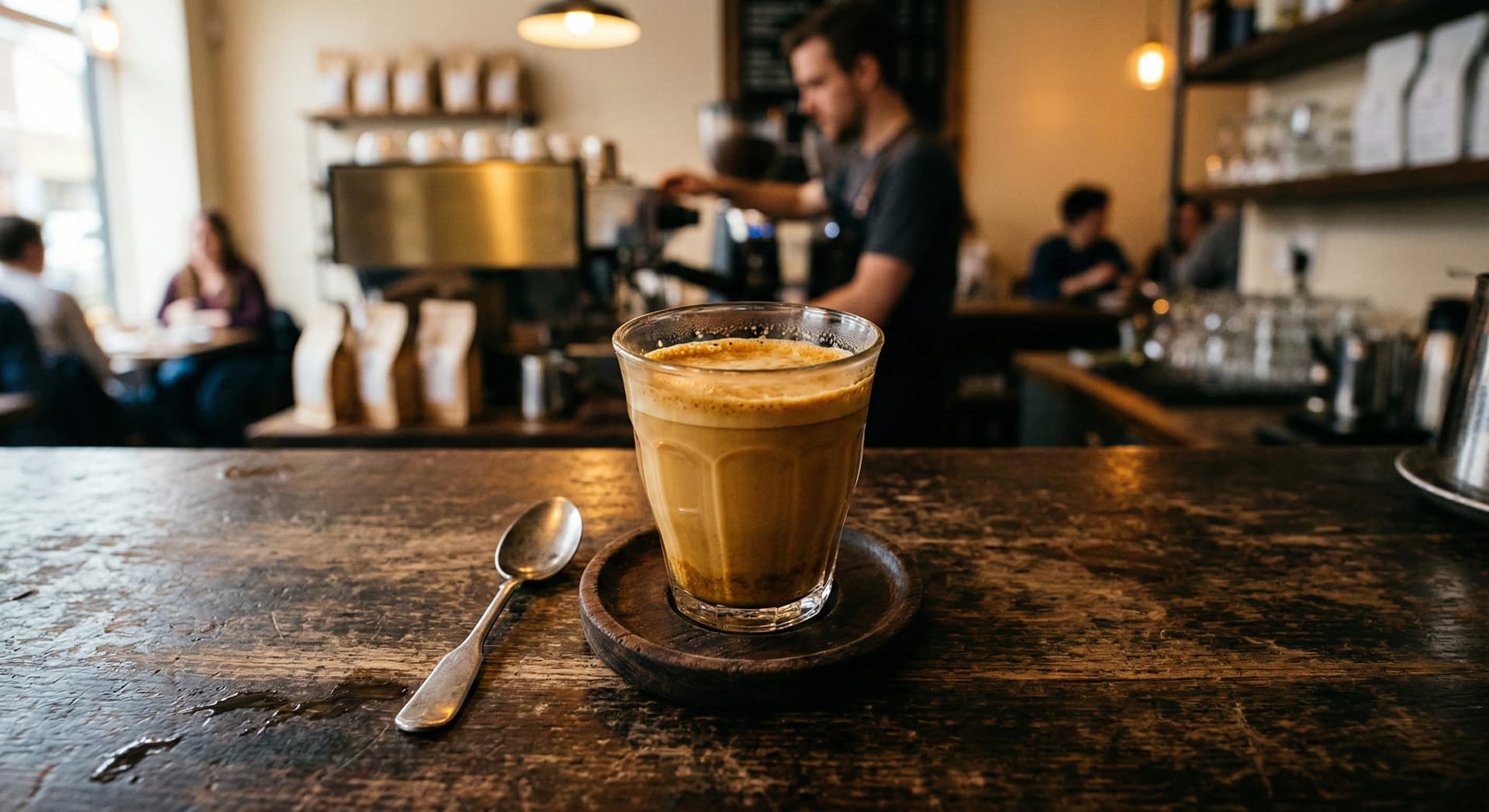
What Is a Cortado? Size, Ratio, and How It's Made
The complete barista guide to the cortado coffee drink — origin, 1:1 ratio, glassware, recipe, and how it compares to a flat white or latte
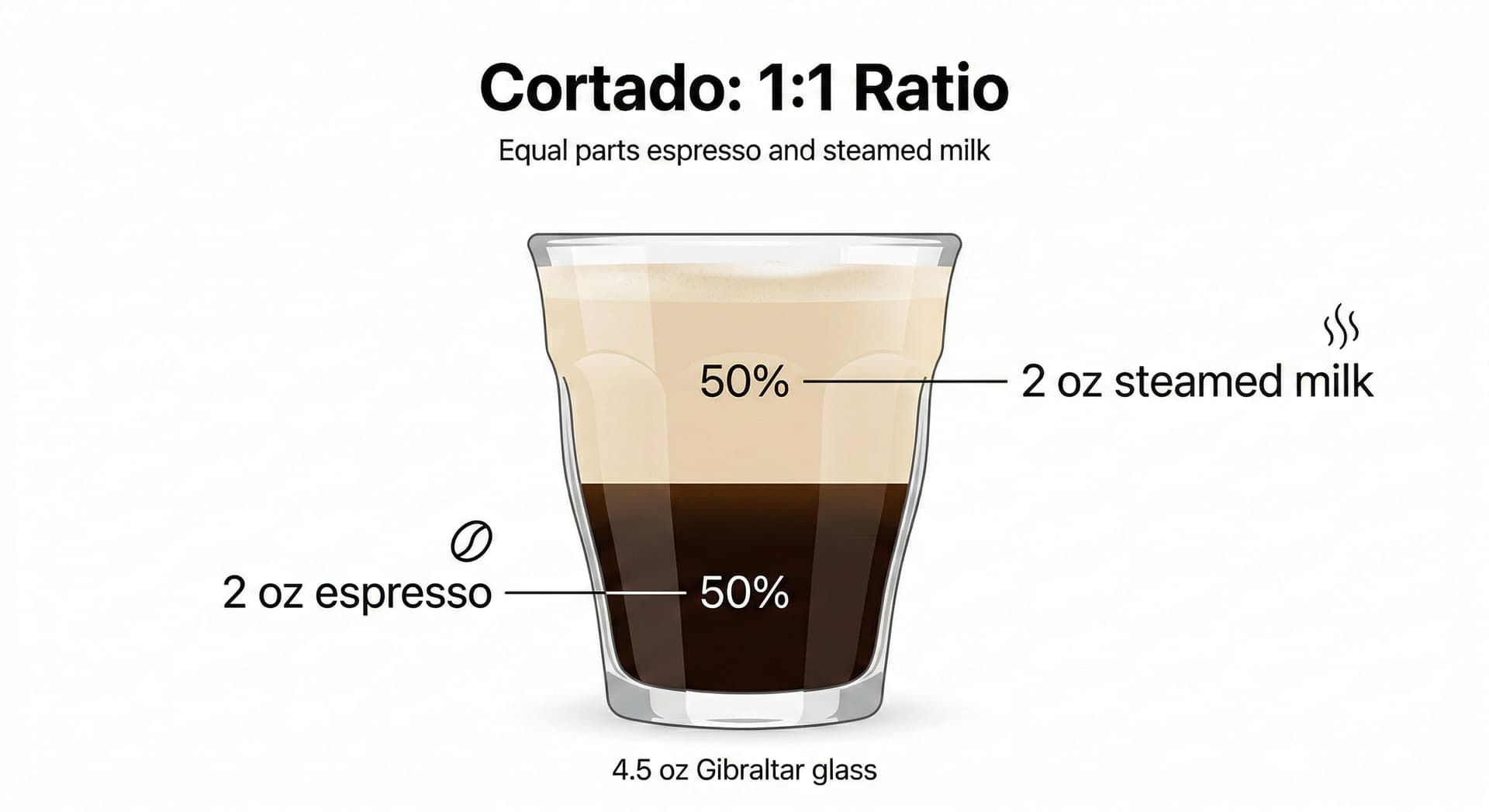
A cortado is a 4-ounce espresso drink made with equal parts espresso and lightly steamed milk — typically 2 oz espresso to 2 oz milk — served in a small glass. The name comes from the Spanish verb cortar (to cut), and that etymology tells you everything: the milk cuts the espresso's acidity without burying its character.
I've been making cortados for fifteen years — first in a specialty café in San Francisco's Mission District, later consulting for shops in Melbourne and London. The cortado is the drink I reach for when I want to actually taste the espresso I just spent twenty minutes dialing in. Every measurement here comes from hands-on work at the bar, not theory.
What Is a Cortado – Quick Answer
- Total size?4 oz (120 ml)
- Espresso?2 oz (double shot)
- Milk?2 oz steamed, minimal foam
- Ratio?1:1 espresso to milk
- Vessel?Small glass (Gibraltar)
- Origin?Spain
What Makes a Cortado Different from Everything Else
The defining characteristic of a cortado coffee drink is the 1:1 ratio. That's not a preference — it's the specification. When I train new baristas, I put it this way: if the ratio drifts, it's no longer a cortado. It becomes something else.
This precision matters because milk integration changes flavor in a non-linear way. At a 1:1 ratio, the milk softens espresso's sharp edges and tempers acidity, but it doesn't suppress the underlying flavor compounds. Increase the milk to 1:2 and you cross into flat white territory — subtly more milk-forward. At 1:4 or 1:5 you have a latte, where the espresso acts as background, not foreground.
Why the Ratio Matters More Than You'd Think
In my testing with a Mazzer Mini E grinder and Breville Dual Boiler, I've pulled the same espresso recipe (18g in / 36g out, 93°C, 28-second extraction) into three different drinks: a cortado, a flat white, and a small latte. The espresso was identical in every case — same beans, same grind, same yield.
The flavor difference was dramatic. In the cortado, I could clearly detect the stone-fruit brightness of the Ethiopian Yirgacheffe I was using. In the flat white, the same notes were present but softer. In the latte, they were almost entirely masked by milk sweetness.
Cortado Origin: The Spanish Espresso Drink
The cortado originated in Spain, most likely in the Basque Country or Madrid, though both claim credit. Spanish café culture developed around smaller, more coffee-forward drinks long before specialty coffee became a global movement — the cortado was simply the most practical solution to espresso that was too intense to drink straight but too good to drown in milk.
From Spain, the drink traveled to Latin America, where it became a fixture in Cuban café culture (often called cortadito with sweetened condensed milk) and eventually reached specialty coffee bars in the United States. San Francisco's Blue Bottle Coffee is widely credited with popularizing the format in the American specialty coffee scene, serving it in the now-iconic Gibraltar glass — a 4.5 oz tempered glass that's since become synonymous with the drink.
Cortado Size: What to Expect
A standard cortado is 4 oz total. Some specialty cafés serve a 5 oz version with a slightly longer double shot (about 2.5 oz) and 2.5 oz of milk, keeping the ratio intact while giving a touch more volume. This is still a cortado. What isn't a cortado is a 6 oz drink with 4 oz of milk — at that point, you're in flat white territory regardless of what the menu calls it.
| Drink | Total Size | Espresso | Milk |
|---|---|---|---|
| Macchiato (traditional) | 1–2 oz | 1 oz | Dash of foam |
| Cortado ✓ | 4 oz | 2 oz | 2 oz |
| Flat White | 6–7 oz | 2 oz | 4–5 oz |
| Latte | 8–12 oz | 2 oz | 6–10 oz |
| Cappuccino | 6 oz | 2 oz | 2 oz milk + 2 oz foam |
How a Cortado Is Made: Step-by-Step
Equipment Used in My Testing
- Espresso machine: Breville Dual Boiler (BES920)
- Grinder: Mazzer Mini E (Type A)
- Serving vessel: 4.5 oz Gibraltar glass (Libbey No. 15325)
- Milk: Whole milk, 4°C at start of steaming
- Thermometer: Lux brand clip-on steam pitcher thermometer
The Cortado Recipe
Espresso Parameters
- Dose: 18g ground coffee
- Yield: 36g espresso (1:2 brew ratio)
- Extraction time: 26–30 seconds
- Water temperature: 93°C (199°F)
- Pressure: 9 bars
Milk Parameters
- Volume: 60 ml (2 oz) whole milk
- Steam target temperature: 58–62°C (136–144°F)
- Texture: Fine microfoam — silky, no large bubbles, pourable
- Final foam depth: Less than 0.5 cm on top
Assembly Steps
- Pull the double espresso shot directly into the Gibraltar glass (warm the glass first with hot water)
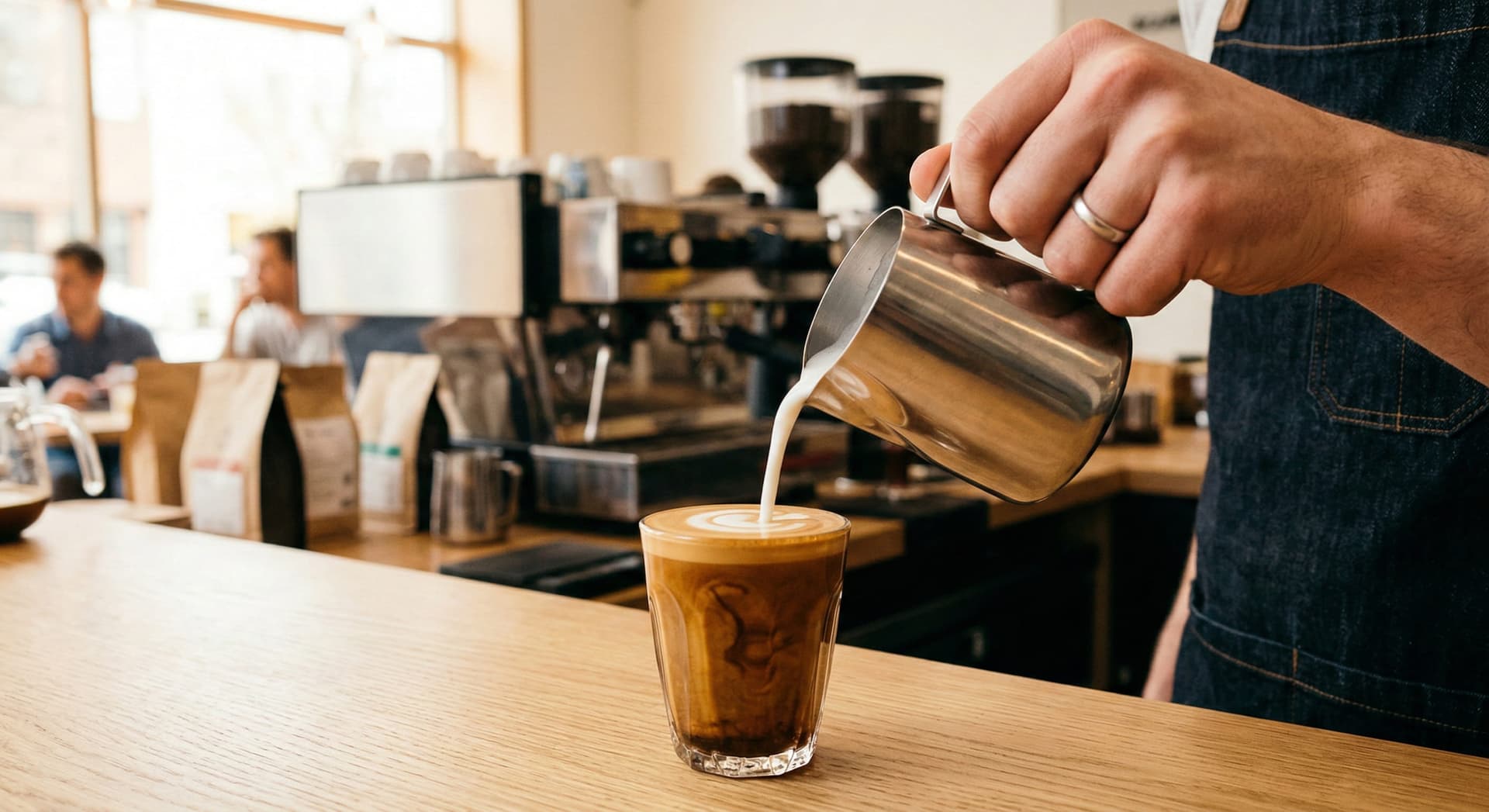
- Steam the milk to texture — silky and integrated, not frothy
- Pour the steamed milk over the espresso at a controlled angle to integrate, not layer
- Result: a small, unified drink with a thin crema layer visible on top
The Detail Most Guides Miss: Milk Temperature
I've experimented extensively with milk temperature in cortados. At 65°C (149°F) — the standard latte steaming temperature — the milk sweetness becomes too dominant in the smaller volume, pushing the cortado toward milky rather than balanced. At 58–62°C, the milk integrates cleaner and the espresso character comes through more clearly. For a 4 oz drink, this 5–7°C difference is perceptible.
Cortado Flavor Notes: What to Expect
My tasting notes from a cortado made with Colombian Huila beans (medium roast, 14 days off roast):
- Aroma: Dark cherry, brown sugar, slight nuttiness
- First sip: Immediate espresso presence, slight sweetness from milk
- Mid-palate: Stone fruit, milk caramel, gentle body
- Finish: Clean, medium-length, no bitterness
- Overall: Coffee-forward with milk support — the espresso is the point
The same recipe as a latte had: creamy, mild, very gentle coffee presence — the Colombian origin notes were barely perceptible. That difference is the cortado's entire argument.
Cortado vs Flat White: Key Differences
The cortado vs flat white comparison is the one I get asked most often. Here's the honest breakdown:
| Feature | Cortado | Flat White |
|---|---|---|
| Size | 4 oz | 6–7 oz |
| Milk | 2 oz | 4–5 oz |
| Ratio | 1:1 | ~1:2 to 1:2.5 |
| Texture | Light microfoam | Velvety microfoam throughout |
| Foam depth | Minimal | Very thin layer (~2–3 mm) |
| Flavor | More espresso-forward | Slightly more milk-forward |
| Origin | Spain | Australia/New Zealand |

The practical difference: if you want to taste the espresso clearly, order a cortado. If you want something smooth and slightly larger, order a flat white. For a deep-dive into what makes the flat white tick — recipe, origin, and microfoam technique — see our what is a flat white guide. For a full three-way comparison, see our guide on flat white vs cappuccino vs cortado.
Cortado vs Latte: Why Size Isn't the Only Difference
A lot of people think a cortado is just a small latte. It isn't — and the distinction matters beyond marketing.
The latte uses a 1:4 to 1:6 espresso-to-milk ratio. At that ratio, milk becomes the primary flavor carrier. The espresso contributes richness and caffeine, but milk sweetness and texture lead the experience. That's not a criticism of lattes — it's their design. They're built to be approachable, crowd-pleasing drinks.
A cortado is built for a completely different purpose: to present espresso in its most transparent form while removing its harshest edges. If you want to understand what a specific coffee actually tastes like, make it as a cortado. You'll learn more from one cortado than ten lattes.
For the full caffeine and flavor breakdown, see our latte vs cortado guide.
What Glass Does a Cortado Come In?
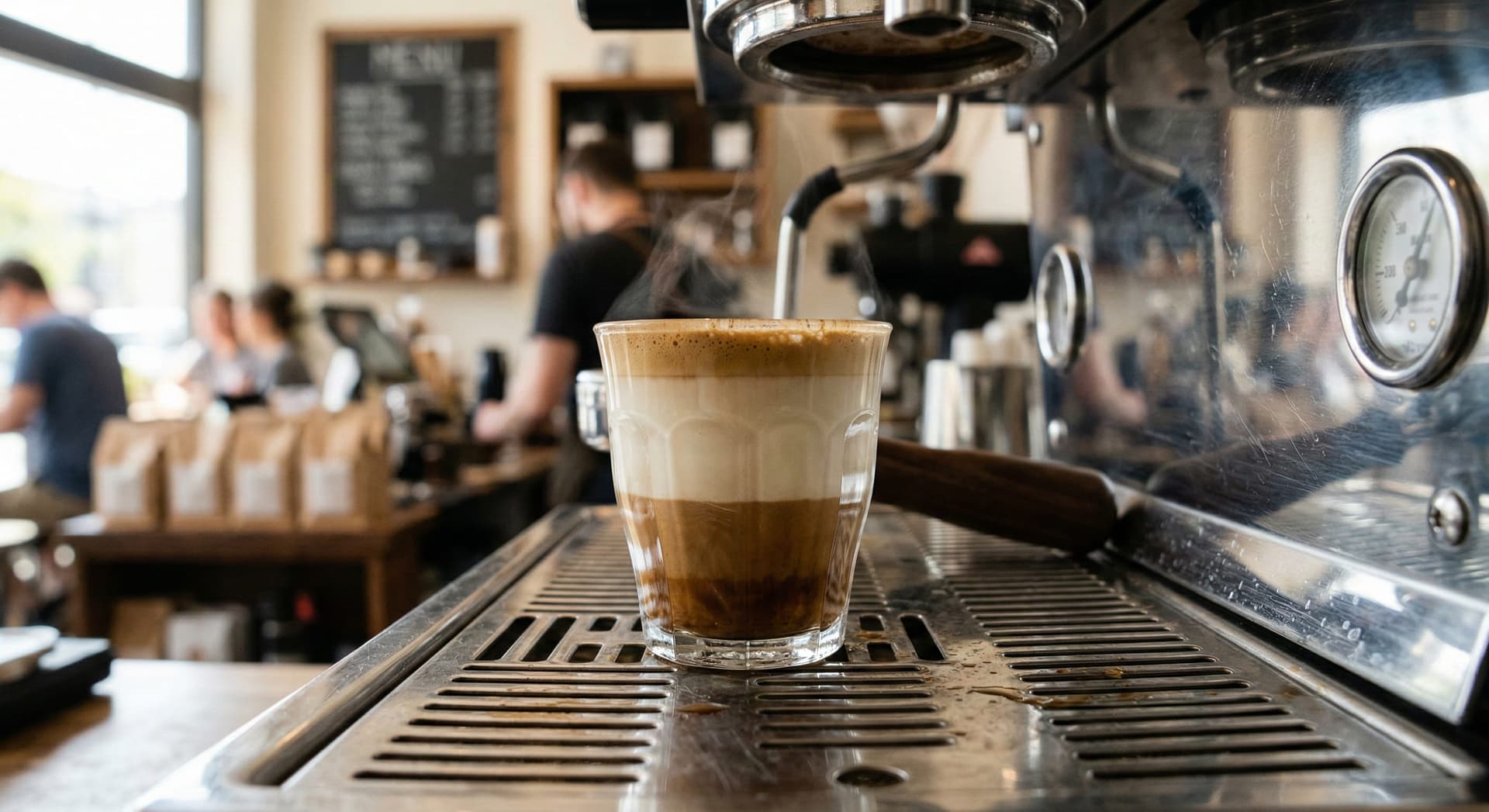
The traditional vessel is a small glass, not a ceramic cup. In specialty coffee culture, the Gibraltar glass (Libbey No. 15325, 4.5 oz) has become the de facto standard. Its clear walls let you see the espresso-to-milk integration, which is part of the point — a properly made cortado should look as good as it tastes.
Some cafés serve cortados in 4 oz ceramic demitasses, which are fine. What you should push back on: a cortado in an 8 oz cup, which usually means the café is adding extra milk to fill the space. That's a diluted cortado at best.
Related: What Is a Lungo?
If you're exploring espresso-based drinks, you've probably encountered the lungo — a longer espresso shot made with more water (typically 3–4 oz vs espresso's standard 1–1.5 oz). Unlike a cortado, a lungo contains no milk. For a full breakdown of what a lungo is and how it compares to espresso and Americano, see our alternative espresso drinks guide.
Frequently Asked Questions
Frequently Asked Questions
A cortado is a 4-ounce espresso-based coffee drink made with equal parts espresso and lightly steamed milk — typically 2 oz of each.
The name comes from the Spanish cortar (to cut) because the milk cuts the espresso's intensity without eliminating its character.
It originated in Spain and is now a staple of specialty coffee menus worldwide.
Get Coffee Tips
Join our newsletter for expert reviews and brewing guides.